
Steakhouse Steak Salad with Blue Cheese
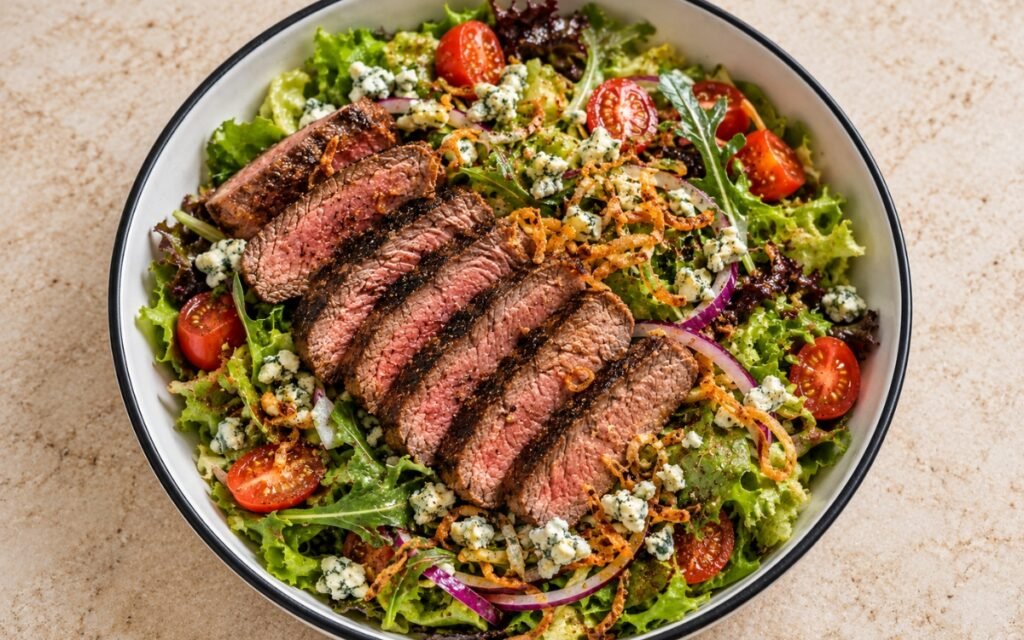
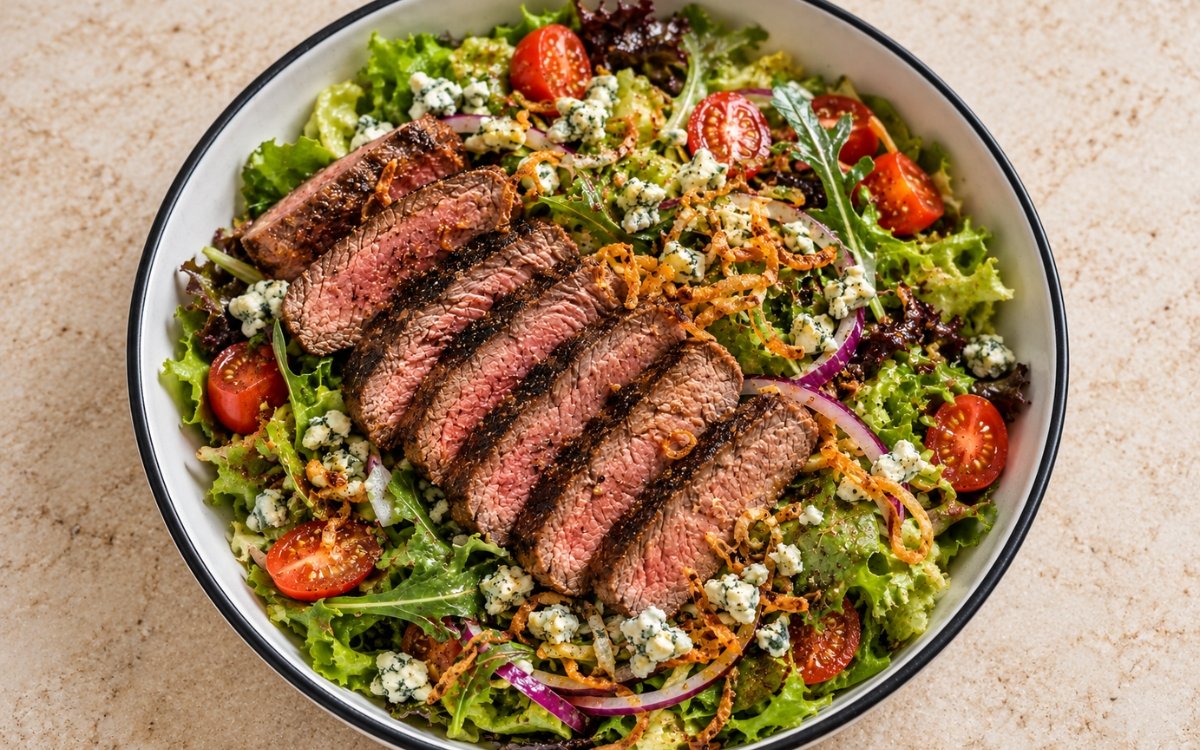
Sliced medium-rare seared steak served over crisp mixed greens with cherry tomatoes, red onion, blue cheese crumbles, crispy fried shallots, and a sharp steakhouse-style vinaigrette. The key is cooking the steak hard and fast, resting it properly, then slicing across the grain so it stays juicy on top of the salad. Drying the steak thoroughly before it ever meets the hot pan is the technique this whole salad depends on for a real, hard sear — any residual surface moisture converts to steam on contact, robbing the steak of exactly the browning that makes this salad feel steakhouse-level, the same dry-before-searing principle used elsewhere in this collection whenever a protein’s own crust is central to a dish’s character rather than incidental. Resting the steak properly before slicing is what keeps its juices inside the meat rather than running out and making the salad watery. Slicing thinly across the grain is what keeps even a well-cooked steak genuinely tender to bite through. The payoff is a salad with real, steakhouse contrast — crisp, lightly dressed greens topped with warm, juicy, medium-rare steak, sharp blue cheese, and crunchy fried shallots.
Prep Time : 25 min
Cook Time : 20 min
Servings : 4
25 min
20 min
4
Ingredients
For the Steak
• 800g steak, such as ribeye, sirloin, strip steak, or flank steak
• 10g fine sea salt
• 3g freshly ground black pepper
• 15ml neutral oil
• 20g unsalted butter — this one on Amazon
• 2 garlic cloves, smashed
• 1 small sprig rosemary or thyme, optional
For the Crispy Fried Shallots
• 3 large shallots, thinly sliced
• 40g all-purpose flour — this one on Amazon
• 2g fine sea salt
• Neutral oil, for shallow-frying
For the Steakhouse Vinaigrette
• 45ml red wine vinegar — this one on Amazon
• 15ml balsamic vinegar — this one on Amazon
• 10g Dijon mustard — this one on Amazon
• 10ml Worcestershire sauce — this one on Amazon
• 1 small garlic clove, very finely grated
• 5g honey or sugar
• 4g fine sea salt
• 2g black pepper
• 90ml extra-virgin olive oil — this one on Amazon
For the Salad
• 300g mixed greens, romaine, baby gem, or green leaf lettuce
• 250g cherry tomatoes, halved
• 1 small red onion, very thinly sliced
• 120g blue cheese, crumbled — this one on Amazon
• Extra black pepper, for finishing
• Flaky salt, for finishing
This post may contain affiliate links. As an Amazon Associate I earn from qualifying purchases, at no additional cost to you.
Directions
- Season the Steak
Pat the steak very dry. Season all over with the salt and black pepper. Let it sit at room temperature for 30 minutes before cooking if the steaks are thick. Dry steak browns faster. If the surface is wet, the steak steams first and loses the hard sear that makes this salad feel steakhouse-level. That thorough drying matters directly because any residual moisture converts to steam the instant it meets the hot pan, working against the direct, sustained contact real browning depends on. - Make the Vinaigrette
In a bowl or jar, combine the red wine vinegar, balsamic vinegar, Dijon, Worcestershire sauce, garlic, honey, salt, and black pepper. Whisk in the olive oil slowly until emulsified. Taste and adjust. The dressing should be sharp and savory, because it has to cut through rich steak and blue cheese. That deliberate sharpness is a genuine, functional requirement given how substantial this salad’s other components are — a milder vinaigrette would be overwhelmed by the steak’s own richness and the blue cheese’s assertive tang rather than balancing them. - Fry the Shallots
Toss the sliced shallots with the flour and salt. Shake off the excess flour. Heat a thin layer of neutral oil in a small pan over medium heat. Fry the shallots in batches for 2 to 4 minutes, stirring often, until golden and crisp. Transfer to paper towels or a rack and season lightly while hot. Pull the shallots when they are golden, not dark brown. They continue to darken after leaving the oil. That residual carryover colour development is exactly why pulling at golden, rather than waiting for a deeper brown in the pan, protects the shallots from tipping into bitterness by the time they’ve fully cooled. - Sear the Steak
Heat a heavy skillet or grill pan over high heat until very hot. Add the neutral oil. Sear the steak for about 2 to 4 minutes per side, depending on thickness, until deeply browned outside. Add the butter, garlic, and rosemary or thyme if using. Baste the steak for the final 30 to 60 seconds. For doneness, aim for rare at 49–51°C, medium-rare at 52–54°C, or medium at 57–60°C. Medium-rare is the best target here. Steak for salad should stay juicy and pink, not grey and dry. That final basting stage, added only once real colour is already established, layers in real, aromatic flavour from the butter, garlic, and herbs without needing to extend the steak’s overall time on the heat. - Rest and Slice the Steak
Transfer the steak to a board and rest for 8 to 10 minutes. Slice across the grain into thin strips. Do not slice immediately. If you cut hot steak straight from the pan, the juices run out and the salad gets watery. During cooking, the steak’s internal juices are pushed toward the centre under real pressure, and that rest period lets them redistribute evenly back through the meat rather than spilling out onto the salad the moment a knife cuts in too soon. - Prepare the Salad Base
Wash and dry the greens very thoroughly. Place them in a large bowl with the cherry tomatoes and red onion. Add just enough vinaigrette to lightly coat the leaves and toss gently. The greens should look glossy, not wet. Too much dressing collapses the salad before the warm steak even goes on. Any residual surface water on the greens would dilute the vinaigrette on contact and prevent it from actually clinging, which is exactly why thorough drying matters here as much as it does for the dressing’s own careful, light application. - Assemble
Divide the dressed greens among 4 bowls or plates. Fan the sliced steak over the top. Add the blue cheese crumbles, crispy fried shallots, extra black pepper, and a small pinch of flaky salt. Drizzle with a little more vinaigrette if needed. Adding the blue cheese as distinct crumbles, rather than melting it into the dressing, keeps its own sharp, assertive character present as a genuinely separate component rather than diffused throughout the whole salad. - Serve
Serve immediately while the steak is still warm and the greens are still crisp. This salad’s whole appeal depends on that direct contrast between warm, juicy steak and cold, crisp greens — any real delay lets both drift toward the same temperature, losing exactly the distinction the dish is built around.
*Notes :
- Drying the steak thoroughly before it ever meets the hot pan deserves genuine recognition as the detail most responsible for whether this salad achieves real steakhouse-level searing or ends up pale and steamed. Any residual surface moisture converts instantly to steam on contact with the hot oil, and that steam actively works against the direct, sustained contact real browning requires — a thorough pat-dry is what allows the steak to actually develop the deep, hard crust this salad’s whole character depends on.
- Resting the steak properly before slicing deserves the same respect this technique receives throughout this collection’s other seared proteins. During cooking, the meat’s own juices are pushed toward the centre under real pressure, and cutting in too soon releases them all at once — directly onto the salad’s own crisp greens, turning them soggy rather than staying properly dressed and crisp.
- Pulling the fried shallots at golden rather than a deeper brown deserves genuine attention given how directly residual heat continues affecting them even off the oil. That specific timing accounts for the real, continued darkening that happens as the shallots cool, protecting them from crossing into bitterness by the time they’re actually scattered over the finished salad.
- Keeping the blue cheese as distinct crumbles, rather than working it into the dressing itself, deserves recognition as a deliberate choice for this salad’s overall textural and flavour balance, exactly as the recipe’s own notes specify. That separation lets the cheese’s own sharp, assertive character register as its own distinct element in each bite, rather than blending indistinguishably into an already-sharp vinaigrette.
Why This Recipe Works
This recipe works because the steak is dried thoroughly, allowing it to develop a genuine, hard sear rather than steaming. Resting it properly before slicing keeps the juices inside the meat rather than spilling out onto the greens. The fried shallots are pulled at golden, accounting for real continued browning as they cool.
The greens are dried thoroughly and dressed lightly, staying crisp rather than wilting under too much vinaigrette. Keeping the blue cheese as distinct crumbles preserves its own sharp character, and serving immediately delivers the essential warm-steak-against-cold-greens contrast this salad is built around.
Ingredient Breakdown
Thoroughly Dried Steak
The critical technique — removes moisture that would otherwise prevent a real, hard sear.
Properly Rested Steak
The critical technique — keeps juices inside the meat rather than spilling onto the salad when sliced.
Golden-Pulled Fried Shallots
The critical technique — accounts for real continued browning after leaving the oil, protecting against bitterness.
Thoroughly Dried, Lightly Dressed Greens
The critical technique — stays crisp and glossy rather than wilting under excess vinaigrette.
Distinct Blue Cheese Crumbles
The finishing technique — preserves the cheese’s own sharp character as a separate component.
Flavor Structure Explained
This steakhouse steak salad follows a layered balance model:
- risp, cold foundation (thoroughly dried, lightly dressed greens)
- Warm, juicy protein (dried, hard-seared, properly rested steak)
- Sharp, tangy accent (blue cheese crumbles)
- Crunchy textural finish (crispy fried shallots)
- Bold, cutting dressing (steakhouse vinaigrette)
Thoroughly dried, lightly dressed mixed greens provide this salad’s crisp, cold foundation. Dried and hard-seared steak, properly rested and thinly sliced, adds warm, juicy protein directly on top. Blue cheese crumbles contribute sharp, tangy contrast as their own distinct element. Crispy fried shallots layer in genuine crunch, and a bold, sharp steakhouse vinaigrette ties everything together, cutting through the salad’s overall richness.
Common Mistakes to Avoid
- Searing Wet Steak – This prevents a real, hard sear from developing. Always dry it thoroughly first.
- Slicing the Steak Immediately After Cooking – This releases the juices onto the salad, making it watery. Always rest for 8 to 10 minutes first.
- Pulling the Fried Shallots Too Late – This risks them turning bitter as they continue to darken off the heat. Always pull them at golden.
- Overdressing the Greens – This collapses the salad before the warm steak even goes on. Always add just enough vinaigrette to lightly coat.
- Melting the Blue Cheese Into the Dressing – This loses its own distinct, sharp character. Always add it as separate crumbles.
Variations
Ribeye Steak Steakhouse Salad
Use ribeye for the richest, most classically steakhouse flavour, per the recipe’s own note.
Flank Steak Steakhouse Salad
Use flank steak, sliced thinly across the grain, for a leaner, budget-friendly alternative.
Extra-Sharp Version
Increase the blue cheese for a more assertively tangy finished salad.
Balsamic-Forward Version
Increase the balsamic vinegar slightly for a sweeter, more rounded vinaigrette.
Storage & Make-Ahead
Blue cheese should be added as crumbles, not melted into the dressing.
Dry the greens extremely well before dressing. Best served immediately after slicing the steak.
Frequently Asked Questions
Why does the steak need to be dried so thoroughly before searing?
Any residual surface moisture converts instantly to steam on contact with the hot pan, preventing the direct, sustained contact real searing requires. Thorough drying is what allows the steak to develop the deep, hard crust this salad depends on.
Why does the steak need to rest before it’s sliced?
During cooking, the meat’s juices are pushed toward the centre under real pressure. Resting lets them redistribute evenly back through the meat, rather than spilling out onto the salad’s greens if cut too soon.
Why should the fried shallots be pulled at golden rather than a deeper brown?
Shallots continue to darken from residual heat even after leaving the oil. Pulling them at golden accounts for that continued browning, protecting them from turning bitter by the time they’re fully cooled.
Why is the blue cheese added as crumbles rather than mixed into the dressing?
That separation lets the cheese’s own sharp, assertive character register as its own distinct element in each bite, rather than blending indistinguishably into an already-sharp vinaigrette.
Are there other steak salad, steak, or classic composed salad dishes worth trying?
Classic Cobb Salad and Grilled Steak & Peach Chimichurri Salad offer another composed salad direction worth exploring. Garlic Butter Steak Bites and Paris Steak Frites are also worth trying for other steak-forward dishes, and Argentine Chimichurri Steak offers a different, herb-sauced steak direction worth exploring.
Nutrition Facts
( per serving )
Calories
~620 kcal
Protein
42 g
Fat
44 g
Carbs
16 g
Calories
~620 kcal
Protein
42 g
Fat
44 g
Carbs
16 g
Related Recipes
Related Recipes

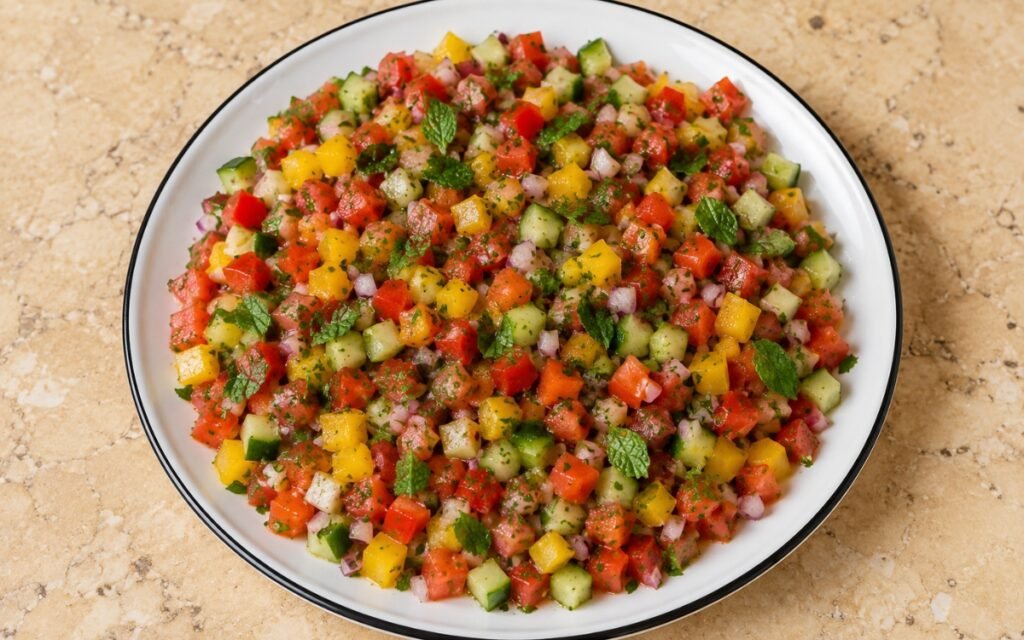
Light Chopped Vegetable Salad
Crisp chopped vegetables with cucumbers, bell peppers, tomatoes, and herbs in lemon vinaigrette.
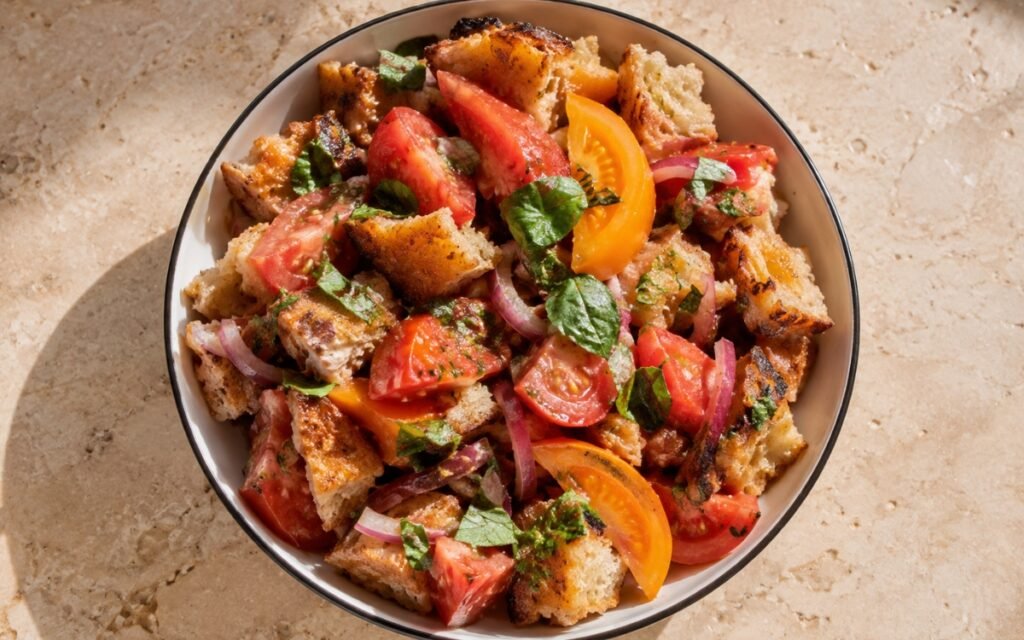
Panzanella Salad
Heirloom tomatoes salted for juice, torn sourdough toasted to crust-and-chew, red onion macerated in red wine vinegar — assembled and rested 10 minutes. The Tuscan summer salad built on timing.
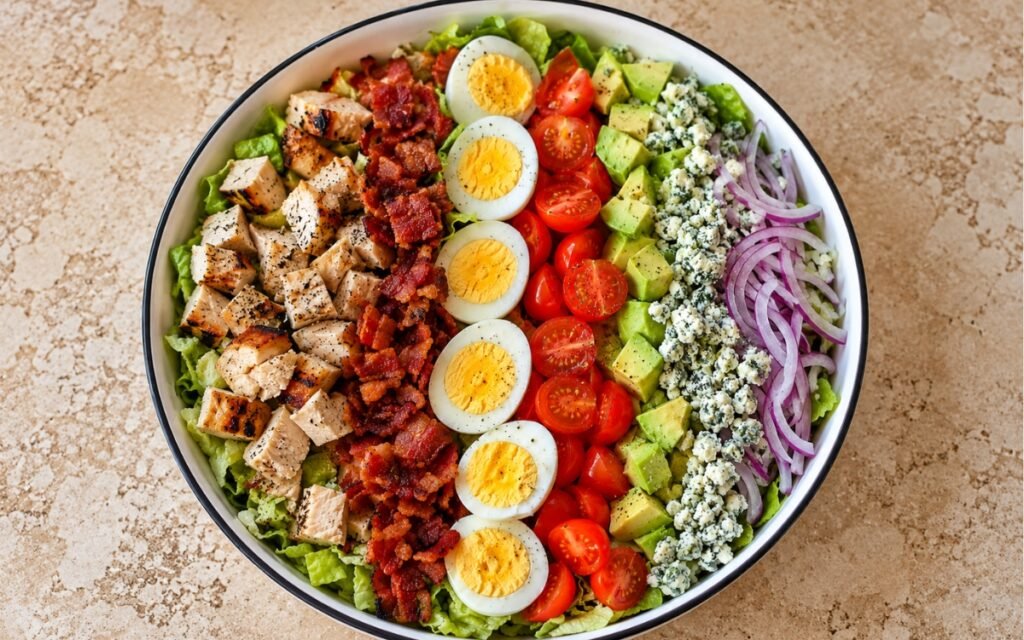
Classic Cobb Salad
Neat rows of seared chicken, crispy bacon, hard-boiled eggs, cherry tomatoes, avocado, blue cheese, and red onion over chopped lettuce with red wine vinaigrette.
You might also like
You might also like
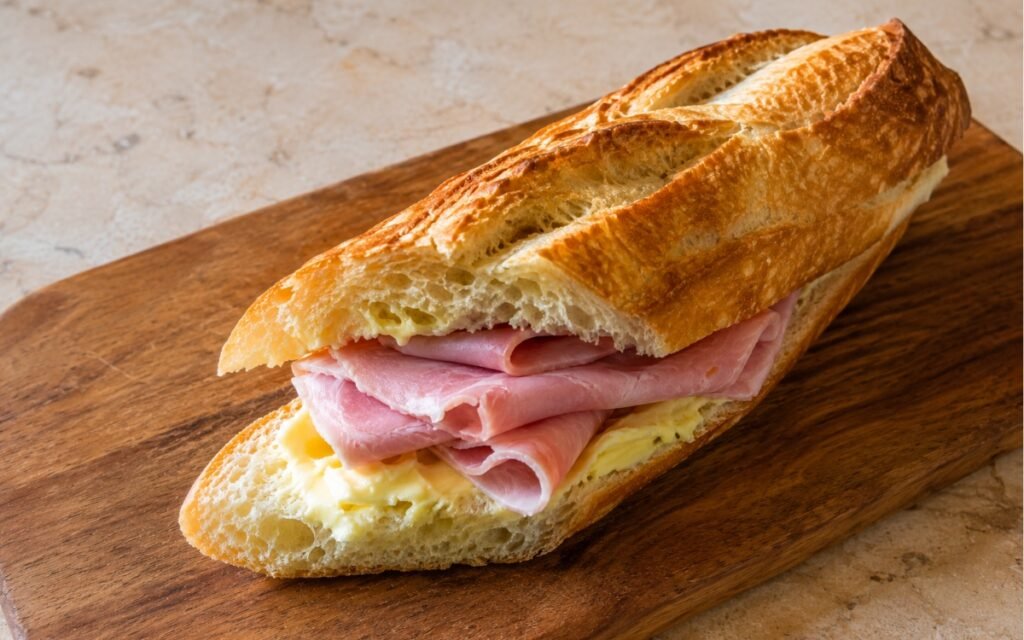
Jambon-Beurre
Fresh crusty baguette, a generous layer of softened butter, and thinly folded slices of pale pink French ham.
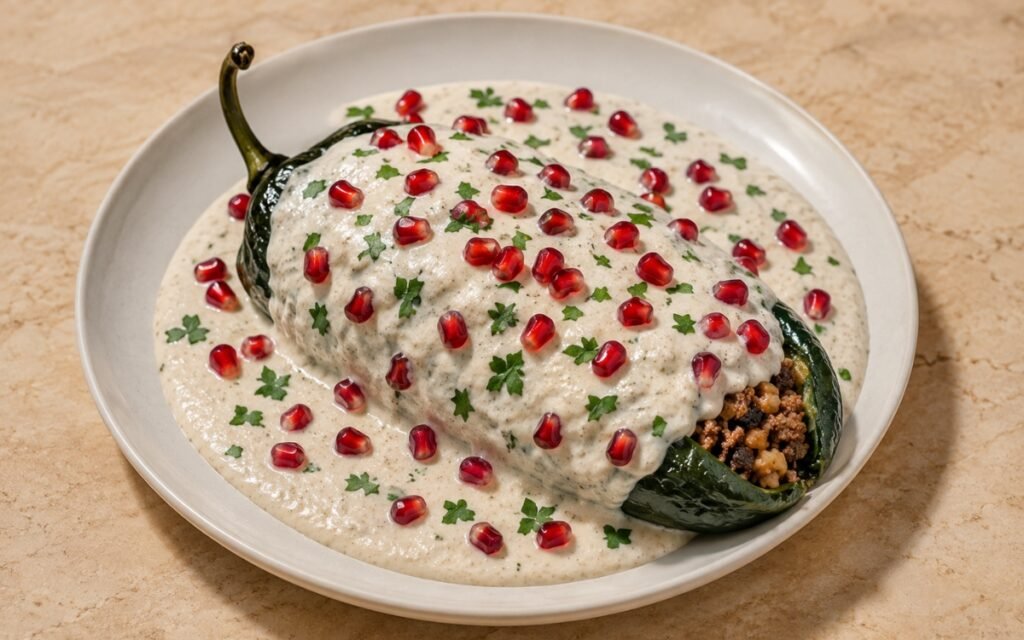
Chiles en Nogada
Roasted poblano peppers stuffed with a savoury-sweet pork and beef picadillo, covered in creamy white walnut sauce, and finished with pomegranate seeds.
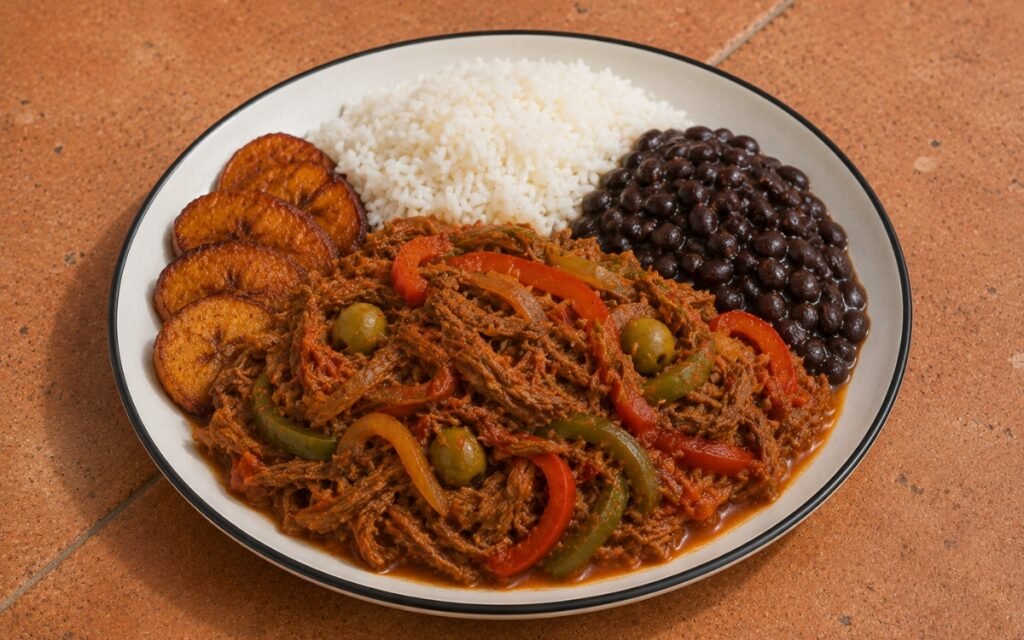
Ropa Vieja Cubana
Slow-braised, shredded beef simmered in a rich tomato sauce with peppers, onion, and green olives, served with white rice, black beans, and fried plantains.
Steakhouse Steak Salad with Blue Cheese
Ingredients
Method
- Pat the steak very dry. Season all over with the salt and black pepper. Let it sit at room temperature for 30 minutes before cooking if the steaks are thick. Dry steak browns faster. If the surface is wet, the steak steams first and loses the hard sear that makes this salad feel steakhouse-level. That thorough drying matters directly because any residual moisture converts to steam the instant it meets the hot pan, working against the direct, sustained contact real browning depends on.
- In a bowl or jar, combine the red wine vinegar, balsamic vinegar, Dijon, Worcestershire sauce, garlic, honey, salt, and black pepper. Whisk in the olive oil slowly until emulsified. Taste and adjust. The dressing should be sharp and savory, because it has to cut through rich steak and blue cheese. That deliberate sharpness is a genuine, functional requirement given how substantial this salad’s other components are — a milder vinaigrette would be overwhelmed by the steak’s own richness and the blue cheese’s assertive tang rather than balancing them.
- Toss the sliced shallots with the flour and salt. Shake off the excess flour. Heat a thin layer of neutral oil in a small pan over medium heat. Fry the shallots in batches for 2 to 4 minutes, stirring often, until golden and crisp. Transfer to paper towels or a rack and season lightly while hot. Pull the shallots when they are golden, not dark brown. They continue to darken after leaving the oil. That residual carryover colour development is exactly why pulling at golden, rather than waiting for a deeper brown in the pan, protects the shallots from tipping into bitterness by the time they’ve fully cooled.
- Heat a heavy skillet or grill pan over high heat until very hot. Add the neutral oil. Sear the steak for about 2 to 4 minutes per side, depending on thickness, until deeply browned outside. Add the butter, garlic, and rosemary or thyme if using. Baste the steak for the final 30 to 60 seconds. For doneness, aim for rare at 49–51°C, medium-rare at 52–54°C, or medium at 57–60°C. Medium-rare is the best target here. Steak for salad should stay juicy and pink, not grey and dry. That final basting stage, added only once real colour is already established, layers in real, aromatic flavour from the butter, garlic, and herbs without needing to extend the steak’s overall time on the heat.
- Transfer the steak to a board and rest for 8 to 10 minutes. Slice across the grain into thin strips. Do not slice immediately. If you cut hot steak straight from the pan, the juices run out and the salad gets watery. During cooking, the steak’s internal juices are pushed toward the centre under real pressure, and that rest period lets them redistribute evenly back through the meat rather than spilling out onto the salad the moment a knife cuts in too soon.
- Wash and dry the greens very thoroughly. Place them in a large bowl with the cherry tomatoes and red onion. Add just enough vinaigrette to lightly coat the leaves and toss gently. The greens should look glossy, not wet. Too much dressing collapses the salad before the warm steak even goes on. Any residual surface water on the greens would dilute the vinaigrette on contact and prevent it from actually clinging, which is exactly why thorough drying matters here as much as it does for the dressing’s own careful, light application.
- Divide the dressed greens among 4 bowls or plates. Fan the sliced steak over the top. Add the blue cheese crumbles, crispy fried shallots, extra black pepper, and a small pinch of flaky salt. Drizzle with a little more vinaigrette if needed. Adding the blue cheese as distinct crumbles, rather than melting it into the dressing, keeps its own sharp, assertive character present as a genuinely separate component rather than diffused throughout the whole salad.
- Serve immediately while the steak is still warm and the greens are still crisp. This salad’s whole appeal depends on that direct contrast between warm, juicy steak and cold, crisp greens — any real delay lets both drift toward the same temperature, losing exactly the distinction the dish is built around.