
Crispy Salmon Bites with Spicy Mayo
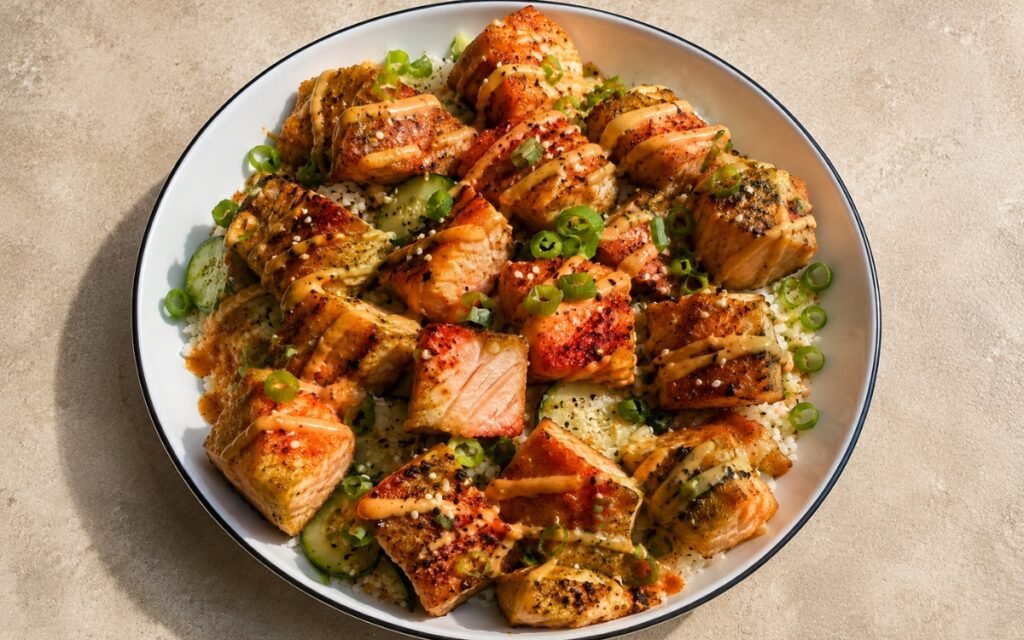
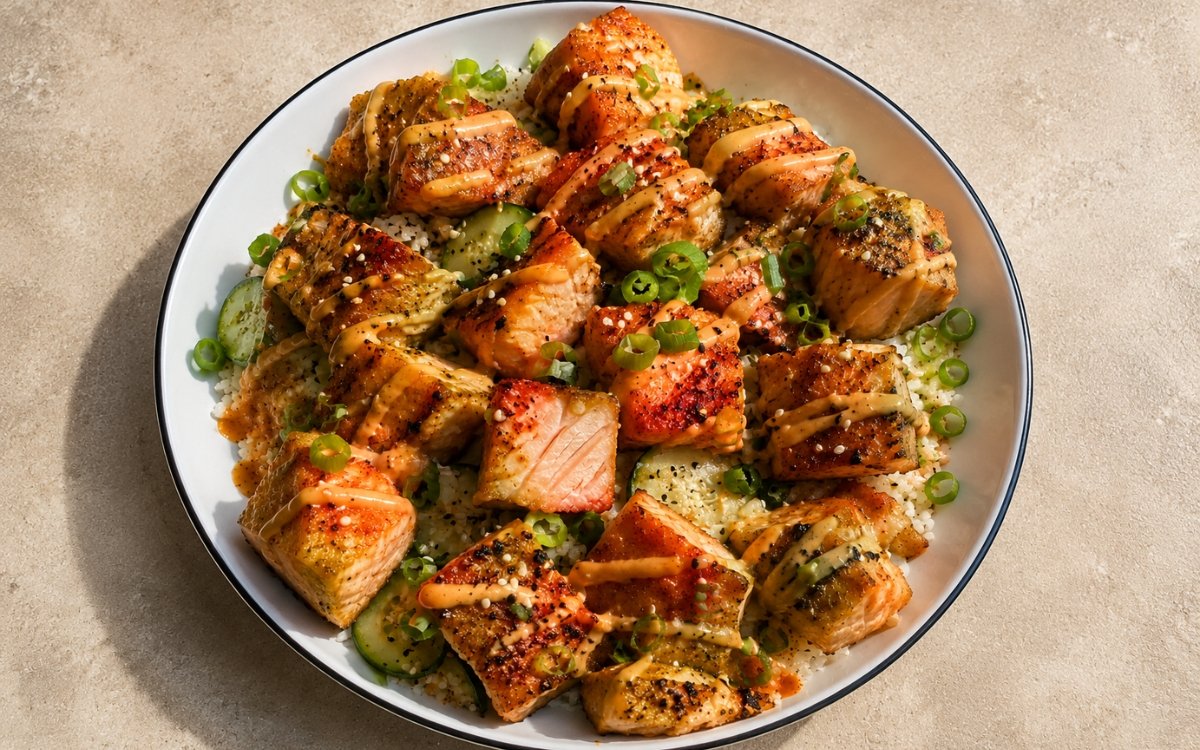
Bite-size salmon pieces cooked until golden and crisp at the edges, served over jasmine rice with cucumber, scallions, sesame seeds, and thick ribbons of spicy mayo. The key is cooking the salmon hot and fast so the outside caramelizes while the center stays tender. Patting the salmon genuinely dry and cutting it into evenly sized cubes is the technique this whole dish depends on for real caramelized edges — wet, unevenly cut salmon both steams instead of searing and cooks unpredictably, the same dry-and-even-cut principle used elsewhere in this collection whenever bite-size protein pieces need to develop real colour without overcooking some pieces before others finish. Leaving the salmon undisturbed for the first few minutes of cooking, whether pan-seared or air-fried, is what gives it the sustained contact real browning requires. Stopping the cook the moment the salmon flakes easily and the centre is just opaque, trusting carryover heat to finish it, is what keeps the interior genuinely tender rather than dry. The payoff is a dish with real textural contrast — crisp, caramelized salmon bites over warm rice, finished with cool cucumber, fresh scallion, and a generous ribbon of spicy mayo.
Prep Time : 20 min
Cook Time : 30 min
Servings : 4
20 min
30 min
4
Ingredients
For the Rice
• 240g jasmine rice, washed 3 times
• 360ml water
• Pinch of fine sea salt
For the Salmon
• 600g salmon fillet, skin removed if preferred, cut into large bite-size cubes
• 15ml olive oil or neutral oil — this one on Amazon
• 5g fine sea salt
• ½ tsp black pepper
• 1 tsp garlic powder — this one on Amazon
• 1 tsp sweet paprika — this one on Amazon
• ½ tsp onion powder — this one on Amazon
• 1 tsp soy sauce, optional but good for color and savoury depth
For the Spicy Mayo
• 120g mayonnaise
• 20 to 30g sriracha, to taste — this one on Amazon
• 1 tsp lemon juice or lime juice
• 1 tsp honey, optional
• 1 to 2 tsp water, if needed, to loosen for drizzling
For Serving
• 1 small cucumber, thinly sliced
• 3 scallions, thinly sliced
• 1 to 2 tsp toasted sesame seeds
• Extra black pepper, optional
• Extra chili flakes, optional
This post may contain affiliate links. As an Amazon Associate I earn from qualifying purchases, at no additional cost to you.
Directions
- Cook the Rice
Add the washed jasmine rice, water, and a pinch of salt to a saucepan. Bring it up to almost a boil, then immediately reduce the heat to low. Cover with a lid and cook for 15 minutes without lifting the lid even once. Remove from the heat and let it rest, still covered, for 15 more minutes. Fluff gently with a fork and keep warm. Washing the rice three times beforehand removes enough surface starch to keep the finished grains genuinely separate rather than clumped, and keeping the lid on throughout both the active cook and the rest protects the steam needed to finish the grains evenly. - Make the Spicy Mayo
In a small bowl, mix together the mayonnaise, sriracha, lemon juice, and honey if using. Add a little water only if needed so it becomes smooth enough to drizzle. Set aside. Adding water only as needed, rather than by default, keeps the mayo at a genuinely drizzlable consistency without thinning it more than necessary and losing body. - Prep the Salmon
Pat the salmon very dry with paper towels, then cut into evenly sized cubes. Toss with the oil, salt, black pepper, garlic powder, paprika, onion powder, and soy sauce if using. Dry salmon and even-sized pieces are what help you get crisp edges without overcooking the center. Cutting every piece to a genuinely consistent size is what lets them all reach doneness together — mismatched cubes force a choice between undercooked larger pieces and overcooked smaller ones cooked for the same amount of time. - Cook the Salmon
You can use either method below. Option A – Air fryer: Preheat the air fryer to 200°C. Arrange the salmon pieces in a single layer with space between them. Cook for 6 to 8 minutes, depending on size, until the edges are caramelized and the salmon is just cooked through. Option B – Pan sear: Heat a large nonstick or well-seasoned skillet over medium-high heat. Add a thin film of oil. Place the salmon pieces in a single layer and leave them undisturbed for 2 to 3 minutes so they can brown properly. Turn carefully and cook for another 2 to 3 minutes, just until golden on multiple sides and barely cooked through in the center. Stop cooking when the salmon flakes easily and the center is just opaque or very slightly translucent in the thickest part. Do not keep moving it around in the pan, and do not keep cooking once it is done — carryover heat will finish it. That undisturbed window, whether in the air fryer’s spaced single layer or the pan’s initial sear, is what actually gives each piece the sustained, direct contact real caramelization depends on — moving the salmon too early interrupts that contact before a proper crust has had time to form. - Assemble
Divide the rice between 4 bowls or plates, about a small serving under each portion of salmon. Add a few cucumber slices over or beside the rice. Top with the salmon bites. Drizzle generously with the spicy mayo. Finish with sliced scallions and toasted sesame seeds. Layering the components in this order — rice as the base, salmon on top, sauce and garnishes last — keeps the crisp salmon edges sitting above rather than beneath any sauce, protecting that texture right up until serving. - Serve
Serve right away while the salmon is still warm and the edges are crisp. This dish’s whole textural appeal depends on that crisp exterior, which softens steadily the moment the salmon comes off the heat — serving without delay is what actually delivers that contrast.
*Notes :
- Patting the salmon thoroughly dry before cutting and seasoning deserves genuine respect as the detail most responsible for whether this dish achieves real caramelized edges or ends up pale and steamed. Any residual surface moisture converts instantly to steam on contact with hot oil, whether in a pan or an air fryer, and that steam actively works against the direct, sustained contact real browning requires.
- Cutting every piece of salmon to a genuinely consistent size deserves the same attention this collection gives to evenly portioned proteins throughout. Mismatched cube sizes force an impossible compromise under a single, uniform cooking time — larger pieces would stay undercooked while smaller ones dry out, a problem consistent sizing avoids entirely from the start.
- Leaving the salmon undisturbed during its initial cooking window, rather than moving or checking it repeatedly, is worth understanding as a genuine technique requirement rather than simple patience. Real caramelization only develops through sustained, direct contact between the protein’s surface and the hot cooking environment — interrupting that contact too early, before a proper crust has formed, produces a paler, less developed result regardless of total cooking time.
- The instruction to stop cooking the moment the salmon flakes easily and looks just opaque, trusting carryover heat to finish it, deserves the same respect given to residual-heat cooking throughout this collection. Salmon continues cooking briefly even off direct heat, and waiting until it looks fully done in the pan or air fryer means it will actually be overcooked by the time it’s plated.
Why This Recipe Works
This recipe works because the salmon is dried thoroughly and cut into evenly sized cubes, giving every piece the same real chance at proper caramelization without some overcooking while others lag behind.
Leaving the salmon undisturbed during its initial cooking window, whichever method is used, is what allows genuine crust development.
Stopping the cook at the right visual cue, trusting carryover heat to finish the centre, keeps the interior tender rather than dry. Assembling with the salmon layered above the rice and sauce protects its crisp texture, and serving immediately delivers the dish at its best textural contrast.
Ingredient Breakdown
Thoroughly Dried, Evenly Cubed Salmon
The critical prep step — removes moisture that would prevent searing and ensures every piece cooks at the same rate.
Undisturbed Initial Cooking Window
The critical technique — gives the salmon sustained, direct contact needed for real caramelization, in either the pan or air fryer.
Carryover-Trusted Doneness Cue
The finishing technique — stopping at just-opaque protects the centre from drying out as residual heat finishes the cook.
Warm Jasmine Rice
The neutral foundation — washed thoroughly for separate, fluffy grains that support rather than compete with the salmon.
Spicy Mayo (Adjusted to Drizzling Consistency)
The finishing sauce — thinned only as needed, keeping real body while staying pourable.
Flavor Structure Explained
This crispy salmon bites bowl follows a layered balance model:
- Neutral hearty base (washed, fluffy jasmine rice)
- Crisp savoury centrepiece (caramelized, seasoned salmon bites)
- Cool fresh contrast (thinly sliced cucumber, scallion)
- Rich spicy finish (spicy mayo)
- Nutty textural accent (toasted sesame seeds)
Washed, fluffy jasmine rice provides a neutral, hearty base for the dish. Caramelized, well-seasoned salmon bites define the centrepiece with real crisp texture and savoury depth. Thinly sliced cucumber and scallion add cool, fresh contrast against the warm salmon. A generous drizzle of spicy mayo finishes the dish with rich, spicy creaminess, and toasted sesame seeds add a final nutty, textural accent that ties every component together.
Common Mistakes to Avoid
- Searing Wet Salmon – This causes it to steam rather than sear, producing pale edges. Always pat it thoroughly dry first.
- Cutting the Salmon Into Uneven Pieces – This forces some pieces to overcook while others stay undercooked. Always cut into consistent, evenly sized cubes.
- Moving the Salmon Too Early in the Pan – This interrupts the sustained contact real caramelization depends on. Always leave it undisturbed for the initial window.
- Cooking the Salmon Until Fully Opaque in the Pan – This overcooks it once carryover heat finishes the job. Always pull it while just opaque or slightly translucent.
- Letting the Dish Sit Before Serving – The crisp salmon edges soften quickly. Always serve immediately.
Variations
Extra-Spicy Version
Increase the sriracha in the mayo, or add a pinch of chili flakes on top, for more heat.
Air Fryer vs. Pan Version
Choose either cooking method based on preference — both are calibrated to produce the same caramelized, tender result.
Extra-Crunchy Version
Add extra toasted sesame seeds or a light scatter of crushed peanuts for additional texture.
Lighter Sauce Version
Reduce the mayo slightly and increase the lemon or lime juice for a tangier, lighter finished drizzle.
Storage & Make-Ahead
Best eaten fresh, because the crisp salmon edges are at their best right after cooking.
The spicy mayo can be made a day ahead and refrigerated in a sealed container.
The rice can be made ahead and reheated gently with a splash of water to restore its fluffy texture.
Frequently Asked Questions
Why does the salmon need to be dried so thoroughly before cooking?
Any residual surface moisture converts instantly to steam on contact with hot oil, whether in a pan or air fryer. That steam actively works against the direct, sustained contact real caramelization depends on.
Why does the salmon need to be cut into evenly sized cubes?
Mismatched cube sizes force an impossible compromise under a single cooking time — larger pieces stay undercooked while smaller ones dry out. Consistent sizing avoids that problem entirely.
Why should the salmon be left undisturbed during its initial cooking window?
Real caramelization only develops through sustained, direct contact between the salmon’s surface and the hot cooking environment. Moving it too early interrupts that contact before a proper crust has formed.
Why stop cooking the salmon while it’s still just opaque rather than waiting until it looks fully done?
Yes. Prepare the citrus base ahead, keep it chilled, and add soda directly into glasses or just before serving to preserve carbonation.
Are there other salmon, poke-style, or crispy rice bowl dishes worth trying?
Miso-Glazed Salmon Rice Bowl and Teriyaki-Glazed Salmon both offer other salmon-forward rice bowl directions worth exploring. Salmon Poke Bowl and Crispy Rice Salad with Spicy Tuna and Avocado are also worth trying for related bowl-style seafood dishes.
Nutrition Facts
( per serving )
Calories
~620 kcal
Protein
38 g
Fat
32 g
Carbs
46 g
Calories
~620 kcal
Protein
38 g
Fat
32 g
Carbs
46 g
Related Recipes
Related Recipes

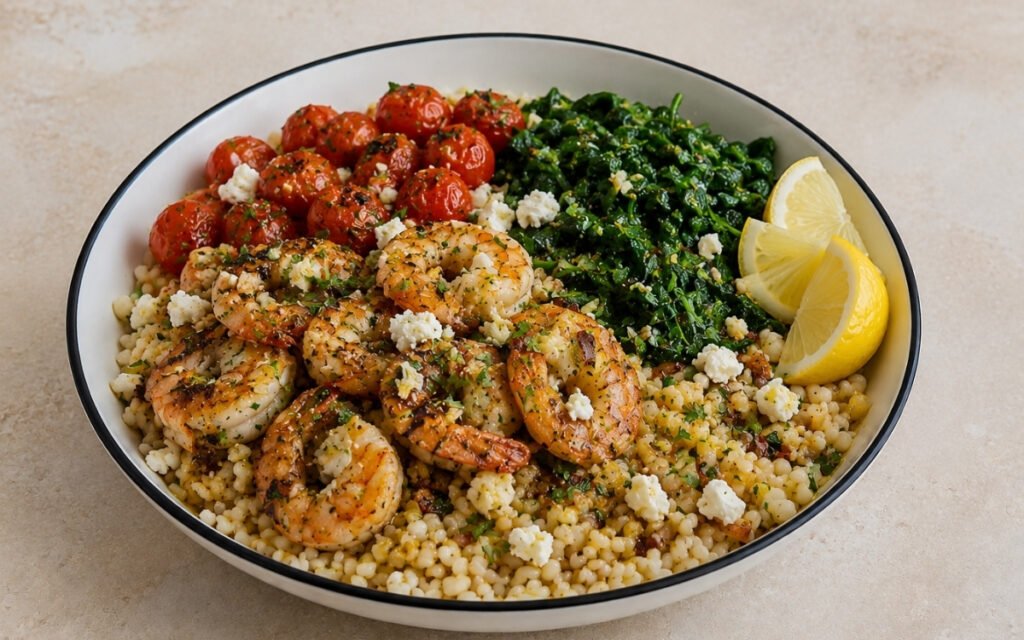
Lemon Garlic Shrimp Couscous Bowl
Garlic-lemon shrimp seared golden over pearl couscous with blistered cherry tomatoes, garlic-wilted spinach, lemon-herb dressing, and feta. Mediterranean, 35 minutes.
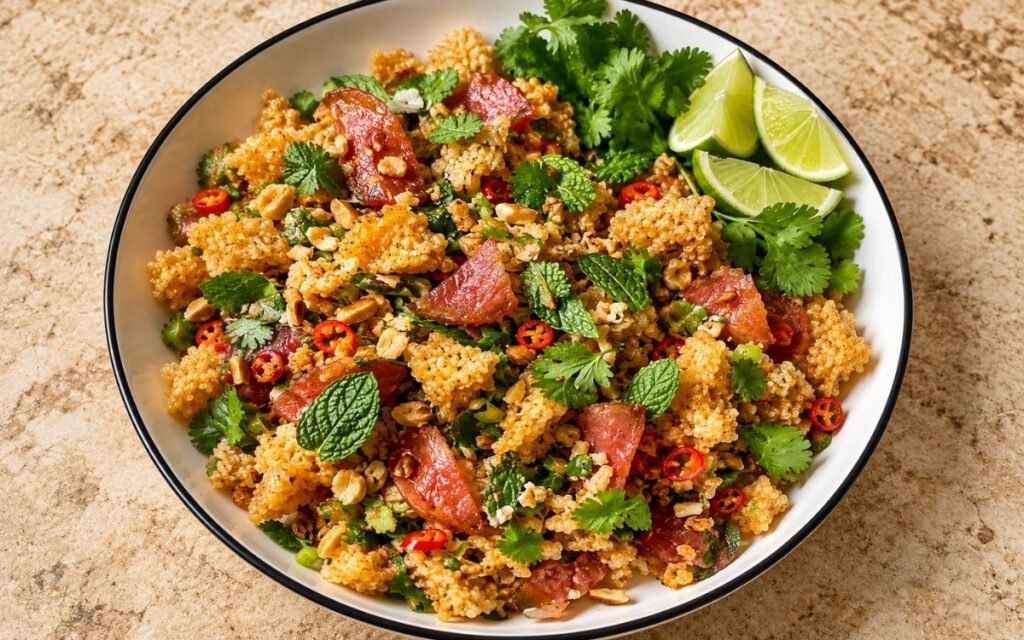
Crispy Rice Salad (Nam Khao Tod)
Deeply fried red-curry-scented rice croquettes broken into crunchy clusters, tossed with cured sausage, herbs, peanuts, and a sharp lime-fish sauce dressing.
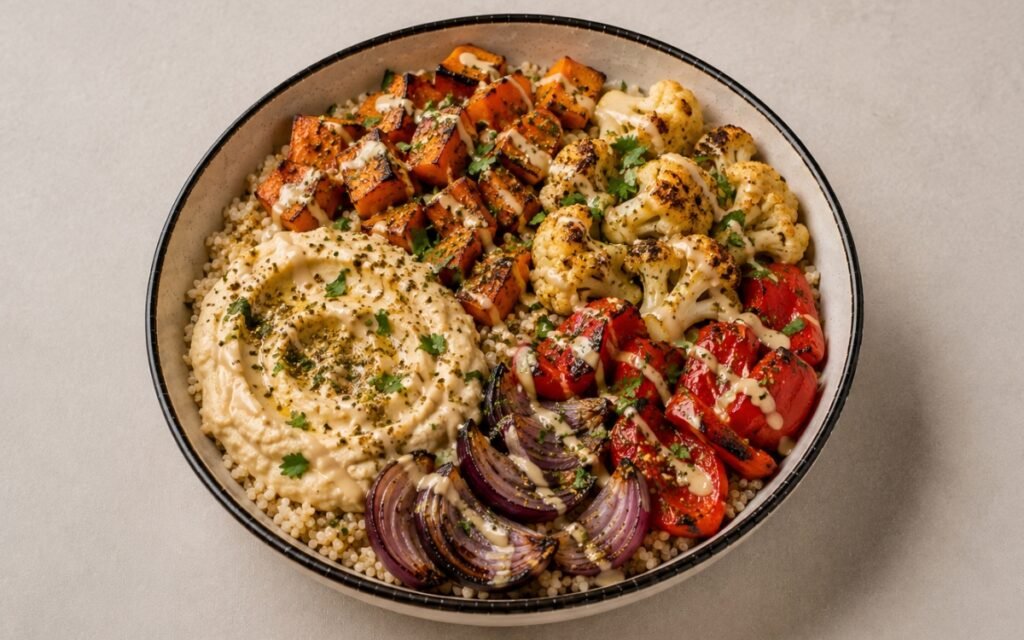
Roasted Veggie Quinoa Bowl
Za’atar-roasted sweet potatoes, cauliflower, and peppers over quinoa with creamy hummus and lemon-tahini drizzle.
You might also like
You might also like
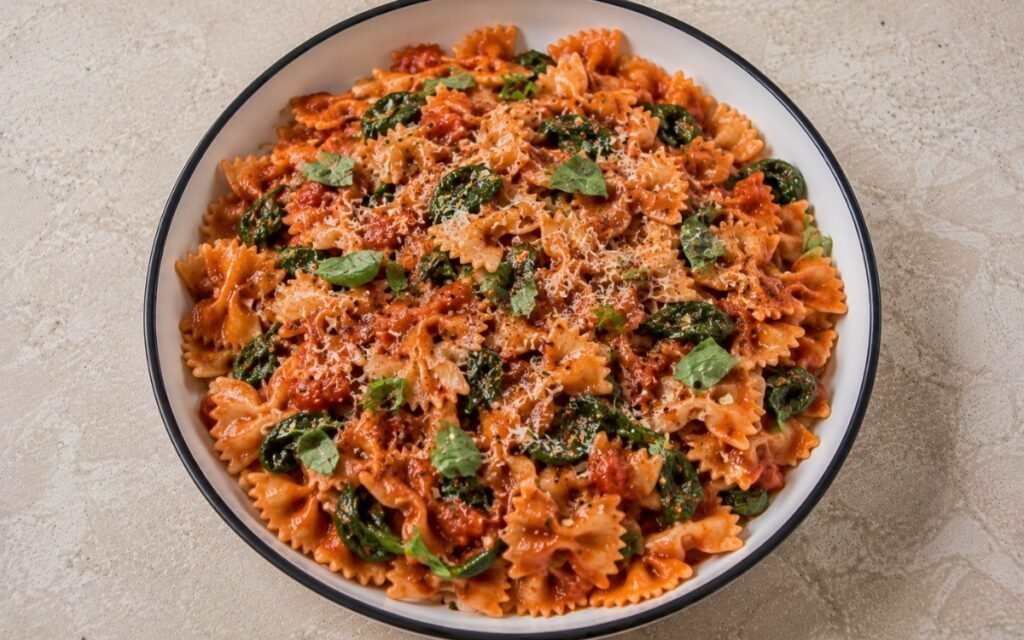
Tomato Spinach Farfalle Pasta
Tomato paste caramelised for depth, crushed tomatoes simmered glossy, spinach wilted in the last 90 seconds — farfalle finished in the sauce. 30 minutes.
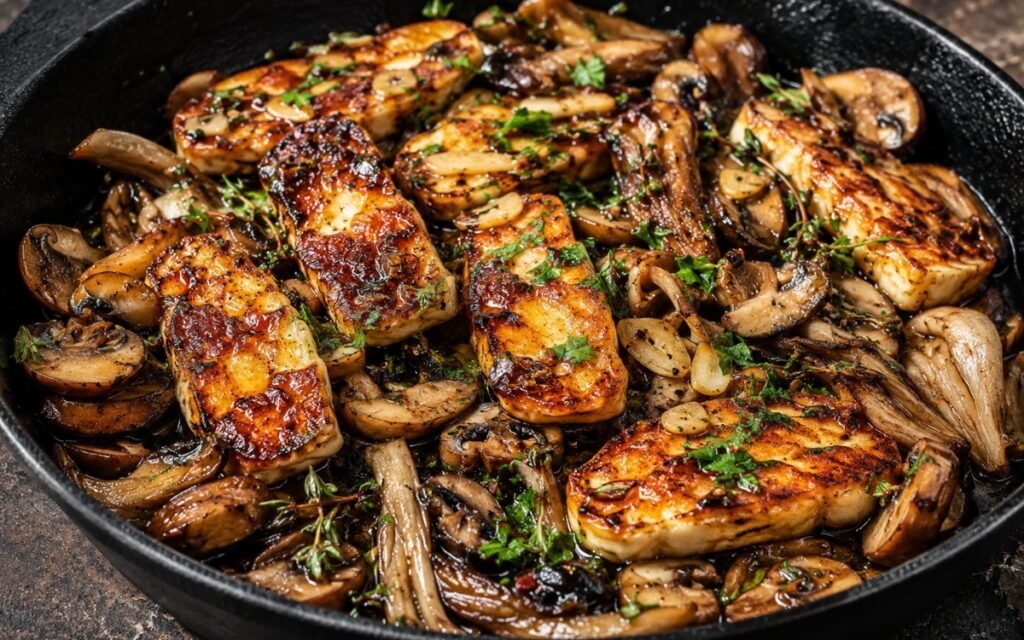
Garlic Mushroom & Halloumi Skillet
Mushrooms seared uncrowded until caramelized, halloumi cooked separately until crisp, combined in garlic balsamic pan sauce. Savory and satisfying.
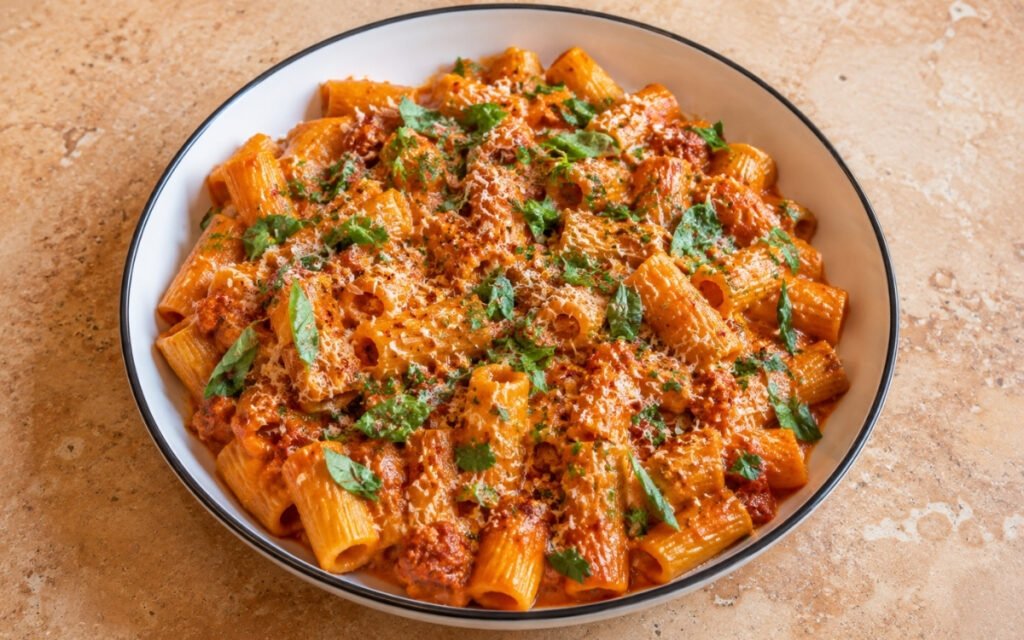
Spicy Italian ‘Nduja Pasta
Calabrian ‘nduja melted into olive oil until it becomes the sauce — mascarpone finish, 30 minutes.
Crispy Salmon Bites with Spicy Mayo
Ingredients
Method
- Add the washed jasmine rice, water, and a pinch of salt to a saucepan. Bring it up to almost a boil, then immediately reduce the heat to low. Cover with a lid and cook for 15 minutes without lifting the lid even once. Remove from the heat and let it rest, still covered, for 15 more minutes. Fluff gently with a fork and keep warm. Washing the rice three times beforehand removes enough surface starch to keep the finished grains genuinely separate rather than clumped, and keeping the lid on throughout both the active cook and the rest protects the steam needed to finish the grains evenly.
- In a small bowl, mix together the mayonnaise, sriracha, lemon juice, and honey if using. Add a little water only if needed so it becomes smooth enough to drizzle. Set aside. Adding water only as needed, rather than by default, keeps the mayo at a genuinely drizzlable consistency without thinning it more than necessary and losing body.
- Pat the salmon very dry with paper towels, then cut into evenly sized cubes. Toss with the oil, salt, black pepper, garlic powder, paprika, onion powder, and soy sauce if using. Dry salmon and even-sized pieces are what help you get crisp edges without overcooking the center. Cutting every piece to a genuinely consistent size is what lets them all reach doneness together — mismatched cubes force a choice between undercooked larger pieces and overcooked smaller ones cooked for the same amount of time.
- You can use either method below.
- Option A – Air fryer: Preheat the air fryer to 200°C. Arrange the salmon pieces in a single layer with space between them. Cook for 6 to 8 minutes, depending on size, until the edges are caramelized and the salmon is just cooked through.
- Option B – Pan sear: Heat a large nonstick or well-seasoned skillet over medium-high heat. Add a thin film of oil. Place the salmon pieces in a single layer and leave them undisturbed for 2 to 3 minutes so they can brown properly. Turn carefully and cook for another 2 to 3 minutes, just until golden on multiple sides and barely cooked through in the center. Stop cooking when the salmon flakes easily and the center is just opaque or very slightly translucent in the thickest part. Do not keep moving it around in the pan, and do not keep cooking once it is done — carryover heat will finish it. That undisturbed window, whether in the air fryer’s spaced single layer or the pan’s initial sear, is what actually gives each piece the sustained, direct contact real caramelization depends on — moving the salmon too early interrupts that contact before a proper crust has had time to form.
- Divide the rice between 4 bowls or plates, about a small serving under each portion of salmon. Add a few cucumber slices over or beside the rice. Top with the salmon bites. Drizzle generously with the spicy mayo. Finish with sliced scallions and toasted sesame seeds. Layering the components in this order — rice as the base, salmon on top, sauce and garnishes last — keeps the crisp salmon edges sitting above rather than beneath any sauce, protecting that texture right up until serving.
- Serve right away while the salmon is still warm and the edges are crisp. This dish’s whole textural appeal depends on that crisp exterior, which softens steadily the moment the salmon comes off the heat — serving without delay is what actually delivers that contrast.