
Roasted Veggie Quinoa Bowl With Hummus
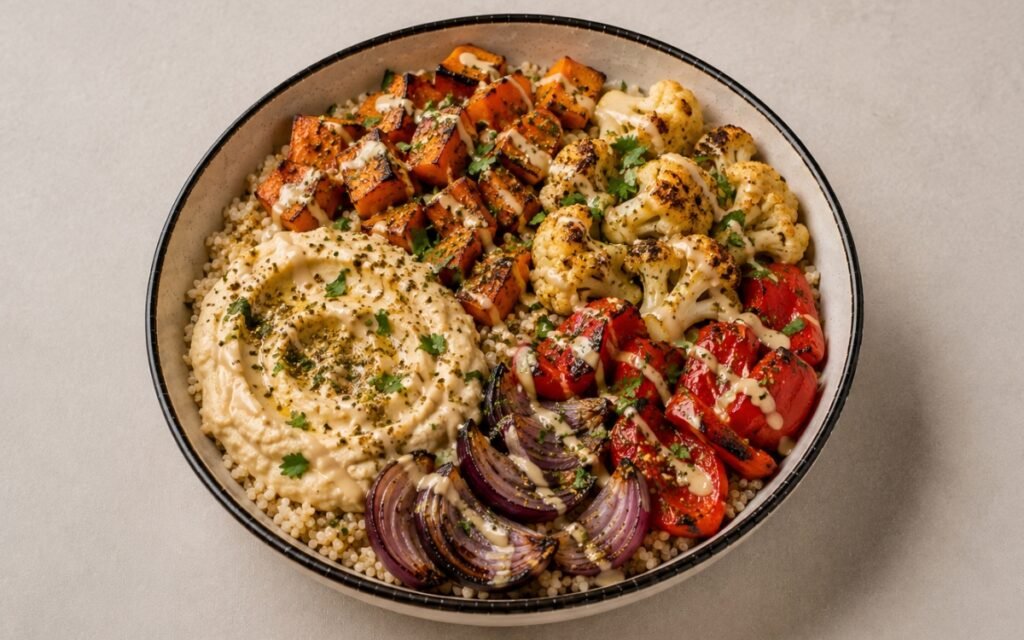
Za’atar-spiced sweet potatoes, cauliflower, red bell pepper, and red onion roasted at 220°C on two baking sheets with space between every piece — the spacing that prevents steaming and produces the golden, slightly crisped edges that make roasted vegetables satisfying rather than soft. A half-batch of the Classic Hummus spooned generously alongside. Lemon-tahini sauce whisked with cold water until the inevitable initial seizure resolves into the smooth, pourable cream that coats every component it reaches. Quinoa cooked in salted water as the grain base. Za’atar at two stages — in the roasting spice blend and scattered again at serving — for the herb blend’s specific thyme-oregano-sesame aromatic to be present at both the cooked and raw intensity. The Middle Eastern bowl that works as well on a Tuesday as it does for a weekend dinner party.
Prep Time : 20 min
Cook Time : 35 min
Servings : 4
20 min
35 min
4
Ingredients
For the Quinoa Base
• 200g dry quinoa
• 400ml water
• Pinch of fine salt
For the Roasted Vegetables
• 400g sweet potatoes, peeled and cut into 2cm cubes
• 300g cauliflower florets
• 200g red bell pepper, diced into 2cm pieces
• 150g red onion, cut into wedges
• 45ml extra virgin olive oil
• 15g za’atar spice blend — this one on Amazon
• 5g ground cumin — this one on Amazon
• 3g smoked paprika — this one on Amazon
• 5g kosher salt
• 2g black pepper
For the Classic Hummus — Half Batch (Full recipe for 8 servings — see Classic Hummus)
• 112g dried chickpeas
• ½ tsp baking soda, divided — ¼ tsp for soaking, ¼ tsp for cooking
• 70g tahini paste — this one on Amazon
• Juice of ¾ lemon
• Zest of ¼ lemon
• 1 medium garlic clove, smashed with a knife
• ½ tsp ground cumin
• Fine sea salt to taste, starting conservatively
• Freshly ground black pepper to taste
• 50ml ice-cold water, added gradually — amount varies by preferred consistency
For the Lemon-Tahini Sauce
• 60g tahini paste
• 45ml fresh lemon juice
• 1 garlic clove, approximately 3g, minced
• 45–60ml cold water
• 4g fine salt
For Garnish
• 20g fresh parsley, chopped
• Extra za’atar for garnish
This post may contain affiliate links. As an Amazon Associate I earn from qualifying purchases, at no additional cost to you.
Directions
- Preheat Oven and Prepare the Quinoa
Preheat the oven to 220°C. Rinse the 200g of quinoa thoroughly under cold running water in a fine-mesh strainer until the water running through is clear — quinoa’s saponin coating produces a soapy, bitter flavour in unrinsed grains. Combine the rinsed quinoa with 400ml of cold water and a pinch of salt in a medium saucepan. Bring to a full rolling boil, reduce immediately to the lowest possible setting, cover tightly, and simmer for 15 minutes. Remove from heat and allow to stand covered for 5 minutes. Fluff with a fork. The correctly cooked quinoa should show the characteristic small spiral — the germ — on each grain, indicating complete cooking. - Season and Roast the Vegetables
Prepare the vegetables while the oven preheats — sweet potatoes into 2cm cubes, cauliflower broken or cut into similarly sized small florets, red onion into wedges keeping the root intact so the wedge layers hold together during roasting, and red bell pepper diced into 2cm pieces. The uniform sizing is not aesthetic precision but a cooking-time equalisation — disparately sized pieces produce some that are correctly roasted while others remain undercooked or burn. In a small bowl, whisk together the 45ml of olive oil, 15g of za’atar, 5g of cumin, 3g of smoked paprika, 5g of salt, and 2g of black pepper into a uniform spiced oil. Distribute the vegetables between two large baking sheets — this is the spacing decision that most determines the quality of the roasted vegetables. All four vegetables combined weigh over 1kg and will not fit on a single baking sheet without crowding — crowded vegetables trap each other’s released steam and soften rather than caramelise. On two sheets with space between each piece, the steam evaporates and the vegetable surfaces develop the golden, slightly crisped edges that make roasted vegetables specifically satisfying. Drizzle the spiced oil over both trays and toss each tray to coat every piece evenly. Place both trays in the preheated oven. Roast for 30–35 minutes, rotating the trays’ positions and stirring each tray halfway through — the rotation compensates for any uneven heat distribution in the oven. The vegetables are done when they show deep golden-brown colouring on their exposed surfaces, tender centres when pressed, and visible crisped edges. - Make the Classic Hummus — Half Batch
For the complete technique — including the overnight chickpea soak with baking soda, the correct cooking method, the tahini-first blending sequence, and the ice-cold water incorporation — follow the full Classic Hummus recipe. This bowl uses half of that recipe’s quantity, which yields approximately 500–600g of hummus — enough for approximately 150g per bowl. Summary for the half-batch: soak the 112g of dried chickpeas overnight in cold water with ¼ tsp of baking soda — the baking soda softens the chickpea skins and produces significantly creamier hummus than unsoftened chickpeas. Cook the soaked chickpeas with ¼ tsp of fresh baking soda until very soft and easy to crush between two fingers. In a food processor, process the 70g of tahini with the juice of ¾ lemon, the zest of ¼ lemon, and 1 smashed garlic clove for a full 60 seconds before adding the chickpeas — this tahini-first step aerates the paste and produces the specific light, creamy texture that distinguishes properly made hummus. Add the cooked chickpeas, ½ tsp of cumin, salt, and pepper. Process for 3–4 minutes, gradually adding up to 50ml of ice-cold water — the cold temperature is essential for the smooth, aerated result. Taste and adjust. The finished hummus should be very smooth, pale, and slightly lighter in colour and texture from the extended processing. - Make the Lemon-Tahini Sauce
Place the 60g of tahini in a medium bowl. Add the 45ml of fresh lemon juice and the 3g of minced garlic and begin whisking — the tahini will seize immediately, appearing to clump and thicken rather than incorporate. This seizure is the expected behaviour of tahini when first contacted by an acidic liquid — it is not a sign of error and will resolve completely with continued whisking and the addition of cold water. Begin adding the 45ml of cold water in small increments while whisking continuously. With each addition of cold water and vigorous whisking the seized tahini progressively loosens — the proteins re-emulsify as the water concentration increases and the temperature remains cool. By the time 45–60ml of cold water has been fully incorporated the sauce should be smooth, uniformly pale, and pourable at a drizzling consistency. Season with the 4g of salt. Taste — the sauce should be simultaneously bright from the lemon, nutty from the tahini, and lightly garlic-forward, with sufficient salt to season the components it drizzles over. - Assemble the Bowls
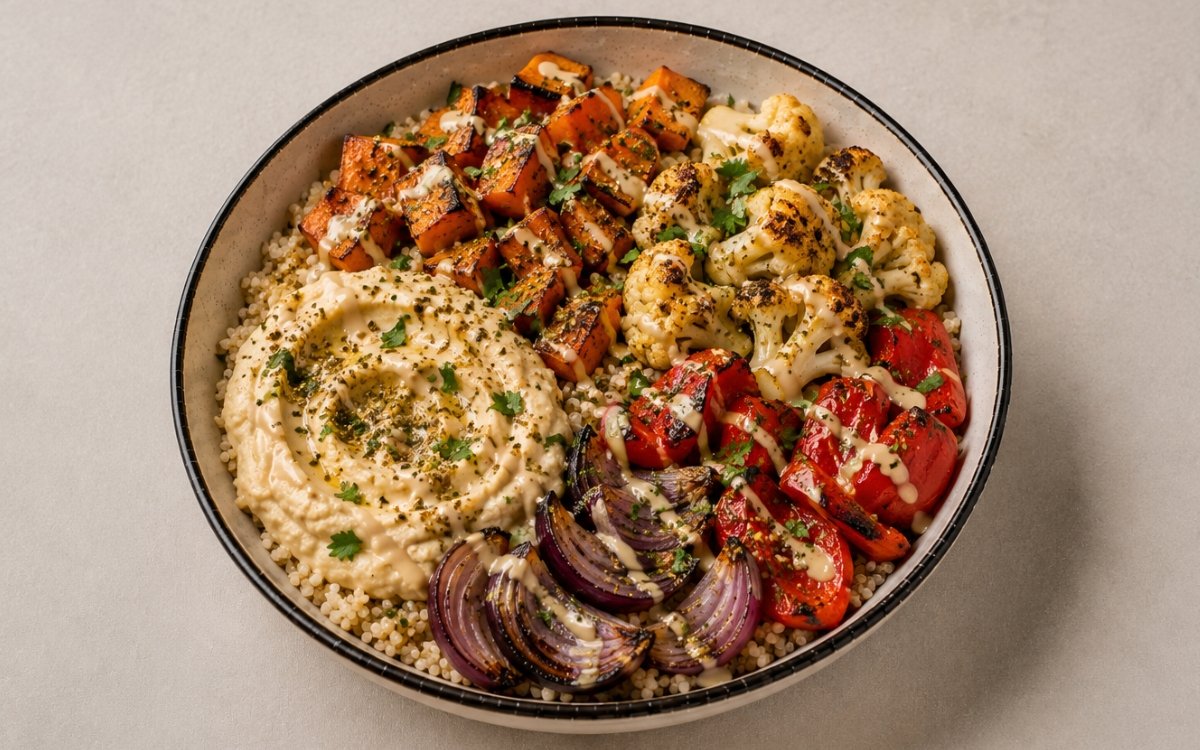
Divide the cooked quinoa among four wide bowls — approximately 180g of cooked quinoa per bowl as the base. On one side of each bowl, arrange a generous portion of the roasted vegetables — grouping the different vegetables so each colour and texture is visible rather than mixing them uniformly, which produces a more visually appealing and more texturally varied bowl. On the other side, add approximately 150g of the hummus — spoon it onto the bowl and use the back of the spoon to create the traditional smooth crater that allows the lemon-tahini drizzle and the olive oil to pool in the centre. Drizzle the lemon-tahini sauce generously across the vegetables, the hummus, and the quinoa — extending it to reach every component. Scatter the 20g of roughly chopped fresh parsley over each bowl. Finish each bowl with an additional sprinkle of za’atar over the hummus and vegetables — its raw application at serving provides the fresh, herbal, toasted-sesame aromatic character that the cooked za’atar in the roasting spice blend produces in a different register. Serve immediately while the vegetables are warm.
*Notes :
- Za’atar — the specific Middle Eastern spice blend — is the flavour identity of this bowl applied at two distinct stages for two distinct purposes. In the roasting blend, the za’atar’s thyme and oregano heat along with the oil’s temperature, losing some of the more volatile aromatic compounds but developing a concentrated, slightly cooked herbal depth that penetrates the vegetables’ surface during the 30–35 minutes in the oven. At serving, the raw za’atar sprinkled over the hummus and assembled bowl retains all of its volatile compounds — the specifically fragrant combination of dried thyme, oregano, sumac, and sesame seeds that makes za’atar immediately identifiable as Middle Eastern. Both stages together produce a more complete za’atar presence than either alone.
- The sweet potato roasting time requires attention for uniform cooking when combined with the other vegetables. Sweet potato cubes take slightly longer than cauliflower to soften through, which is why the 2cm cube size is specifically calibrated — larger cubes will be undercooked at the centre when the cauliflower and pepper are ready; smaller cubes will be soft before the others have caramelised. At 2cm uniformly, all four vegetables reach the correct tender-and-golden stage within the same 30–35 minute window.
- The hummus in this bowl uses the Classic Hummus as its base preparation — a neutral, deeply creamy, balanced hummus that complements the za’atar vegetables without competing with them. See the Variations section for the Roasted Garlic and Harissa Mint hummus alternatives that shift the bowl’s flavour character significantly.
Why This Recipe Works
This recipe works because it applies the two specific technique requirements that most differentiate good from mediocre versions of each component: the two-baking-sheet spacing that produces genuinely roasted rather than steamed vegetables, and the tahini-first food processor technique that produces smooth, well-emulsified hummus.
The lemon-tahini sauce uses the same cold-water emulsification principle that the tahini naturally requires. And the za’atar’s dual application — cooked in the spice blend and raw at serving — provides the bowl’s defining aromatic character at both intensity levels simultaneously.
Ingredient Breakdown
Za’atar (Dual Application)
The defining aromatic — cooked in the roasting blend for concentrated herbal depth; sprinkled raw at serving for volatile, fragrant freshness.
Two-Baking-Sheet Spacing
The roasting technique requirement — the spacing that produces caramelised golden surfaces rather than steamed, soft vegetables.
Classic Hummus Half Batch
The creamy protein and texture element — overnight soak with baking soda softens the skins for superior creaminess; tahini-first processing and ice-cold water incorporation producing the specific smooth, aerated result of properly made hummus.
Lemon-Tahini Sauce (Cold-Water Emulsification)
The connecting drizzle — tahini’s seizure on lemon contact resolved by cold water and continuous whisking into the smooth, pourable sauce.
Sweet Potato and Cauliflower (2cm Uniform Cubes)
The calibrated sizing that ensures both vegetables reach correct doneness within the same roasting window.
Flavor Structure Explained
This Roasted veggie quinoa bowl follows a layered balance model:
- Aromatic spiced core (za’atar)
- Sweet earthy depth (roasted sweet potato, cauliflower)
- Creamy rich base (hummus)
- Bright fresh contrast (lemon-tahini sauce, parsley)
- Roasted nutty complexity (caramelised vegetables, sesame)
Za’atar defines the bowl’s identity with herbal, citrusy, sesame-driven aromatics layered through both roasting and finishing. Sweet potato and cauliflower provide warm, roasted depth through caramelisation and nuttiness. Hummus anchors the structure with creamy tahini-chickpea richness that adds substance and cohesion. Lemon-tahini sauce and parsley cut through the roasted elements with acidity and freshness, preventing heaviness. The result is a balanced Middle Eastern flavor composition where warmth, earthiness, creaminess, and brightness all coexist in each bite.
Common Mistakes to Avoid
- Crowding the Vegetables on One Baking Sheet – Over 1kg of vegetables on a single sheet produces steaming rather than roasting. Always use two sheets with space between each piece.
- Not Rotating the Baking Sheets – Oven hot spots produce unevenly roasted vegetables. Always rotate positions and stir halfway through.
- Not Processing the Tahini with Lemon First – Adding chickpeas immediately produces a less smooth, less aerated hummus. The tahini-first, lemon-second step is the technique that produces the creamy result.
- Not Whisking the Tahini Sauce Long Enough – The initial seizure resolves with continued whisking and cold water addition. Do not add too much water at once — always in small increments while whisking.
- Cutting Vegetables to Unequal Sizes – Pieces cooking at different rates produce some correctly roasted while others are underdone or overcooked.
- Adding Cold Hummus Directly to the Bowl – Refrigerated hummus tastes significantly less flavourful than room-temperature hummus. Always allow 20 minutes at room temperature or warm briefly before serving.
Variations
With Roasted Garlic Hummus
Replace the Classic Hummus half-batch with a half-batch of Roasted Garlic Hummus — the roasted garlic’s sweet, mellow, caramelised depth specifically complements the za’atar vegetables and amplifies the bowl’s roasted character.
With Harissa Mint Hummus
Replace the Classic Hummus half-batch with a half-batch of Harissa Mint Hummus — the harissa’s smoky-spiced heat and the fresh mint’s cooling contrast add a more complex, more assertively spiced dimension to the bowl and shift it toward a North African flavour character.
With Falafel
Add 3–4 baked or fried falafel per bowl alongside the roasted vegetables for additional protein and the specific crispy-exterior, herb-packed Middle Eastern character that complements every other component.
With Pickled Red Onion
Add 80g of quick-pickled red onion — thinly sliced, briefly soaked in red wine vinegar, sugar, and salt — alongside the roasted vegetables for additional acid contrast against the hummus’s richness.
Storage & Make-Ahead
Classic hummus can be refrigerated for up to 4 days. Before serving, let it sit at room temperature for about 20 minutes or warm it briefly. For more detailed storage instructions, see the Classic Hummus recipe.
Roasted vegetables can be refrigerated in an airtight container for up to 4 days. To bring back some of their crisped edges, reheat them in a 200°C oven for 8 to 10 minutes. Microwaving will soften them noticeably.
Quinoa can be refrigerated for up to 4 days. Reheat it covered with a splash of water. Lemon-tahini sauce can also be refrigerated for up to 5 days, although it will thicken significantly during storage. Before serving, whisk in a little cold water until it returns to a pourable consistency.
Assembled bowls are not recommended for storage. For the best texture and freshness, store the components separately and assemble each serving fresh from the refrigerated ingredients.
Frequently Asked Questions
What is za’atar?
Za’atar is a Middle Eastern spice blend made from dried thyme, oregano, sesame seeds, sumac, and salt — the specific combination varies by region and producer, but the characteristic warm herbal-and-sesame aroma is consistent. Available at Middle Eastern grocery stores and increasingly at mainstream supermarkets in the spice section or international foods aisle.
Why use two baking sheets for the vegetables?
Over 1kg of combined vegetables cannot roast properly on a single standard baking sheet — crowded vegetables trap each other’s released steam and soften without caramelising. On two sheets with space between each piece, the steam evaporates and the surface contact with the hot sheet produces the golden, crisped edges.
Why does the tahini sauce seize when lemon juice is added?
Tahini’s fat and protein structure contracts when it first contacts acidic liquid — the proteins temporarily bond tightly, producing the characteristic thickened, clumped appearance. This resolves completely with continued whisking and the gradual addition of cold water, which re-emulsifies the proteins into a smooth, creamy sauce.
Why use dried chickpeas rather than canned for the hummus?
The Classic Hummus recipe specifically uses dried chickpeas soaked overnight with baking soda — the baking soda softens the chickpea skins during both soaking and cooking, producing hummus that blends to a significantly smoother, creamier consistency than canned chickpeas can achieve. The extra preparation time is the reason the hummus can be made up to 3 days ahead.
Can I use canned chickpeas for the hummus?
Yes — drain and rinse one 400g can of chickpeas and use directly in the food processor with the tahini, lemon, and seasonings. The result is good but less smooth and less creamy than the overnight-soaked dried chickpea version. For the full technique with either approach, see Classic Hummus.
Which hummus variation works best with this bowl?
The Classic Hummus provides the most neutral, most complementary base. The Roasted Garlic Hummus deepens the roasted character significantly. The Harissa Mint Hummus adds a more complex, spiced dimension. All three work — the choice depends on preferred heat level and flavour direction.
Can I use a different grain instead of quinoa?
Yes — cooked farro, bulgur wheat, or pearl couscous all work well. Farro provides a chewier, more robust base; bulgur is softer and quicker to prepare; pearl couscous provides a lighter, more delicate result. All three are specifically compatible with Middle Eastern flavours.
Nutrition Facts
( per serving )
Calories
~760 kcal
Protein
23 g
Fat
35 g
Carbs
88 g
Calories
~760 kcal
Protein
23 g
Fat
35 g
Carbs
88 g
Related Recipes
Related Recipes

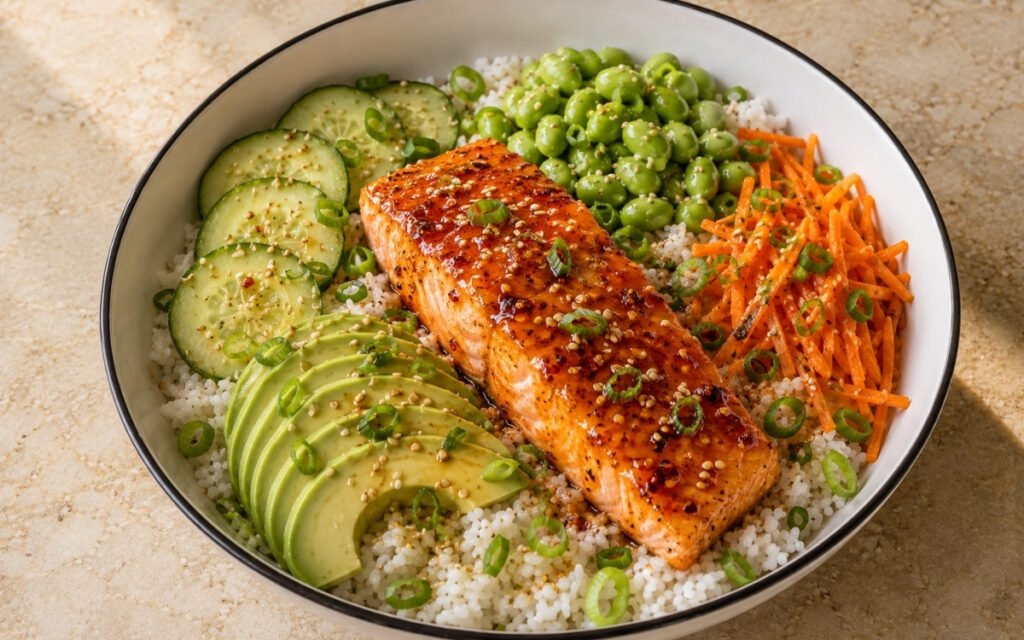
Hot Honey Salmon Rice Bowl
Salmon seared in sesame oil and glazed with gochugaru hot honey in the final minute — over jasmine rice with pickled carrots, avocado, and soy sauce. 35 minutes.
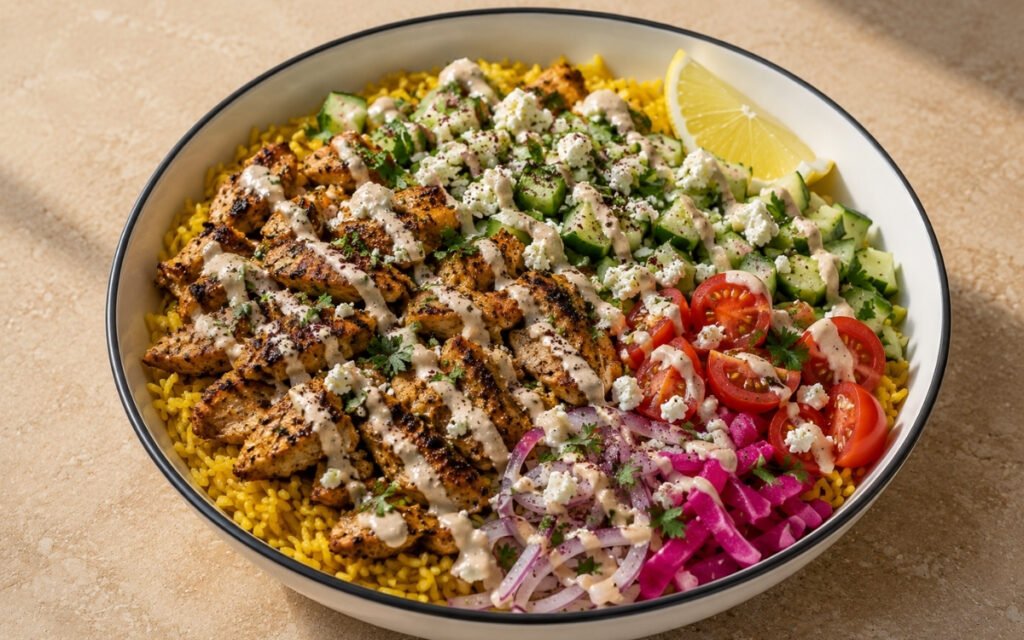
Lebanese Chicken Shawarma Rice Bowl
Chicken thighs marinated in yogurt and seven Lebanese spices, charred undisturbed in cast iron — over turmeric rice with cold-whisked tahini sauce and pickled turnips. 45 minutes.
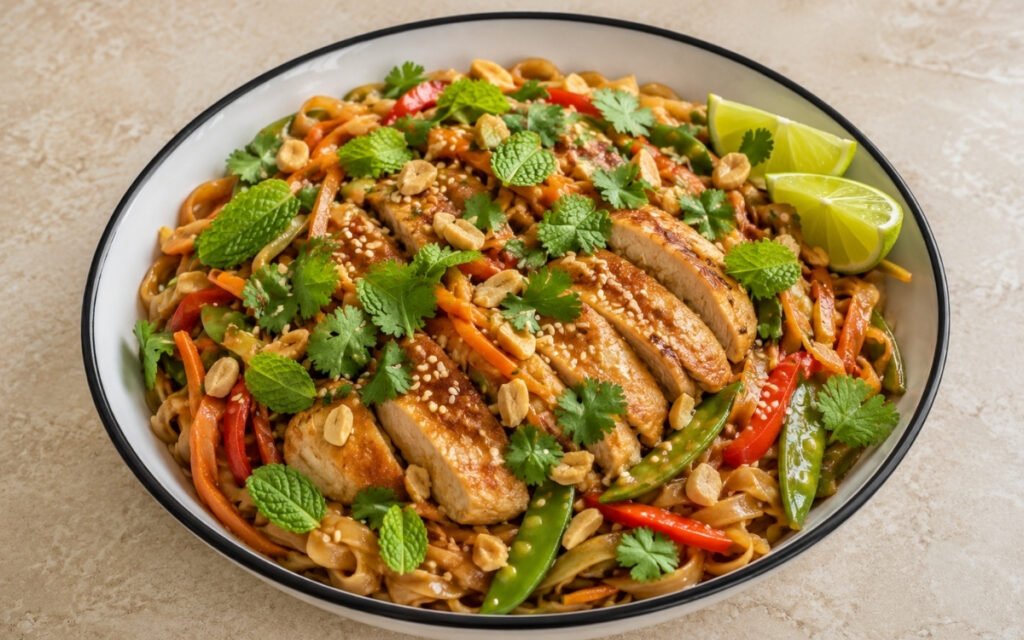
Thai Peanut Chicken Noodle Bowl
Seared chicken and flat rice noodles tossed in sriracha-ginger peanut sauce with stir-fried vegetables — cilantro, mint, crushed peanuts, and lime over the top. 45 minutes.
You might also like
You might also like
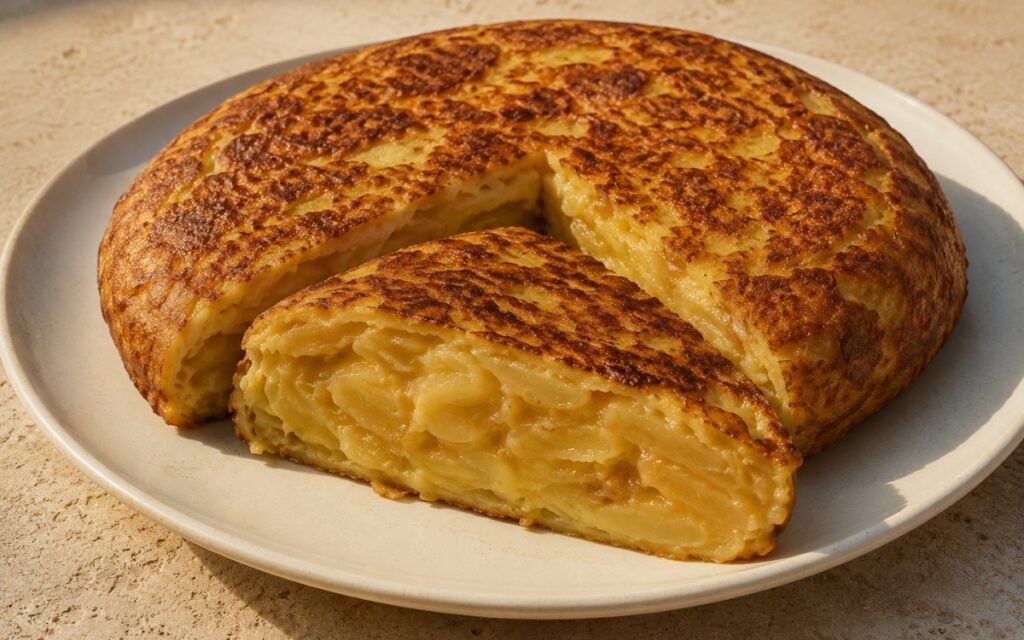
Spanish Tortilla / Tortilla Española
Thin potato slices gently cooked in olive oil, folded into beaten eggs, and cooked slowly for a golden exterior and soft, custardy centre.
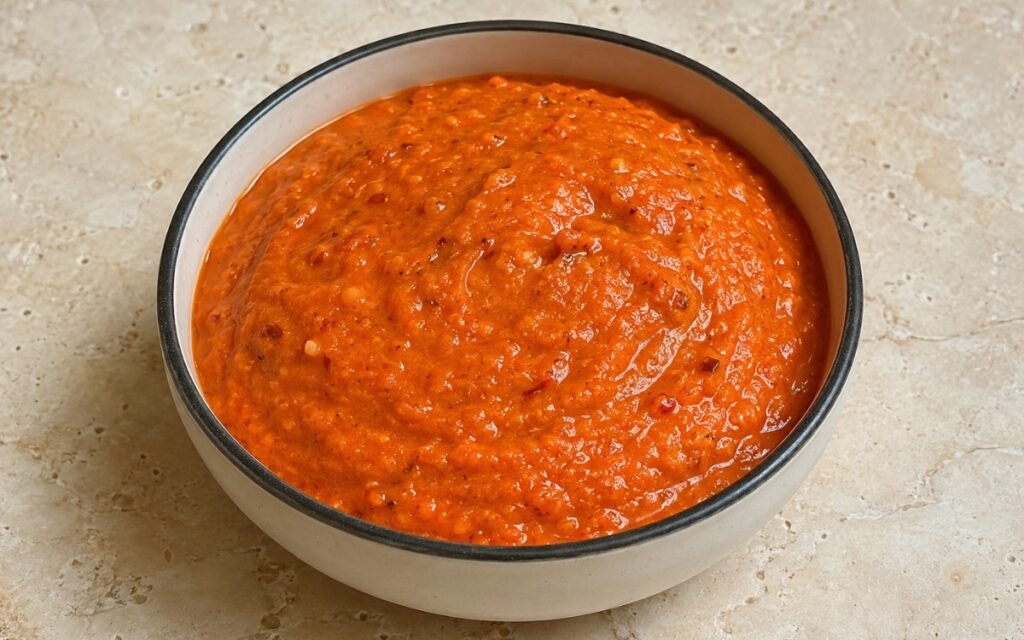
Roasted Red Pepper Sauce
Silky roasted red pepper sauce with garlic and almonds. No-cook versatile condiment in 10 minutes.
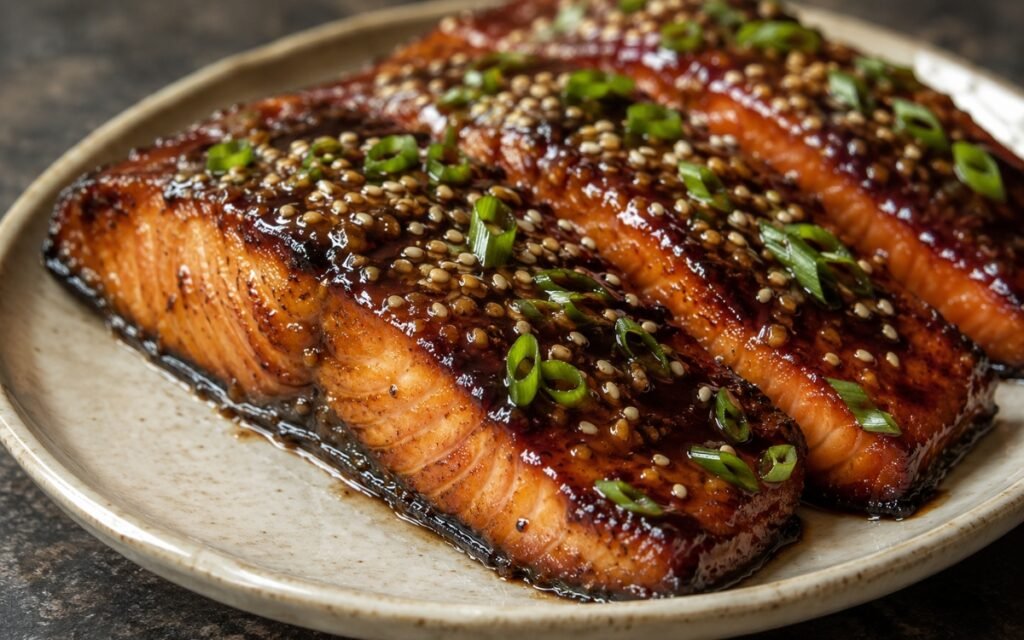
Teriyaki Glazed Salmon
Salmon marinated briefly in thickened teriyaki sauce, broiled in layered passes with repeated glazing until sticky. Finished with sesame and scallions.
Roasted Veggie Quinoa Bowl With Hummus
Ingredients
Method
- Preheat the oven to 220°C. Rinse the 200g of quinoa thoroughly under cold running water in a fine-mesh strainer until the water running through is clear — quinoa’s saponin coating produces a soapy, bitter flavour in unrinsed grains. Combine the rinsed quinoa with 400ml of cold water and a pinch of salt in a medium saucepan. Bring to a full rolling boil, reduce immediately to the lowest possible setting, cover tightly, and simmer for 15 minutes. Remove from heat and allow to stand covered for 5 minutes. Fluff with a fork. The correctly cooked quinoa should show the characteristic small spiral — the germ — on each grain, indicating complete cooking.
- Prepare the vegetables while the oven preheats — sweet potatoes into 2cm cubes, cauliflower broken or cut into similarly sized small florets, red onion into wedges keeping the root intact so the wedge layers hold together during roasting, and red bell pepper diced into 2cm pieces. The uniform sizing is not aesthetic precision but a cooking-time equalisation — disparately sized pieces produce some that are correctly roasted while others remain undercooked or burn. In a small bowl, whisk together the 45ml of olive oil, 15g of za’atar, 5g of cumin, 3g of smoked paprika, 5g of salt, and 2g of black pepper into a uniform spiced oil. Distribute the vegetables between two large baking sheets — this is the spacing decision that most determines the quality of the roasted vegetables. All four vegetables combined weigh over 1kg and will not fit on a single baking sheet without crowding — crowded vegetables trap each other’s released steam and soften rather than caramelise. On two sheets with space between each piece, the steam evaporates and the vegetable surfaces develop the golden, slightly crisped edges that make roasted vegetables specifically satisfying. Drizzle the spiced oil over both trays and toss each tray to coat every piece evenly. Place both trays in the preheated oven. Roast for 30–35 minutes, rotating the trays’ positions and stirring each tray halfway through — the rotation compensates for any uneven heat distribution in the oven. The vegetables are done when they show deep golden-brown colouring on their exposed surfaces, tender centres when pressed, and visible crisped edges.
- For the complete technique — including the overnight chickpea soak with baking soda, the correct cooking method, the tahini-first blending sequence, and the ice-cold water incorporation — follow the full Classic Hummus recipe. This bowl uses half of that recipe’s quantity, which yields approximately 500–600g of hummus — enough for approximately 150g per bowl. Summary for the half-batch: soak the 112g of dried chickpeas overnight in cold water with ¼ tsp of baking soda — the baking soda softens the chickpea skins and produces significantly creamier hummus than unsoftened chickpeas. Cook the soaked chickpeas with ¼ tsp of fresh baking soda until very soft and easy to crush between two fingers. In a food processor, process the 70g of tahini with the juice of ¾ lemon, the zest of ¼ lemon, and 1 smashed garlic clove for a full 60 seconds before adding the chickpeas — this tahini-first step aerates the paste and produces the specific light, creamy texture that distinguishes properly made hummus. Add the cooked chickpeas, ½ tsp of cumin, salt, and pepper. Process for 3–4 minutes, gradually adding up to 50ml of ice-cold water — the cold temperature is essential for the smooth, aerated result. Taste and adjust. The finished hummus should be very smooth, pale, and slightly lighter in colour and texture from the extended processing.
- Place the 60g of tahini in a medium bowl. Add the 45ml of fresh lemon juice and the 3g of minced garlic and begin whisking — the tahini will seize immediately, appearing to clump and thicken rather than incorporate. This seizure is the expected behaviour of tahini when first contacted by an acidic liquid — it is not a sign of error and will resolve completely with continued whisking and the addition of cold water. Begin adding the 45ml of cold water in small increments while whisking continuously. With each addition of cold water and vigorous whisking the seized tahini progressively loosens — the proteins re-emulsify as the water concentration increases and the temperature remains cool. By the time 45–60ml of cold water has been fully incorporated the sauce should be smooth, uniformly pale, and pourable at a drizzling consistency. Season with the 4g of salt. Taste — the sauce should be simultaneously bright from the lemon, nutty from the tahini, and lightly garlic-forward, with sufficient salt to season the components it drizzles over.
- Divide the cooked quinoa among four wide bowls — approximately 180g of cooked quinoa per bowl as the base. On one side of each bowl, arrange a generous portion of the roasted vegetables — grouping the different vegetables so each colour and texture is visible rather than mixing them uniformly, which produces a more visually appealing and more texturally varied bowl. On the other side, add approximately 150g of the hummus — spoon it onto the bowl and use the back of the spoon to create the traditional smooth crater that allows the lemon-tahini drizzle and the olive oil to pool in the centre. Drizzle the lemon-tahini sauce generously across the vegetables, the hummus, and the quinoa — extending it to reach every component. Scatter the 20g of roughly chopped fresh parsley over each bowl. Finish each bowl with an additional sprinkle of za’atar over the hummus and vegetables — its raw application at serving provides the fresh, herbal, toasted-sesame aromatic character that the cooked za’atar in the roasting spice blend produces in a different register. Serve immediately while the vegetables are warm.