Ingredients
Method
Cook the Rice
- Add the washed jasmine rice, water, and a pinch of salt to a saucepan. Bring it up to almost a boil, then immediately reduce the heat to low. Cover with a lid and cook for 15 minutes without lifting the lid even once. Remove from the heat and let it rest, still covered, for 15 more minutes. Fluff gently with a fork and keep warm. Washing the rice three times beforehand removes enough surface starch to keep the finished grains genuinely separate rather than clumped, and keeping the lid on throughout both the active cook and the rest protects the steam needed to finish the grains evenly.
Make the Spicy Mayo
- In a small bowl, mix together the mayonnaise, sriracha, lemon juice, and honey if using. Add a little water only if needed so it becomes smooth enough to drizzle. Set aside. Adding water only as needed, rather than by default, keeps the mayo at a genuinely drizzlable consistency without thinning it more than necessary and losing body.
Prep the Salmon
- Pat the salmon very dry with paper towels, then cut into evenly sized cubes. Toss with the oil, salt, black pepper, garlic powder, paprika, onion powder, and soy sauce if using. Dry salmon and even-sized pieces are what help you get crisp edges without overcooking the center. Cutting every piece to a genuinely consistent size is what lets them all reach doneness together — mismatched cubes force a choice between undercooked larger pieces and overcooked smaller ones cooked for the same amount of time.
Cook the Salmon
- You can use either method below.
- Option A – Air fryer: Preheat the air fryer to 200°C. Arrange the salmon pieces in a single layer with space between them. Cook for 6 to 8 minutes, depending on size, until the edges are caramelized and the salmon is just cooked through.
- Option B – Pan sear: Heat a large nonstick or well-seasoned skillet over medium-high heat. Add a thin film of oil. Place the salmon pieces in a single layer and leave them undisturbed for 2 to 3 minutes so they can brown properly. Turn carefully and cook for another 2 to 3 minutes, just until golden on multiple sides and barely cooked through in the center. Stop cooking when the salmon flakes easily and the center is just opaque or very slightly translucent in the thickest part. Do not keep moving it around in the pan, and do not keep cooking once it is done — carryover heat will finish it. That undisturbed window, whether in the air fryer's spaced single layer or the pan's initial sear, is what actually gives each piece the sustained, direct contact real caramelization depends on — moving the salmon too early interrupts that contact before a proper crust has had time to form.
Assemble
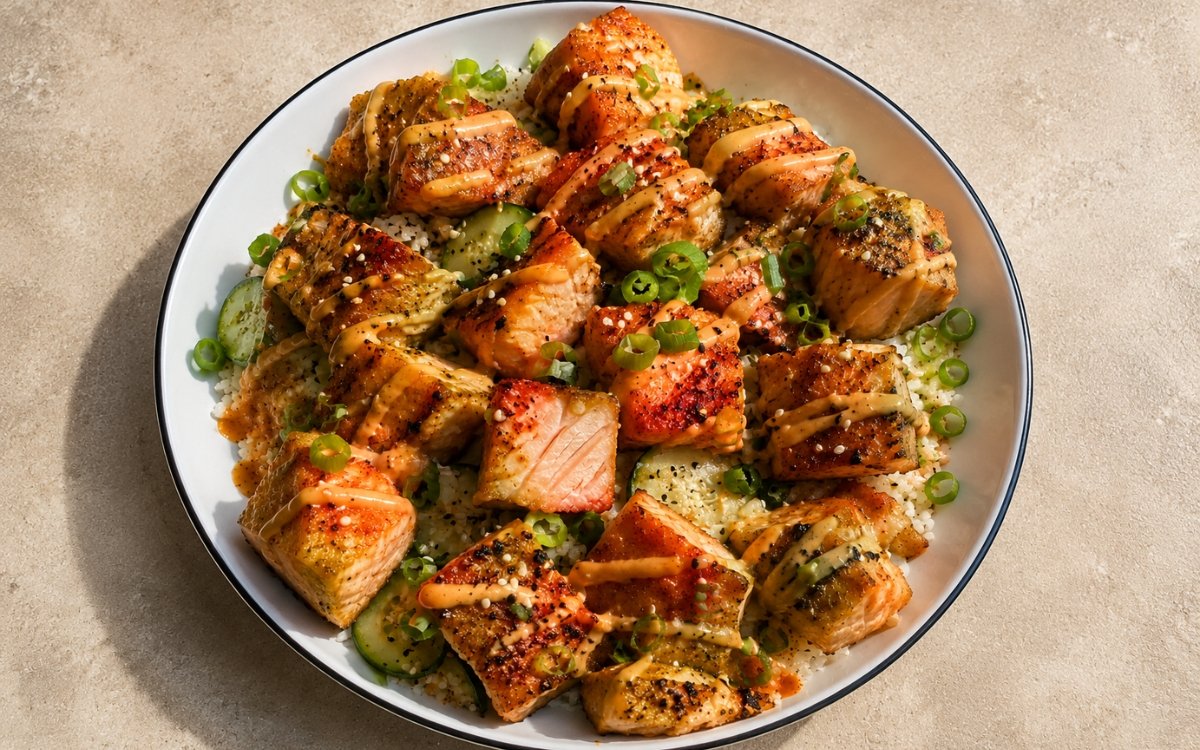
- Divide the rice between 4 bowls or plates, about a small serving under each portion of salmon. Add a few cucumber slices over or beside the rice. Top with the salmon bites. Drizzle generously with the spicy mayo. Finish with sliced scallions and toasted sesame seeds. Layering the components in this order — rice as the base, salmon on top, sauce and garnishes last — keeps the crisp salmon edges sitting above rather than beneath any sauce, protecting that texture right up until serving.
Serve
- Serve right away while the salmon is still warm and the edges are crisp. This dish's whole textural appeal depends on that crisp exterior, which softens steadily the moment the salmon comes off the heat — serving without delay is what actually delivers that contrast.
Notes
Patting the salmon thoroughly dry before cutting and seasoning deserves genuine respect as the detail most responsible for whether this dish achieves real caramelized edges or ends up pale and steamed. Any residual surface moisture converts instantly to steam on contact with hot oil, whether in a pan or an air fryer, and that steam actively works against the direct, sustained contact real browning requires.
Cutting every piece of salmon to a genuinely consistent size deserves the same attention this collection gives to evenly portioned proteins throughout. Mismatched cube sizes force an impossible compromise under a single, uniform cooking time — larger pieces would stay undercooked while smaller ones dry out, a problem consistent sizing avoids entirely from the start.
Leaving the salmon undisturbed during its initial cooking window, rather than moving or checking it repeatedly, is worth understanding as a genuine technique requirement rather than simple patience. Real caramelization only develops through sustained, direct contact between the protein's surface and the hot cooking environment — interrupting that contact too early, before a proper crust has formed, produces a paler, less developed result regardless of total cooking time.
The instruction to stop cooking the moment the salmon flakes easily and looks just opaque, trusting carryover heat to finish it, deserves the same respect given to residual-heat cooking throughout this collection. Salmon continues cooking briefly even off direct heat, and waiting until it looks fully done in the pan or air fryer means it will actually be overcooked by the time it's plated.