
Chicken Fries
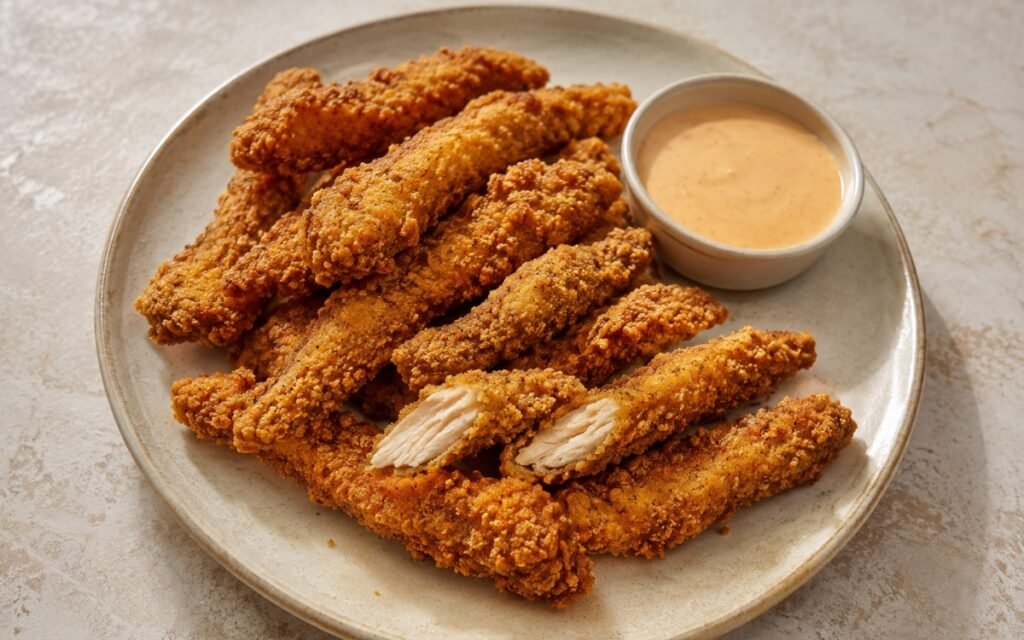
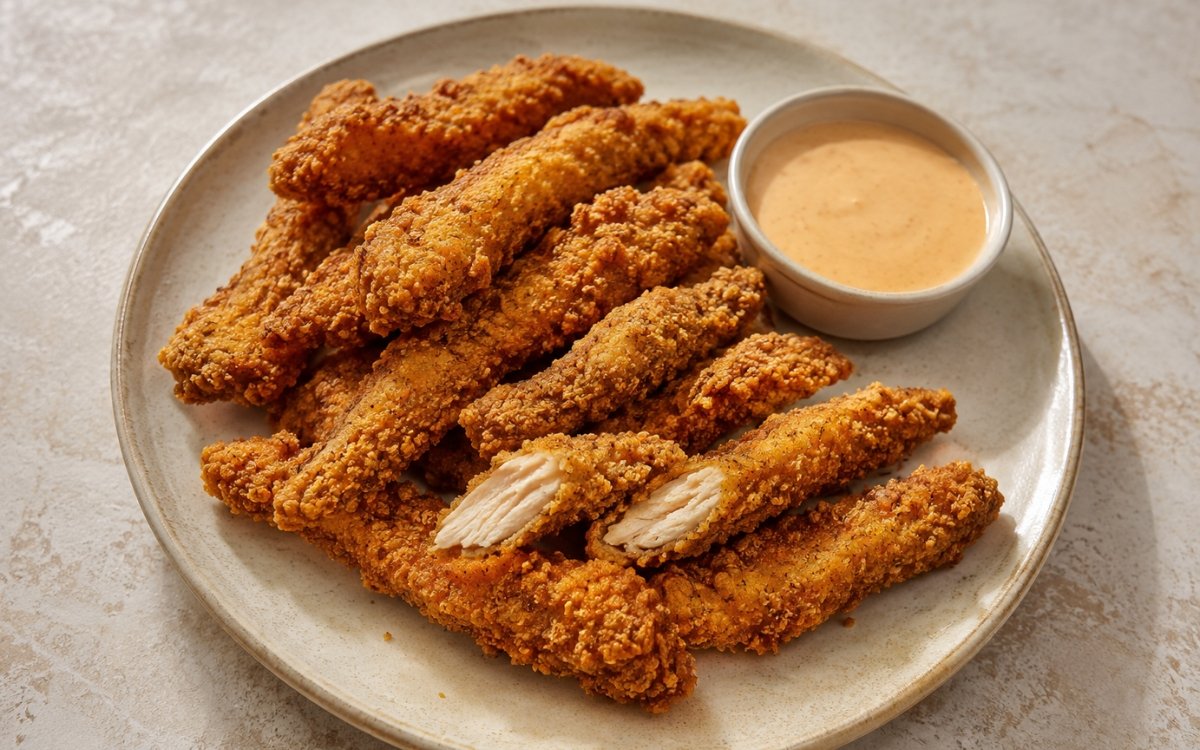
Long thin chicken breast strips cut into fry-shaped pieces, coated in spiced flour, egg wash, and a breadcrumb-panko crust, then deep-fried until golden, craggy, crisp outside, and tender white inside, served with a creamy ketchup-sriracha dipping sauce. Cutting the chicken into genuinely even, fry-shaped strips is the technique this whole recipe depends on — pieces that are too thick let the coating darken before the centre catches up, while pieces too thin dry out before the crust even finishes crisping, the same even-thickness principle used elsewhere in this collection whenever a fast-frying protein needs to cook through and crisp in the same short window. Lightly crushing the panko before combining it with fine breadcrumbs, rather than using panko whole, is what gives these thin strips a craggy crust without flakes too large to properly cling. Resting the breaded strips before frying protects that coating from shedding into the hot oil. The payoff is a genuinely crisp, craggy-crusted chicken strip with tender, juicy white meat inside, dipped into a rich, savoury, lightly spicy sauce.
Prep Time : 25 min
Cook Time : 15–20 min
Servings : 4
25 min
15–20 min
4
Ingredients
For the Chicken
• 800g chicken breast, sliced into long strips about 1 x 1cm thick
• 5g fine sea salt
• 1 tsp garlic powder — this one on Amazon
• 1 tsp onion powder — this one on Amazon
• ½ tsp smoked paprika — this one on Amazon
• ½ tsp white pepper or black pepper — this one on Amazon
For the Spiced Flour Dredge
• 150g all-purpose flour — this one on Amazon
• 35g cornstarch
• 1 tsp garlic powder
• 1 tsp onion powder
• 1 tsp smoked paprika
• ½ tsp fine sea salt
• ½ tsp black pepper
For the Egg Wash
• 3 large eggs
• 30ml milk or water
• 1 tsp hot sauce, optional
For the Breadcrumb Coating
• 120g panko breadcrumbs, lightly crushed by hand
• 80g classic fine breadcrumbs
• ½ tsp fine sea salt
• ½ tsp smoked paprika
For Frying
• Neutral frying oil, as needed
For the Dipping Sauce
• 120g mayonnaise
• 60g ketchup
• 5g Dijon mustard, about 1 tsp — this one on Amazon
• 2 garlic cloves, finely grated
• 3g oyster or porcini mushroom powder, about 1 tsp
• 15g sriracha, about 1 tbsp — this one on Amazon
• 4g Worcestershire sauce, about 1 tsp
This post may contain affiliate links. As an Amazon Associate I earn from qualifying purchases, at no additional cost to you.
Directions
- Make the Dipping Sauce
In a bowl, combine the mayonnaise, ketchup, Dijon mustard, grated garlic, oyster or porcini mushroom powder, sriracha, and Worcestershire sauce. Mix until completely smooth. Refrigerate while the chicken fries are prepared. The sauce should be thick, creamy, lightly spicy, and savoury. If it tastes flat, add a small pinch of salt or a few extra drops of Worcestershire. The mushroom powder here is a quiet but meaningful addition — it contributes umami depth that rounds out the sauce’s flavour in a way that’s felt more than directly tasted, similar to how instant coffee works in a spice rub without ever reading as coffee. - Cut and Season the Chicken
Slice the chicken breast into long thin strips, about 1 x 1cm thick. Keep them as even as possible so they cook at the same speed. Season the chicken with fine sea salt, garlic powder, onion powder, smoked paprika, and white or black pepper. Toss until evenly coated. These should be actual sliced chicken strips, not ground chicken. If the pieces are too thick, the coating will darken before the center cooks. If they are too thin, they dry out fast. This specific, narrow thickness target exists because chicken fries fry for a genuinely short time — there’s very little margin for a piece being noticeably thicker or thinner than the rest, since that difference translates directly into uneven doneness across the batch. - Set Up the Coating Stations
In one shallow dish, combine the flour, cornstarch, garlic powder, onion powder, smoked paprika, salt, and black pepper. In a second dish, whisk the eggs with milk or water and hot sauce if using. In a third dish, combine the lightly crushed panko, fine breadcrumbs, salt, and smoked paprika. Lightly crushing the panko matters. Whole panko flakes can be too large for thin chicken fries and fall off unevenly. The mix of fine breadcrumbs and crushed panko gives a better craggy crust. Whole panko flakes are sized for a larger surface, like a full cutlet — on a thin strip, those same large flakes have less surface to grip and tend to shed, while crushed panko combined with fine breadcrumbs distributes more evenly across the narrower shape. - Bread the Chicken Fries
Coat each chicken strip first in the spiced flour, shaking off excess. Dip into the egg wash, letting excess drip off. Transfer to the breadcrumb-panko mixture and press firmly so the coating sticks all over. Arrange the breaded chicken fries on a tray or wire rack. Let them rest for 10 minutes before frying. The coating should look dry and fully attached, not patchy or wet. The short rest helps the crust hydrate and cling so it does not blow off in the oil. This three-stage breading works because each layer gives the next something to grip — the flour gives the wet egg a surface to cling to, and that egg layer is what the breadcrumb mixture ultimately adheres to. - Fry
Heat neutral oil in a deep pot to 175°C. Fry the chicken fries in batches for 2–4 minutes, depending on thickness, until golden-brown, crisp, and cooked through. Do not overcrowd the oil. The chicken is done when the coating is deeply golden and the internal temperature reaches 74°C. Pull them as soon as the crust is golden and the chicken is cooked. These strips are thin — overcooking them is easy, and dry chicken fries are garbage. Given how thin these strips are, the window between properly cooked and overdone is genuinely narrow — a thermometer check on one or two pieces per batch is worth the extra few seconds it takes, since visual colour alone can be misleading at this small scale. - Drain and Serve
Transfer the fried chicken fries to a wire rack. Season very lightly with fine sea salt while hot if needed. Serve immediately with the dipping sauce on the side. Salting immediately while the coating is still hot and glistening with oil is what allows the seasoning to actually adhere — strips left to cool first won’t hold that finishing salt nearly as well.
*Notes :
- The even, fry-shaped cut of the chicken is worth treating as the foundational decision in this recipe rather than a simple prep step. Because these strips fry for such a short window — often under four minutes — there’s very little time for heat to correct for inconsistency in thickness. A batch with meaningfully uneven pieces will inevitably produce some strips that are perfectly done alongside others that are either undercooked or dried out, purely as a function of how much material the heat had to travel through.
- Lightly crushing the panko before mixing it with fine breadcrumbs addresses a scale mismatch that’s easy to overlook. Panko is generally sized with a full-sized cutlet or larger piece of protein in mind, where its large, irregular flakes have plenty of surface area to grip onto. On a narrow, thin strip like a chicken fry, that same large flake size actually works against adhesion — crushing it down and blending it with finer crumbs produces a coating better proportioned to the smaller surface it needs to cling to.
- The dipping sauce’s inclusion of mushroom powder is a small, easy-to-miss detail that’s worth understanding rather than skipping. Its role isn’t to add a noticeable mushroom flavour, but to contribute umami depth that rounds out the sauce’s overall savouriness — similar in principle to how a small amount of instant coffee deepens a spice rub without tasting like coffee. Leaving it out doesn’t ruin the sauce, but it does leave it tasting slightly flatter and less complex.
- Given how thin these chicken pieces are, verifying doneness by temperature rather than relying purely on visual colour is worth the small extra effort. At this scale, a golden, fully crisped exterior can develop just slightly ahead of the interior actually reaching a safe, fully cooked temperature — a quick thermometer check on a representative piece from each batch is a more reliable confirmation than colour alone.
Why This Recipe Works
This recipe works because the chicken is cut to a specific, even thickness that lets it cook through and crisp in the same short frying window, and the breadcrumb coating is proportioned specifically for that thin strip’s surface area — crushed panko blended with fine breadcrumbs, rather than whole panko flakes sized for a larger cutlet.
Resting the breaded strips before frying protects the coating from shedding, and pulling the strips as soon as they’re golden and safely cooked through avoids the dry, overcooked result this thin cut is especially prone to. The savoury, umami-rounded dipping sauce provides a rich, tangy counterpoint to the crisp, craggy crust.
Ingredient Breakdown
Evenly Cut Chicken Breast Strips (1 x 1cm)
The specified cut — thin and consistent enough to cook through and crisp within the same short frying window.
Cornstarch-Enriched Flour Dredge
The base coating layer — cornstarch lightens the fry, producing a crisper texture than flour alone.
Crushed Panko and Fine Breadcrumb Blend
The crust — proportioned specifically for a thin strip’s surface area, unlike whole panko sized for larger cutlets.
Rested Breaded Strips
The pre-fry protection — a brief rest lets the coating set and hydrate, reducing shedding in the hot oil.
Mushroom-Powder-Enriched Dipping Sauce
The finishing sauce — a small addition of umami depth that rounds out the sauce’s savoury character.
Flavor Structure Explained
This chicken fry follows a layered balance model:
- Crisp craggy foundation (panko-breadcrumb crust)
- Tender juicy centre (thin-sliced chicken breast)
- Warm savoury depth (garlic, onion, smoked paprika)
- Rich tangy finish (ketchup-sriracha dipping sauce)
The crisp, craggy breadcrumb-panko crust defines the eating experience with real crunch scaled appropriately to the thin strip beneath it. Inside, the tender chicken breast stays juicy thanks to the short, carefully timed fry. Garlic powder, onion powder, and smoked paprika, present in both the chicken seasoning and the flour dredge, build consistent warm, savoury depth throughout. The rich, tangy, umami-rounded dipping sauce finishes each bite with a sharp, spiced contrast that cuts through the crisp coating’s richness.
Common Mistakes to Avoid
- Cutting the Chicken Unevenly – Inconsistent thickness produces some pieces overcooked and others undercooked within the same short fry. Always aim for a consistent 1 x 1cm strip.
- Using Whole Panko Instead of Crushing It First – Large flakes are poorly proportioned for a thin strip and tend to shed. Always lightly crush the panko before combining it with fine breadcrumbs.
- Frying Immediately After Breading – Freshly breaded strips shed coating into the oil. Always rest for 10 minutes first.
- Overcrowding the Frying Oil – This drops the temperature and produces uneven, greasy results. Always fry in small batches.
- Overcooking the Thin Strips – Given how thin these are, it’s easy to push them past done into dry territory. Always pull them as soon as the coating is golden and the internal temperature reaches 74°C.
Variations
Spicier Version
Add a pinch of cayenne to both the chicken seasoning and the flour dredge, and increase the sriracha in the dipping sauce for a sharper heat throughout.
Parmesan-Crusted Version
Add 30g of finely grated Parmesan to the breadcrumb mixture for a saltier, more savoury crust.
Baked Version
After breading and resting, arrange on a wire rack over a baking sheet, spray lightly with oil, and bake at 220°C for 12–15 minutes, turning once, for a lighter alternative to frying.
Buffalo-Style Version
Toss the freshly fried chicken fries in a warm butter-and-hot-sauce Buffalo coating instead of serving the dipping sauce on the side.
Storage & Make-Ahead
Raw, cut chicken strips can be seasoned and refrigerated for a few hours ahead of breading. The dipping sauce can be refrigerated in a sealed container for up to 1 week.
Breaded, unfried chicken fries can be frozen on a tray until solid, then transferred to a bag or container and frozen for up to 3 months — fry directly from frozen, adding 1–2 extra minutes to the fry time.
Fried chicken fries are best eaten immediately; they lose their crisp texture within an hour and are best refreshed briefly in a hot oven rather than a microwave if reheating.
Frequently Asked Questions
Why does the chicken need to be cut to such a specific, even thickness?
Chicken fries cook through in a genuinely short window, often under four minutes. Inconsistent thickness across a batch means some strips finish perfectly while others are either undercooked or dried out, purely because heat had more or less material to travel through on each piece.
Why crush the panko instead of using it whole, like in other breaded recipes?
Panko’s large, irregular flakes are generally proportioned for a bigger surface, like a full cutlet. On a narrow chicken fry strip, that same flake size has less surface to properly grip and tends to shed unevenly. Crushing it and blending with fine breadcrumbs produces a coating better matched to the strip’s smaller scale.
Why does the dipping sauce include mushroom powder?
It’s not there for a noticeable mushroom flavour, but to add umami depth that rounds out the sauce’s overall savouriness. Leaving it out won’t ruin the sauce, but it will taste slightly flatter and less complex without it.
Why is checking the internal temperature emphasized so much for such thin pieces?
At this small scale, the exterior can turn golden and crisp just slightly ahead of the interior actually reaching a safe temperature. A quick thermometer check on a representative piece per batch is more reliable than judging doneness by colour alone.
Are there other crispy fried chicken recipes or good pairings worth trying?
Homemade Chicken Nuggets and Crispiest Fried Chicken both offer related but distinct takes on breaded, fried chicken worth exploring. For a great combo pairing, Hush Puppies, Homemade Onion Rings, or Sausages in Blankets all make excellent sides alongside these chicken fries.
Nutrition Facts
( per serving )
Calories
~620 kcal
Protein
42 g
Fat
32 g
Carbs
42 g
Calories
~620 kcal
Protein
42 g
Fat
32 g
Carbs
42 g
Related Recipes
Related Recipes

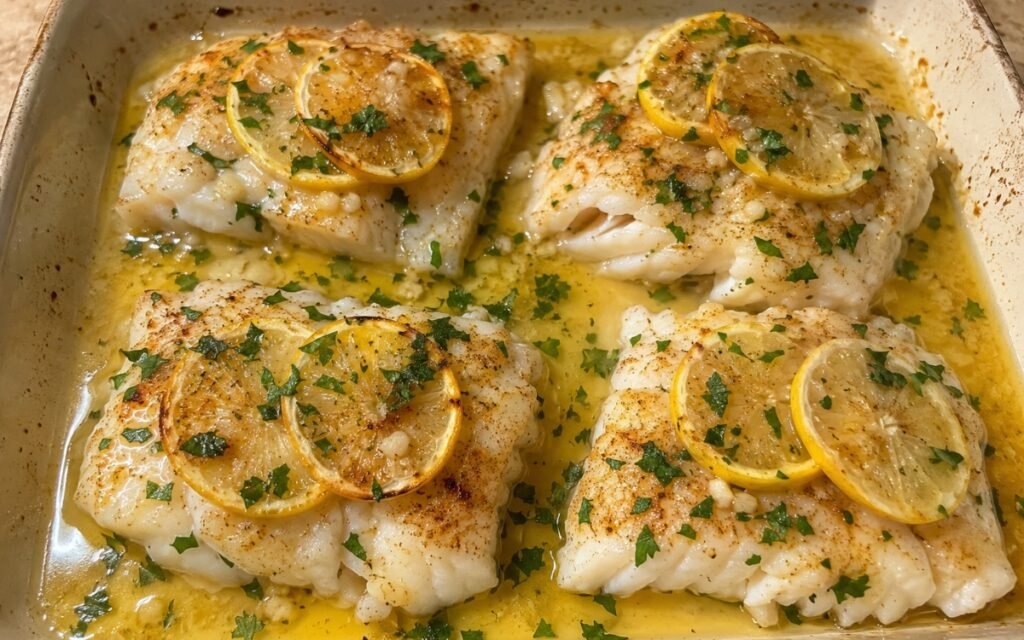
Lemon Butter Baked Cod
Cod fillets baked snugly in garlicky lemon butter, topped with lemon slices until flaky, finished with pan juices and parsley. Elegant and effortless.
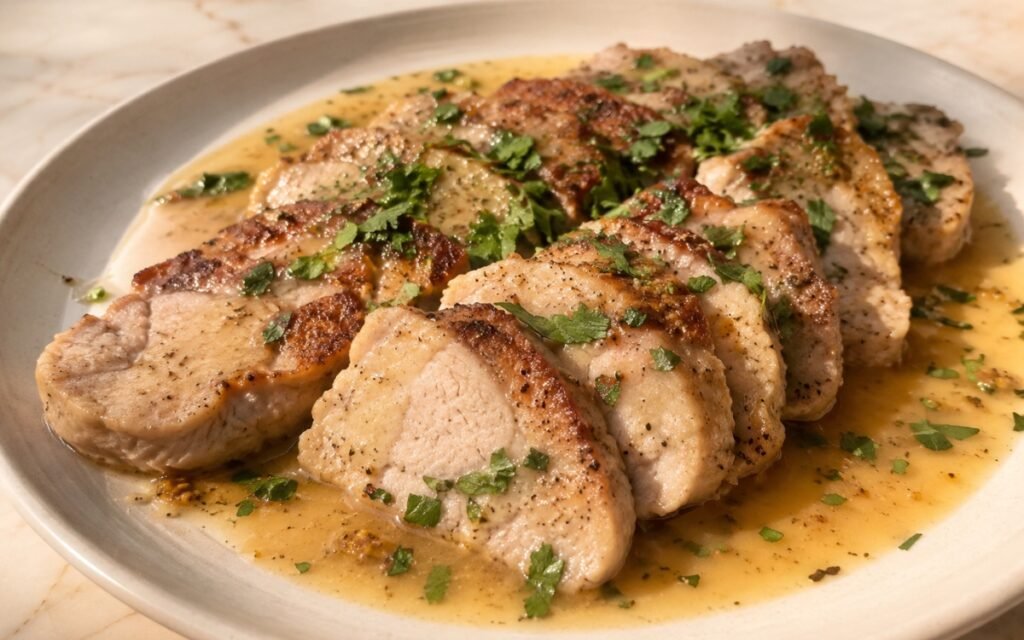
Pan-Seared Pork Medallions
Pork tenderloin sliced and pounded even, seared golden, finished with a rich Dijon pan sauce from the fond. Quick and restaurant-quality.
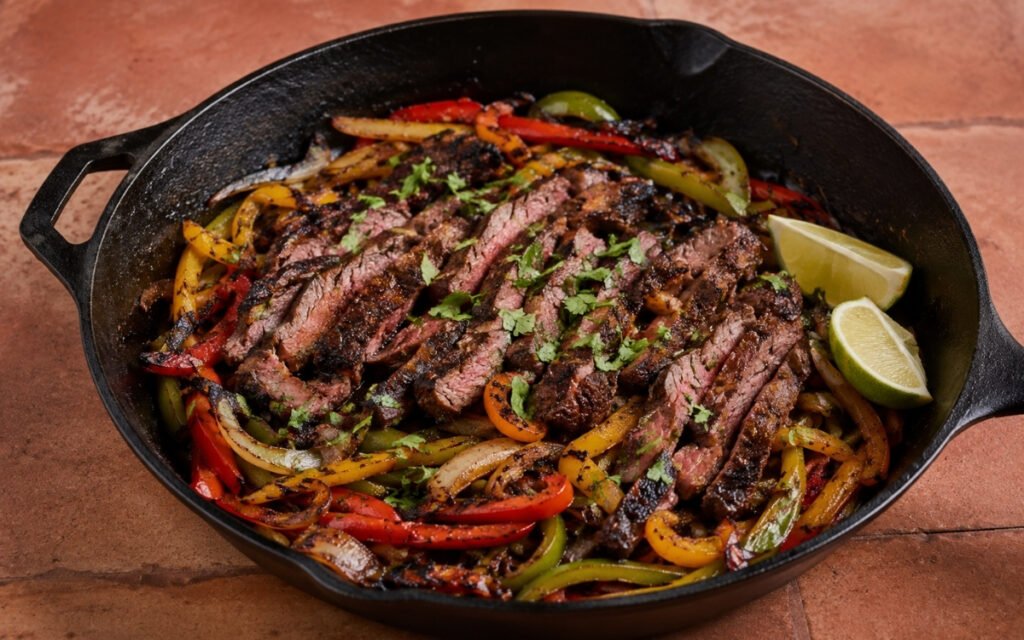
Skirt Steak Fajita
Dry-brined skirt steak seared to medium-rare in cast iron, combined with charred peppers and onions cooked in the full spiced marinade — the steak fajita done properly.
You might also like
You might also like
Crispy Fish Sandwich
Beer-battered cod fried until deeply golden and crisp, piled onto a soft toasted brioche bun with tangy tartar sauce, lettuce, and pickles.
La Bandera Dominicana
Fluffy white rice, stewed red beans, caramelised braised chicken, sweet fried plantains, and fresh salad, each kept distinct on the plate.
Caldo Tlalpeño
A clear chipotle-tomato chicken broth with shredded chicken, chickpeas, carrots, and zucchini, finished with avocado and queso fresco.
Chicken Fries
Ingredients
Method
- In a bowl, combine the mayonnaise, ketchup, Dijon mustard, grated garlic, oyster or porcini mushroom powder, sriracha, and Worcestershire sauce. Mix until completely smooth. Refrigerate while the chicken fries are prepared. The sauce should be thick, creamy, lightly spicy, and savoury. If it tastes flat, add a small pinch of salt or a few extra drops of Worcestershire. The mushroom powder here is a quiet but meaningful addition — it contributes umami depth that rounds out the sauce’s flavour in a way that’s felt more than directly tasted, similar to how instant coffee works in a spice rub without ever reading as coffee.
- Slice the chicken breast into long thin strips, about 1 x 1cm thick. Keep them as even as possible so they cook at the same speed. Season the chicken with fine sea salt, garlic powder, onion powder, smoked paprika, and white or black pepper. Toss until evenly coated. These should be actual sliced chicken strips, not ground chicken. If the pieces are too thick, the coating will darken before the center cooks. If they are too thin, they dry out fast. This specific, narrow thickness target exists because chicken fries fry for a genuinely short time — there’s very little margin for a piece being noticeably thicker or thinner than the rest, since that difference translates directly into uneven doneness across the batch.
- In one shallow dish, combine the flour, cornstarch, garlic powder, onion powder, smoked paprika, salt, and black pepper. In a second dish, whisk the eggs with milk or water and hot sauce if using. In a third dish, combine the lightly crushed panko, fine breadcrumbs, salt, and smoked paprika. Lightly crushing the panko matters. Whole panko flakes can be too large for thin chicken fries and fall off unevenly. The mix of fine breadcrumbs and crushed panko gives a better craggy crust. Whole panko flakes are sized for a larger surface, like a full cutlet — on a thin strip, those same large flakes have less surface to grip and tend to shed, while crushed panko combined with fine breadcrumbs distributes more evenly across the narrower shape.
- Coat each chicken strip first in the spiced flour, shaking off excess. Dip into the egg wash, letting excess drip off. Transfer to the breadcrumb-panko mixture and press firmly so the coating sticks all over. Arrange the breaded chicken fries on a tray or wire rack. Let them rest for 10 minutes before frying. The coating should look dry and fully attached, not patchy or wet. The short rest helps the crust hydrate and cling so it does not blow off in the oil. This three-stage breading works because each layer gives the next something to grip — the flour gives the wet egg a surface to cling to, and that egg layer is what the breadcrumb mixture ultimately adheres to.
- Heat neutral oil in a deep pot to 175°C. Fry the chicken fries in batches for 2–4 minutes, depending on thickness, until golden-brown, crisp, and cooked through. Do not overcrowd the oil. The chicken is done when the coating is deeply golden and the internal temperature reaches 74°C. Pull them as soon as the crust is golden and the chicken is cooked. These strips are thin — overcooking them is easy, and dry chicken fries are garbage. Given how thin these strips are, the window between properly cooked and overdone is genuinely narrow — a thermometer check on one or two pieces per batch is worth the extra few seconds it takes, since visual colour alone can be misleading at this small scale.
- Transfer the fried chicken fries to a wire rack. Season very lightly with fine sea salt while hot if needed. Serve immediately with the dipping sauce on the side. Salting immediately while the coating is still hot and glistening with oil is what allows the seasoning to actually adhere — strips left to cool first won’t hold that finishing salt nearly as well.