
La Bandera Dominicana
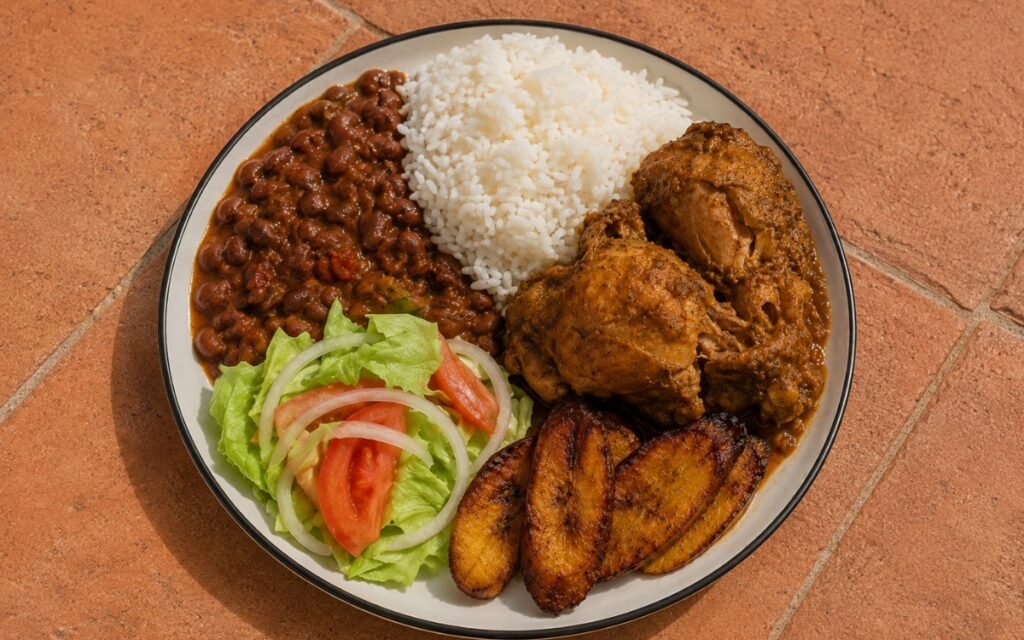
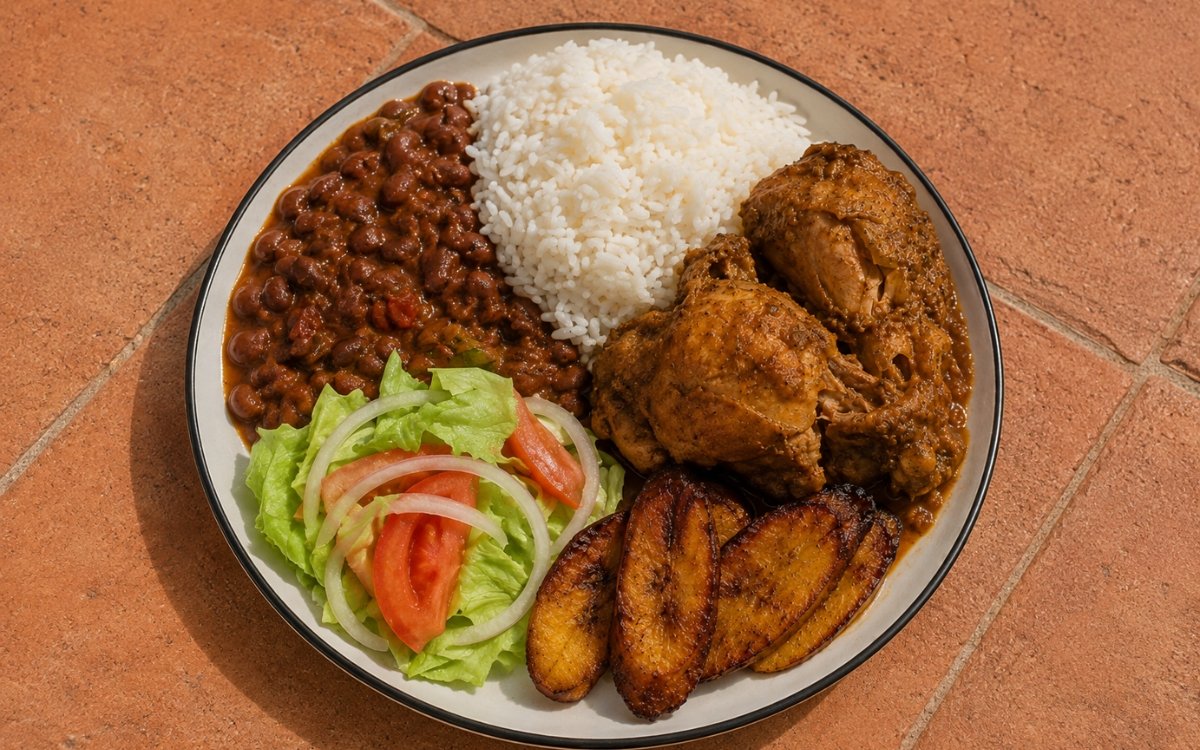
A classic Dominican “flag plate” with fluffy white rice, stewed red beans, braised chicken, golden fried ripe plantains, and a simple fresh salad. Each component is cooked separately and plated in distinct sections for the traditional homestyle Dominican presentation. Caramelising sugar to a genuine medium amber before the chicken ever hits the pan is the technique this whole braise depends on — that classical Dominican technique is what gives the finished stew its deeper colour and characteristic flavour, the same caramelised-sugar-base principle used elsewhere in this collection whenever a braise’s colour and depth are built at the very first stage rather than added later. Marinating the chicken briefly in garlic, lime, and vinegar before it ever meets the pan is what gives it the classic Dominican savoury-acidic base seasoned all the way through. Keeping every component — rice, beans, chicken, plantains, salad — cooked and plated in its own distinct section is what preserves this dish’s whole identity as a “flag plate,” built around contrast rather than a single combined stew. The payoff is a plate with genuine balance across five separate components — fluffy rice, saucy beans, well-seasoned chicken, sweet plantains, and a fresh, acidic salad cutting through all that richness.
Prep Time : 35 min
Cook Time : 1 hr, 35 min
Servings : 4
35 min
1 hr, 35 min
4
Ingredients
For the White Rice
• 360g long-grain white rice
• 600ml water
• 15ml neutral oil
•8g fine sea salt
For the Red Beans
• 250g dried small red beans or red kidney beans, soaked overnight and drained
• 1.2L water, plus more as needed
• 1 bay leaf
For the Stewed Bean Base
• 30ml neutral oil
• 120g white onion, finely diced
• 1 green bell pepper or cubanelle pepper, finely diced
• 4 garlic cloves, finely minced
• 20g tomato paste
• 120ml tomato sauce or puréed canned tomato
• 3g dried oregano — this one on Amazon
• 1 bay leaf
• 10g chopped fresh cilantro
• 6g fine sea salt, plus more to taste
• Freshly ground black pepper, to taste
• 15ml red wine vinegar or white vinegar — this one on Amazon
• 240–360ml reserved bean cooking liquid, as needed
For the Braised Chicken
• 1.4kg bone-in chicken pieces, preferably a mix of thighs and drumsticks, about 8 pieces
• 20g garlic, finely minced
• 30ml fresh lime juice
• 15ml white vinegar — this one on Amazon
• 4g dried oregano
• 10g fine sea salt
• 2g freshly ground black pepper
For the Chicken Stew Base
• 30ml neutral oil
• 10g granulated sugar
• 150g red or white onion, sliced
• 1 green bell pepper or cubanelle pepper, sliced
• 1 small red bell pepper, sliced
• 20g tomato paste
• 120ml tomato sauce
• 1 bay leaf
• 15g chopped fresh cilantro
• 240ml water or light chicken stock
• 1 pinch extra salt, only if needed after simmering
For the Fried Plantains
• 2 large very ripe plantains, yellow with black spots
• Neutral oil, for shallow frying
• Pinch of fine sea salt, optional
For the Fresh Side Salad
• 150g crisp lettuce, roughly chopped
• 2 medium ripe tomatoes, cut into wedges
• 60g red onion, very thinly sliced
• 15ml fresh lime juice or white vinegar
• 15ml olive oil — this one on Amazon
• 4g fine sea salt
• Freshly ground black pepper, to taste
This post may contain affiliate links. As an Amazon Associate I earn from qualifying purchases, at no additional cost to you.
Directions
- Cook the Beans
Add the soaked and drained beans to a medium pot with 1.2L water and 1 bay leaf. Bring to a boil, then lower to a gentle simmer. Cook uncovered or partially covered for 60–75 minutes, stirring occasionally, until the beans are fully tender. They should mash easily between your fingers without any chalky center. Reserve about 500ml of the cooking liquid before draining if needed. Set the cooked beans aside. Soaking the beans overnight before this simmer considerably shortens the cooking time itself and produces more even, thorough softening than starting from fully dry beans would. - Season and Marinate the Chicken
In a large bowl, combine the chicken with the garlic, lime juice, vinegar, oregano, salt, and black pepper. Rub the seasoning thoroughly over every piece, including under folds of skin where possible. Let the chicken marinate for 20 minutes at room temperature. This short marinade gives the chicken the classic Dominican savory-acidic base and helps season it all the way through. Working the marinade under the skin folds, not just over the surface, is what lets the seasoning actually reach the meat directly rather than sitting only on the exterior skin. - Make the White Rice
Rinse the rice under cold water until the water runs mostly clear, then drain well. In a medium pot, combine the rice, water, oil, and salt. Bring to a steady boil over medium-high heat. Cook uncovered until most of the surface water has evaporated and small steam holes appear across the top, about 8–10 minutes. Stir once gently from the bottom, reduce the heat to very low, cover tightly, and cook for 15 minutes. Turn off the heat and let the rice rest, still covered, for 10 minutes. Fluff with a fork. The grains should be fully cooked, separate, and tender, not wet or mushy. This uncovered evaporation stage, watched for visible steam holes, is a genuine visual checkpoint confirming the rice is ready to move to its covered, low-heat finish — proceeding too early or too late at this stage would throw off the timing for the covered cook that follows. - Brown and Braise the Chicken
Heat the oil in a wide heavy pot or deep sauté pan over medium heat. Add the sugar and let it melt until it turns a medium amber color, 30–60 seconds. Do not let it go dark brown or it will taste bitter. Immediately add the chicken pieces in a single layer. They should sizzle on contact. Brown for about 3–4 minutes per side until lightly caramelized. This sugar step is a classical Dominican technique that gives the stew its deeper color and characteristic flavor. Add the sliced onion, green pepper, and red pepper around the chicken. Cook for 3 minutes, stirring around the pan, until the vegetables begin to soften. Add the tomato paste and cook for 1 minute, then add the tomato sauce, bay leaf, cilantro, and water or stock. Bring to a simmer, cover partially, and cook over medium-low heat for 30–35 minutes, turning the chicken once or twice, until the chicken is fully tender and reaches at least 74°C internally. The sauce should reduce to a lightly thickened stew consistency that coats the chicken rather than remaining watery. Taste and adjust salt only at the end if needed. This caramelised sugar step happens genuinely fast, and adding the chicken the instant the sugar hits medium amber is what stops that caramelisation exactly where it needs to be — any delay risks the sugar darkening past amber into the bitter territory this recipe explicitly warns against. - Stew the Beans
In a separate saucepan, heat the oil over medium heat. Add the onion and bell pepper and cook for 4–5 minutes until softened. Add the garlic and cook for 30 seconds until fragrant. Stir in the tomato paste and cook for 1 minute, then add the tomato sauce, oregano, bay leaf, and cilantro. Add the cooked beans and 240ml of the reserved bean cooking liquid. Stir and bring to a gentle simmer. Mash a small portion of the beans against the side of the pan with a spoon to thicken the sauce naturally. Simmer for 12–15 minutes, stirring occasionally, until the beans are glossy, lightly thickened, and spoonable. They should hold together in a gentle sauce rather than looking dry or soupy. Add more bean liquid as needed if they tighten too much. Finish with the vinegar, salt, and black pepper. Remove the bay leaf. Using the beans’ own reserved cooking liquid to build this sauce, rather than plain water, keeps genuine bean flavour concentrated directly in the finished dish rather than diluting it with something neutral. - Fry the Plantains
Peel the ripe plantains and slice them on a diagonal into pieces about 1.5cm thick. Heat about 1cm of neutral oil in a skillet over medium heat. Fry the plantain slices in batches for 2–3 minutes per side until deep golden brown with caramelized edges. They should be soft inside and richly colored outside, not pale. Transfer to paper towels or a rack. Sprinkle very lightly with salt if desired. Genuinely ripe plantains, heavily spotted with black, carry the natural sugar content this caramelisation depends on for real browning and sweetness. - Make the Fresh Salad
In a bowl, combine the lettuce, tomato wedges, and thinly sliced onion. Dress with the lime juice or vinegar, olive oil, salt, and black pepper just before serving. Toss lightly so the salad stays crisp. The salad should be simple, fresh, and lightly dressed, not heavily coated. Dressing the salad only right before serving, rather than in advance, protects the lettuce from wilting under the acidic dressing while everything else on the plate finishes cooking. - Plate and Serve
Divide the rice, stewed beans, braised chicken, and fried plantains among 4 plates, keeping each component in its own section. Add a small portion of fresh salad to each plate. Spoon a little extra chicken sauce over the chicken. Serve hot, with the plate looking clearly sectioned in the classic La Bandera style. This deliberate, sectioned plating is a genuine expression of the dish’s whole identity — “la bandera,” the flag, refers directly to this visual arrangement of distinct colours and components sitting side by side rather than combined.
*Notes :
- The caramelised sugar step at the start of the chicken braise deserves recognition as a genuinely classical Dominican technique responsible for the finished stew’s characteristic colour and flavour, not simply an optional flourish. That brief window between properly amber and dark, bitter sugar happens quickly, which is exactly why the chicken needs to go in immediately once the right colour is reached — hesitating even briefly risks pushing the sugar past its ideal point.
- Marinating the chicken with real attention to working the seasoning under the skin, not just over the surface, reflects genuine technique worth respecting despite the marinade’s brief 20-minute window. That thoroughness is what gives the chicken the classic, all-the-way-through Dominican savoury-acidic flavour this dish depends on, rather than a seasoning that stays superficial and only affects the exterior.
- Keeping every component of this plate — rice, beans, chicken, plantains, salad — genuinely separate through both cooking and plating deserves to be understood as the dish’s defining organisational principle, directly reflected in its name. “La bandera,” the flag, describes exactly this visual arrangement of distinct, differently coloured components sitting side by side; combining any of them into a single mixed dish would lose that core identity entirely.
- The fresh salad’s brief, last-minute dressing is worth respecting as a genuine, deliberate timing choice rather than a minor afterthought. Given how many rich, warm components make up the rest of this plate, the salad’s specific job is to provide crisp, bright, acidic contrast — dressing it too far in advance would let the lettuce wilt under the acid, losing exactly the freshness that contrast depends on.
Why This Recipe Works
This recipe works because the chicken’s sugar-caramelisation step is timed precisely, adding the meat the instant the sugar reaches proper amber to build real colour and flavour without bitterness. A brief but thorough marinade, worked under the chicken’s skin, seasons the meat genuinely through rather than superficially.
The beans are stewed using their own reserved cooking liquid, concentrating genuine bean flavour into the finished sauce. Genuinely ripe plantains caramelise properly during frying, and the fresh salad is dressed only right before serving to stay crisp. Keeping every component cooked and plated separately delivers this dish’s whole defining identity as a genuine “flag plate” built around contrast.
Ingredient Breakdown
Caramelised Sugar (Chicken Braise Base)
The classical technique — timed precisely to build deep colour and characteristic flavour without tipping into bitterness.
Briefly Marinated, Under-Skin-Seasoned Chicken
The protein — a short marinade worked thoroughly, including under the skin, seasons the meat genuinely through.
Reserved Bean Cooking Liquid
The bean sauce’s foundation — concentrates real bean flavour directly into the finished stewed beans rather than diluting with plain water.
Genuinely Ripe, Heavily Spotted Plantains
The sweet component — real ripeness is what allows proper caramelisation during frying.
Deliberately Separated, Sectioned Plate
The presentation — keeps rice, beans, chicken, plantains, and salad genuinely distinct, reflecting the dish’s core “flag” identity.
Flavor Structure Explained
This la bandera dominicana follows a layered balance model:
- Hearty neutral body (fluffy white rice)
- Rich earthy depth (stewed red beans)
- Deep savoury centre (caramelised, braised chicken)
- Sweet caramelised finish (fried ripe plantains)
- Bright fresh contrast (acidic, lightly dressed salad)
Fluffy white rice provides this plate’s neutral, hearty body. Stewed red beans, thickened partially and simmered in their own reserved liquid, contribute rich, earthy depth. Braised chicken, built on a caramelised sugar base and marinated thoroughly, defines the plate’s deep, savoury centre. Sweet, caramelised fried plantains offer a genuinely different sweet note against the savoury components. A fresh, lightly dressed salad finishes the plate with bright, acidic contrast that cuts directly through all that richness — the entire plate is built around this deliberate balance between its five distinct sections.
Common Mistakes to Avoid
- Letting the Caramelised Sugar Go Past Medium Amber – This introduces genuine bitterness into the chicken stew. Always add the chicken the instant the sugar reaches medium amber.
- Marinating Only the Chicken’s Surface – This leaves the seasoning superficial rather than reaching the meat itself. Always work the marinade under the skin as well.
- Using Plain Water Instead of Reserved Bean Liquid for the Bean Sauce – This dilutes genuine bean flavour. Always use the reserved liquid to build the sauce.
- Dressing the Salad Too Far Ahead – This causes the lettuce to wilt under the acid. Always dress it only right before serving.
- Mixing the Plate’s Components Together – This loses the dish’s whole defining “flag” identity. Always keep rice, beans, chicken, plantains, and salad in distinct sections.
Variations
Canned Bean Version
Substitute two 400g cans of drained red beans for dried, using water or stock instead of reserved bean liquid, and skipping the long initial bean cooking.
Extra-Spicy Version
Add a small diced chile to the chicken stew base for background heat.
Pork Version
Substitute bone-in pork pieces for the chicken, following an identical caramelised-sugar-and-braise method.
Extra-Vegetable Version
Add extra bell pepper varieties to the chicken stew for more colour and texture.
Storage & Make-Ahead
The beans and chicken both reheat well and can be made a day ahead, refrigerated separately, and gently reheated.
The white rice can be made ahead and reheated with a splash of water to restore its fluffy texture.
Fried plantains and the fresh salad are both best made fresh close to serving, since neither holds or reheats well.
Frequently Asked Questions
Why does the sugar need to be caramelised to a specific medium amber before the chicken is added?
This is a classical Dominican technique that builds the finished stew’s deeper colour and characteristic flavour. The chicken needs to go in the instant that amber colour is reached, since the sugar can quickly darken further into genuinely bitter territory if left even briefly longer.
Why is the chicken marinade worked under the skin, not just over the surface?
Seasoning that stays only on the exterior skin doesn’t reach the meat itself in the same way. Working the marinade under the skin folds is what gives the chicken its classic, thoroughly seasoned Dominican flavour rather than a superficial coating.
Why is the beans’ own reserved cooking liquid used to build the bean sauce instead of plain water?
That reserved liquid carries real, concentrated bean flavour built up during the initial simmer. Using it instead of plain water keeps that flavour directly in the finished stewed beans rather than diluting it.
Why does every component of this plate need to stay in its own separate section rather than being combined?
This dish’s name, “la bandera” — the flag — directly refers to this visual arrangement of distinct, differently coloured components sitting side by side. Combining any of them into a single mixed dish would lose that defining identity entirely.
Are there other classic Latin American plate-style or shredded/braised beef dishes worth trying?
Pabellón Venezolano, Ropa Vieja Cubana, Cuban Picadillo, and Vaca Frita all offer other classic Latin American beef preparations built around a similar principle of distinct, contrasting plate components. Plain Steamed Basmati Rice is also worth considering as an alternative rice pairing for any of these dishes.
Nutrition Facts
( per serving )
Calories
~920 kcal
Protein
48 g
Fat
32 g
Carbs
108 g
Calories
~920 kcal
Protein
48 g
Fat
32 g
Carbs
108 g
Related Recipes
Related Recipes

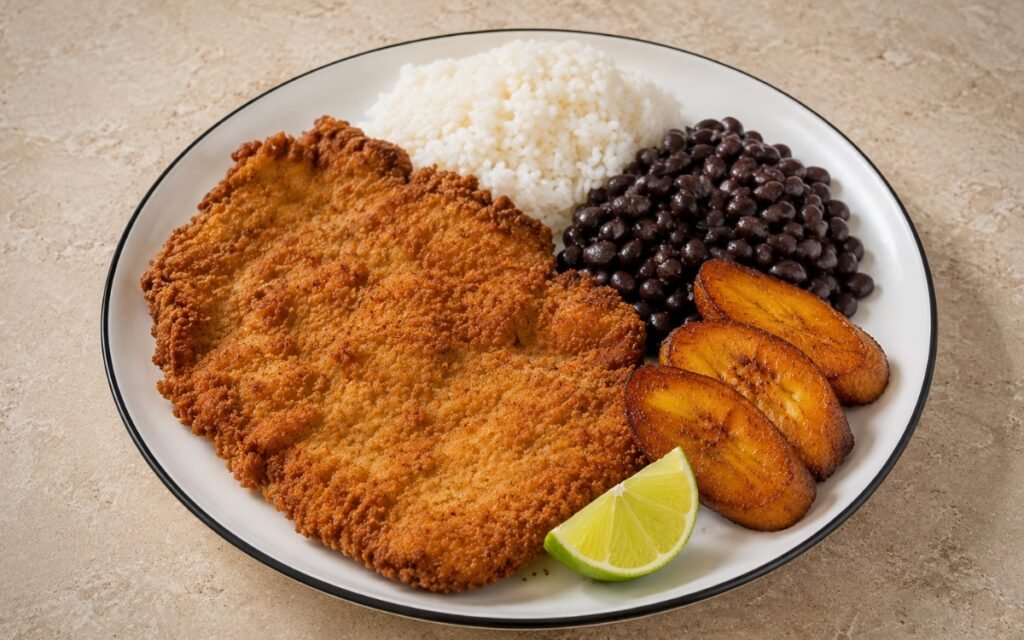
Cuban Bistec Empanizado
Thin, breaded, and fried beef cutlets marinated with garlic and citrus, served with fluffy white rice, black beans, and sweet fried plantains.
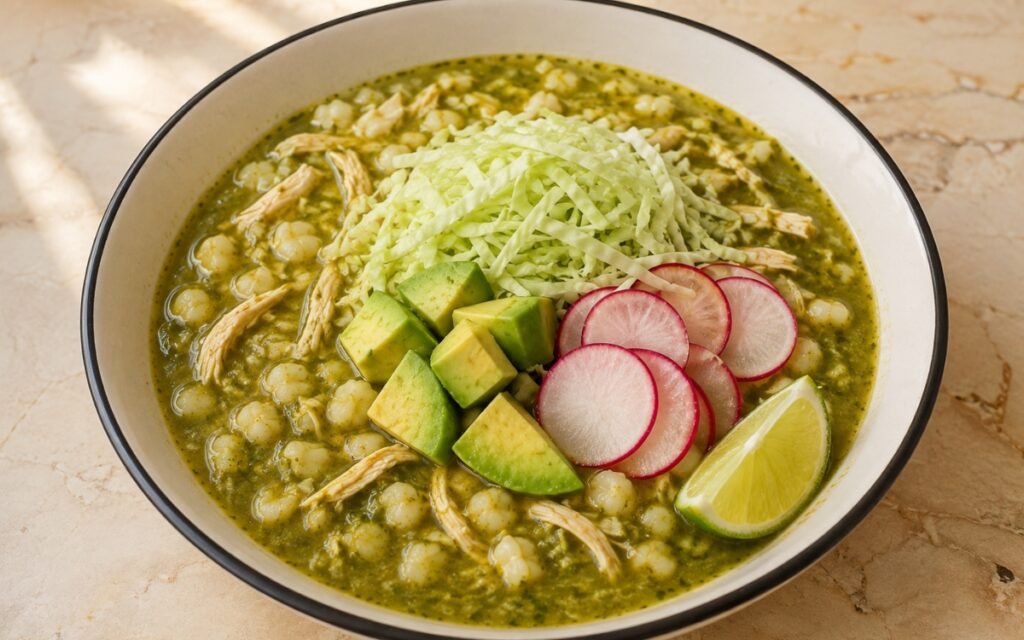
Pozole Verde
A vivid green Mexican pozole with savory chicken broth, roasted tomatillo-pumpkin seed base, hominy, and shredded chicken.
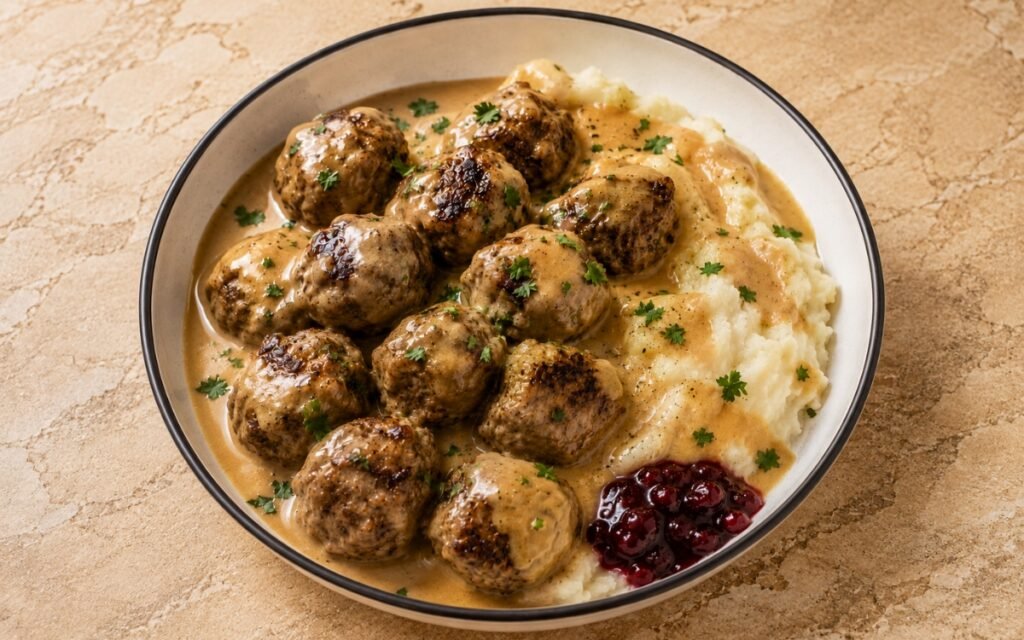
Swedish Meatballs
Tender panade-enriched beef and pork meatballs, gently spiced with allspice and nutmeg, in a creamy brown gravy over mashed potatoes.
You might also like
You might also like
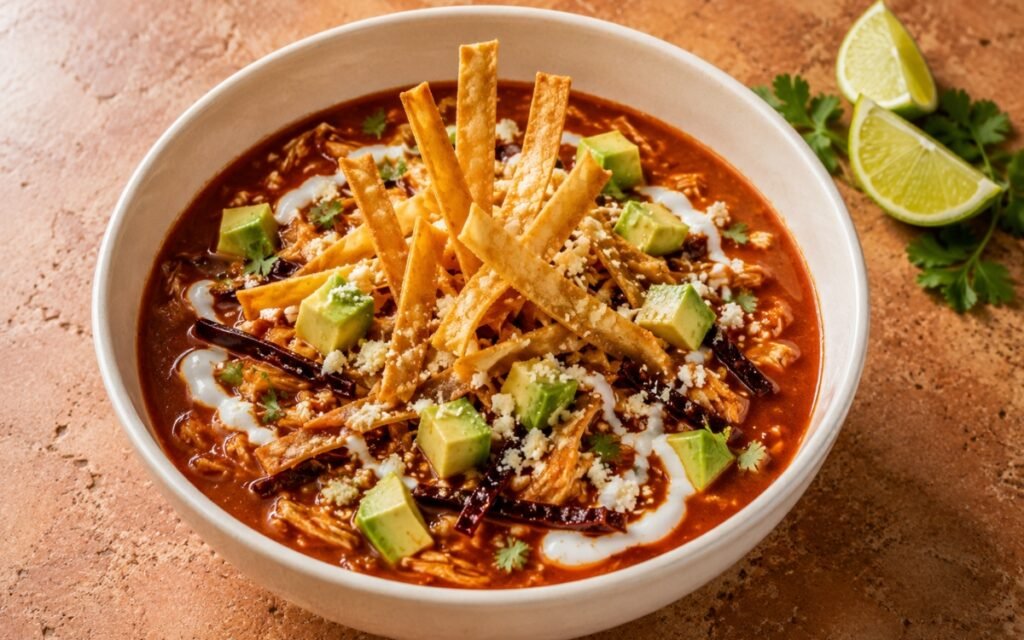
Sopa de Tortilla (Tortilla Soup)
A roasted, toasted, and fried tomato-chipotle broth with tender shredded chicken, topped with crisp golden tortilla strips, avocado, and cotija.
Cuban Bistec Empanizado
Thin, breaded, and fried beef cutlets marinated with garlic and citrus, served with fluffy white rice, black beans, and sweet fried plantains.
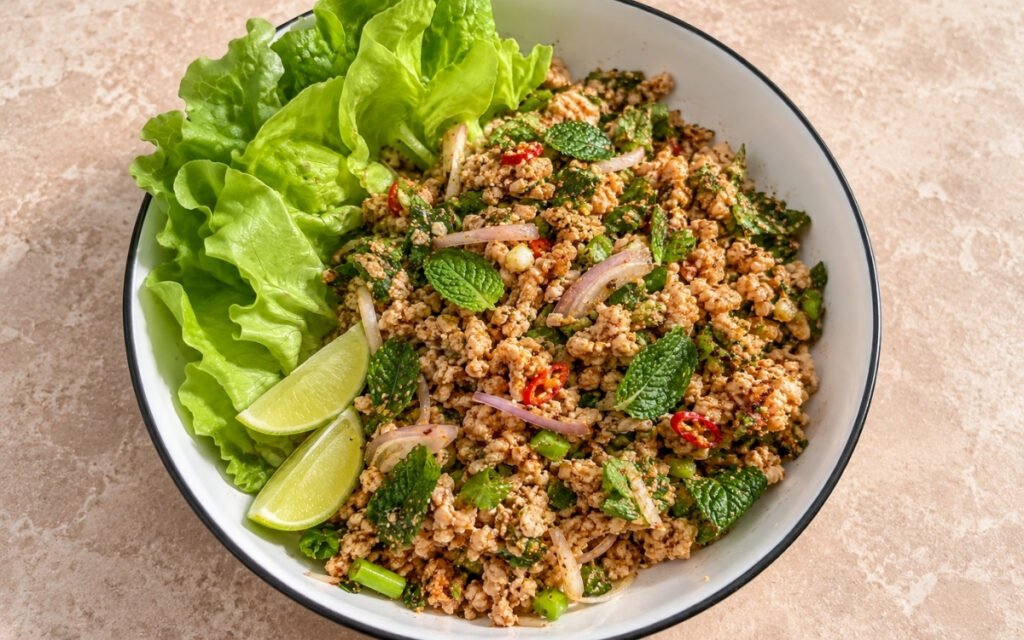
Larb Gai — Thai Minced Chicken Salad
Gently cooked minced chicken tossed with lime juice, fish sauce, roasted chili, toasted rice powder, shallots, scallions, and fresh mint.
La Bandera Dominicana
Ingredients
Method
- Add the soaked and drained beans to a medium pot with 1.2L water and 1 bay leaf. Bring to a boil, then lower to a gentle simmer. Cook uncovered or partially covered for 60–75 minutes, stirring occasionally, until the beans are fully tender. They should mash easily between your fingers without any chalky center. Reserve about 500ml of the cooking liquid before draining if needed. Set the cooked beans aside. Soaking the beans overnight before this simmer considerably shortens the cooking time itself and produces more even, thorough softening than starting from fully dry beans would.
- In a large bowl, combine the chicken with the garlic, lime juice, vinegar, oregano, salt, and black pepper. Rub the seasoning thoroughly over every piece, including under folds of skin where possible. Let the chicken marinate for 20 minutes at room temperature. This short marinade gives the chicken the classic Dominican savory-acidic base and helps season it all the way through. Working the marinade under the skin folds, not just over the surface, is what lets the seasoning actually reach the meat directly rather than sitting only on the exterior skin.
- Rinse the rice under cold water until the water runs mostly clear, then drain well. In a medium pot, combine the rice, water, oil, and salt. Bring to a steady boil over medium-high heat. Cook uncovered until most of the surface water has evaporated and small steam holes appear across the top, about 8–10 minutes. Stir once gently from the bottom, reduce the heat to very low, cover tightly, and cook for 15 minutes. Turn off the heat and let the rice rest, still covered, for 10 minutes. Fluff with a fork. The grains should be fully cooked, separate, and tender, not wet or mushy. This uncovered evaporation stage, watched for visible steam holes, is a genuine visual checkpoint confirming the rice is ready to move to its covered, low-heat finish — proceeding too early or too late at this stage would throw off the timing for the covered cook that follows.
- Heat the oil in a wide heavy pot or deep sauté pan over medium heat. Add the sugar and let it melt until it turns a medium amber color, 30–60 seconds. Do not let it go dark brown or it will taste bitter. Immediately add the chicken pieces in a single layer. They should sizzle on contact. Brown for about 3–4 minutes per side until lightly caramelized. This sugar step is a classical Dominican technique that gives the stew its deeper color and characteristic flavor. Add the sliced onion, green pepper, and red pepper around the chicken. Cook for 3 minutes, stirring around the pan, until the vegetables begin to soften. Add the tomato paste and cook for 1 minute, then add the tomato sauce, bay leaf, cilantro, and water or stock. Bring to a simmer, cover partially, and cook over medium-low heat for 30–35 minutes, turning the chicken once or twice, until the chicken is fully tender and reaches at least 74°C internally. The sauce should reduce to a lightly thickened stew consistency that coats the chicken rather than remaining watery. Taste and adjust salt only at the end if needed. This caramelised sugar step happens genuinely fast, and adding the chicken the instant the sugar hits medium amber is what stops that caramelisation exactly where it needs to be — any delay risks the sugar darkening past amber into the bitter territory this recipe explicitly warns against.
- In a separate saucepan, heat the oil over medium heat. Add the onion and bell pepper and cook for 4–5 minutes until softened. Add the garlic and cook for 30 seconds until fragrant. Stir in the tomato paste and cook for 1 minute, then add the tomato sauce, oregano, bay leaf, and cilantro. Add the cooked beans and 240ml of the reserved bean cooking liquid. Stir and bring to a gentle simmer. Mash a small portion of the beans against the side of the pan with a spoon to thicken the sauce naturally. Simmer for 12–15 minutes, stirring occasionally, until the beans are glossy, lightly thickened, and spoonable. They should hold together in a gentle sauce rather than looking dry or soupy. Add more bean liquid as needed if they tighten too much. Finish with the vinegar, salt, and black pepper. Remove the bay leaf. Using the beans’ own reserved cooking liquid to build this sauce, rather than plain water, keeps genuine bean flavour concentrated directly in the finished dish rather than diluting it with something neutral.
- Peel the ripe plantains and slice them on a diagonal into pieces about 1.5cm thick. Heat about 1cm of neutral oil in a skillet over medium heat. Fry the plantain slices in batches for 2–3 minutes per side until deep golden brown with caramelized edges. They should be soft inside and richly colored outside, not pale. Transfer to paper towels or a rack. Sprinkle very lightly with salt if desired. Genuinely ripe plantains, heavily spotted with black, carry the natural sugar content this caramelisation depends on for real browning and sweetness.
- In a bowl, combine the lettuce, tomato wedges, and thinly sliced onion. Dress with the lime juice or vinegar, olive oil, salt, and black pepper just before serving. Toss lightly so the salad stays crisp. The salad should be simple, fresh, and lightly dressed, not heavily coated. Dressing the salad only right before serving, rather than in advance, protects the lettuce from wilting under the acidic dressing while everything else on the plate finishes cooking.
- Divide the rice, stewed beans, braised chicken, and fried plantains among 4 plates, keeping each component in its own section. Add a small portion of fresh salad to each plate. Spoon a little extra chicken sauce over the chicken. Serve hot, with the plate looking clearly sectioned in the classic La Bandera style. This deliberate, sectioned plating is a genuine expression of the dish’s whole identity — “la bandera,” the flag, refers directly to this visual arrangement of distinct colours and components sitting side by side rather than combined.