Ingredients
Method
Cook the Beans
- Add the soaked and drained beans to a medium pot with 1.2L water and 1 bay leaf. Bring to a boil, then lower to a gentle simmer. Cook uncovered or partially covered for 60–75 minutes, stirring occasionally, until the beans are fully tender. They should mash easily between your fingers without any chalky center. Reserve about 500ml of the cooking liquid before draining if needed. Set the cooked beans aside. Soaking the beans overnight before this simmer considerably shortens the cooking time itself and produces more even, thorough softening than starting from fully dry beans would.
Season and Marinate the Chicken
- In a large bowl, combine the chicken with the garlic, lime juice, vinegar, oregano, salt, and black pepper. Rub the seasoning thoroughly over every piece, including under folds of skin where possible. Let the chicken marinate for 20 minutes at room temperature. This short marinade gives the chicken the classic Dominican savory-acidic base and helps season it all the way through. Working the marinade under the skin folds, not just over the surface, is what lets the seasoning actually reach the meat directly rather than sitting only on the exterior skin.
Make the White Rice
- Rinse the rice under cold water until the water runs mostly clear, then drain well. In a medium pot, combine the rice, water, oil, and salt. Bring to a steady boil over medium-high heat. Cook uncovered until most of the surface water has evaporated and small steam holes appear across the top, about 8–10 minutes. Stir once gently from the bottom, reduce the heat to very low, cover tightly, and cook for 15 minutes. Turn off the heat and let the rice rest, still covered, for 10 minutes. Fluff with a fork. The grains should be fully cooked, separate, and tender, not wet or mushy. This uncovered evaporation stage, watched for visible steam holes, is a genuine visual checkpoint confirming the rice is ready to move to its covered, low-heat finish — proceeding too early or too late at this stage would throw off the timing for the covered cook that follows.
Brown and Braise the Chicken
- Heat the oil in a wide heavy pot or deep sauté pan over medium heat. Add the sugar and let it melt until it turns a medium amber color, 30–60 seconds. Do not let it go dark brown or it will taste bitter. Immediately add the chicken pieces in a single layer. They should sizzle on contact. Brown for about 3–4 minutes per side until lightly caramelized. This sugar step is a classical Dominican technique that gives the stew its deeper color and characteristic flavor. Add the sliced onion, green pepper, and red pepper around the chicken. Cook for 3 minutes, stirring around the pan, until the vegetables begin to soften. Add the tomato paste and cook for 1 minute, then add the tomato sauce, bay leaf, cilantro, and water or stock. Bring to a simmer, cover partially, and cook over medium-low heat for 30–35 minutes, turning the chicken once or twice, until the chicken is fully tender and reaches at least 74°C internally. The sauce should reduce to a lightly thickened stew consistency that coats the chicken rather than remaining watery. Taste and adjust salt only at the end if needed. This caramelised sugar step happens genuinely fast, and adding the chicken the instant the sugar hits medium amber is what stops that caramelisation exactly where it needs to be — any delay risks the sugar darkening past amber into the bitter territory this recipe explicitly warns against.
Stew the Beans
- In a separate saucepan, heat the oil over medium heat. Add the onion and bell pepper and cook for 4–5 minutes until softened. Add the garlic and cook for 30 seconds until fragrant. Stir in the tomato paste and cook for 1 minute, then add the tomato sauce, oregano, bay leaf, and cilantro. Add the cooked beans and 240ml of the reserved bean cooking liquid. Stir and bring to a gentle simmer. Mash a small portion of the beans against the side of the pan with a spoon to thicken the sauce naturally. Simmer for 12–15 minutes, stirring occasionally, until the beans are glossy, lightly thickened, and spoonable. They should hold together in a gentle sauce rather than looking dry or soupy. Add more bean liquid as needed if they tighten too much. Finish with the vinegar, salt, and black pepper. Remove the bay leaf. Using the beans' own reserved cooking liquid to build this sauce, rather than plain water, keeps genuine bean flavour concentrated directly in the finished dish rather than diluting it with something neutral.
Fry the Plantains
- Peel the ripe plantains and slice them on a diagonal into pieces about 1.5cm thick. Heat about 1cm of neutral oil in a skillet over medium heat. Fry the plantain slices in batches for 2–3 minutes per side until deep golden brown with caramelized edges. They should be soft inside and richly colored outside, not pale. Transfer to paper towels or a rack. Sprinkle very lightly with salt if desired. Genuinely ripe plantains, heavily spotted with black, carry the natural sugar content this caramelisation depends on for real browning and sweetness.
Make the Fresh Salad
- In a bowl, combine the lettuce, tomato wedges, and thinly sliced onion. Dress with the lime juice or vinegar, olive oil, salt, and black pepper just before serving. Toss lightly so the salad stays crisp. The salad should be simple, fresh, and lightly dressed, not heavily coated. Dressing the salad only right before serving, rather than in advance, protects the lettuce from wilting under the acidic dressing while everything else on the plate finishes cooking.
Plate and Serve
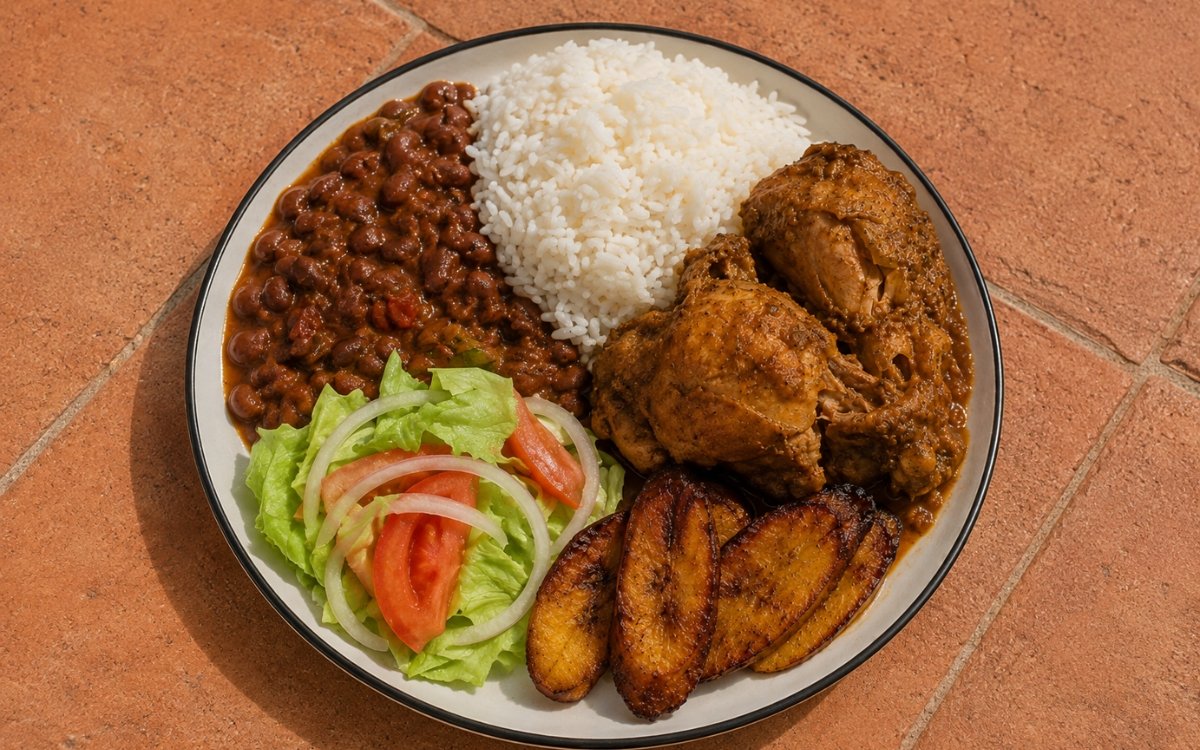
- Divide the rice, stewed beans, braised chicken, and fried plantains among 4 plates, keeping each component in its own section. Add a small portion of fresh salad to each plate. Spoon a little extra chicken sauce over the chicken. Serve hot, with the plate looking clearly sectioned in the classic La Bandera style. This deliberate, sectioned plating is a genuine expression of the dish's whole identity — "la bandera," the flag, refers directly to this visual arrangement of distinct colours and components sitting side by side rather than combined.
Notes
The caramelised sugar step at the start of the chicken braise deserves recognition as a genuinely classical Dominican technique responsible for the finished stew's characteristic colour and flavour, not simply an optional flourish. That brief window between properly amber and dark, bitter sugar happens quickly, which is exactly why the chicken needs to go in immediately once the right colour is reached — hesitating even briefly risks pushing the sugar past its ideal point.
Marinating the chicken with real attention to working the seasoning under the skin, not just over the surface, reflects genuine technique worth respecting despite the marinade's brief 20-minute window. That thoroughness is what gives the chicken the classic, all-the-way-through Dominican savoury-acidic flavour this dish depends on, rather than a seasoning that stays superficial and only affects the exterior.
Keeping every component of this plate — rice, beans, chicken, plantains, salad — genuinely separate through both cooking and plating deserves to be understood as the dish's defining organisational principle, directly reflected in its name. "La bandera," the flag, describes exactly this visual arrangement of distinct, differently coloured components sitting side by side; combining any of them into a single mixed dish would lose that core identity entirely.
The fresh salad's brief, last-minute dressing is worth respecting as a genuine, deliberate timing choice rather than a minor afterthought. Given how many rich, warm components make up the rest of this plate, the salad's specific job is to provide crisp, bright, acidic contrast — dressing it too far in advance would let the lettuce wilt under the acid, losing exactly the freshness that contrast depends on.