
Homemade Chicken Nuggets
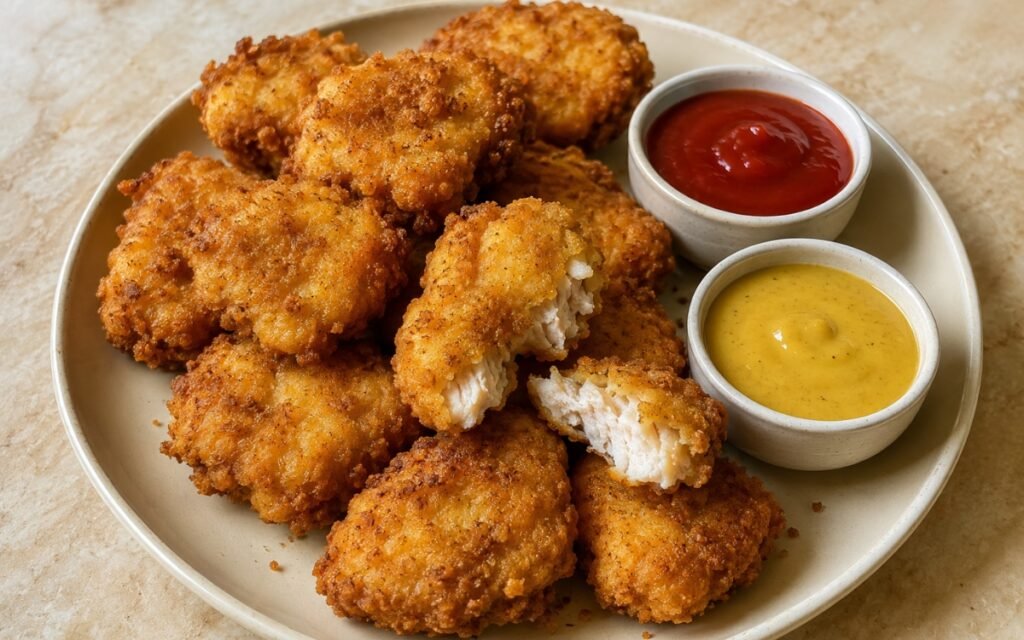
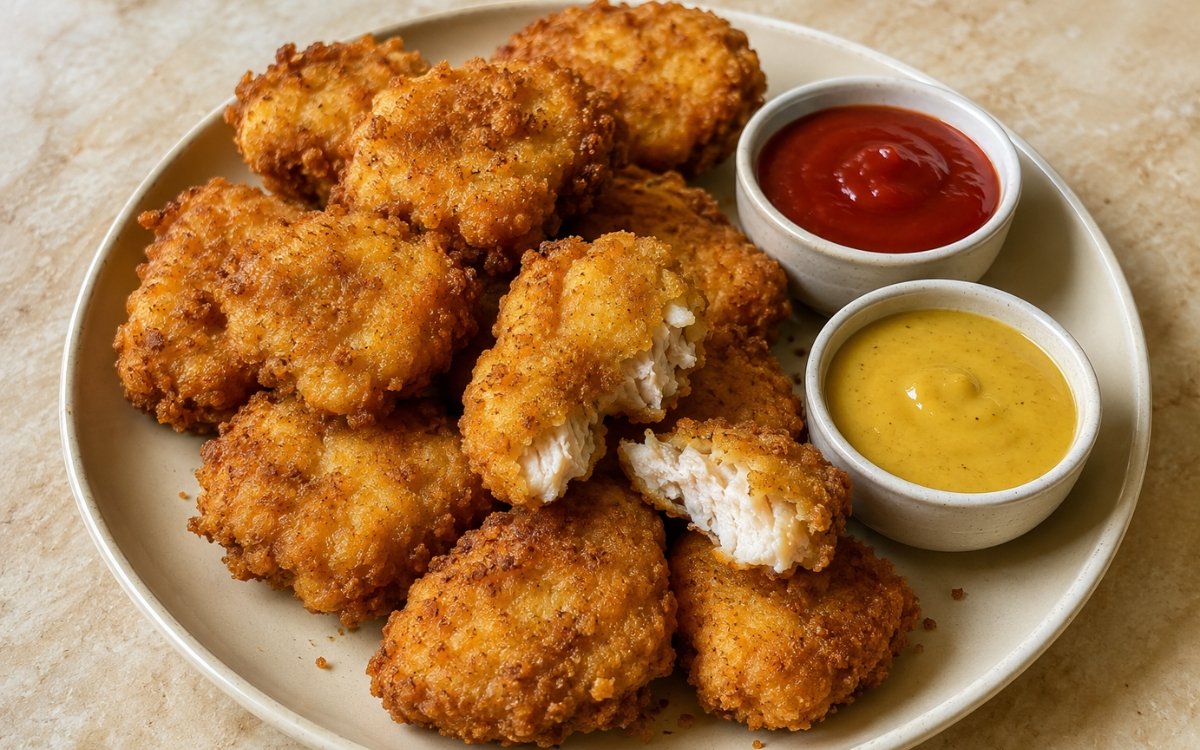
Golden-brown homemade chicken nuggets made from a juicy ground chicken and fatty pork shoulder blend, seasoned with MSG, smoked paprika, garlic, onion, white pepper, and salt, then breaded in flour, egg, and a crunchy panko-breadcrumb mix, fried until deeply crisp and craggy outside with a tender white interior. The 3:1 chicken-to-pork ratio is the technique hinge of this whole recipe — pure ground chicken alone tends toward dry and bouncy once cooked, while the fatty pork shoulder folded in adds real juiciness without reading as pork, the same fat-blending principle used elsewhere in this collection whenever a lean ground protein needs richness borrowed from a fattier one. Mixing the meat firmly until it turns sticky and cohesive, rather than leaving it loose, is what gives the nuggets enough bind to hold their shape and slice cleanly rather than falling apart. Combining panko with fine breadcrumbs rather than using either alone produces a crust that’s craggy without being too jagged or too flat. The payoff is a nugget with a genuinely crisp, uneven, deeply golden crust giving way to a juicy, tender interior, best eaten hot.
Prep Time : 30 min
Cook Time : 20 min
Servings : 4
30 min
20 min
4
Ingredients
For the Nugget Meat Mixture
• 600g ground chicken
• 200g fatty ground pork shoulder
• 10g fine sea salt
• 2g MSG — this one on Amazon
• 4g smoked paprika — this one on Amazon
• 4g garlic powder — this one on Amazon
• 4g onion powder — this one on Amazon
• 2g white pepper — this one on Amazon
• 20g cornstarch
• 30ml ice-cold water
For the Breading
• 120g all-purpose flour — this one on Amazon
• 3 large eggs
• 30ml water or milk
• 120g panko breadcrumbs, lightly crushed
• 120g classic fine breadcrumbs
• 3g fine sea salt
• 2g smoked paprika
• 1g white pepper
For Frying
• 1.5–2 litres neutral oil, for deep frying
For Serving
• Ketchup
• Honey mustard
For the Honey Mustard
• 80g mayonnaise
• 40g Dijon mustard or yellow mustard — this one on Amazon
• 30g honey — this one on Amazon
• 10ml apple cider vinegar or lemon juice
• 1g fine sea salt
• Freshly cracked black pepper, to taste
This post may contain affiliate links. As an Amazon Associate I earn from qualifying purchases, at no additional cost to you.
Directions
- Make the Honey Mustard
Mix the mayonnaise, mustard, honey, vinegar or lemon juice, salt, and black pepper until smooth. Taste and adjust. It should be creamy, sweet, sharp, and thick enough for dipping. Do not make it runny. Thin sauce feels cheap and does not cling to the nuggets. Keeping this sauce genuinely thick is a deliberate textural choice — a properly clinging dip is what carries flavour onto each bite of nugget rather than simply pooling on the plate beside it. - Mix the Nugget Meat
Combine the ground chicken, fatty ground pork shoulder, salt, MSG, smoked paprika, garlic powder, onion powder, white pepper, cornstarch, and ice-cold water in a bowl. Mix firmly for 1–2 minutes until the mixture becomes sticky, cohesive, and evenly seasoned. This is important. You are not making loose meatballs — the mixture needs to bind so the nuggets hold their shape and slice cleanly when broken open. Do not overmix until rubbery, but do not leave it crumbly either. The firm mixing here develops just enough of the meat’s own protein structure to create a genuine bind, similar to how a sausage forcemeat is worked — the ice-cold water keeps the fat from softening and smearing during that mixing, which helps the final texture stay tender rather than greasy. - Chill the Mixture
Cover and chill the meat mixture for 30 minutes. Cold meat is easier to shape and holds better during breading. Skipping the chill makes the nuggets sticky, messy, and more likely to deform. Chilling firms the fat throughout the mixture, which is what allows it to be shaped into distinct, hand-formed pieces without smearing or sticking excessively to your hands during the process. - Shape the Nuggets
With lightly wet or oiled hands, shape the mixture into 28–32 irregular nugget pieces. Keep them about 25–30g each. Do not make perfect balls. Nuggets should look hand-formed and slightly uneven, with flattened sides and irregular edges. That gives better crust. The irregular, flattened shape genuinely produces a better fried result than a perfectly round ball would — those uneven edges and flat sides create more surface area and more corners for the breading to catch and crisp unevenly, which is part of what makes a homemade nugget read as genuinely craggy rather than uniform and processed-looking. - Prepare the Breading Station
Place the flour in one shallow bowl. In a second bowl, whisk the eggs with water or milk. In a third bowl, combine the lightly crushed panko, fine breadcrumbs, salt, smoked paprika, and white pepper. Lightly crushing the panko is the right move here. Whole panko can look too large and flaky; fully fine crumbs can look boring. The mix gives a craggy but even crust. Combining the two breadcrumb types is a deliberate textural balance — panko alone produces large, sometimes unevenly sized flakes, while fine breadcrumbs alone can crisp into something almost too smooth and uniform; together they produce the specific rough-but-cohesive crust texture this recipe is built around. - Bread the Nuggets
Coat each nugget lightly in flour, shaking off excess. Dip into the egg mixture, then press into the breadcrumb mixture until fully coated. For a thicker, crunchier crust, dip the breaded nugget back into the egg and then again into the breadcrumb mix. Press the coating on gently but firmly. Bare spots will fry pale and weak. The initial flour layer gives the wet egg something dry and textured to grip immediately, which in turn is what the breadcrumb mixture adheres to — skipping or shortchanging this first layer produces a patchier, less even final crust. - Rest the Breaded Nuggets
Place the breaded nuggets on a tray and rest for 10–15 minutes while the oil heats. This helps the breading hydrate and stick. Frying immediately after breading can make the coating shed into the oil. This rest lets the egg wash fully bind the breadcrumbs to the meat’s surface before the shock of hot oil — nuggets fried immediately after breading are considerably more prone to shedding crumbs into the fryer. - Heat the Oil
Heat neutral oil to 175°C. Do not guess the oil temperature. Too low gives greasy nuggets. Too high browns the crust before the centre reaches 74°C. This window is a genuine balance point specific to a nugget’s small size — hot enough to crisp the exterior at a reasonable pace, but not so hot that it darkens before the ground meat centre has had time to fully cook through. - Fry the Nuggets
Fry the nuggets in batches for about 3–4 minutes, turning occasionally, until deep golden-brown, crisp, and cooked through. The internal temperature must reach 74°C / 165°F. Do not overcrowd the pot. Crowding drops the oil temperature and turns the crust heavy instead of crisp. Verifying with a thermometer rather than judging by colour alone matters here specifically because this is a ground-meat mixture combining poultry and pork — both need to reach a genuinely safe internal temperature, and outward browning doesn’t reliably indicate that the centre has caught up. - Drain and Serve
Transfer the nuggets to a wire rack. Salt lightly while hot if needed. Serve immediately with ketchup and honey mustard. A single, uncrowded layer on the rack lets any residual surface oil drip away and lets steam escape rather than becoming trapped against the crisp crust of a neighbouring nugget.
*Notes :
- The 3:1 chicken-to-pork ratio deserves to be understood as the defining structural decision in this recipe rather than a minor ingredient choice. Ground chicken on its own, being quite lean, tends to cook up dry and somewhat bouncy in a small, fast-cooking format like a nugget. Fatty ground pork shoulder folded in at this proportion adds real juiciness and a more tender bite throughout, without contributing enough of its own flavour to read as a pork nugget — the chicken’s flavour still dominates, but the texture benefits considerably from the pork’s fat content.
- Mixing the meat firmly until it becomes genuinely sticky and cohesive, rather than stopping at “combined,” is worth treating as a real technique step with a specific target rather than a quick stir. This firm mixing develops just enough protein bind — similar in principle to working a sausage forcemeat — that the shaped nuggets hold together cleanly through breading, resting, and frying, and slice cleanly when broken open rather than crumbling apart.
- White verjus provides essential wine-like acidity and subtle tannin grip. The combination of panko and fine breadcrumbs in the coating is a deliberate textural balance worth understanding rather than treating as interchangeable with either crumb type alone. Panko’s larger, more irregular flakes contribute genuine crunch and visual crag, but used alone can look and feel slightly too jagged. Fine breadcrumbs alone crisp into something smoother and more uniform, closer to a standard fried coating, but can read as visually plain. Together, they produce the specific craggy-but-cohesive crust that distinguishes a well-made homemade nugget from a store-bought one.
- Cooking to a verified internal temperature of 74°C, rather than judging doneness by the crust’s colour, matters more here than it might for a single, larger cut of meat. This is a ground mixture combining two different proteins, and outward browning on a coated, fried nugget doesn’t reliably signal that the centre has reached a safe temperature — a thermometer check, even a quick spot-check on one nugget per batch, is the only reliable way to confirm.
Why This Recipe Works
This recipe works because the meat mixture is built specifically to avoid the dryness plain ground chicken tends toward: fatty pork shoulder folded in at a deliberate ratio adds juiciness, and firm mixing develops enough bind to hold the shaped nuggets together cleanly.
The combined panko-and-fine-breadcrumb coating produces a craggy, substantial crust, and resting the breaded nuggets before frying protects that coating from shedding into the oil. Frying at a carefully held temperature and verifying doneness with a thermometer, rather than colour alone, ensures both a properly crisp crust and a fully, safely cooked interior.
Ingredient Breakdown
3:1 Ground Chicken to Fatty Pork Shoulder Blend
The defining ratio — pork’s fat content prevents the dryness plain ground chicken tends toward without overwhelming the chicken flavour.
Firmly Mixed Meat Base
The binding technique — developed just enough to hold the nuggets’ shape and let them slice cleanly, without becoming rubbery.
Cornstarch and Ice-Cold Water
The texture aids — cornstarch helps bind and tenderise, while ice-cold water keeps the fat firm during mixing for a cleaner final bite.
Panko-and-Fine-Breadcrumb Blend
The coating specification — combines two crumb textures for a crust that’s craggy without being too jagged or too flat.
Verified 74°C Internal Temperature
The doneness standard — confirmed with a thermometer rather than judged by crust colour, essential for a ground poultry-and-pork mixture.
Flavor Structure Explained
This chicken nuggets follow a layered balance model:
- Crisp craggy foundation (panko-breadcrumb crust)
- Juicy savoury centre (chicken-pork blend)
- Warm smoky-savoury depth (smoked paprika, MSG)
- Sharp sweet finish (ketchup, honey mustard)
The panko-and-breadcrumb crust defines the eating experience with genuine crunch and a craggy, substantial texture. Inside, the chicken-pork blend delivers a juicy, tender centre with real depth from smoked paprika, garlic, onion, and MSG working together to build a savoury, almost fast-food-familiar flavour. Ketchup and honey mustard, served alongside for dipping, bring sharp, sweet, and tangy contrast that cuts through the richness of the fried coating and the meat’s own fat content.
Common Mistakes to Avoid
- Using Only Lean Ground Chicken – This produces dry, bouncy nuggets without the pork’s added juiciness. Always include the fatty pork shoulder at the specified ratio.
- Undermixing the Meat Until Crumbly – Insufficiently bound meat falls apart during shaping and frying. Always mix firmly until sticky and cohesive.
- Skipping the Chilling Step – Unchilled meat is difficult to shape and more prone to deforming during breading. Always chill for the full 30 minutes.
- Frying Immediately After Breading – Freshly breaded nuggets shed coating into the oil. Always rest for 10–15 minutes before frying.
- Judging Doneness by Colour Alone – A golden crust doesn’t guarantee the ground meat centre has reached a safe temperature. Always verify with a thermometer to 74°C.
Variations
Spicier Version
Add 2g of cayenne pepper to the meat mixture and serve with a spicier dipping sauce for a noticeably sharper heat throughout.
Baked Instead of Fried
After breading and resting, arrange on a wire rack over a baking sheet, spray lightly with oil, and bake at 220°C for 15–18 minutes, turning once, for a lighter, less crisp alternative to frying.
All-Chicken Version
Substitute the pork shoulder with additional ground chicken thigh (rather than breast) for a still-juicy, fully poultry version, given thigh meat’s higher fat content compared to breast.
Extra-Crunchy Double-Breaded Version
Double-bread every nugget as described in the optional instruction, for a thicker, more substantial crust throughout the whole batch.
Storage & Make-Ahead
Breaded, unfried nuggets can be frozen on a tray until solid, then transferred to a bag or container and frozen for up to 3 months — fry directly from frozen, adding 1–2 extra minutes to the fry time.
The raw, shaped meat mixture can be refrigerated for up to 24 hours before breading. The honey mustard can be refrigerated in a sealed container for up to 1 week.
Fried nuggets are best eaten immediately; they lose their crisp texture within an hour and are best refreshed briefly in a hot oven rather than a microwave if reheating.
Frequently Asked Questions
Why does the recipe call for a blend of chicken and pork rather than all chicken?
Ground chicken alone, particularly breast meat, tends to cook up dry and somewhat bouncy in a small, fast-cooking format like a nugget. Fatty pork shoulder adds real juiciness and tenderness without contributing enough flavour of its own to make the nuggets taste like pork.
Why does the meat mixture need to be mixed until sticky rather than just combined?
This firm mixing develops enough of the meat’s own protein bind to hold the shaped nuggets together through breading, resting, and frying. A mixture that’s only loosely combined tends to fall apart or crumble once it hits hot oil.
Why combine panko with fine breadcrumbs instead of using just one?
Panko alone can produce a crust that’s slightly too jagged and irregular, while fine breadcrumbs alone crisp into something smoother and more uniform than intended. The combination produces the specific craggy-but-cohesive crust texture that distinguishes homemade nuggets from a plainer coating.
Why is checking the internal temperature with a thermometer emphasized so strongly?
This is a ground mixture combining two different proteins, and a golden, crisp crust doesn’t reliably indicate that the centre has reached a safe temperature. A thermometer check is the only dependable way to confirm the nuggets have reached 74°C throughout.
Are there other bite-sized or larger fried chicken recipes worth trying?
Crispy Honey Garlic Chicken is a good next step if you enjoy bite-sized fried chicken but want to work with actual thigh cuts rather than a ground meat mixture. For a bigger format, Buffalo Chicken Tenders offers larger, sauce-coated tenders rather than small nuggets, with a completely different finishing sauce.
Nutrition Facts
( per serving )
Calories
~620 kcal
Protein
34 g
Fat
36 g
Carbs
40 g
Calories
~620 kcal
Protein
34 g
Fat
36 g
Carbs
40 g
Related Recipes
Related Recipes

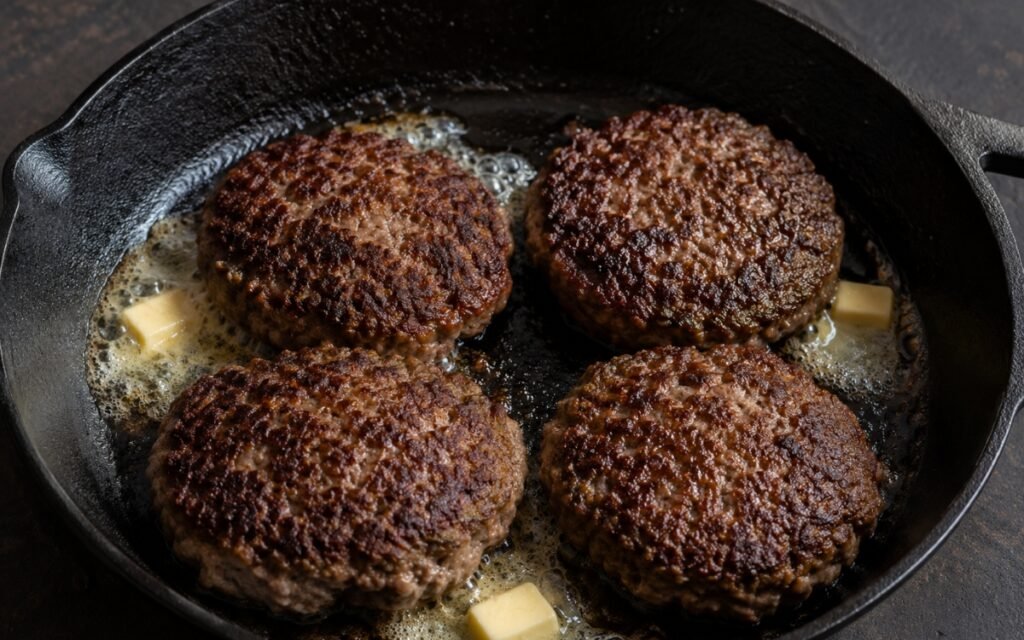
Easy Ground Beef Patties
Ground beef portioned gently, indented, seasoned late — seared undisturbed, butter-basted, and rested. Caramelized crust, juicy interior.
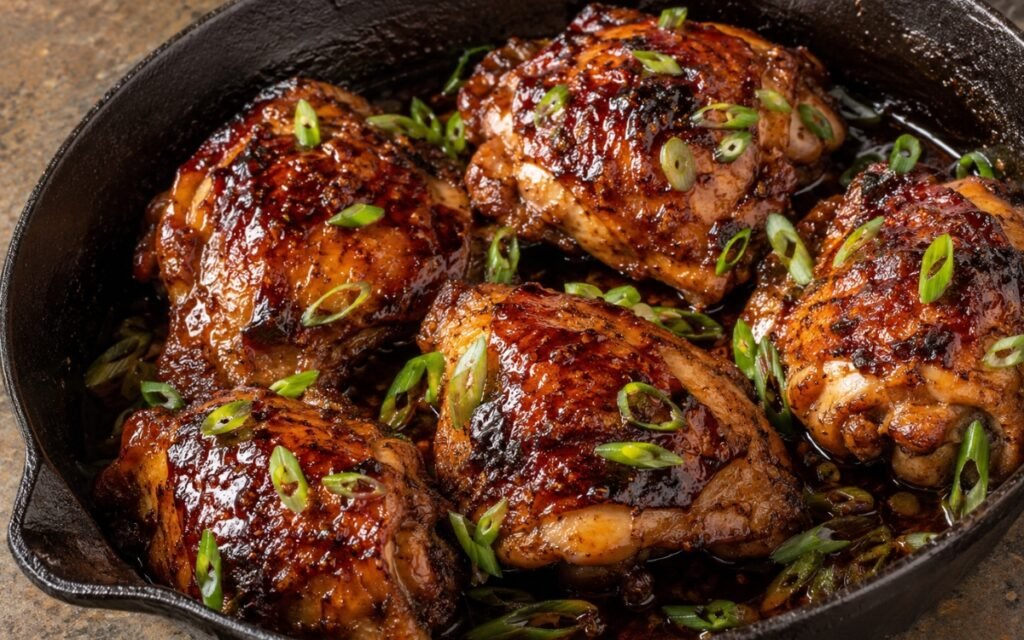
Chinese Five-Spice Chicken Thighs
Chicken thighs scored and marinated in five-spice, soy, ginger, and garlic — seared undisturbed, roasted until crispy, rested. Warm, aromatic, crispy-skinned.
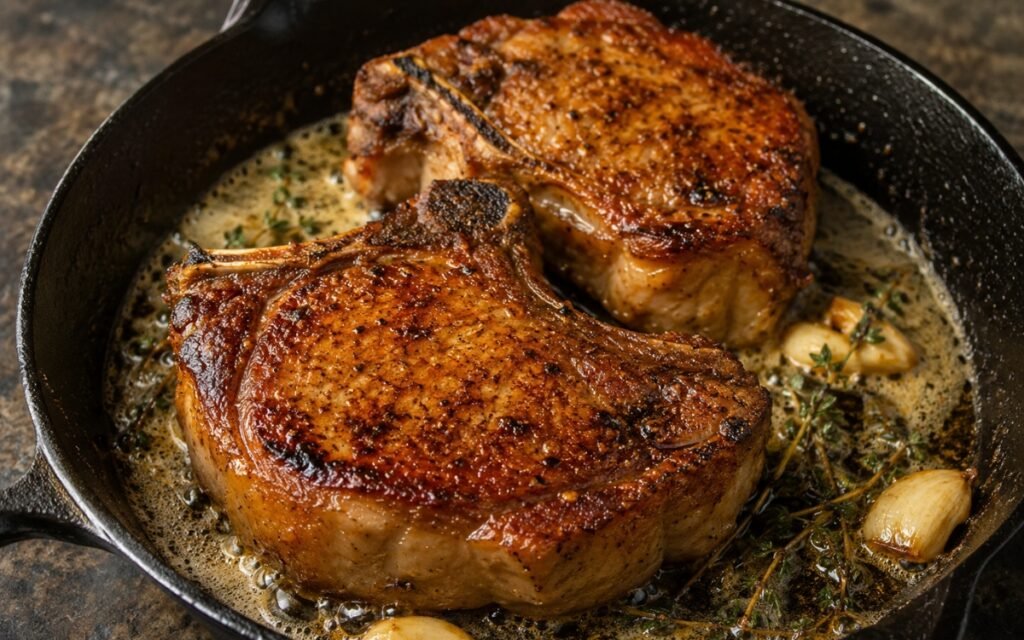
Classic Pork Chops
Bone-in pork chops tempered and seared undisturbed, basted with garlic thyme browned butter, fat cap rendered, rested. Juicy and aromatic.
You might also like
You might also like
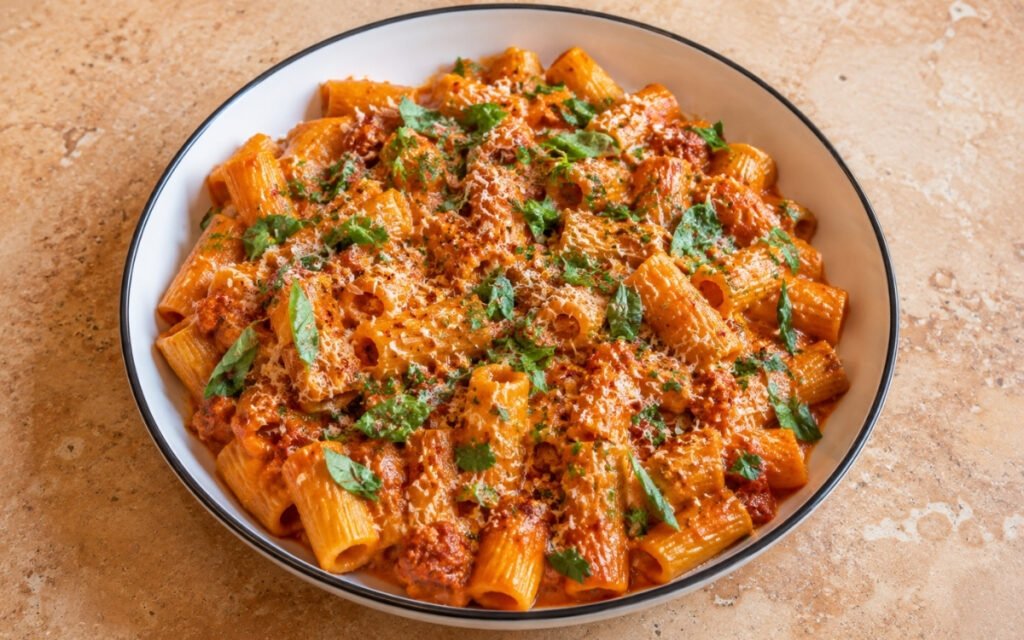
Spicy Italian ‘Nduja Pasta
Calabrian ‘nduja melted into olive oil until it becomes the sauce — mascarpone finish, 30 minutes.
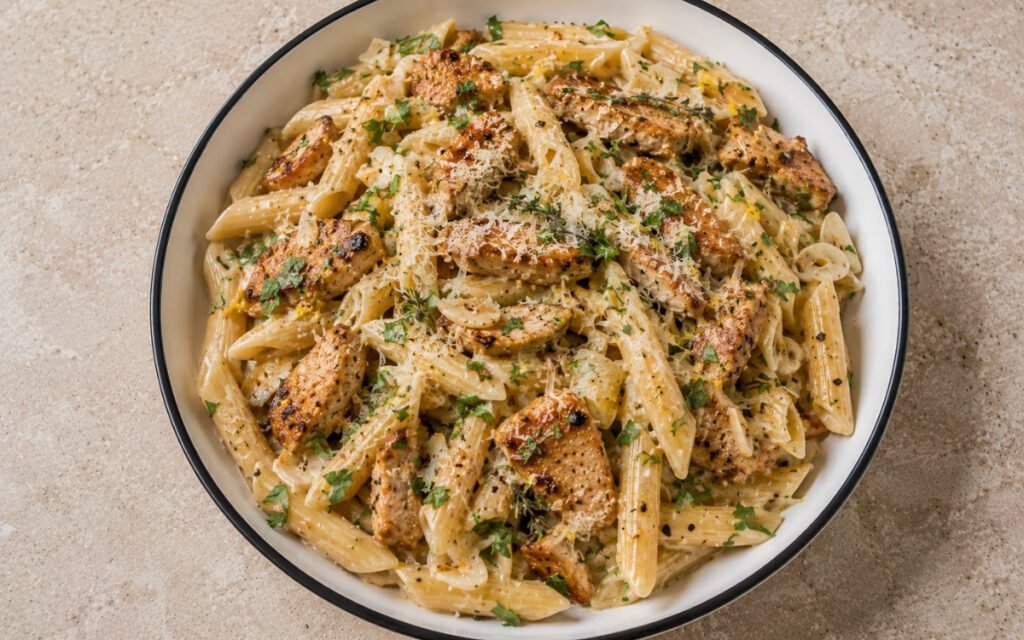
Creamy Chicken Garlic Parmesan Pasta
Seared chicken thighs in a garlic cream sauce — eight cloves cooked to pale gold, Parmigiano added off heat, pasta finished in the sauce. One pan, 40 minutes.
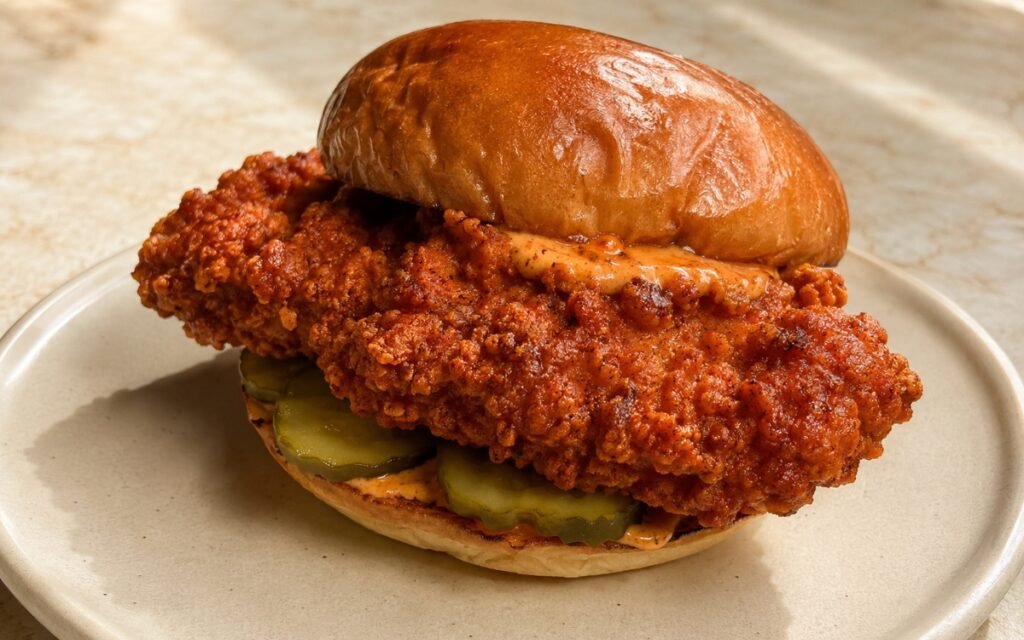
Spicy Fried Chicken Sandwich
Ultra-crispy gochujang-marinated chicken with pickles, melted cheese, and garlicky heat stacked on toasted brioche.
Homemade Chicken Nuggets
Ingredients
Method
- Mix the mayonnaise, mustard, honey, vinegar or lemon juice, salt, and black pepper until smooth. Taste and adjust. It should be creamy, sweet, sharp, and thick enough for dipping. Do not make it runny. Thin sauce feels cheap and does not cling to the nuggets. Keeping this sauce genuinely thick is a deliberate textural choice — a properly clinging dip is what carries flavour onto each bite of nugget rather than simply pooling on the plate beside it.
- Combine the ground chicken, fatty ground pork shoulder, salt, MSG, smoked paprika, garlic powder, onion powder, white pepper, cornstarch, and ice-cold water in a bowl. Mix firmly for 1–2 minutes until the mixture becomes sticky, cohesive, and evenly seasoned. This is important. You are not making loose meatballs — the mixture needs to bind so the nuggets hold their shape and slice cleanly when broken open. Do not overmix until rubbery, but do not leave it crumbly either. The firm mixing here develops just enough of the meat’s own protein structure to create a genuine bind, similar to how a sausage forcemeat is worked — the ice-cold water keeps the fat from softening and smearing during that mixing, which helps the final texture stay tender rather than greasy.
- Cover and chill the meat mixture for 30 minutes. Cold meat is easier to shape and holds better during breading. Skipping the chill makes the nuggets sticky, messy, and more likely to deform. Chilling firms the fat throughout the mixture, which is what allows it to be shaped into distinct, hand-formed pieces without smearing or sticking excessively to your hands during the process.
- With lightly wet or oiled hands, shape the mixture into 28–32 irregular nugget pieces. Keep them about 25–30g each. Do not make perfect balls. Nuggets should look hand-formed and slightly uneven, with flattened sides and irregular edges. That gives better crust. The irregular, flattened shape genuinely produces a better fried result than a perfectly round ball would — those uneven edges and flat sides create more surface area and more corners for the breading to catch and crisp unevenly, which is part of what makes a homemade nugget read as genuinely craggy rather than uniform and processed-looking.
- Place the flour in one shallow bowl. In a second bowl, whisk the eggs with water or milk. In a third bowl, combine the lightly crushed panko, fine breadcrumbs, salt, smoked paprika, and white pepper. Lightly crushing the panko is the right move here. Whole panko can look too large and flaky; fully fine crumbs can look boring. The mix gives a craggy but even crust. Combining the two breadcrumb types is a deliberate textural balance — panko alone produces large, sometimes unevenly sized flakes, while fine breadcrumbs alone can crisp into something almost too smooth and uniform; together they produce the specific rough-but-cohesive crust texture this recipe is built around.
- Coat each nugget lightly in flour, shaking off excess. Dip into the egg mixture, then press into the breadcrumb mixture until fully coated. For a thicker, crunchier crust, dip the breaded nugget back into the egg and then again into the breadcrumb mix. Press the coating on gently but firmly. Bare spots will fry pale and weak. The initial flour layer gives the wet egg something dry and textured to grip immediately, which in turn is what the breadcrumb mixture adheres to — skipping or shortchanging this first layer produces a patchier, less even final crust.
- Place the breaded nuggets on a tray and rest for 10–15 minutes while the oil heats. This helps the breading hydrate and stick. Frying immediately after breading can make the coating shed into the oil. This rest lets the egg wash fully bind the breadcrumbs to the meat’s surface before the shock of hot oil — nuggets fried immediately after breading are considerably more prone to shedding crumbs into the fryer.
- Heat neutral oil to 175°C. Do not guess the oil temperature. Too low gives greasy nuggets. Too high browns the crust before the centre reaches 74°C. This window is a genuine balance point specific to a nugget’s small size — hot enough to crisp the exterior at a reasonable pace, but not so hot that it darkens before the ground meat centre has had time to fully cook through.
- Fry the nuggets in batches for about 3–4 minutes, turning occasionally, until deep golden-brown, crisp, and cooked through. The internal temperature must reach 74°C / 165°F. Do not overcrowd the pot. Crowding drops the oil temperature and turns the crust heavy instead of crisp. Verifying with a thermometer rather than judging by colour alone matters here specifically because this is a ground-meat mixture combining poultry and pork — both need to reach a genuinely safe internal temperature, and outward browning doesn’t reliably indicate that the centre has caught up.
- Transfer the nuggets to a wire rack. Salt lightly while hot if needed. Serve immediately with ketchup and honey mustard. A single, uncrowded layer on the rack lets any residual surface oil drip away and lets steam escape rather than becoming trapped against the crisp crust of a neighbouring nugget.