
Blackened Salmon Tacos
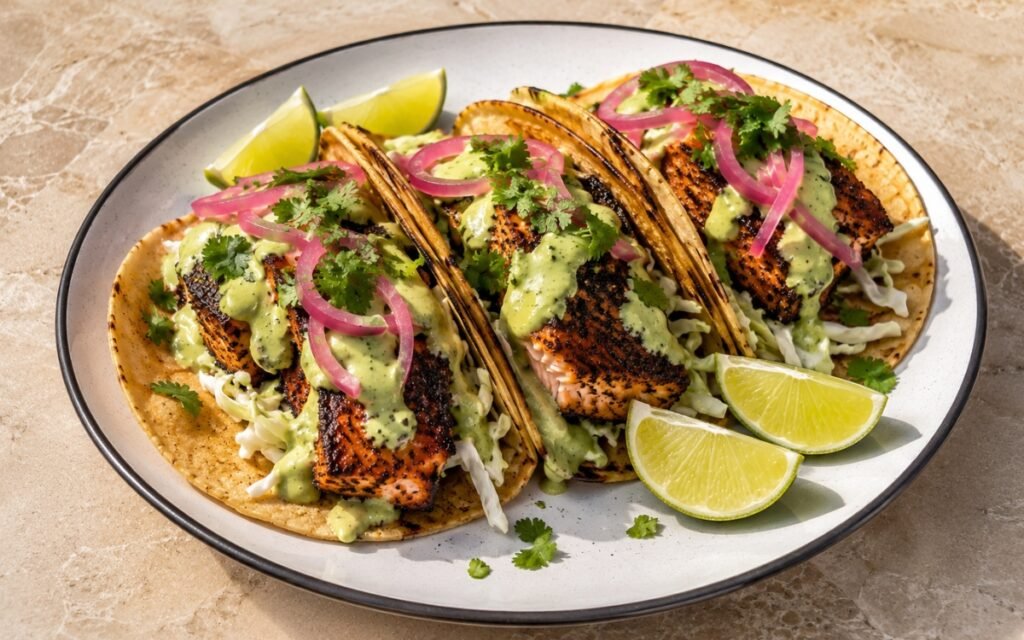
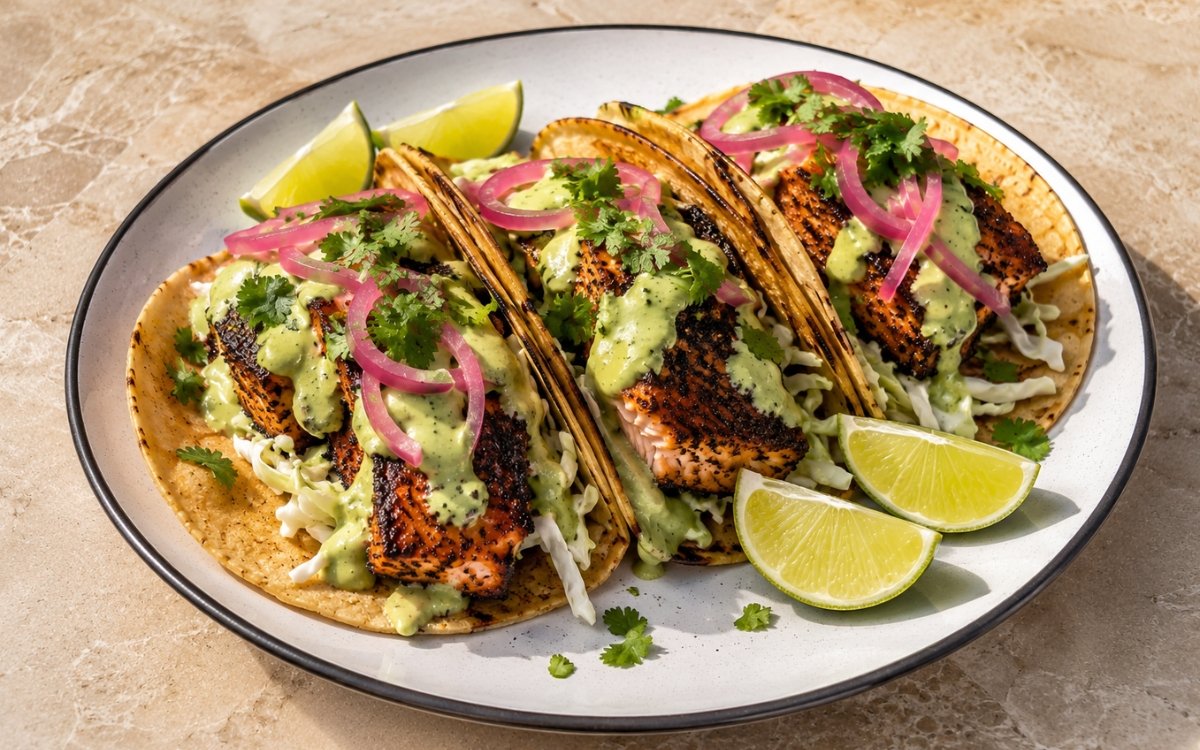
Warm homemade corn tortillas filled with flaky blackened salmon, shredded cabbage, avocado crema, pickled red onion, cilantro, and lime. The key is cooking the salmon hot and fast so it gets a dark, flavorful crust without drying out. Drying the salmon thoroughly and cooking it undisturbed over medium-high heat is the technique this whole dish depends on for a genuine blackened crust — any residual surface moisture or premature movement prevents the sustained, direct contact real charring requires, the same dry-and-leave-undisturbed principle used elsewhere in this collection whenever a protein needs a real, dark crust rather than a pale, steamed surface. Pulling the salmon the moment it’s just opaque and flakes easily, trusting carryover heat to finish it, is what keeps the interior genuinely juicy rather than dried out under all that concentrated spice and heat. Stacking the freshly cooked tortillas under a towel is what keeps them soft and pliable rather than stiffening as they cool. The payoff is a taco with real contrast — dark, spice-crusted flaky salmon against cool avocado crema, crisp cabbage, and bright pickled onion.
Prep Time : 30 min
Cook Time : 25 min
Servings : 4
30 min
25 min
4
Ingredients
For the Homemade Corn Tortillas — ⅔ batch (Full recipe — see Homemade Corn Tortillas)
• 160g masa harina — this one on Amazon
• 2g fine sea salt
• 200g warm water, approximately 40°C
For the Blackened Salmon
• 800g salmon fillet, skin removed if preferred, cut into chunky taco-size pieces
• 15ml neutral oil or olive oil
• 2 tsp smoked paprika — this one on Amazon
• 1 tsp sweet paprika — this one on Amazon
• 1 tsp garlic powder — this one on Amazon
• 1 tsp onion powder — this one on Amazon
• 1 tsp dried oregano — this one on Amazon
• 1 tsp fine sea salt
• ½ tsp black pepper
• ½ tsp ground cumin — this one on Amazon
• ¼ to ½ tsp cayenne pepper, to taste
For the Cabbage
• 250g shredded green cabbage
• 1 tbsp lime juice
• Pinch of salt
For the Avocado Crema
• 1 ripe avocado
• 80g sour cream or Greek yogurt
• 30 to 45ml lime juice
• 1 small garlic clove
• 2 tbsp cilantro leaves
• 2 to 4 tbsp water, as needed
• ½ tsp fine sea salt
For Serving / Garnish
• Pickled red onion, from Pickled Red Onion recipe
• Fresh cilantro leaves
• Lime wedges
This post may contain affiliate links. As an Amazon Associate I earn from qualifying purchases, at no additional cost to you.
Directions
- Prepare the Small Corn Tortillas
Prepare the Homemade Corn Tortilla dough according to its separate recipe, using 160g masa harina, 2g fine sea salt, and 200g warm water at about 40°C. Once the dough has rested, divide it into 16 equal balls of about 22g each. Keep the dough balls covered at all times so the masa does not dry out. Press each tortilla to about 11.4cm / 4.5 inches in diameter. Cook on a dry hot skillet or griddle until lightly charred, flexible, and just cooked through. Stack immediately under a towel so the tortillas steam and stay pliable. That stacking under a towel traps the tortillas’ own residual steam, which is exactly what keeps them soft and pliable rather than stiffening and drying out as they cool waiting to be filled. - Make the Cabbage
Toss the shredded cabbage with the lime juice and a small pinch of salt. Set aside so it softens slightly while you prepare the rest. That brief rest with lime juice softens the cabbage’s own raw crunch just slightly while adding real brightness, giving it a texture that sits somewhere between fully raw and properly slaw-like by the time the tacos are assembled. - Make the Avocado Crema
Add the avocado, sour cream or Greek yogurt, lime juice, garlic, cilantro, and salt to a blender or small food processor. Blend until smooth. Add a little water as needed until it reaches a spoonable, drizzle-friendly consistency. Set aside. Adding water only gradually, checking the consistency as you go, protects the crema from becoming thinner than intended — it’s far easier to loosen further than to thicken it back up once too much liquid has already gone in. - Season the Salmon
Pat the salmon dry very well, then cut it into chunky pieces sized for tacos. In a small bowl, mix the smoked paprika, sweet paprika, garlic powder, onion powder, oregano, salt, black pepper, cumin, and cayenne. Toss the salmon with the oil, then coat evenly with the spice mix. Tossing the salmon in oil before the dry spice mix is what gives that seasoning something to properly adhere to — spice applied directly to bare, dry fish tends to sit more loosely on the surface and fall away during cooking rather than forming the cohesive crust this dish depends on. - Cook the Salmon
Heat a large skillet over medium-high heat until hot. Add a light film of oil if needed. Place the salmon pieces in a single layer and cook without moving them first for about 2 to 3 minutes, so the blackened crust can form. Turn and cook another 1 to 2 minutes, depending on thickness, until the edges are dark and the salmon is just cooked through. Break or flake the larger pieces gently into taco-size chunks. To keep the salmon juicy: start with dry salmon, use medium-high heat so the crust forms quickly, do not overcrowd the pan, do not keep stirring, and pull the salmon when it is just opaque and flakes easily — it will keep cooking a little from residual heat. That undisturbed 2-to-3-minute window is precisely what gives the spice-coated surface enough sustained, direct contact with the hot pan to actually blacken and char, rather than simply warming through while staying pale. - Warm the Tortillas
If needed, rewarm the cooked tortillas briefly on a hot dry skillet, then keep them wrapped in a towel so they stay soft and pliable. - Assemble the Tacos
Fill each tortilla with a little cabbage, then add blackened salmon. Spoon or drizzle over the avocado crema. Top with pickled red onion and fresh cilantro. Serve with lime wedges on the side. Layering cabbage first, directly against the tortilla, gives the salmon and crema a slightly raised, more stable base to sit on rather than settling directly against the tortilla’s own soft surface.
*Notes :
- Drying the salmon thoroughly before it ever meets the seasoning and the pan deserves genuine respect as the detail most responsible for whether this dish achieves a real blackened crust or ends up pale and steamed. Any residual surface moisture converts instantly to steam on contact with the hot skillet, and that steam actively works against the direct, sustained contact real charring requires — a thorough pat-dry is what allows the spice coating to actually blacken rather than simply warm through.
- Leaving the salmon genuinely undisturbed during that initial 2-to-3-minute window deserves the same attention this technique receives throughout this collection’s other seared proteins. Real blackening only develops through sustained contact between the spiced surface and the hot pan — interrupting that contact too early, before a proper crust has formed, produces a noticeably paler, less developed result regardless of total cooking time.
- Pulling the salmon the moment it’s just opaque and flakes easily, rather than waiting until it looks completely done, deserves the same respect given to residual-heat cooking throughout this collection. Salmon continues cooking briefly even off direct heat, and waiting until it appears fully done in the pan means it will actually be overcooked and drier by the time it’s flaked and assembled into tacos.
- Stacking the freshly cooked tortillas under a towel immediately after cooking is a small but genuinely consequential detail. That trapped steam is specifically what keeps the tortillas soft and pliable through assembly — tortillas left uncovered to cool on their own stiffen considerably faster, becoming harder to fold around a generous taco filling without cracking.
Why This Recipe Works
This recipe works because the salmon is dried thoroughly, coated in oil before the spice mix so it properly adheres, and cooked undisturbed over real medium-high heat to develop a genuine blackened crust.
Pulling it while just opaque, trusting carryover heat to finish, keeps the interior juicy rather than dry. The tortillas are stacked under a towel immediately after cooking, protecting their pliability through assembly.
The cabbage, briefly tossed with lime, and the blended avocado crema round out the plate with fresh, cool contrast against the dark, spiced salmon.
Ingredient Breakdown
Thoroughly Dried, Well-Coated Salmon
The centrepiece — dried for real charring, coated in oil first so the spice mix properly adheres and blackens.
Undisturbed Initial Sear (2–3 Minutes)
The critical technique — gives the spiced surface sustained, direct contact needed for genuine blackening.
Carryover-Trusted Doneness Cue
The finishing technique — pulling the salmon while just opaque protects the centre from drying out.
Homemade Corn Tortillas (Stacked Under a Towel)
The structural base — trapped steam keeps them soft and pliable through assembly.
Blended Avocado Crema
The cool, creamy finish — adjusted gradually with water to a spoonable, drizzle-friendly consistency.
Flavor Structure Explained
This blackened salmon tacos dish follows a layered balance model:
- Dark spiced foundation (blackened, well-seasoned salmon)
- Cool creamy finish (avocado crema)
- Crisp fresh crunch (lime-tossed cabbage)
- Bright pickled accent (pickled red onion)
- Soft warm base (homemade corn tortillas)
Blackened, well-seasoned salmon provides this taco’s dark, spiced foundation, its crust built through real, undisturbed searing. Blended avocado crema finishes the dish with cool, creamy richness. Lime-tossed cabbage adds crisp, fresh crunch beneath the salmon. Bright, tangy pickled red onion cuts through the richness with real acidity. Soft, warm corn tortillas tie every component together into one balanced, textured taco.
Common Mistakes to Avoid
- Searing Wet Salmon – This prevents real blackening and produces a pale crust. Always pat it thoroughly dry first.
- Skipping the Oil Before the Spice Mix – This causes the seasoning to fall away rather than adhere and blacken. Always toss the salmon in oil first.
- Moving the Salmon Too Early in the Pan – This interrupts the sustained contact real blackening depends on. Always leave it undisturbed for the initial window.
- Cooking the Salmon Until Fully Opaque in the Pan – This overcooks it once carryover heat finishes the job. Always pull it while just opaque and flaky.
- Leaving the Tortillas Uncovered to Cool – This stiffens them quickly. Always stack them under a towel immediately after cooking.
Variations
Extra-Spicy Version
Increase the cayenne, or add hot sauce at serving, per the recipe’s own guidance.
Lighter Crema Version
Use Greek yogurt instead of sour cream for a lighter avocado crema, per the recipe’s own note.
Extra-Crunchy Version
Add extra shredded cabbage or a scatter of thinly sliced radish for more textural contrast.
Store-Bought Tortilla Version
Substitute good-quality store-bought small corn tortillas if homemade isn’t practical, warming them the same way.
Storage & Make-Ahead
These are best served immediately while the salmon is still warm and the tortillas are soft.
The avocado crema can be made a few hours ahead and refrigerated with plastic wrap pressed directly onto the surface to reduce browning.
The cabbage can be tossed with lime a short time ahead and kept refrigerated until assembly.
Frequently Asked Questions
Why does the salmon need to be dried so thoroughly before seasoning?
Any residual surface moisture converts instantly to steam on contact with the hot skillet, and that steam prevents the direct, sustained contact real blackening requires. Thorough drying is what allows the spiced surface to actually char.
Why is the salmon tossed in oil before the dry spice mix?
Oil gives the spice mix something to properly adhere to. Spice applied directly to bare, dry fish tends to sit more loosely and fall away during cooking rather than forming a cohesive, blackened crust.
Why does the salmon need to stay undisturbed during the initial sear?
Real blackening only develops through sustained, direct contact between the spiced surface and the hot pan. Moving the salmon too early interrupts that contact before a proper crust has had time to form.
Why stack the freshly cooked tortillas under a towel right away?
That trapped steam keeps the tortillas soft and pliable through assembly. Tortillas left uncovered stiffen considerably faster, becoming harder to fold without cracking.
Are there other fish taco or crispy seafood taco dishes worth trying?
Crispy Fish Tacos with Slaw offers a related, crunch-forward fish taco direction worth exploring. Fish Tacos with Mango Salsa and Shrimp Tacos with Lime Crema are also worth trying for other seafood taco directions, and Salsa Verde Mexican makes a great addition alongside any of them.
Nutrition Facts
( per serving )
Calories
~560 kcal
Protein
40 g
Fat
32 g
Carbs
32 g
Calories
~560 kcal
Protein
40 g
Fat
32 g
Carbs
32 g
Related Recipes
Related Recipes

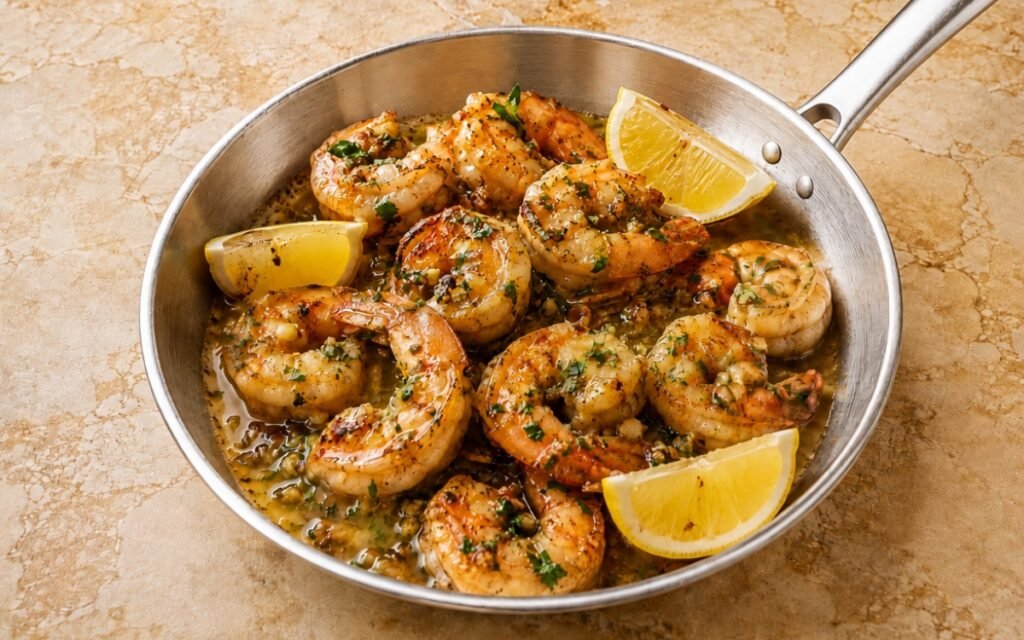
Garlic Butter Shrimp Skillet
Hard-seared shrimp finished gently in a glossy garlic butter sauce with lemon, parsley, and chili flakes.
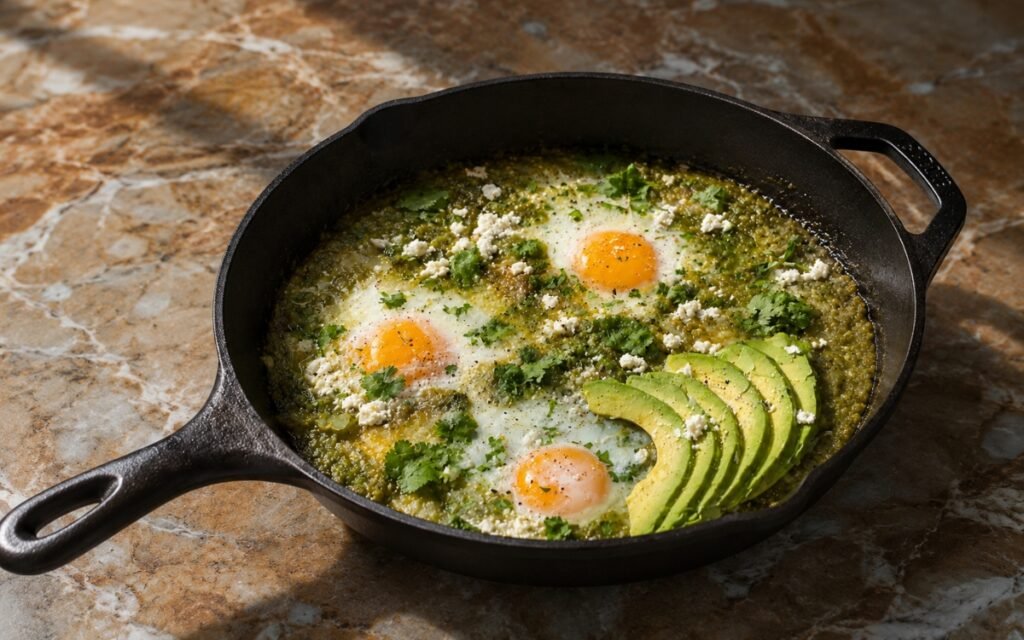
Shakshuka Verde with Poached Eggs & Avocado
Eggs nestled in a vibrant green sauce with tender vegetables and fresh herbs, cooked until the yolks stay soft.
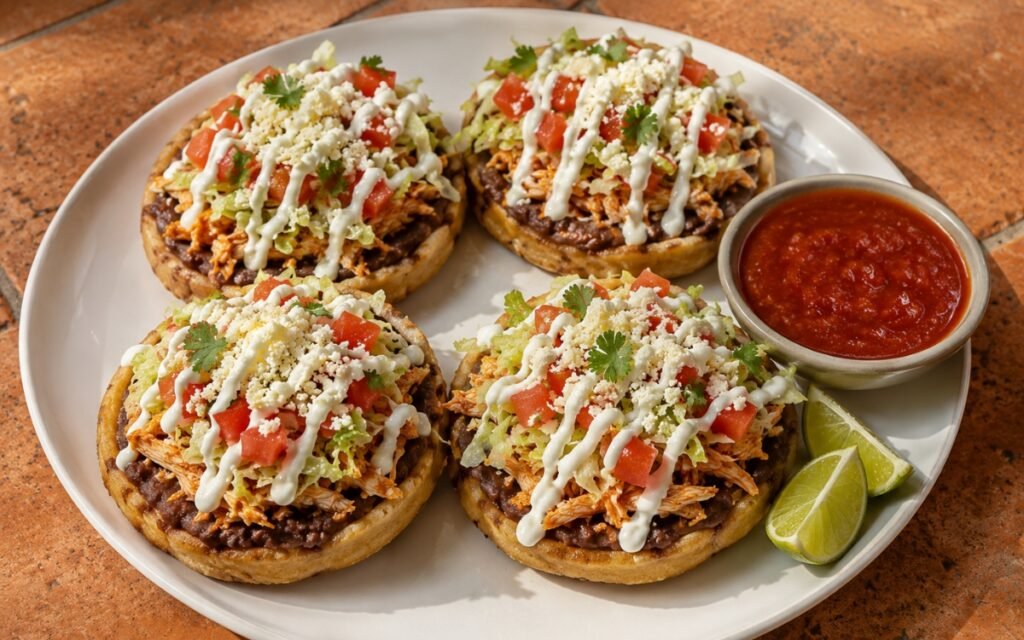
Pollo Sopes with Refried Beans
Thick masa sopes shaped with a raised rim, fried golden, and layered with refried black beans, adobo-simmered shredded chicken, lettuce, tomato, and crema.
You might also like
You might also like
Creamy Tuscan Salmon
Deeply seared salmon finished gently in a rich garlic Parmesan cream sauce with sun-dried tomatoes, spinach, parsley, and basil.
Grilled Halloumi Chickpea Salad
Chickpeas, cherry tomatoes, cucumber, red onion, parsley, and mint dressed with lemony olive oil, topped with warm grilled halloumi.
Grilled Chicken Caesar Salad
Grilled chicken breast, crisp romaine, golden croutons, shaved Parmesan, and a proper old-school Caesar dressing with no cream or mayonnaise.
Blackened Salmon Tacos
Ingredients
Method
- Prepare the Homemade Corn Tortilla dough according to its separate recipe, using 160g masa harina, 2g fine sea salt, and 200g warm water at about 40°C. Once the dough has rested, divide it into 16 equal balls of about 22g each. Keep the dough balls covered at all times so the masa does not dry out. Press each tortilla to about 11.4cm / 4.5 inches in diameter. Cook on a dry hot skillet or griddle until lightly charred, flexible, and just cooked through. Stack immediately under a towel so the tortillas steam and stay pliable. That stacking under a towel traps the tortillas’ own residual steam, which is exactly what keeps them soft and pliable rather than stiffening and drying out as they cool waiting to be filled.
- Toss the shredded cabbage with the lime juice and a small pinch of salt. Set aside so it softens slightly while you prepare the rest. That brief rest with lime juice softens the cabbage’s own raw crunch just slightly while adding real brightness, giving it a texture that sits somewhere between fully raw and properly slaw-like by the time the tacos are assembled.
- Add the avocado, sour cream or Greek yogurt, lime juice, garlic, cilantro, and salt to a blender or small food processor. Blend until smooth. Add a little water as needed until it reaches a spoonable, drizzle-friendly consistency. Set aside. Adding water only gradually, checking the consistency as you go, protects the crema from becoming thinner than intended — it’s far easier to loosen further than to thicken it back up once too much liquid has already gone in.
- Pat the salmon dry very well, then cut it into chunky pieces sized for tacos. In a small bowl, mix the smoked paprika, sweet paprika, garlic powder, onion powder, oregano, salt, black pepper, cumin, and cayenne. Toss the salmon with the oil, then coat evenly with the spice mix. Tossing the salmon in oil before the dry spice mix is what gives that seasoning something to properly adhere to — spice applied directly to bare, dry fish tends to sit more loosely on the surface and fall away during cooking rather than forming the cohesive crust this dish depends on.
- Heat a large skillet over medium-high heat until hot. Add a light film of oil if needed. Place the salmon pieces in a single layer and cook without moving them first for about 2 to 3 minutes, so the blackened crust can form. Turn and cook another 1 to 2 minutes, depending on thickness, until the edges are dark and the salmon is just cooked through. Break or flake the larger pieces gently into taco-size chunks. To keep the salmon juicy: start with dry salmon, use medium-high heat so the crust forms quickly, do not overcrowd the pan, do not keep stirring, and pull the salmon when it is just opaque and flakes easily — it will keep cooking a little from residual heat. That undisturbed 2-to-3-minute window is precisely what gives the spice-coated surface enough sustained, direct contact with the hot pan to actually blacken and char, rather than simply warming through while staying pale.
- If needed, rewarm the cooked tortillas briefly on a hot dry skillet, then keep them wrapped in a towel so they stay soft and pliable.
- Fill each tortilla with a little cabbage, then add blackened salmon. Spoon or drizzle over the avocado crema. Top with pickled red onion and fresh cilantro. Serve with lime wedges on the side. Layering cabbage first, directly against the tortilla, gives the salmon and crema a slightly raised, more stable base to sit on rather than settling directly against the tortilla’s own soft surface.