Ingredients
Method
Prepare the Small Corn Tortillas
- Prepare the Homemade Corn Tortilla dough according to its separate recipe, using 160g masa harina, 2g fine sea salt, and 200g warm water at about 40°C. Once the dough has rested, divide it into 16 equal balls of about 22g each. Keep the dough balls covered at all times so the masa does not dry out. Press each tortilla to about 11.4cm / 4.5 inches in diameter. Cook on a dry hot skillet or griddle until lightly charred, flexible, and just cooked through. Stack immediately under a towel so the tortillas steam and stay pliable. That stacking under a towel traps the tortillas' own residual steam, which is exactly what keeps them soft and pliable rather than stiffening and drying out as they cool waiting to be filled.
Make the Cabbage
- Toss the shredded cabbage with the lime juice and a small pinch of salt. Set aside so it softens slightly while you prepare the rest. That brief rest with lime juice softens the cabbage's own raw crunch just slightly while adding real brightness, giving it a texture that sits somewhere between fully raw and properly slaw-like by the time the tacos are assembled.
Make the Avocado Crema
- Add the avocado, sour cream or Greek yogurt, lime juice, garlic, cilantro, and salt to a blender or small food processor. Blend until smooth. Add a little water as needed until it reaches a spoonable, drizzle-friendly consistency. Set aside. Adding water only gradually, checking the consistency as you go, protects the crema from becoming thinner than intended — it's far easier to loosen further than to thicken it back up once too much liquid has already gone in.
Season the Salmon
- Pat the salmon dry very well, then cut it into chunky pieces sized for tacos. In a small bowl, mix the smoked paprika, sweet paprika, garlic powder, onion powder, oregano, salt, black pepper, cumin, and cayenne. Toss the salmon with the oil, then coat evenly with the spice mix. Tossing the salmon in oil before the dry spice mix is what gives that seasoning something to properly adhere to — spice applied directly to bare, dry fish tends to sit more loosely on the surface and fall away during cooking rather than forming the cohesive crust this dish depends on.
Cook the Salmon
- Heat a large skillet over medium-high heat until hot. Add a light film of oil if needed. Place the salmon pieces in a single layer and cook without moving them first for about 2 to 3 minutes, so the blackened crust can form. Turn and cook another 1 to 2 minutes, depending on thickness, until the edges are dark and the salmon is just cooked through. Break or flake the larger pieces gently into taco-size chunks. To keep the salmon juicy: start with dry salmon, use medium-high heat so the crust forms quickly, do not overcrowd the pan, do not keep stirring, and pull the salmon when it is just opaque and flakes easily — it will keep cooking a little from residual heat. That undisturbed 2-to-3-minute window is precisely what gives the spice-coated surface enough sustained, direct contact with the hot pan to actually blacken and char, rather than simply warming through while staying pale.
Warm the Tortillas
- If needed, rewarm the cooked tortillas briefly on a hot dry skillet, then keep them wrapped in a towel so they stay soft and pliable.
Assemble the Tacos
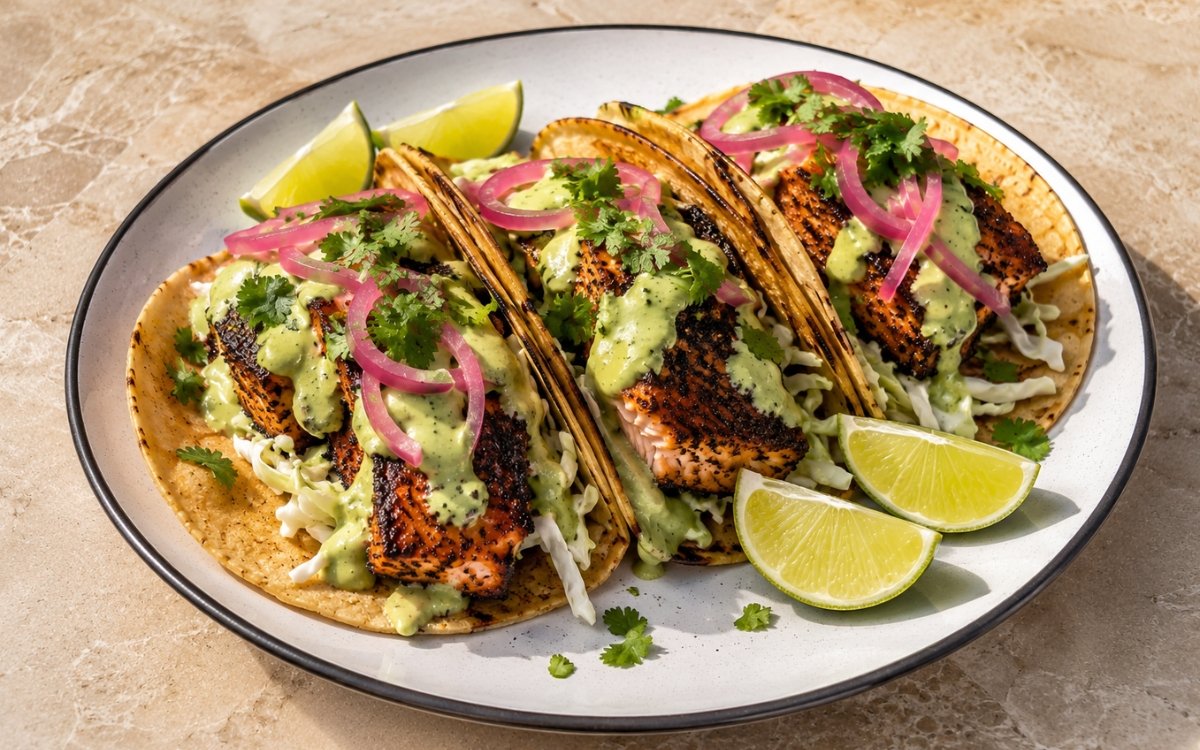
- Fill each tortilla with a little cabbage, then add blackened salmon. Spoon or drizzle over the avocado crema. Top with pickled red onion and fresh cilantro. Serve with lime wedges on the side. Layering cabbage first, directly against the tortilla, gives the salmon and crema a slightly raised, more stable base to sit on rather than settling directly against the tortilla's own soft surface.
Notes
Drying the salmon thoroughly before it ever meets the seasoning and the pan deserves genuine respect as the detail most responsible for whether this dish achieves a real blackened crust or ends up pale and steamed. Any residual surface moisture converts instantly to steam on contact with the hot skillet, and that steam actively works against the direct, sustained contact real charring requires — a thorough pat-dry is what allows the spice coating to actually blacken rather than simply warm through.
Leaving the salmon genuinely undisturbed during that initial 2-to-3-minute window deserves the same attention this technique receives throughout this collection's other seared proteins. Real blackening only develops through sustained contact between the spiced surface and the hot pan — interrupting that contact too early, before a proper crust has formed, produces a noticeably paler, less developed result regardless of total cooking time.
Pulling the salmon the moment it's just opaque and flakes easily, rather than waiting until it looks completely done, deserves the same respect given to residual-heat cooking throughout this collection. Salmon continues cooking briefly even off direct heat, and waiting until it appears fully done in the pan means it will actually be overcooked and drier by the time it's flaked and assembled into tacos.
Stacking the freshly cooked tortillas under a towel immediately after cooking is a small but genuinely consequential detail. That trapped steam is specifically what keeps the tortillas soft and pliable through assembly — tortillas left uncovered to cool on their own stiffen considerably faster, becoming harder to fold around a generous taco filling without cracking.