
Shrimp Tacos with Avocado and Lime Crema
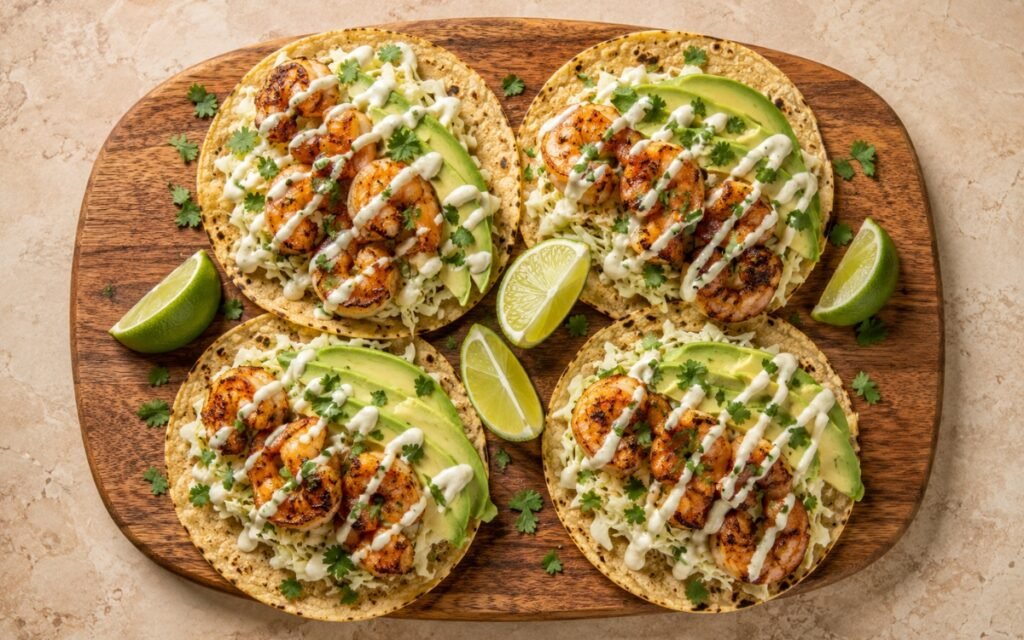
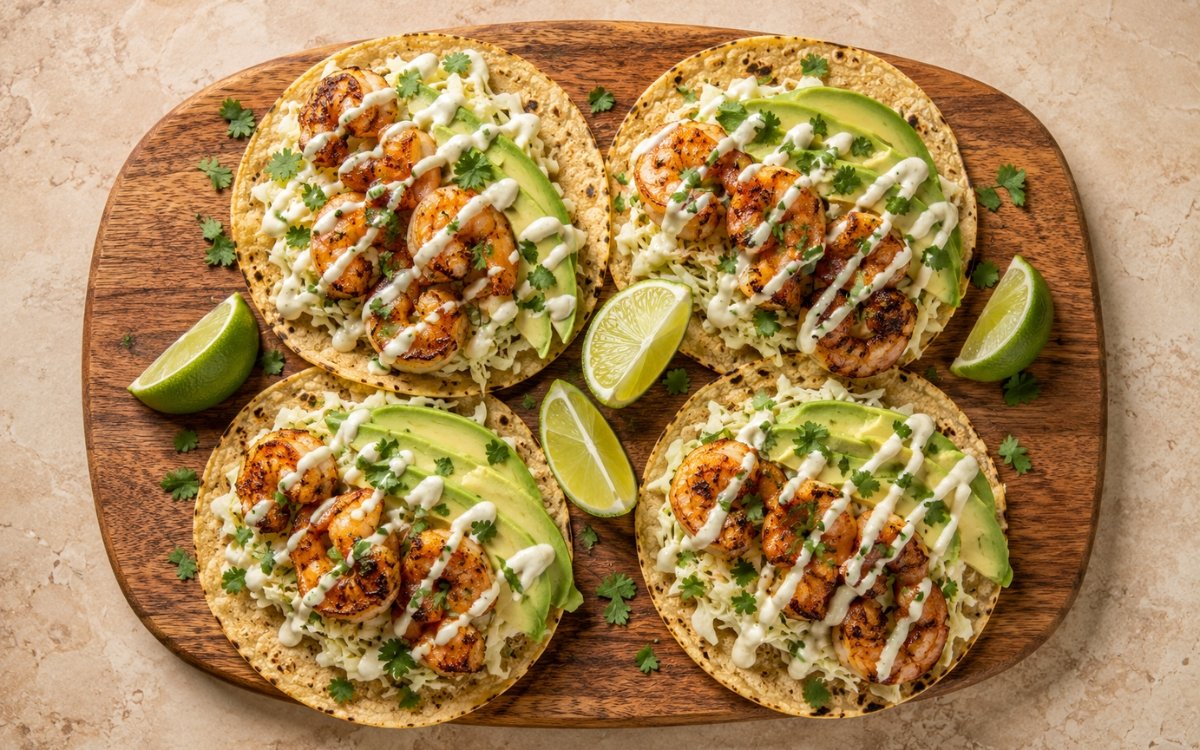
Small corn tortillas filled with a crisp bed of finely shredded white cabbage, four large pan-seared spiced shrimp per taco, thin avocado slices, and a thick white lime crema drizzle, finished with fresh cilantro and lime wedges. Shrimp cook fast enough that every step here is calibrated around that speed — drying them thoroughly before seasoning is what allows a real sear rather than a steamed, pale surface, the same dry-before-heat principle used elsewhere in this collection wherever a hard, fast sear is the goal. Letting the salted, spiced shrimp sit for only 10 minutes, rather than a longer marinade, matters just as much: salt left on shrimp too long draws out moisture and tightens the texture into something rubbery rather than tender. Adding the avocado only after the hot shrimp is on the taco, not before, keeps the slices clean and cool rather than warmed and smashed by residual heat. The payoff is a taco with genuine colour and textural range — vivid orange-charred shrimp, cool green avocado fans, crisp pale cabbage, and thick white crema, each staying visually distinct.
Prep Time : 35 min
Cook Time : 25 min
Servings : 4
35 min
25 min
4
Ingredients
For the Homemade Corn Tortillas — ⅔ batch; (Full recipe — see Homemade Corn Tortillas)
• 160g masa harina — this one on Amazon
• 2g fine sea salt
• 200g warm water, approximately 40°C
For the Spiced Pan-Seared Shrimp
• 1.35kg large shrimp, peeled and deveined, tail-off, about 64 shrimp
• 45ml neutral oil, divided
• 8g kosher salt
• 4g smoked paprika — this one on Amazon
• 4g ground cumin — this one on Amazon
• 3g garlic powder
• 2g onion powder
• 2g chilli powder — this one on Amazon
• 1g cayenne pepper, optional
• 2g freshly cracked black pepper
• 30ml fresh lime juice, added after cooking
For the Lime Crema
• 300g sour cream
• 45ml fresh lime juice
• 3g lime zest
• 1 small garlic clove, finely grated
• 4g kosher salt
• 1g freshly cracked black pepper
• 15–30ml water, only if needed to loosen
For the Cabbage Base
• 400g white cabbage, sliced as thinly as possible
• 20ml fresh lime juice
• 3g kosher salt
For the Avocado
• 4 ripe avocados, thinly sliced
• 15ml fresh lime juice
• Pinch of kosher salt
For Garnishing and Serving
• 35g fresh cilantro, chopped or leaves picked
• 3 limes, cut into wedges
• Lime crema, from above
This post may contain affiliate links. As an Amazon Associate I earn from qualifying purchases, at no additional cost to you.
Directions
- Prepare the Small Corn Tortillas
Prepare the Homemade Corn Tortilla dough according to its separate recipe, using 160g masa harina, 2g salt, and 200g warm water. Mix until the dough is soft, hydrated, and no dry masa remains. Rest covered for 20–30 minutes. Divide into 16 equal balls of about 22–23g each. Keep the dough covered at all times so the masa does not dry out. Press each tortilla to about 11.4cm / 4.5 inches diameter and cook on a dry hot skillet or comal until lightly charred, flexible, and cooked through. Stack immediately under a towel so the tortillas steam and stay soft. Keeping the tortillas continuously covered from cooking through to assembly is what keeps them pliable through the whole prep window — even brief exposure to open air starts stiffening the edges. - Prepare the Lime Crema
Mix the sour cream, lime juice, lime zest, grated garlic, salt, and black pepper until smooth. Add water 15ml at a time only if needed. The crema should drizzle in thick white ribbons, not run like milk. If it is too thin, it will disappear into the cabbage and look weak. The lime zest here is doing different work than the lime juice — zest carries the bright, floral citrus oils without adding extra liquid, which is what lets the crema stay genuinely citrus-forward without needing to be thinned past its ideal thick, ribbon-like consistency. - Prepare the Cabbage
Toss the very thinly sliced cabbage with lime juice and salt. Let it sit for 10–15 minutes while preparing the shrimp. The cabbage should soften slightly but stay crisp, pale, and fresh. Do not over-salt or crush it. This is a crisp bedding for the tacos, not coleslaw. The distinction matters for technique as much as flavour — a genuine coleslaw is worked and massaged to break down the cabbage’s texture, while this brief lime-and-salt rest is meant only to soften the sharpest raw edge while leaving the crunch fully intact. - Prepare the Avocado
Slice the avocados thinly and gently toss or brush with lime juice and a pinch of salt. Keep the slices intact so they can be fanned across each taco. A light brush of lime juice here serves a dual purpose — it seasons the avocado directly and slows the oxidation that would otherwise dull its colour before assembly, without needing to toss the slices so vigorously that they break apart. - Season the Shrimp
Pat the shrimp completely dry with paper towels. Toss with 30ml neutral oil, salt, smoked paprika, cumin, garlic powder, onion powder, chilli powder, cayenne if using, and black pepper. Let sit for 10 minutes only. Do not let the shrimp sit heavily salted for too long or the texture will tighten. This short window is a genuine trade-off point — long enough for the salt and spices to season the surface, but well short of the point where salt begins actively drawing moisture out of the shrimp and firming its texture past tender into rubbery. - Sear the Shrimp
Heat a large skillet or griddle over medium-high heat until very hot. Add a thin film of the remaining oil. Sear the shrimp in batches for 60–90 seconds on the first side, then 45–60 seconds on the second side, until pink-orange, lightly charred in spots, and just cooked through. Transfer cooked shrimp to a bowl and toss with fresh lime juice. Do not overcrowd the skillet. Crowding gives you steamed shrimp with no colour, which is trash for tacos. Genuinely hot oil and a single uncrowded layer are what let the shrimp’s surface actually contact and brown against the pan rather than releasing moisture into a crowded space and simmering in it — the difference between a lightly charred, vivid orange shrimp and a flat grey one comes down almost entirely to this. - Warm the Tortillas
Just before assembling, rewarm the tortillas on a dry skillet or comal for 10–15 seconds per side until soft and flexible. Keep covered in a towel. This brief warm-through restores pliability right before assembly, rather than serving as a second full cook. - Assemble the Tacos
Place 4 warm corn tortillas per serving on plates or a board. Add a small bed of shredded cabbage to each tortilla. Place 4 seared shrimp on each taco. Fan thin avocado slices along one side of each taco. Drizzle lime crema across the shrimp and avocado in thick white lines. Finish with fresh cilantro. Building the taco in this specific order — cabbage first as a base, then hot shrimp, then cool avocado, then crema last — keeps the avocado from sitting directly against the shrimp’s residual heat any longer than necessary, protecting its clean, cool texture. - Serve
Serve immediately with lime wedges between the tacos. Squeeze fresh lime over the tacos just before eating. The shrimp should be hot and slightly charred, the cabbage crisp, the avocado cleanly sliced, and the crema visibly drizzled over the top. Shrimp cools and its texture shifts quickly once off the heat, so serving without delay is what keeps the char, the temperature contrast against the cool avocado and crema, and the overall texture intact.
*Notes :
- The shrimp’s brief seasoning window — just 10 minutes rather than a longer marinade — is a deliberate departure from how many other proteins in this collection are treated. Larger cuts of meat benefit from extended marinating time for both flavour penetration and tenderising, but shrimp’s small size and delicate texture work against that same logic: salt applied for too long draws out moisture rapidly given the shrimp’s high surface-area-to-volume ratio, tightening the flesh into something noticeably more rubbery well before any real flavour benefit is gained.
- Searing shrimp successfully comes down almost entirely to heat management and batch size. A genuinely hot pan and a single uncrowded layer are what allow direct contact and browning; anything less produces shrimp that release their natural moisture into a crowded pan and effectively steam rather than sear, resulting in the flat grey colour and lack of char that undermines the whole point of pan-searing them in the first place. This is a case where working in smaller batches, even if it takes a few extra minutes total, produces a categorically better result than trying to cook everything at once.
- The distinction drawn in this recipe between the cabbage base here and a full coleslaw is worth taking seriously despite the similar starting ingredients. A brief lime-and-salt rest is designed to soften cabbage’s sharpest raw edge while preserving nearly all of its crunch, functioning as a crisp textural bed for the taco. Treating it like coleslaw — working it more aggressively or salting it more heavily — breaks the cabbage down further than this dish calls for and turns a crisp bedding into something softer and wetter.
- Timing the avocado’s addition to after the shrimp is assembled, rather than earlier in the process, protects one of the dish’s more fragile elements. Avocado exposed to the shrimp’s direct residual heat for any real length of time will warm through and soften past the clean, firm slice this recipe calls for — building the taco with avocado added last, right before the crema, is what keeps those slices looking and tasting genuinely fresh.
Why This Recipe Works
This recipe works because every component’s timing is calibrated to shrimp’s fast cooking speed and delicate texture: a brief 10-minute seasoning window avoids over-salting and toughening the shrimp, a hot, uncrowded pan produces real sear and char rather than steaming, and the avocado is added only at final assembly to stay cool and clean rather than warming under the shrimp’s residual heat.
The crisp, lightly dressed cabbage base and the thick, visible lime crema round out the taco with textural and visual contrast that highlights rather than competes with the shrimp itself.
Ingredient Breakdown
Large, Thoroughly Dried Shrimp
The specified size and prep — large enough to look substantial on the taco, dried completely so the spiced surface actually sears rather than steams.
Brief 10-Minute Seasoning Window
The timing specification — long enough to season the shrimp’s surface, short enough to avoid salt tightening the delicate texture.
Hot, Uncrowded Sear
The cooking technique — real heat and single-layer batches produce genuine char and colour rather than grey, steamed shrimp.
Lime Zest and Juice Crema
The finishing sauce — zest for bright citrus oil without added liquid, juice for acidity, together kept thick enough to drizzle visibly.
Late-Added Avocado
The freshness-preserving sequence — fanned onto the taco only after the shrimp and cabbage are in place, staying cool and cleanly sliced.
Flavor Structure Explained
This shrimp taco follows a layered balance model:
- Crisp fresh foundation (cabbage base)
- Warm charred savoury centre (spiced seared shrimp)
- Rich creamy contrast (avocado, lime crema)
- Bright citrus acidity (lime juice, lime zest)
- Fresh herbal finish (cilantro)
The crisp cabbage base provides a cool, crunchy foundation beneath the warm, spiced shrimp. The seared shrimp itself delivers smoky, charred savouriness with just enough heat from the chilli and cayenne to register without overwhelming. Avocado and lime crema both add rich, cooling creaminess that balances the shrimp’s spice. Fresh lime juice and zest cut through that richness with sharp acidity, while a final scatter of cilantro finishes each taco with clean, aromatic brightness.
Common Mistakes to Avoid
- Not Drying the Shrimp Before Seasoning – Surface moisture prevents real searing and produces pale, rubbery shrimp instead of charred, vivid ones. Always pat the shrimp completely dry before tossing with oil and spices.
- Letting the Shrimp Sit Too Long After Salting – Extended contact with salt draws out moisture and tightens the shrimp’s texture past tender into rubbery. Always limit the rest to 10 minutes.
- Overcrowding the Searing Pan – A crowded pan drops the temperature and causes the shrimp to steam rather than sear, losing all colour and char. Always cook in batches with space between pieces.
- Adding Avocado Before the Hot Shrimp – Direct contact with residual heat warms and can smash the avocado slices, losing their clean texture. Always fan the avocado on after the shrimp is already in place.
- Making the Lime Crema Too Thin – A watery crema disappears into the cabbage instead of staying visible, and can soak the tortilla. Always keep it thick enough to drizzle in distinct ribbons.
Variations
Spicier Version
Increase the cayenne to 2g and add a small pinch of chile de árbol powder to the shrimp seasoning for a noticeably sharper heat.
Grilled Instead of Pan-Seared
Thread the seasoned shrimp onto skewers and grill for 1–2 minutes per side over high heat for a smokier, char-forward version of the same flavour profile.
With Mango
Add thin slices of ripe mango alongside the avocado for a sweeter, brighter contrast against the spiced shrimp.
Shrimp Taco Bowl
Skip the tortillas and serve the cabbage, shrimp, avocado, and crema over rice for a bowl-style version of the same components.
Storage & Make-Ahead
Raw, seasoned shrimp should be seared fresh rather than seasoned far ahead; if prepping in advance, keep the shrimp and the spice mix separate until shortly before cooking.
Cooked shrimp can be refrigerated in an airtight container for up to 2 days. Reheat briefly in a hot pan rather than the microwave to avoid overcooking further.
Lime crema can be refrigerated in a sealed container for up to 5 days. Dressed cabbage can be refrigerated for up to 1 day, though it will continue softening the longer it sits.
Sliced avocado is best cut fresh just before assembly; pre-sliced avocado browns and softens within a few hours even with lime juice. Assembled tacos are not suitable for storage — assemble only what will be served and eaten immediately.
Frequently Asked Questions
Why does the shrimp only sit in its seasoning for 10 minutes instead of a longer marinade?
Why does the shrimp only sit in its seasoning for 10 minutes instead of a longer marinade?
Shrimp’s small size and high surface-area-to-volume ratio mean salt draws out moisture from it much faster than from a larger cut of meat. A longer rest tightens the shrimp’s texture into something rubbery well before any additional flavour benefit is gained, so the short window is a deliberate trade-off in the shrimp’s favour.
Why is overcrowding the pan specifically called out as a problem here?
A crowded pan can’t maintain its high heat, and the shrimp release moisture that has nowhere to evaporate quickly in a packed skillet. Instead of searing and developing char, the shrimp effectively steam in that released liquid, producing pale, grey shrimp with none of the vivid colour or texture this recipe is built around.
Why add the avocado after the shrimp rather than as part of the base layer?
Avocado left sitting directly against hot, freshly seared shrimp will warm through and soften past the clean, firm slice the recipe calls for. Adding it only once the shrimp is already on the taco limits its exposure to that residual heat, keeping the slices fresh and intact.
Why does the lime crema use both zest and juice rather than just juice?
Lime zest carries the fruit’s aromatic citrus oils without adding liquid, letting the crema taste genuinely bright and citrus-forward while staying thick enough to hold its shape and drizzle in visible ribbons. Relying on juice alone for that same citrus intensity would require thinning the crema past the point where it stays visually distinct.
Are there other seafood-forward recipes worth trying, and what else could I drizzle over these tacos?
If you enjoy this kind of fresh, citrus-forward seafood preparation, Tostadas with Ceviche is a similar direction worth exploring — it uses raw fish cured in citrus rather than seared shrimp, served over a crisp tostada instead of a soft tortilla. As for the tacos themselves, Salsa Verde makes a tangy, herbaceous drizzle alongside or in place of the lime crema, and Cilantro Lime Drizzle offers an even lighter, sharper citrus finish for anyone who wants something brighter than the crema’s richness.
Nutrition Facts
( per serving )
Calories
~560 kcal
Protein
42 g
Fat
28 g
Carbs
38 g
Calories
~560 kcal
Protein
42 g
Fat
28 g
Carbs
38 g
Related Recipes
Related Recipes

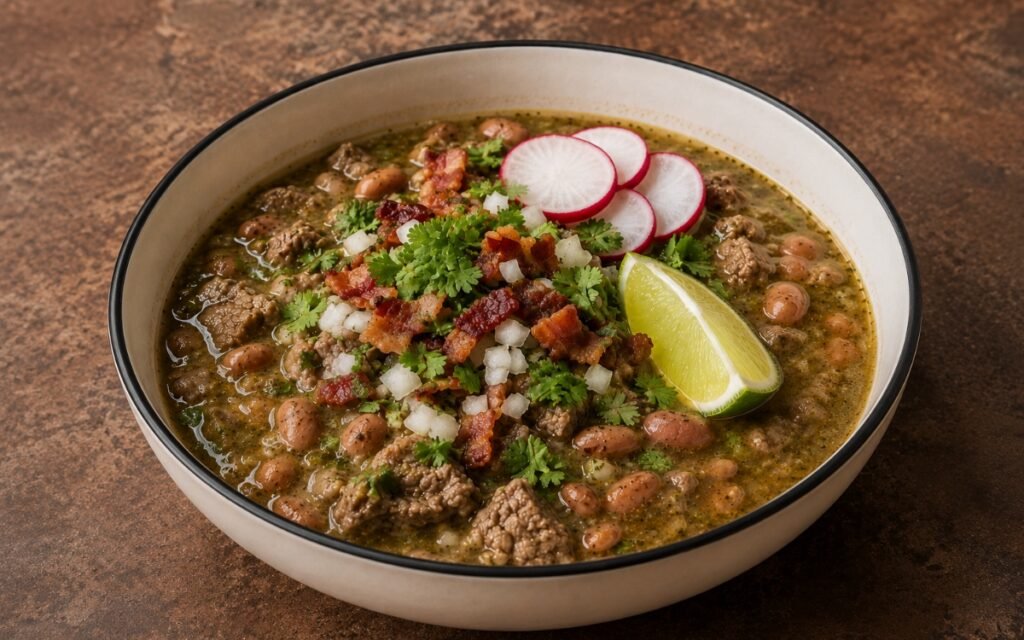
Carne en su Jugo
Finely chopped, batch-browned beef simmered briefly in a savory tomatillo broth with pinto beans, topped with crispy bacon and fresh garnishes.
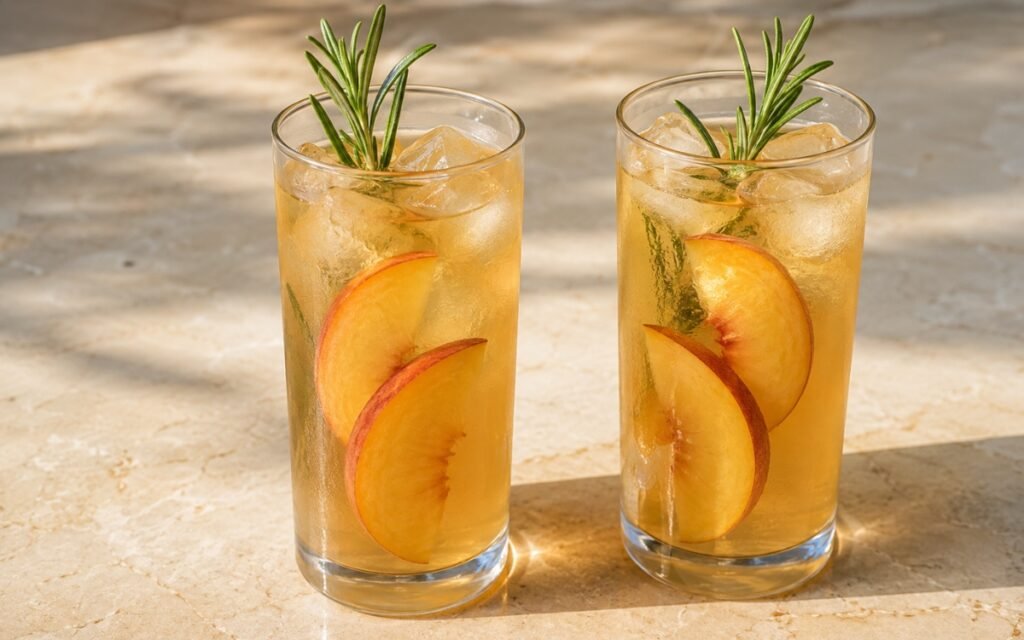
Rosemary Peach White Iced Tea
White tea at 75–80°C for 3–4 minutes, peach rosemary syrup made separately and strained — stirred in with restraint, chilled. Delicate, floral, and quietly fruity.
Mint Pineapple White Tea Cooler
White tea at 75–80°C for 3–4 minutes, fresh pineapple blended and strained — ginger infused 5–7 minutes, mint clapped and infused last, chilled. Tropical and herbal.

You might also like
You might also like
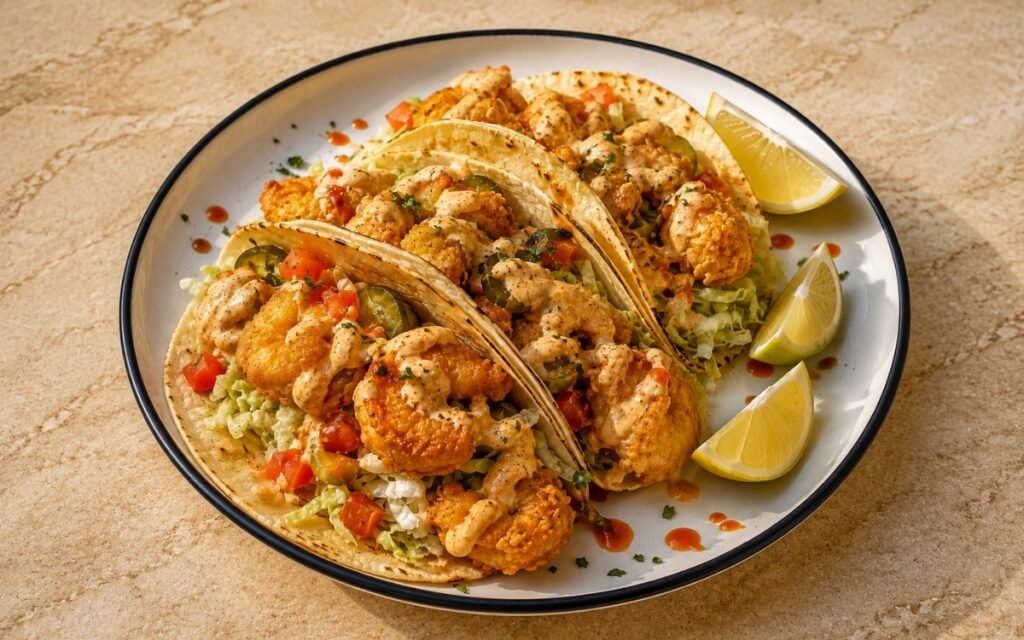
Shrimp Po’Boy Tacos
Crispy fried shrimp in warm homemade corn tortillas with cold shredded lettuce, tomato, pickles, and creamy remoulade.
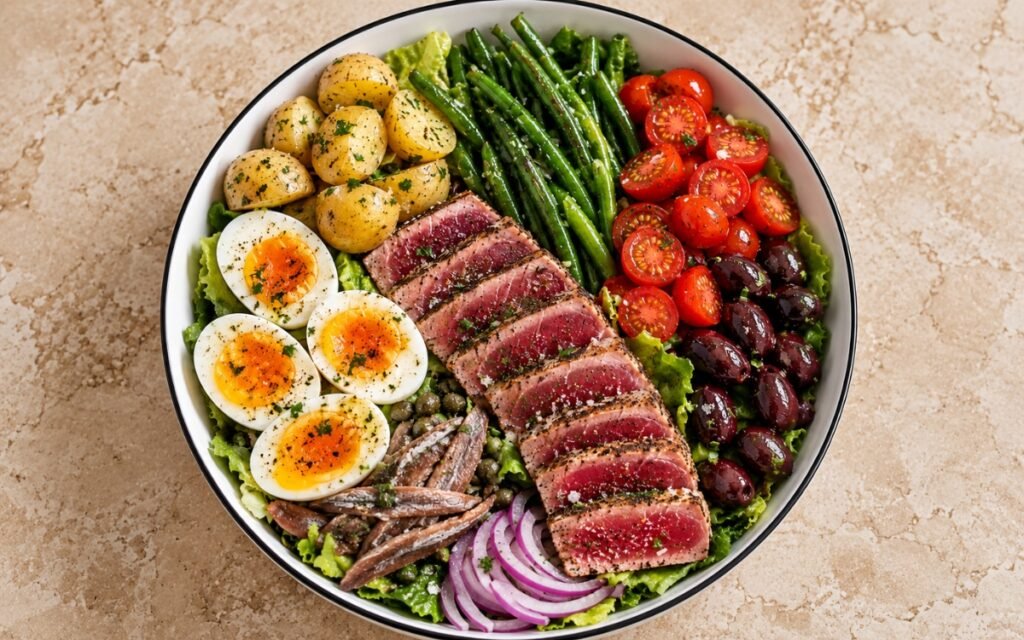
Tuna Niçoise Salad
Seared rare tuna, jammy eggs, haricots verts, baby potatoes, olives, and anchovies composed over crisp greens with a sharp mustard vinaigrette.
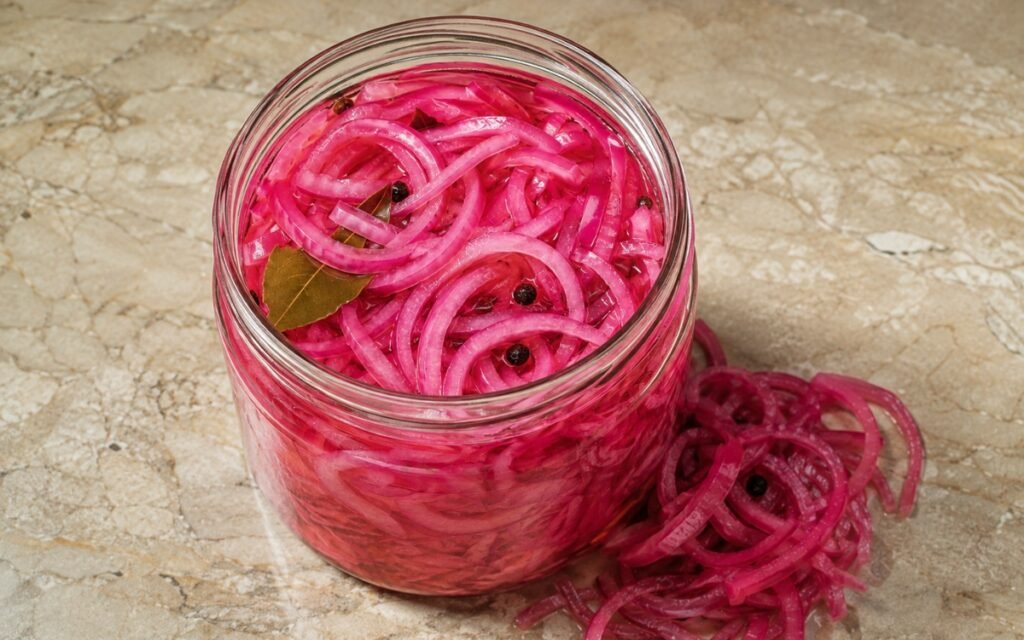
Pickled Red Onion
Thin, evenly sliced red onion pickled in a bright vinegar-lime brine with bay leaf, peppercorns, and coriander seeds.
Shrimp Tacos with Avocado and Lime Crema
Ingredients
Method
- Prepare the Homemade Corn Tortilla dough according to its separate recipe, using 160g masa harina, 2g salt, and 200g warm water. Mix until the dough is soft, hydrated, and no dry masa remains. Rest covered for 20–30 minutes. Divide into 16 equal balls of about 22–23g each. Keep the dough covered at all times so the masa does not dry out. Press each tortilla to about 11.4cm / 4.5 inches diameter and cook on a dry hot skillet or comal until lightly charred, flexible, and cooked through. Stack immediately under a towel so the tortillas steam and stay soft. Keeping the tortillas continuously covered from cooking through to assembly is what keeps them pliable through the whole prep window — even brief exposure to open air starts stiffening the edges.
- Mix the sour cream, lime juice, lime zest, grated garlic, salt, and black pepper until smooth. Add water 15ml at a time only if needed. The crema should drizzle in thick white ribbons, not run like milk. If it is too thin, it will disappear into the cabbage and look weak. The lime zest here is doing different work than the lime juice — zest carries the bright, floral citrus oils without adding extra liquid, which is what lets the crema stay genuinely citrus-forward without needing to be thinned past its ideal thick, ribbon-like consistency.
- Toss the very thinly sliced cabbage with lime juice and salt. Let it sit for 10–15 minutes while preparing the shrimp. The cabbage should soften slightly but stay crisp, pale, and fresh. Do not over-salt or crush it. This is a crisp bedding for the tacos, not coleslaw. The distinction matters for technique as much as flavour — a genuine coleslaw is worked and massaged to break down the cabbage’s texture, while this brief lime-and-salt rest is meant only to soften the sharpest raw edge while leaving the crunch fully intact.
- Slice the avocados thinly and gently toss or brush with lime juice and a pinch of salt. Keep the slices intact so they can be fanned across each taco. A light brush of lime juice here serves a dual purpose — it seasons the avocado directly and slows the oxidation that would otherwise dull its colour before assembly, without needing to toss the slices so vigorously that they break apart.
- Pat the shrimp completely dry with paper towels. Toss with 30ml neutral oil, salt, smoked paprika, cumin, garlic powder, onion powder, chilli powder, cayenne if using, and black pepper. Let sit for 10 minutes only. Do not let the shrimp sit heavily salted for too long or the texture will tighten. This short window is a genuine trade-off point — long enough for the salt and spices to season the surface, but well short of the point where salt begins actively drawing moisture out of the shrimp and firming its texture past tender into rubbery.
- Heat a large skillet or griddle over medium-high heat until very hot. Add a thin film of the remaining oil. Sear the shrimp in batches for 60–90 seconds on the first side, then 45–60 seconds on the second side, until pink-orange, lightly charred in spots, and just cooked through. Transfer cooked shrimp to a bowl and toss with fresh lime juice. Do not overcrowd the skillet. Crowding gives you steamed shrimp with no colour, which is trash for tacos. Genuinely hot oil and a single uncrowded layer are what let the shrimp’s surface actually contact and brown against the pan rather than releasing moisture into a crowded space and simmering in it — the difference between a lightly charred, vivid orange shrimp and a flat grey one comes down almost entirely to this.
- Just before assembling, rewarm the tortillas on a dry skillet or comal for 10–15 seconds per side until soft and flexible. Keep covered in a towel. This brief warm-through restores pliability right before assembly, rather than serving as a second full cook.
- Place 4 warm corn tortillas per serving on plates or a board. Add a small bed of shredded cabbage to each tortilla. Place 4 seared shrimp on each taco. Fan thin avocado slices along one side of each taco. Drizzle lime crema across the shrimp and avocado in thick white lines. Finish with fresh cilantro. Building the taco in this specific order — cabbage first as a base, then hot shrimp, then cool avocado, then crema last — keeps the avocado from sitting directly against the shrimp’s residual heat any longer than necessary, protecting its clean, cool texture.
- Serve immediately with lime wedges between the tacos. Squeeze fresh lime over the tacos just before eating. The shrimp should be hot and slightly charred, the cabbage crisp, the avocado cleanly sliced, and the crema visibly drizzled over the top. Shrimp cools and its texture shifts quickly once off the heat, so serving without delay is what keeps the char, the temperature contrast against the cool avocado and crema, and the overall texture intact.