Ingredients
Method
Prepare the Small Corn Tortillas
- Prepare the Homemade Corn Tortilla dough according to its separate recipe, using 160g masa harina, 2g salt, and 200g warm water. Mix until the dough is soft, hydrated, and no dry masa remains. Rest covered for 20–30 minutes. Divide into 16 equal balls of about 22–23g each. Keep the dough covered at all times so the masa does not dry out. Press each tortilla to about 11.4cm / 4.5 inches diameter and cook on a dry hot skillet or comal until lightly charred, flexible, and cooked through. Stack immediately under a towel so the tortillas steam and stay soft. Keeping the tortillas continuously covered from cooking through to assembly is what keeps them pliable through the whole prep window — even brief exposure to open air starts stiffening the edges.
Prepare the Lime Crema
- Mix the sour cream, lime juice, lime zest, grated garlic, salt, and black pepper until smooth. Add water 15ml at a time only if needed. The crema should drizzle in thick white ribbons, not run like milk. If it is too thin, it will disappear into the cabbage and look weak. The lime zest here is doing different work than the lime juice — zest carries the bright, floral citrus oils without adding extra liquid, which is what lets the crema stay genuinely citrus-forward without needing to be thinned past its ideal thick, ribbon-like consistency.
Prepare the Cabbage
- Toss the very thinly sliced cabbage with lime juice and salt. Let it sit for 10–15 minutes while preparing the shrimp. The cabbage should soften slightly but stay crisp, pale, and fresh. Do not over-salt or crush it. This is a crisp bedding for the tacos, not coleslaw. The distinction matters for technique as much as flavour — a genuine coleslaw is worked and massaged to break down the cabbage's texture, while this brief lime-and-salt rest is meant only to soften the sharpest raw edge while leaving the crunch fully intact.
Prepare the Avocado
- Slice the avocados thinly and gently toss or brush with lime juice and a pinch of salt. Keep the slices intact so they can be fanned across each taco. A light brush of lime juice here serves a dual purpose — it seasons the avocado directly and slows the oxidation that would otherwise dull its colour before assembly, without needing to toss the slices so vigorously that they break apart.
Season the Shrimp
- Pat the shrimp completely dry with paper towels. Toss with 30ml neutral oil, salt, smoked paprika, cumin, garlic powder, onion powder, chilli powder, cayenne if using, and black pepper. Let sit for 10 minutes only. Do not let the shrimp sit heavily salted for too long or the texture will tighten. This short window is a genuine trade-off point — long enough for the salt and spices to season the surface, but well short of the point where salt begins actively drawing moisture out of the shrimp and firming its texture past tender into rubbery.
Sear the Shrimp
- Heat a large skillet or griddle over medium-high heat until very hot. Add a thin film of the remaining oil. Sear the shrimp in batches for 60–90 seconds on the first side, then 45–60 seconds on the second side, until pink-orange, lightly charred in spots, and just cooked through. Transfer cooked shrimp to a bowl and toss with fresh lime juice. Do not overcrowd the skillet. Crowding gives you steamed shrimp with no colour, which is trash for tacos. Genuinely hot oil and a single uncrowded layer are what let the shrimp's surface actually contact and brown against the pan rather than releasing moisture into a crowded space and simmering in it — the difference between a lightly charred, vivid orange shrimp and a flat grey one comes down almost entirely to this.
Warm the Tortillas
- Just before assembling, rewarm the tortillas on a dry skillet or comal for 10–15 seconds per side until soft and flexible. Keep covered in a towel. This brief warm-through restores pliability right before assembly, rather than serving as a second full cook.
Assemble the Tacos
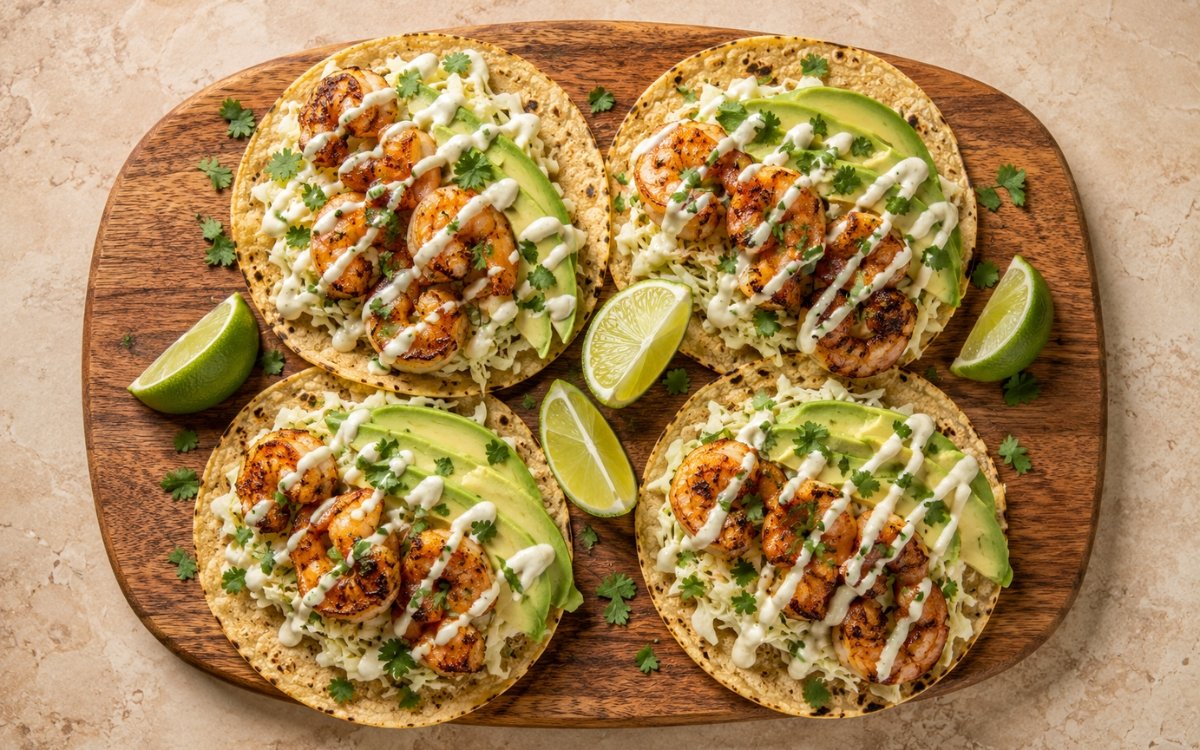
- Place 4 warm corn tortillas per serving on plates or a board. Add a small bed of shredded cabbage to each tortilla. Place 4 seared shrimp on each taco. Fan thin avocado slices along one side of each taco. Drizzle lime crema across the shrimp and avocado in thick white lines. Finish with fresh cilantro. Building the taco in this specific order — cabbage first as a base, then hot shrimp, then cool avocado, then crema last — keeps the avocado from sitting directly against the shrimp's residual heat any longer than necessary, protecting its clean, cool texture.
Serve
- Serve immediately with lime wedges between the tacos. Squeeze fresh lime over the tacos just before eating. The shrimp should be hot and slightly charred, the cabbage crisp, the avocado cleanly sliced, and the crema visibly drizzled over the top. Shrimp cools and its texture shifts quickly once off the heat, so serving without delay is what keeps the char, the temperature contrast against the cool avocado and crema, and the overall texture intact.
Notes
The shrimp's brief seasoning window — just 10 minutes rather than a longer marinade — is a deliberate departure from how many other proteins in this collection are treated. Larger cuts of meat benefit from extended marinating time for both flavour penetration and tenderising, but shrimp's small size and delicate texture work against that same logic: salt applied for too long draws out moisture rapidly given the shrimp's high surface-area-to-volume ratio, tightening the flesh into something noticeably more rubbery well before any real flavour benefit is gained.
Searing shrimp successfully comes down almost entirely to heat management and batch size. A genuinely hot pan and a single uncrowded layer are what allow direct contact and browning; anything less produces shrimp that release their natural moisture into a crowded pan and effectively steam rather than sear, resulting in the flat grey colour and lack of char that undermines the whole point of pan-searing them in the first place. This is a case where working in smaller batches, even if it takes a few extra minutes total, produces a categorically better result than trying to cook everything at once.
The distinction drawn in this recipe between the cabbage base here and a full coleslaw is worth taking seriously despite the similar starting ingredients. A brief lime-and-salt rest is designed to soften cabbage's sharpest raw edge while preserving nearly all of its crunch, functioning as a crisp textural bed for the taco. Treating it like coleslaw — working it more aggressively or salting it more heavily — breaks the cabbage down further than this dish calls for and turns a crisp bedding into something softer and wetter.
Timing the avocado's addition to after the shrimp is assembled, rather than earlier in the process, protects one of the dish's more fragile elements. Avocado exposed to the shrimp's direct residual heat for any real length of time will warm through and soften past the clean, firm slice this recipe calls for — building the taco with avocado added last, right before the crema, is what keeps those slices looking and tasting genuinely fresh.