
Shrimp Ceviche Tostadas
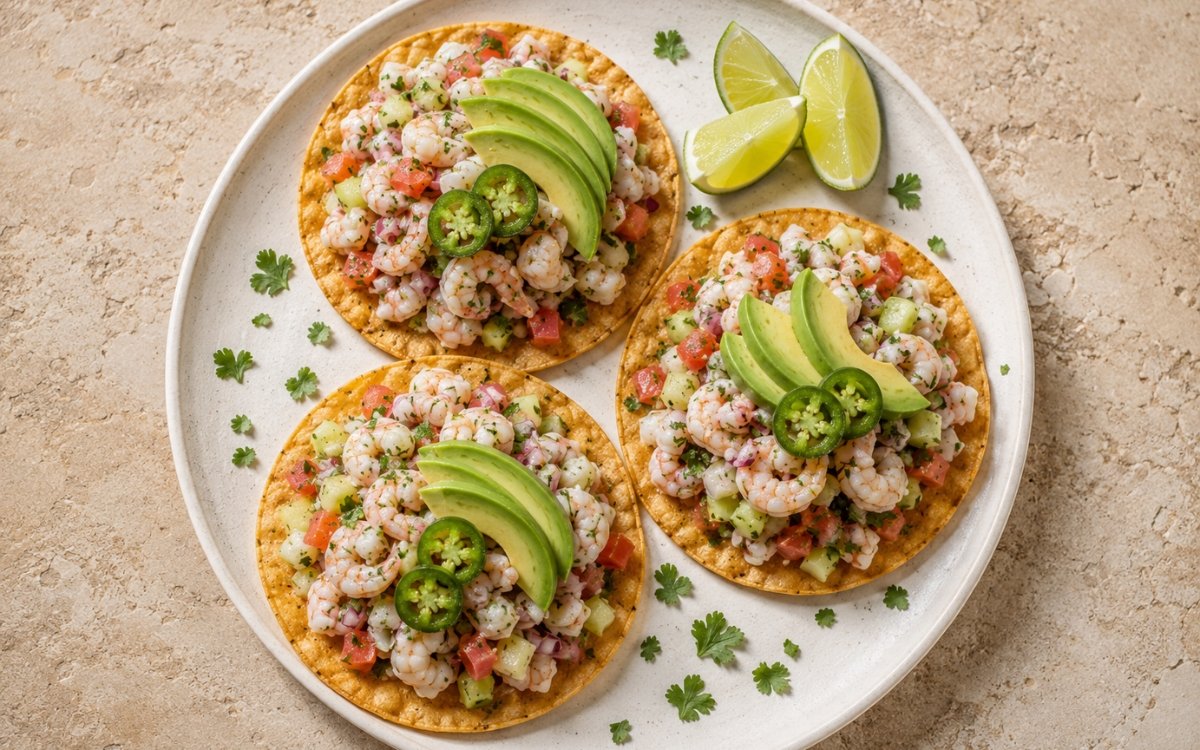
Three crisp round tostadas per serving, made from small corn tortillas fried until golden and firm, then topped generously with fresh shrimp ceviche, diced tomato, cucumber, red onion, cilantro, fanned avocado slices, thin jalapeño rounds, and lime wedges, with the ceviche looking cold, bright, and vivid against the crispy golden tostadas. Poaching the shrimp briefly before lime-marinating rather than relying on citrus alone is the food-safety backbone of this recipe — a genuinely different approach from traditional raw-lime ceviche, and the same brief-poach-then-marinate principle that gives this version the bright, citrus-forward ceviche flavour without the risk of undercooked shellfish. Frying the tortillas until fully rigid rather than merely golden matters just as much, since a tostada that still bends after cooling was under-fried and won’t hold up to the ceviche’s moisture. Draining the ceviche slightly before topping, and assembling only right before serving, both protect the same vulnerable point — a crisp shell has almost no defence against sustained contact with liquid. The payoff is a tostada with genuine contrast, crisp golden shell beneath cold, bright, well-drained ceviche and clean avocado fans.
Prep Time : 40 min
Cook Time : 25 min
Servings : 4
40 min
25 min
4
Ingredients
For the Homemade Corn Tostadas — ½ batch; (Full recipe — see Homemade Corn Tortillas)
• 120g masa harina — this one on Amazon
• 1.5g fine sea salt
• 150g warm water, approximately 40°C
For Frying the Tostadas
• Neutral oil, enough for 2–3cm depth in the skillet
• Fine sea salt, for seasoning after frying
For the Shrimp Ceviche
• 900g raw shrimp, peeled and deveined
• 2 litres water, for poaching
• 12g kosher salt, for poaching water
• 180ml fresh lime juice
• 45ml fresh orange juice
• 400g ripe tomatoes, seeded and diced small
• 300g cucumber, peeled if thick-skinned, seeded and diced small
• 120g red onion, finely diced
• 35g fresh cilantro, finely chopped
• 1 small jalapeño, deseeded and finely diced, optional for the ceviche mix
• 6g kosher salt, plus more to taste
• 2g freshly cracked black pepper
For the Avocado and Jalapeño Finish
• 2 ripe avocados, thinly sliced and divided across all tostadas
• 15ml fresh lime juice, for the avocado
• 1 jalapeño, thinly sliced into rounds
For Garnishing and Serving
• 3 limes, cut into wedges
• Fresh cilantro leaves, optional extra garnish
This post may contain affiliate links. As an Amazon Associate I earn from qualifying purchases, at no additional cost to you.
Directions
- Prepare the Small Corn Tortillas
Prepare the Homemade Corn Tortilla dough according to its separate recipe, using 120g masa harina, 1.5g salt, and 150g warm water. Mix until the dough is soft, hydrated, and no dry masa remains. Rest covered for 20 minutes. Divide into 12 equal balls of about 22–23g each. Keep the dough covered at all times so the masa does not dry out. Press each tortilla to about 11.4cm / 4.5 inches diameter and cook on a dry hot skillet or comal until lightly charred, flexible, and just cooked through. Stack under a towel while finishing the batch. The tortillas should be cooked but still pale and flexible before frying. Keeping this initial cook light and pale, rather than fully charred, matters because the frying stage still has real colour development to do — a tortilla that’s already deeply browned before frying risks burning before it reaches the fully rigid stage this recipe needs. - Fry the Tostadas
Heat 2–3cm neutral oil in a skillet to 175–180°C. Fry the tortillas one or two at a time for 45–75 seconds per side, pressing gently with tongs if they puff, until golden, rigid, and crisp. Transfer to a rack and season lightly with fine salt while hot. Do not stack the tostadas while warm. Steam will soften them and wreck the whole point of the dish. Frying only one or two at a time, rather than a larger batch, keeps the oil temperature stable enough to produce genuinely rigid, evenly coloured tostadas — overcrowding drops the temperature and risks an undercooked, still-flexible result. - Poach the Shrimp
Bring 2 litres water and 12g kosher salt to a simmer. Add the shrimp and poach for 60–90 seconds, just until opaque and curled into a loose C-shape. Drain immediately and rinse briefly under cold water or transfer to an ice bath. Do not overcook the shrimp. Tight O-shaped shrimp are rubbery and ugly. The C-shape versus O-shape distinction is a reliable visual cue for doneness — shrimp curl progressively tighter the longer they cook, and stopping at the loose C-shape is what keeps the texture tender rather than tightening into rubbery overcooked shrimp. - Chop and Lime-Marinate the Shrimp
Pat the cooled shrimp dry. Cut into bite-sized pieces, leaving some pieces larger so the shrimp stays visually obvious. Combine the shrimp with lime juice and orange juice. Let sit for 15–20 minutes in the refrigerator while preparing the vegetables. This gives the bright ceviche flavour without pretending lime juice alone makes raw seafood safe. The shrimp here is already fully cooked from poaching, so this citrus marinade is doing flavour work rather than any actual cooking — a meaningful distinction from traditional raw ceviche, where lime juice’s role in denaturing proteins is doing double duty as both flavour and a form of chemical cooking. - Mix the Ceviche
Add the diced tomatoes, cucumber, red onion, cilantro, optional diced jalapeño, salt, and black pepper to the shrimp. Fold gently until combined. Taste and adjust with more salt or lime if needed. The ceviche should be bright, juicy, and fresh, but not swimming in liquid. If it looks watery, drain off some excess juice before assembling. Folding gently rather than stirring vigorously keeps the diced vegetables and shrimp pieces distinct rather than breaking them down — the visual and textural variety of clearly defined pieces is part of what makes the finished ceviche look genuinely fresh rather than mashed together. - Prepare the Avocado and Jalapeño
Slice the avocados thinly and toss or brush gently with lime juice to prevent browning. Slice the jalapeño into thin rounds for topping. Keep the avocado slices clean and intact. Smashed avocado will make the tostadas look messy instead of fresh. A light brushing of lime juice, rather than a full toss, is usually enough to slow oxidation without needing to handle the delicate slices any more than necessary to keep them intact for fanning. - Assemble the Tostadas
Place 3 crisp tostadas per serving on plates. Spoon the shrimp ceviche generously over each tostada, draining each spoonful slightly so excess liquid does not soak the shell. Fan avocado slices over the ceviche on each tostada. Add thin jalapeño rounds on top. Finish with extra cilantro if using. Draining each individual spoonful as it’s added, rather than relying solely on the earlier draining of the whole batch, is a second layer of protection for the crisp shell — even well-drained ceviche can pool a little liquid at the bottom of the bowl by the time it’s spooned out. - Serve
Serve immediately with lime wedges at the plate edge. The tostadas should be crisp, the ceviche cold and vivid, the avocado cleanly sliced, and the jalapeño visible on top. This dish has essentially no holding window once assembled — the crisp tostada shell begins softening from contact with the cold, moist ceviche within minutes, so serving without any delay is what preserves the crunch this whole recipe is built around.
*Notes :
- The poach-then-marinate method used for this ceviche is a deliberate departure from the traditional technique of “cooking” raw shrimp or fish purely through extended contact with lime juice. Briefly poaching the shrimp until just opaque and curled guarantees it’s actually food-safe, cooked through by heat rather than by an acid whose cooking effect can be inconsistent depending on cut size, citrus strength, and marinating time. The subsequent lime-and-orange-juice marinade then exists purely to layer in the bright, characteristic ceviche flavour, with none of the food-safety ambiguity that comes with relying on citrus alone.
- Frying the tostadas to genuine rigidity, not just visible golden colour, is worth double-checking rather than assuming from appearance alone. A tostada that still has any flex to it once cooled was under-fried, and that flexibility is a direct predictor of how it will perform under a spoonful of cold, juicy ceviche — a rigid tostada holds its shape and crunch considerably longer than a merely golden but still slightly pliable one.
- Seeding both the tomatoes and the cucumber before dicing is a small step that meaningfully affects the finished ceviche’s texture. Tomato and cucumber seeds both carry a disproportionate amount of the vegetables’ internal moisture, and removing them before dicing keeps the diced pieces themselves firmer and less prone to releasing excess liquid into the mix once combined with the shrimp and citrus.
- This is a dish built around near-zero holding time at every stage past the initial prep. The tortillas need to be fried close to serving to stay crisp, the shrimp ceviche needs to be assembled and topped only once every component is ready, and the fully built tostadas need to reach the table within minutes of assembly. Treating any of these timing windows loosely is the most direct path to a soggy, disappointing result.
Why This Recipe Works
This recipe works because it manages both food safety and moisture with equal care: the shrimp is genuinely cooked through poaching before it’s marinated in citrus for flavour, and the tostadas are fried to real rigidity rather than just visible colour so they can withstand contact with the ceviche.
Seeding the tomatoes and cucumber, draining the mixed ceviche, and draining each individual spoonful again during assembly all work together to keep excess liquid away from the crisp shell for as long as possible. Building and serving immediately is what lets all of that careful moisture management actually pay off at the table.
Ingredient Breakdown
Briefly Poached Shrimp
The food-safety foundation — cooked through by heat first, then marinated in citrus purely for flavour rather than relying on lime alone to “cook” it.
Fully Rigid Fried Tostadas
The structural base — fried until genuinely stiff, not just golden, so they hold up under the ceviche’s moisture.
Seeded Tomato and Cucumber
The texture-protecting prep — removing the seeds before dicing keeps the vegetables firmer and less watery in the finished mix.
Twice-Drained Ceviche
The moisture-control technique — drained once as a batch, then again spoonful by spoonful during assembly, protecting the crisp shell at every stage.
Late-Added Avocado and Jalapeño
The fresh finishing layer — added only at final assembly to stay clean, intact, and visually vivid on top of the ceviche.
Flavor Structure Explained
This ceviche tostadass follow a layered balance model:
- Crisp savoury foundation (fried tostada)
- Bright citrus-cured centre (lime-marinated shrimp)
- Fresh crunchy vegetables (tomato, cucumber, onion)
- Rich creamy contrast (avocado)
- Sharp fresh finish (cilantro, jalapeño, lime)
The crisp fried tostada provides a savoury, crunchy base that anchors the whole dish. The poached, citrus-marinated shrimp defines the ceviche’s bright, tangy character without any raw-seafood ambiguity. Diced tomato, cucumber, and red onion contribute fresh, crisp texture and mild sweetness. Fanned avocado slices add rich, creamy contrast against the citrus-forward ceviche. A final scatter of cilantro, thin jalapeño rounds, and a squeeze of lime finish each tostada with clean, sharp brightness.
Common Mistakes to Avoid
- Skipping the Poaching Step – Relying on lime juice alone to “cook” raw shrimp is a genuine food-safety risk rather than a reliable technique. Always briefly poach the shrimp until opaque before marinating in citrus.
- Overcooking the Shrimp During Poaching – Tight, O-shaped shrimp are tough and rubbery rather than tender. Always pull them at the loose C-shape stage.
- Under-Frying the Tostadas – A tostada that still bends after cooling won’t hold up to the ceviche’s moisture. Always fry until fully rigid, not just golden in colour.
- Skipping the Seeding Step on Tomato and Cucumber – Unseeded vegetables release excess water into the ceviche, diluting the lime dressing and soaking the tostadas faster. Always seed both before dicing.
- Assembling the Tostadas Too Far Ahead – Ceviche’s moisture softens the crisp shell within minutes of contact. Always assemble and serve immediately, never in advance.
Variations
With White Fish Instead of Shrimp
Substitute 900g of firm white fish, diced small, poached the same way as the shrimp, for a fish-forward version of the same ceviche.
Spicier Version
Include the optional diced jalapeño in the ceviche mix and add extra jalapeño rounds on top for a noticeably sharper heat throughout.
With Mango
Fold 150g of finely diced ripe mango into the ceviche alongside the other vegetables for a sweeter, brighter variation.
Tostada Bar Style
Serve the fried tostadas, ceviche, and all toppings separately so guests can build their own, which also solves the timing pressure of assembling everything at once.
Storage & Make-Ahead
Fried tostadas can be stored in an airtight container at room temperature for up to 2 days, though frying fresh produces the crispest result. Poached, cooled shrimp can be refrigerated separately for up to 2 days before marinating and mixing into ceviche.
The mixed shrimp ceviche (without avocado) can be refrigerated in a sealed container for up to 1 day; drain any accumulated liquid before using.
Sliced avocado is best cut fresh just before assembly; pre-sliced avocado browns within a few hours even with lime juice. Assembled tostadas are not suitable for storage or make-ahead — build only what will be eaten immediately.
Frequently Asked Questions
Why poach the shrimp instead of relying on lime juice alone to “cook” it, as in traditional ceviche?
Lime juice denatures surface proteins and changes the shrimp’s appearance and texture, but its effectiveness as an actual cooking method varies with cut size, citrus strength, and time, making it an inconsistent food-safety method on its own. Briefly poaching the shrimp first guarantees it’s genuinely cooked through by heat, and the citrus marinade afterward is purely for flavour.
Why does the tostada need to be fried until fully rigid rather than just golden?
A tostada that still has flex to it once cooled was under-fried, and that flexibility predicts poor performance once it’s topped with cold, juicy ceviche. A genuinely rigid tostada holds its crunch considerably longer under the same conditions.
Why seed the tomatoes and cucumber before dicing them?
Seeds in both vegetables carry a disproportionate share of their internal moisture. Removing them before dicing keeps the diced pieces firmer and prevents the finished ceviche from releasing excess liquid that would dilute the lime dressing and soak the tostadas.
Why drain the ceviche both as a batch and again spoonful by spoonful during assembly?
Even a well-drained batch of ceviche can pool a small amount of liquid again by the time it’s spooned out individually. Draining each spoonful as it’s added is a second layer of protection that keeps as much liquid as possible away from the crisp tostada shell.
Are there other seafood tortilla-based recipes worth trying, and what can boost this dish’s freshness even more?
Shrimp Tacos is a similar direction worth exploring — seared spiced shrimp on soft tortillas with cabbage, avocado, and lime crema, rather than poached shrimp ceviche on a crisp tostada. For an extra boost of freshness on these tostadas themselves, a small spoonful of Salsa Verde drizzled over the finished ceviche adds another layer of bright, tangy acidity on top of everything already there.
Nutrition Facts
( per serving )
Calories
~480 kcal
Protein
34 g
Fat
22 g
Carbs
40 g
Calories
~480 kcal
Protein
34 g
Fat
22 g
Carbs
40 g
Related Recipes
Related Recipes

Grapefruit Orange Pitcher Drink
Brown sugar syrup with grapefruit and orange zest steeped 5–8 minutes maximum — 500ml each juice, salt, cold water, chilled. Bright, lightly bitter, and grown-up.
Mixed Berry Citrus Pitcher Drink
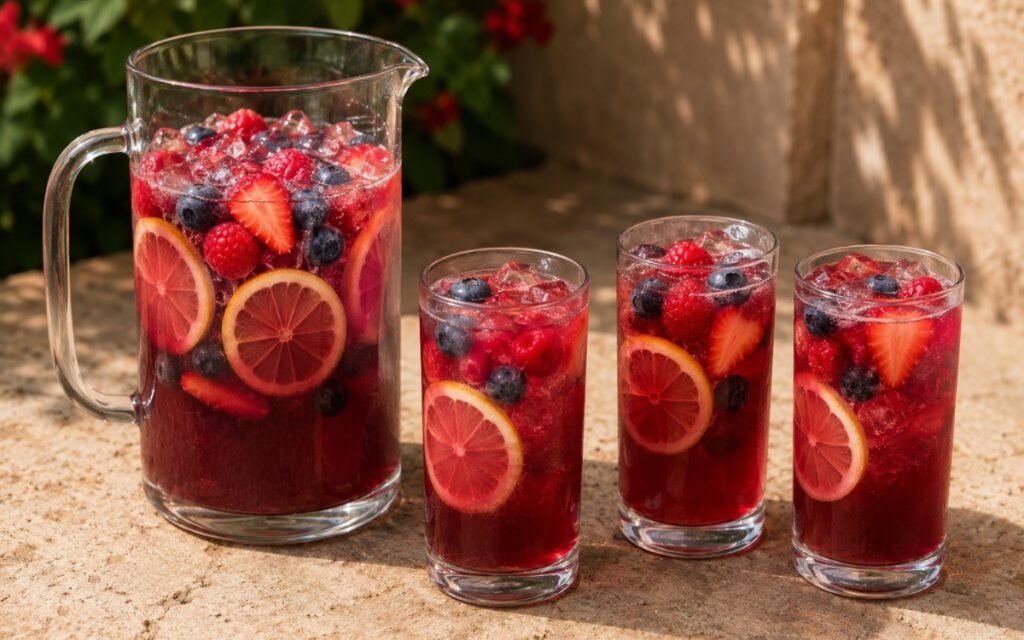
Three berries at 150g each warmed 2–3 minutes maximum in light brown sugar syrup — lemon zest off heat, combined with cold water, chilled. Vivid and multi-register.
Strawberry Lemonade Pitcher Drink
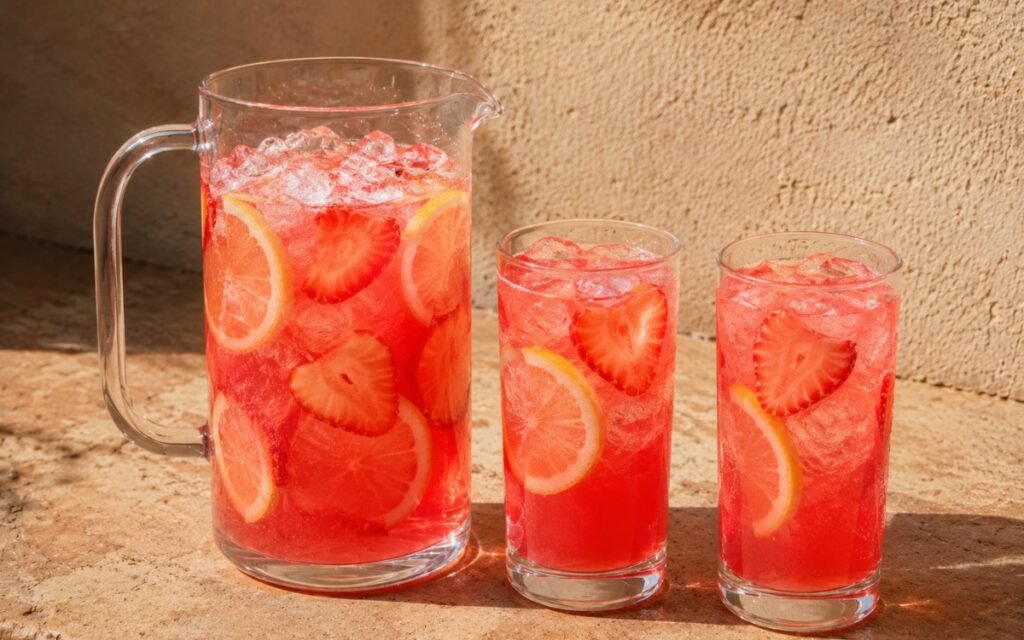
Honey-strawberry syrup with lemon zest plus fresh strawberries cold-strained — both combined with lemon juice, salt, cold water, fully strained for the crowd pitcher. Bright and vivid.

You might also like
You might also like
Classic Guacamole
Three ripe avocados folded with red onion, jalapeño, lime, and cumin — rustic, rich, and perfectly seasoned in 20 minutes.
Pomegranate Ginger Sparkler Mocktail
Deep ruby pomegranate and rounded ginger warmth with lime over club soda — tart and dramatic.
Melon Mint Agua Fresca Mocktail
Ripe honeydew blended with lime and honey, mint cold-infused — still, pale green, and cooling.
Tostadas with Ceviche
Ingredients
Method
- Prepare the Homemade Corn Tortilla dough according to its separate recipe, using 120g masa harina, 1.5g salt, and 150g warm water. Mix until the dough is soft, hydrated, and no dry masa remains. Rest covered for 20 minutes. Divide into 12 equal balls of about 22–23g each. Keep the dough covered at all times so the masa does not dry out. Press each tortilla to about 11.4cm / 4.5 inches diameter and cook on a dry hot skillet or comal until lightly charred, flexible, and just cooked through. Stack under a towel while finishing the batch. The tortillas should be cooked but still pale and flexible before frying. Keeping this initial cook light and pale, rather than fully charred, matters because the frying stage still has real colour development to do — a tortilla that’s already deeply browned before frying risks burning before it reaches the fully rigid stage this recipe needs.
- Heat 2–3cm neutral oil in a skillet to 175–180°C. Fry the tortillas one or two at a time for 45–75 seconds per side, pressing gently with tongs if they puff, until golden, rigid, and crisp. Transfer to a rack and season lightly with fine salt while hot. Do not stack the tostadas while warm. Steam will soften them and wreck the whole point of the dish. Frying only one or two at a time, rather than a larger batch, keeps the oil temperature stable enough to produce genuinely rigid, evenly coloured tostadas — overcrowding drops the temperature and risks an undercooked, still-flexible result.
- Bring 2 litres water and 12g kosher salt to a simmer. Add the shrimp and poach for 60–90 seconds, just until opaque and curled into a loose C-shape. Drain immediately and rinse briefly under cold water or transfer to an ice bath. Do not overcook the shrimp. Tight O-shaped shrimp are rubbery and ugly. The C-shape versus O-shape distinction is a reliable visual cue for doneness — shrimp curl progressively tighter the longer they cook, and stopping at the loose C-shape is what keeps the texture tender rather than tightening into rubbery overcooked shrimp.
- Pat the cooled shrimp dry. Cut into bite-sized pieces, leaving some pieces larger so the shrimp stays visually obvious. Combine the shrimp with lime juice and orange juice. Let sit for 15–20 minutes in the refrigerator while preparing the vegetables. This gives the bright ceviche flavour without pretending lime juice alone makes raw seafood safe. The shrimp here is already fully cooked from poaching, so this citrus marinade is doing flavour work rather than any actual cooking — a meaningful distinction from traditional raw ceviche, where lime juice’s role in denaturing proteins is doing double duty as both flavour and a form of chemical cooking.
- Add the diced tomatoes, cucumber, red onion, cilantro, optional diced jalapeño, salt, and black pepper to the shrimp. Fold gently until combined. Taste and adjust with more salt or lime if needed. The ceviche should be bright, juicy, and fresh, but not swimming in liquid. If it looks watery, drain off some excess juice before assembling. Folding gently rather than stirring vigorously keeps the diced vegetables and shrimp pieces distinct rather than breaking them down — the visual and textural variety of clearly defined pieces is part of what makes the finished ceviche look genuinely fresh rather than mashed together.
- Slice the avocados thinly and toss or brush gently with lime juice to prevent browning. Slice the jalapeño into thin rounds for topping. Keep the avocado slices clean and intact. Smashed avocado will make the tostadas look messy instead of fresh. A light brushing of lime juice, rather than a full toss, is usually enough to slow oxidation without needing to handle the delicate slices any more than necessary to keep them intact for fanning.
- Place 3 crisp tostadas per serving on plates. Spoon the shrimp ceviche generously over each tostada, draining each spoonful slightly so excess liquid does not soak the shell. Fan avocado slices over the ceviche on each tostada. Add thin jalapeño rounds on top. Finish with extra cilantro if using. Draining each individual spoonful as it’s added, rather than relying solely on the earlier draining of the whole batch, is a second layer of protection for the crisp shell — even well-drained ceviche can pool a little liquid at the bottom of the bowl by the time it’s spooned out.
- Serve immediately with lime wedges at the plate edge. The tostadas should be crisp, the ceviche cold and vivid, the avocado cleanly sliced, and the jalapeño visible on top. This dish has essentially no holding window once assembled — the crisp tostada shell begins softening from contact with the cold, moist ceviche within minutes, so serving without any delay is what preserves the crunch this whole recipe is built around.