Ingredients
Method
Prepare the Small Corn Tortillas
- Prepare the Homemade Corn Tortilla dough according to its separate recipe, using 120g masa harina, 1.5g salt, and 150g warm water. Mix until the dough is soft, hydrated, and no dry masa remains. Rest covered for 20 minutes. Divide into 12 equal balls of about 22–23g each. Keep the dough covered at all times so the masa does not dry out. Press each tortilla to about 11.4cm / 4.5 inches diameter and cook on a dry hot skillet or comal until lightly charred, flexible, and just cooked through. Stack under a towel while finishing the batch. The tortillas should be cooked but still pale and flexible before frying. Keeping this initial cook light and pale, rather than fully charred, matters because the frying stage still has real colour development to do — a tortilla that's already deeply browned before frying risks burning before it reaches the fully rigid stage this recipe needs.
Fry the Tostadas
- Heat 2–3cm neutral oil in a skillet to 175–180°C. Fry the tortillas one or two at a time for 45–75 seconds per side, pressing gently with tongs if they puff, until golden, rigid, and crisp. Transfer to a rack and season lightly with fine salt while hot. Do not stack the tostadas while warm. Steam will soften them and wreck the whole point of the dish. Frying only one or two at a time, rather than a larger batch, keeps the oil temperature stable enough to produce genuinely rigid, evenly coloured tostadas — overcrowding drops the temperature and risks an undercooked, still-flexible result.
Poach the Shrimp
- Bring 2 litres water and 12g kosher salt to a simmer. Add the shrimp and poach for 60–90 seconds, just until opaque and curled into a loose C-shape. Drain immediately and rinse briefly under cold water or transfer to an ice bath. Do not overcook the shrimp. Tight O-shaped shrimp are rubbery and ugly. The C-shape versus O-shape distinction is a reliable visual cue for doneness — shrimp curl progressively tighter the longer they cook, and stopping at the loose C-shape is what keeps the texture tender rather than tightening into rubbery overcooked shrimp.
Chop and Lime-Marinate the Shrimp
- Pat the cooled shrimp dry. Cut into bite-sized pieces, leaving some pieces larger so the shrimp stays visually obvious. Combine the shrimp with lime juice and orange juice. Let sit for 15–20 minutes in the refrigerator while preparing the vegetables. This gives the bright ceviche flavour without pretending lime juice alone makes raw seafood safe. The shrimp here is already fully cooked from poaching, so this citrus marinade is doing flavour work rather than any actual cooking — a meaningful distinction from traditional raw ceviche, where lime juice's role in denaturing proteins is doing double duty as both flavour and a form of chemical cooking.
Mix the Ceviche
- Add the diced tomatoes, cucumber, red onion, cilantro, optional diced jalapeño, salt, and black pepper to the shrimp. Fold gently until combined. Taste and adjust with more salt or lime if needed. The ceviche should be bright, juicy, and fresh, but not swimming in liquid. If it looks watery, drain off some excess juice before assembling. Folding gently rather than stirring vigorously keeps the diced vegetables and shrimp pieces distinct rather than breaking them down — the visual and textural variety of clearly defined pieces is part of what makes the finished ceviche look genuinely fresh rather than mashed together.
Prepare the Avocado and Jalapeño
- Slice the avocados thinly and toss or brush gently with lime juice to prevent browning. Slice the jalapeño into thin rounds for topping. Keep the avocado slices clean and intact. Smashed avocado will make the tostadas look messy instead of fresh. A light brushing of lime juice, rather than a full toss, is usually enough to slow oxidation without needing to handle the delicate slices any more than necessary to keep them intact for fanning.
Assemble the Tostadas
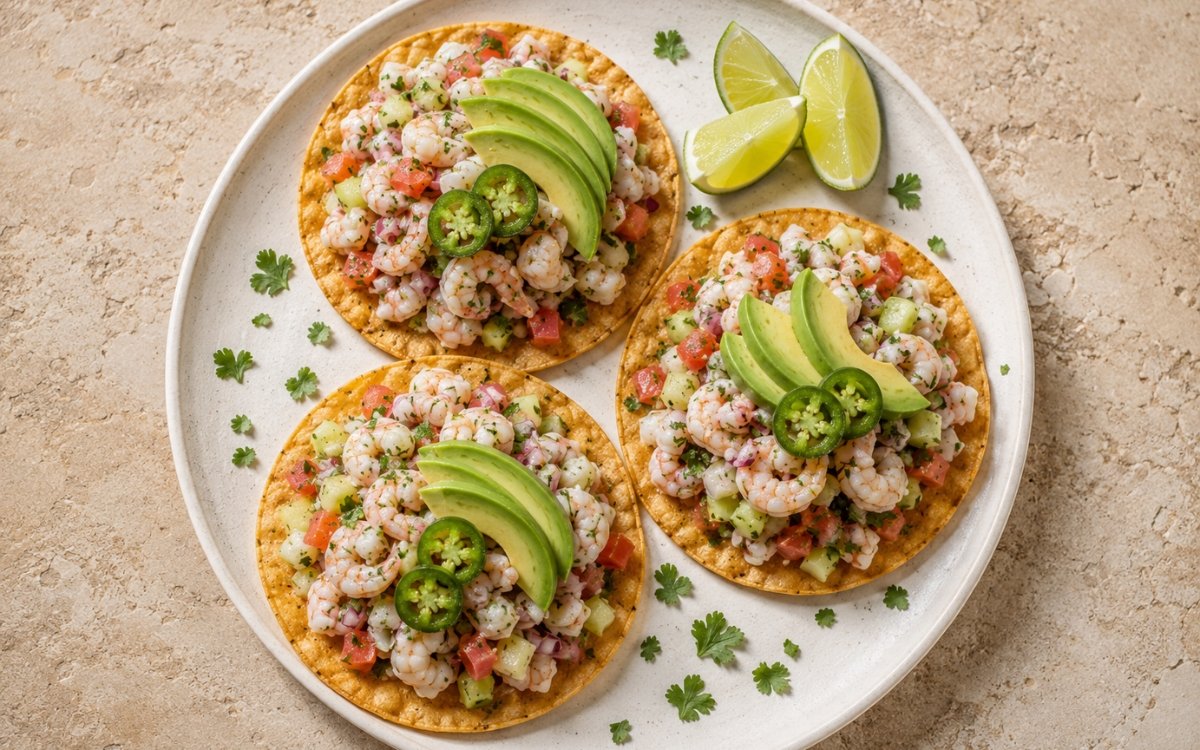
- Place 3 crisp tostadas per serving on plates. Spoon the shrimp ceviche generously over each tostada, draining each spoonful slightly so excess liquid does not soak the shell. Fan avocado slices over the ceviche on each tostada. Add thin jalapeño rounds on top. Finish with extra cilantro if using. Draining each individual spoonful as it's added, rather than relying solely on the earlier draining of the whole batch, is a second layer of protection for the crisp shell — even well-drained ceviche can pool a little liquid at the bottom of the bowl by the time it's spooned out.
Serve
- Serve immediately with lime wedges at the plate edge. The tostadas should be crisp, the ceviche cold and vivid, the avocado cleanly sliced, and the jalapeño visible on top. This dish has essentially no holding window once assembled — the crisp tostada shell begins softening from contact with the cold, moist ceviche within minutes, so serving without any delay is what preserves the crunch this whole recipe is built around.
Notes
The poach-then-marinate method used for this ceviche is a deliberate departure from the traditional technique of "cooking" raw shrimp or fish purely through extended contact with lime juice. Briefly poaching the shrimp until just opaque and curled guarantees it's actually food-safe, cooked through by heat rather than by an acid whose cooking effect can be inconsistent depending on cut size, citrus strength, and marinating time. The subsequent lime-and-orange-juice marinade then exists purely to layer in the bright, characteristic ceviche flavour, with none of the food-safety ambiguity that comes with relying on citrus alone.
Frying the tostadas to genuine rigidity, not just visible golden colour, is worth double-checking rather than assuming from appearance alone. A tostada that still has any flex to it once cooled was under-fried, and that flexibility is a direct predictor of how it will perform under a spoonful of cold, juicy ceviche — a rigid tostada holds its shape and crunch considerably longer than a merely golden but still slightly pliable one.
Seeding both the tomatoes and the cucumber before dicing is a small step that meaningfully affects the finished ceviche's texture. Tomato and cucumber seeds both carry a disproportionate amount of the vegetables' internal moisture, and removing them before dicing keeps the diced pieces themselves firmer and less prone to releasing excess liquid into the mix once combined with the shrimp and citrus.
This is a dish built around near-zero holding time at every stage past the initial prep. The tortillas need to be fried close to serving to stay crisp, the shrimp ceviche needs to be assembled and topped only once every component is ready, and the fully built tostadas need to reach the table within minutes of assembly. Treating any of these timing windows loosely is the most direct path to a soggy, disappointing result.