
Sheet Pan Lemon Garlic Cod with Potatoes
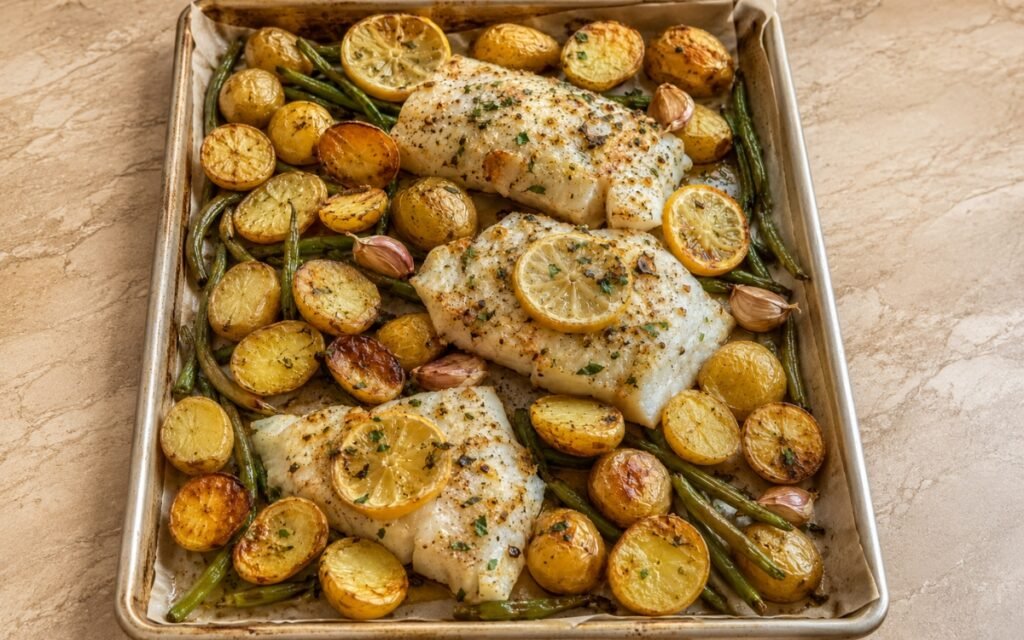
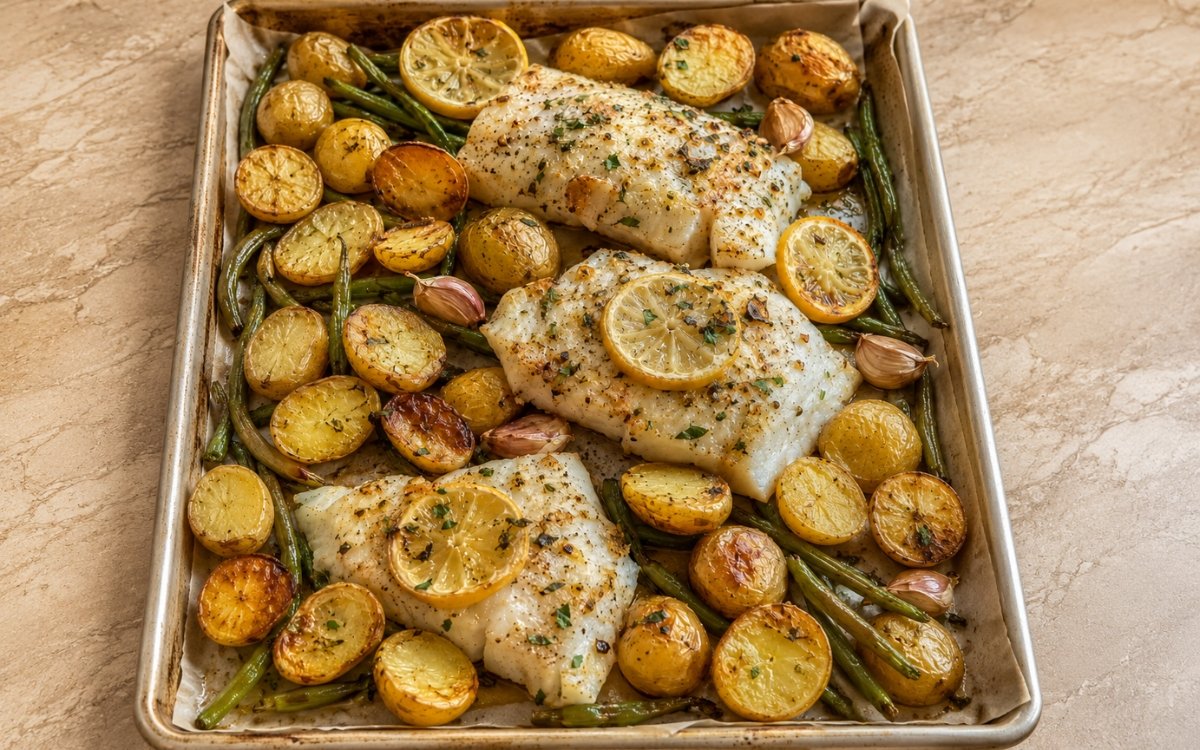
Flaky cod fillets baked on one sheet pan with golden baby potatoes, green beans, lemon slices, garlic, olive oil, and herbs. The potatoes start first, the beans go in later, and the cod is added only at the end so the fish stays moist instead of overcooking. Staggering the sheet pan in three genuine stages — potatoes first, green beans next, cod only at the very end — is the technique this whole dish depends on for every component finishing properly at once, since cod cooks in a fraction of the time potatoes need, the same staggered-roasting principle used elsewhere in this collection whenever ingredients with very different cooking times share one pan. Keeping the cod’s lemon-garlic coating brief rather than a long marinade is what protects the fish’s texture from turning mushy under sustained citrus contact. Using a genuinely wide sheet pan, rather than a crowded one, is what lets the vegetables actually roast rather than steam in their own trapped moisture. The payoff is a sheet pan dinner with real balance — crisp-edged, golden potatoes, tender green beans, and moist, flaky cod, all finishing together at exactly the right moment.
Prep Time : 20 min
Cook Time : 40-45 min
Servings : 4
20 min
40-45 min
4
Ingredients
For the Potatoes and Green Beans
• 1kg baby potatoes, halved
• 600g green beans, trimmed
• 45ml olive oil — this one on Amazon
• 6 garlic cloves, lightly crushed, skins left on or peeled
• 1 lemon, sliced into thin rounds
• 2 tsp dried oregano or dried thyme — this one on Amazon
• 8g fine sea salt
• 1 tsp black pepper
• 10g fresh parsley, chopped
For the Cod
• 4 cod fillets, about 200g each
• 30ml olive oil
• 20ml fresh lemon juice
• 1 tsp finely grated lemon zest, yellow part only
• 2 garlic cloves, finely grated or minced
• 1 tsp dried oregano or thyme
• 4g fine sea salt
• ½ tsp black pepper
• ½ tsp chili flakes, optional — this one on Amazon
• 10g fresh parsley, chopped
For Serving
• Lemon wedges
• Extra chopped parsley
• Extra olive oil, optional
This post may contain affiliate links. As an Amazon Associate I earn from qualifying purchases, at no additional cost to you.
Directions
- Heat the Oven
Preheat the oven to 220°C. Line a large sheet pan with parchment paper. Use a wide sheet pan so the potatoes and beans roast instead of steaming. A genuinely wide pan gives the vegetables enough room to sit in a single layer with real airflow around them — a crowded pan traps steam between the pieces, softening them rather than letting them properly roast and develop crisp edges. - Start the Potatoes
Add the halved baby potatoes to the sheet pan. Toss with olive oil, crushed garlic cloves, lemon slices, oregano or thyme, salt, black pepper, and parsley. Arrange the potatoes cut-side down where possible. Roast for 25 minutes. The potatoes need a real head start. If the cod goes in from the beginning, the fish will be dry before the potatoes are tender. Placing the cut side down, directly against the hot pan, gives that flat surface the most direct contact available for developing real, deep colour and crispness. - Season the Cod
While the potatoes roast, pat the cod fillets dry with paper towels. In a small bowl, mix olive oil, lemon juice, lemon zest, minced garlic, oregano or thyme, salt, black pepper, chili flakes if using, and parsley. Spoon this mixture over the cod and let it sit while the potatoes finish their first roast. Dry cod plus a short lemon-garlic coating gives better texture. Do not marinate cod for a long time in lemon juice or the surface can turn mushy. Lemon juice’s own acidity begins actively breaking down the fish’s delicate protein structure the moment it makes contact — a brief coating flavours the surface without giving that acid enough time to compromise the cod’s own texture the way an extended marinade would. - Add the Green Beans
After the potatoes have roasted for 25 minutes, remove the tray from the oven. Add the green beans around the potatoes and toss them lightly in the oil and pan juices. Spread everything back out into an even layer. Return the tray to the oven for 8 to 10 minutes. Adding the beans only at this later stage, rather than alongside the potatoes from the start, respects their genuinely different cooking time — beans roasted the full 25 minutes alongside the potatoes would turn limp and overdone well before the potatoes were ready. - Add the Cod
Remove the tray again. Make space between the potatoes and beans, then place the cod fillets on the sheet pan. Spoon any remaining lemon-garlic oil over the fish. Place a lemon slice on each fillet if you want the classic roasted lemon look. Return to the oven and bake for 10 to 12 minutes, depending on thickness. The cod is done when it flakes easily but still looks moist in the center. Do not wait until it looks dry and fully separated into flakes. Making genuine space for the cod, rather than tucking it in around already-cooking vegetables, gives the fish its own direct exposure to the oven’s heat rather than cooking unevenly in whatever gaps happen to be available. - Rest Briefly
Remove the sheet pan from the oven and rest for 3 minutes. Spoon a little of the lemony pan juice over the cod. That brief rest lets the cod’s own carryover heat finish gently, while spooning the accumulated pan juices back over the fish returns real flavour that collected on the tray during roasting. - Serve
Serve each portion with 1 cod fillet, about 250g roasted baby potatoes, about 150g green beans, roasted lemon slices, garlic cloves, fresh parsley, and lemon wedges. This dish is best delivered the moment it comes together, while the potatoes are still crisp-edged and the cod is at its most moist.
*Notes :
- Staggering this sheet pan into three genuine stages — potatoes given a real head start, beans added partway through, cod only at the very end — deserves recognition as the technique responsible for whether this entire dinner comes together properly balanced. Cod cooks in a fraction of the time potatoes need to turn tender and golden; without that staggered approach, achieving properly cooked vegetables would mean badly overcooked, dry fish, while properly cooked fish would mean undercooked, hard potatoes.
- Keeping the cod’s citrus coating genuinely brief, rather than treating it as a longer marinade, protects the fish’s own delicate texture from a real and specific risk. Lemon juice’s acidity actively works on fish protein much the way heat does, and extended exposure would begin breaking down that structure into something mushy — the short coating specified here flavours the surface without crossing into that territory.
- Using a genuinely wide sheet pan, giving every piece of potato and green bean real space rather than crowding them together, deserves the same attention this collection gives to properly spaced roasting throughout. Crowded vegetables release enough collective moisture to steam each other rather than actually roasting, producing a softer, less caramelized result than the crisp-edged potatoes this dish depends on.
- Making deliberate space for the cod fillets when they’re finally added, rather than simply nestling them wherever room exists among the vegetables, ensures the fish gets consistent, direct exposure to the oven’s heat. Fish tucked unevenly into gaps between vegetables would cook unpredictably depending on how much of its surface was actually exposed to the hot pan and air.
Why This Recipe Works
This recipe works because the potatoes are given a genuine head start, roasting long enough to turn golden and tender before anything else joins them.
The cod’s lemon-garlic coating stays brief, protecting its texture from the acid’s own effect on delicate fish protein. The green beans are added only partway through, respecting their considerably shorter cooking time.
Making real space for the cod when it’s finally added ensures even cooking, and a brief rest afterward lets the fish finish gently while the accumulated pan juices are spooned back over everything for maximum flavour.
Ingredient Breakdown
Baby Potatoes (Roasted First, Cut-Side Down)
The structural foundation — given a genuine head start and placed for maximum direct contact, developing real golden colour and crispness.
Staged Green Bean Addition
The timing technique — added only partway through roasting, respecting a cooking time considerably shorter than the potatoes’.
Briefly Coated Cod (Not Marinated)
The critical technique — a short lemon-garlic coating flavours the fish without the acid compromising its delicate texture.
Genuinely Wide, Uncrowded Sheet Pan
The overarching technique — gives every component real space to roast rather than steam.
Deliberate Space for the Cod
The finishing technique — ensures the fish gets even, direct exposure to the oven’s heat during its brief bake.
Flavor Structure Explained
This sheet pan lemon garlic cod follows a layered balance model:
- Hearty roasted foundation (golden, crisp-edged baby potatoes)
- Tender green vegetable body (staged green beans)
- Flaky, moist centerpiece (briefly coated, gently roasted cod)
- Bright citrus-herb finish (lemon, garlic, oregano, parsley)
- Warm background heat (optional chili flakes)
Golden, crisp-edged baby potatoes provide this dish’s hearty, roasted foundation. Green beans, added at the right moment, contribute tender green body without overcooking. Briefly coated, gently roasted cod defines the dish’s flaky, moist centrepiece, its texture protected by the short citrus contact. Lemon, garlic, oregano, and fresh parsley finish every component with bright, herbal flavour, and optional chili flakes add a touch of warm background heat throughout.
Common Mistakes to Avoid
- Adding the Cod at the Same Time as the Potatoes – This dries out the fish long before the potatoes are tender. Always add it only at the very end.
- Adding the Green Beans From the Start – This overcooks them well before the potatoes are ready. Always add them partway through roasting.
- Marinating the Cod for Too Long – This can turn the fish’s surface mushy from the lemon’s acidity. Always keep the coating brief.
- Crowding the Sheet Pan – This traps steam and prevents real roasting. Always use a genuinely wide pan with space between pieces.
- Waiting Until the Cod Looks Fully Dry and Flaked – This means it’s already overcooked. Always pull it while it still looks moist in the center.
Variations
Extra-Spicy Version
Increase the chili flakes in the cod coating for a more assertive heat throughout.
Herb Swap Version
Substitute fresh dill or fresh thyme for the dried herbs for a different, brighter herbal note.
Extra-Vegetable Version
Add a handful of cherry tomatoes alongside the green beans for additional colour and sweetness.
Different Fish Version
Substitute another firm white fish like haddock or halibut, adjusting the final bake time slightly based on thickness.
Storage & Make-Ahead
This is best served immediately while the potatoes are crisp-edged and the cod is still juicy.
The lemon-garlic coating for the cod can be mixed ahead and refrigerated, ready to spoon over the fish when needed.
Leftovers can be refrigerated briefly, but reheating tends to soften the potatoes and dry the cod, so freshly cooked is genuinely best.
Frequently Asked Questions
Why does the cod need to be added only at the very end rather than roasting alongside the potatoes?
Cod cooks in a fraction of the time potatoes need to turn tender and golden. Adding it from the start would leave the fish badly overcooked and dry long before the potatoes were properly done.
Why are the green beans added partway through rather than at the very beginning?
Green beans cook considerably faster than potatoes, and roasting them for the same full time would leave them limp and overdone well before the potatoes were ready.
Why shouldn’t the cod be marinated in the lemon mixture for a long time?
Lemon juice’s acidity actively works on fish protein much the way heat does, and extended exposure begins breaking down that delicate structure into something mushy. A brief coating flavours the fish without crossing into that territory.
Why does the sheet pan need to be so wide, with real space between the vegetables?
Crowded vegetables release enough collective moisture to steam each other rather than actually roasting, producing a softer result than the crisp-edged potatoes this dish depends on.
Are there other cod, roasted fish, or roasted vegetable side dishes worth trying?
Lemon Butter Baked Cod and Pan-Seared Cod both offer other cod preparations worth exploring. Crispy Baked Potato Fries and Greek-Style Potato Salad are also worth trying as related potato side dishes.
Nutrition Facts
( per serving )
Calories
~520 kcal
Protein
38 g
Fat
18 g
Carbs
52 g
Calories
~520 kcal
Protein
38 g
Fat
18 g
Carbs
52 g
Related Recipes
Related Recipes

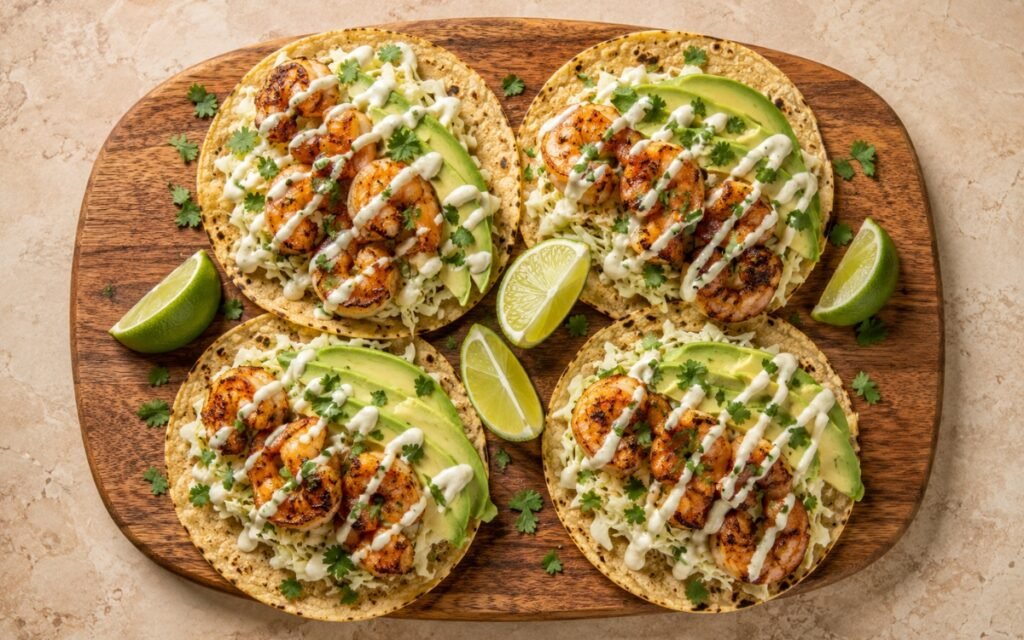
Shrimp Tacos with Lime Crema
Large shrimp dried, spiced, and seared hot and fast, piled onto small corn tortillas with crisp cabbage, fanned avocado, and a thick lime crema drizzle.
Iced Caramel Macchiato
Vanilla-sweetened cold milk, ice, and espresso poured over the top to create a dramatic dark swirl, finished with caramel sauce drizzle.
Mexican Hot Dog
Bacon-wrapped smoked frankfurters seared crisp, topped with melted Mexican cheese, guacamole, fresh pico de gallo, and a crema drizzle.


You might also like
You might also like
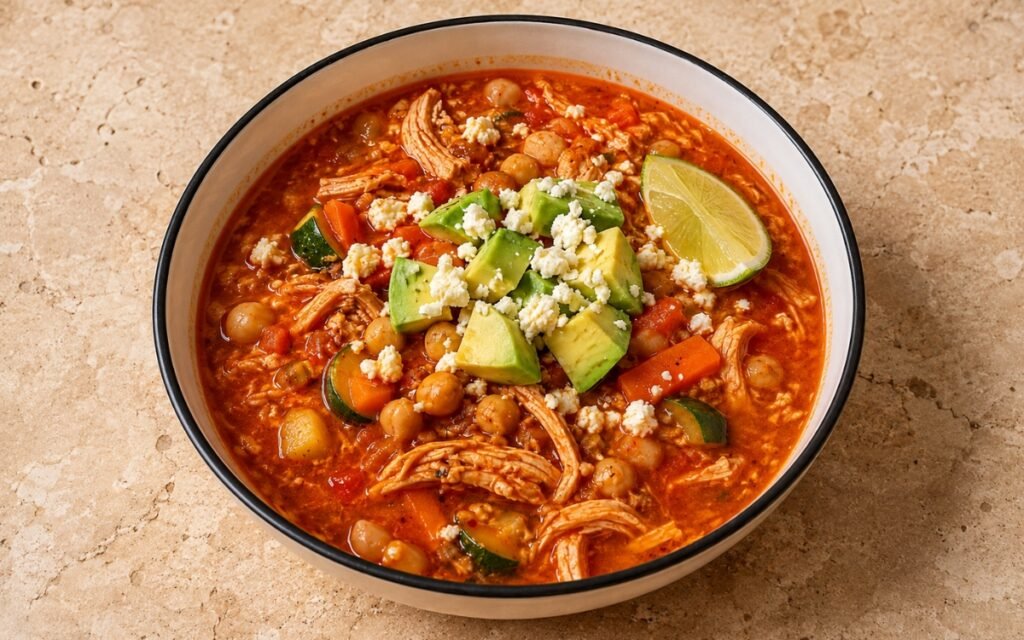
Caldo Tlalpeño
A clear chipotle-tomato chicken broth with shredded chicken, chickpeas, carrots, and zucchini, finished with avocado and queso fresco.
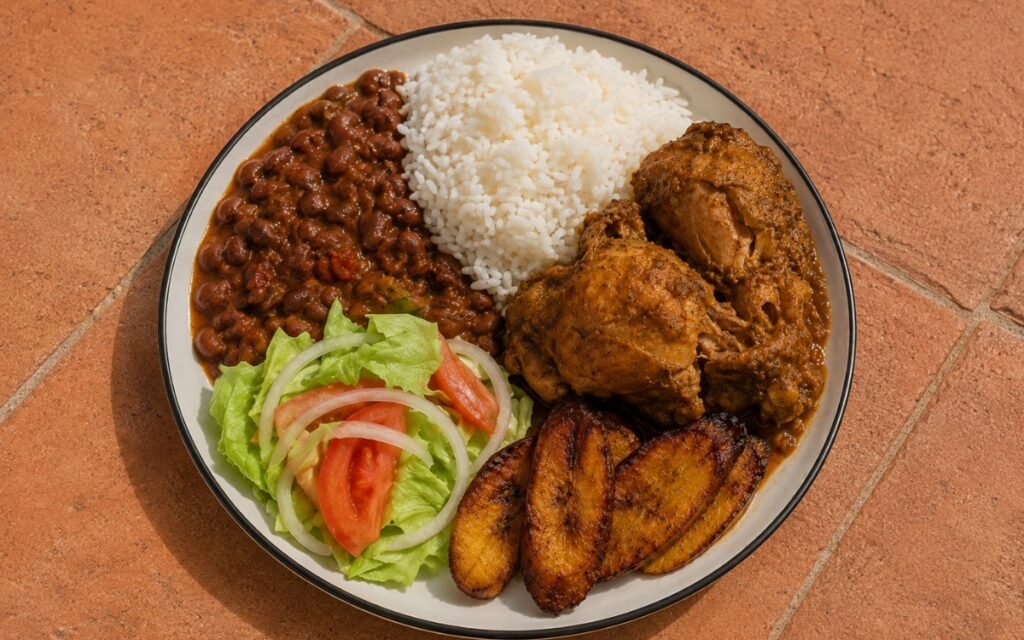
La Bandera Dominicana
Fluffy white rice, stewed red beans, caramelised braised chicken, sweet fried plantains, and fresh salad, each kept distinct on the plate.
Carne Asada Plate
Citrus-soy marinated skirt steak grilled hard for deep char, rested, and sliced against the grain — served with cilantro-lime rice, salsa roja, and charred cebollitas.
Sheet Pan Lemon Garlic Cod with Potatoes
Ingredients
Method
- Preheat the oven to 220°C. Line a large sheet pan with parchment paper. Use a wide sheet pan so the potatoes and beans roast instead of steaming. A genuinely wide pan gives the vegetables enough room to sit in a single layer with real airflow around them — a crowded pan traps steam between the pieces, softening them rather than letting them properly roast and develop crisp edges.
- Add the halved baby potatoes to the sheet pan. Toss with olive oil, crushed garlic cloves, lemon slices, oregano or thyme, salt, black pepper, and parsley. Arrange the potatoes cut-side down where possible. Roast for 25 minutes. The potatoes need a real head start. If the cod goes in from the beginning, the fish will be dry before the potatoes are tender. Placing the cut side down, directly against the hot pan, gives that flat surface the most direct contact available for developing real, deep colour and crispness.
- While the potatoes roast, pat the cod fillets dry with paper towels. In a small bowl, mix olive oil, lemon juice, lemon zest, minced garlic, oregano or thyme, salt, black pepper, chili flakes if using, and parsley. Spoon this mixture over the cod and let it sit while the potatoes finish their first roast. Dry cod plus a short lemon-garlic coating gives better texture. Do not marinate cod for a long time in lemon juice or the surface can turn mushy. Lemon juice’s own acidity begins actively breaking down the fish’s delicate protein structure the moment it makes contact — a brief coating flavours the surface without giving that acid enough time to compromise the cod’s own texture the way an extended marinade would.
- After the potatoes have roasted for 25 minutes, remove the tray from the oven. Add the green beans around the potatoes and toss them lightly in the oil and pan juices. Spread everything back out into an even layer. Return the tray to the oven for 8 to 10 minutes. Adding the beans only at this later stage, rather than alongside the potatoes from the start, respects their genuinely different cooking time — beans roasted the full 25 minutes alongside the potatoes would turn limp and overdone well before the potatoes were ready.
- Remove the tray again. Make space between the potatoes and beans, then place the cod fillets on the sheet pan. Spoon any remaining lemon-garlic oil over the fish. Place a lemon slice on each fillet if you want the classic roasted lemon look. Return to the oven and bake for 10 to 12 minutes, depending on thickness. The cod is done when it flakes easily but still looks moist in the center. Do not wait until it looks dry and fully separated into flakes. Making genuine space for the cod, rather than tucking it in around already-cooking vegetables, gives the fish its own direct exposure to the oven’s heat rather than cooking unevenly in whatever gaps happen to be available.
- Remove the sheet pan from the oven and rest for 3 minutes. Spoon a little of the lemony pan juice over the cod. That brief rest lets the cod’s own carryover heat finish gently, while spooning the accumulated pan juices back over the fish returns real flavour that collected on the tray during roasting.
- Serve each portion with 1 cod fillet, about 250g roasted baby potatoes, about 150g green beans, roasted lemon slices, garlic cloves, fresh parsley, and lemon wedges. This dish is best delivered the moment it comes together, while the potatoes are still crisp-edged and the cod is at its most moist.