Ingredients
Method
Heat the Oven
- Preheat the oven to 220°C. Line a large sheet pan with parchment paper. Use a wide sheet pan so the potatoes and beans roast instead of steaming. A genuinely wide pan gives the vegetables enough room to sit in a single layer with real airflow around them — a crowded pan traps steam between the pieces, softening them rather than letting them properly roast and develop crisp edges.
Start the Potatoes
- Add the halved baby potatoes to the sheet pan. Toss with olive oil, crushed garlic cloves, lemon slices, oregano or thyme, salt, black pepper, and parsley. Arrange the potatoes cut-side down where possible. Roast for 25 minutes. The potatoes need a real head start. If the cod goes in from the beginning, the fish will be dry before the potatoes are tender. Placing the cut side down, directly against the hot pan, gives that flat surface the most direct contact available for developing real, deep colour and crispness.
Season the Cod
- While the potatoes roast, pat the cod fillets dry with paper towels. In a small bowl, mix olive oil, lemon juice, lemon zest, minced garlic, oregano or thyme, salt, black pepper, chili flakes if using, and parsley. Spoon this mixture over the cod and let it sit while the potatoes finish their first roast. Dry cod plus a short lemon-garlic coating gives better texture. Do not marinate cod for a long time in lemon juice or the surface can turn mushy. Lemon juice's own acidity begins actively breaking down the fish's delicate protein structure the moment it makes contact — a brief coating flavours the surface without giving that acid enough time to compromise the cod's own texture the way an extended marinade would.
Add the Green Beans
- After the potatoes have roasted for 25 minutes, remove the tray from the oven. Add the green beans around the potatoes and toss them lightly in the oil and pan juices. Spread everything back out into an even layer. Return the tray to the oven for 8 to 10 minutes. Adding the beans only at this later stage, rather than alongside the potatoes from the start, respects their genuinely different cooking time — beans roasted the full 25 minutes alongside the potatoes would turn limp and overdone well before the potatoes were ready.
Add the Cod
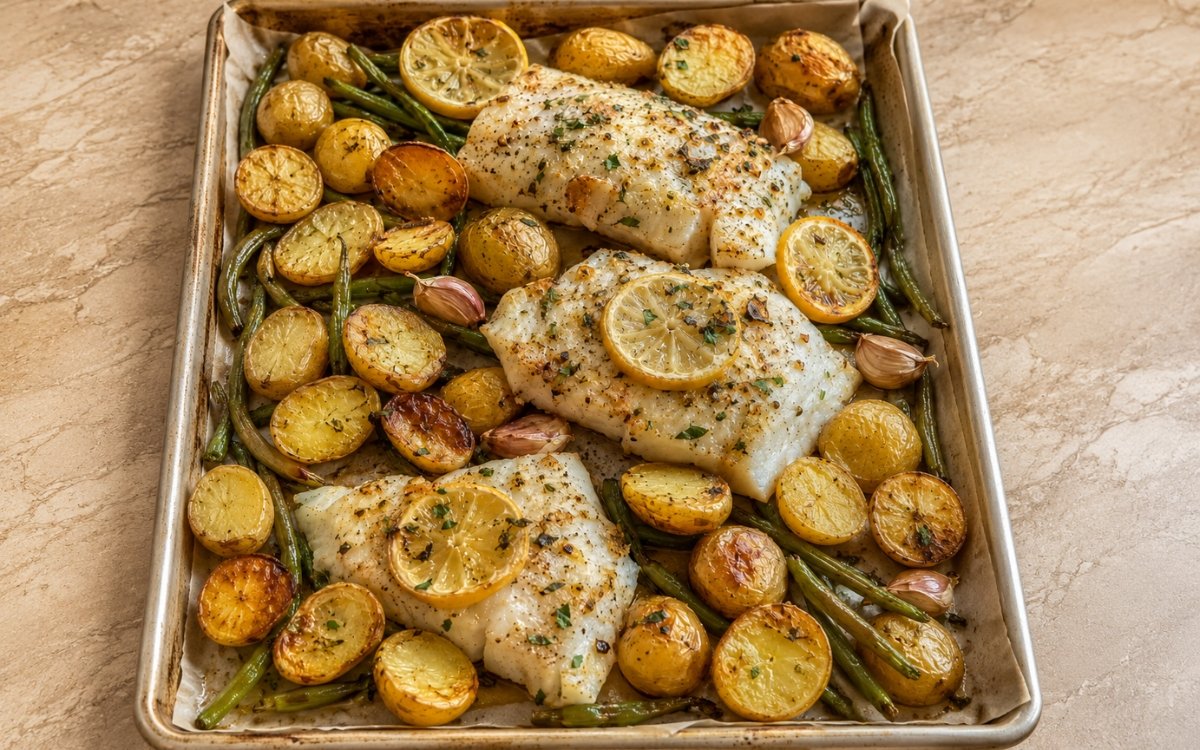
- Remove the tray again. Make space between the potatoes and beans, then place the cod fillets on the sheet pan. Spoon any remaining lemon-garlic oil over the fish. Place a lemon slice on each fillet if you want the classic roasted lemon look. Return to the oven and bake for 10 to 12 minutes, depending on thickness. The cod is done when it flakes easily but still looks moist in the center. Do not wait until it looks dry and fully separated into flakes. Making genuine space for the cod, rather than tucking it in around already-cooking vegetables, gives the fish its own direct exposure to the oven's heat rather than cooking unevenly in whatever gaps happen to be available.
Rest Briefly
- Remove the sheet pan from the oven and rest for 3 minutes. Spoon a little of the lemony pan juice over the cod. That brief rest lets the cod's own carryover heat finish gently, while spooning the accumulated pan juices back over the fish returns real flavour that collected on the tray during roasting.
Serve
- Serve each portion with 1 cod fillet, about 250g roasted baby potatoes, about 150g green beans, roasted lemon slices, garlic cloves, fresh parsley, and lemon wedges. This dish is best delivered the moment it comes together, while the potatoes are still crisp-edged and the cod is at its most moist.
Notes
Staggering this sheet pan into three genuine stages — potatoes given a real head start, beans added partway through, cod only at the very end — deserves recognition as the technique responsible for whether this entire dinner comes together properly balanced. Cod cooks in a fraction of the time potatoes need to turn tender and golden; without that staggered approach, achieving properly cooked vegetables would mean badly overcooked, dry fish, while properly cooked fish would mean undercooked, hard potatoes.
Keeping the cod's citrus coating genuinely brief, rather than treating it as a longer marinade, protects the fish's own delicate texture from a real and specific risk. Lemon juice's acidity actively works on fish protein much the way heat does, and extended exposure would begin breaking down that structure into something mushy — the short coating specified here flavours the surface without crossing into that territory.
Using a genuinely wide sheet pan, giving every piece of potato and green bean real space rather than crowding them together, deserves the same attention this collection gives to properly spaced roasting throughout. Crowded vegetables release enough collective moisture to steam each other rather than actually roasting, producing a softer, less caramelized result than the crisp-edged potatoes this dish depends on.
Making deliberate space for the cod fillets when they're finally added, rather than simply nestling them wherever room exists among the vegetables, ensures the fish gets consistent, direct exposure to the oven's heat. Fish tucked unevenly into gaps between vegetables would cook unpredictably depending on how much of its surface was actually exposed to the hot pan and air.