
Grilled Halloumi Chickpea Salad
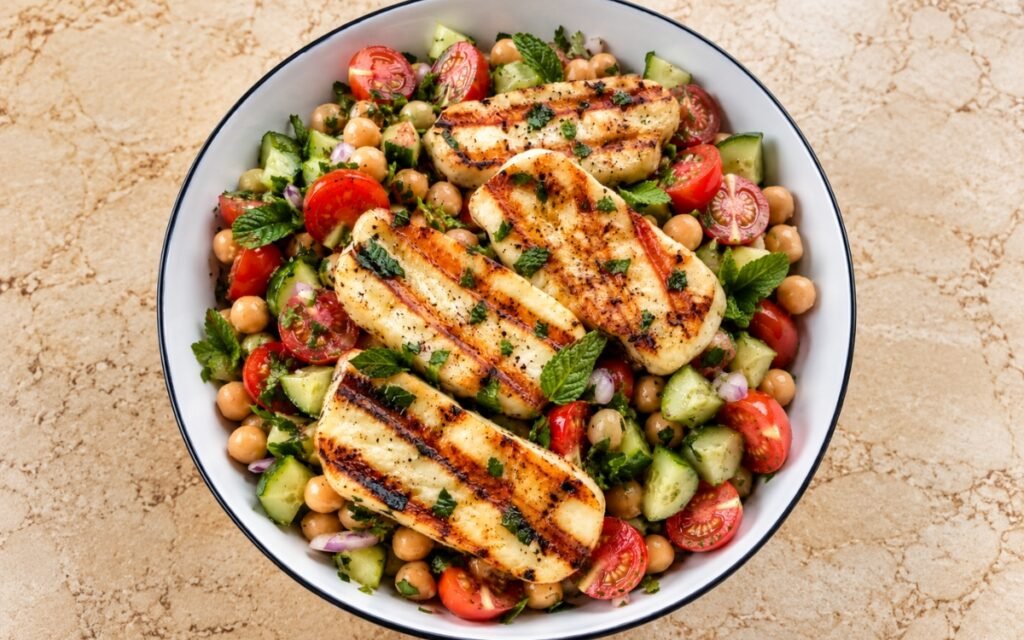
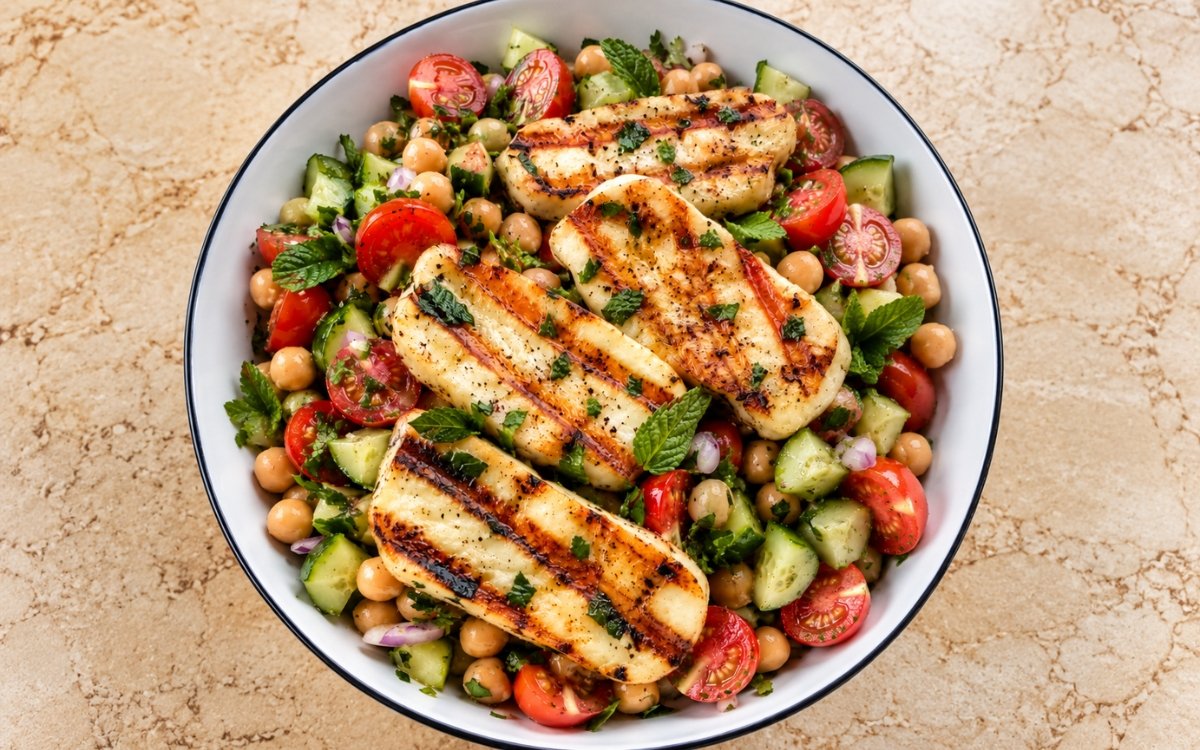
A bright Mediterranean-style salad of chickpeas, cherry tomatoes, cucumber, red onion, parsley, and mint, dressed with a lemony olive oil dressing and topped with warm grilled halloumi. The key is keeping the salad fresh and sharply dressed while grilling the halloumi hard and fast so it develops deep golden grill marks without turning rubbery. Drying the halloumi thoroughly before it ever meets the hot grill is the technique this whole dish depends on for real, defined grill marks — a wet surface steams instead of sears, making strong colour considerably harder to achieve, the same dry-before-searing principle used elsewhere in this collection whenever a protein or cheese’s own surface moisture would otherwise prevent direct contact browning. Building the dressing deliberately sharper than seems necessary on its own is what lets it actually stand up once tossed through the chickpeas and vegetables. Letting the dressed chickpeas rest briefly before serving is what gives them real time to absorb the dressing’s flavour, though not so long that the tomatoes and cucumber begin releasing their own excess water. The payoff is a salad with real, bright Mediterranean character — sharply dressed chickpeas and fresh vegetables topped with warm, deeply golden grilled halloumi.
Prep Time : 20 min
Cook Time : 8 min
Servings : 4
20 min
8 min
4
Ingredients
For the Salad
• 2 x 400g cans chickpeas, drained and rinsed
• 250g cherry tomatoes, halved
• 250g cucumber, diced
• 60g red onion, very thinly sliced or finely diced
• 20g fresh parsley, finely chopped
• 12g fresh mint leaves, chopped or torn
• 1 small garlic clove, very finely grated or minced, optional
For the Lemon Dressing
• 60ml extra-virgin olive oil — this one on Amazon
• 35ml fresh lemon juice
• 1 tsp lemon zest
• 8g Dijon mustard, optional but helpful for emulsifying — this one on Amazon
• 6g fine sea salt, or to taste
• 2g black pepper
For the Halloumi
• 450g halloumi — this one on Amazon
• 10ml olive oil, for brushing
• Black pepper, lightly to finish
This post may contain affiliate links. As an Amazon Associate I earn from qualifying purchases, at no additional cost to you.
Directions
- Prepare the Vegetables and Chickpeas
Drain and rinse the chickpeas well, then let them dry off as much as possible. Halve the cherry tomatoes, dice the cucumber, and slice the red onion thinly. Chop the parsley and mint. Add the chickpeas, tomatoes, cucumber, red onion, parsley, and mint to a large bowl. Do not leave the chickpeas wet from rinsing. Excess surface water dilutes the dressing and makes the salad taste flat rather than bright. Any residual surface moisture clinging to the chickpeas would work against the dressing’s own concentrated flavour the moment they meet, diluting it right at the point of contact. - Make the Lemon Dressing
In a small bowl or jar, combine the olive oil, lemon juice, lemon zest, Dijon if using, salt, black pepper, and garlic if using. Whisk or shake until emulsified. Taste it. It should be vivid, lemony, and slightly sharper than seems necessary on its own — once it coats the chickpeas and vegetables, the flavour will settle into balance. That deliberate over-brightness accounts for real, predictable dilution — a dressing that tastes perfectly balanced on its own would read as noticeably flatter once spread across this many other components. - Dress the Salad Base
Pour most of the dressing over the chickpea mixture and toss thoroughly. Reserve a small amount for finishing after the halloumi is added. Let the salad sit for 5–10 minutes while you cook the halloumi. This short rest is useful. Chickpeas benefit from a few minutes in the dressing so they absorb flavour, but do not let the salad sit too long before serving or the tomatoes and cucumber will start releasing too much water. That specific, brief window balances two competing needs — enough time for the chickpeas to genuinely absorb the dressing, but not so long that the vegetables’ own moisture begins working against that same dressing’s concentration. - Slice and Dry the Halloumi
Cut the halloumi into 8 slices, roughly 1.5cm thick. Pat the slices dry very well with paper towel, then brush lightly with olive oil. Drying the halloumi matters. A wet surface steams instead of sears and makes it harder to get strong golden grill marks. Any residual surface moisture on the halloumi converts to steam the instant it meets the hot grill, and that steam is exactly what prevents the direct, sustained contact real grill marks depend on. - Grill the Halloumi
Heat a grill pan, cast iron skillet, or outdoor grill over medium-high to high heat. Once properly hot, grill the halloumi slices for about 1–2 minutes per side until deeply golden with distinct grill marks. Do not move them around too early — let the crust form before turning. Remove as soon as both sides are browned. Halloumi should be cooked hot and fast. Overcooking makes it firmer and chewier than necessary, while a short hard sear keeps the interior pleasantly tender. Leaving the halloumi genuinely undisturbed during that initial window gives it the sustained, direct contact real grill marks require — moving it too early interrupts that contact before the crust has any real chance to form. - Assemble
Transfer the dressed chickpea salad to a large serving bowl or divide among plates. Arrange the grilled halloumi slices over the top. Drizzle with the remaining dressing and finish with a little black pepper plus a few extra parsley and mint leaves if desired. Reserving a portion of the dressing specifically for this final drizzle, rather than using it all in the initial toss, gives the warm halloumi its own fresh coating right at the surface where it’s tasted first. - Serve
Serve immediately while the halloumi is still warm and the salad is still crisp. Halloumi’s own supple, warm texture changes noticeably as it cools, firming up into something considerably less pleasant to eat — serving without delay is what actually delivers the dish at its best.
*Notes :
- Drying the halloumi thoroughly before it ever reaches the hot grill deserves genuine recognition as the technique responsible for whether this dish achieves real, defined grill marks or ends up pale and steamed. Any residual surface moisture converts instantly to steam on contact with the hot grill, and that steam actively works against the direct, sustained contact real searing depends on — a thorough pat-dry is what allows the halloumi to actually develop those characteristic dark, distinct grill lines.
- Building the dressing deliberately sharper than seems necessary deserves the same attention this technique receives throughout this collection’s other dressings meant to coat a whole composed salad. That intentional over-brightness accounts for the real, predictable dilution that happens once the dressing meets the chickpeas and vegetables all at once — a dressing balanced perfectly on its own would taste flat once actually part of the finished salad.
- The specific, brief resting window given to the dressed chickpeas deserves genuine respect as a real, functional balance point rather than an arbitrary timeframe. That window is long enough to let the chickpeas genuinely absorb the dressing’s flavour, but short enough to stay ahead of the tomatoes and cucumber beginning to release their own excess moisture, which would otherwise dilute the dressing right back down.
- Leaving the halloumi genuinely undisturbed during its initial grilling window deserves attention as the detail most directly responsible for real, defined grill marks forming at all. Moving or checking the halloumi too early interrupts the sustained contact needed for that crust to actually develop, producing a paler, less distinctly marked result regardless of total cooking time.
Why This Recipe Works
This recipe works because the chickpeas are dried thoroughly after rinsing, protecting the dressing from unwanted dilution. The dressing itself is built deliberately sharp, accounting for the real dilution it undergoes once tossed with the chickpeas and vegetables.
A carefully timed rest lets the chickpeas absorb flavour without letting the vegetables release too much water. The halloumi is dried thoroughly and left undisturbed during its brief, hot sear, developing real, defined grill marks.
Reserved dressing finishes the warm halloumi at assembly, and serving immediately delivers the dish while the halloumi is still at its supple, warm best.
Ingredient Breakdown
Thoroughly Dried Chickpeas
The critical technique — removes rinsing water that would otherwise dilute the dressing on contact.
Deliberately Sharp Lemon Dressing
The critical technique — intentional over-brightness accounts for real dilution once tossed with the salad.
Timed Chickpea Rest (5–10 Minutes)
The critical technique — balances real flavour absorption against vegetables releasing excess moisture.
Thoroughly Dried Halloumi
The critical technique — removes surface moisture that would otherwise prevent real, defined grill marks.
Undisturbed Grilling Window
The critical technique — sustained, direct contact is what actually builds distinct, dark grill marks.
Flavor Structure Explained
This grilled halloumi chickpea salad follows a layered balance model:
- earty, protein-rich base (dried, dressed chickpeas)
- Fresh, bright vegetables (cherry tomatoes, cucumber, red onion)
- Sharp, lemony dressing (olive oil, lemon juice and zest, Dijon)
- Fresh herbal lift (parsley, mint)
- Warm, seared centrepiece (grilled halloumi)
Dried, dressed chickpeas provide this salad’s hearty, protein-rich base. Fresh cherry tomatoes, cucumber, and red onion contribute bright, crisp vegetable freshness throughout. A sharp, lemony dressing ties the base together with vivid, cutting flavour. Fresh parsley and mint add real herbal lift, classic to this style of Mediterranean salad. Warm, deeply grilled halloumi finishes the dish as its centrepiece, its golden crust and supple interior tying every component together.
Common Mistakes to Avoid
- Not Drying the Chickpeas After Rinsing – This dilutes the dressing and flattens the salad’s flavour. Always let them dry off thoroughly first.
- Underseasoning the Dressing – This produces a flat-tasting salad once diluted by the chickpeas and vegetables. Always build it deliberately sharp.
- Letting the Dressed Salad Sit Too Long – This lets the tomatoes and cucumber release excess water, diluting the dressing. Always keep the rest to 5–10 minutes.
- Grilling Wet Halloumi – This prevents real grill marks from forming. Always dry the slices thoroughly first.
- Moving the Halloumi Too Early on the Grill – This interrupts the contact needed for real grill marks to develop. Always let the crust form before turning.
Variations
Extra-Herbal Version
Increase the mint and parsley for a more pronounced fresh, herbal character throughout.
Milder Onion Version
Soak the sliced red onion in cold water for 10 minutes, per the recipe’s own note, for a gentler bite.
Extra-Chickpea Version
Use cooked-from-dry chickpeas instead of canned, per the recipe’s own guidance, for a slightly different texture and flavour.
Spicy Version
Add a pinch of chili flakes to the dressing for a subtle background heat.
Storage & Make-Ahead
Halloumi quantity: about 110–115g per serving works well as a main-course salad.
Make-ahead: the dressing and chopped vegetables can be prepared ahead, but grill the halloumi right before serving.
Do not refrigerate after grilling and expect the same texture: halloumi is best freshly cooked, while still warm and supple.
Frequently Asked Questions
Why do the chickpeas need to be dried thoroughly after rinsing?
Any residual surface moisture clinging to the chickpeas dilutes the dressing’s concentrated flavour the moment they meet, making the finished salad taste flatter than intended.
Why is the dressing built to taste sharper than seems necessary on its own?
That intentional over-brightness accounts for the real dilution that happens once the dressing meets the chickpeas and vegetables all at once. A perfectly balanced dressing on its own would taste flat in the finished salad.
Why does the dressed salad need to rest for only 5–10 minutes rather than longer?
That window is long enough to let the chickpeas genuinely absorb the dressing’s flavour, but short enough to stay ahead of the tomatoes and cucumber beginning to release their own excess moisture, which would dilute the dressing back down.
Why does the halloumi need to be dried so thoroughly and left undisturbed while grilling?
Residual surface moisture converts to steam on contact with the hot grill, preventing real searing. Leaving it undisturbed afterward gives the sustained contact needed for distinct, dark grill marks to actually form.
Are there other classic Greek, Mediterranean, or chickpea-based salad dishes worth trying?
Greek Chicken Salad with Tzatziki Dressing offers another classic Mediterranean salad direction worth exploring. Grilled Halloumi Watermelon Salad and Za’atar White Bean Salad are also worth trying for other Mediterranean-inspired salads, and Classic Hummus pairs naturally alongside this dish.
Nutrition Facts
( per serving )
Calories
~520 kcal
Protein
26 g
Fat
32 g
Carbs
36 g
Calories
~520 kcal
Protein
26 g
Fat
32 g
Carbs
36 g
Related Recipes
Related Recipes

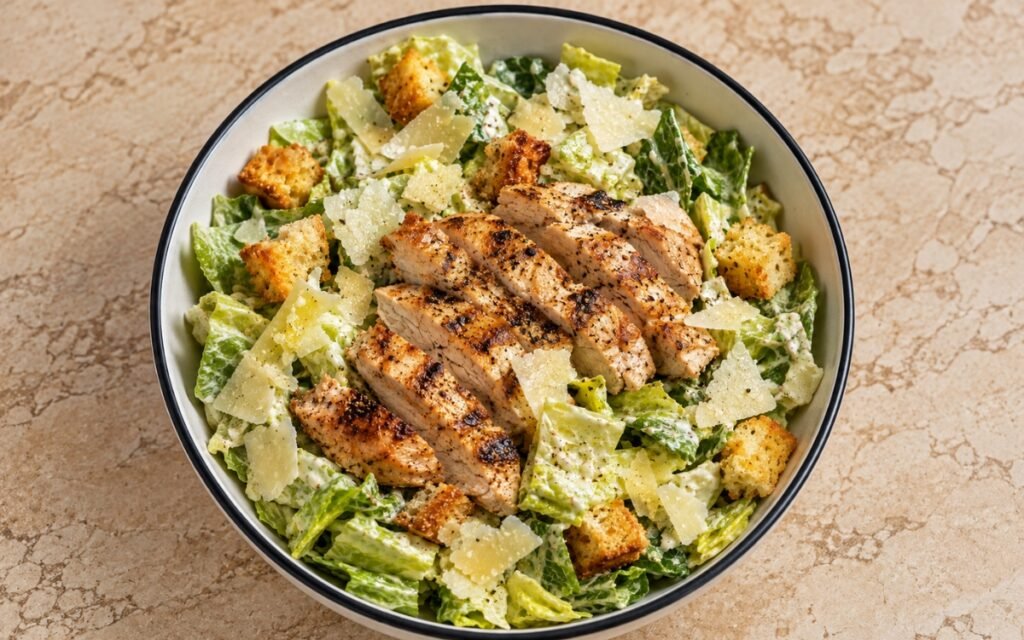
Grilled Chicken Caesar Salad
Grilled chicken breast, crisp romaine, golden croutons, shaved Parmesan, and a proper old-school Caesar dressing with no cream or mayonnaise.
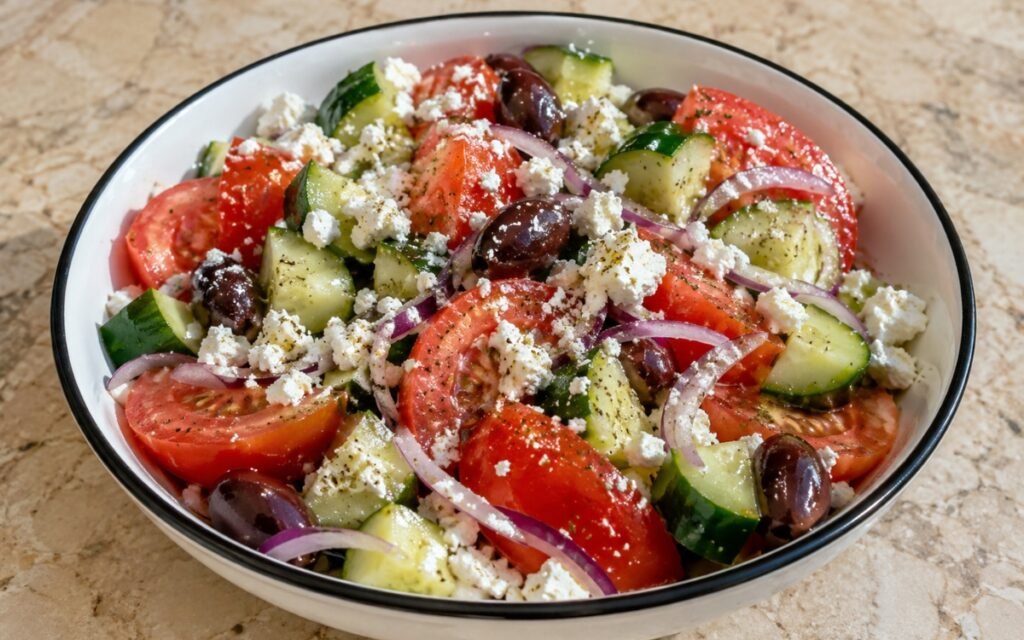
Authentic Greek Village Side Salad
Authentic Greek village salad with cucumbers, tomatoes, olives, and feta in lemon-oregano dressing.
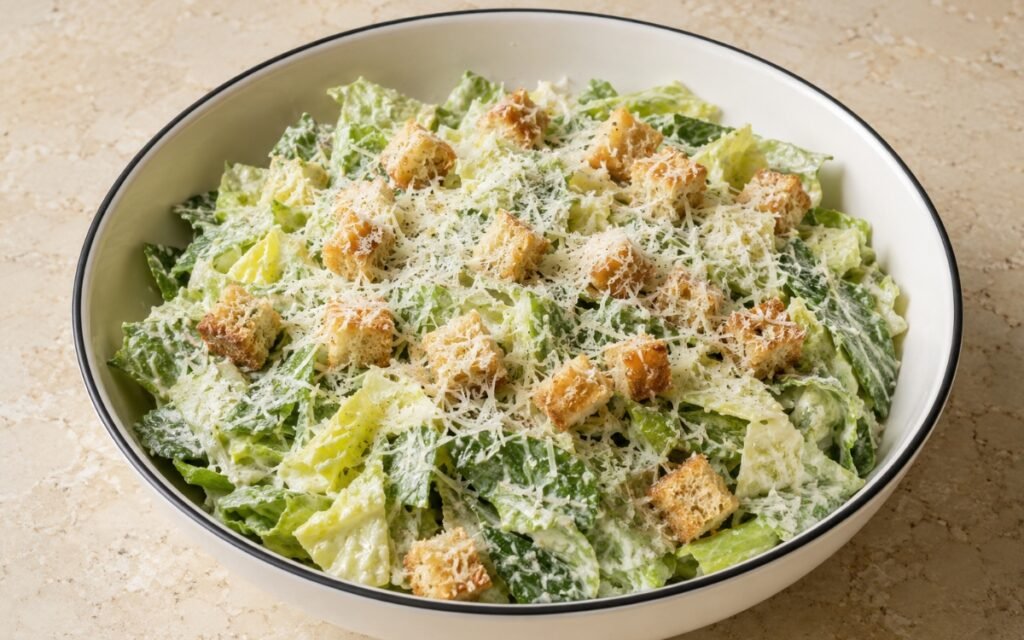
Authentic Caesar Side Salad
Classic Caesar salad with romaine lettuce, creamy anchovy dressing, Parmesan, and croutons.
You might also like
You might also like
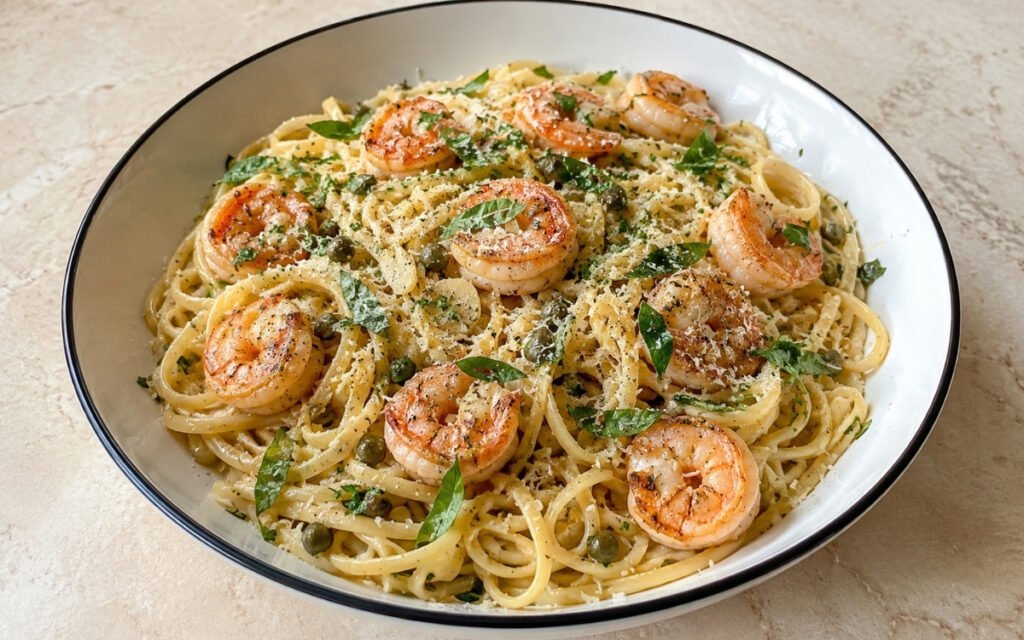
Lemon Garlic Shrimp Pasta
Golden-seared shrimp in a white wine, lemon, and butter sauce — one pan, 30 minutes.
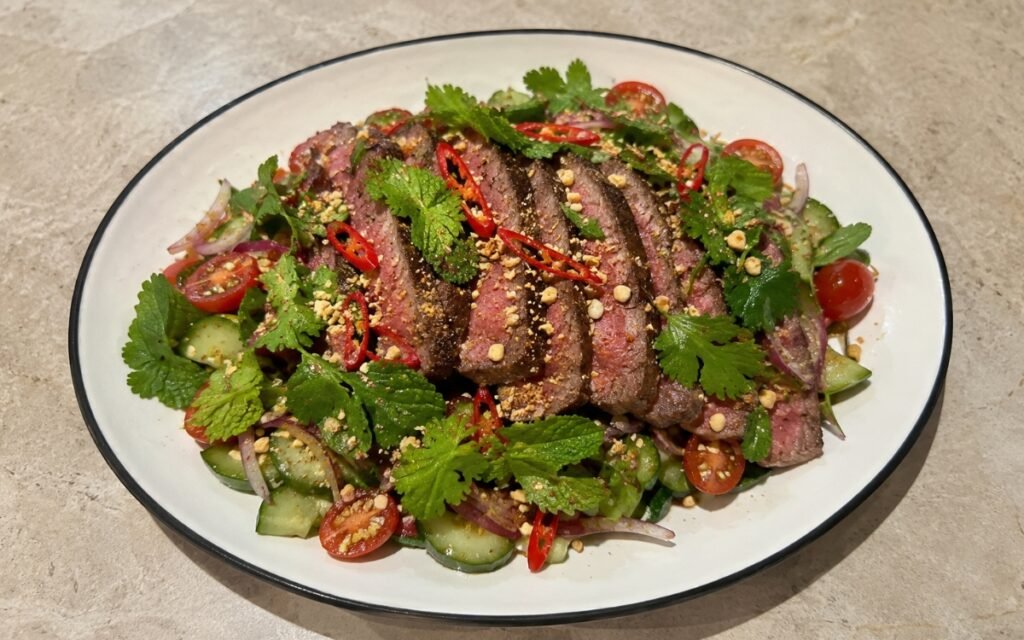
Spicy Thai Beef Salad (Yam Neua)
Sirloin seared deeply, rested, and sliced warm against the grain over three fresh herbs — dressed with fish sauce, lime, palm sugar, and chili tasted to balance. Toasted rice powder over the top. Serve immediately.
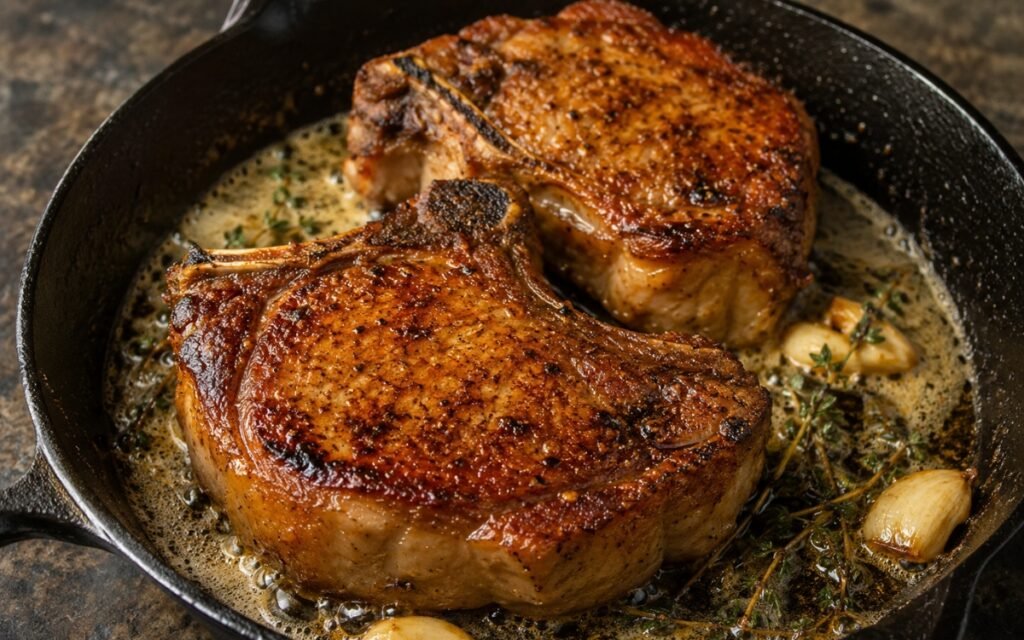
Classic Pork Chops
Bone-in pork chops tempered and seared undisturbed, basted with garlic thyme browned butter, fat cap rendered, rested. Juicy and aromatic.
Grilled Halloumi Chickpea Salad
Ingredients
Method
- Drain and rinse the chickpeas well, then let them dry off as much as possible. Halve the cherry tomatoes, dice the cucumber, and slice the red onion thinly. Chop the parsley and mint. Add the chickpeas, tomatoes, cucumber, red onion, parsley, and mint to a large bowl. Do not leave the chickpeas wet from rinsing. Excess surface water dilutes the dressing and makes the salad taste flat rather than bright. Any residual surface moisture clinging to the chickpeas would work against the dressing’s own concentrated flavour the moment they meet, diluting it right at the point of contact.
- In a small bowl or jar, combine the olive oil, lemon juice, lemon zest, Dijon if using, salt, black pepper, and garlic if using. Whisk or shake until emulsified. Taste it. It should be vivid, lemony, and slightly sharper than seems necessary on its own — once it coats the chickpeas and vegetables, the flavour will settle into balance. That deliberate over-brightness accounts for real, predictable dilution — a dressing that tastes perfectly balanced on its own would read as noticeably flatter once spread across this many other components.
- Pour most of the dressing over the chickpea mixture and toss thoroughly. Reserve a small amount for finishing after the halloumi is added. Let the salad sit for 5–10 minutes while you cook the halloumi. This short rest is useful. Chickpeas benefit from a few minutes in the dressing so they absorb flavour, but do not let the salad sit too long before serving or the tomatoes and cucumber will start releasing too much water. That specific, brief window balances two competing needs — enough time for the chickpeas to genuinely absorb the dressing, but not so long that the vegetables’ own moisture begins working against that same dressing’s concentration.
- Cut the halloumi into 8 slices, roughly 1.5cm thick. Pat the slices dry very well with paper towel, then brush lightly with olive oil. Drying the halloumi matters. A wet surface steams instead of sears and makes it harder to get strong golden grill marks. Any residual surface moisture on the halloumi converts to steam the instant it meets the hot grill, and that steam is exactly what prevents the direct, sustained contact real grill marks depend on.
- Heat a grill pan, cast iron skillet, or outdoor grill over medium-high to high heat. Once properly hot, grill the halloumi slices for about 1–2 minutes per side until deeply golden with distinct grill marks. Do not move them around too early — let the crust form before turning. Remove as soon as both sides are browned. Halloumi should be cooked hot and fast. Overcooking makes it firmer and chewier than necessary, while a short hard sear keeps the interior pleasantly tender. Leaving the halloumi genuinely undisturbed during that initial window gives it the sustained, direct contact real grill marks require — moving it too early interrupts that contact before the crust has any real chance to form.
- Transfer the dressed chickpea salad to a large serving bowl or divide among plates. Arrange the grilled halloumi slices over the top. Drizzle with the remaining dressing and finish with a little black pepper plus a few extra parsley and mint leaves if desired. Reserving a portion of the dressing specifically for this final drizzle, rather than using it all in the initial toss, gives the warm halloumi its own fresh coating right at the surface where it’s tasted first.
- Serve immediately while the halloumi is still warm and the salad is still crisp. Halloumi’s own supple, warm texture changes noticeably as it cools, firming up into something considerably less pleasant to eat — serving without delay is what actually delivers the dish at its best.