
Shakshuka Verde with Poached Eggs & Avocado
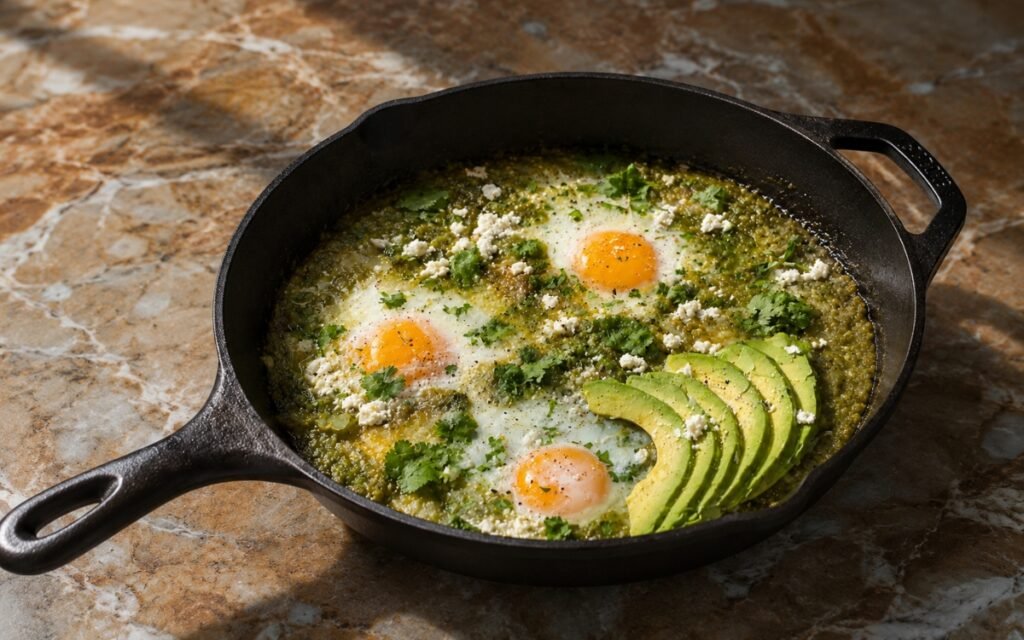
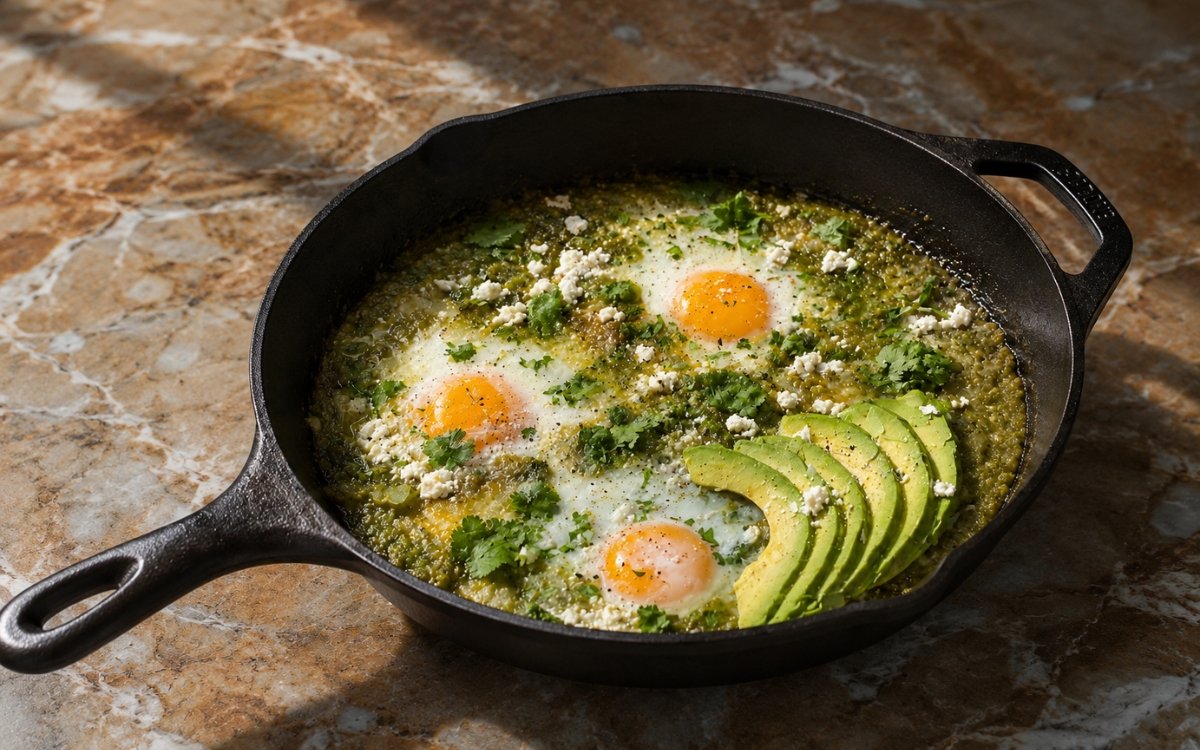
The green version of shakshuka — built on Mexican Salsa Verde rather than spiced tomato sauce, with butter rather than olive oil for the richer, slightly sweeter base that specifically complements the tomatillo’s bright, slightly grassy acidity. The salsa verde simmered in the butter until the sauce is hot and slightly bubbling, then shallow wells created with the back of a spatula for the eggs — the same technique as the Classic Breakfast Shakshuka transferred to an entirely different flavour universe. Oven-finished at 190°C for the specific evenly-set whites and warm, runny yolks that stovetop-only cooking cannot produce consistently. Cotija crumbled over the finished pan while still steaming, avocado sliced thinly and laid alongside seasoned with salt and pepper, cilantro scattered generously, and optionally a squeeze of lime for the extra acid and freshness against the already-bright salsa verde. The shakshuka that surprises everyone who thought they knew what shakshuka was.
Prep Time : 10 min
Cook Time : 25 min
Servings : 2
10 min
25 min
8
Ingredients
For the Shakshuka Verde
• 4 large eggs
• 30g unsalted butter — this one on Amazon
• Fine sea salt, to taste
• Freshly cracked black pepper, to taste
For the Salsa Verde (Full recipe — see Mexican Salsa Verde)
• 10–12 tomatillos, husked and washed
• 1 large sweet onion, cut into 8 wedges
• 2 green jalapeños, deseeded, cut into 4 chunks each
• 3 garlic cloves, peeled and lightly smashed
• 2 tbsp extra-virgin olive oil — this one on Amazon
• Salt to taste
• Large bunch of fresh cilantro, leaves and stems included
• Juice of 1 lime
• 3 tbsp water, plus more if needed to adjust consistency
For the Garnish
• 50g cotija cheese, crumbled — this one on Amazon
• 1 ripe avocado, thinly sliced
• Fresh cilantro leaves
• Fine sea salt and freshly cracked black pepper, for the avocado
• Lime wedges — optional, for squeezing at the table
This post may contain affiliate links. As an Amazon Associate I earn from qualifying purchases, at no additional cost to you.
Directions
- Make the Salsa Verde
For the complete technique — including broiling the tomatillos for proper char, deciding whether to keep or remove the skins, and achieving the ideal texture — follow the full Mexican Salsa Verde recipe. The salsa verde can be made up to 3 days ahead and refrigerated, making this shakshuka an easy weeknight meal. Summary: Broil the tomatillos, onion, garlic, and jalapeños until softened and lightly charred, developing the smoky, caramelized depth that gives salsa verde its character. Transfer the roasted vegetables and any accumulated juices to a blender with fresh cilantro, lime juice, and a splash of water. Blend until mostly smooth but still slightly textured — salsa verde should have body rather than the consistency of a completely silky purée. Season generously with fine sea salt and taste for balance. The finished salsa should be bright, tangy, herbaceous, and slightly smoky, as its acidity and heat will mellow during the simmering stage of the shakshuka. - Simmer the Salsa Verde in Butter
Preheat the oven to 190°C. In a wide, oven-safe skillet — cast iron is the ideal vessel for its even heat distribution and seamless stovetop-to-oven transfer — melt the 30g of unsalted butter over medium heat until foaming and just beginning to smell nutty. The butter rather than olive oil is the specific fat choice for this preparation: the butter’s milk solids interact with the tomatillo’s acidity and jalapeño’s heat during the simmer, rounding the sauce’s brightness into something slightly richer, more rounded, and specifically more satisfying as a base for poached eggs. Olive oil would produce a more assertively acid sauce without this rounding effect. Pour the prepared salsa verde into the butter and stir to combine. Simmer over medium heat for 5–7 minutes, stirring occasionally, until the sauce is hot, slightly thickened, and beginning to bubble around the edges. Season with fine sea salt and black pepper — tasting to ensure the sauce is well-seasoned before the eggs are added, as the eggs will draw their seasoning entirely from the surrounding sauce. - Create the Wells and Add the Eggs
Using the back of a large spoon or spatula, press down into the simmering salsa verde to create 4 shallow wells spaced evenly around the pan — deep enough to cradle each egg white without the yolk sitting on the pan surface, and spaced far enough apart that each egg has room to set without merging with its neighbours during oven cooking. Before cracking the eggs in, spoon a small amount of the warm salsa verde into the base of each well — the same technique from the Classic Breakfast Shakshuka where pre-warming each well starts the egg white setting from the bottom immediately rather than sitting in cold sauce during the oven’s initial heat phase. Crack one egg carefully into each warm well, keeping each yolk intact and centred. The egg whites should begin setting slightly at their bases within 30 seconds from the warm well — this is the correct sign that the pan is at the right temperature before going into the oven. - Bake to Preferred Doneness
Transfer the skillet to the preheated 190°C oven immediately. Bake for 8–12 minutes depending on preferred yolk doneness — the oven’s surrounding heat cooks the eggs from all sides simultaneously, producing the specific evenly set whites that stovetop heat-from-below cannot achieve without overcooking the sauce base. Check at 7–8 minutes: correctly done whites should be fully set and opaque across their entire surface, with no visible translucency, while the yolk should feel completely liquid when gently pressed through the set white surface. For softly set yolks — firm to the touch but still yielding when broken — cook for 10–12 minutes. The eggs continue cooking from the cast iron’s residual heat after removal from the oven — always pull 1 minute earlier than the target doneness. - Garnish and Serve
Remove the skillet from the oven. Immediately crumble the 50g of cotija cheese evenly across the surface — the skillet’s retained heat warms the cotija slightly while it stays crumbly and retains its sharp, salty character rather than melting. Slice the avocado thinly immediately before serving to prevent oxidation. Lay the avocado slices alongside or over the eggs and season them specifically with fine sea salt, black pepper, and optionally a small squeeze of lime juice directly onto the avocado — the lime lifts the avocado’s flavour and prevents browning while adding to the dish’s bright citrus register. Scatter fresh cilantro generously over the pan. Serve the skillet directly at the table if using cast iron — the heat retention keeps the sauce warm through the meal. Place lime wedges alongside for squeezing at the table.
*Notes :
- The butter-simmered salsa verde is the flavour decision that distinguishes this shakshuka from simply poached eggs in salsa. Salsa verde cooked briefly in butter undergoes a mild emulsification — the tomatillo’s acids and the butter’s fat producing a slightly creamier, more coating sauce that holds its body better when the eggs are added than a straight tomatillo sauce poured cold into a hot pan. The butter’s mild caramelised-dairy character also specifically complements the cotija’s salty, dry creaminess at serving in a way that olive oil does not.
- Cotija cheese for this preparation rather than feta: cotija’s specifically dry, crumbly texture and sharp, salty character are calibrated to Mexican flavour profiles in the way that feta is calibrated to Mediterranean ones. Both cheeses are briny and crumbly, but cotija’s specific flavour is more austere, less tangy, and more directly salty — the correct character against the tomatillo’s acidity and jalapeño’s heat. Feta works as a substitute; cotija is the correct choice.
Why This Recipe Works
This recipe works because it applies the same egg-nesting-and-oven technique from the Classic Breakfast Shakshuka to a completely different sauce base — the salsa verde — with the butter substitution providing the rounding effect that makes the tomatillo’s bright acidity cohere as a shakshuka base rather than simply being spicy green sauce with eggs. The cotija, avocado, and cilantro complete the specifically Mexican character that the tomatillo establishes.
Ingredient Breakdown
Mexican Salsa Verde (Roasted Tomatillo Base)
The primary flavour foundation — tomatillo’s specific bright, slightly grassy, moderately acidic character producing a fundamentally different shakshuka from the red tomato version.
Butter (Rather Than Olive Oil)
The specific fat choice — rounding the tomatillo’s acidity and producing a slightly richer, more coating sauce base than olive oil would provide.
Pre-Warmed Egg Wells
The temperature-management technique from Classic Shakshuka — starting the white-setting from the base immediately rather than having cold eggs in a hot sauce.
Oven Finish at 190°C
The even-setting technique — surrounding heat from all sides producing uniformly set whites that stovetop heat cannot achieve.
Cotija (Crumbled After Oven)
The sharp, salty Mexican dairy finish — crumbled warm rather than melted, retaining its crumbly character and briny flavour.
Avocado Seasoned Separately
The creamy cooling element — sliced immediately before serving, seasoned with salt, pepper, and optional lime for the specific cool-rich contrast to the warm, acidic salsa verde.
Flavor Structure Explained
This Shakshuka verde follows a layered balance model:
- Bright tangy core (tomatillos)
- Rich comforting layer (butter, egg yolks)
- Warm green spice (jalapeño)
- Cool creamy contrast (avocado)
- Salty fresh finish (cotija, cilantro, lime)
Tomatillos define the foundation with vivid acidity, gentle tartness, and fresh green character that distinguish the dish from red shakshuka. Butter and runny egg yolks provide richness that softens and balances the brightness. Jalapeño contributes steady warmth and freshness rather than the deeper spice profile associated with dried spices. Avocado introduces cooling creaminess that complements the tangy sauce and creates texture contrast. Cotija sharpens the entire composition with dry salinity, while cilantro and lime finish with fresh herbal and citrus notes that keep the dish lively and vibrant.
Common Mistakes to Avoid
- Not Simmering the Salsa Before Adding Eggs – Cold salsa in a warm pan produces uneven cooking and the eggs sit in insufficiently hot sauce. Always bring to a full simmer before nesting the eggs.
- Not Pre-Warming the Wells – Cold wells delay the white-setting from below, producing overcooked tops before the bottoms have set. Always spoon warm sauce into each well before the egg.
- Pulling Too Late from the Oven – The cast iron continues cooking the eggs from retained heat after removal. Always pull 1 minute before the target doneness.
- Slicing Avocado Too Early – Avocado oxidises rapidly once cut. Always slice immediately before serving.
- Using Feta Instead of Cotija – Feta works but is tangier and creamier — cotija’s specifically dry, salty, less tangy character is the correct pairing for Mexican-flavoured preparations.
Variations
Shakshuka Roja — Mexican Red Version
Replace the salsa verde with Salsa Roja — a roasted red tomato and dried chili sauce that produces a preparation closer in flavour to the Classic Breakfast Shakshuka but driven by Mexican spice character rather than Middle Eastern. Simmer the salsa roja in butter as in this recipe, nest the eggs identically, and garnish with cotija, cilantro, and avocado. The salsa roja’s deeper, slightly smoky, more mellow character against the butter is specifically warm and comforting where the verde is bright and fresh.
Shakshuka Verde With Chorizo
Add 80g of crumbled Mexican chorizo to the butter at the start and cook for 3–4 minutes before adding the salsa verde — the rendered chorizo fat and spice blending into the butter-salsa base adds a specifically meaty, smoky depth.
Extra Heat
Add 1 additional serrano chili, thinly sliced, directly into the pan alongside the salsa verde — its fresh heat layering over the jalapeño’s roasted heat in the salsa.
Storage & Make-Ahead
Salsa verde can be refrigerated for up to 5 days and is one of the most useful make-ahead components in this collection. For more detailed storage information, refer to the Mexican Salsa Verde recipe.
Assembled shakshuka is not suitable for storage because the eggs continue to cook from the residual heat after the dish is removed from the stove or oven. For the best result, always prepare and cook the eggs fresh just before serving.
Frequently Asked Questions
What is the difference between Shakshuka Verde and Classic Shakshuka?
The Classic Breakfast Shakshuka is built on a spiced red tomato sauce — cumin, sweet paprika, and crushed tomatoes producing a warm, earthy, Middle Eastern-flavoured base. Shakshuka verde uses Mexican tomatillo-based salsa verde — producing a bright, acidic, jalapeño-forward base with an entirely different flavour register. Both use the same egg-nesting and oven technique; the sauce is where they diverge completely.
Why butter rather than olive oil?
The butter’s fat and milk solids round the tomatillo’s sharp acidity slightly during the simmer — producing a creamier, more coating sauce that specifically works well as a shakshuka base. Olive oil in the same application produces a more assertively acidic sauce that is less cohesive as a base for poached eggs.
What is cotija cheese?
Cotija is a Mexican aged cheese — dry, crumbly, salty, and relatively austere in flavour. Its specific dry, crumbling texture means it holds its character against the warm, steaming sauce rather than melting. Available at Mexican grocery stores and increasingly at mainstream supermarkets. Crumbled feta is the closest accessible substitute.
Can I cook the eggs entirely on the stovetop?
Yes — cover the skillet tightly and cook over the lowest available heat for 6–10 minutes until the whites are set. The stovetop method is more variable than the oven — the bottom of the sauce may over-reduce before the eggs are set — but works when the oven is not available.
What does the lime add at serving?
Fresh lime juice squeezed at the table provides a vivid, aromatic citrus top note that — like the two-stage lime addition in the chili lime noodles — preserves the volatile aromatic compounds that cooking lime juice destroys. Against the creamy avocado and salty cotija the lime’s freshness is specifically vivid.
Nutrition Facts
( per serving )
Calories
~520 kcal
Protein
24 g
Fat
38 g
Carbs
22 g
Calories
~520 kcal
Protein
24 g
Fat
38 g
Carbs
22 g
Related Recipes
Related Recipes

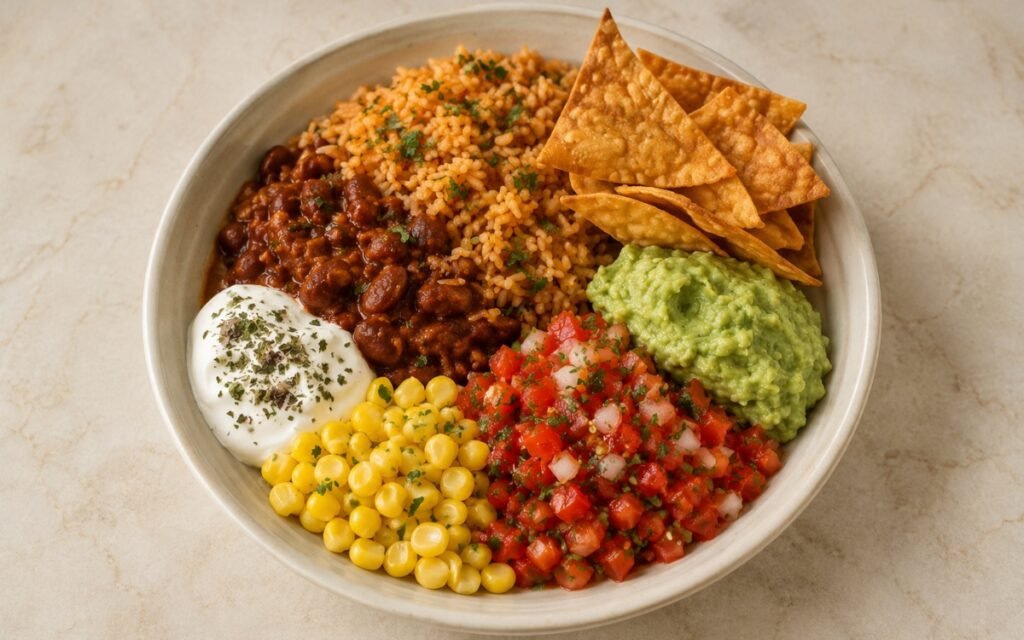
Loaded Mexican Taco Bowl
Toasted tomato rice, smoky chipotle red beans, fresh pico de gallo, plain guacamole, sour cream, and crispy tortilla chips, layered in one vibrant bowl.
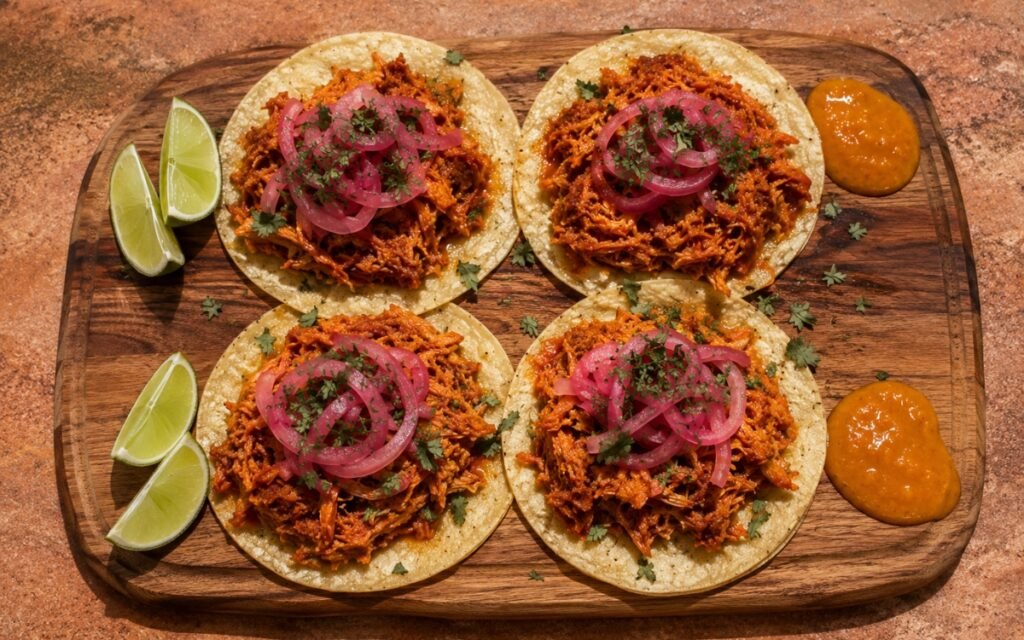
Cochinita Pibil Tacos
Pork shoulder braised in a smooth achiote marinade until fork-tender and glossy, served on corn tortillas with pickled red onion and habanero salsa.
Grapefruit Orange Pitcher Drink
Brown sugar syrup with grapefruit and orange zest steeped 5–8 minutes maximum — 500ml each juice, salt, cold water, chilled. Bright, lightly bitter, and grown-up.

You might also like
You might also like
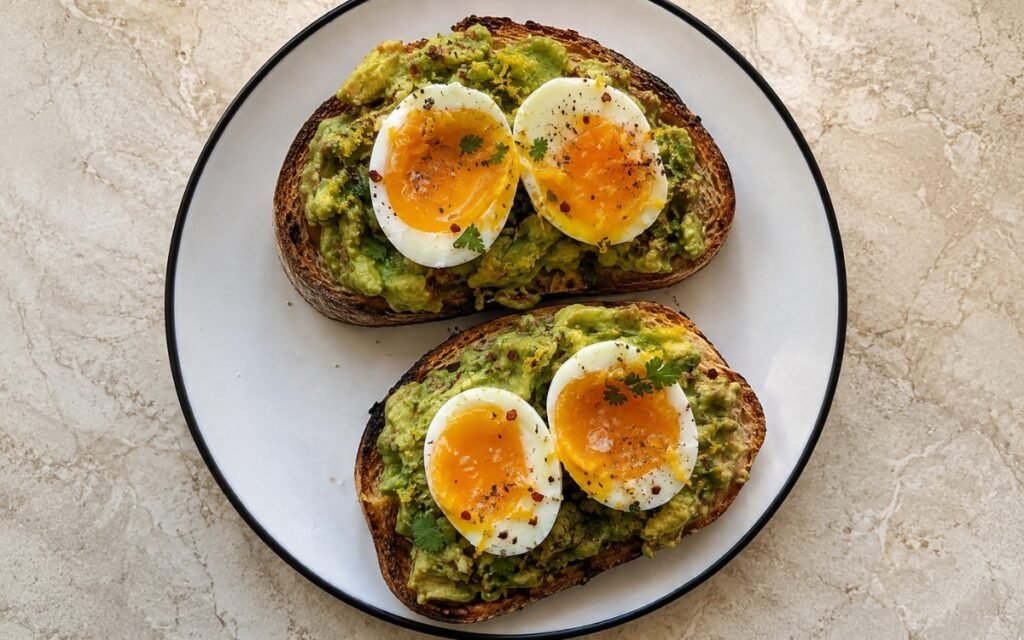
Avocado Toast with Jammy Eggs
Deeply toasted sourdough with chunky lemon-brightened smashed avocado and precisely timed jammy eggs, finished with chili flakes and herbs.
Gorditas with Chicharrón and Salsa
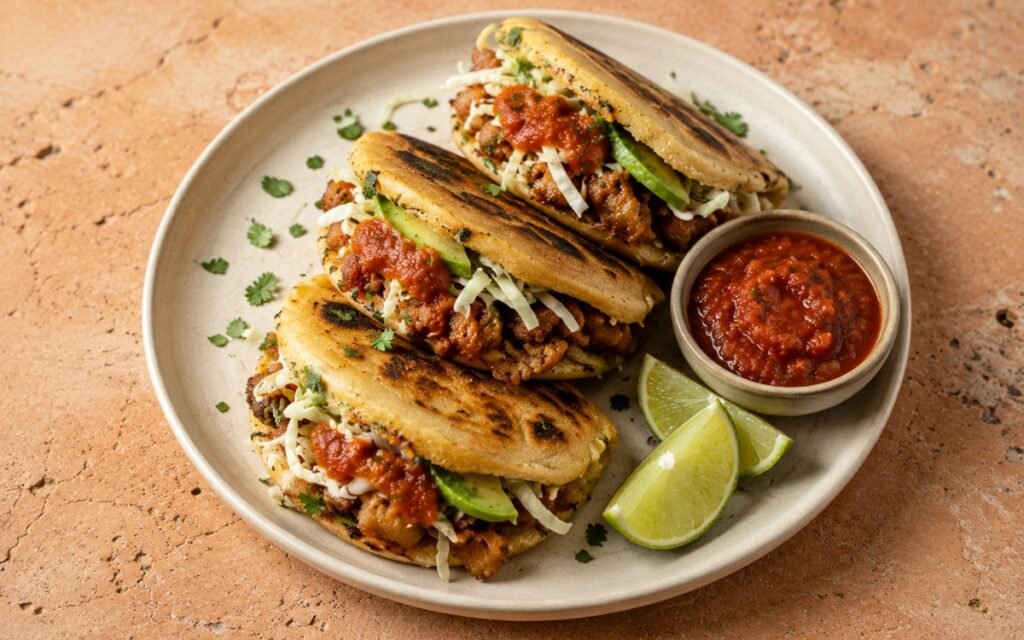
Thick masa gorditas cooked golden and split into a pocket while warm, filled with crispy chicharrón, salsa roja, shredded cabbage, and avocado.
Molletes Mexicanos
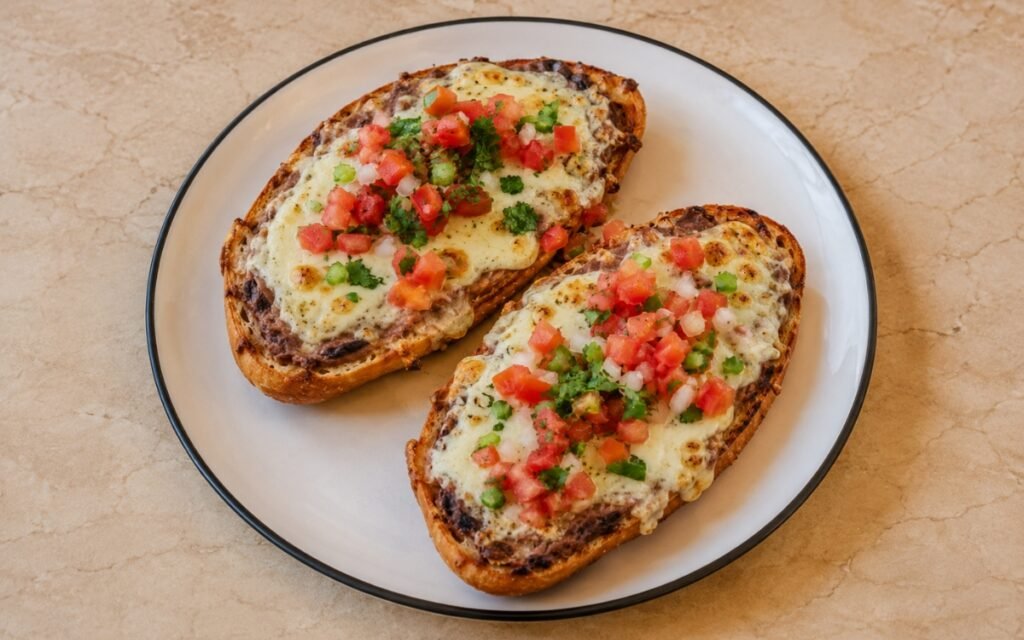
Toasted bolillo rolls spread with thick refried beans, topped with melted cheese and finished with fresh pico de gallo.
Shakshuka Verde with Poached Eggs & Avocado
Ingredients
Method
- For the complete technique — including broiling the tomatillos for proper char, deciding whether to keep or remove the skins, and achieving the ideal texture — follow the full Mexican Salsa Verde recipe. The salsa verde can be made up to 3 days ahead and refrigerated, making this shakshuka an easy weeknight meal. Summary: Broil the tomatillos, onion, garlic, and jalapeños until softened and lightly charred, developing the smoky, caramelized depth that gives salsa verde its character. Transfer the roasted vegetables and any accumulated juices to a blender with fresh cilantro, lime juice, and a splash of water. Blend until mostly smooth but still slightly textured — salsa verde should have body rather than the consistency of a completely silky purée. Season generously with fine sea salt and taste for balance. The finished salsa should be bright, tangy, herbaceous, and slightly smoky, as its acidity and heat will mellow during the simmering stage of the shakshuka.
- Preheat the oven to 190°C. In a wide, oven-safe skillet — cast iron is the ideal vessel for its even heat distribution and seamless stovetop-to-oven transfer — melt the 30g of unsalted butter over medium heat until foaming and just beginning to smell nutty. The butter rather than olive oil is the specific fat choice for this preparation: the butter’s milk solids interact with the tomatillo’s acidity and jalapeño’s heat during the simmer, rounding the sauce’s brightness into something slightly richer, more rounded, and specifically more satisfying as a base for poached eggs. Olive oil would produce a more assertively acid sauce without this rounding effect. Pour the prepared salsa verde into the butter and stir to combine. Simmer over medium heat for 5–7 minutes, stirring occasionally, until the sauce is hot, slightly thickened, and beginning to bubble around the edges. Season with fine sea salt and black pepper — tasting to ensure the sauce is well-seasoned before the eggs are added, as the eggs will draw their seasoning entirely from the surrounding sauce.
- Using the back of a large spoon or spatula, press down into the simmering salsa verde to create 4 shallow wells spaced evenly around the pan — deep enough to cradle each egg white without the yolk sitting on the pan surface, and spaced far enough apart that each egg has room to set without merging with its neighbours during oven cooking. Before cracking the eggs in, spoon a small amount of the warm salsa verde into the base of each well — the same technique from the Classic Breakfast Shakshuka where pre-warming each well starts the egg white setting from the bottom immediately rather than sitting in cold sauce during the oven’s initial heat phase. Crack one egg carefully into each warm well, keeping each yolk intact and centred. The egg whites should begin setting slightly at their bases within 30 seconds from the warm well — this is the correct sign that the pan is at the right temperature before going into the oven.
- Transfer the skillet to the preheated 190°C oven immediately. Bake for 8–12 minutes depending on preferred yolk doneness — the oven’s surrounding heat cooks the eggs from all sides simultaneously, producing the specific evenly set whites that stovetop heat-from-below cannot achieve without overcooking the sauce base. Check at 7–8 minutes: correctly done whites should be fully set and opaque across their entire surface, with no visible translucency, while the yolk should feel completely liquid when gently pressed through the set white surface. For softly set yolks — firm to the touch but still yielding when broken — cook for 10–12 minutes. The eggs continue cooking from the cast iron’s residual heat after removal from the oven — always pull 1 minute earlier than the target doneness.
- Remove the skillet from the oven. Immediately crumble the 50g of cotija cheese evenly across the surface — the skillet’s retained heat warms the cotija slightly while it stays crumbly and retains its sharp, salty character rather than melting. Slice the avocado thinly immediately before serving to prevent oxidation. Lay the avocado slices alongside or over the eggs and season them specifically with fine sea salt, black pepper, and optionally a small squeeze of lime juice directly onto the avocado — the lime lifts the avocado’s flavour and prevents browning while adding to the dish’s bright citrus register. Scatter fresh cilantro generously over the pan. Serve the skillet directly at the table if using cast iron — the heat retention keeps the sauce warm through the meal. Place lime wedges alongside for squeezing at the table.