Ingredients
Method
Make the Salsa Verde
- For the complete technique — including broiling the tomatillos for proper char, deciding whether to keep or remove the skins, and achieving the ideal texture — follow the full Mexican Salsa Verde recipe. The salsa verde can be made up to 3 days ahead and refrigerated, making this shakshuka an easy weeknight meal. Summary: Broil the tomatillos, onion, garlic, and jalapeños until softened and lightly charred, developing the smoky, caramelized depth that gives salsa verde its character. Transfer the roasted vegetables and any accumulated juices to a blender with fresh cilantro, lime juice, and a splash of water. Blend until mostly smooth but still slightly textured — salsa verde should have body rather than the consistency of a completely silky purée. Season generously with fine sea salt and taste for balance. The finished salsa should be bright, tangy, herbaceous, and slightly smoky, as its acidity and heat will mellow during the simmering stage of the shakshuka.
Simmer the Salsa Verde in Butter
- Preheat the oven to 190°C. In a wide, oven-safe skillet — cast iron is the ideal vessel for its even heat distribution and seamless stovetop-to-oven transfer — melt the 30g of unsalted butter over medium heat until foaming and just beginning to smell nutty. The butter rather than olive oil is the specific fat choice for this preparation: the butter's milk solids interact with the tomatillo's acidity and jalapeño's heat during the simmer, rounding the sauce's brightness into something slightly richer, more rounded, and specifically more satisfying as a base for poached eggs. Olive oil would produce a more assertively acid sauce without this rounding effect. Pour the prepared salsa verde into the butter and stir to combine. Simmer over medium heat for 5–7 minutes, stirring occasionally, until the sauce is hot, slightly thickened, and beginning to bubble around the edges. Season with fine sea salt and black pepper — tasting to ensure the sauce is well-seasoned before the eggs are added, as the eggs will draw their seasoning entirely from the surrounding sauce.
Create the Wells and Add the Eggs
- Using the back of a large spoon or spatula, press down into the simmering salsa verde to create 4 shallow wells spaced evenly around the pan — deep enough to cradle each egg white without the yolk sitting on the pan surface, and spaced far enough apart that each egg has room to set without merging with its neighbours during oven cooking. Before cracking the eggs in, spoon a small amount of the warm salsa verde into the base of each well — the same technique from the Classic Breakfast Shakshuka where pre-warming each well starts the egg white setting from the bottom immediately rather than sitting in cold sauce during the oven's initial heat phase. Crack one egg carefully into each warm well, keeping each yolk intact and centred. The egg whites should begin setting slightly at their bases within 30 seconds from the warm well — this is the correct sign that the pan is at the right temperature before going into the oven.
Bake to Preferred Doneness
- Transfer the skillet to the preheated 190°C oven immediately. Bake for 8–12 minutes depending on preferred yolk doneness — the oven's surrounding heat cooks the eggs from all sides simultaneously, producing the specific evenly set whites that stovetop heat-from-below cannot achieve without overcooking the sauce base. Check at 7–8 minutes: correctly done whites should be fully set and opaque across their entire surface, with no visible translucency, while the yolk should feel completely liquid when gently pressed through the set white surface. For softly set yolks — firm to the touch but still yielding when broken — cook for 10–12 minutes. The eggs continue cooking from the cast iron's residual heat after removal from the oven — always pull 1 minute earlier than the target doneness.
Garnish and Serve
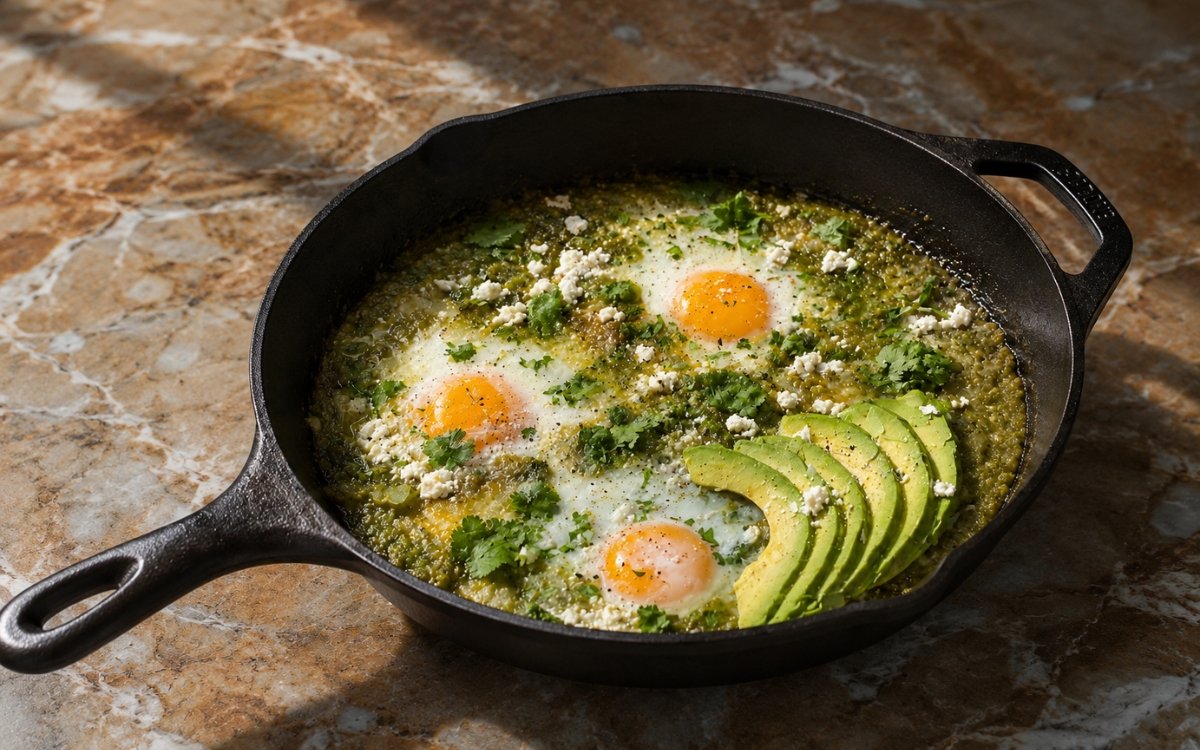
- Remove the skillet from the oven. Immediately crumble the 50g of cotija cheese evenly across the surface — the skillet's retained heat warms the cotija slightly while it stays crumbly and retains its sharp, salty character rather than melting. Slice the avocado thinly immediately before serving to prevent oxidation. Lay the avocado slices alongside or over the eggs and season them specifically with fine sea salt, black pepper, and optionally a small squeeze of lime juice directly onto the avocado — the lime lifts the avocado's flavour and prevents browning while adding to the dish's bright citrus register. Scatter fresh cilantro generously over the pan. Serve the skillet directly at the table if using cast iron — the heat retention keeps the sauce warm through the meal. Place lime wedges alongside for squeezing at the table.
Notes
The butter-simmered salsa verde is the flavour decision that distinguishes this shakshuka from simply poached eggs in salsa. Salsa verde cooked briefly in butter undergoes a mild emulsification — the tomatillo's acids and the butter's fat producing a slightly creamier, more coating sauce that holds its body better when the eggs are added than a straight tomatillo sauce poured cold into a hot pan. The butter's mild caramelised-dairy character also specifically complements the cotija's salty, dry creaminess at serving in a way that olive oil does not.
Cotija cheese for this preparation rather than feta: cotija's specifically dry, crumbly texture and sharp, salty character are calibrated to Mexican flavour profiles in the way that feta is calibrated to Mediterranean ones. Both cheeses are briny and crumbly, but cotija's specific flavour is more austere, less tangy, and more directly salty — the correct character against the tomatillo's acidity and jalapeño's heat. Feta works as a substitute; cotija is the correct choice.