Traditional Spanish Albóndigas en Salsa de Tomate
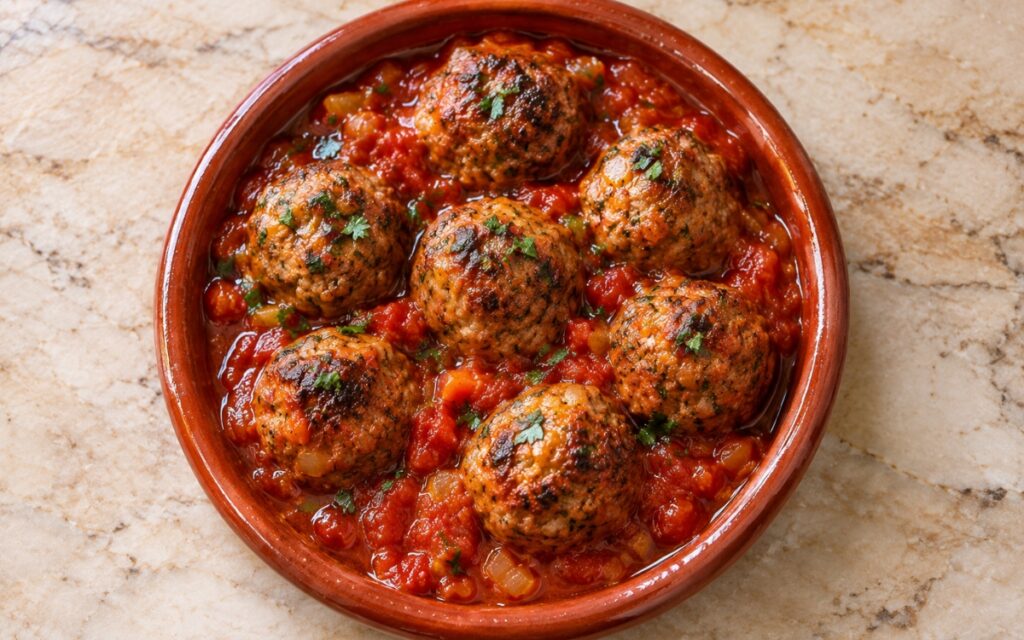
Traditional Spanish albóndigas en salsa de tomate are 24 tender handmade meatballs of ground beef and pork with garlic, parsley, and bread soaked in milk, pan-seared until deeply golden-brown and then simmered gently in a thick, rustic, brick-red tomato sauce built on softened onion, garlic, olive oil, dry white wine, and sweet Spanish paprika, finished with fresh parsley and served hot as a classic tapa. Soaking the bread in milk and mashing it into a panade, then mixing the meat only until it just holds together, rather than kneading it, is the technique this whole dish depends on for juicy, tender meatballs — overworked meat turns dense and springy and dry bread steals moisture, the same keep-the-meat-loose principle used elsewhere in this collection whenever ground meat is shaped. Browning only the outside and finishing in the sauce is what keeps the interior moist. Cooking the onion fully before the tomatoes go in is what builds sweetness. The payoff is an albóndiga with real, savoury depth — a coarse, juicy centre under a caramelised crust, coated in a glossy sauce.
- Prep Time : 25 min
- Total Time : 1 hr 15 min
- Servings : 4
Ingredients
For the Meatballs
- 500g ground beef (about 80/20 lean-to-fat ratio)
- 300g ground pork (about 20–25% fat)
- 60g soft white bread, crusts removed
- 90ml whole milk
- 1 large egg (about 50g without shell)
- 12g garlic (about 3 cloves), finely minced
- 20g fresh flat-leaf parsley, finely chopped
- 9g fine sea salt
- 2g freshly ground black pepper
- 1g sweet Spanish paprika (pimentón dulce)
- 35ml Spanish olive oil, for browning
For the Spanish Tomato Sauce
- 900g canned whole peeled tomatoes, preferably good-quality plum tomatoes, with their juices
- 180g yellow onion (about 1 medium-large onion), finely diced
- 16g garlic (about 4 cloves), finely minced
- 40ml extra virgin olive oil
- 120ml dry white wine
- 3g sweet Spanish paprika (pimentón dulce)
- 1 dried bay leaf
- 6g fine sea salt, adjusted to taste
- 1g freshly ground black pepper
- 100–150ml water, only if needed to adjust the sauce consistency
For Finishing
- 12g fresh flat-leaf parsley, finely chopped
Directions
- Make the Panade and Meatball Mixture
Tear the 60g soft white bread into small pieces, put them in a mixing bowl with the 90ml milk, and leave for about 5 minutes until fully softened, then mash into a smooth, moist paste. Add the 500g beef, 300g pork, egg, 12g garlic, 20g parsley, 9g salt, 2g pepper, and 1g paprika. Mix gently with your hands only until everything is evenly distributed and the mixture turns cohesive, and then cover and refrigerate for about 10 minutes while you prepare the sauce ingredients. Gentle mixing is what keeps the meatballs tender rather than dense and springy. - Shape the 24 Meatballs
Divide the mixture into 24 equal portions of about 42–44g each. With lightly dampened hands, roll each portion gently into a rough sphere about 4cm across, keeping a little handmade irregularity instead of compressing it into a perfectly smooth, tight ball. Set the meatballs on a tray and return them to the refrigerator briefly if they soften while you work. All 24 should hold their shape without cracks or stickiness. Light rolling is what keeps the coarse, tender texture that traditional albóndigas should have. - Brown the Meatballs
Heat a large, heavy skillet over medium-high heat and add about half of the 35ml olive oil, then add half the meatballs in a single layer with space between them. Sear them undisturbed for about 2 minutes until a deep golden crust forms, turn them gently, and brown for another 3–4 minutes until caramelised patches cover several sides. Move them to a plate, repeat with the remaining oil and meatballs, and keep all the juices and pan drippings. The centres should stay only partly cooked. Browning in batches is what gives crust and flavour instead of steaming. - Build the Tomato Sauce
Lower the heat to medium and add the 40ml extra virgin olive oil and the 180g diced onion to the browned drippings. Cook for 7–9 minutes, stirring occasionally, until soft and lightly golden, then stir in the 16g garlic for 30–45 seconds and the 3g paprika for 15 seconds, taking care not to burn it. Pour in the 120ml white wine, scrape up the drippings, and simmer 3–4 minutes until reduced by about half. Crush the 900g tomatoes by hand, add them with their juices, the bay leaf, 6g salt, and 1g pepper, and simmer uncovered for 12–15 minutes. Cooked-through onion is what gives the sauce its sweetness. - Simmer the Meatballs in the Sauce
Return the 24 browned meatballs and their juices to the skillet and nestle them in so the lower halves sit in sauce while some browned tops remain exposed. Reduce the heat to medium-low, cover partially, and cook at a gentle simmer for 12–15 minutes, turning the meatballs carefully halfway through. Check that they reach an internal temperature of at least 71°C, adding water in 30ml portions if the sauce thickens too soon, and removing the lid for the last 3–5 minutes if it needs to reduce. A gentle simmer is what finishes the meat without toughening it or breaking the balls apart. - Rest and Serve
Remove the bay leaf, taste the sauce, and adjust the salt and pepper if needed, then let the meatballs rest in the sauce off the heat for about 3 minutes. Spoon them into shallow terracotta cazuelas with the thick tomato sauce around and partly over them, leaving several browned tops visible, and scatter the 12g chopped parsley over the dish. Divide the 24 meatballs into 4 portions of 6, each with plenty of sauce, and serve hot with crusty bread if you like. Resting in the sauce is what lets the juices settle and the meatballs soak up flavour.
*Notes :
- Soaking the bread in milk and mashing it into a panade deserves genuine recognition as the technique most directly responsible for tender, juicy meatballs. The softened starch traps milk between the meat proteins as they cook, whereas dry crumbs or no binder leave the proteins to tighten and squeeze out their juices, giving a firm, dry meatball.
- Mixing the meat only until it holds together deserves the same attention this technique receives throughout this collection’s other ground-meat dishes. Overworking develops the meat proteins into a dense, springy network, whereas a light, brief mix keeps the texture coarse and open, which is the tender, rustic crumb of a proper Spanish albóndiga.
- Browning only the outside deserves genuine respect as the detail most directly responsible for flavour without dryness. A deep crust in batches builds caramelised flavour and a fond for the sauce, whereas cooking the meatballs through in the pan dries them out before they ever reach the tomato, and crowding the pan steams them grey.
- Checking the internal temperature deserves attention as a genuine, checkable doneness cue rather than a loose estimate. Ground beef and pork must reach at least 71°C in the centre to be safe, and a gentle simmer reaches that point without boiling, which would toughen the meat and break the meatballs apart.
Why This Recipe Works
This recipe works because moisture is protected at every stage. A milk-soaked panade and a light hand keep the beef and pork tender, and a mix with 20–25% pork fat stays juicy. Browning in batches builds a crust and flavourful drippings without cooking the centres, so the meatballs finish gently in the sauce to 71°C. Onion cooked until sweet, a half-reduced wine, and sweet paprika then give a thick, rustic tomato sauce that clings. The result is juicy meatballs in a glossy, brick-red sauce.
Ingredient Breakdown
Beef and Pork (500g and 300g)
The structural foundation — beef gives savoury depth and pork adds fat and tenderness for a juicy, rich meatball.
Milk-Soaked Bread Panade (60g and 90ml)
The critical technique — softened bread holds milk in the mixture and keeps the cooked meatballs moist and tender.
Deep Browning in Batches
The core flavour-building stage — a dark crust and pan drippings add caramelised depth to both meatballs and sauce.
Whole Peeled Tomatoes (900g)
The sauce foundation — hand-crushed plum tomatoes give a thick, rustic sauce with small tender pieces that cling to the meat.
Onion, Garlic, and Sweet Paprika
The aromatic base — slowly softened onion and briefly bloomed pimentón dulce give sweetness, warmth, and brick-red colour.
Dry White Wine (120ml)
The balancing note — reduced by half, it lifts the browned drippings and brightens the tomato.
Flavor Structure Explained
This Spanish albóndigas en salsa de tomate follows a layered balance model:
- Savoury, meaty foundation (browned ground beef and pork)
- Tender, mild body (milk-soaked bread and egg)
- Sweet, tangy sauce base (crushed tomatoes and softened onion)
- Warm, aromatic accent (garlic, sweet paprika, and bay)
- Fresh, green finish (flat-leaf parsley)
Browned beef and pork give the albóndigas their savoury, meaty foundation, and the milk-soaked bread and egg keep the interior tender and mild. The crushed tomatoes and softened onion supply a sweet, tangy sauce base that wine lifts, while garlic, sweet paprika, and bay add a warm, aromatic accent. Fresh parsley gives a green finish that ties this tapa together.
Common Mistakes to Avoid
- Overworking the Meat – This makes the meatballs dense, springy, and dry. Always mix gently with your hands only until the mixture turns cohesive.
- Using Very Lean Meat – This produces dry, firm meatballs that cannot stay juicy. Always use beef of about 80/20 and pork with 20–25% fat.
- Crowding the Skillet – This steams the meat instead of browning it. Always brown in two batches in a single layer with space between the meatballs.
- Cooking Them Through While Browning – This dries the meatballs before they reach the sauce. Always sear only until deeply golden and finish them gently in the simmering tomato sauce.
- Boiling the Sauce Hard – This toughens the meat and breaks the meatballs apart. Always keep a gentle, medium-low simmer and turn them carefully with a spoon.
Variations
Breadcrumb Panade Version
Replace the soft white bread with about 45g of plain breadcrumbs soaked in the same milk if necessary, which works but gives a slightly less delicate result than fresh bread.
Smoked Paprika Version
Use a small amount of smoked paprika instead of some of the sweet paprika for a subtle smoky note, though an intensely smoky flavour is not needed for this traditional tomato sauce.
Main Course Version
Serve the albóndigas as a substantial main course with crusty bread for soaking up the sauce instead of as tapas, using the same 6 meatballs per person.
Make-Ahead Dish Version
Prepare the finished dish a day ahead and refrigerate it, so the meatballs absorb extra flavour from the sauce, then reheat gently with a little water if needed.
Storage & Make-Ahead
The meatballs can be shaped up to 24 hours ahead and refrigerated at 4°C or below on a covered tray, which also lets the seasoning settle before they are browned and simmered.
The finished dish can be made a day in advance, because the meatballs absorb extra flavour from the tomato sauce during refrigeration and taste even more rounded the next day.
Refrigerate leftovers promptly at 4°C or below for up to 3 days, keeping the meatballs covered by sauce in an airtight container to stop them drying out.
Reheat gently in the sauce, adding a little water if it has thickened, until the meatballs are thoroughly hot, at least 71°C, and avoid boiling hard or the meat will toughen.
Freeze the cooked meatballs in their sauce for up to 3 months for best quality, then thaw them overnight in the refrigerator before reheating.
Frequently Asked Questions
Why is the bread soaked in milk before it goes into the meat?
The softened bread forms a moist panade that traps liquid between the meat proteins, so the meatballs stay juicy and tender instead of drying out and tightening as they cook.
Why are the meatballs browned but not cooked through?
A deep crust builds caramelised flavour and a fond for the sauce, while the centres finish gently in the simmering tomato, which keeps them moist and avoids drying the meat.
Why is the onion cooked for 7–9 minutes before the tomatoes?
Slow cooking softens the onion and turns it sweet, whereas onion added raw with the tomatoes stays sharp, so the sauce tastes rounded and rustic instead of raw.
Why is the sauce simmered gently rather than boiled?
A vigorous boil toughens the meat and can split the meatballs, whereas a gentle simmer cooks them to 71°C while the sauce thickens naturally into a glossy coating.
Are there other classic meatball, tomato-sauce, or ground meat dishes worth trying?
Juicy Beef Meatballs and Easy Spaghetti and Meatballs both offer other classic beef meatball directions worth exploring, and Sopa de Albóndigas is also worth trying for another albóndigas dish from the Spanish-speaking world. Cuban Picadillo is another ground-meat dish cooked in a tomato base, while Sourdough Bread is a bread worth baking for soaking up the sauce.
Nutrition Facts
( Per Serving — 6 meatballs with sauce )
- Calories
- ~740 kcal
- Protein
- 39 g
- Fat
- 54 g
- Carbs
- 24 g
-

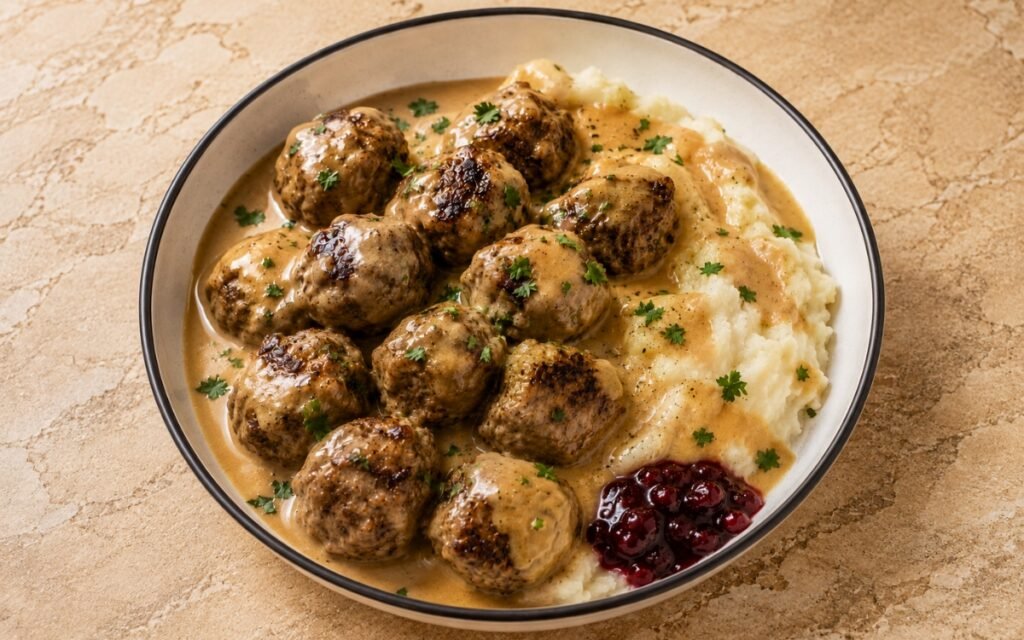
Swedish Meatballs
Tender panade-enriched beef and pork meatballs, gently spiced with allspice and nutmeg, in a creamy brown gravy over mashed potatoes.
-
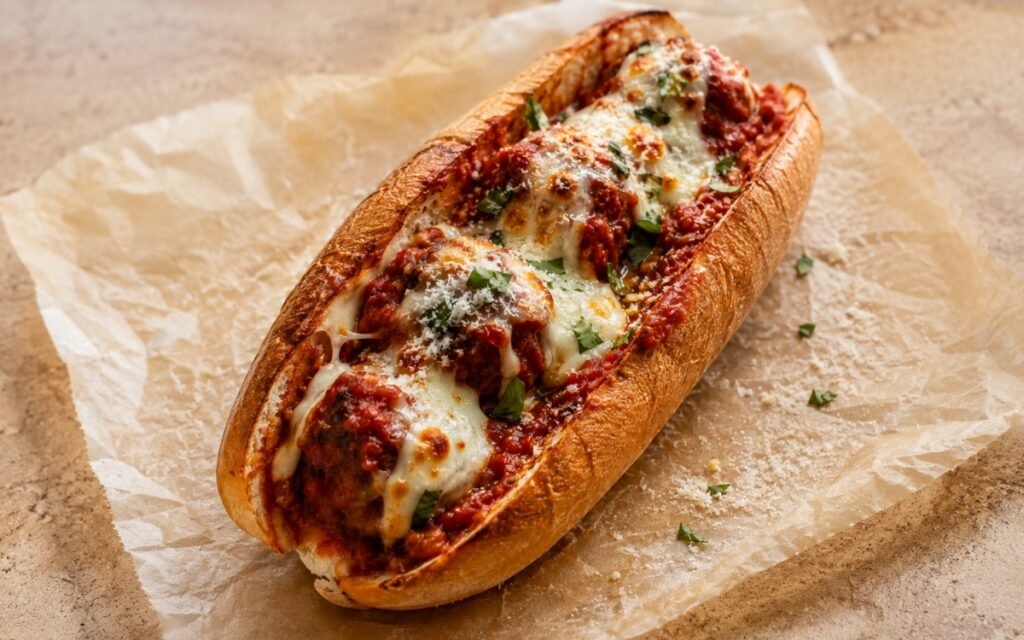
Meatball Sub Sandwich
Tender panade-enriched beef meatballs in thick marinara, melted mozzarella and provolone, and fresh basil, in toasted long French rolls.
-
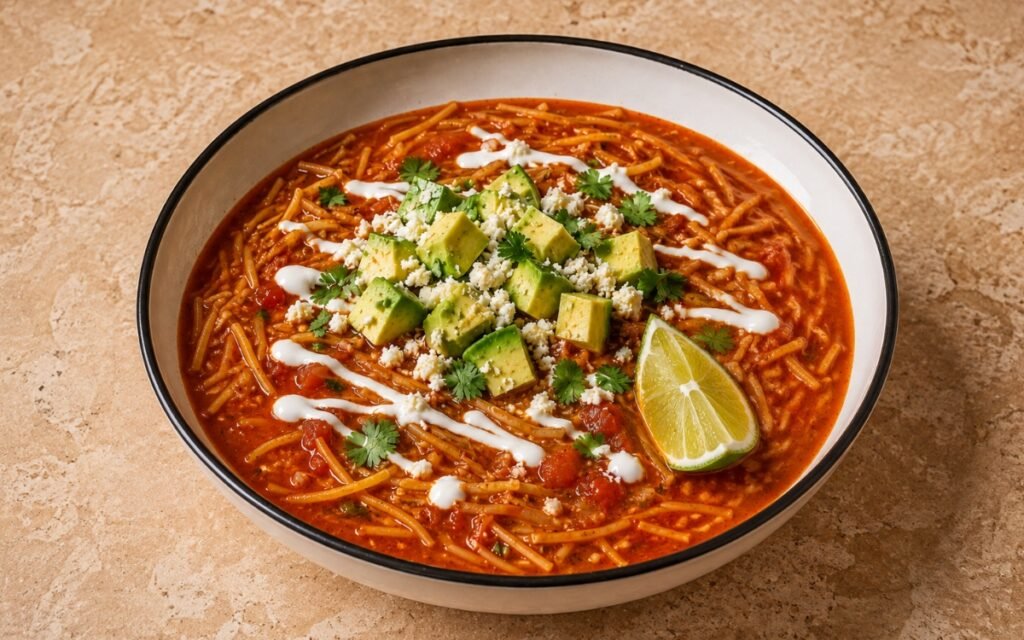
Sopa de Fideo
Toasted fideo noodles simmered in a rich, deeply cooked tomato broth, finished with avocado, crema, queso fresco, and lime.
-
Patatas Bravas with Mayonnaise-Style Aioli
Potatoes parboiled, shaken rough, roasted on a preheated tray — smoky bravas sauce with sherry vinegar, creamy garlic aioli.
-
Spanish Tortilla / Tortilla Española
Thin potato slices gently cooked in olive oil, folded into beaten eggs, and cooked slowly for a golden exterior and soft, custardy centre.
-
Virgin Spanish Sangria
Wine-like citrus mocktail with macerated fruit and verjus, lightly tannic, bright, festive, and convincingly grown-up.