
Sopa de Fideo
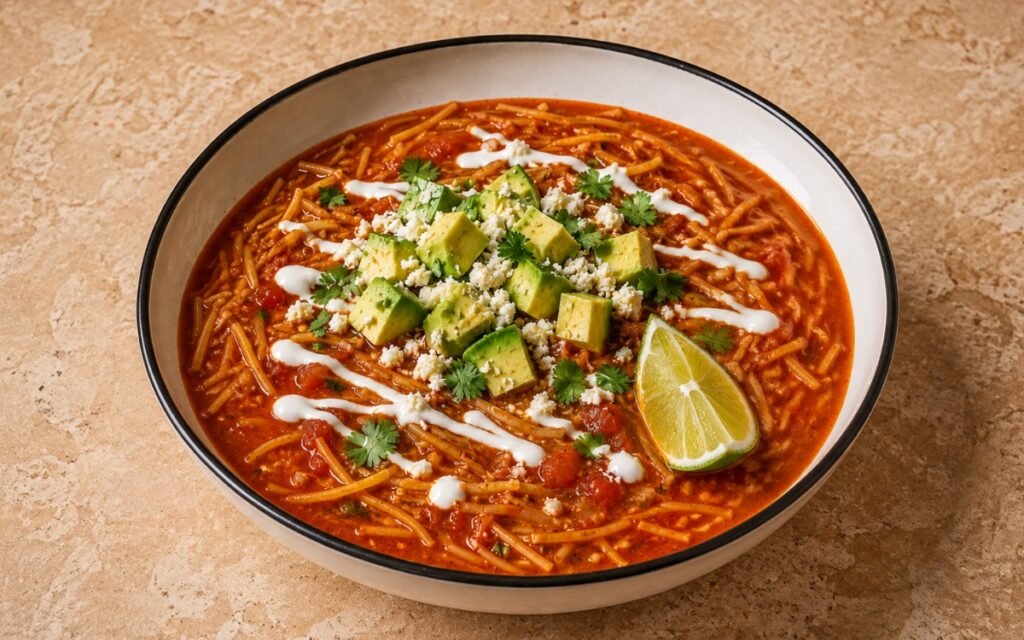
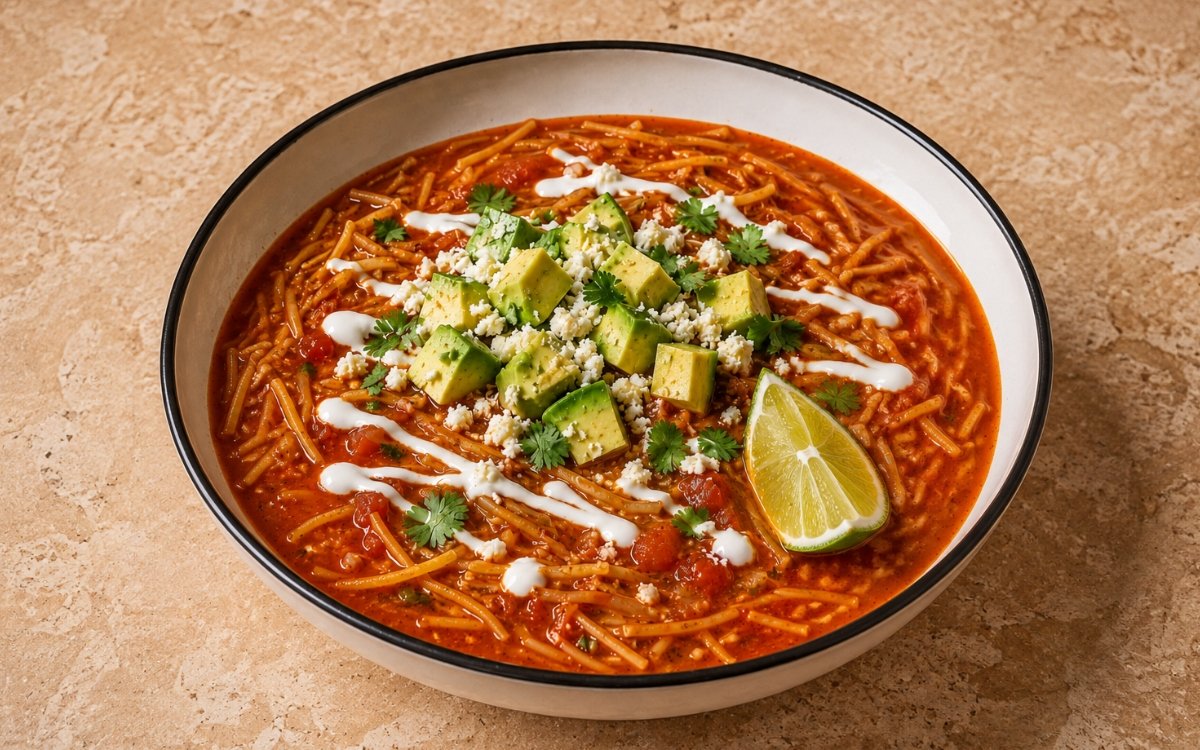
Sopa de Fideo is a classic Mexican noodle soup made by toasting thin fideo noodles until golden, then simmering them in a rich tomato broth until tender. This version is finished with diced avocado, crema, queso fresco, cilantro, and lime for the classic full bowl. The key is properly toasting the noodles and cooking the tomato base before adding broth so the soup tastes deep and savory rather than raw or flat. Toasting the fideo noodles to a genuine deep golden colour before they ever meet any liquid is the technique this whole soup depends on — that toasting builds a nutty depth the noodles simply wouldn’t have if simmered raw, the same toast-before-simmer principle used elsewhere in this collection whenever dry noodles or grains need real colour development before absorbing liquid. Cooking the blended tomato base thoroughly, until it loses its raw smell and darkens, is what gives the broth its actual savoury depth rather than a flat, uncooked tomato flavour. Adding the finishing toppings — avocado, crema, queso fresco, cilantro — only per bowl at the very end is what keeps them fresh and distinct against the hot broth. The payoff is a soup that’s genuinely brothy and deep, with tender, nutty noodles in a savoury tomato broth, topped fresh and cool.
Prep Time : 15 min
Cook Time : 25 min
Servings : 4
15 min
25 min
4
Ingredients
For the Soup Base
• 30ml neutral oil
• 180g white onion, roughly chopped
• 4 garlic cloves
• 600g ripe tomatoes, roughly chopped, or canned whole peeled tomatoes
• 1.2 litres chicken broth, or light stock
• 1 tsp dried Mexican oregano, crushed — this one on Amazon
• 1 bay leaf
• 2 tsp fine sea salt, plus more to taste
• Freshly ground black pepper, to taste
For the Fideo
• 200g fideo noodles, or thin vermicelli broken into 3–5cm pieces — this one on Amazon
• 15ml neutral oil, if needed
For Finishing and Serving
• 1 medium avocado, diced
• 60–80g queso fresco, crumbled — this one on Amazon
• 60ml Mexican crema — this one on Amazon
• 2 tbsp chopped fresh cilantro, plus a little extra if needed
• 1–2 limes, cut into wedges
This post may contain affiliate links. As an Amazon Associate I earn from qualifying purchases, at no additional cost to you.
Directions
- Blend the Tomato Base
Add the onion, garlic, and tomatoes to a blender with about 200ml of the broth. Blend until completely smooth. Set aside. The mixture should be fully smooth and pourable. If it is too thick to blend cleanly, add a little more broth. Blending with a portion of the broth already included, rather than water, means this base carries genuine savoury depth from the very first stage rather than starting from a neutral liquid. - Toast the Fideo
Heat a medium pot or Dutch oven over medium heat. Add the 30ml oil, then add the fideo. Cook, stirring constantly, for 4–6 minutes until the noodles are evenly golden brown and smell nutty. Do not walk away — they can go from golden to burnt quickly. Transfer the toasted noodles to a plate if the pot seems too hot, or keep them in the pot if they are evenly toasted and not in danger of overbrowning. The fideo should be a deep golden color, not pale. This step is essential for the classic flavor. Burnt dark brown bits will make the soup bitter. Constant stirring throughout this stage is what allows every noodle to colour evenly rather than some catching and darkening in spots while others stay pale — fideo’s thin, quick-cooking strands leave genuinely little margin for inattention here. - Cook the Tomato Base
If needed, add a small extra splash of oil to the pot. Pour in the blended tomato mixture carefully. Cook over medium heat for 8–10 minutes, stirring often, until it darkens slightly, thickens a little, and loses its raw tomato smell. Add the oregano, bay leaf, salt, and a few grinds of black pepper. The tomato base should smell savory and cooked, not sharp or raw. This is what gives the broth depth. This active cooking stage is what actually transforms the blended purée from something that still tastes distinctly raw into a genuinely developed flavour base — that transformation doesn’t happen automatically once the base is diluted with the remaining broth, which is exactly why it needs real, dedicated cooking time here first. - Build the Soup
Add the remaining broth and stir well. Bring to a gentle simmer. Return the toasted fideo to the pot if you removed it earlier. Simmer gently for 6–9 minutes, stirring occasionally, until the noodles are tender but not mushy. Taste and adjust salt as needed. The final consistency should be brothy, but the noodles should slightly thicken the soup as they release starch. The noodles should be fully tender while still holding their shape. Occasional stirring during this simmer prevents the thin, delicate fideo strands from settling and clumping together at the bottom of the pot, where they’d cook unevenly against direct contact with the hot base. - Finish and Serve
Ladle the sopa de fideo into bowls. Top each serving with diced avocado, a drizzle of crema, crumbled queso fresco, chopped cilantro, and a lime wedge on the side. Serve immediately. The soup should be hot and brothy, with cool creamy toppings added only at the end so they stay fresh and distinct. Adding every topping per individual bowl, rather than stirring any of them into the full pot, protects each one’s own fresh character — avocado stays firm, crema stays cool and distinct, and queso fresco keeps its texture rather than dissolving into the hot broth.
*Notes :
- Toasting the fideo to a genuine deep golden colour before it ever touches liquid deserves recognition as the technique most responsible for this soup’s actual flavour identity. Untoasted fideo simmered directly in broth produces a noticeably flatter, blander noodle with none of the nutty depth this dish is specifically known for — that toasting step, while quick, is doing real, non-optional flavour work rather than simply being a cosmetic step before the “real” cooking begins.
- The narrow margin between properly toasted and burnt fideo is worth taking seriously given how thin and quick-cooking these noodles are. Constant stirring through the full toasting window isn’t excessive caution — it’s a genuine requirement, since fideo’s thin strands can move from golden to noticeably burnt within a very short stretch of inattention, and any burnt bits introduce a bitterness that carries straight through into the finished soup.
- Cooking the blended tomato base thoroughly before the remaining broth is added follows the same underlying logic used throughout this collection’s other tomato-based soups and sauces. A blended purée straight from the blender still tastes distinctly raw, and that sharp edge doesn’t simply dissolve away once diluted into a larger volume of broth — it needs real, active cooking time on its own first to develop into something genuinely savoury and rounded.
- Reserving every finishing topping for individual bowls rather than the shared pot reflects a real understanding of what each one contributes. Avocado, crema, and queso fresco are all meant to provide fresh, cool, distinct contrast against the hot broth — stirred into the pot instead, each would soften, dissolve, or lose its own character, undermining the specific textural contrast a properly finished bowl of sopa de fideo depends on.
Why This Recipe Works
This recipe works because the fideo is toasted to a genuine deep golden colour with constant attention, building real nutty depth that raw, untoasted noodles simply wouldn’t have. The tomato base is blended with a portion of the broth already included and then actively cooked before the rest of the liquid joins it, losing its raw edge and developing genuine savoury depth.
Gentle simmering with occasional stirring keeps the delicate noodles from clumping while they cook to tender. Every finishing topping — avocado, crema, queso fresco, cilantro — is added only per bowl at serving, preserving each one’s fresh, distinct character against the hot broth.
Ingredient Breakdown
Toasted Fideo Noodles
The soup’s defining texture — genuinely toasted to deep golden with constant attention, building nutty depth raw noodles wouldn’t have.
Blended Tomato Base (With Broth Included)
The flavour foundation — built with a portion of broth from the start, carrying savoury depth into the base itself.
Thoroughly Cooked Tomato Base
The critical technique — actively cooked before dilution, losing its raw edge and developing genuine savoury depth.
Gently Simmered, Occasionally Stirred Noodles
The cooking technique — prevents clumping while bringing the fideo to properly tender without turning mushy.
Per-Bowl Fresh Toppings (Avocado, Crema, Queso Fresco)
The finishing contrast — added only at serving, preserving each ingredient’s own fresh, distinct character.
Flavor Structure Explained
This sopa de fideo follows a layered balance model:
- Nutty toasted foundation (toasted fideo noodles)
- Deep savoury broth (thoroughly cooked tomato base)
- Warm background aroma (oregano, bay leaf)
- Cool creamy finish (avocado, crema, queso fresco)
- Bright citrus lift (fresh lime)
Toasted fideo noodles provide the soup’s nutty, genuinely developed foundation, distinct from what raw noodles would offer. The thoroughly cooked tomato base contributes deep, savoury broth flavour rather than anything raw or sharp. Oregano and bay leaf add warm, background aroma throughout the simmer. Fresh avocado, crema, and queso fresco, added only at serving, finish each bowl with cool, creamy contrast against the hot broth. A final squeeze of fresh lime brightens the whole soup right before eating.
Common Mistakes to Avoid
- Skipping or Rushing the Fideo Toasting Step – This misses the nutty depth that defines this soup’s classic flavour. Always toast the noodles to a genuine deep golden colour with constant attention.
- Walking Away While the Fideo Toasts – These thin noodles can burn quickly. Always stir constantly through the full toasting window.
- Adding the Broth Before the Tomato Base Is Properly Cooked – This leaves the finished soup tasting flat and raw. Always cook the blended base thoroughly first.
- Overcooking the Noodles Once Added – They continue absorbing liquid even after becoming tender. Always pull them from active heat once they’re just tender, not mushy.
- Stirring the Toppings Into the Full Pot – This softens or dissolves their fresh character. Always add avocado, crema, and queso fresco per individual bowl.
Variations
Vegetable Broth Version
Substitute a light vegetable broth for chicken broth for a vegetarian version of the same technique.
Extra-Rustic Version
Keep the broth slightly looser rather than reduced heavily, letting the soup eat like a proper soup rather than a thickened pasta sauce.
Spicy Version
Add a small amount of blended chipotle or a few dashes of hot sauce to the tomato base for a spicier finished broth.
With Shredded Chicken
Add cooked shredded chicken to the soup during the final simmer for a heartier, more substantial version.
Storage & Make-Ahead
The tomato base can be made ahead and refrigerated in a sealed container for a few days before being combined with the broth and noodles.
This soup is best made fresh and eaten soon after cooking, since the noodles continue absorbing liquid and can turn overly soft if left to sit.
If the soup thickens too much on standing, loosen it with a little extra hot broth.
Frequently Asked Questions
Why does the fideo need to be toasted before it’s simmered in broth?
Untoasted fideo produces a noticeably flatter, blander noodle without the nutty depth this soup is specifically known for. Toasting the noodles to a genuine deep golden colour first is what builds that characteristic flavour before any liquid is added.
Why does the fideo need such constant attention while toasting?
These thin, quick-cooking noodles can move from golden to noticeably burnt within a short stretch of inattention. Constant stirring through the full toasting window is what prevents burnt bits, which would otherwise introduce bitterness carrying straight through into the finished soup.
Why does the tomato base need to be cooked before the remaining broth is added?
A blended purée straight from the blender still tastes distinctly raw, and that sharp edge doesn’t simply dissolve once diluted into a larger volume of liquid. Active cooking time on its own first is what allows the base to develop real, savoury depth.
Why are the toppings added per bowl instead of stirred into the whole pot?
Avocado, crema, and queso fresco are all meant to provide fresh, cool contrast against the hot broth. Stirred into the pot, each would soften, dissolve, or lose its own character, undermining the textural contrast a properly finished bowl depends on.
Are there other classic Mexican soups or accompaniments worth trying?
Sopa de Tortilla, Sopa de Albóndigas, and Caldo Tlalpeño all offer other classic, brothy Mexican soup directions worth exploring. Mexican-Style Rice and Homemade Corn Tortillas both make great accompaniments alongside this soup.
Nutrition Facts
( per serving )
Calories
~380 kcal
Protein
10 g
Fat
18 g
Carbs
44 g
Calories
~380 kcal
Protein
10 g
Fat
18 g
Carbs
44 g
Related Recipes
Related Recipes

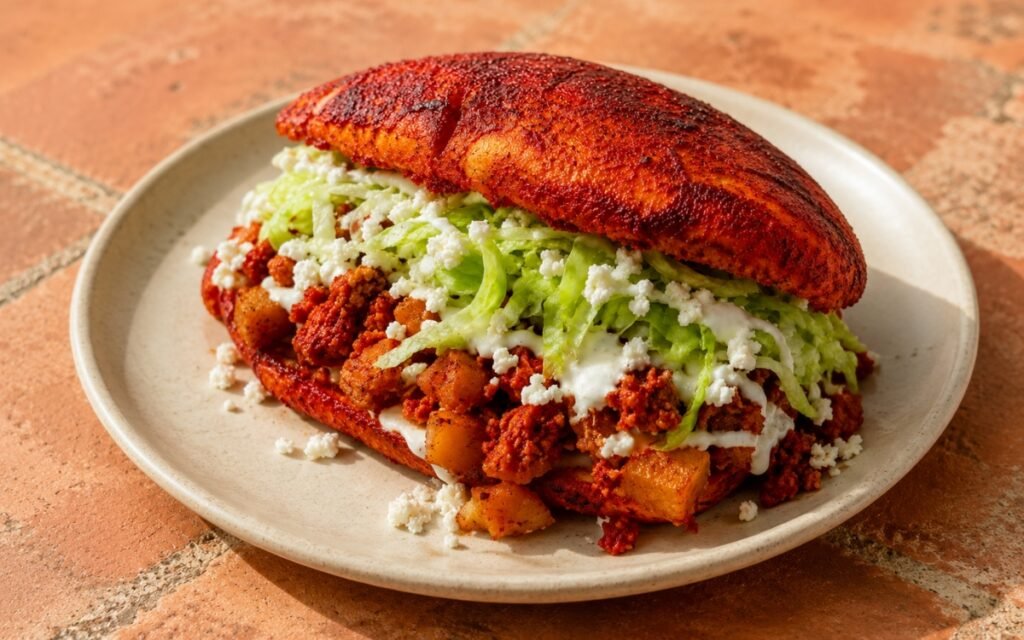
Pambazo Sandwich
Rolls dipped in vivid guajillo chili sauce and griddled deep red and lightly crisp, filled with savory potato-and-chorizo, and finished with crema and queso fresco.
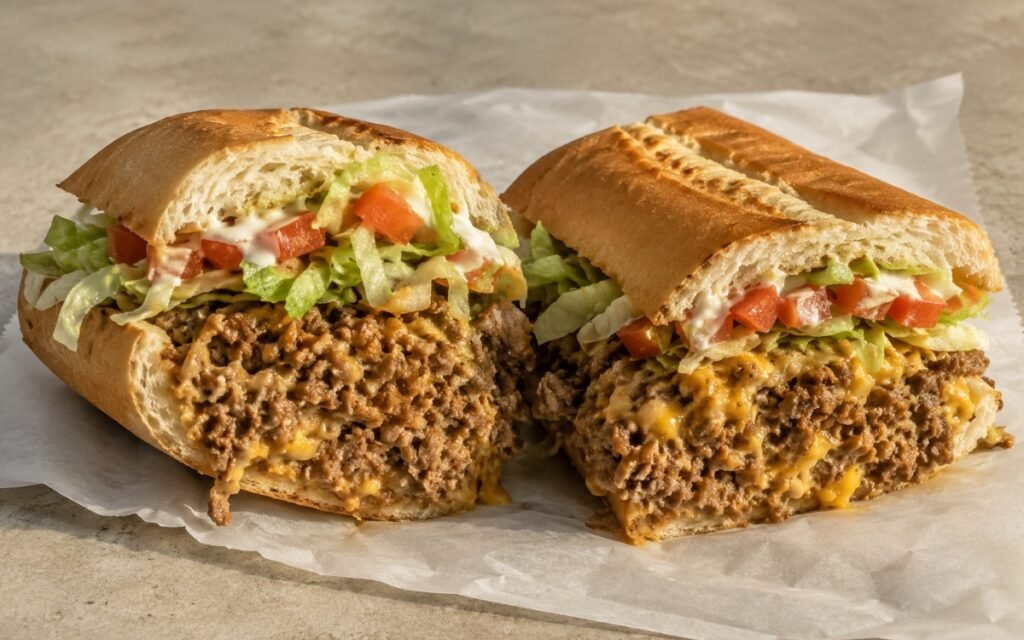
Chopped Cheese
Seared ground beef and caramelized onion chopped together with melted American cheese, piled into a soft hoagie roll with lettuce and tomato.
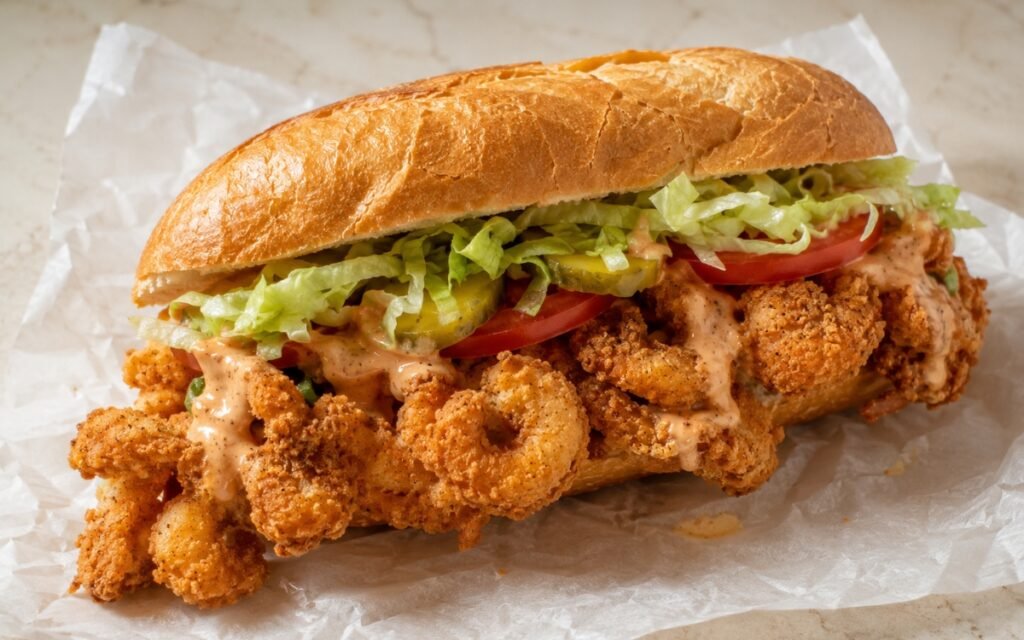
Po’ Boy Sandwich
Crisp, well-seasoned fried shrimp piled generously into crusty French bread with shredded lettuce, tomato, and a tangy remoulade.
You might also like
You might also like
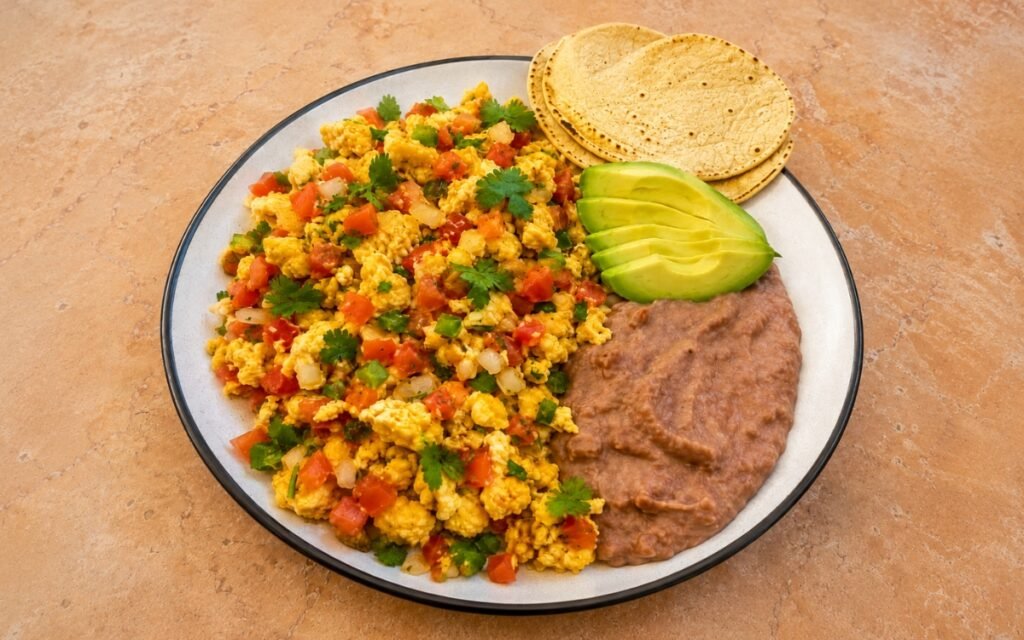
Huevos a la Mexicana
Softly scrambled eggs cooked with diced tomato, onion, and jalapeño, served with warm refried beans, sliced avocado, and tortillas.
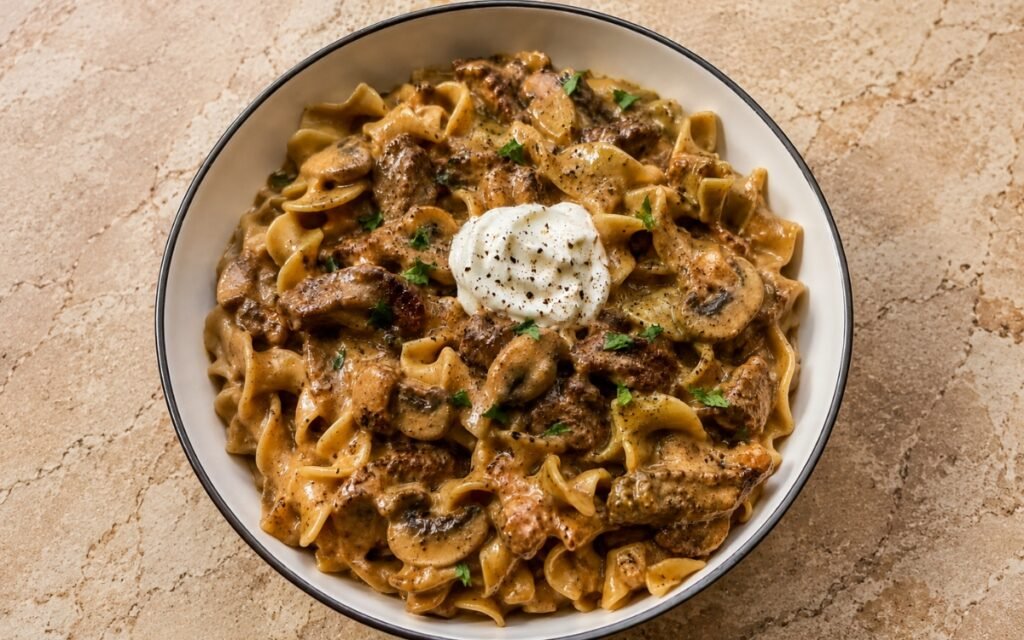
Beef Stroganoff
Tender seared beef, properly browned mushrooms, and a rich, glossy sour cream sauce over buttery egg noodles.
Elote-Style Chicken Wings
Oven-baked wings with crackling skin, tossed hot in a creamy mayo-crema elote sauce, then topped with crumbled cotija and chili powder.

Sopa de Fideo
Ingredients
Method
- Add the onion, garlic, and tomatoes to a blender with about 200ml of the broth. Blend until completely smooth. Set aside. The mixture should be fully smooth and pourable. If it is too thick to blend cleanly, add a little more broth. Blending with a portion of the broth already included, rather than water, means this base carries genuine savoury depth from the very first stage rather than starting from a neutral liquid.
- Heat a medium pot or Dutch oven over medium heat. Add the 30ml oil, then add the fideo. Cook, stirring constantly, for 4–6 minutes until the noodles are evenly golden brown and smell nutty. Do not walk away — they can go from golden to burnt quickly. Transfer the toasted noodles to a plate if the pot seems too hot, or keep them in the pot if they are evenly toasted and not in danger of overbrowning. The fideo should be a deep golden color, not pale. This step is essential for the classic flavor. Burnt dark brown bits will make the soup bitter. Constant stirring throughout this stage is what allows every noodle to colour evenly rather than some catching and darkening in spots while others stay pale — fideo’s thin, quick-cooking strands leave genuinely little margin for inattention here.
- If needed, add a small extra splash of oil to the pot. Pour in the blended tomato mixture carefully. Cook over medium heat for 8–10 minutes, stirring often, until it darkens slightly, thickens a little, and loses its raw tomato smell. Add the oregano, bay leaf, salt, and a few grinds of black pepper. The tomato base should smell savory and cooked, not sharp or raw. This is what gives the broth depth. This active cooking stage is what actually transforms the blended purée from something that still tastes distinctly raw into a genuinely developed flavour base — that transformation doesn’t happen automatically once the base is diluted with the remaining broth, which is exactly why it needs real, dedicated cooking time here first.
- Add the remaining broth and stir well. Bring to a gentle simmer. Return the toasted fideo to the pot if you removed it earlier. Simmer gently for 6–9 minutes, stirring occasionally, until the noodles are tender but not mushy. Taste and adjust salt as needed. The final consistency should be brothy, but the noodles should slightly thicken the soup as they release starch. The noodles should be fully tender while still holding their shape. Occasional stirring during this simmer prevents the thin, delicate fideo strands from settling and clumping together at the bottom of the pot, where they’d cook unevenly against direct contact with the hot base.
- Ladle the sopa de fideo into bowls. Top each serving with diced avocado, a drizzle of crema, crumbled queso fresco, chopped cilantro, and a lime wedge on the side. Serve immediately. The soup should be hot and brothy, with cool creamy toppings added only at the end so they stay fresh and distinct. Adding every topping per individual bowl, rather than stirring any of them into the full pot, protects each one’s own fresh character — avocado stays firm, crema stays cool and distinct, and queso fresco keeps its texture rather than dissolving into the hot broth.