
Steak Tacos with Salsa Verde
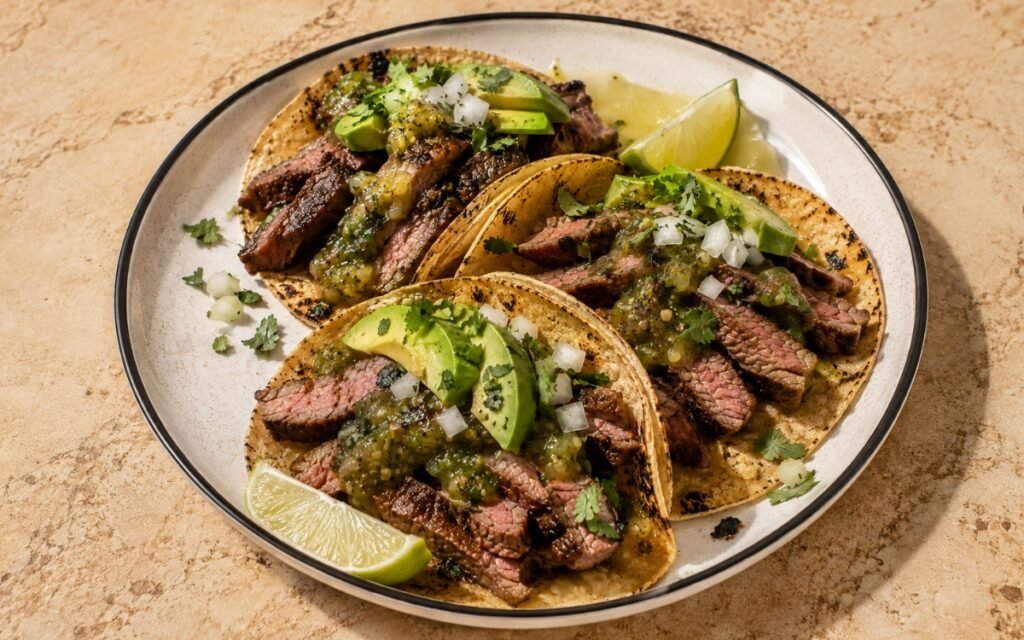
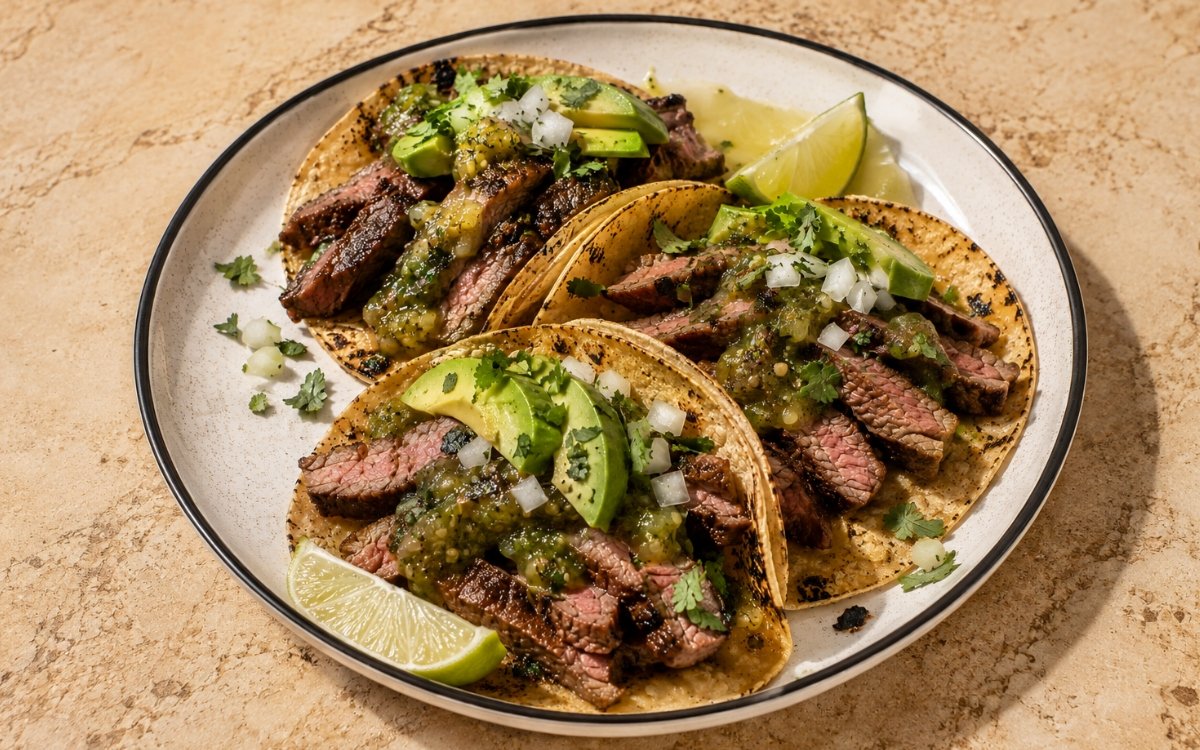
Juicy sliced steak folded into small homemade corn tortillas with bright salsa verde, diced white onion, cilantro, avocado, and lime. The key is treating the steak properly: salt it ahead, dry it extremely well, sear it hard, rest it fully, then slice it thinly across the grain so every taco gets tender beef with dark charred edges. Salting the steak well ahead and letting it rest uncovered on a rack is the technique this whole dish depends on for a real, dark crust — that dry-brine period both seasons the meat throughout and pulls surface moisture out, the same salt-ahead-and-dry principle used elsewhere in this collection whenever a thick cut needs genuine, deep browning rather than a pale, steamed surface. Resting the steak fully before slicing is what keeps its juices inside the meat rather than pooling out onto the board. Slicing thinly across the grain is what makes even a perfectly cooked steak actually eat tender in a taco, since cutting with the grain would leave every bite working against the muscle fibers. The payoff is a taco with real contrast — tender, juicy beef with dark charred edges against bright salsa verde, sharp onion, and creamy avocado.
Prep Time : 30 min
Cook Time : 25 min
Servings : 4
30 min
25 min
4
Ingredients
For the Homemade Corn Tortillas — (Full recipe — see Homemade Corn Tortillas)
• 160g masa harina — this one on Amazon
• 2g fine sea salt
• 200g warm water, approximately 40°C
For the Steak
• 800g ribeye or sirloin steak
• 10 to 12g fine sea salt, for salting ahead
• 3g black pepper
• 2g garlic powder, optional — this one on Amazon
• 15ml neutral oil
For Serving
• Salsa Verde Mexican, for serving
• 120g white onion, finely diced
• 20g fresh cilantro, roughly chopped
• 2 ripe avocados, sliced
• 2 to 3 limes, cut into wedges
This post may contain affiliate links. As an Amazon Associate I earn from qualifying purchases, at no additional cost to you.
Directions
- Salt the Steak
Place the steak on a wire rack set over a tray. Season all sides with the fine sea salt. Refrigerate uncovered for 1 to 2 hours. This dry rest seasons the steak and pulls surface moisture out. That surface moisture has to be removed before searing, or the steak will steam instead of forming a crust. Salt draws moisture to the surface through osmosis before eventually reabsorbing back into the meat along with dissolved salt — that uncovered rest on a rack, rather than a plate, lets air circulate around the meat so the drawn-out moisture can actually evaporate rather than pooling underneath. - Rinse and Dry the Steak
Mix the masa harina and salt in a bowl. Add the warm water and mix until a soft dough forms. Knead briefly until smooth, then cover and rest for 20 to 30 minutes. Divide into 16 equal balls of about 22g each. Keep the dough balls covered at all times so the masa does not dry out. That brief resting period gives the masa harina genuine time to fully hydrate, which is part of what makes the dough smooth and pliable enough to press evenly rather than cracking at the edges. - Cook the Small Corn Tortillas
Press each dough ball into a tortilla about 11.4cm / 4.5 inches wide. Cook on a dry hot skillet or griddle for about 45 to 60 seconds per side, flipping until lightly charred, flexible, and cooked through. Stack immediately under a clean towel so the tortillas steam and stay pliable. Tortillas for steak tacos need to stay soft and flexible. If they dry out, they crack when filled. That trapped steam under the towel is exactly what keeps the tortillas soft and pliable right through assembly, rather than stiffening as they cool uncovered. - Sear the Steak
Heat a heavy skillet, cast iron pan, or grill pan over high heat until very hot. Add the neutral oil. Sear the steak hard, without moving it too early, until a dark crust forms. For steak about 2.5cm / 1 inch thick, use these guides: rare, sear 2 to 2½ minutes per side, pull at 46–48°C; medium-rare, sear 3 to 3½ minutes per side, pull at 50–52°C; medium, sear about 4 minutes per side, pull at 57–60°C; well done, cook 5+ minutes per side, final temperature 71°C+. Medium-rare works best for these tacos. It keeps the beef juicy after slicing and gives you the best contrast between charred edges and pink center. Leaving the steak genuinely undisturbed during that initial sear window is what gives it the sustained, direct pan contact real crust development depends on — moving it too early interrupts that contact before a proper sear has actually formed. - Rest the Steak
Transfer the steak to a board and rest for 8 to 10 minutes. Do not slice immediately. Resting keeps the juices inside the steak. If you slice too early, the board gets the juice instead of the tacos. During cooking, the steak’s internal juices are pushed toward the centre and held under real pressure — that rest period lets the muscle fibers relax and reabsorb those juices evenly throughout, rather than releasing them all at once the moment a knife cuts in too soon. - Slice the Steak
Slice the steak thinly across the grain. Aim for small strips that fit easily inside the tortillas. Each taco should get about 50g sliced steak. Slicing across the grain is what makes the steak feel tender in the taco. Even perfectly cooked steak will eat tough if sliced the wrong way. Cutting perpendicular to the muscle fibers, rather than parallel to them, shortens those long fibers into much smaller segments — that’s the literal mechanism behind why the same steak can taste tender or tough depending purely on slicing direction. - Warm the Tortillas Again
Right before serving, rewarm the tortillas briefly on a dry skillet if needed. Keep them wrapped in a towel. - Assemble the Tacos
Fill each warm tortilla with about 50g sliced steak. Top with salsa verde, diced white onion, cilantro, avocado slices, and a squeeze of lime. Serve immediately with extra lime wedges. Using salsa verde as a bright topping rather than a heavy sauce, as the recipe’s own notes emphasise, keeps its role as an accent against the beef rather than something that overwhelms or drowns it.
*Notes :
- Salting the steak well ahead and letting it rest uncovered on a rack deserves recognition as the technique most responsible for whether this steak develops a real, dark crust or ends up pale and steamed. That extended dry-brine period does genuine double duty — it seasons the meat throughout via osmosis, and it draws surface moisture out where open air circulation, rather than a covered plate, actually lets that moisture evaporate away.
- Resting the steak fully before slicing deserves the same respect this technique receives throughout this collection’s other seared and roasted proteins. During cooking, the steak’s juices are pushed toward the centre under real pressure, and cutting in too soon releases them all at once onto the board rather than letting them redistribute evenly back through the meat — that patience is directly responsible for how juicy the finished tacos actually taste.
- Slicing thinly and specifically across the grain deserves genuine attention as the final, decisive step in this whole process. Even a steak cooked to perfect doneness and rested correctly will still eat tough if sliced with the grain rather than against it — that direction determines whether the muscle’s long fibers stay intact and chewy or get shortened into something genuinely tender to bite through.
- The recipe’s own explicit guidance to use salsa verde as a bright topping rather than a heavy, drowning sauce deserves to be treated as a real principle for this dish’s overall balance. Every earlier technique choice — the careful salting, the hard sear, the proper rest and slice — is meant to deliver genuinely good beef as the dish’s centre; a heavy-handed sauce would work against showcasing that carefully built result.
Why This Recipe Works
This recipe works because the steak is salted well ahead and dried thoroughly, building the surface conditions real crust development depends on. A hard sear, left undisturbed during its initial window, builds genuine char. A full rest afterward keeps the juices inside the meat rather than lost to the cutting board.
Slicing thinly across the grain is the final technique that determines whether the beef actually eats tender, regardless of how well it was cooked. Salsa verde used as a bright accent, rather than a heavy sauce, keeps the beef as the genuine centre of the dish.
Ingredient Breakdown
Dry-Brined, Rested-and-Dried Steak
The centrepiece — an extended salt rest followed by thorough drying builds the surface conditions real searing depends on.
Undisturbed Hard Sear
The critical technique — sustained, direct pan contact is what actually builds a dark, genuine crust.
Full Post-Sear Rest
The critical technique — lets internal juices redistribute evenly rather than spilling out onto the board.
Thin Slices, Cut Across the Grain
The critical finishing technique — the literal difference between tender and tough, regardless of how well the steak was cooked.
Salsa Verde (as a Bright Accent)
The finishing touch — used as a topping rather than a heavy sauce, keeping the beef as the dish’s actual focus.
Flavor Structure Explained
This steak taco follows a layered balance model:
- Dark seared foundation (dry-brined, hard-seared steak)
- Tender juicy centre (properly rested, thinly sliced beef)
- Bright acidic topping (salsa verde)
- Sharp fresh accent (diced white onion)
- Cool creamy finish (avocado, lime, cilantro)
Dry-brined, hard-seared steak provides this taco’s dark, genuinely charred foundation. Properly rested and thinly sliced against the grain, the beef stays tender and juicy at its centre. Bright salsa verde tops the beef with real acidity, used deliberately as an accent rather than a heavy sauce. Sharp diced white onion cuts through the richness, and creamy avocado, fresh cilantro, and a squeeze of lime finish every taco with cool, bright contrast.
Common Mistakes to Avoid
- Skipping or Shortening the Salt Rest – This misses real seasoning depth and surface drying. Always salt ahead and let the steak rest uncovered on a rack.
- Searing Wet Steak – This prevents a real crust from forming. Always dry the meat thoroughly before it hits the pan.
- Moving the Steak Too Early During Searing – This interrupts the sustained contact real crust development depends on. Always leave it undisturbed for the initial window.
- Slicing the Steak Immediately After Cooking – This releases the juices onto the board instead of into the tacos. Always rest for the full 8 to 10 minutes.
- Slicing With the Grain Instead of Across It – This makes even well-cooked steak eat tough. Always slice thinly against the grain.
Variations
Ribeye vs. Sirloin Version
Choose ribeye for richer, juicier tacos or sirloin for a leaner, beefier result, per the recipe’s own guidance.
Extra-Charred Version
Push the sear slightly longer for a darker crust, watching the internal temperature closely to avoid overcooking.
Well-Done Version
Follow the recipe’s own extended timing guide for a well-done steak, accepting a less traditionally juicy result for these tacos.
Extra-Spicy Version
Serve with an extra-spicy salsa verde or a scatter of thinly sliced fresh chile for more heat.
Storage & Make-Ahead
Best served immediately while the tortillas are warm and the steak is juicy.
The tortilla dough can be made ahead and kept covered; the steak is best salted, seared, and sliced fresh for the best texture.
Leftover sliced steak can be refrigerated briefly and reheated gently, though the texture is best on the day it’s made.
Frequently Asked Questions
Why does the steak need to be salted so far ahead of cooking?
That extended dry-brine period seasons the meat throughout via osmosis while also drawing surface moisture out, where open air circulation lets it actually evaporate. Both effects are what set up the steak for a genuinely deep, dark sear later.
Why does the steak need to rest again after searing, before slicing?
During cooking, the steak’s juices are pushed toward the centre under real pressure. Resting lets the muscle fibers relax and reabsorb those juices evenly, rather than releasing them all at once onto the board if sliced too early.
Why does the steak need to be sliced specifically across the grain?
Cutting perpendicular to the muscle fibers shortens those long fibers into much smaller segments. Even a perfectly cooked steak will eat tough if sliced parallel to the grain instead.
Why should the salsa verde be used as a topping rather than a heavy sauce?
This dish is built around genuinely good, carefully prepared beef as its centre. A heavy-handed sauce would work against showcasing that beef, which is why salsa verde is meant to stay a bright accent rather than something that drowns the steak.
Are there other steak taco, carne asada, or salsa verde dishes worth trying?
Carne Asada Plate and Suadero Tacos both offer other classic Mexican beef preparations worth exploring. Salsa Verde and Homemade Corn Tortillas are both worth making on their own too, since they form the foundation of this and many other classic Mexican dishes.
Nutrition Facts
( per serving )
Calories
~5620 kcal
Protein
42 g
Fat
36 g
Carbs
34 g
Calories
~620 kcal
Protein
42 g
Fat
36 g
Carbs
34 g
Related Recipes
Related Recipes

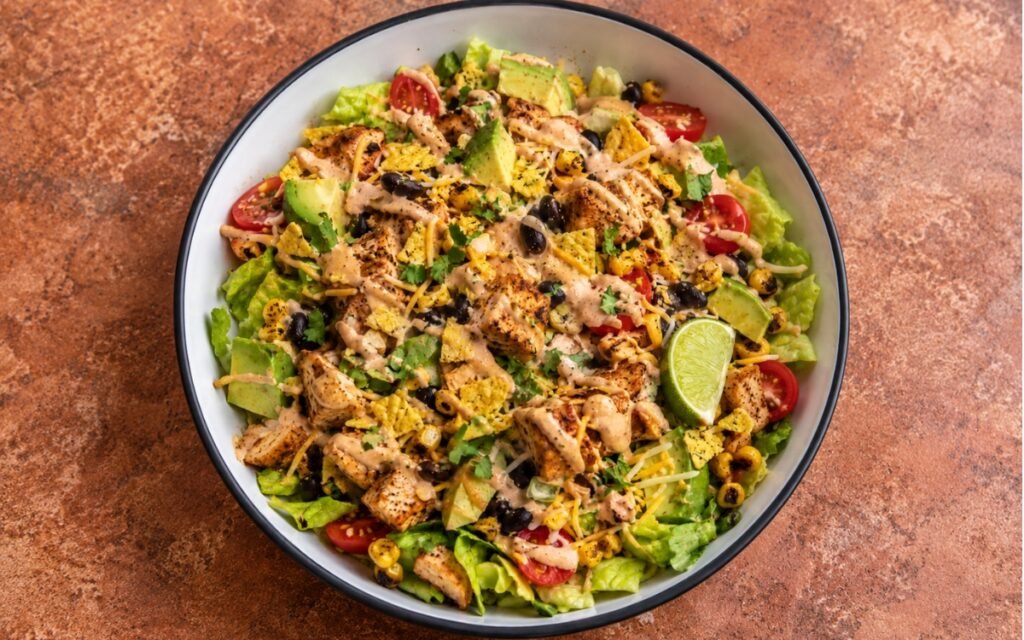
Mexican Chicken Taco Salad
Seasoned chicken breast, chopped lettuce, black beans, charred corn, cherry tomatoes, avocado, shredded cheese, and crushed tortilla chips with chipotle crema.
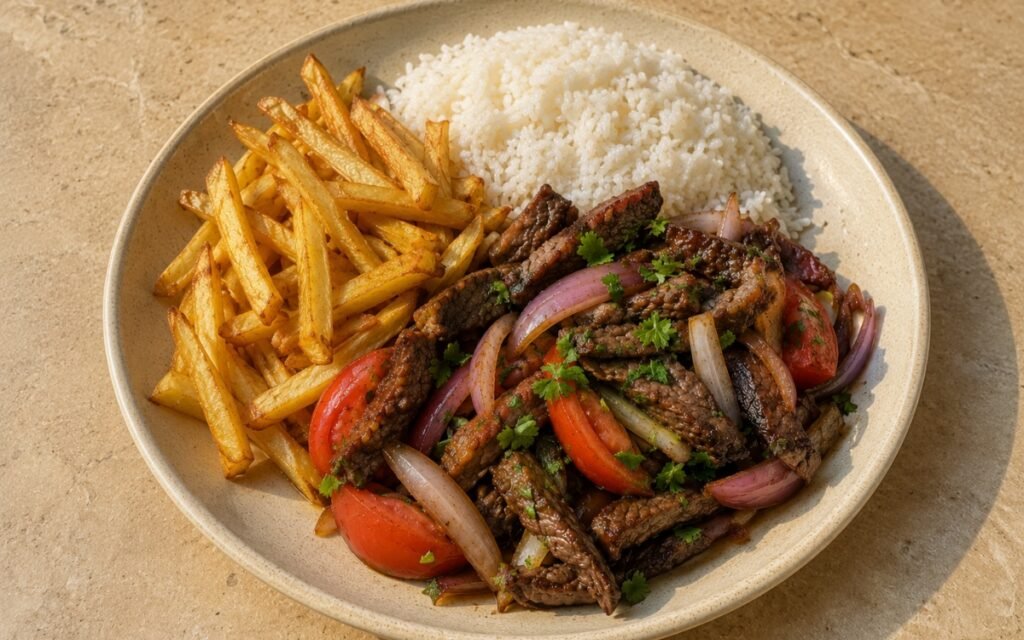
Peruvian Lomo Saltado
Deeply seared beef strips tossed fast with feathered shallots, tomato wedges, and a glossy soy-vinegar sauce, served with double-fried fries and rice.
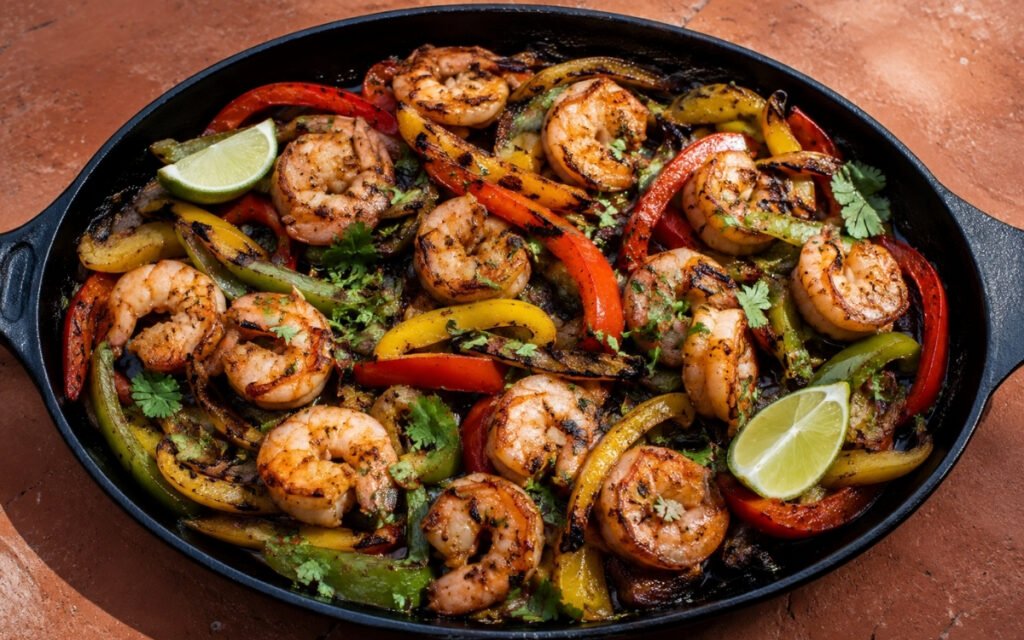
Shrimp Fajita
Smoked paprika and cumin-marinated shrimp seared 30–45 seconds per side in cast iron with charred tri-colour peppers and caramelised onions — the fastest fajita in the collection.
You might also like
You might also like
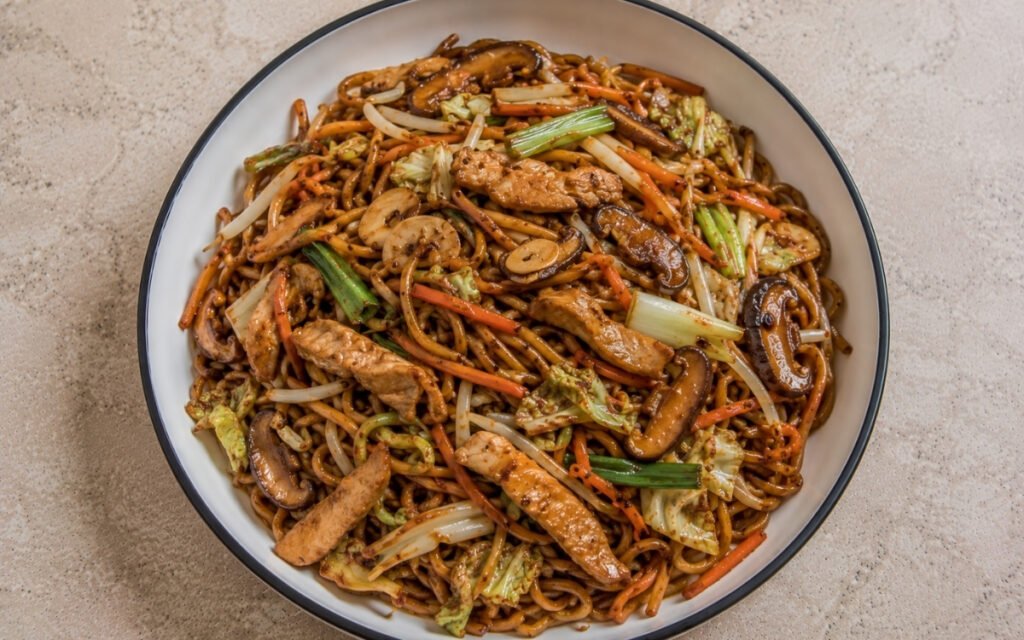
Easy Chicken Chow Mein Noodles
Hong Kong egg noodles crisped in a smoking-hot wok with seared chicken and vegetables — four-component soy sauce, cornstarch glaze, 35 minutes.
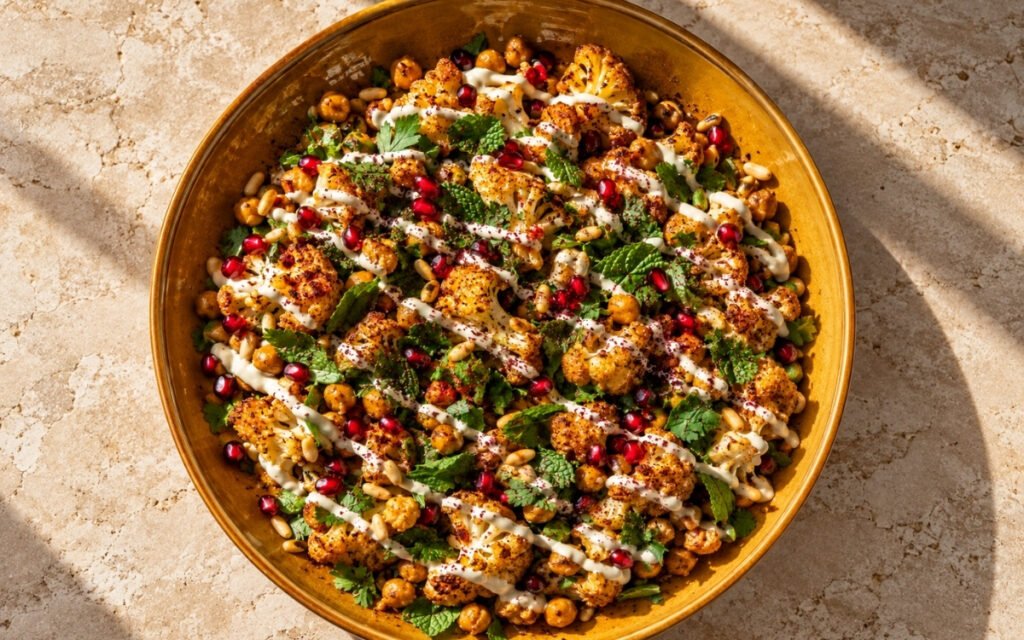
Roasted Cauliflower and Chickpea Salad with Tahini
Golden roasted cauliflower and crisp chickpeas with lemon-tahini sauce, fresh herbs, pomegranate, and toasted pine nuts.
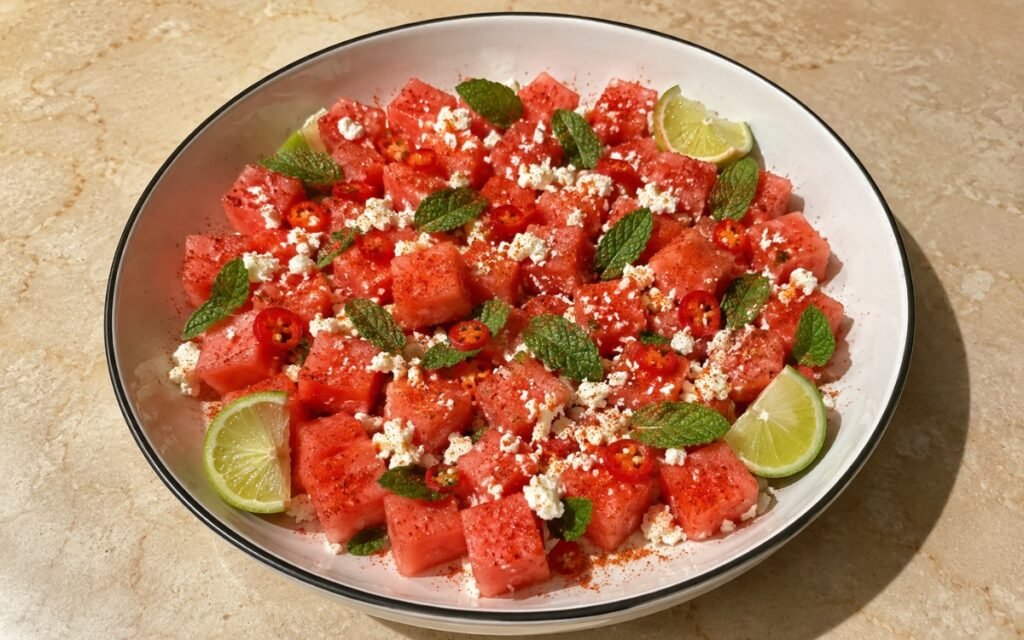
Watermelon Tajín Salad
Watermelon drained 5 minutes, tossed with Tajín, lime, and olive oil — cotija crumbled over the top with fresno chili, fresh mint, and an extra Tajín dusting. The summer salad in 25 minutes.
Steak Tacos with Salsa Verde
Ingredients
Method
- Place the steak on a wire rack set over a tray. Season all sides with the fine sea salt. Refrigerate uncovered for 1 to 2 hours. This dry rest seasons the steak and pulls surface moisture out. That surface moisture has to be removed before searing, or the steak will steam instead of forming a crust. Salt draws moisture to the surface through osmosis before eventually reabsorbing back into the meat along with dissolved salt — that uncovered rest on a rack, rather than a plate, lets air circulate around the meat so the drawn-out moisture can actually evaporate rather than pooling underneath.
- After salting, rinse the steak quickly under cold water to remove excess surface salt. Pat it extremely dry with paper towels. Season lightly with black pepper and garlic powder if using. Let the steak sit at room temperature for 25 to 35 minutes before cooking. The steak must be dry before it hits the pan. Rinsing is fine only if you dry it aggressively after. Any water left on the surface will damage the sear. That aggressive drying after rinsing matters just as much as the drying after the initial salt rest — any residual surface water, whatever its source, converts to steam the instant it meets the hot pan and works directly against real browning.
- Mix the masa harina and salt in a bowl. Add the warm water and mix until a soft dough forms. Knead briefly until smooth, then cover and rest for 20 to 30 minutes. Divide into 16 equal balls of about 22g each. Keep the dough balls covered at all times so the masa does not dry out. That brief resting period gives the masa harina genuine time to fully hydrate, which is part of what makes the dough smooth and pliable enough to press evenly rather than cracking at the edges.
- Press each dough ball into a tortilla about 11.4cm / 4.5 inches wide. Cook on a dry hot skillet or griddle for about 45 to 60 seconds per side, flipping until lightly charred, flexible, and cooked through. Stack immediately under a clean towel so the tortillas steam and stay pliable. Tortillas for steak tacos need to stay soft and flexible. If they dry out, they crack when filled. That trapped steam under the towel is exactly what keeps the tortillas soft and pliable right through assembly, rather than stiffening as they cool uncovered.
- Heat a heavy skillet, cast iron pan, or grill pan over high heat until very hot. Add the neutral oil. Sear the steak hard, without moving it too early, until a dark crust forms. For steak about 2.5cm / 1 inch thick, use these guides: rare, sear 2 to 2½ minutes per side, pull at 46–48°C; medium-rare, sear 3 to 3½ minutes per side, pull at 50–52°C; medium, sear about 4 minutes per side, pull at 57–60°C; well done, cook 5+ minutes per side, final temperature 71°C+. Medium-rare works best for these tacos. It keeps the beef juicy after slicing and gives you the best contrast between charred edges and pink center. Leaving the steak genuinely undisturbed during that initial sear window is what gives it the sustained, direct pan contact real crust development depends on — moving it too early interrupts that contact before a proper sear has actually formed.
- Transfer the steak to a board and rest for 8 to 10 minutes. Do not slice immediately. Resting keeps the juices inside the steak. If you slice too early, the board gets the juice instead of the tacos. During cooking, the steak’s internal juices are pushed toward the centre and held under real pressure — that rest period lets the muscle fibers relax and reabsorb those juices evenly throughout, rather than releasing them all at once the moment a knife cuts in too soon.
- Slice the steak thinly across the grain. Aim for small strips that fit easily inside the tortillas. Each taco should get about 50g sliced steak. Slicing across the grain is what makes the steak feel tender in the taco. Even perfectly cooked steak will eat tough if sliced the wrong way. Cutting perpendicular to the muscle fibers, rather than parallel to them, shortens those long fibers into much smaller segments — that’s the literal mechanism behind why the same steak can taste tender or tough depending purely on slicing direction.
- Right before serving, rewarm the tortillas briefly on a dry skillet if needed. Keep them wrapped in a towel.
- Fill each warm tortilla with about 50g sliced steak. Top with salsa verde, diced white onion, cilantro, avocado slices, and a squeeze of lime. Serve immediately with extra lime wedges. Using salsa verde as a bright topping rather than a heavy sauce, as the recipe’s own notes emphasise, keeps its role as an accent against the beef rather than something that overwhelms or drowns it.