
Peruvian Lomo Saltado
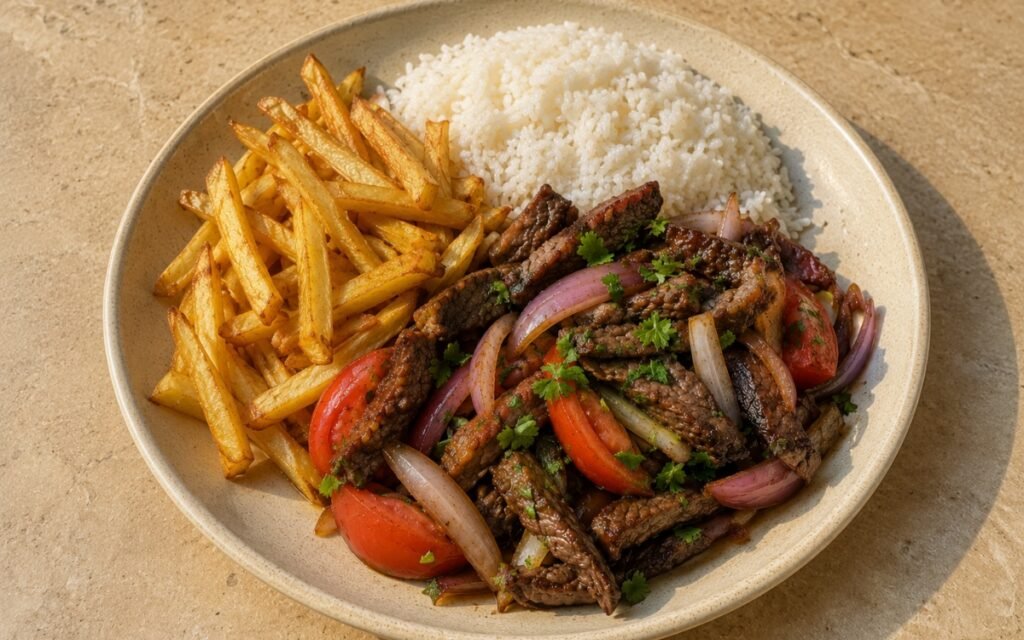
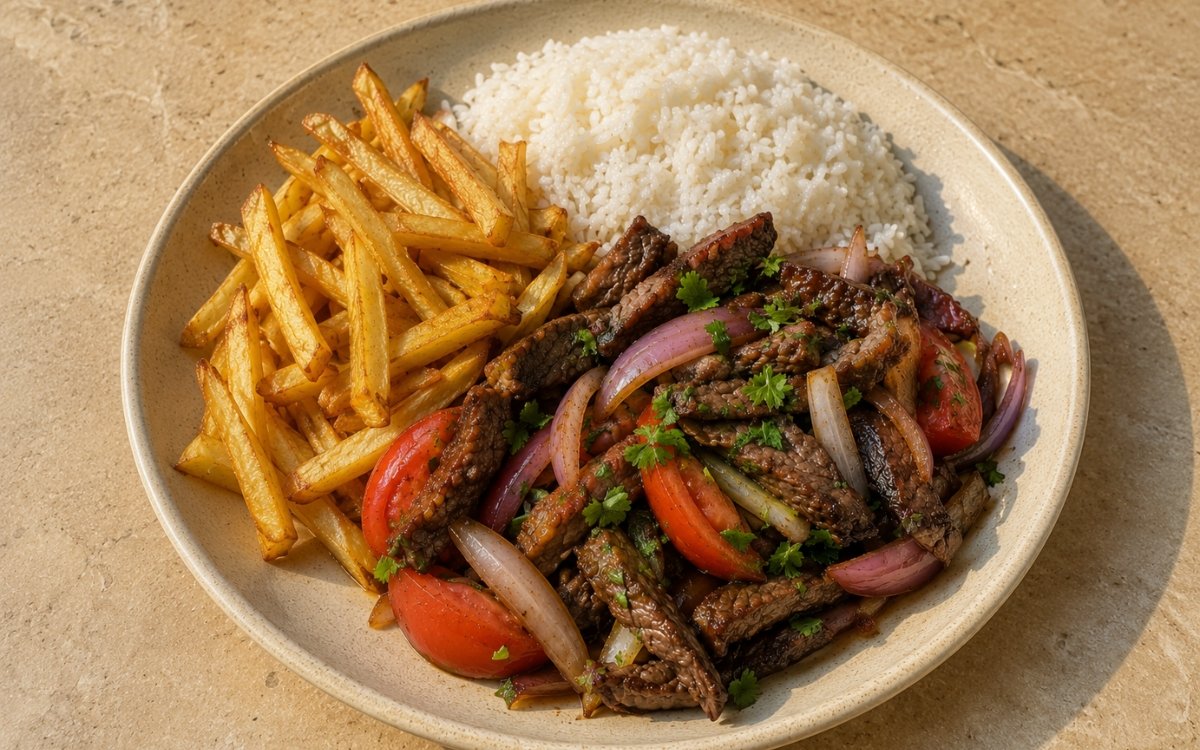
Peruvian-style lomo saltado with deeply seared beef strips, feathered shallots, Roma tomato wedges, and a glossy soy-vinegar pan sauce, served beside double-fried golden fries and simple steamed white rice. Searing the beef in small, uncrowded batches is the technique this entire dish depends on — the moment a pan is overloaded, the beef releases liquid and starts simmering instead of charring, the same crowding-kills-sear principle used elsewhere in this collection whenever a hard, fast char is the goal. The double-fried potatoes follow the same two-stage logic used throughout this collection for fries that need to hold their crispness under a saucy topping: a cooler first fry cooks the interior, a hotter second fry builds the rigid, crisp crust. Finishing everything in one fast, aggressive toss over high heat, rather than letting the sauce simmer, is what keeps the tomatoes in distinct wedges and the beef juicy rather than dry. The payoff is a plate with real structural clarity — charred, glossy beef and blistered tomato beside crisp fries and clean, fluffy rice, each staying visually and texturally distinct.
Prep Time : 30 min
Cook Time : 45 min
Servings : 4
30 min
45 min
4
Ingredients
For the White Rice
• 200g short-grain white rice
• 300ml water
• 3g fine sea salt
For the Double-Fried Fries
• 800g potatoes, peeled and cut into fries
• 2 litres ice-cold water, for soaking
• Neutral oil, for frying
• 6g fine sea salt, plus more to taste
For the Beef
• 800g beef sirloin, sliced into thick strips — fattier sirloin, skirt steak, flank steak, or ribeye may also be used
• 8g fine sea salt
• 3g freshly cracked black pepper
• 30ml neutral oil, divided
For the Soy-Vinegar Sauce
• 75ml soy sauce — this one on Amazon
• 45ml red wine vinegar — this one on Amazon
• 30ml beef stock or water
• 15g aji amarillo paste, optional but recommended — this one on Amazon
• 10g garlic, finely grated or minced
• 5g fresh ginger, finely grated, optional
• 5g brown sugar, optional, only to balance sharp vinegar
For the Vegetables
• 180g shallots, sliced into thick feathers
• 350g Roma tomatoes, cut into thin wedges
• 1 small green chilli or aji amarillo, thinly sliced, optional
For Garnishing and Serving
• 25g fresh cilantro, roughly chopped
• Extra freshly cracked black pepper, to finish
This post may contain affiliate links. As an Amazon Associate I earn from qualifying purchases, at no additional cost to you.
Directions
- Cook the Rice
Wash the short-grain rice 3 times, rubbing gently and changing the water until it runs mostly clear. Drain well. Add the rice, water, and salt to a small pot. Bring to a simmer, then reduce the heat to low, cover, and cook for 15 minutes without lifting the lid. Turn off the heat and let the rice rest, still covered and undisturbed, for another 15 minutes. Fluff gently before serving. Do not open the lid during cooking or resting. That steam is what finishes the rice cleanly. Lifting the lid at any point releases trapped steam that’s still actively finishing the rice — even a quick peek costs real cooking time and moisture that the grains need to fully hydrate and separate. - Soak the Potatoes
Place the cut potatoes in ice-cold water and soak for 30 minutes. Drain, rinse, and dry extremely well with towels. The potatoes must be dry before frying. Wet potatoes spit oil and fry badly. The cold soak draws out excess surface starch that would otherwise cause the fries to stick together and brown unevenly across the two separate fries this recipe calls for. - First Fry the Potatoes
Heat neutral oil to 150°C. Fry the potatoes in batches for 5–6 minutes, until cooked through and pale blond but not browned. Transfer to a rack and let them cool for at least 10–15 minutes. This first fry cooks the interior. Do not try to brown them yet. The lower temperature here cooks the potato through gently without the surface setting a crust too early — that crust-building is deliberately saved for the second, hotter fry. - Prepare the Sauce
Mix the soy sauce, red wine vinegar, beef stock or water, aji amarillo paste if using, garlic, ginger if using, and brown sugar if using. Taste carefully. The sauce should be salty, sharp, slightly spicy, and punchy. It should not taste sweet. Mixing the sauce fully before the beef ever hits the pan means it’s ready for a single, decisive pour once the stir-fry stage begins — lomo saltado moves fast once cooking starts, and there’s no time to measure out individual components mid-toss. - Prepare the Beef
Pat the beef strips very dry. Season with salt and black pepper. This is non-negotiable. Wet beef steams, and steamed beef in lomo saltado is weak. You need direct high heat contact. A genuinely dry surface is what lets the pan’s intense heat go straight into browning rather than first evaporating surface moisture — any lingering dampness works directly against the fast, hard sear this dish depends on. - Sear the Beef
Heat a wok, cast-iron skillet, or heavy pan over very high heat until almost smoking. Add half the oil. Sear the beef in batches for 60–90 seconds per side, until deeply browned and charred at the edges but still juicy inside. Transfer to a plate. Do not crowd the pan. If the beef releases liquid and starts simmering, stop — the pan is overloaded. Work in smaller batches. This is the single most consequential decision point in the whole recipe — the instant a pan holds more beef than it can properly sear, released moisture pools and the beef starts simmering in its own juices instead of charring, and there’s no recovering that texture once it happens. - Cook the Shallots and Tomatoes
Add the remaining oil to the same hot pan. Add the feathered shallots and stir-fry for 1–2 minutes, just until browned at the edges but still slightly crisp. Add the tomato wedges and optional chilli. Toss for 30–60 seconds only. The tomatoes should warm and blister slightly but not collapse into sauce. Using the same hot pan the beef was just seared in means the shallots and tomatoes pick up residual browned flavour left behind, and the brief cook time on the tomatoes specifically is what keeps them in distinct, recognisable wedges rather than breaking down. - Finish the Lomo Saltado
Return the beef and any resting juices to the pan. Pour in the soy-vinegar sauce and toss aggressively over high heat for 45–60 seconds, just until the sauce bubbles, reduces slightly, and coats the beef and vegetables in a glossy layer. Do not simmer this for minutes. Lomo saltado is a fast stir-fry. Long cooking turns the tomatoes mushy and the beef dry. This final toss is genuinely brief by design — the goal is a quick reduction that glosses everything in sauce, not a simmer that would continue cooking the already-seared beef past its ideal juicy doneness and break the tomato wedges down completely. - Second Fry the Potatoes
Raise the oil to 185°C. Fry the potatoes again in batches for 2–4 minutes, until golden, crisp, and firm at the edges. Transfer to a rack and salt immediately while hot. This second, hotter fry is what builds the genuinely rigid, crisp exterior this dish needs — a fry that’s merely golden but still flexible won’t hold its structure once it’s sitting on the plate next to the saucy beef. - Serve
Divide the rice between four plates or bowls. Add a pile of fries beside the rice. Spoon the glossy beef, shallots, tomatoes, and sauce onto the remaining section of each plate. Scatter fresh cilantro over the beef and finish with black pepper if needed. Serve immediately while the beef is hot, the fries are crisp, and the rice is fluffy. Keeping the fries mostly separate on the plate, rather than piling the saucy beef directly over them, protects their crispness for as long as possible before they’re eaten.
*Notes :
- Searing the beef in properly sized, uncrowded batches is worth treating as the single non-negotiable step in this recipe. A crowded pan can’t maintain the intense heat lomo saltado depends on — the beef releases moisture that has nowhere to evaporate quickly, and instead of charring, it simmers in that released liquid, producing grey, flat-tasting strips instead of the deeply browned, charred-edged beef this dish is named for. Working in smaller batches, even if it adds a few extra minutes to the total cook time, produces a categorically different and better result.
- The double-fried potatoes follow the same structural logic used for fries throughout this collection: a cooler first fry cooks the potato through without colour, and a hotter second fry builds a genuinely rigid, crisp crust. That crisp structure matters more here than it might in a simpler fried-potato application, since these fries sit on the plate directly beside — and are often eaten alongside bites of — the glossy, saucy beef, and only a properly double-fried potato holds up to that proximity without softening quickly.
- The brief, aggressive final toss that brings the beef, vegetables, and sauce together is deliberately fast rather than a leisurely simmer, and that speed is what preserves the dish’s core textural identity. The beef has already been seared to the correct doneness in the previous step; further cooking during this final toss would only push it past that point. The same logic applies to the tomato wedges, which are meant to warm through and blister slightly while staying visibly intact rather than breaking down into a sauce.
- Steamed white rice’s uninterrupted covered cooking and resting period is a small detail that’s easy to compromise on, particularly out of curiosity to check progress, but doing so costs real texture. The trapped steam inside a covered pot is actively finishing the rice throughout both the active cooking time and the following rest — lifting the lid at any point, even briefly, releases that steam and can leave the rice underdone or unevenly cooked.
Why This Recipe Works
This recipe works because its core technique — genuinely hot, uncrowded searing followed by a fast, aggressive final toss — protects the beef and tomatoes from overcooking while still building real char and a glossy, reduced sauce coating.
The double-fried potatoes hold their crisp structure specifically because they follow the same two-stage frying principle used elsewhere for fries that need to survive contact with a saucy topping, and the covered, undisturbed rice preserves its own texture through patient, steam-driven cooking.
Kept in their own distinct sections on the plate, all three main components — beef, fries, and rice — stay at their intended texture right up to the moment of eating.
Ingredient Breakdown
Thick-Sliced Beef Strips
The specified cut thickness — thick enough to stay juicy through a hard sear, unlike thin strips that overcook before developing real char.
Uncrowded, High-Heat Searing
The critical technique — small batches at intense heat produce genuine char, while a crowded pan steams the beef instead.
Soy-Vinegar Sauce with Aji Amarillo
The flavour base — salty, sharp, and slightly spicy, mixed fully in advance for a single, fast pour during the stir-fry.
Double-Fried Potatoes
The structural side — a cooler first fry for the interior, a hotter second fry for a rigid, crisp crust that holds up beside the beef.
Brief, Aggressive Final Toss
The finishing technique — a fast, high-heat reduction that glosses everything without overcooking the already-seared beef or breaking down the tomatoes.
Flavor Structure Explained
This lomo saltado follows a layered balance model:
- Charred savoury foundation (seared beef)
- Sharp umami depth (soy-vinegar sauce)
- Sweet caramelised contrast (feathered shallots)
- Bright acidic lift (tomato wedges, optional chilli)
- Clean neutral finish (rice, fries)
The deeply charred, seared beef defines the dish with a smoky, savoury foundation. The soy-vinegar sauce layers in sharp, salty umami depth that clings to every piece. Feathered shallots contribute a sweet, slightly caramelised note from their brief high-heat cook. Tomato wedges and optional chilli cut through that richness with bright, juicy acidity and a touch of heat. Simple steamed rice and crisp double-fried potatoes round out the plate with clean, neutral bulk that lets the glossy, punchy beef remain the clear centrepiece.
Common Mistakes to Avoid
- Crowding the Pan While Searing the Beef – This drops the temperature and causes the beef to steam rather than char. Always sear in small, uncrowded batches.
- Not Drying the Beef Thoroughly Before Searing – Surface moisture prevents real browning and produces pale, weak beef. Always pat it very dry before seasoning and cooking.
- Simmering the Final Toss Instead of Keeping It Fast – Extended cooking dries out the already-seared beef and turns the tomato wedges mushy. Always keep the final toss to under a minute over high heat.
- Skipping the Double Fry on the Potatoes – A single fry produces fries that soften too quickly next to the saucy beef. Always fry twice, at two different temperatures.
- Lifting the Rice Lid During Cooking or Resting – This releases the trapped steam still actively finishing the rice. Always keep it covered and undisturbed through both stages.
Variations
Chicken Saltado (Saltado de Pollo)
Substitute the beef with the same weight of chicken thigh strips, following the identical searing and finishing technique, for a lighter version of the same dish.
Spicier Version
Increase the sliced green chilli or aji amarillo and add a touch more aji amarillo paste to the sauce for a noticeably sharper heat throughout.
With Red Onion Instead of Shallots
Substitute thick-feathered red onion for the shallots if aji-style shallots aren’t available, following the same brief stir-fry technique.
Extra-Saucy Version
Increase the soy-vinegar sauce by 50% for a version with more sauce to spoon over the rice.
Storage & Make-Ahead
Raw beef strips can be seasoned and refrigerated for a few hours ahead, though searing fresh produces the best texture.
The soy-vinegar sauce can be mixed and refrigerated in a sealed container for up to 5 days. Cooked white rice can be refrigerated for up to 4 days; reheat covered with a splash of water.
Twice-fried potatoes are best made fresh close to serving; they lose their crisp texture within an hour once fully cooked.
The finished lomo saltado (beef, shallots, tomatoes, and sauce) is best eaten immediately and does not hold well — reheating tends to overcook the beef further and break down the tomatoes.
Frequently Asked Questions
Why is it so important not to crowd the pan while searing the beef?
A crowded pan can’t maintain the very high heat this dish depends on. Once too much beef is added at once, it releases moisture that has nowhere to evaporate quickly, and the beef starts simmering in that liquid instead of developing a real char — a texture that can’t be recovered once it happens.
Why does the final toss need to be so fast rather than a longer simmer?
The beef has already reached its correct doneness during the searing stage, and the tomatoes are meant to stay in visible, intact wedges. A longer simmer at this final stage would overcook the beef past juicy and break the tomatoes down into something closer to sauce.
Why do the potatoes need to be fried twice at two different temperatures?
A single fry forces a trade-off between a fully cooked interior and a crisp, browned exterior. The cooler first fry cooks the potato through without colour, and the hotter second fry builds the rigid, crisp crust needed to hold up on the plate beside the saucy beef.
Why shouldn’t the rice’s lid be lifted during cooking or resting?
The trapped steam inside the covered pot is actively finishing the rice throughout both stages. Lifting the lid, even briefly, releases that steam and can leave the rice underdone or unevenly cooked by the time it’s meant to be ready.
Are there other balanced, plated Latin American dishes worth trying?
Carne Asada Plate and Pollo Asado with Rice and Beans both follow a similar structure to this one — a charred, well-seasoned protein served alongside rice and other distinct sides, each component kept visually and texturally separate on the plate rather than mixed together.
Nutrition Facts
( per serving )
Calories
~780 kcal
Protein
44 g
Fat
34 g
Carbs
72 g
Calories
~780 kcal
Protein
44 g
Fat
34 g
Carbs
72 g
Related Recipes
Related Recipes

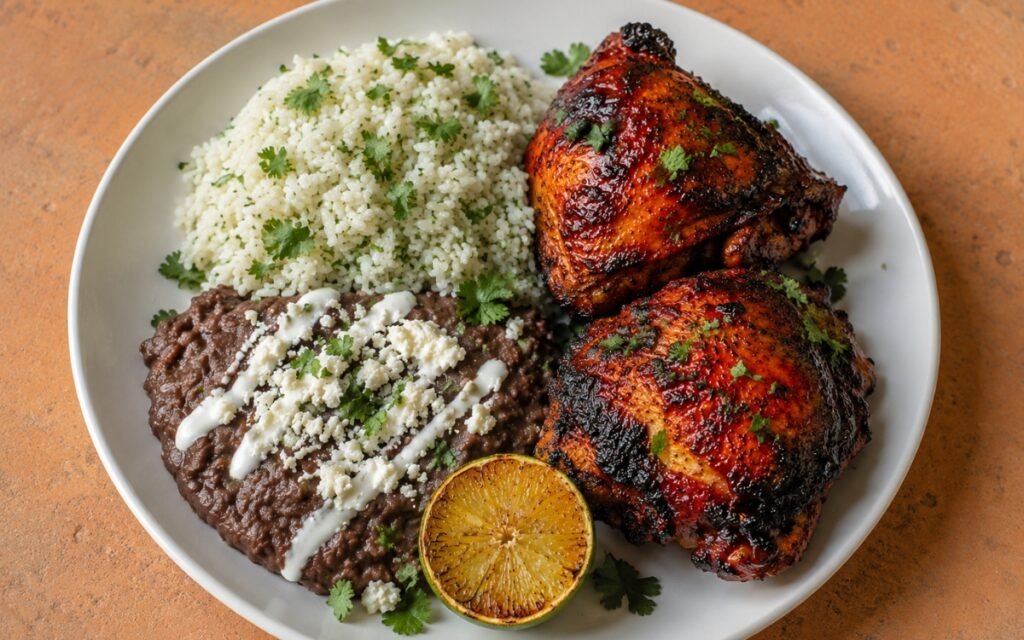
Pollo Asado with Rice and Beans
Bone-in chicken thighs marinated in achiote and citrus, grilled two-zone until deeply red and charred. Served with cilantro-lime rice and creamy black beans.
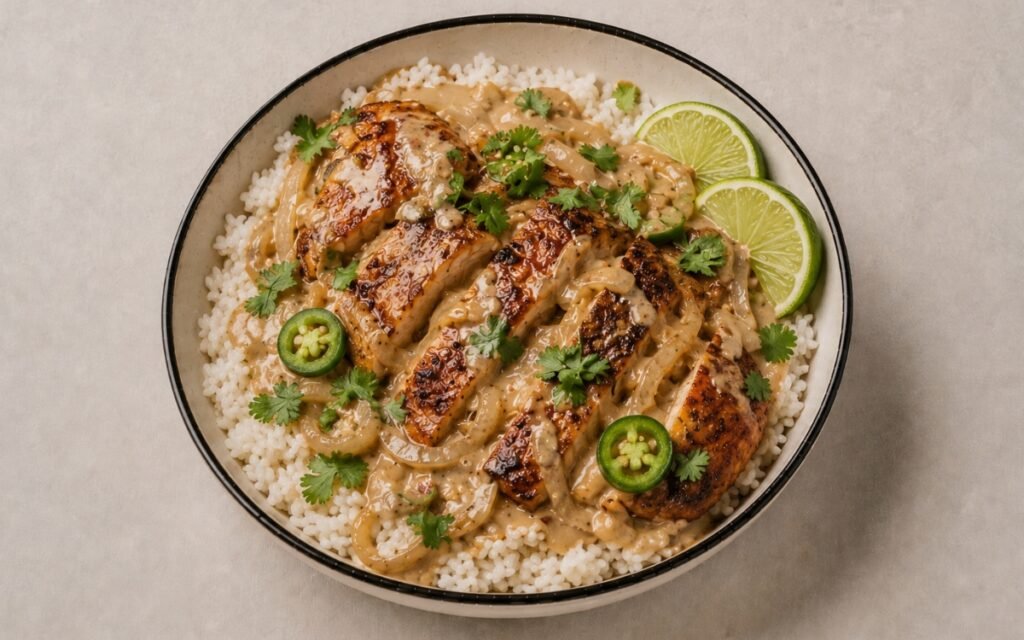
Creamy Coconut Chicken Rice Bowl
Seared chicken thighs simmered in coconut cream, ginger, lime, and soy sauce built in the same skillet — over coconut-lime jasmine rice. 45 minutes and better the next day.
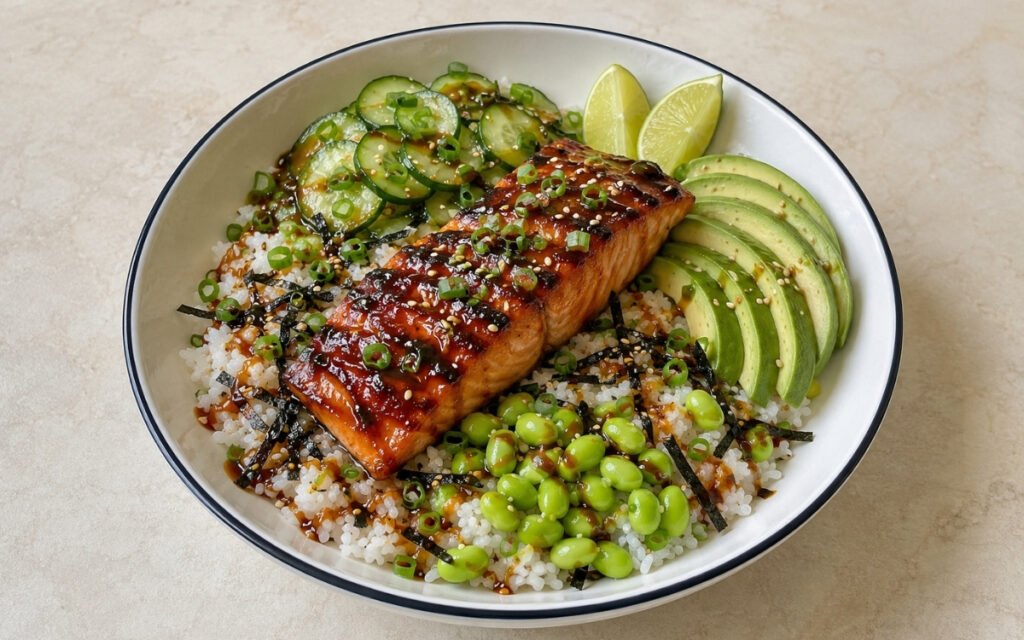
Miso Glazed Salmon Rice Bowl
Salmon seared flesh-side first then basted every minute with white miso-mirin-sake glaze until caramelised at 52°C — over sushi rice with pickled cucumbers, avocado, and edamame. 40 minutes.
You might also like
You might also like
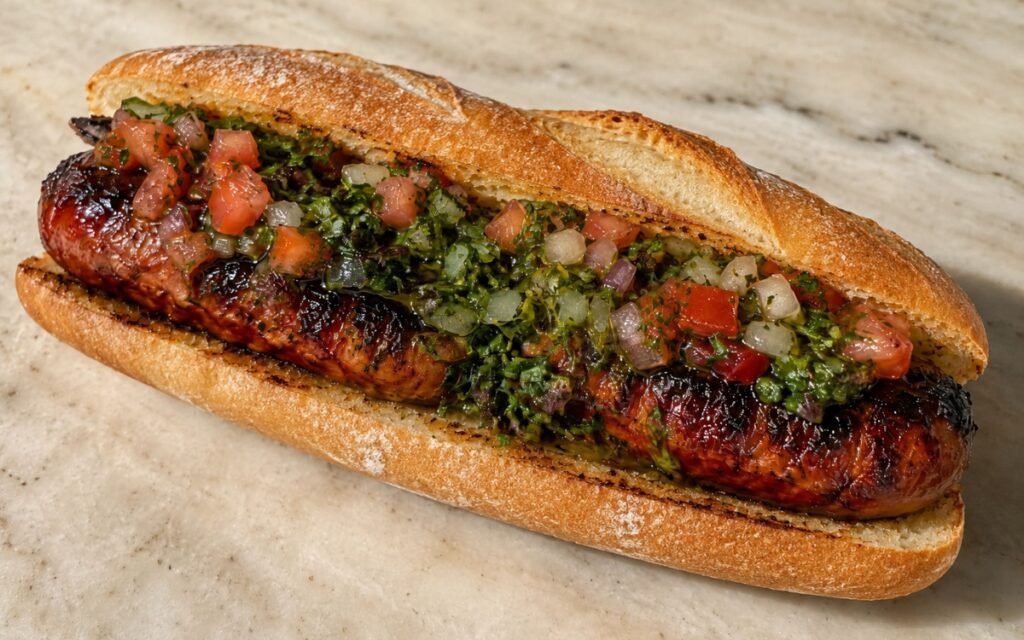
Argentine Choripán
Butterflied Argentinian chorizo seared until deeply charred and glossy, stuffed into a toasted roll with generous chimichurri and tomato-shallot salsa.
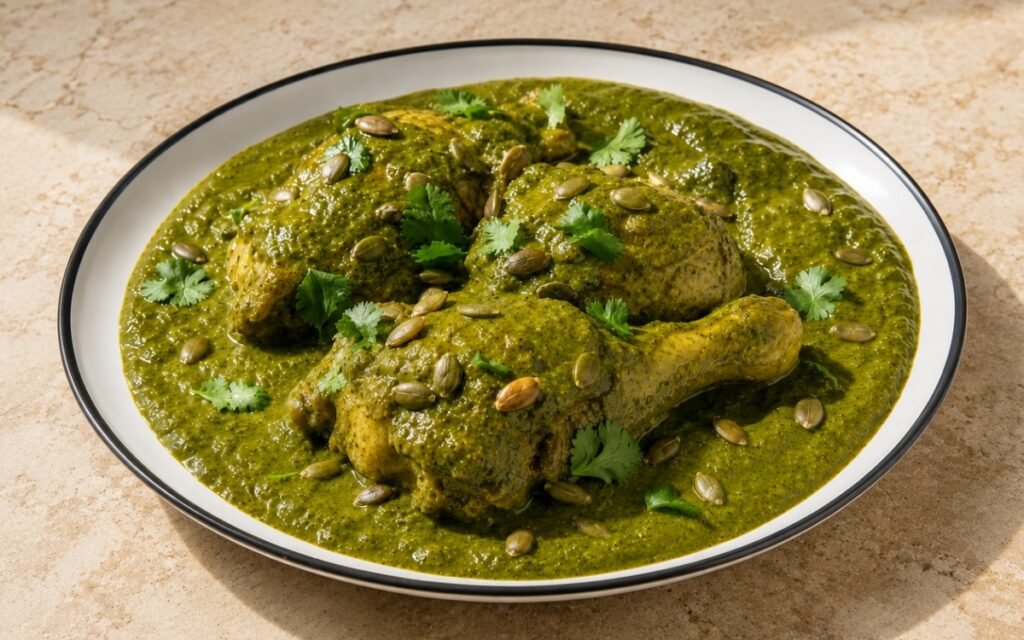
Pipián Verde Chicken
Gently poached chicken finished in a vivid green pipián sauce of roasted tomatillos, pumpkin seeds, green chiles, and herbs.
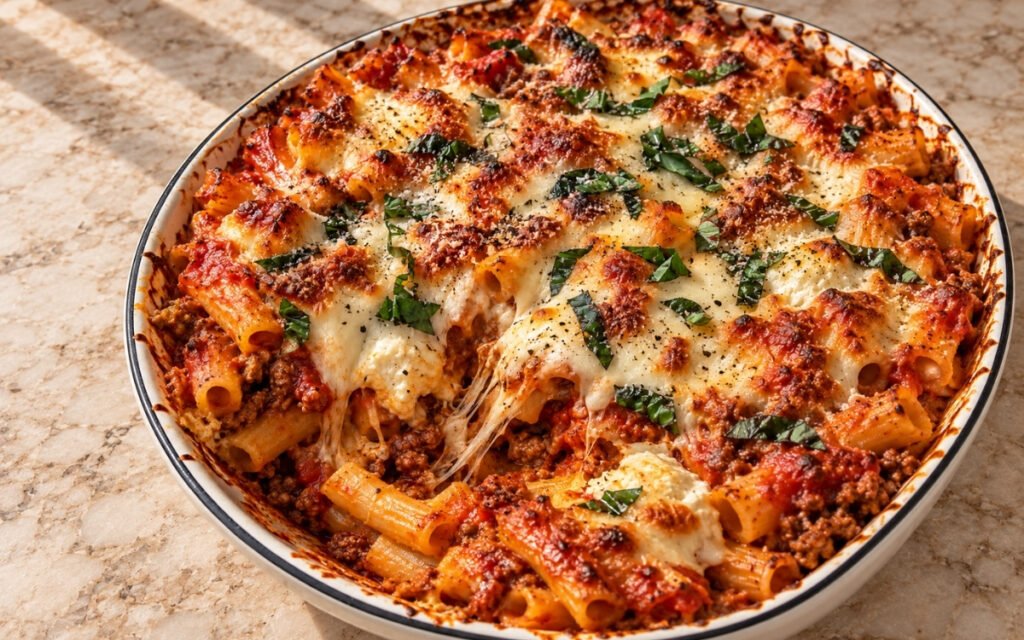
Baked Ziti
Ziti tossed in a rich beef and pork tomato sauce, layered with creamy ricotta pockets, mozzarella, and Parmesan, baked until bubbling.
Peruvian Lomo Saltado
Ingredients
Method
- Wash the short-grain rice 3 times, rubbing gently and changing the water until it runs mostly clear. Drain well. Add the rice, water, and salt to a small pot. Bring to a simmer, then reduce the heat to low, cover, and cook for 15 minutes without lifting the lid. Turn off the heat and let the rice rest, still covered and undisturbed, for another 15 minutes. Fluff gently before serving. Do not open the lid during cooking or resting. That steam is what finishes the rice cleanly. Lifting the lid at any point releases trapped steam that’s still actively finishing the rice — even a quick peek costs real cooking time and moisture that the grains need to fully hydrate and separate.
- Place the cut potatoes in ice-cold water and soak for 30 minutes. Drain, rinse, and dry extremely well with towels. The potatoes must be dry before frying. Wet potatoes spit oil and fry badly. The cold soak draws out excess surface starch that would otherwise cause the fries to stick together and brown unevenly across the two separate fries this recipe calls for.
- Heat neutral oil to 150°C. Fry the potatoes in batches for 5–6 minutes, until cooked through and pale blond but not browned. Transfer to a rack and let them cool for at least 10–15 minutes. This first fry cooks the interior. Do not try to brown them yet. The lower temperature here cooks the potato through gently without the surface setting a crust too early — that crust-building is deliberately saved for the second, hotter fry.
- Mix the soy sauce, red wine vinegar, beef stock or water, aji amarillo paste if using, garlic, ginger if using, and brown sugar if using. Taste carefully. The sauce should be salty, sharp, slightly spicy, and punchy. It should not taste sweet. Mixing the sauce fully before the beef ever hits the pan means it’s ready for a single, decisive pour once the stir-fry stage begins — lomo saltado moves fast once cooking starts, and there’s no time to measure out individual components mid-toss.
- Pat the beef strips very dry. Season with salt and black pepper. This is non-negotiable. Wet beef steams, and steamed beef in lomo saltado is weak. You need direct high heat contact. A genuinely dry surface is what lets the pan’s intense heat go straight into browning rather than first evaporating surface moisture — any lingering dampness works directly against the fast, hard sear this dish depends on.
- Heat a wok, cast-iron skillet, or heavy pan over very high heat until almost smoking. Add half the oil. Sear the beef in batches for 60–90 seconds per side, until deeply browned and charred at the edges but still juicy inside. Transfer to a plate. Do not crowd the pan. If the beef releases liquid and starts simmering, stop — the pan is overloaded. Work in smaller batches. This is the single most consequential decision point in the whole recipe — the instant a pan holds more beef than it can properly sear, released moisture pools and the beef starts simmering in its own juices instead of charring, and there’s no recovering that texture once it happens.
- Add the remaining oil to the same hot pan. Add the feathered shallots and stir-fry for 1–2 minutes, just until browned at the edges but still slightly crisp. Add the tomato wedges and optional chilli. Toss for 30–60 seconds only. The tomatoes should warm and blister slightly but not collapse into sauce. Using the same hot pan the beef was just seared in means the shallots and tomatoes pick up residual browned flavour left behind, and the brief cook time on the tomatoes specifically is what keeps them in distinct, recognisable wedges rather than breaking down.
- Return the beef and any resting juices to the pan. Pour in the soy-vinegar sauce and toss aggressively over high heat for 45–60 seconds, just until the sauce bubbles, reduces slightly, and coats the beef and vegetables in a glossy layer. Do not simmer this for minutes. Lomo saltado is a fast stir-fry. Long cooking turns the tomatoes mushy and the beef dry. This final toss is genuinely brief by design — the goal is a quick reduction that glosses everything in sauce, not a simmer that would continue cooking the already-seared beef past its ideal juicy doneness and break the tomato wedges down completely.
- Raise the oil to 185°C. Fry the potatoes again in batches for 2–4 minutes, until golden, crisp, and firm at the edges. Transfer to a rack and salt immediately while hot. This second, hotter fry is what builds the genuinely rigid, crisp exterior this dish needs — a fry that’s merely golden but still flexible won’t hold its structure once it’s sitting on the plate next to the saucy beef.
- Divide the rice between four plates or bowls. Add a pile of fries beside the rice. Spoon the glossy beef, shallots, tomatoes, and sauce onto the remaining section of each plate. Scatter fresh cilantro over the beef and finish with black pepper if needed. Serve immediately while the beef is hot, the fries are crisp, and the rice is fluffy. Keeping the fries mostly separate on the plate, rather than piling the saucy beef directly over them, protects their crispness for as long as possible before they’re eaten.