Cambodian Beef Lok Lak
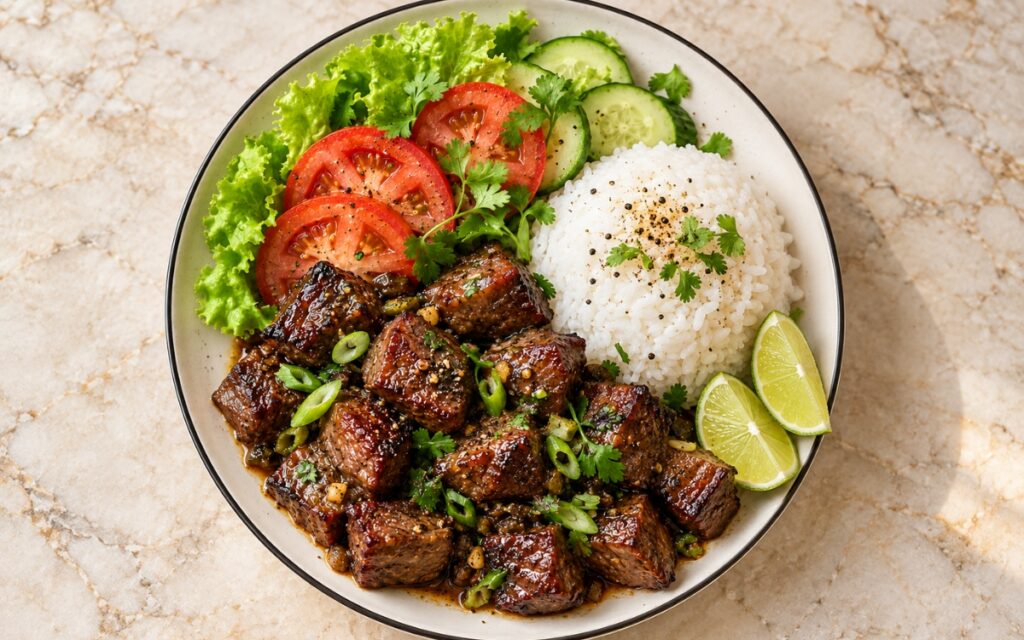
A classic Cambodian dish of tender, deeply seared beef cubes in a savoury-sweet garlic, oyster and fish sauce marinade, stir-fried fast with onion and served with jasmine rice, crisp lettuce, tomato, cucumber, cilantro, lime and a sharp pepper-lime dipping sauce, the key being a fierce sear against cool, simple sides. Searing well-dried, lightly coated cubes in a smoking-hot wok in 2 uncrowded batches, rather than tipping all 700g in at once, is the technique this whole dish depends on for its dark, glossy edges and juicy centres — a crowded pan floods with released moisture and boils the beef grey instead of caramelising it, the same dry-hot-and-uncrowded principle used elsewhere in this collection whenever quick-cooking beef has only minutes to brown. A short 20-minute marinade with a teaspoon of cornstarch, rather than a long salty soak, is what lets the garlic and sugar cling to each cube as a lacquered coating. A strong dipping sauce of lime, fish sauce and freshly cracked pepper is what seasons every bite of beef and rice at the table. The payoff is a bowl with real, Cambodian-style balance — glossy, peppery beef and sweet charred onion beside warm jasmine rice, cold crisp salad and a punchy lime-and-pepper dip.

- Prep Time : 25 min
- Total Time : 1 hr 5 min
- Servings : 4
Ingredients
For the Beef and Marinade
- 700g beef steak, such as sirloin, rump, ribeye or tenderloin, cut into large bite-size cubes, about 2.5–3cm
- 4 garlic cloves, finely grated or minced
- 2 tbsp oyster sauce
- 1 tbsp soy sauce
- 1 tbsp fish sauce
- 1 tbsp light brown sugar
- 1 tsp cornstarch
- ½ tsp freshly ground black pepper
- 1 tbsp neutral oil
For the Stir-Fry
- 1½ tbsp neutral oil, divided
- 1 medium onion, cut into thick wedges or petals
- 1 tbsp unsalted butter, optional but traditional in many home-style versions
- ½ tsp freshly ground black pepper, or more to taste
For the Jasmine Rice
- 200g jasmine rice
- 300ml water
- A pinch of salt, optional
For the Salad and Garnish
- 8–12 lettuce leaves, washed and dried
- 2 medium tomatoes, sliced
- ½ large cucumber or 2 small cucumbers, sliced
- 10g cilantro leaves
- 1 lime, cut into wedges
- Extra freshly cracked black pepper, to garnish
For the Pepper-Lime Dipping Sauce
- 1½ tbsp lime juice
- ½ tsp fish sauce
- ½ tsp sugar
- ½ tsp freshly cracked black pepper
Directions
- Cook the Jasmine Rice
Rinse the 200g jasmine rice in cold water, swirling and draining it 3–4 times, until the water runs mostly clear, then drain well. Combine the rice, 300ml water and the pinch of salt, if using, in a small heavy saucepan and bring to a boil over medium-high heat. Stir once, cover tightly, reduce to the lowest heat and cook for 12 minutes, then turn off the heat and leave it to stand, still covered, for 10 minutes. Resist lifting the lid at any point, since every peek releases the steam the grains need to finish cooking. The rice is ready when the grains are tender and separate, with no wet layer of water left at the bottom of the pan. Fluff it with a fork only just before serving. That undisturbed steam is what cooks every grain evenly in such a small volume of water. - Marinate the Beef
While the rice comes to a boil, pat the 700g beef very dry with paper towels and check that every cube sits close to 2.5–3cm, trimming any oversized pieces so they all cook at the same rate. In a bowl, mix the 4 grated garlic cloves, 2 tbsp oyster sauce, 1 tbsp soy sauce, 1 tbsp fish sauce, 1 tbsp light brown sugar, 1 tsp cornstarch, ½ tsp black pepper and 1 tbsp neutral oil until the sugar and cornstarch have dissolved into a smooth, glossy paste. Add the beef and toss until every cube is evenly coated, with the marinade clinging lightly rather than pooling thinly in the bowl. Leave to marinate for 20 minutes, and never longer than 30, since the salty sauces begin to draw moisture out of the meat. That short, clinging marinade is what seasons the surface while leaving it dry enough to sear. - Prepare the Fresh Components
While the beef marinates, wash the 8–12 lettuce leaves and dry them thoroughly, since clinging water dilutes the dipping sauce and wilts the leaves faster beside hot beef. Slice the 2 tomatoes and the cucumber, cut the lime into wedges and pick the 10g cilantro leaves. Separate the onion wedges into petals if you prefer, keeping each piece thick enough to hold its shape in the wok. Arrange the lettuce, tomato and cucumber on a plate or tray, cover and keep them cold, with the cilantro, lime and extra black pepper within reach of the stove. Every component must be ready before the stir-fry starts, because the beef cooks in only a few minutes. That advance preparation is what keeps the vegetables genuinely cold and crisp while the beef goes straight from wok to bowl. - Make the Pepper-Lime Sauce
In a small bowl, stir together the 1½ tbsp lime juice, ½ tsp fish sauce, ½ tsp sugar and ½ tsp freshly cracked black pepper for about 30 seconds, until the sugar has completely dissolved. Taste it on its own: it should be bright, salty, lightly sweet and noticeably peppery, with a sharp lime aroma and a real cracked-pepper bite. If it tastes flat, squeeze in a few drops of juice from one of the lime wedges and stir again. The sauce should taste strong by itself, because it is meant to season small bites of beef and rice rather than be eaten alone. Divide it among 4 small dipping dishes or leave it in one bowl for the table. That concentrated balance is what lets a single spoonful lift each mouthful of rich, glossy beef. - Char the Onion and Sear the Beef
Heat a large wok or heavy skillet over high heat for 2–3 minutes, until very hot and just starting to smoke. Add 1 tbsp of the neutral oil, then the onion, and stir-fry for 1–2 minutes, until it is just starting to soften and char at the edges but still holds its shape; transfer it to a plate, leaving the oil behind. Add the remaining ½ tbsp oil, let the pan reheat fully, then add half the beef in a single layer. Sear without moving for 45–60 seconds, then toss and cook for 1–2 minutes more, until browned outside but still juicy inside, and transfer to the plate. Let the pan get very hot again and repeat with the remaining beef in the fat left behind. If the cubes release liquid and start to bubble, the pan is crowded or not hot enough; if the garlic residue begins to burn rather than simply smoke, lower the heat slightly. That fast, uncrowded sear is what caramelises the marinade instead of boiling the beef in its own juices. - Glaze and Season
Return all the beef, any juices from the plate and the onion to the hot pan. Add the 1 tbsp unsalted butter, if using, and toss everything for 20–30 seconds, until the juices reduce to a shiny glaze that clings to every cube. Sprinkle over the ½ tsp black pepper, toss once more and take the pan off the heat immediately. The edges should be dark and glossy, the onion lightly softened and the centres medium-rare to medium, depending on preference; with tenderloin, keep each stage toward the shorter end, since it cooks faster. Stop the moment the glaze clings, because further tossing only tightens the meat and turns the coating sticky. That brief final toss is what turns the pan juices into a lacquered coating without cooking the beef any further. - Assemble the Bowls
Fluff the rice with a fork and divide it among 4 bowls, then arrange the lettuce, tomato slices and cucumber slices beside it. Spoon the hot beef and onion next to or partly over the rice, giving each bowl about a quarter of the beef and scraping every bit of glaze from the pan over the top. Scatter over the cilantro leaves, add a few grinds of extra black pepper and tuck the lime wedges alongside. Serve straight away with the pepper-lime sauce on the side, or spoon a little over the beef just before eating. Keep the salad separate from the hot beef in each bowl, so the lettuce stays crisp instead of wilting under the heat. That immediate, clean assembly is what keeps the beef glossy and hot against the genuinely cool, crunchy vegetables.
*Notes :
- Searing the beef in 2 small batches over smoking-hot heat deserves genuine recognition as the technique most directly responsible for the dark, lacquered edges that define lok lak. The recipe’s own warning, “Do not overcrowd the pan or the beef will release moisture and boil instead of sear,” reflects simple heat physics — too many cold cubes cool the metal below browning temperature, so their juices pool and the meat poaches grey instead.
- Choosing a tender, quick-cooking steak deserves the same attention this technique receives throughout this collection’s other fast beef stir-fries, because 2–3 minutes in a wok cannot soften tough connective tissue. The recipe’s own note, “Use a tender quick-cooking cut; lok lak is not for stewing beef,” reflects exactly this — sirloin, rump, ribeye and tenderloin turn juicy almost instantly, while chuck or shin stay genuinely rubbery however hot the pan.
- Keeping the marinade to about 20 minutes deserves genuine respect as the detail most directly responsible for the beef browning at all rather than steaming. The recipe’s own instruction, “Do not marinate too long with salt-heavy sauces; 20–30 minutes is enough,” matters because oyster, soy and fish sauce slowly pull moisture to the surface, while the teaspoon of cornstarch needs a dry, tacky coating to set into its lacquered finish.
- The finished glaze deserves attention as a genuine, checkable readiness cue rather than a loose estimate of cooking time. The recipe’s own target, “If sauce starts reducing to a shiny glaze clinging to the beef, it is done—do not keep cooking past that point,” gives a clear signal — shiny cubes over an almost dry pan mean the centres are still medium-rare to medium, while further tossing only tightens and dries them.
Why This Recipe Works
This recipe works because every step protects the contrast between hot, glossy beef and cold, crisp sides. Large, well-dried cubes take a short marinade thickened with cornstarch, so the garlic, oyster sauce and sugar cling as a coating instead of soaking in and wetting the surface. The rice steams undisturbed while the salad and dipping sauce are finished during the marinade, leaving nothing to delay the beef once the wok is hot. Searing in 2 uncrowded batches and stopping at the first shiny glaze keeps the centres juicy, while the sharp pepper-lime sauce cuts through the genuinely savoury, caramelised richness.
Ingredient Breakdown
Two-Batch Smoking-Hot Sear
The critical technique — splitting 700g of beef keeps the wok hot enough to caramelise the marinade instead of boiling it.
Tender Steak Cut (Not Stewing Beef)
The critical ingredient choice — sirloin, rump, ribeye or tenderloin turns juicy in minutes, while braising cuts stay chewy.
Cornstarch in the Marinade
The structural choice — one teaspoon helps the sauces cling and sets into a genuinely lacquered finish.
Short 20-Minute Marinade
The critical timing technique — long enough for garlic and oyster sauce to season the beef, too short to draw out moisture.
Freshly Cracked Black Pepper
The defining flavour ingredient — it seasons the marinade, glaze and dip, giving lok lak its warm, unmistakable bite.
Pepper-Lime Dipping Sauce
The finishing touch — sharp lime, fish sauce, sugar and pepper brighten each bite of rich, caramelised beef and plain rice.
Flavor Structure Explained
This Cambodian beef lok lak follows a layered balance model:
- Soft, neutral foundation (jasmine rice)
- Savoury, caramelised centrepiece (seared beef, oyster sauce, soy sauce, fish sauce, garlic)
- Sweet, glossy coating (light brown sugar, cornstarch, charred onion, optional butter)
- Sharp, peppery accent (black pepper, pepper-lime dipping sauce)
- Cool, fresh contrast (lettuce, tomato, cucumber, cilantro, lime)
Jasmine rice gives the soft, neutral foundation that absorbs every drop of glaze. Seared beef seasoned with oyster sauce, soy sauce, fish sauce and garlic forms the savoury, caramelised centrepiece, while brown sugar, cornstarch, charred onion and the optional butter build its sweet, glossy coating. Black pepper and the pepper-lime dipping sauce add the sharp, peppery accent that gives the dish its identity. Lettuce, tomato, cucumber, cilantro and lime then bring the cool, fresh contrast that ties this lok lak together.
Common Mistakes to Avoid
- Marinating Wet Beef – This dilutes the marinade and leaves surface water that must boil off, so the cubes steam instead of searing. Always pat the beef thoroughly dry first.
- Using Stewing Beef – This leaves the cubes tough and rubbery, since a 2–3 minute sear never softens connective tissue. Always choose sirloin, rump, ribeye or tenderloin.
- Crowding the Wok – This floods the pan with released juices, boiling the beef grey instead of browning it. Always sear in 2 batches over very high heat.
- Cooking Past the Glaze – This tightens and dries the centres, turning juicy cubes chewy and the coating sticky. Always stop the moment the sauce clings in a shiny coat.
- Starting the Stir-Fry Unprepared – This leaves the beef cooling in the wok while vegetables are sliced and sauce is mixed. Always finish the salad, sauce and rice first.
Variations
Kampot Pepper Version
Use freshly cracked Kampot black pepper, Cambodia’s prized aromatic pepper, in the marinade, glaze and dipping sauce for a warmer, more floral heat that deepens the dish’s defining peppery character.
Tenderloin Version
Use tenderloin for the most tender, buttery cubes, shortening each batch’s searing time slightly, per the recipe’s own note, since this lean cut cooks faster and loses its juiciness quickly once overdone.
Fried Egg Version
Top each bowl with a crisp-edged fried egg with a runny yolk, a popular way to serve lok lak in Cambodia, letting the yolk enrich the rice and soften the pepper’s bite.
Chicken Thigh Version
Replace the beef with 700g boneless chicken thigh cut into 2.5–3cm pieces, keeping the same marinade but searing each batch for 4–5 minutes until cooked through with no pink remaining.
Storage & Make-Ahead
The beef can be cubed and patted dry up to 1 day ahead and kept covered in the fridge, then marinated for 20 minutes just before cooking, never for hours, so the salty sauces do not draw out its moisture.
Mix the pepper-lime dipping sauce up to 1 day ahead and keep it in a sealed jar in the fridge, stirring it again before serving, since the pepper settles and the lime aroma softens slightly over time.
Wash and thoroughly dry the lettuce up to 1 day ahead and store it wrapped in paper towel in a sealed container, but slice the tomatoes and cucumber shortly before serving so they stay crisp and genuinely cold.
The jasmine rice can be cooked up to 1 day ahead, cooled quickly and refrigerated in an airtight container, then reheated covered with 1–2 tbsp water in the microwave until steaming hot all the way through.
Lok lak is genuinely best eaten straight from the wok, but leftover beef and onion keep in an airtight container in the fridge for up to 2 days and reheat best tossed for 30–60 seconds in a very hot pan.
Frequently Asked Questions
Why is cornstarch added to the beef marinade?
It thickens the thin sauces just enough to cling to each cube rather than run off into the bowl. In the hot wok it sets into a light, lacquered coating that turns glossy and helps the sugar caramelise evenly.
Why is the onion cooked first and set aside?
Onion needs only 1–2 minutes to soften and char at the edges, but it would collapse if it stayed in the wok through 2 batches of beef. Returning it at the end keeps the petals sweet, lightly softened and still holding their shape.
Why is the pepper-lime sauce made so strong?
It is meant to season small bites of beef and rice, not to be eaten on its own. Once a spoonful meets plain rice and rich, glossy beef, the sharp lime, salt and pepper soften into a bright, genuinely balanced seasoning.
Why is the salad kept separate from the hot beef?
Hot beef wilts lettuce and warms tomato and cucumber within seconds, dulling their crunch. Keeping them side by side preserves the hot-and-cold contrast that defines lok lak, letting each bite move between rich, glossy beef and cool, crisp vegetables.
Are there other classic beef stir-fry, beef salad, or rice dishes worth trying?
Vietnamese Shaking Beef / Bo Luc Lac is the closest regional cousin worth exploring, and Peruvian Lomo Saltado brings another classic stir-fried beef dish. Spicy Thai Beef Salad (Yam Neua) and Thai Basil Beef Noodles offer two more beef-forward directions, while Cilantro Lime Jasmine Rice makes another jasmine rice side worth trying.
Nutrition Facts
( Per Serving — 1 bowl )
- Calories
- ~630 kcal
- Protein
- 42 g
- Fat
- 26 g
- Carbs
- 52 g
-

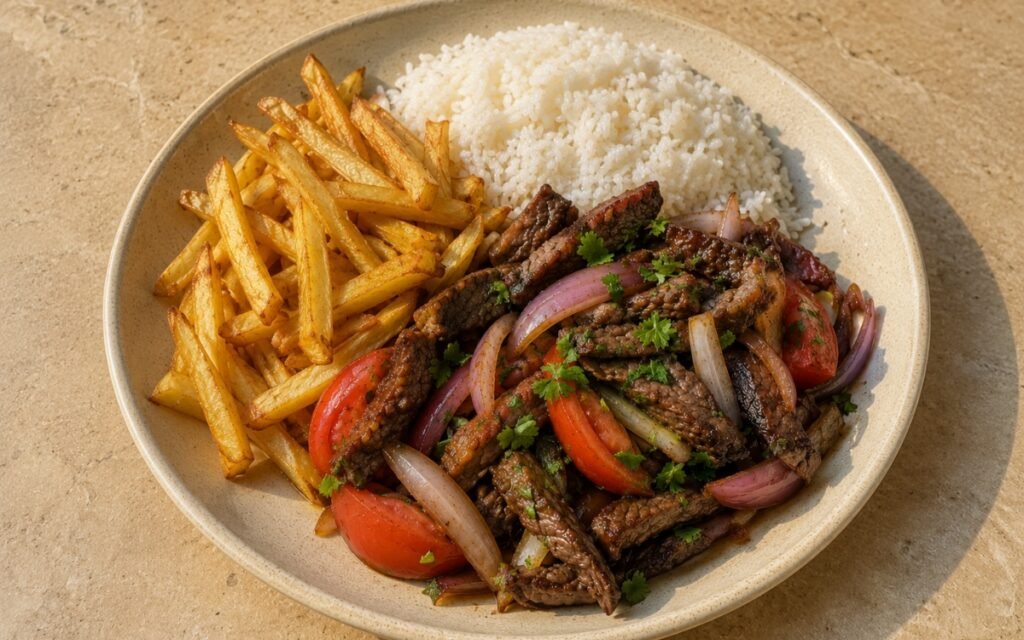
Peruvian Lomo Saltado
Deeply seared beef strips tossed fast with feathered shallots, tomato wedges, and a glossy soy-vinegar sauce, served with double-fried fries and rice.
-
Vietnamese Shaking Beef / Bò Lúc Lắc
Seared Vietnamese beef cubes in a glossy garlic and oyster sauce glaze, served with jasmine rice, lettuce, tomato, cucumber and lime.
-
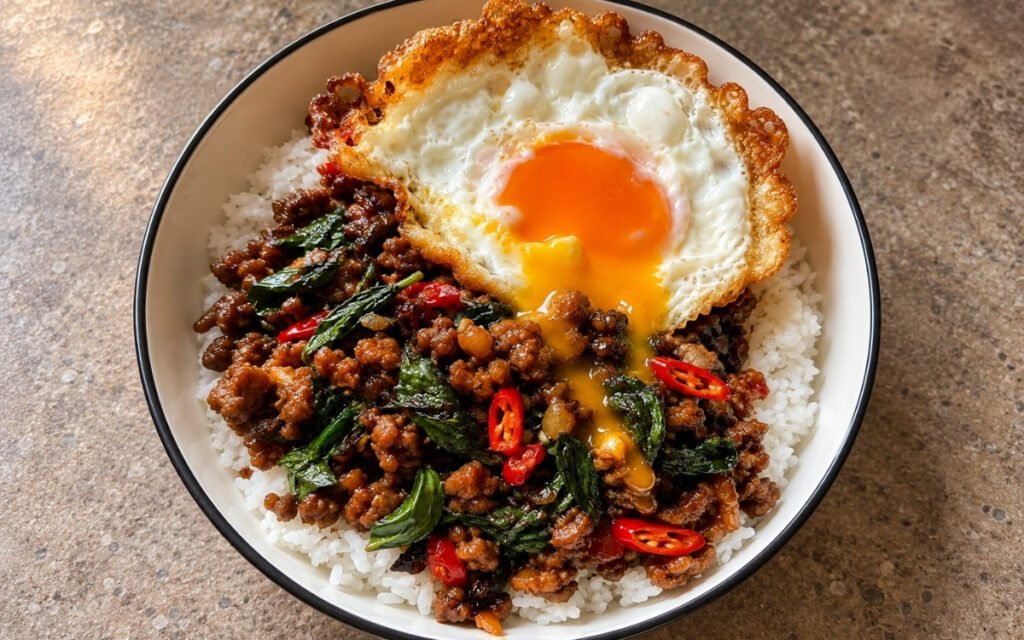
Pad Krapao — Thai Basil Stir-Fry
Hard-caramelized minced pork with garlic, chilies, glossy sauce, and Thai holy basil, served over jasmine rice with a crispy fried egg.
-
Korean Spicy Pork / Jeyuk Bokkeum
Thinly sliced pork in a glossy red gochujang glaze with onion and scallion, served beside white rice and topped with toasted sesame seeds.
-
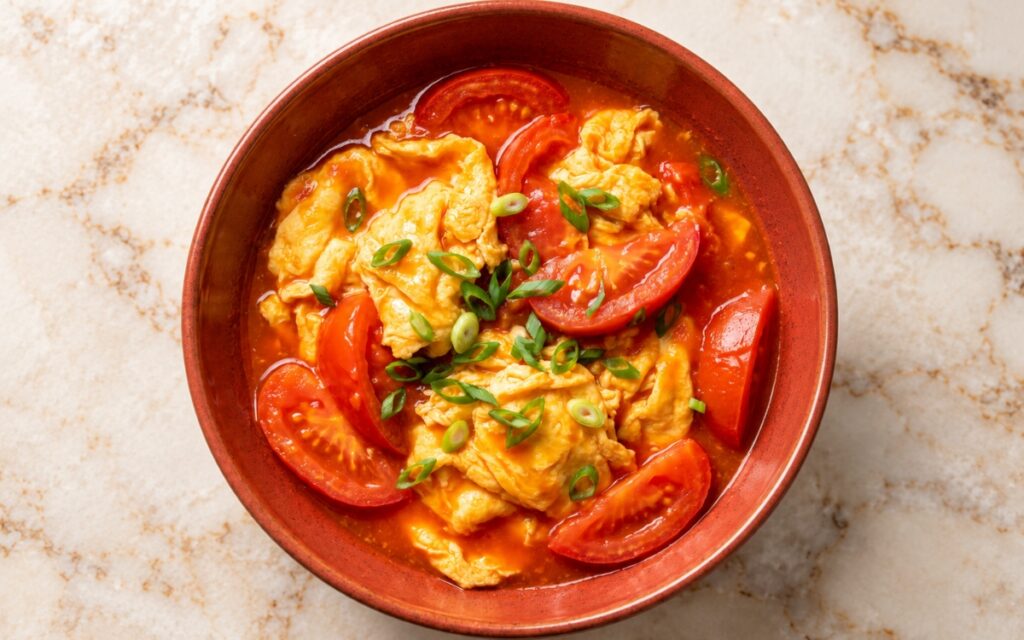
Chinese Tomato Egg Stir-Fry
Large soft scrambled egg curds and juicy tomato wedges in a glossy, lightly thickened red sauce, finished with fresh sliced scallion greens.
-
Kung Pao Chicken
Small seared chicken cubes in a glossy soy-chili glaze with dried red chilies, Sichuan peppercorns, roasted peanuts, scallions and green bell pepper pieces.