
Watermelon Tajín Salad with Lime, Cotija & Mint
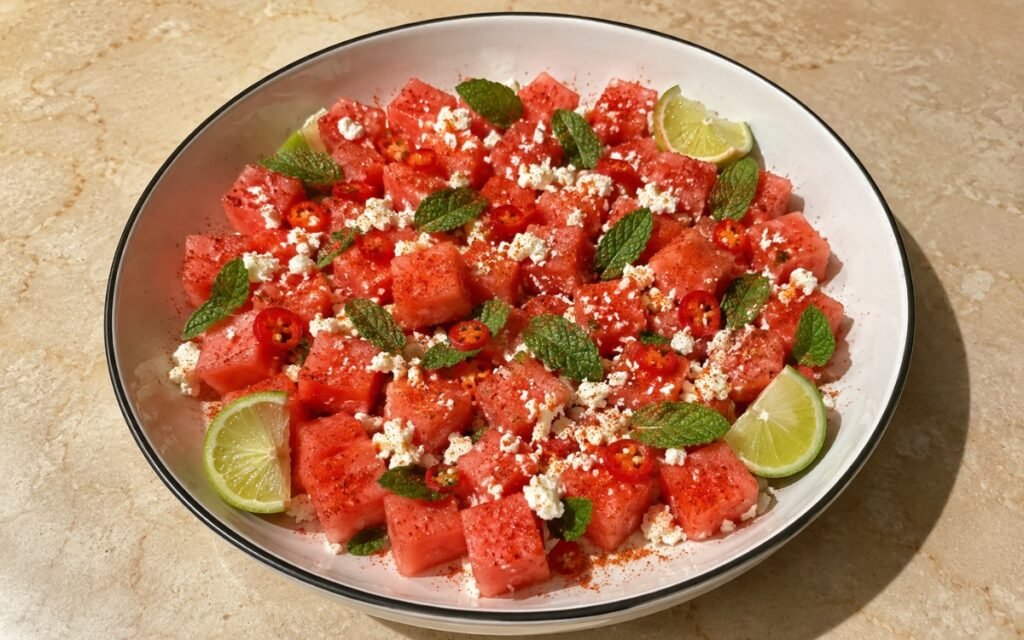
Watermelon drained for 5–10 minutes before the dressing is applied — because watermelon’s surface liquid, if undrained, dilutes every component in the bowl from the first toss and produces the watery, flat result that gives fruit salads their undeserved mediocre reputation. The dressing is three ingredients: Tajín, lime juice, and olive oil. Tajín — the Mexican chili-lime-salt seasoning powder — does the work of three separate seasonings simultaneously and its specific citrus-forward, mildly spiced character is not approximated by chili powder and lime juice used separately. Cotija crumbled over the finished salad rather than tossed through — the sharp, dry, salty cheese in distinct crumbles against the sweet watermelon rather than dissolved into the dressing. Fresh mint and thinly sliced fresno chili completing the flavour composition that is the entire point: cold, sweet fruit against salty cheese, sharp lime, mild chili heat, cooling mint, and Tajín’s specific citrus-chili edge simultaneously. The summer salad that requires no cooking, fifteen minutes, and a table outside.
Prep Time : 15 min
Cook Time : 0 min
Servings : 4
15 min
0 min
4
Ingredients
For the Salad
• 1.2kg watermelon, rind removed, deseeded and cut into irregular rustic chun
• 60g cotija cheese, crumbled — this one on Amazon
• 1 fresno chili, thinly sliced into rounds — seeds removed for milder heat, left in for sharper
• ½ packed cup fresh mint leaves
For the Dressing
• 2 tbsp Tajín seasoning — this one on Amazon
• Juice of 2 limes — approximately 60ml
• 1 tbsp extra-virgin olive oil — this one on Amazon
• Pinch of freshly cracked black pepper
For Garnish
• Extra Tajín seasoning
• Additional fresh mint leaves
• Lime wedges
This post may contain affiliate links. As an Amazon Associate I earn from qualifying purchases, at no additional cost to you.
Directions
- Prepare and Drain the Watermelon
Remove the rind from the watermelon completely. Cut into large, irregular, rustic chunks — roughly 4–6cm in their largest dimension, with uneven shapes rather than uniform cubes or triangles. The irregular shaping is not simply aesthetic: the rough, uneven surfaces created by irregular cuts have more surface area and more texture variation than smooth, flat-faced cubes, and the dressing’s olive oil, lime, and Tajín cling more effectively to a rough, slightly porous surface than to the sealed, smooth faces of precision-cut pieces. Transfer the cut watermelon to a colander or fine-mesh strainer set over a bowl. Allow to drain at room temperature for 5–10 minutes. The watermelon’s very high water content — approximately 92% water by weight — means its surface is actively wet with sweet, dilute juice at the moment of cutting. Applied over this wet surface, the dressing is immediately diluted and its flavour compounds are dispersed into the surrounding liquid rather than adhering to the fruit. The 5–10 minute drain removes this surface moisture without beginning to dry the watermelon’s flesh — the fruit remains completely cold, crisp, and juicy inside while the surface is noticeably less wet and ready to hold the dressing. - Prepare the Fresno Chili
Slice the fresno chili into thin, even rounds. For a milder, cleaner heat — the chili providing a fruity, slightly sweet warmth that is perceptible but not assertive — remove the seeds and white pith before slicing. Fresno chilies have a specific moderately bright, fruity heat (approximately 2,500–10,000 SHU) and a slightly thicker flesh than most red chilies — their roundness when sliced provides both visual appeal and a clean, not-too-thin slice that holds its shape in the salad without wilting. Leaving the seeds produces a sharper, more directly spiced result where the chili’s heat is clearly present alongside the Tajín’s milder background warmth. - Make the Dressing
In a small bowl, combine the 2 tbsp of Tajín, the juice of 2 limes, 1 tbsp of extra-virgin olive oil, and a pinch of black pepper. Whisk until the Tajín powder is fully suspended in the liquid — Tajín does not fully dissolve but disperses evenly with whisking, ensuring even distribution over the watermelon rather than concentrated patches of chili-salt on some pieces and bland pieces elsewhere. Tajín — a commercially produced Mexican seasoning made from a specific blend of chili peppers, dehydrated lime juice, and salt — has a specific citrus-forward, mildly spiced character that makes it the defining seasoning in this recipe rather than simply a heat source. The dehydrated lime component in Tajín contributes a different quality of citrus intensity than fresh lime juice — concentrated, slightly more aromatic, and less immediately sharp — that the fresh lime juice amplifies and brightens. The olive oil does not emulsify with the lime juice without a binding agent but distributes sufficiently with whisking to carry the Tajín’s fat-soluble aromatic compounds more evenly across every piece of watermelon than a Tajín-and-lime-only dressing would provide. - Dress and Toss
Transfer the drained watermelon to a large bowl. Pour the dressing over the watermelon and toss gently but thoroughly — using two large spoons or clean hands to turn every piece through the dressing without breaking the larger chunks. The watermelon’s flesh is fragile and breaks easily under pressure; confident, gentle turning movements produce a complete coating without disintegrating the pieces into an unstructured mass. - Plate and Garnish
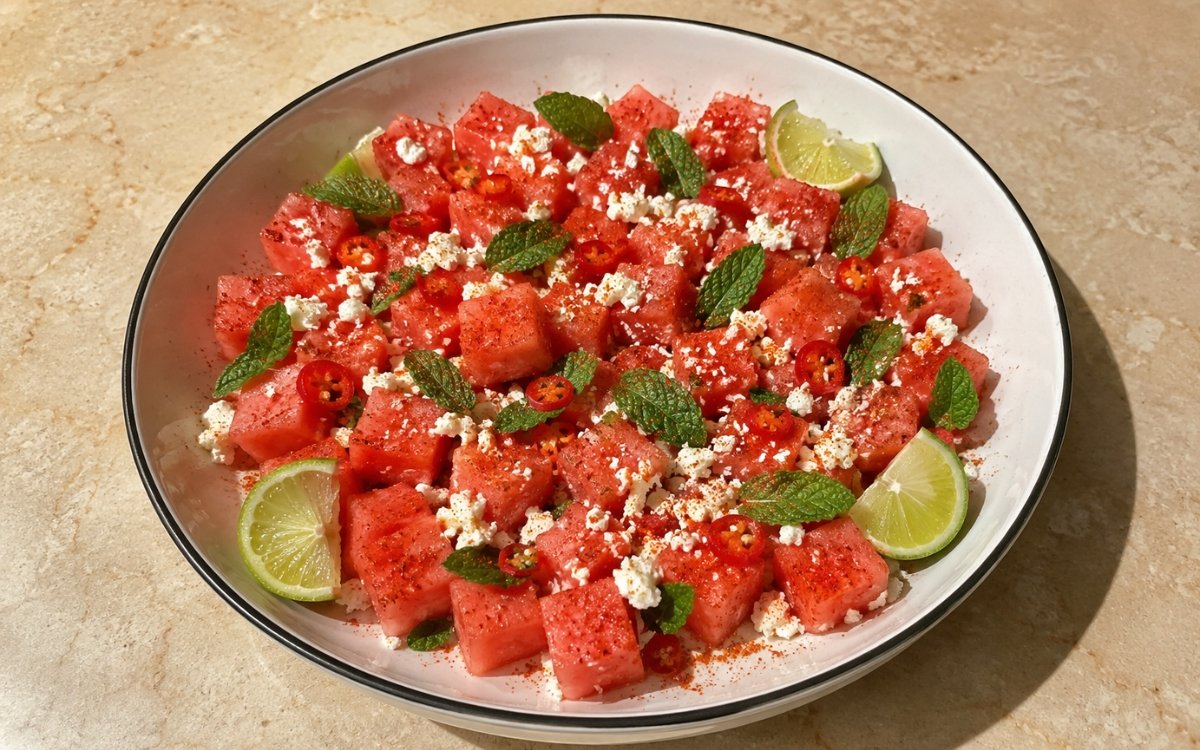
Transfer the dressed watermelon to a wide, shallow serving bowl or platter — spreading it out into a single irregular layer rather than piling it into a mound. The shallow, spread presentation keeps the salad visually clean, prevents the lower pieces from being crushed under the weight of those above, and prevents the excess dressing and watermelon juice that accumulates at the bottom of a piled arrangement from making the lower pieces soggy while the top pieces remain underdressed. Crumble the 60g of cotija evenly over the surface. Scatter the sliced fresno chili rounds. Distribute the fresh mint leaves. Finish with an additional sprinkle of Tajín directly over the top — the additional seasoning dusting provides stronger red-orange colour contrast against the pink watermelon and the white cotija, and its concentrated chili-lime character provides a more assertive bite at the top of the salad where each serving is scooped from. Place lime wedges alongside. Serve immediately.
*Notes :
- Tajín Clásico — the standard variety of the Mexican seasoning — is the specific product for this recipe. It is made from a proprietary blend of mild red chilies, dehydrated lime juice, and salt, producing a seasoning that is simultaneously salty, acidic, mildly spiced, and specifically citrusy in a dehydrated-lime way that cannot be produced by substituting plain chili powder and lime salt. Available at Mexican grocery stores, Latin supermarkets, and increasingly at mainstream supermarkets in the international foods section. Its specific character is central to the dish — the salad made with a substitute seasoning blend produces a different, less characteristically Mexican result.
- Cotija cheese is a Mexican aged cheese with a hard, granular, very dry texture and a sharp, salty, slightly tangy flavour. When crumbled, it produces distinct, firm pieces that retain their identity against the watermelon’s moisture rather than dissolving — the specific textural and flavour contrast between the crumbly, salty cheese and the cold, sweet, juicy watermelon is the pairing that makes this salad specifically more interesting than dressed watermelon alone. Crumbled feta can substitute at a similar quantity — its comparable saltiness and crumbly texture produce a comparable result with a slightly less dry, slightly creamier character.
Why This Recipe Works
This recipe works because it executes the one non-obvious technique requirement — draining the watermelon before dressing — that prevents the watery, diluted result of undressed fruit salad. The Tajín does the work of three seasoning components simultaneously.
The cotija is crumbled over the top rather than tossed through, preserving its textural identity as distinct salty pieces rather than distributing it into the dressing. And the salad is served immediately — the contrast between cold sweet fruit, sharp lime, salty cotija, mild chili heat, and cooling mint existing at its most vivid at the moment of assembly.
Ingredient Breakdown
Watermelon Drained 5–10 Minutes
The technique requirement — surface moisture removal before dressing prevents the watery dilution that ruins undrained fruit salad.
Tajín (Simultaneous Salt, Acid, and Spice)
The defining seasoning — its dehydrated lime component producing a different, more concentrated citrus character than fresh lime alone; not substitutable with plain chili and salt.
Cotija (Crumbled Over, Not Tossed Through)
The salty textural contrast — distinct crumbles rather than dissolved seasoning; the sharp dry cheese against sweet juicy watermelon is the salad’s primary flavour pairing.
Fresno Chili (Fresh, Thinly Sliced)
The fruity, moderate heat element — visible rounds providing both the mild spice and the visual colour contrast.
Fresh Mint
The cooling aromatic counterpoint — specifically complementary to watermelon’s sweetness and Tajín’s chili-lime character.
Irregular Rustic Chunks (Not Uniform Cubes)
The surface texture decision — rough surfaces carry the dressing more effectively than smooth cut faces.
Flavor Structure Explained
This Watermelon tajín salad follows a layered balance model:
- Sweet refreshing core (watermelon)
- Bright acidic-spiced contrast (Tajín, lime)
- Sharp salty depth (cotija)
- Fruity warming heat (Fresno chili, Tajín)
- Cooling herbal finish (mint)
Watermelon defines the foundation with juicy sweetness and refreshing lightness that make the salad instantly thirst-quenching. Tajín and fresh lime provide the signature Mexican street-fruit combination of acidity, salt, and chili that intensifies the fruit’s natural flavor. Cotija adds concentrated salinity that makes the watermelon taste even sweeter through contrast. Fresno chili and the chili component of Tajín contribute gentle, fruity heat that builds across successive bites. Mint completes the structure with cooling freshness that keeps the acid, salt, and spice feeling vibrant and refreshing rather than overwhelming.
Common Mistakes to Avoid
- Not Draining the Watermelon – Undrained watermelon produces a watery, diluted dressing that pools at the bottom of the bowl rather than coating the fruit. Always drain 5–10 minutes before dressing.
- Using Uniform Cubes Rather Than Rustic Chunks – Smooth, flat-faced cubes carry the dressing less effectively than rough irregular surfaces. Always cut or tear irregularly.
- Tossing the Cotija Through the Salad – Tossed cotija breaks down into fine crumbles that dissolve into the dressing rather than providing the distinct salty pieces that contrast with the watermelon. Always crumble over the top after plating.
- Piling Rather Than Spreading the Salad – A piled arrangement compresses the bottom pieces, causes juice accumulation beneath, and makes even garnish distribution impossible.
- Not Serving Immediately – The mint wilts, the cotija softens, and the dressing dilutes progressively after assembly. Serve within 5 minutes of completion.
Variations
With Cucumber
Add 200g of thinly sliced cucumber alongside or partially replacing an equal weight of watermelon — the cucumber’s cool, slightly bitter freshness amplifies the mint’s cooling character and adds a different textural crunch.
With Chili Oil Drizzle
Add a thin drizzle of a good chili oil over the finished salad alongside or instead of the olive oil in the dressing — the chili oil’s toasted, slightly smoky spice adds depth to the Tajín’s more immediate citrus-chili character.
Watermelon Tajín Salad With Avocado
Add one sliced ripe avocado — its creamy richness and mild flavour provide a specifically satisfying contrast against the sharp, sweet, acidic composition of the salad without competing with any other element.
With Toasted Pepitas
Add 2 tbsp of toasted pumpkin seeds scattered over the finished salad — their crunchy, nutty character alongside the creamy cotija provides additional textural interest.
Storage & Make-Ahead
The assembled salad is not suitable for storage, since the watermelon continues to release moisture, the mint wilts, and the cotija cheese softens within 20 to 30 minutes. For the best texture and flavor, assemble only the amount that will be eaten immediately.
If you want to prepare part of the dish ahead of time, the drained, undressed watermelon can be stored in a sealed container in the refrigerator for up to 2 days. When ready to serve, add the dressing and garnishes and assemble the salad immediately.
Frequently Asked Questions
What is Tajín and can I substitute it?
Tajín Clásico is a commercially produced Mexican seasoning made from mild red chilies, dehydrated lime juice, and salt — available at Mexican grocery stores, Latin supermarkets, and mainstream supermarkets in the international foods section. Its specific dehydrated lime component produces a concentrated citrus character that cannot be fully replicated by fresh lime and chili powder combined. It is the defining seasoning in this recipe — a substitute blend produces a different result.
Why drain the watermelon before dressing?
Watermelon’s surface is wet with dilute sweet juice at the moment of cutting. Applied over this wet surface, the dressing is immediately diluted before it can adhere — producing a flat, watery result. The 5–10 minute drain removes the surface moisture so the Tajín, lime, and olive oil adhere to the fruit and coat it evenly rather than dissolving into surrounding liquid.
What is cotija cheese?
Cotija is a Mexican aged cheese with a hard, granular, very dry texture and sharp, salty flavour — similar in function to a Mexican Parmesan or Greek feta but with a specifically drier, more crumbly character. When crumbled over the salad it produces distinct salty pieces that retain their identity against the watermelon’s moisture. Available at Mexican grocery stores and Latin supermarkets. Crumbled Greek feta is the closest substitute.
What is a fresno chili?
Fresno chilies are red, medium-sized fresh chilies with moderate heat (2,500–10,000 SHU) and a specifically fruity, bright character — slightly more fruity and less vegetal than jalapeños at a comparable heat level. Available at well-stocked supermarkets and specialty grocers. Red jalapeños are the closest substitute.
Why irregular chunks rather than uniform cubes?
Irregular chunks have more surface area variation — rough, slightly porous torn or cut surfaces that carry the dressing more effectively than the smooth, sealed faces of uniform cubes. The uneven shapes also produce the rustic, natural appearance that makes this salad visually appealing in a specifically casual, generous way.
Nutrition Facts
( per serving )
Calories
~175 kcal
Protein
4 g
Fat
8 g
Carbs
24 g
Calories
~175 kcal
Protein
4 g
Fat
8 g
Carbs
24 g
Related Recipes
Related Recipes

Salmon Cobb Salad
Chickpeas, cherry tomatoes, cucumber, red onion, parsley, and mint dressed with lemony olive oil, topped with warm grilled halloumi.
Shaved Fennel Citrus Salad
Paper-thin fennel slices tossed with sweet citrus segments, arugula, and light citrus vinaigrette.
Simple Arugula Salad with Lemon Vinaigrette
Peppery arugula with lemon vinaigrette, cherry tomatoes, shaved Parmesan, and toasted pine nuts.
You might also like
You might also like
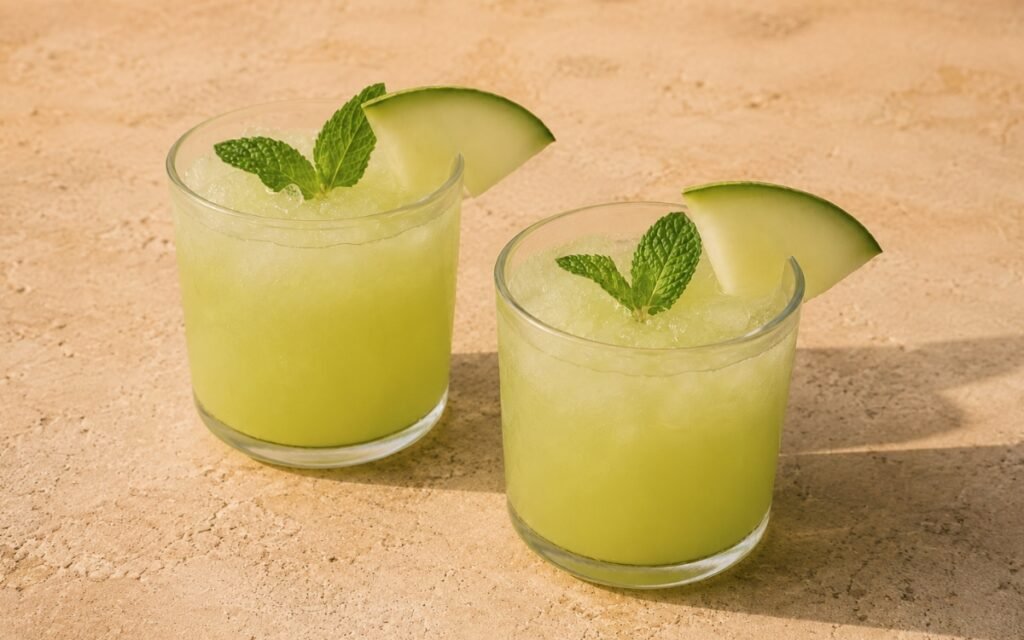
Melon Mint Agua Fresca Mocktail
Ripe honeydew blended with lime and honey, mint cold-infused — still, pale green, and cooling.
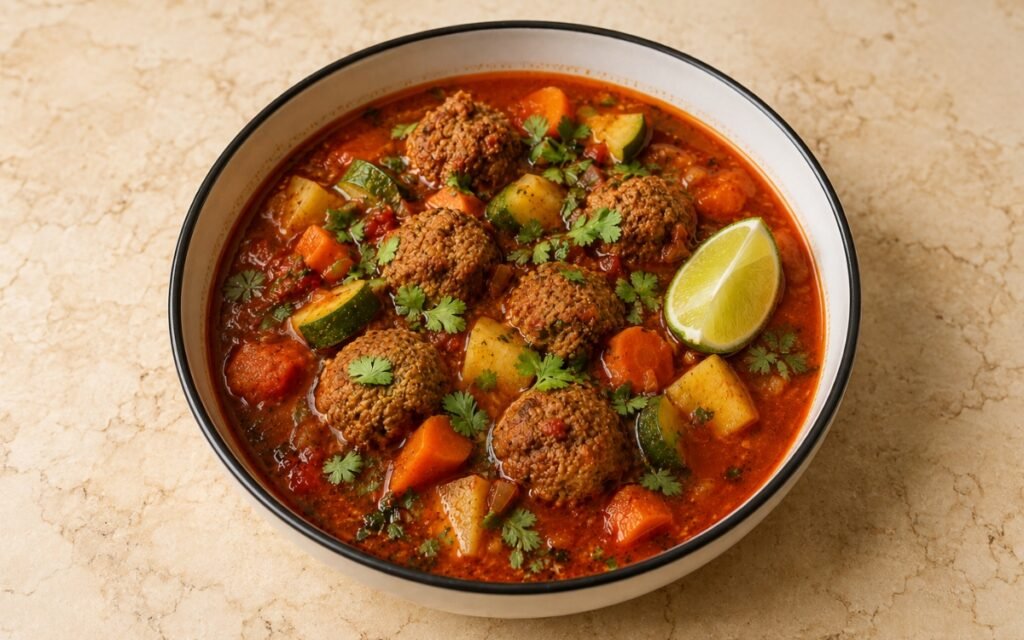
Sopa de Albóndigas
Tender beef-and-rice meatballs simmered gently in a savory red tomato broth with carrot, potato, and zucchini.
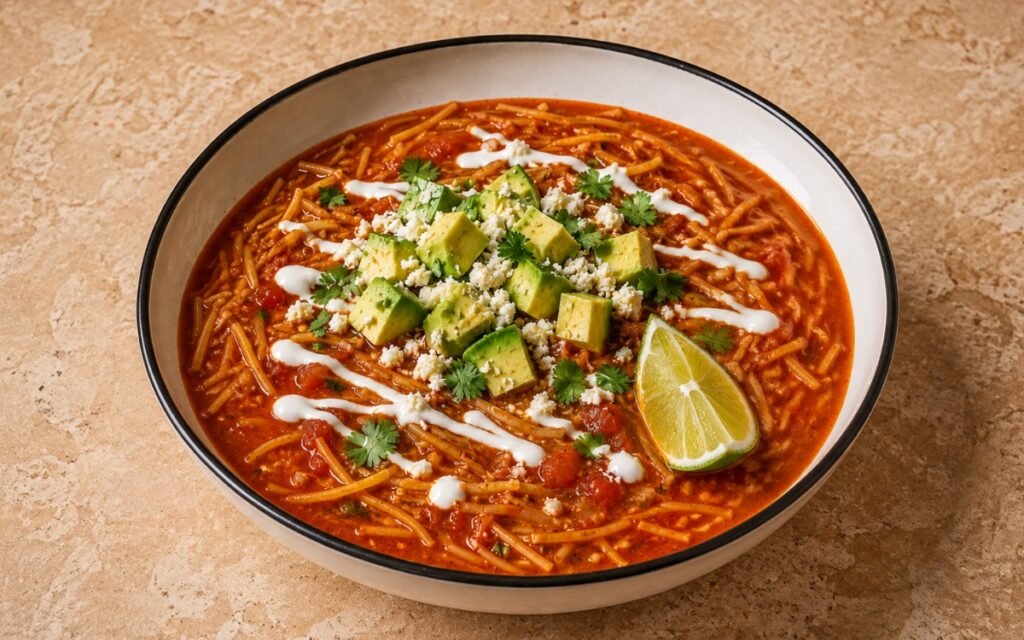
Sopa de Fideo
Toasted fideo noodles simmered in a rich, deeply cooked tomato broth, finished with avocado, crema, queso fresco, and lime.
Watermelon Tajín Salad with Lime, Cotija & Mint
Ingredients
Method
- Remove the rind from the watermelon completely. Cut into large, irregular, rustic chunks — roughly 4–6cm in their largest dimension, with uneven shapes rather than uniform cubes or triangles. The irregular shaping is not simply aesthetic: the rough, uneven surfaces created by irregular cuts have more surface area and more texture variation than smooth, flat-faced cubes, and the dressing’s olive oil, lime, and Tajín cling more effectively to a rough, slightly porous surface than to the sealed, smooth faces of precision-cut pieces. Transfer the cut watermelon to a colander or fine-mesh strainer set over a bowl. Allow to drain at room temperature for 5–10 minutes. The watermelon’s very high water content — approximately 92% water by weight — means its surface is actively wet with sweet, dilute juice at the moment of cutting. Applied over this wet surface, the dressing is immediately diluted and its flavour compounds are dispersed into the surrounding liquid rather than adhering to the fruit. The 5–10 minute drain removes this surface moisture without beginning to dry the watermelon’s flesh — the fruit remains completely cold, crisp, and juicy inside while the surface is noticeably less wet and ready to hold the dressing.
- Slice the fresno chili into thin, even rounds. For a milder, cleaner heat — the chili providing a fruity, slightly sweet warmth that is perceptible but not assertive — remove the seeds and white pith before slicing. Fresno chilies have a specific moderately bright, fruity heat (approximately 2,500–10,000 SHU) and a slightly thicker flesh than most red chilies — their roundness when sliced provides both visual appeal and a clean, not-too-thin slice that holds its shape in the salad without wilting. Leaving the seeds produces a sharper, more directly spiced result where the chili’s heat is clearly present alongside the Tajín’s milder background warmth.
- In a small bowl, combine the 2 tbsp of Tajín, the juice of 2 limes, 1 tbsp of extra-virgin olive oil, and a pinch of black pepper. Whisk until the Tajín powder is fully suspended in the liquid — Tajín does not fully dissolve but disperses evenly with whisking, ensuring even distribution over the watermelon rather than concentrated patches of chili-salt on some pieces and bland pieces elsewhere. Tajín — a commercially produced Mexican seasoning made from a specific blend of chili peppers, dehydrated lime juice, and salt — has a specific citrus-forward, mildly spiced character that makes it the defining seasoning in this recipe rather than simply a heat source. The dehydrated lime component in Tajín contributes a different quality of citrus intensity than fresh lime juice — concentrated, slightly more aromatic, and less immediately sharp — that the fresh lime juice amplifies and brightens. The olive oil does not emulsify with the lime juice without a binding agent but distributes sufficiently with whisking to carry the Tajín’s fat-soluble aromatic compounds more evenly across every piece of watermelon than a Tajín-and-lime-only dressing would provide.
- Transfer the drained watermelon to a large bowl. Pour the dressing over the watermelon and toss gently but thoroughly — using two large spoons or clean hands to turn every piece through the dressing without breaking the larger chunks. The watermelon’s flesh is fragile and breaks easily under pressure; confident, gentle turning movements produce a complete coating without disintegrating the pieces into an unstructured mass.
- Transfer the dressed watermelon to a wide, shallow serving bowl or platter — spreading it out into a single irregular layer rather than piling it into a mound. The shallow, spread presentation keeps the salad visually clean, prevents the lower pieces from being crushed under the weight of those above, and prevents the excess dressing and watermelon juice that accumulates at the bottom of a piled arrangement from making the lower pieces soggy while the top pieces remain underdressed. Crumble the 60g of cotija evenly over the surface. Scatter the sliced fresno chili rounds. Distribute the fresh mint leaves. Finish with an additional sprinkle of Tajín directly over the top — the additional seasoning dusting provides stronger red-orange colour contrast against the pink watermelon and the white cotija, and its concentrated chili-lime character provides a more assertive bite at the top of the salad where each serving is scooped from. Place lime wedges alongside. Serve immediately.