Serbian Ćevapi with Lepinja
Serbian ćevapi with lepinja are four large, open sandwiches of warm, freshly baked lepinja flatbread spread with creamy kajmak on one side and roasted red pepper ajvar on the other, filled with eight small, skinless beef-and-pork sausages each, grilled until deeply caramelised outside and juicy, tender, and slightly springy within, then finished with thin raw red onion and fresh parsley. Kneading the salted meat with cold sparkling water and resting it overnight, rather than binding it with egg or breadcrumbs, is the technique this whole sandwich depends on for sausages that hold together over fierce heat and stay juicy — unrested, loosely mixed meat crumbles on the grill and dries out, the same salt-extraction principle used elsewhere in this collection whenever ground meat must bind without fillers. A fat content of about 20–22% is what keeps the ćevapi juicy through high-heat grilling. Baking the lepinja thick and soft on a very hot surface is what lets it hold eight sausages and two generous spreads. The payoff is a ćevapi sandwich with real, hearty contrast — smoky meat, rich tangy kajmak, sweet pepper relish, sharp raw onion, and pillowy toasted bread.

- Prep Time : 50 min
- Total Time : 3 hr 15 min
- Servings : 4
Ingredients
For the Traditional Serbian Ćevapi
- 840g ground beef chuck, approximately 80/20 lean-to-fat ratio
- 360g ground pork shoulder, approximately 75/25 to 80/20 lean-to-fat ratio
- 18g fine sea salt
- 3g freshly ground black pepper
- 10g garlic, approximately 3 cloves, very finely grated
- 2.5g baking soda, approximately ½ tsp
- 80ml ice-cold sparkling mineral water
- 10–15ml neutral sunflower oil or a small amount of beef fat, for lightly greasing the grill
For the Homemade Serbian Lepinja Flatbreads
- 520g strong white wheat flour or bread flour, approximately 11–12.5% protein
- 370ml lukewarm water, approximately 28–32°C
- 7g instant dry yeast
- 6g granulated sugar
- 10g fine sea salt
- 15ml neutral sunflower oil
- Additional flour, for shaping and dusting
For Assembly and Serving
- 4 freshly baked Serbian lepinja flatbreads, from the recipe above
- 32 freshly grilled ćevapi, 8 per sandwich
- 200g traditional Serbian kajmak, approximately 50g per sandwich
- 200g prepared roasted red pepper ajvar, preferably mild, approximately 50g per sandwich
- 160g red onion, sliced into very thin crescents
- 15g fresh flat-leaf parsley, leaves and tender stems
- Additional warm meat juices or a small amount of unsalted beef stock, optional, for lightly moistening the bread before grilling
Directions
- Mix the Meat Mixture
Put the chilled beef and pork in a large chilled bowl, check that the combined fat is about 20–22%, and break the meat apart gently by hand. Sprinkle over the 18g salt, 3g pepper, grated garlic, and 2.5g baking soda, then fold and squeeze the meat while adding the 80ml ice-cold sparkling water in three or four additions. Knead for 6–8 minutes until the mixture turns tacky, cohesive, and slightly elastic, and a small pinch pressed between your fingers holds as a smooth mass instead of crumbling. Add no egg, breadcrumbs, spices, or chopped onion. Thorough kneading is what binds the meat without any filler. - Rest the Meat Overnight
Press the mixture into an even layer in a shallow food-safe container, cover it tightly, and refrigerate at 4°C or below for at least 8 hours, preferably 12–18 hours. Do the mixing the day before cooking, and never leave the seasoned meat at room temperature overnight. After resting it should feel noticeably firmer, more cohesive, and easier to shape without cracking, though still slightly sticky. Keep it covered and cold, and avoid resting beyond 24 hours. Overnight resting is what gives the salt time to distribute and the proteins time to bind, so the ćevapi survive the grill without splitting. - Prepare the Lepinja Dough
Combine the 520g flour, 7g yeast, and 6g sugar in a large bowl, then stir in about 340ml of the lukewarm water until the flour begins to hydrate. Add the remaining 30ml water gradually, followed by the 10g salt and 15ml sunflower oil, and mix until no dry flour remains. Rest the rough dough for 10 minutes, then knead for 8–10 minutes by hand, or 6–8 minutes in a stand mixer on low to medium-low, until smooth, elastic, and slightly tacky. Avoid adding extra flour. Roughly 71% hydration is what produces a light, airy, porous crumb. - Proof and Shape the Lepinja
Place the dough in a lightly oiled, covered bowl at 24–26°C for 60–90 minutes until nearly doubled. Turn it out onto a floured surface, press out only the largest gas pockets, divide it into 4 portions of about 230g, and form loose balls. Relax them for 10 minutes, then flatten each with your fingertips into a round about 19–21cm across with a centre 1.5–2cm thick and rounded edges. Set them on parchment-lined trays and proof for another 25–35 minutes until visibly puffy but still stable. Never use a rolling pin. Preserving the gas pockets is what keeps the bread thick and fluffy. - Bake the Lepinja
During the final proof, heat the oven to 250°C conventional or about 235°C fan-assisted with a baking steel, pizza stone, or heavy tray inside for at least 20–30 minutes. Slide the proofed breads onto the hot surface and bake for 10–14 minutes, rotating only if needed, until they have risen noticeably, turned golden with darker toasted patches, and are cooked through. Move them to a wire rack and cover loosely with a clean towel for about 10 minutes. Do not bake them hard. High initial heat is what drives the strong oven spring that gives a soft, airy centre. - Shape the Ćevapi
Take the cold meat from the refrigerator and divide it into 32 portions of about 37–38g. With lightly wet hands, roll each portion gently between your palms into a short cylinder about 8–9cm long and 2–2.5cm thick, keeping the ends softly rounded and smoothing only the largest cracks. Do not pack the meat tightly, and do not use skewers. Set all 32 ćevapi in a single layer on a chilled tray and refrigerate them for 15–20 minutes while you prepare the grill and toppings. Compact, uniform cylinders are what caramelise evenly while the centre stays juicy. - Prepare the Toppings and Grill
Cut the red onion into crescents 1–2mm thick, separate them, and rinse briefly under cold water if they are very sharp. Wash and dry the parsley, keeping small leaves for garnish. Divide the kajmak and ajvar into four 50g portions each, stir the ajvar if its oil has separated, and take the kajmak out of the refrigerator 10 minutes before assembly. Build a strong bed of charcoal embers without active flames, or heat a heavy cast-iron grill pan until very hot, then brush it with a little oil or beef fat. Intense, steady heat is what browns the meat before it dries. - Grill the Ćevapi Until Deeply Browned
Lay the chilled ćevapi on the hot grill with small gaps between them and leave them undisturbed for 2–3 minutes until the underside forms a firm brown crust. Turn gently with tongs every 1–2 minutes for 8–12 minutes in total, until the surfaces are deep reddish-brown with irregular darker marks, and never press them down. Because the mix contains pork, check a representative piece with an instant-read thermometer: the centre must reach 71°C. Rest them loosely covered for 2–3 minutes and cook in batches. Checking the temperature is what makes juicy ćevapi safe. - Open and Toast the Lepinja
Slice each lepinja horizontally with a long serrated knife, stopping 2–3cm before the far edge so a small hinge holds the halves together, and open it like a book. Heat a large skillet or a clean part of the grill over medium-high heat and set the breads cut side down for 30–60 seconds, until light golden patches appear and the centre is warm and fluffy. Spoon a little warm meat juice onto the cut faces if you like, without soaking them. The bread should stay soft and flexible. Gentle toasting is what lets it open wide without cracking. - Assemble the Ćevapi Sandwiches
Put a warm, opened lepinja on a plate and spread about 50g kajmak thickly across one inner side and 50g ajvar across the other, keeping the two spreads separate. Arrange 8 hot ćevapi in a tight row down the centre with their browned sides up, scatter about 40g red onion over and around them, and tuck in a few parsley leaves. Leave the sandwich open so all the fillings show, and repeat with the remaining three. Serve immediately. Hot meat on the kajmak is what softens it into a creamy, tangy layer.
*Notes :
- Kneading the meat with salt and cold sparkling water deserves genuine recognition as the technique most directly responsible for ćevapi that hold together without egg or breadcrumbs. Salt draws out the proteins that bind the minced meat into a tacky, elastic mass, whereas lightly mixed meat stays loose and falls apart on the grill into dry, crumbly pieces.
- Resting the seasoned meat overnight deserves the same attention this technique receives throughout this collection’s other ground-meat dishes. The salt has hours to distribute and the proteins to hydrate and bind, so the cold mixture shapes cleanly and stays springy under fierce heat, whereas meat grilled straight after mixing splits, shapes poorly, and tastes unevenly seasoned.
- Keeping about 20–22% fat in the meat deserves genuine respect as the detail most directly responsible for juicy, tender ćevapi. Fat melts during grilling and bastes the meat from within, whereas very lean beef or pork has nothing to render, so the sausages turn dry, firm, and rubbery before the crust has finished browning properly.
- Checking the centre at 71°C deserves attention as a genuine, checkable food-safety cue rather than a judgement by colour. A browned crust can hide an undercooked middle, and this mixture contains ground pork, whereas a thermometer reading of 71°C confirms safety, and removing the meat promptly after that keeps the ćevapi juicy instead of rubbery.
Why This Recipe Works
This recipe works because the meat and the bread are each built to survive the heat of the grill. Salted, kneaded, and overnight-rested beef and pork bind into cohesive cylinders that need no filler, and their 20–22% fat keeps the centres juicy while the outside caramelises over strong heat. A thick, well-hydrated lepinja baked on a very hot surface stays soft enough to hold eight sausages and two spreads. Kajmak, ajvar, and raw onion add cream, sweetness, and bite. The result is a smoky, hearty sandwich in which every component keeps its own texture.
Ingredient Breakdown
Beef Chuck and Pork Shoulder (1,200g)
The structural foundation — a 70/30 blend with 20–22% fat gives juicy, cohesive ćevapi.
Salt, Baking Soda, and Sparkling Water
The binding technique — salt extracts proteins, baking soda adds spring, and cold fizzy water helps kneading.
Overnight Resting
The critical technique — time lets seasoning spread and proteins bind, so the sausages stay intact over high heat.
Homemade Lepinja (4)
The structural choice — a thick, airy flatbread opens like a book and carries eight sausages without collapsing.
Kajmak and Ajvar
The flavour contrast — tangy dairy cream on one side and sweet roasted pepper relish on the other frame the meat.
Raw Red Onion and Parsley
The fresh finish — thin crescents and a few leaves add sharp, clean contrast against the rich grilled meat.
Flavor Structure Explained
This Serbian ćevapi sandwich follows a layered balance model:
- Smoky, savoury foundation (grilled beef and pork ćevapi)
- Rich, tangy cream (kajmak)
- Sweet, roasted relish (ajvar)
- Sharp, fresh contrast (raw red onion and parsley)
- Soft, toasted wrapping (warm lepinja)
Grilled beef and pork ćevapi give the sandwich its smoky, savoury foundation, while kajmak lays a rich, slightly tangy cream beneath the hot meat. Ajvar answers with a sweet, roasted pepper relish on the opposite side, and raw red onion and parsley add a sharp, fresh contrast that keeps every bite lively. Soft, lightly toasted lepinja holds it all in a warm, pillowy layer, and that soft wrapping is what ties this ćevapi sandwich together.
Common Mistakes to Avoid
- Using Lean Meat – This produces dry, crumbly ćevapi that fall apart over heat. Always keep the mixture at about 20–22% fat with chuck and pork shoulder.
- Under-Kneading the Mixture – This leaves the proteins unbound, so the sausages split on the grill. Always knead for 6–8 minutes until the meat is tacky and cohesive.
- Skipping the Overnight Rest – This gives a looser, less evenly seasoned mixture that is harder to shape. Always refrigerate the meat for at least 8 hours, preferably 12–18.
- Rolling the Dough Thin – This squeezes out the gas and makes a flat, dense bread that cannot be split. Always flatten the dough with your fingertips to 1.5–2cm in the centre.
- Overcooking the Ćevapi – This leaves them dry and rubbery once past the safe temperature. Always check for 71°C at the centre and remove them promptly.
Variations
Charcoal Version
Grill the ćevapi over a bed of hot charcoal embers without active flames instead of a pan, which gives the more characteristic smoky grill-house flavour while following the same timing and temperature.
Cast-Iron Pan Version
Cook the ćevapi in a very hot, lightly oiled cast-iron grill pan or skillet in batches, which gives a practical indoor alternative with good browning and the same internal temperature.
White Onion Version
Serve finely diced raw white onion instead of the red crescents, which is another traditional Serbian serving option and gives a sharper, more pungent bite over the hot meat.
Mild or Spicy Ajvar Version
Choose a mild ajvar for the most balanced sandwich, or a hotter jar if you prefer heat, which changes the sweetness of the spread against the rich kajmak and meat.
Storage & Make-Ahead
Mix the meat the day before and refrigerate it at 4°C or below in a covered container, since the overnight rest improves the texture, makes shaping easier, and spreads the seasoning evenly through every portion.
The lepinja can be baked earlier on the serving day and refreshed briefly on the grill or in a skillet, which restores a warm, soft crumb just before the sandwiches are assembled and served.
Keep the kajmak refrigerated until about 10 minutes before assembly, and slice the onions shortly before serving, because both are at their best when the cream is spreadable and the onion is fresh, crisp, and sharp.
Refrigerate cooked ćevapi in an airtight container for up to 3 days, and reheat them thoroughly in a hot skillet or oven without overcooking so they stay juicy.
Store the bread, kajmak, ajvar, and onions separately and assemble the sandwiches immediately before serving, because the moisture of the spreads and the meat juices softens the bread quickly and spoils its texture.
Frequently Asked Questions
Why are the ćevapi made without egg or breadcrumbs?
Salt, thorough kneading, and cold sparkling water extract the proteins that bind the meat, so the sausages hold together on the grill and stay juicy, whereas fillers would dilute the pure beef and pork flavour.
Why is the meat rested overnight before shaping?
The rest gives the salt time to distribute and the proteins time to hydrate and bind, so the cold meat shapes cleanly without cracking and stays cohesive and springy over fierce heat.
Why must the ćevapi reach 71°C at the centre?
This mixture contains ground pork, and a thermometer is the only reliable check, since a deeply browned crust can hide an undercooked middle, whereas removing them promptly afterwards keeps the meat juicy.
Why is the lepinja opened like a book rather than cut in two?
Leaving a 2–3cm hinge keeps the halves joined so the bread opens wide and shows both spreads and all eight ćevapi, while the connected crumb also holds the meat juices.
Are there other classic grilled meat, flatbread, or roasted pepper dishes worth trying?
Simple Beef Kofta Skewers and Turkish Adana Kebab with Tomato Couscous both offer other classic grilled minced-meat directions worth exploring, and Argentine Choripán is also worth trying for another grilled sausage in bread. Homemade Pita Flatbread is worth making as a soft flatbread for grilled meats, while Roasted Red Pepper Sauce offers a sweet roasted pepper spread in the same direction as ajvar.
Nutrition Facts
( Per Serving — 1 large sandwich )
- Calories
- ~1450 kcal
- Protein
- 68 g
- Fat
- 92 g
- Carbs
- 108 g
-

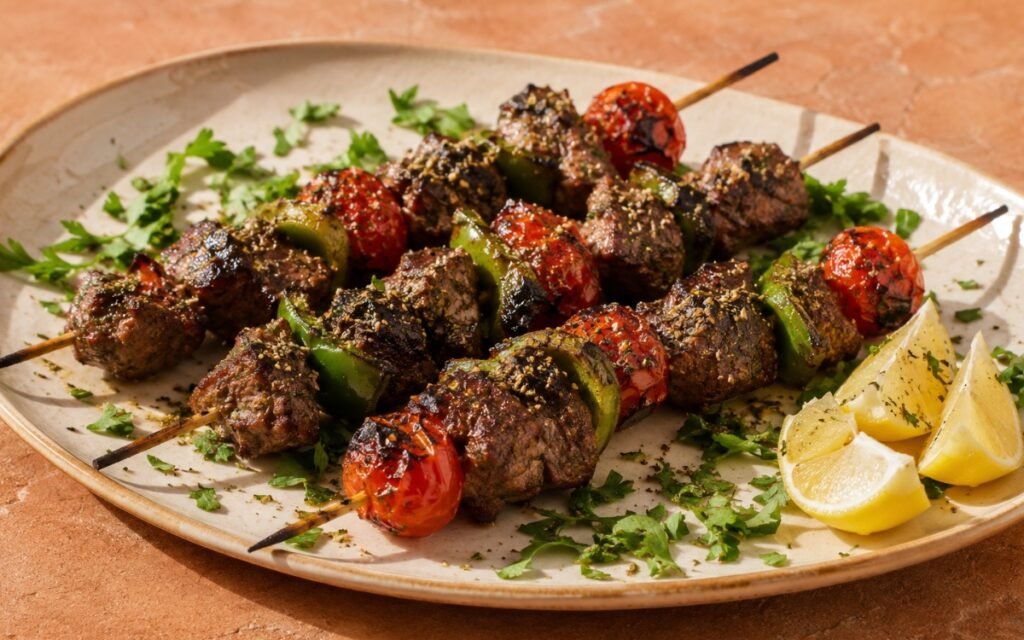
Grilled Lamb Kebabs with Charred Veggies
Charred lamb shoulder kebabs in a lemon, onion and za’atar marinade, grilled with green peppers and cherry tomatoes.
-
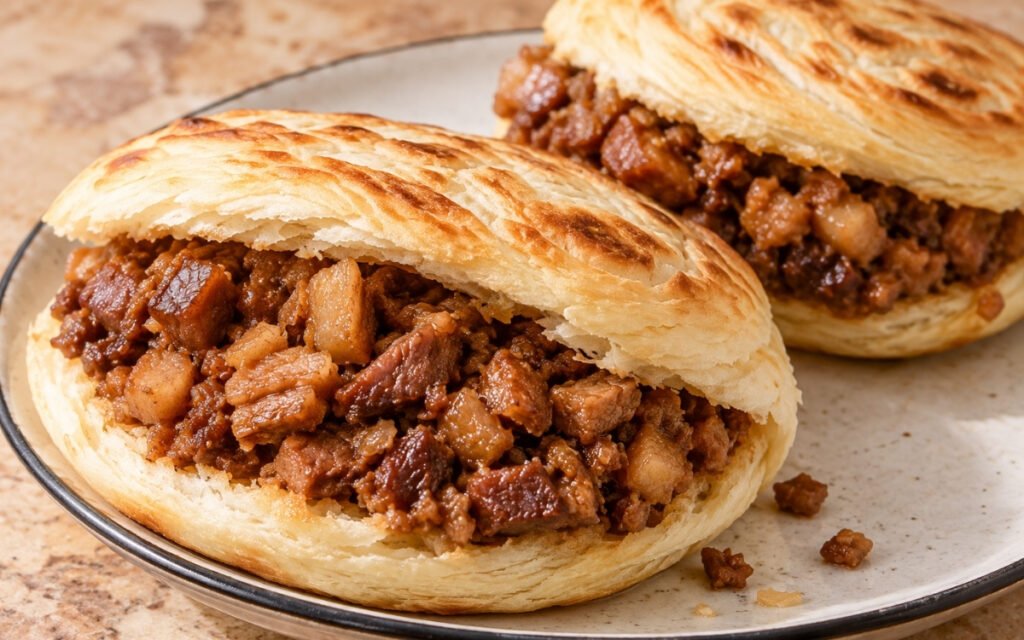
Roujiamo Sandwich
Crisp-outside, soft-inside flatbread packed with finely chopped, richly spiced braised pork belly and reduced braising juices.
-
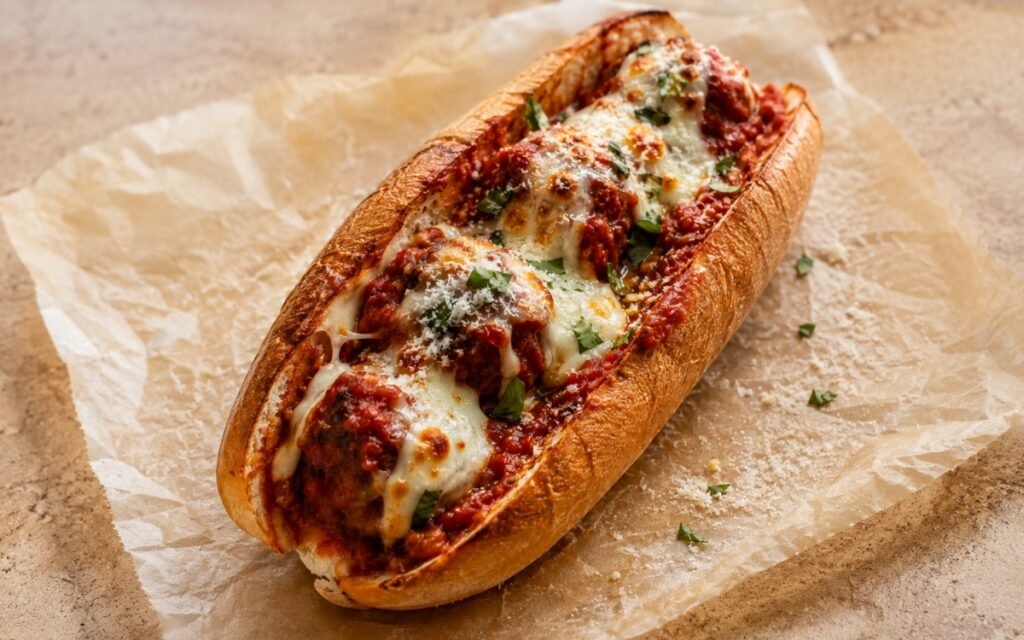
Meatball Sub Sandwich
Tender panade-enriched beef meatballs in thick marinara, melted mozzarella and provolone, and fresh basil, in toasted long French rolls.
-
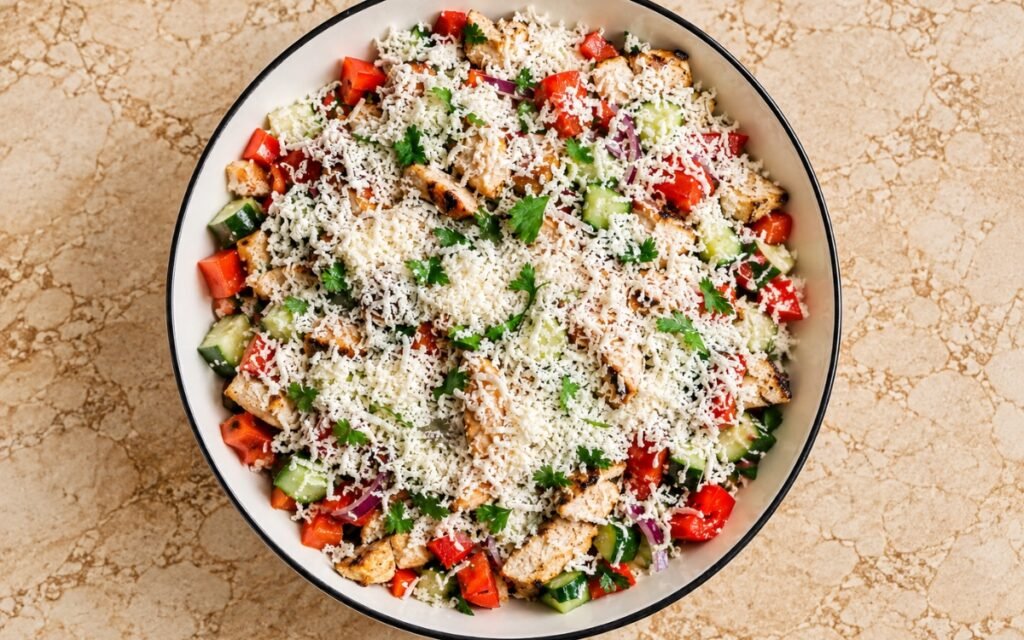
Balkan Shopska Chicken Salad
Diced tomato, cucumber, roasted red pepper, red onion, grilled chicken, and parsley under a heavy blanket of finely grated sirene cheese.
-
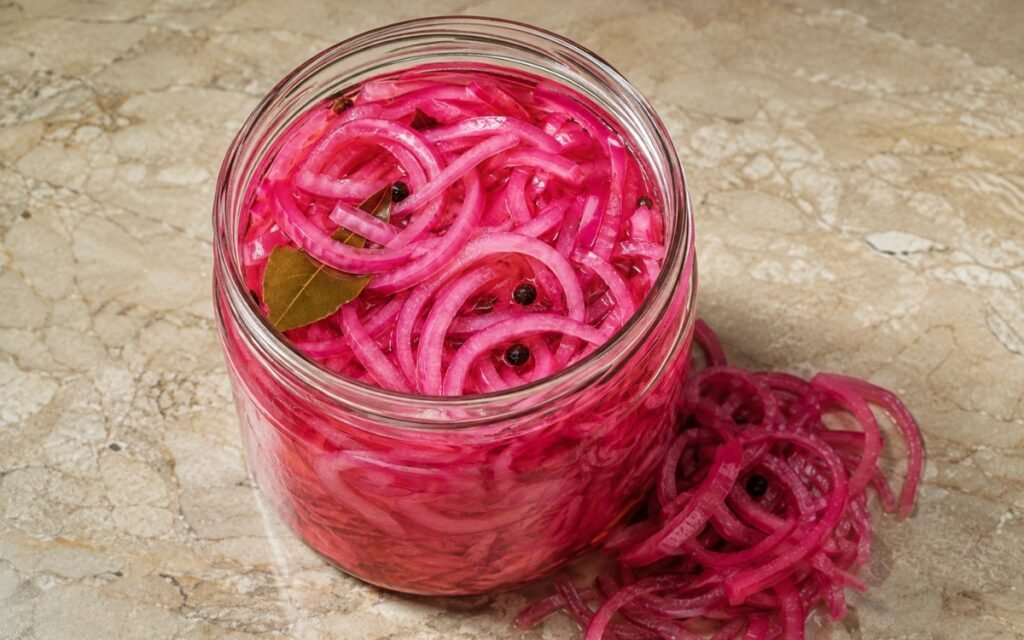
Pickled Red Onion
Thin, evenly sliced red onion pickled in a bright vinegar-lime brine with bay leaf, peppercorns, and coriander seeds.
-
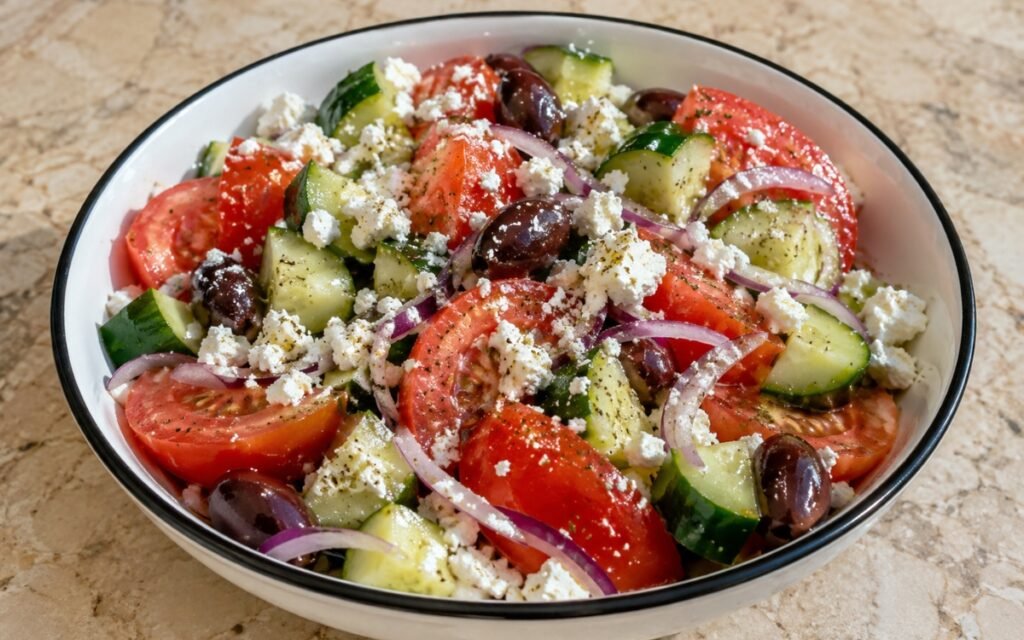
Authentic Greek Village Side Salad
Authentic Greek village salad with cucumbers, tomatoes, olives, and feta in lemon-oregano dressing.