Red Lentil Dal Tadka
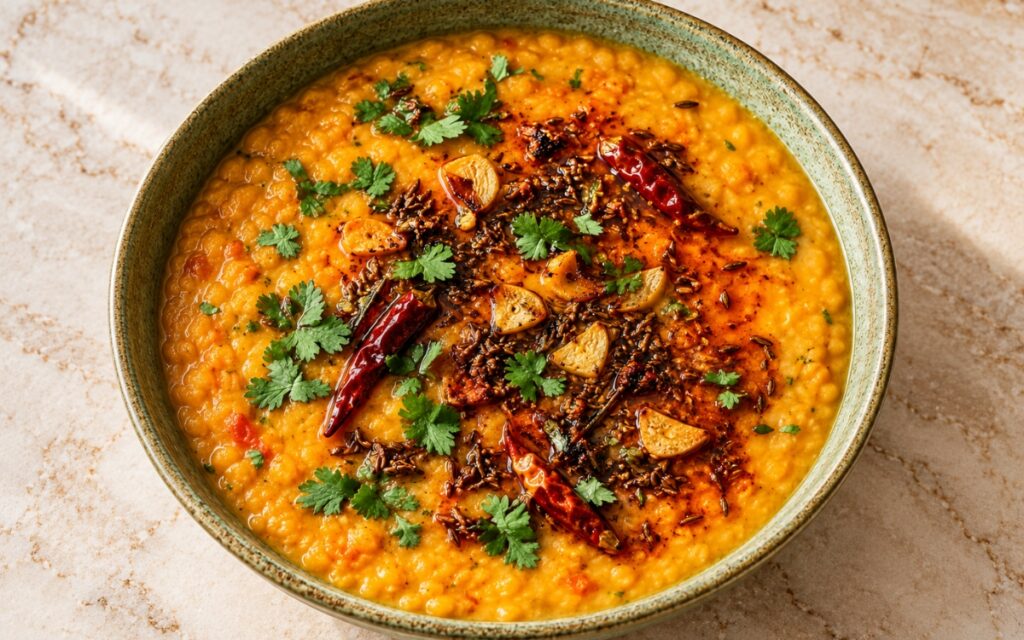
A classical red lentil dal made from split red lentils simmered until creamy and soft, then finished with a hot ghee tadka of cumin seeds, sliced garlic, dried red chilies, and spices poured over the top. The finished dal is smooth but not completely pureed, with a rich orange-yellow color and strong contrast from the darker sizzling tempering.
- Prep Time : 10 min
- Total Time : 45 min
- Servings : 4
Ingredients
For the Dal
- 300 g red lentils (masoor dal), rinsed very well
- 1 tbsp ghee or neutral oil
- 1 small onion, finely chopped
- 2 medium tomatoes, finely chopped, or 180 g canned crushed tomatoes
- 1 tbsp ginger, finely grated
- 3 garlic cloves, minced
- 1 green chili, finely chopped
- 1 tsp cumin seeds
- ½ tsp turmeric
- 1 tsp ground coriander
- ½ tsp Kashmiri chili powder
- 1.1–1.2 L water, plus more as needed
- 1 to 1¼ tsp salt, or to taste
For the Tadka
- 3 tbsp ghee
- 1½ tsp cumin seeds
- 5–6 garlic cloves, thinly sliced
- 2–3 dried red chilies
- ¼ tsp red chili flakes, optional
- ¼ tsp Kashmiri chili powder
- Small pinch asafoetida (hing), optional
- 6–8 curry leaves, optional but very good if available
To Finish
- 1–2 tbsp chopped cilantro
- ½ tsp garam masala, optional
- 1–2 tsp lemon juice, optional, added at the end only
- Hot water as needed for final consistency
Directions
- Rinse the Lentils
Rinse the red lentils in several changes of cold water until the water runs mostly clear. Red lentils release a lot of starch, so this step matters — proper rinsing keeps the finished dal creamy rather than gluey. - Build the Base
Heat 1 tablespoon ghee or oil in a medium pot over medium heat. Add the 1 teaspoon cumin seeds and let them sizzle for a few seconds until fragrant, then add the onion and cook for 5–7 minutes until softened and lightly golden. Add the ginger, minced garlic, and green chili, cooking for 30–60 seconds, just until fragrant and the raw smell fades. Add the tomatoes, turmeric, coriander, and Kashmiri chili powder, cooking for 4–6 minutes, stirring often, until the tomatoes soften and the mixture thickens slightly. The masala should look glossy and no longer taste raw before moving on. - Cook the Dal
Add the rinsed lentils and 1.1–1.2 L water, stir well, and bring to a boil. Once boiling, reduce to a gentle simmer, skimming off any foam if needed. Partially cover and cook for 18–25 minutes, stirring occasionally, until the lentils are fully soft and mostly broken down. Add the salt once the lentils are nearly tender, then continue cooking a few minutes more. The dal should be thick but spoonable at this point — loosen with hot water if it’s too thick, or simmer uncovered a few extra minutes if it’s too thin. Lightly whisking or mashing part of the dal with the back of a spoon gives a creamier texture, but stop short of pureeing it completely; it should still feel natural and homemade. - Adjust the Texture
Once the lentils are soft, taste and adjust the salt. Stir in the garam masala now if using, and add the lemon juice, if you want extra brightness, only at the very end, once the pot is off the heat or nearly done. The dal should end up creamy, orange-yellow, and thick enough to hold the tadka on top without it disappearing immediately. - Make the Tadka
Heat the 3 tablespoons ghee in a small pan or tadka ladle over medium heat. Add the cumin seeds and let them crackle, then add the sliced garlic and fry gently until lightly golden, not dark brown. Add the dried red chilies, optional chili flakes, optional curry leaves, and optional hing, then turn the heat low and add the Kashmiri chili powder right at the end for just 2–3 seconds. Keep a close eye on the garlic and chili powder here — either one burning turns the whole tempering bitter instead of nutty and fragrant. - Finish the Dal
Pour the hot tadka over the dal immediately; it should sizzle on contact. Cover the pot for 1 minute to trap the aroma, then uncover and either leave the tadka partly visible on top for serving or swirl it in gently. Top with the chopped cilantro. - Serve
Serve hot. For the classical look, spoon the dal into a bowl and leave the darker ghee tadka clearly visible over the creamy lentils, with a light scatter of cilantro on top.
*Notes :
- Classical red lentil dal stays creamy and soft rather than completely blended smooth like a soup, so stopping short of a full puree — even while mashing part of it for body — keeps the texture in the right range.
- Red lentils thicken considerably as they break down, so starting with the full 1.1–1.2 liters of water and adding more as needed during cooking keeps the dal from turning unworkably thick before the lentils are even fully tender.
- Salt added early toughens the lentils slightly and slows their breakdown, which is why it goes in only once they’re nearly tender rather than at the very start of cooking.
- The tadka is timed to be made only once the dal itself is fully ready, so it can be poured over while still sizzling hot — a tadka made ahead of time and reheated loses much of the aroma that makes it worthwhile in the first place.
Why This Recipe Works
Rinsing the lentils thoroughly before cooking removes excess surface starch that would otherwise make the dal gluey rather than creamy. Building a short tomato-onion masala before the lentils go in gives the dal a savory base to simmer into, rather than relying on the lentils alone for flavor. Cooking the lentils low and slow lets them break down naturally into a creamy consistency without needing to force the texture with a blender. Making the tadka separately, timed to finish right as the dal is ready, means it arrives at the pot still hot enough to sizzle on contact, carrying its aroma straight into the finished dish rather than losing it to cooling.
Ingredient Breakdown
Red lentils (masoor dal)
Break down naturally into a creamy texture over a relatively short simmer, which is part of why this dal cooks faster than whole-lentil versions like dal makhani.
Tomato-onion base
Built before the lentils go in, giving the dal a savory foundation it would otherwise lack from the lentils alone.
Ghee tadka
A separate hot tempering of cumin, garlic, and chilies poured over the finished dal, adding a final layer of aroma and texture that simmering alone can’t produce.
Kashmiri chili powder (in the tadka)
Added only in the last few seconds over low heat, since it burns quickly and turns bitter if it lingers in the hot fat too long.
Lemon juice (optional)
Added only at the very end, off the heat, to preserve its brightness rather than letting it cook down into the dal.
Flavor Structure Explained
This dal follows a layered balance model:
- Mild, creamy centerpiece (slow-simmered red lentils)
- Savory undertone (tomato-onion base)
- Warm background spice (turmeric, coriander, and Kashmiri chili powder in the dal itself)
- Sizzling, aromatic finish (hot ghee tadka with cumin, garlic, and chilies)
- Fresh lift (cilantro and optional lemon juice)
Slow-simmered red lentils serve as this dal’s mild, creamy centerpiece, their texture built through a long, gentle simmer rather than any blending. The tomato-onion base contributes a savory undertone that gives the lentils something to simmer into. Turmeric, coriander, and Kashmiri chili powder, cooked into the dal itself, add a warm background spice that sits underneath everything else. The hot ghee tadka, poured on at the very end, delivers a sizzling, aromatic finish that simmering alone could never produce. A final fresh lift from the cilantro and optional lemon juice brightens the dish right at the point of serving.
Common Mistakes to Avoid
- Skipping the lentil rinse – This leaves excess starch in the dal, making it gluey rather than creamy; always rinse until the water runs mostly clear.
- Adding salt too early – This slows the lentils’ breakdown and can leave them firmer than intended; always wait until they’re nearly tender.
- Browning the garlic too dark in the tadka – This turns the whole tempering bitter; always stop at pale gold.
- Making the tadka too far ahead – This lets it cool and lose its sizzle and aroma before it ever reaches the dal; always time it to finish right as the dal is ready.
Variations
Richer Finish Version
Stir a small knob of butter into the finished dal along with the tadka for a slightly more indulgent, restaurant-style result.
Extra-Spicy Version
Increase the dried red chilies in the tadka or add more chili flakes for a noticeably hotter finished dish.
South Indian-Style Version
Add the curry leaves and a pinch of mustard seeds to the tadka for a tempering closer to a South Indian tadka style.
Thicker, Stew-Like Version
Reduce the water slightly and simmer a bit longer for a thicker, more stew-like consistency rather than a more pourable dal.
Storage & Make-Ahead
Make the dal itself up to 2 days ahead and store it in an airtight container in the refrigerator, adding a fresh tadka just before serving for the best aroma.
Store the finished dal, tadka included, in an airtight container in the refrigerator for up to 4 days, though the tadka’s aroma fades somewhat after the first day.
Reheat gently on the stovetop over low heat, loosening with a splash of hot water, since the dal thickens noticeably as it sits.
Freeze the plain dal without the tadka for up to 3 months, thawing in the refrigerator overnight and adding a fresh tadka after reheating.
Frequently Asked Questions
Can I make the tadka ahead of time?
It’s best made fresh right when the dal is ready, since its aroma and sizzle fade quickly once it cools. If needed, a quick reheat in a dry pan can revive some of that aroma before pouring it over.
Why is my dal gluey instead of creamy?
This usually traces back to insufficient rinsing before cooking, since red lentils carry a lot of surface starch that needs to be rinsed away for a cleaner texture.
Can I blend this dal completely smooth?
You can, but a classical red lentil dal stays a little textured rather than fully pureed, so stopping short of a complete blend keeps it closer to the traditional style.
Why did my tadka turn bitter?
This almost always means the garlic or the Kashmiri chili powder browned too much in the hot ghee. Keeping the garlic pale gold and adding the chili powder only in the last few seconds over low heat prevents this.
What else pairs well with this red lentil dal tadka?
Dal Makhani and Idli Sambar Bowl share a similar lentil-forward approach if you want to build out a vegetarian Indian spread, and Aloo Gobi makes a simple vegetable side for the same meal. For a base, Plain Steamed Basmati Rice is a natural pairing, and Cucumber Raita adds a cooling contrast to the dal’s spice.
Nutrition Facts
( Per Serving )
- Calories
- ~420 kcal
- Protein
- 18 g
- Fat
- 15 g
- Carbs
- 49 g
-

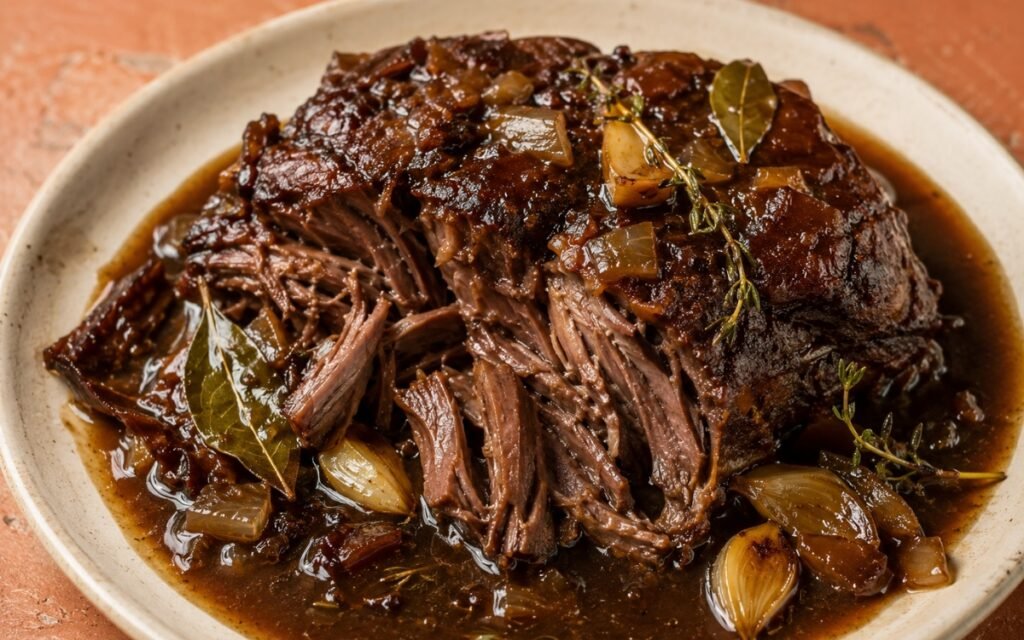
Braised Beef Chuck Steak
Tough chuck steak transforms into fork-tender perfection through slow braising with wine and aromatics.
-
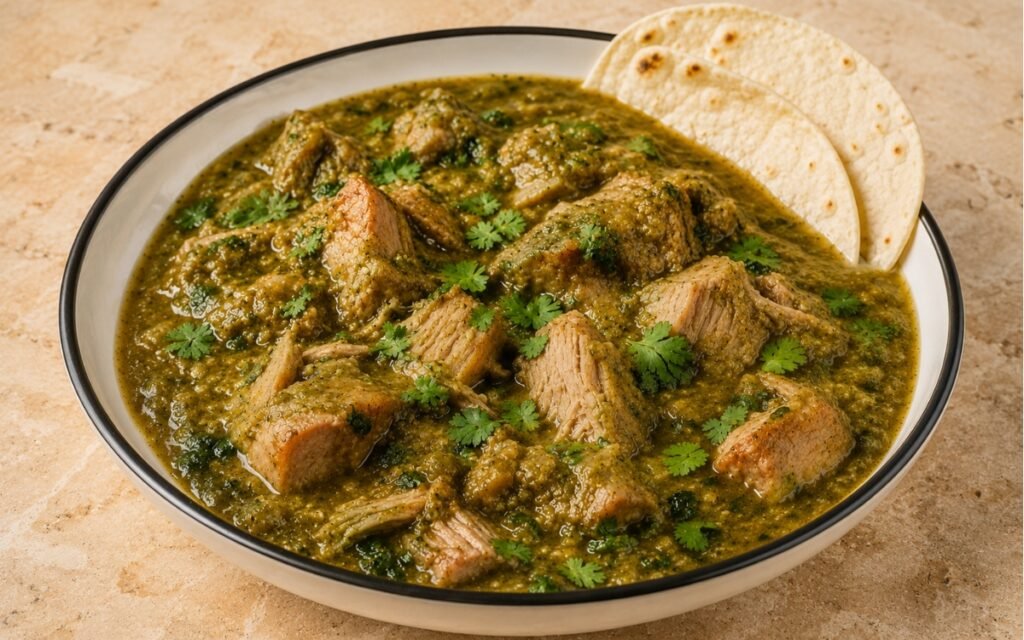
Pork Chile Verde
Browned pork shoulder braised tender in a roasted tomatillo-green chile sauce, thick and glossy with poblano body.
-
Ropa Vieja Cubana
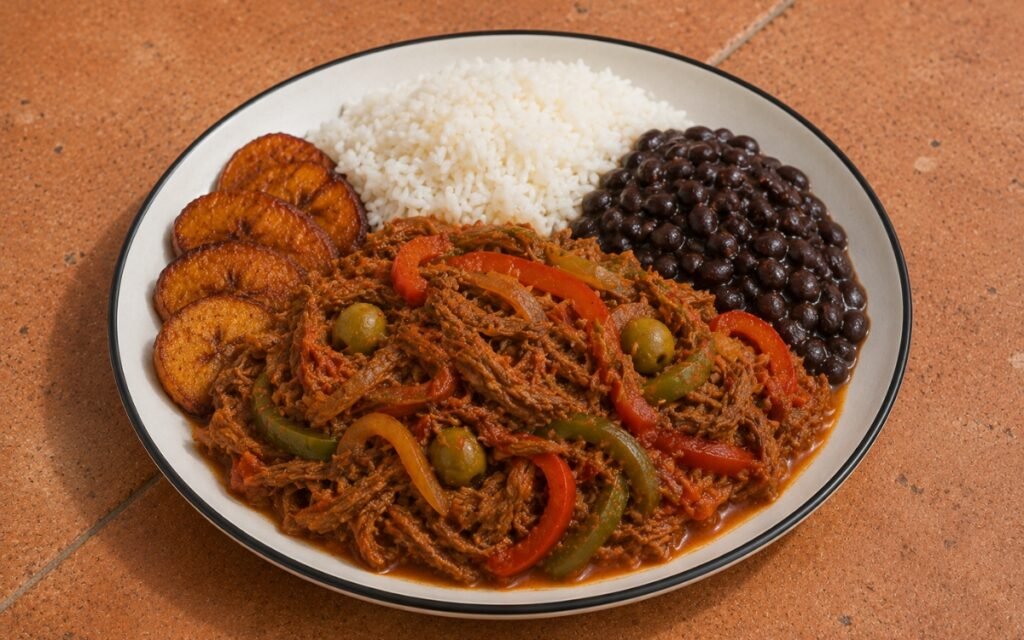
Slow-braised, shredded beef simmered in a rich tomato sauce with peppers, onion, and green olives, served with white rice, black beans, and fried plantains.
-
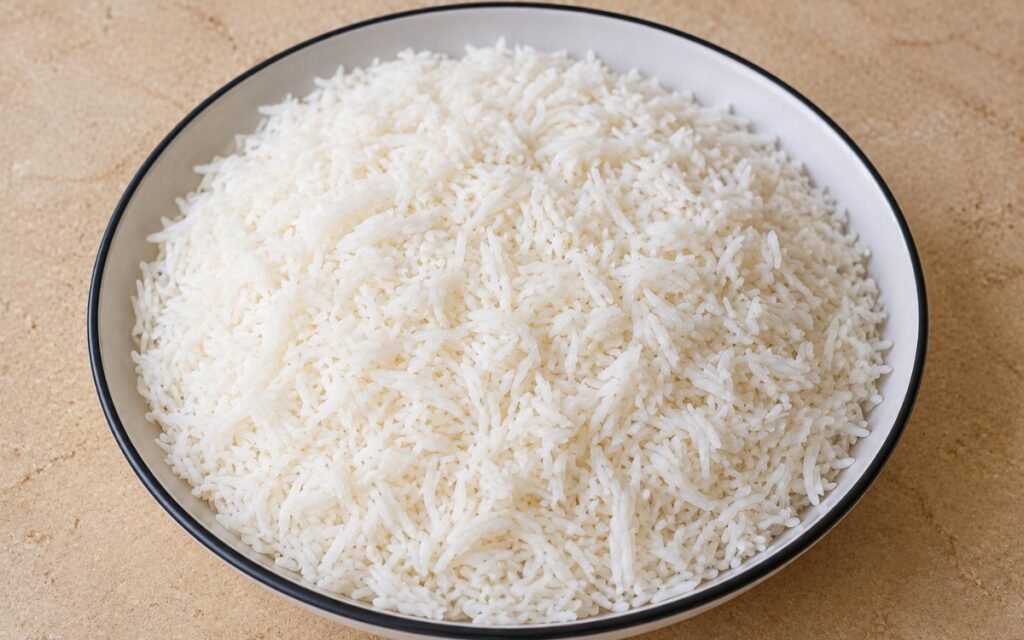
Plain Steamed Basmati Rice
Basmati rinsed thoroughly, boiled uncovered then simmered covered undisturbed for 15 minutes, rested and fluffed. Long, separate grains every time.
-
Dominican Pollo Guisado
A classic Dominican braise of browned bone-in chicken in a glossy reddish-orange tomato sauce with onions and peppers, served over fluffy white rice.
-
Indonesian Beef Rendang
Beef chuck slow-braised in coconut milk and a fried shallot, galangal and lemongrass paste until dark and clinging, served with jasmine rice.