Aloo Gobi
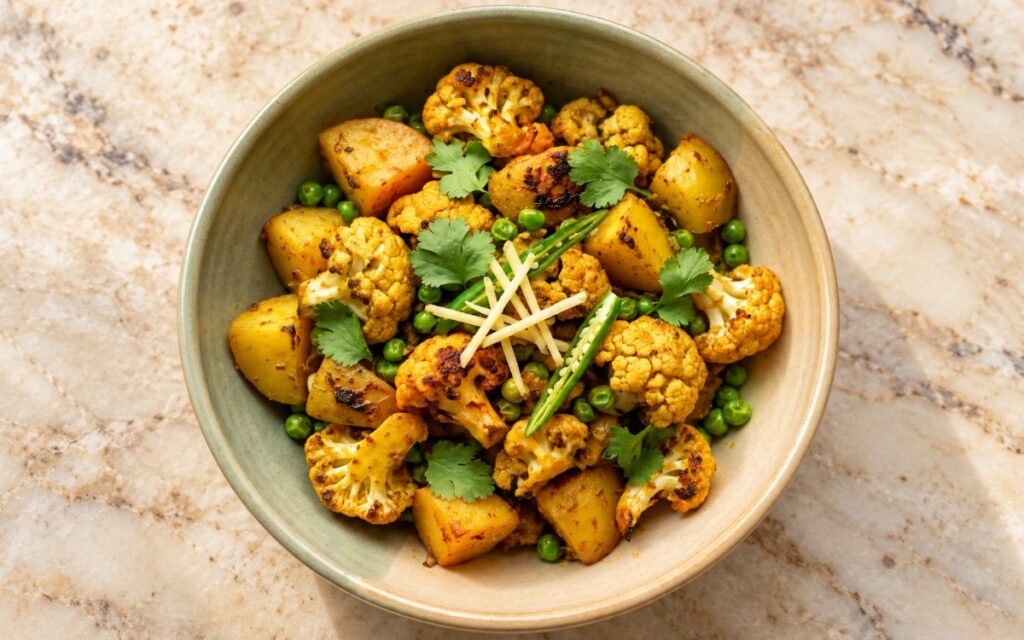
A classic dry-style Indian cauliflower and potato dish with tender golden potato pieces, roasted cauliflower florets, sweet peas, and a warm spice coating. The finished dish stays mostly dry rather than saucy, with visible turmeric color, light chili warmth, browned edges, and distinct pieces rather than a mash.
- Prep Time : 20 min
- Total Time : 55 min
- Servings : 4
Ingredients
Main
- 1 medium cauliflower, about 700–800 g before trimming, cut into medium florets
- 600 g potatoes, peeled and cut into medium chunks (about 2.5–3 cm)
- 120 g green peas, fresh or frozen
- 1 medium onion, finely sliced or finely chopped
- 1–2 green chilies, slit or finely chopped
- 1 tbsp ginger, julienned or finely chopped, plus extra ginger matchsticks for garnish if desired
- 3 tbsp neutral oil or ghee
- 2–3 tbsp water, only if needed during covered steaming
Spices
- 1 tsp turmeric
- 1½ tsp cumin seeds
- 1½ tsp ground coriander
- ½–1 tsp Kashmiri chili powder or mild chili powder
- ½ tsp ground cumin
- ½ tsp garam masala
- 1 to 1¼ tsp salt, or to taste
- ½ tsp amchur (dried mango powder), or 1–2 tsp lemon juice at the end
For the Garnish
- 2–3 tbsp chopped cilantro
- Extra ginger matchsticks, optional
- Extra sliced green chili, optional
Directions
- Prep the Vegetables
Cut the cauliflower into medium florets, not too small — florets cut too fine overcook and crumble before they have a chance to brown. Cut the potatoes into evenly sized chunks, around 2.5–3 cm, keeping them medium rather than tiny so they stay intact through both frying and steaming. If using frozen peas, keep them aside to add near the end so they stay bright rather than wrinkling. - Par-cook the Potatoes
Heat 2 tablespoons oil or ghee in a wide skillet, sauté pan, or shallow Dutch oven over medium heat. Add the potato chunks and cook for 6–8 minutes, turning occasionally, until they develop light golden patches on the outside while staying undercooked in the center, then remove them to a plate. This head start matters because cauliflower cooks faster than potatoes; going in raw at the same time risks the cauliflower turning too soft before the potatoes are tender. - Brown the Cauliflower
In the same pan, add the remaining tablespoon of oil if needed. Add the cauliflower florets and cook over medium to medium-high heat for 5–7 minutes, turning occasionally, until they pick up light brown charred spots in places; they don’t need to be fully tender yet. Remove to the same plate as the potatoes. Avoid crowding the pan too heavily, browning the cauliflower in two smaller batches if needed — crowding causes steaming instead of browning. - Build the Spice Base
Lower the heat to medium-low. Add the cumin seeds and let them sizzle for a few seconds until fragrant, then add the onion and cook for 5–7 minutes until softened and lightly golden. Add the green chili and ginger and cook for 30–60 seconds, just until fragrant. Add the turmeric, ground coriander, chili powder, ground cumin, and salt, stirring for only 10–15 seconds. If the pan looks dry, add 1–2 tablespoons water to stop the spices from burning and help them coat the onions evenly — this is a light masala coating, not a sauce. - Combine and Steam Gently
Return the potatoes and cauliflower to the pan, tossing carefully so the vegetables are coated in the spices. Cover with a lid and cook over low heat for 10–15 minutes, stirring gently every few minutes, adding only a tablespoon of water at a time if needed. The goal here is helping the potatoes finish cooking and the cauliflower soften without turning the dish wet. Add the peas during the last 3–4 minutes. The vegetables are ready when the potatoes are fully tender when pierced with a knife, the cauliflower is tender but still holding its shape, the pan is mostly dry, and everything shows visible browned edges and spice color. - Dry Out and Finish
Uncover the pan and raise the heat slightly to medium for 2–4 minutes if needed, tossing gently, to evaporate any residual moisture and intensify the dry-style finish. Add the garam masala and amchur, tossing very gently, then turn off the heat and fold in the chopped cilantro. If skipping the amchur, add the lemon juice instead at the very end, once the heat is off. - Serve
Serve hot, plated as a dry, chunky vegetable bowl with clearly defined cauliflower florets, golden potato pieces, bright peas, and visible browned edges, finished with a light cilantro garnish and optional ginger matchsticks and sliced green chili on top.
*Notes :
- Keeping this dish dry rather than saucy is the whole point of aloo gobi’s style, so water goes in only in small spoonfuls when needed to help steaming or prevent scorching, never as a base liquid the way it would in a curry.
- Browning both the potatoes and the cauliflower before the covered cooking stage adds a flavor the dish doesn’t develop the same way if everything just steams together from raw — those browned edges carry through to the finished texture and taste.
- Cauliflower breaks apart easily once it’s tender, so stirring gently and only when necessary through the later stages keeps the florets intact rather than turning the dish into more of a mash.
- A wide, heavy pan gives better evaporation and browning than a narrow pot, which traps steam and works against the dry-style finish this dish depends on.
Why This Recipe Works
Par-cooking the potatoes before the cauliflower ever goes into the pan accounts for their different cooking speeds, so both vegetables reach tenderness around the same point instead of one overcooking while the other catches up. Browning each vegetable separately before the covered steaming stage builds a layer of flavor that steaming alone wouldn’t produce. The brief covered steam that follows finishes cooking everything through without adding liquid, keeping the dish in its intended dry style. Uncovering the pan at the end to evaporate any remaining moisture is what locks in that dry finish, and folding in the garam masala and amchur only after the heat is off preserves their aroma rather than cooking it away.
Ingredient Breakdown
Potatoes, par-cooked first
Given a head start in the pan to account for their longer cooking time relative to the cauliflower.
Cauliflower, browned separately
Picks up char and color before the covered steaming stage, adding flavor that a fully steamed version wouldn’t develop.
Turmeric and ground coriander
Build the dish’s base color and warmth, cooked briefly into the onions before the vegetables go back in.
Peas, added near the end
Kept bright and intact by joining the pan only in the last few minutes of cooking.
Amchur or lemon juice
Added only after the heat is off, contributing a final tang that stays bright rather than cooking down into the vegetables.
Flavor Structure Explained
This dish follows a layered balance model:
- Tender, golden centerpiece (par-cooked potatoes)
- Charred, textured counterpart (browned cauliflower florets)
- Warm spice coating (turmeric, coriander, and cumin)
- Sweet, bright accent (green peas added near the end)
- Final tangy lift (amchur or lemon juice)
Par-cooked potatoes serve as this dish’s tender, golden centerpiece, given an early head start in the pan to account for their longer cooking time. Browned cauliflower florets provide a charred, textured counterpart, picking up color separately before the two vegetables are combined. Turmeric, coriander, and cumin build a warm spice coating that clings to both vegetables rather than pooling as a sauce. Green peas, added only in the last few minutes, contribute a sweet, bright accent that stays intact rather than dulling into the rest of the dish. A final tangy lift from amchur or lemon juice, stirred in once the heat is off, brightens the whole dry-style dish right at the point of serving.
Common Mistakes to Avoid
- Cooking the potatoes and cauliflower together from raw – This lets the cauliflower overcook before the potatoes catch up; always par-cook the potatoes first.
- Crowding the pan while browning – This causes the vegetables to steam instead of browning; always work in batches if the pan is getting full.
- Adding too much water during the covered stage – This turns the dish saucy instead of dry; always add only small amounts, a tablespoon at a time.
- Adding the peas too early – This leaves them dull and mushy by the time the dish is done; always add them in the last 3–4 minutes.
Variations
Extra-Spicy Version
Increase the Kashmiri chili powder or add a pinch of hot chili powder alongside it for a noticeably spicier finished dish.
Ginger-Forward Version
Double the ginger and finish with extra matchsticks on top for a more pronounced ginger flavor throughout.
No-Peas Version
Omit the peas entirely for a simpler two-vegetable version, which is also closer to some traditional preparations of this dish.
Air Fryer Version
Toss the potato and cauliflower pieces in a little oil and roast them separately in an air fryer before combining with the spiced onion base, for a crisper finished texture.
Storage & Make-Ahead
Store leftover aloo gobi in an airtight container in the refrigerator for up to 4 days, keeping in mind that the texture firms up slightly as it cools.
Reheat in a skillet over medium heat, uncovered, so residual steam doesn’t soften the dish back toward wet rather than dry.
Avoid microwaving if possible, since the trapped steam in a covered microwave reheat works against the dry-style texture this dish is built around.
Freeze for up to 2 months, though the potatoes and cauliflower will soften somewhat more than fresh once thawed and reheated.
Frequently Asked Questions
Why did my aloo gobi turn out wet instead of dry?
This usually comes from adding too much water during the covered steaming stage, or skipping the uncovered finishing step that evaporates residual moisture. Both matter for keeping the dish in its intended dry style.
Can I skip par-cooking the potatoes separately?
It’s not required, but skipping it risks the cauliflower overcooking before the potatoes catch up, since the two vegetables cook at different speeds.
Why is my cauliflower mushy instead of holding its shape?
This usually means it was stirred too often or too vigorously once it softened. Gentle, infrequent stirring keeps the florets intact.
Can I use amchur and lemon juice together?
It’s not necessary, since both serve the same tangy purpose, but a very small amount of both won’t hurt the dish if that’s what’s on hand.
What else pairs well with this aloo gobi?
Saag Paneer and Chana Masala share a similar spiced, vegetable-forward approach if you want to build out a vegetarian Indian spread, and Gobi Manchurian offers a very different, Indo-Chinese take on cauliflower for contrast. For bread, Homemade Garlic Butter Naan rounds out the meal, and Red Lentil Dal Tadka makes a simple, complementary lentil side.
Nutrition Facts
( Per Serving )
- Calories
- ~300 kcal
- Protein
- 8 g
- Fat
- 10 g
- Carbs
- 42 g
-

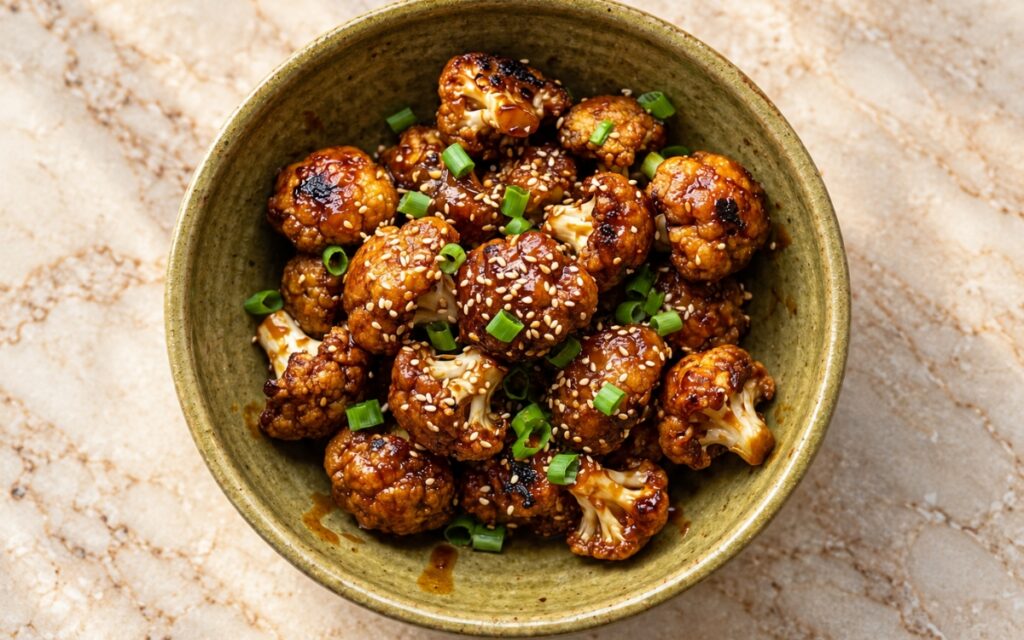
Gobi Manchurian
Crisp battered cauliflower florets tossed in a glossy, dark soy-chilli sauce with charred spring onions, onion and green bell pepper.
-
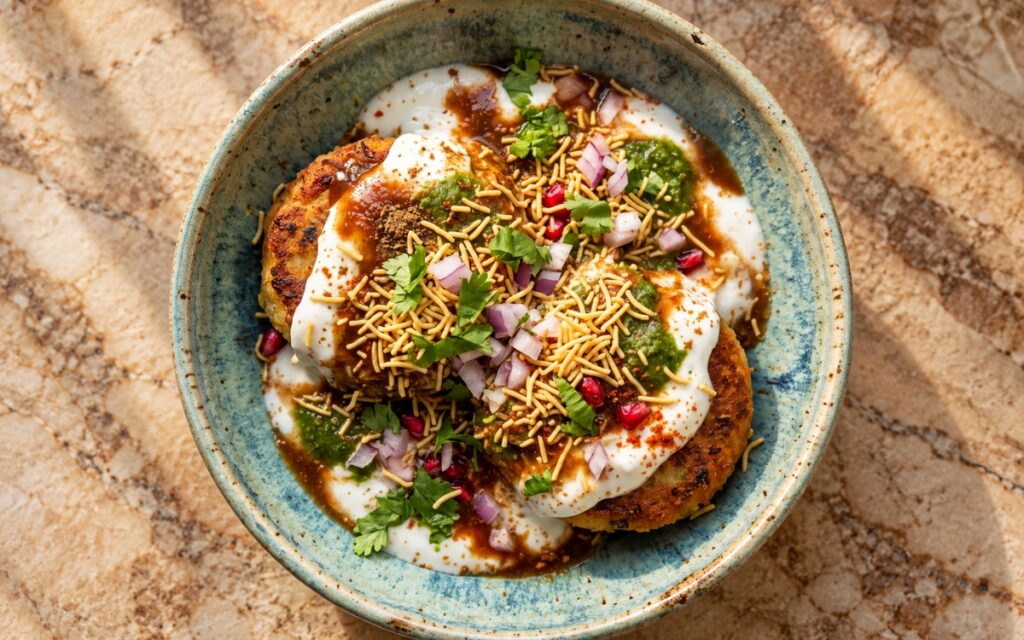
Aloo Tikki Chaat
Crisp, shallow-fried spiced potato tikkis topped with yogurt, tamarind chutney, green chutney, sev, red onion, cilantro and tangy chaat spices.
-
Malai Kofta
Soft potato-paneer koftas in a smooth, cashew-cream tomato gravy with warm spices.

-
Pav Bhaji
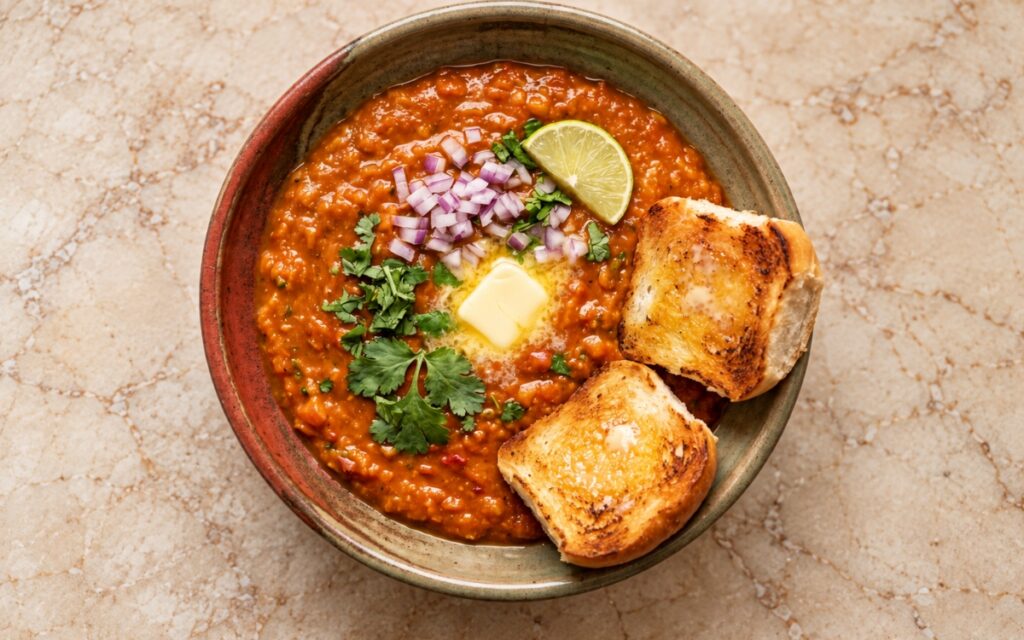
A buttery Mumbai-style mashed vegetable bhaji with tomato, capsicum and pav bhaji masala, served with toasted pav, onion, cilantro and lime.
-
Jalapeño Poppers
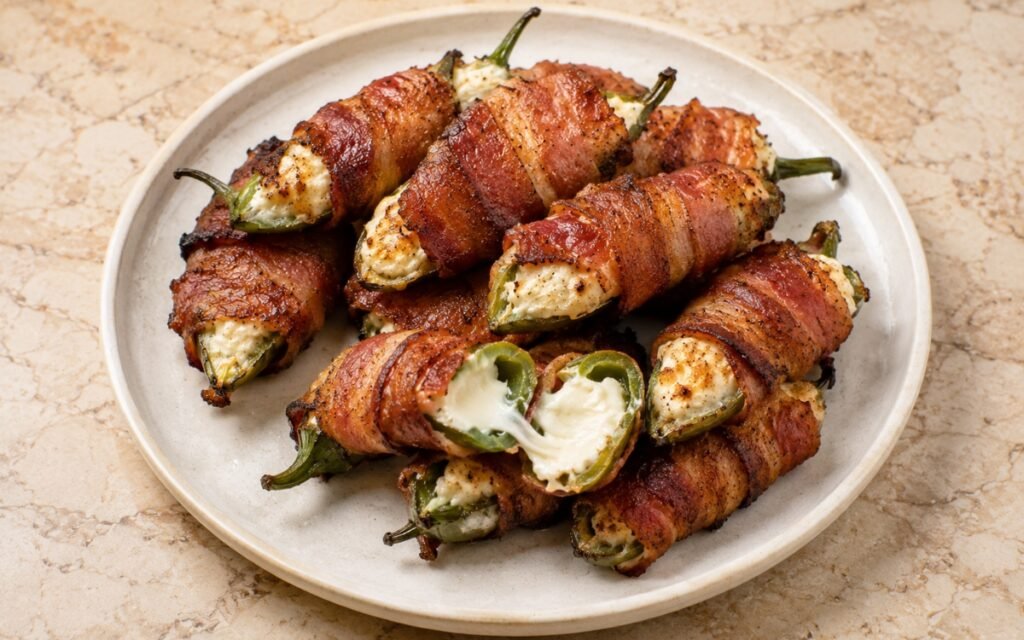
Halved jalapeños filled with creamy sriracha-spiked cheddar-cream cheese, wrapped in bacon and baked until crisp, hot, and molten.
-
Refried Beans
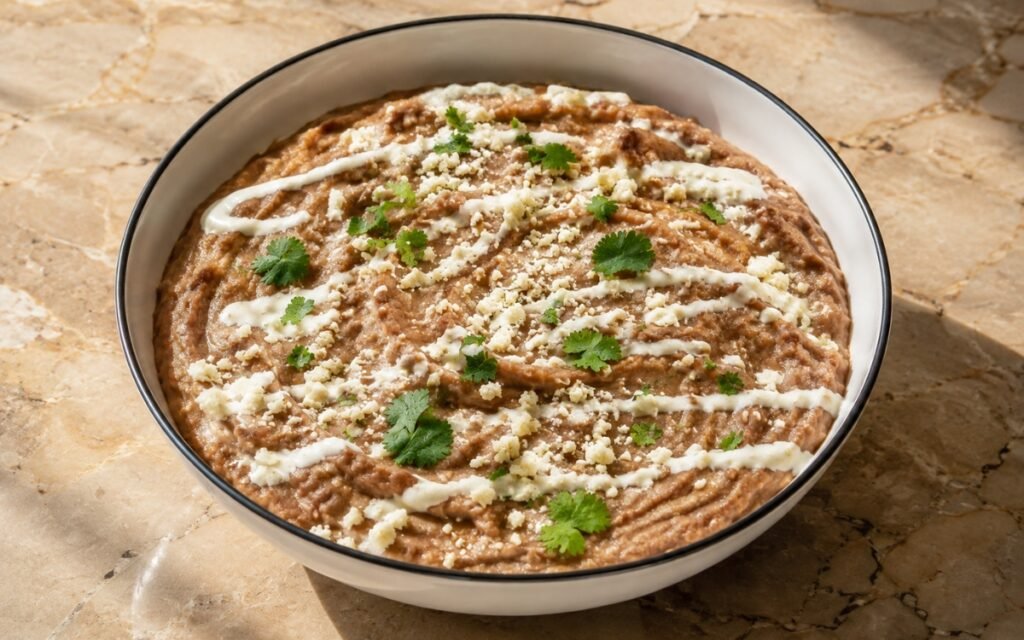
Creamy pinto beans simmered slowly, mashed and fried in lard with onion and garlic until glossy and spreadable.