
Patty Melt
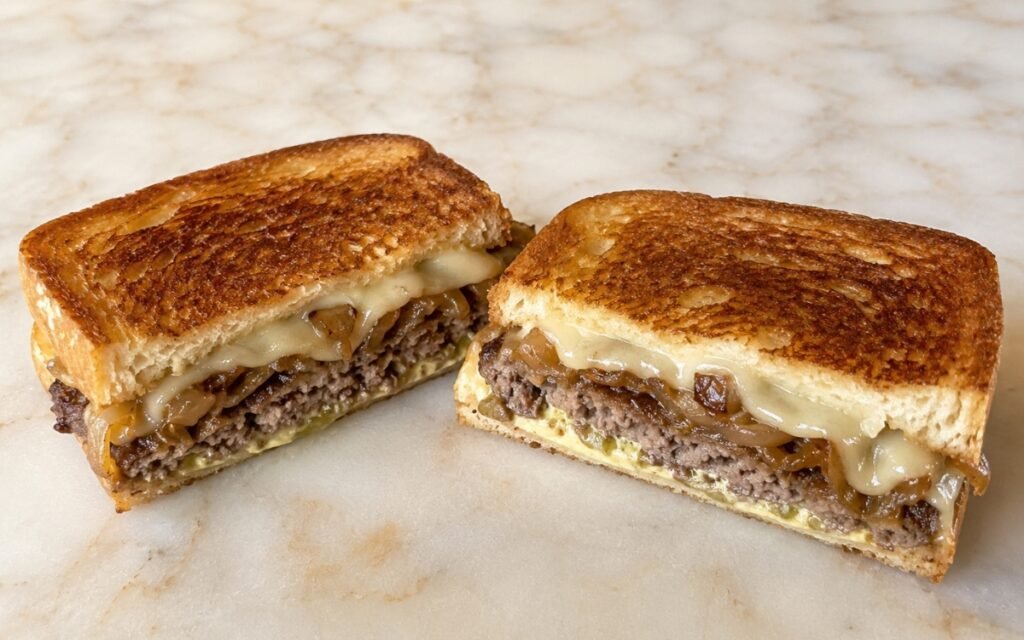
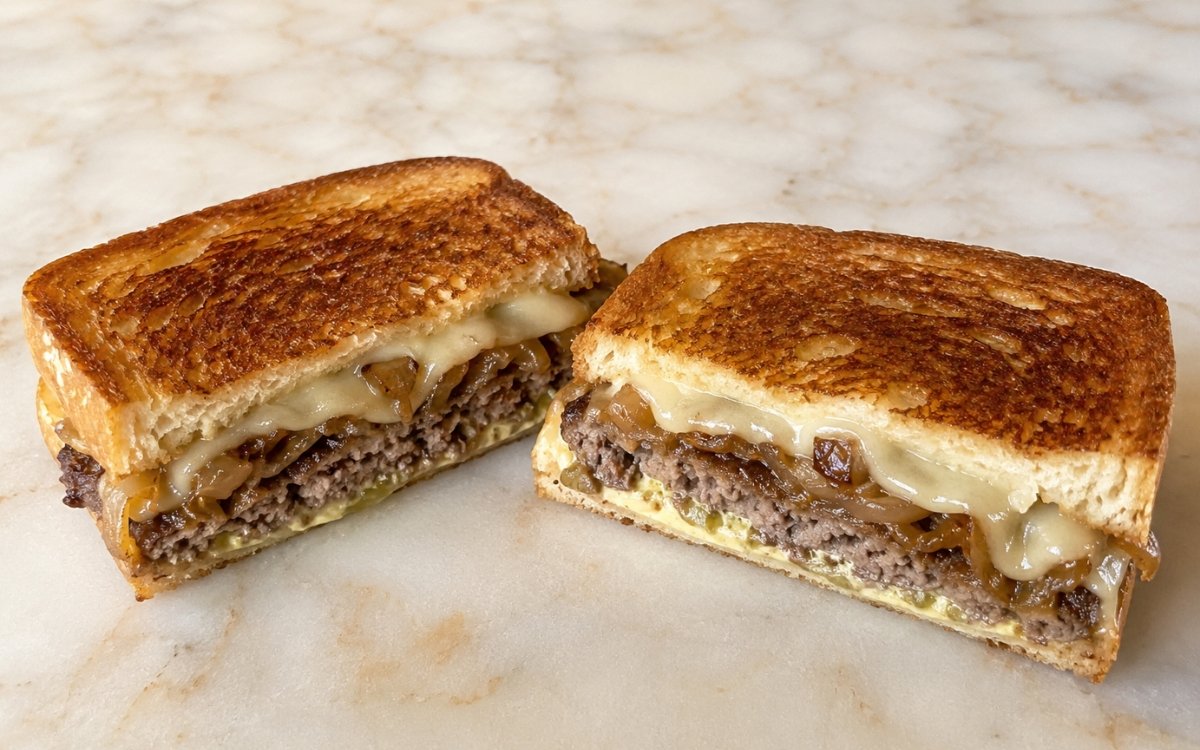
A classic patty melt made with deeply griddled brioche toast bread, a thin seared beef patty, jammy caramelized onions, melted Swiss cheese, and a tangy mayo-ketchup-mustard pickle sauce spread on both sides of the bread. Caramelizing the onions properly, over 25–35 minutes rather than rushing them, is the technique this whole sandwich depends on for its defining sweetness — onions cooked too quickly at higher heat scorch and turn bitter before they’ve had time to soften into the sweet, glossy, jammy texture a proper patty melt needs, the same low-and-patient principle used elsewhere in this collection whenever an allium needs real caramelisation rather than a quick sauté. Shaping the patties thin and slightly wider than the bread matters just as much, since beef shrinks noticeably during cooking and a patty that starts too small ends up looking lost inside the finished sandwich. Keeping the tangy sauce genuinely thick rather than runny protects the brioche’s structure, since this bread’s high sugar and butter content already makes it prone to browning and softening quickly under a wet sauce. The payoff is a sandwich with a clean cross-section showing seared beef, glossy jammy onions, melted Swiss cheese, and deeply golden, crisp brioche.
Prep Time : 20 min
Cook Time : 45 min
Servings : 4
20 min
45 min
4
Ingredients
For the Bread
• 8 slices brioche toast bread, store-bought or homemade — see Brioche Toast Bread
• 60g unsalted butter, softened, for griddling — this one on Amazon
For the Beef Patties
• 400g ground beef, 85/15, divided into 4 x 100g portions
• 6g kosher salt
• 3g freshly cracked black pepper
• Neutral oil, only if needed for the skillet
For the Caramelized Onions
• 400g yellow onions, thinly sliced
• 25g unsalted butter
• 15ml neutral oil
• 3g kosher salt
• 5ml Worcestershire sauce, optional
• 10ml water, only if needed to prevent scorching
For the Swiss Cheese
• 240g Swiss cheese, sliced — use about 60g per sandwich — this one on Amazon
For the Patty Melt Sauce
• 120g mayonnaise
• 40g ketchup
• 20g yellow mustard or Dijon mustard — this one on Amazon
• 40g dill pickles, finely diced
• 15ml pickle juice
• 2g garlic powder
• 1g smoked paprika — this one on Amazon
• Freshly cracked black pepper, to taste
This post may contain affiliate links. As an Amazon Associate I earn from qualifying purchases, at no additional cost to you.
Directions
- Make the Patty Melt Sauce
Mix the mayonnaise, ketchup, mustard, finely diced pickles, pickle juice, garlic powder, smoked paprika, and black pepper until smooth but still slightly textured from the pickles. Taste and adjust with more pickle juice if it needs acidity. The sauce should be creamy, tangy, and thick enough to spread on the bread without running. The diced pickles left slightly textured rather than fully blended in give the sauce a bit of bite alongside its creaminess, which is part of what distinguishes it from a simple, uniform spread. - Caramelize the Onions
Heat the butter and oil in a wide skillet over medium heat. Add the sliced onions and salt. Cook for 25–35 minutes, stirring often, until deeply softened, golden-brown, glossy, and jammy. If the onions start sticking or browning too fast before they soften, add 10ml water and scrape the pan. Add Worcestershire sauce at the end if using. Do not rush this over high heat. Burnt onions are bitter trash. Proper patty melt onions should be sweet, soft, and browned, not blackened and dry. The combination of butter and oil matters here — oil raises the effective cooking temperature just enough that the butter doesn’t burn during this extended cook, while the butter still contributes richer flavour and colour than oil alone would. - Shape the Patties
Divide the beef into 4 portions of 100g each. Shape into thin patties slightly larger than the bread slices because they will shrink during cooking. Season both sides with kosher salt and black pepper right before cooking. Do not make thick burger patties here. Patty melts need thin patties so the sandwich griddles evenly and the cheese melts before the bread burns. Sizing the raw patty deliberately larger than the bread accounts directly for the shrinkage that happens as the beef renders fat and contracts during searing — a patty cut exactly to the bread’s size at the start ends up visibly undersized by the time it’s cooked. - Sear the Patties
Heat a cast-iron skillet or griddle over medium-high heat until very hot. Add a tiny amount of neutral oil only if needed. Sear the patties for 2–3 minutes on the first side until deeply browned. Flip and cook another 1–2 minutes until cooked through but still juicy. Transfer to a plate. Do not leave the patties sitting in their juices too long, or the bread will get soggy later. A hot pan and a thin patty together produce real browning quickly, which is what this sandwich needs given how little time the patty actually has before it’s assembled into bread that also needs to stay dry. - Prepare the Bread
Spread patty melt sauce on the inside of all 8 slices of brioche toast bread. Layer Swiss cheese on 4 slices, then add one beef patty, a generous amount of caramelized onions, and more Swiss cheese. Close with the remaining bread slices, sauce-side down. Cheese on both sides helps glue the sandwich together and gives a stronger cheese pull. Placing cheese directly against both the bottom and top of the filling means the melting cheese binds the whole stack together from both directions once griddled, rather than relying on the sauce alone to hold everything in place. - Griddle the Patty Melts
Spread softened butter on the outside of each sandwich. Heat a clean skillet or griddle over medium-low to medium heat. Cook the sandwiches for 3–5 minutes on the first side, pressing gently with a spatula, until the bread is deeply golden and crisp. Flip carefully and cook another 3–5 minutes, until the second side is golden and the Swiss cheese is fully melted. Do not use high heat. Brioche browns fast because of its sugar and butter. If the outside gets dark before the cheese melts, lower the heat and cover the pan for 1–2 minutes. Brioche’s own sugar and butter content means it caramelises and browns considerably faster than a leaner bread would at the same heat — the moderate temperature specified here is calibrated specifically around that faster browning, giving the cheese and onions enough time to fully heat through without the bread darkening past golden. - Rest and Slice
Transfer the patty melts to a cutting board and rest for 1–2 minutes. Cut each sandwich in half. The short rest keeps the molten cheese and onions from flooding out immediately while still leaving a visible pull. Cheese and onions straight off the griddle are at their most fluid; the brief rest lets everything firm up just enough that the first cut doesn’t send filling spilling out, while it’s still hot and the cheese still pulls cleanly. - Serve
Serve immediately while the bread is crisp, the cheese is melted, the onions are jammy, and the beef is still hot. A patty melt gets worse fast once steam starts softening the bread. The hot filling continues releasing steam even after leaving the pan, and that steam works directly against the crisp crust the griddling stage just built, so serving without delay preserves it.
*Notes :
- The extended caramelisation time for the onions is worth protecting from any temptation to rush, since it’s the single step most responsible for this sandwich’s specific character. Onions cooked over higher heat for a shorter time will soften and pick up some colour, but they won’t develop the same deep, sweet, jammy quality that a genuine 25–35 minute low-and-slow cook produces — that distinction between “cooked onions” and “properly caramelised onions” is a meaningful part of what separates a good patty melt from a mediocre one.
- Sizing the raw beef patties larger than the bread is a small adjustment that accounts for a predictable, physical reality of cooking ground beef: as it sears, rendered fat cooks off and the patty’s muscle fibres contract, both of which shrink its overall diameter. Cutting the patty to match the bread’s size before cooking guarantees a visibly undersized, lost-looking patty by the time the sandwich is assembled — starting larger compensates for that shrinkage in advance.
- Keeping the patty melt sauce genuinely thick, rather than accepting a looser, more pourable consistency, matters specifically because of brioche’s structure. This enriched bread is inherently softer and more prone to absorbing moisture than a leaner, sturdier loaf, which means it has less built-in tolerance for a wet sauce spread directly against it. A thick sauce sits on the surface rather than soaking in immediately, buying the sandwich more time before the bread begins to break down.
- The moderate griddling heat specified for this sandwich exists because of a genuine timing tension specific to brioche’s composition. Its sugar and butter content mean it browns considerably faster than a plainer bread would at the same temperature, but the sandwich’s substantial filling — beef, onions, and cheese on both sides — still needs real time to come fully up to hot, melted temperature. Medium-low to medium heat is the setting that lets both of those processes land in the same window.
Why This Recipe Works
This recipe works because the onions are given real, patient time to caramelise into something genuinely sweet and jammy rather than merely softened, and the beef patties are cut deliberately oversized to account for predictable shrinkage during searing.
Cheese layered on both sides of the filling binds the sandwich structurally while contributing a strong pull, and the thick patty melt sauce protects brioche’s softer structure from excess moisture.
Moderate, patient heat during griddling accounts for brioche’s faster browning relative to how long the substantial filling needs to fully heat through, and a brief rest before slicing preserves a clean cross-section without losing the cheese’s characteristic pull.
Ingredient Breakdown
Slow-Caramelized Yellow Onions
The defining component — cooked patiently over 25–35 minutes for genuine sweetness and jamminess, not just softened colour.
Oversized Thin Beef Patties
The protein — cut larger than the bread to account for predictable shrinkage during searing.
Double-Layered Swiss Cheese
The binding technique — cheese against both bread slices holds the sandwich together and provides a strong pull.
Thick Patty Melt Sauce
The spread — kept deliberately thick to protect brioche’s softer structure from excess moisture.
Buttered, Moderately Griddled Brioche
The exterior — cooked at controlled heat to account for brioche’s faster browning relative to the filling’s heating time.
Flavor Structure Explained
This patty melt follows a layered balance model:
- Crisp buttery foundation (griddled brioche)
- Rich savoury centre (seared beef patty)
- Sweet caramelised depth (jammy onions)
- Melted creamy body (Swiss cheese)
- Tangy sharp finish (patty melt sauce)
The griddled brioche provides a crisp, buttery, deeply golden foundation for the whole sandwich. The thin, seared beef patty delivers rich, savoury depth at the centre. Slow-caramelized onions add real sweetness and a jammy, glossy texture that balances the beef’s richness. Melted Swiss cheese, layered on both sides, contributes a mild, creamy binding element throughout. The tangy, pickle-flecked patty melt sauce finishes every bite with sharp acidity that keeps the whole sandwich from feeling heavy.
Common Mistakes to Avoid
- Rushing the Onions Over High Heat – This scorches them before they’ve had time to properly soften and sweeten. Always cook low and slow for the full 25–35 minutes.
- Cutting the Patties the Same Size as the Bread – Beef shrinks during searing, leaving an undersized patty in the finished sandwich. Always shape patties slightly larger than the bread slices.
- Making the Sauce Too Thin – A runny sauce soaks into and softens the brioche quickly. Always keep it thick enough to spread without running.
- Griddling Over High Heat – Brioche’s sugar and butter content make it brown fast, often before the cheese has fully melted. Always use medium-low to medium heat and be patient.
- Slicing Immediately Off the Griddle – Molten cheese and onions spill out messily when cut too soon. Always rest for 1–2 minutes before slicing.
Variations
With Cheddar Instead of Swiss
Substitute sharp cheddar for a more assertive, tangier flavour against the sweet onions.
Mushroom Patty Melt
Add sautéed mushrooms alongside the caramelized onions for an earthier, more savoury filling.
Rye Bread Version
Substitute rye bread for the brioche for a more traditional, tangier base that pairs particularly well with the pickle-forward sauce.
Double-Patty Version
Use two thin 75g patties per sandwich instead of one 100g patty for extra beef and crust surface.
Storage & Make-Ahead
Caramelized onions can be made 3–4 days ahead and refrigerated in a sealed container; rewarm gently before assembling.
The patty melt sauce can be made ahead and refrigerated for up to 1 week. Raw patties can be shaped and refrigerated for a few hours before cooking; sear fresh for the best crust.
Fully assembled, griddled patty melts are not suitable for storage — a griddled sandwich softens noticeably within minutes of leaving the pan, so build and cook only what will be eaten immediately.
Frequently Asked Questions
Why do the onions need to caramelize for so long instead of being cooked quickly?
Onions cooked over higher heat for a shorter time soften and pick up some colour, but they don’t develop the deep, sweet, jammy quality a genuine slow caramelisation produces. That extended, patient cook is what gives patty melt onions their specific character.
Why cut the patties larger than the bread before cooking?
Ground beef shrinks as it sears, both from rendered fat cooking off and the meat’s fibres contracting. A patty cut to match the bread’s size before cooking ends up visibly undersized once cooked, so starting larger compensates for that predictable shrinkage.
Why does the sauce need to stay thick rather than being a bit looser?
Brioche is a softer, more enriched bread with less built-in resistance to moisture than a leaner loaf. A thick sauce sits on the surface rather than soaking straight in, giving the sandwich more time before the bread starts to break down.
Why does the griddle need to stay at moderate heat specifically for this bread?
Brioche’s sugar and butter content make it brown considerably faster than plainer bread at the same temperature, while the substantial filling still needs real time to fully heat through. Moderate heat is what lets both of those processes finish together, rather than forcing burnt bread or a cold centre.
Are there other griddled beef sandwiches worth trying?
Slider Beef Burgers apply a related smash-burger technique at a miniature scale, stacked with bacon and bacon-onion jam instead of caramelized onions and Swiss. For a larger, more classic burger built on the same hard-smash principle, the Double Smash Burger is worth exploring as well.
Nutrition Facts
( per serving )
Calories
~860 kcal
Protein
40 g
Fat
58 g
Carbs
44 g
Calories
~860 kcal
Protein
40 g
Fat
58 g
Carbs
44 g
Related Recipes
Related Recipes

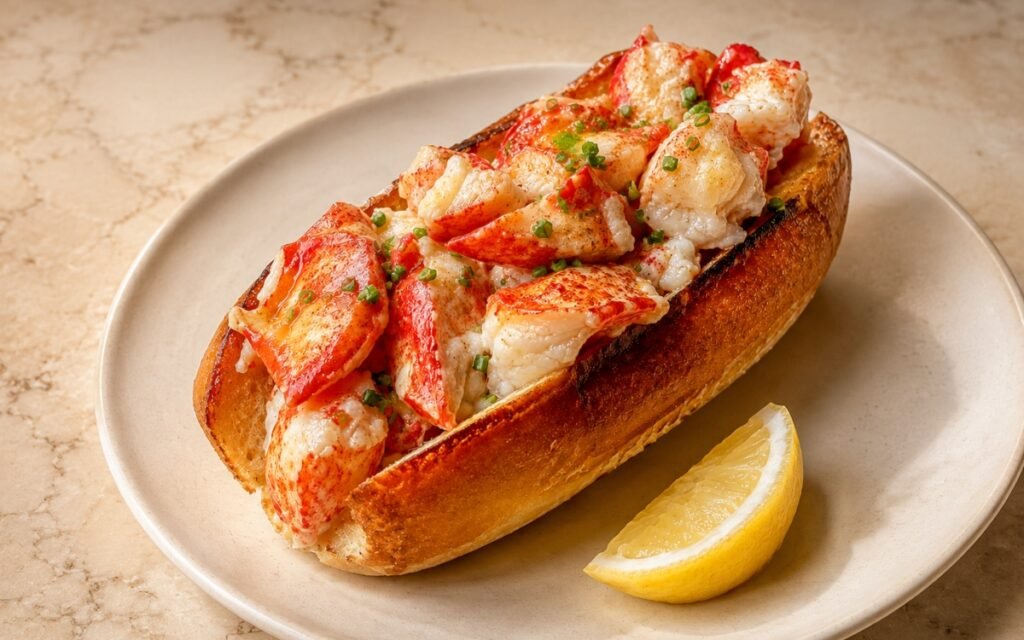
Lobster Roll (Connecticut Style)
Large chunky pieces of warm lobster meat gently coated in melted butter, piled into buttery griddled split-top brioche buns with chives and lemon.
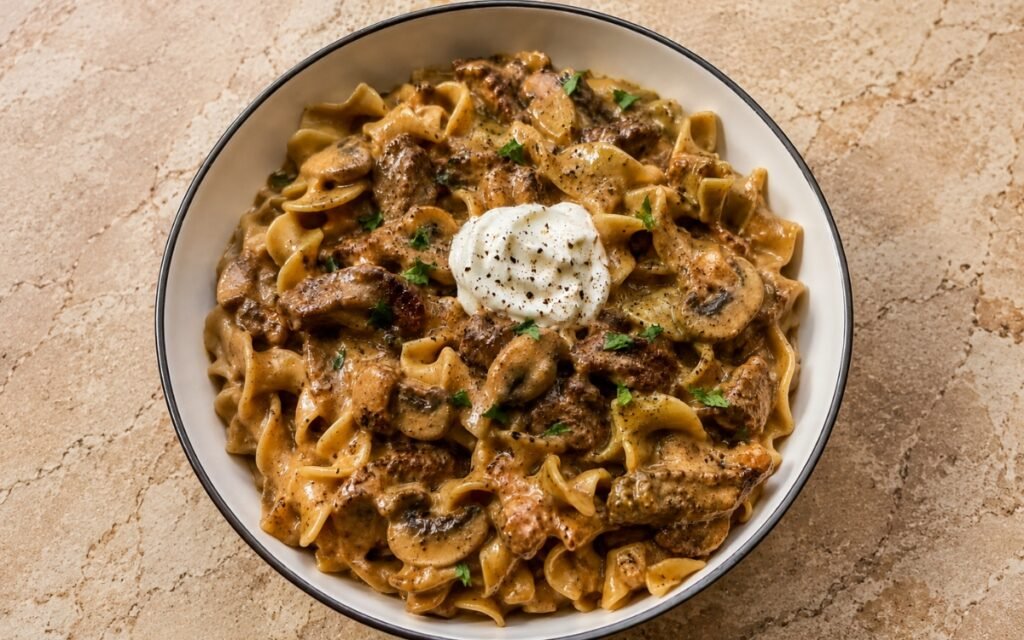
Beef Stroganoff
Tender seared beef, properly browned mushrooms, and a rich, glossy sour cream sauce over buttery egg noodles.
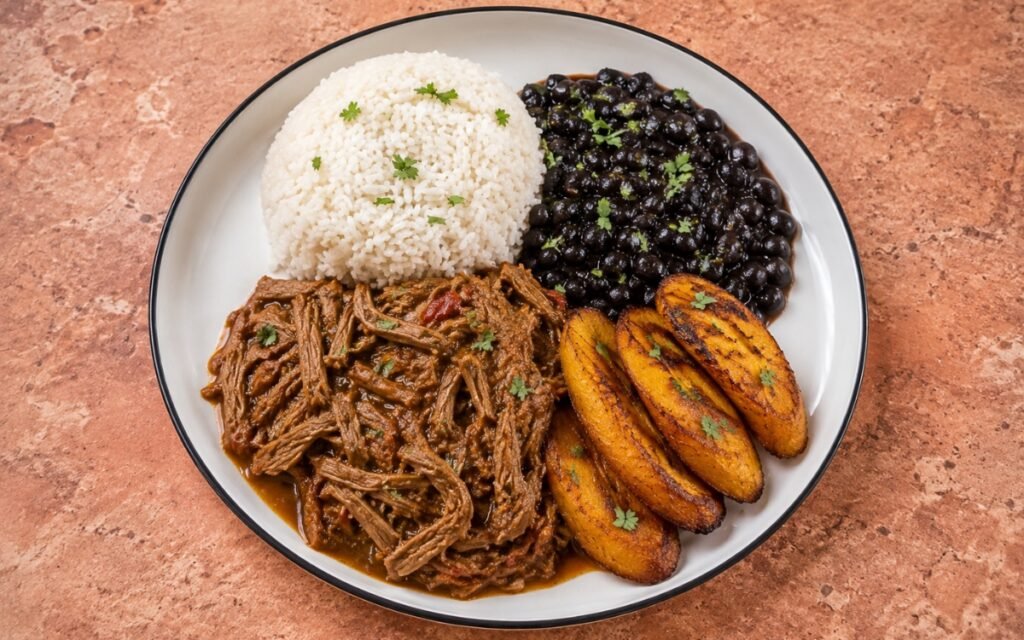
Pabellón Venezolano
Slow-braised, thinly shredded beef, fluffy white rice, glossy black beans, and sweet fried plantains, each kept distinct on the plate.
You might also like
You might also like
Argentine Choripán
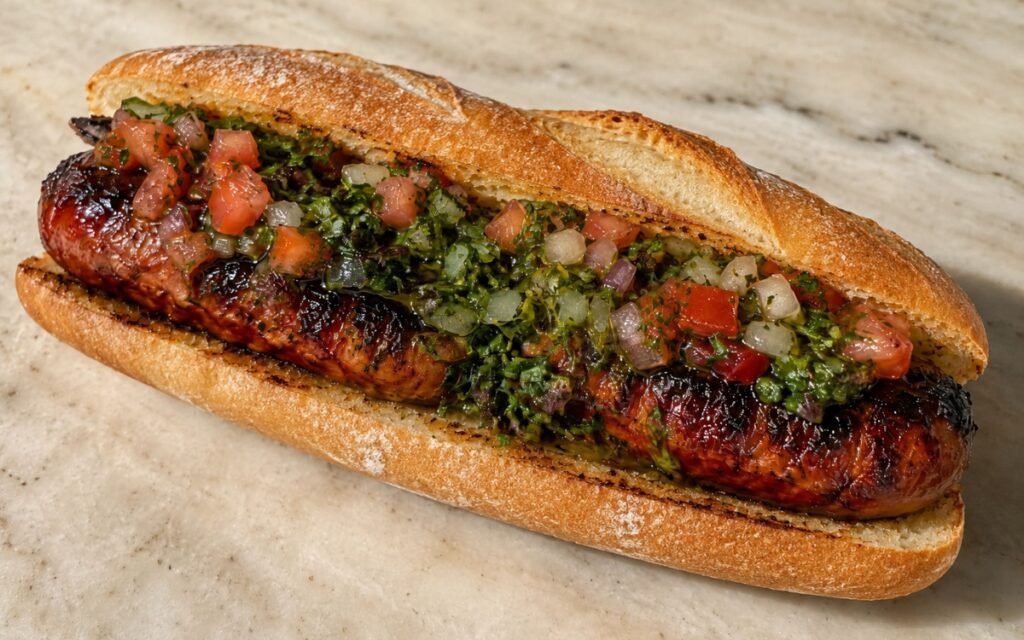
Butterflied Argentinian chorizo seared until deeply charred and glossy, stuffed into a toasted roll with generous chimichurri and tomato-shallot salsa.
Cuban Sandwich (Cubano)
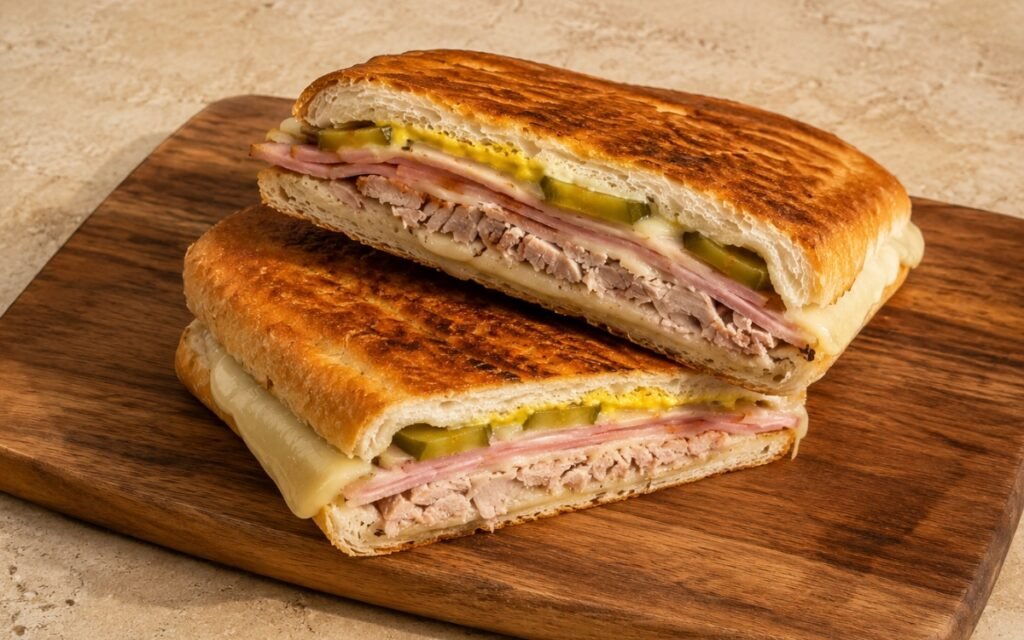
Citrus-marinated pork roasted in its own mojo marinade, layered with ham, Swiss cheese, and pickles on homemade Cuban bread, pressed until crisp and golden.
Cuban Frita Burger
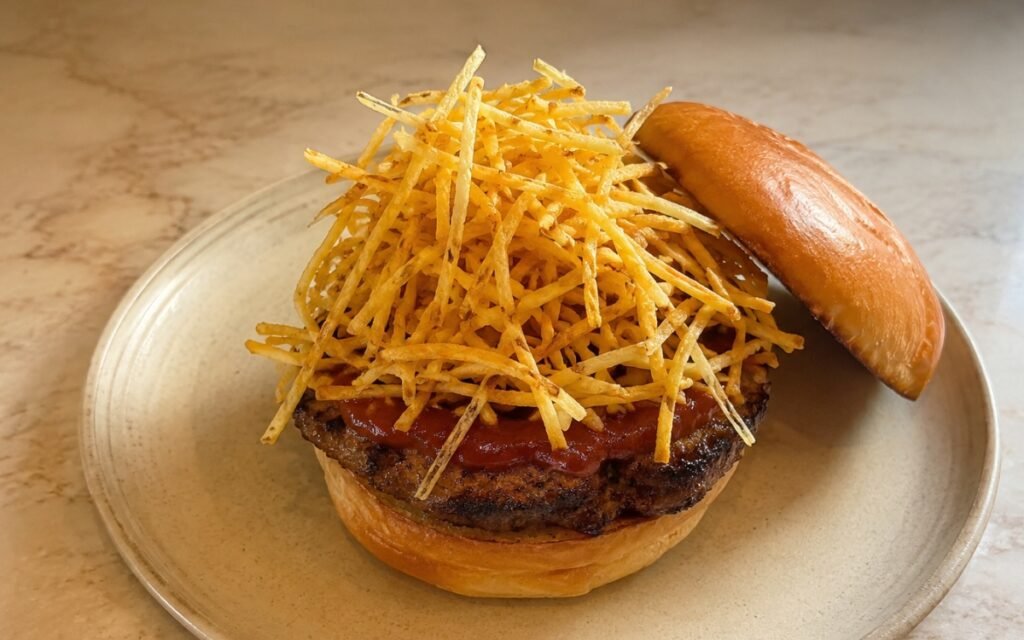
A paprika-red chorizo-beef patty glazed in tangy frita sauce, piled high with crispy thin shoestring potatoes on a toasted brioche bun.
Patty Melt
Ingredients
Method
- Mix the mayonnaise, ketchup, mustard, finely diced pickles, pickle juice, garlic powder, smoked paprika, and black pepper until smooth but still slightly textured from the pickles. Taste and adjust with more pickle juice if it needs acidity. The sauce should be creamy, tangy, and thick enough to spread on the bread without running. The diced pickles left slightly textured rather than fully blended in give the sauce a bit of bite alongside its creaminess, which is part of what distinguishes it from a simple, uniform spread.
- Heat the butter and oil in a wide skillet over medium heat. Add the sliced onions and salt. Cook for 25–35 minutes, stirring often, until deeply softened, golden-brown, glossy, and jammy. If the onions start sticking or browning too fast before they soften, add 10ml water and scrape the pan. Add Worcestershire sauce at the end if using. Do not rush this over high heat. Burnt onions are bitter trash. Proper patty melt onions should be sweet, soft, and browned, not blackened and dry. The combination of butter and oil matters here — oil raises the effective cooking temperature just enough that the butter doesn’t burn during this extended cook, while the butter still contributes richer flavour and colour than oil alone would.
- Divide the beef into 4 portions of 100g each. Shape into thin patties slightly larger than the bread slices because they will shrink during cooking. Season both sides with kosher salt and black pepper right before cooking. Do not make thick burger patties here. Patty melts need thin patties so the sandwich griddles evenly and the cheese melts before the bread burns. Sizing the raw patty deliberately larger than the bread accounts directly for the shrinkage that happens as the beef renders fat and contracts during searing — a patty cut exactly to the bread’s size at the start ends up visibly undersized by the time it’s cooked.
- Heat a cast-iron skillet or griddle over medium-high heat until very hot. Add a tiny amount of neutral oil only if needed. Sear the patties for 2–3 minutes on the first side until deeply browned. Flip and cook another 1–2 minutes until cooked through but still juicy. Transfer to a plate. Do not leave the patties sitting in their juices too long, or the bread will get soggy later. A hot pan and a thin patty together produce real browning quickly, which is what this sandwich needs given how little time the patty actually has before it’s assembled into bread that also needs to stay dry.
- Spread patty melt sauce on the inside of all 8 slices of brioche toast bread. Layer Swiss cheese on 4 slices, then add one beef patty, a generous amount of caramelized onions, and more Swiss cheese. Close with the remaining bread slices, sauce-side down. Cheese on both sides helps glue the sandwich together and gives a stronger cheese pull. Placing cheese directly against both the bottom and top of the filling means the melting cheese binds the whole stack together from both directions once griddled, rather than relying on the sauce alone to hold everything in place.
- Spread softened butter on the outside of each sandwich. Heat a clean skillet or griddle over medium-low to medium heat. Cook the sandwiches for 3–5 minutes on the first side, pressing gently with a spatula, until the bread is deeply golden and crisp. Flip carefully and cook another 3–5 minutes, until the second side is golden and the Swiss cheese is fully melted. Do not use high heat. Brioche browns fast because of its sugar and butter. If the outside gets dark before the cheese melts, lower the heat and cover the pan for 1–2 minutes. Brioche’s own sugar and butter content means it caramelises and browns considerably faster than a leaner bread would at the same heat — the moderate temperature specified here is calibrated specifically around that faster browning, giving the cheese and onions enough time to fully heat through without the bread darkening past golden.
- Transfer the patty melts to a cutting board and rest for 1–2 minutes. Cut each sandwich in half. The short rest keeps the molten cheese and onions from flooding out immediately while still leaving a visible pull. Cheese and onions straight off the griddle are at their most fluid; the brief rest lets everything firm up just enough that the first cut doesn’t send filling spilling out, while it’s still hot and the cheese still pulls cleanly.
- Serve immediately while the bread is crisp, the cheese is melted, the onions are jammy, and the beef is still hot. A patty melt gets worse fast once steam starts softening the bread. The hot filling continues releasing steam even after leaving the pan, and that steam works directly against the crisp crust the griddling stage just built, so serving without delay preserves it.