
Tuna Melt
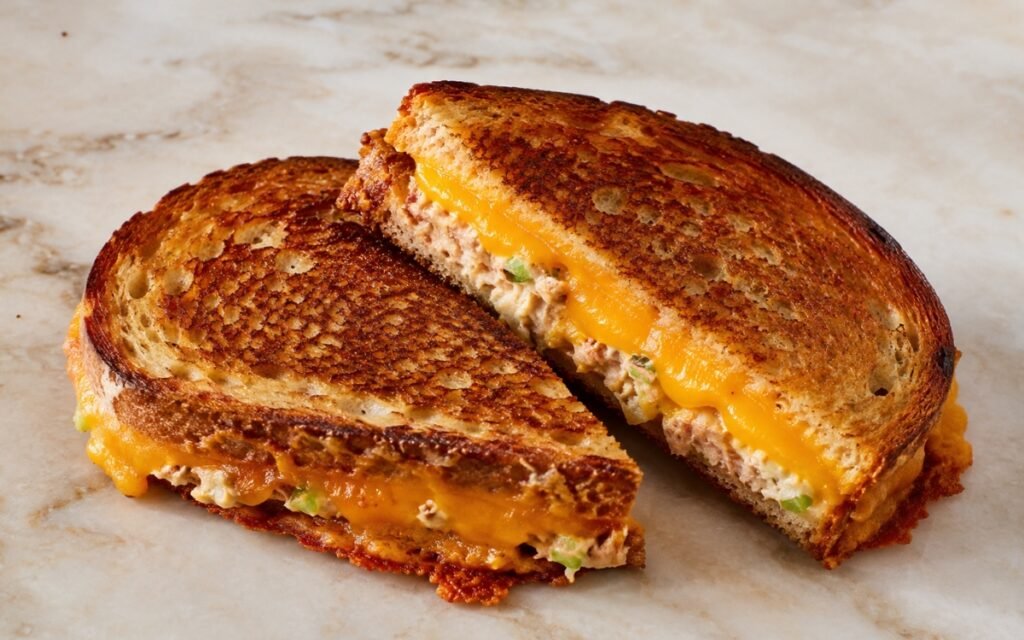
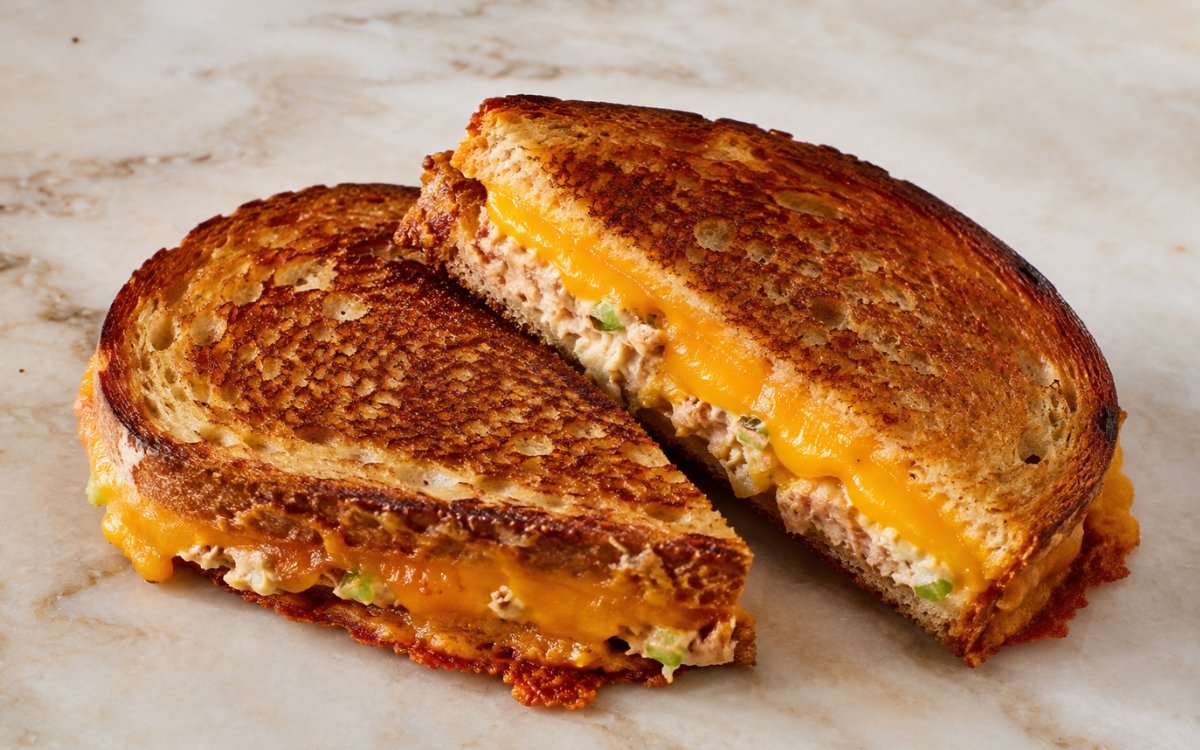
A classic tuna melt made on deeply griddled sourdough bread with creamy tuna salad, melted cheddar, and buttery golden crust, cut diagonally so the cross-section shows the tuna filling, melted cheese pull, and crisp sourdough edges. Draining the tuna aggressively is the technique this entire sandwich depends on — even tuna that looks reasonably dry from the can typically still carries enough residual liquid to soften bread and weaken the cheese melt, the same wet-filling-management principle used elsewhere in this collection whenever a moist filling meets bread that needs to stay crisp. Sandwiching the tuna salad between two layers of cheddar rather than placing it directly against bare bread matters just as much, since that cheese layer both binds the sandwich together and shields the bread from direct contact with the filling. Keeping the griddle heat moderate rather than high protects the sourdough specifically, since this bread browns and can burn before the cheddar has fully melted at higher heat. The payoff is a sandwich with genuine contrast — creamy, bright tuna salad, sharp melted cheddar, and a crisp, buttery sourdough exterior.
Prep Time : 20 min
Cook Time : 20 min
Servings : 4
20 min
20 min
4
Ingredients
For the Sourdough Bread
• 8 slices sourdough bread, medium-thick sliced — use good store-bought sourdough or make your own from Sourdough Bread
For the Tuna Salad
• 4 cans tuna, drained very well, about 450–500g drained weight — this one on Amazon
• 120g mayonnaise
• 60g celery, finely diced
• 50g red onion or white onion, finely diced
• 50g dill pickles, finely diced, or dill relish
• 15g Dijon mustard — this one on Amazon
• 15ml fresh lemon juice
• 10g fresh parsley, finely chopped, optional
• 3g fine sea salt, plus more to taste
• 2g freshly cracked black pepper
• 1g garlic powder, optional
For the Cheese
• 280g sharp cheddar cheese, sliced or shredded — use about 70g per sandwich — this one on Amazon
For Griddling
• 60g unsalted butter, softened — this one on Amazon
• 10ml neutral oil, optional, to help prevent the butter from burning
This post may contain affiliate links. As an Amazon Associate I earn from qualifying purchases, at no additional cost to you.
Directions
- Drain the Tuna
Drain the tuna extremely well, then press out excess liquid with a fork or paper towel. This is non-negotiable. Wet tuna makes a soggy sandwich and weakens the cheese melt. The filling should be creamy, not watery. Canned tuna holds onto packing liquid more stubbornly than it might appear to at a glance — actively pressing it, rather than simply tipping the can and letting gravity do the work, removes considerably more of that residual moisture before it ever meets the mayonnaise. - Make the Tuna Salad
Add the drained tuna to a bowl and flake it into medium pieces. Add the mayonnaise, celery, onion, dill pickles, Dijon mustard, lemon juice, parsley if using, salt, black pepper, and garlic powder if using. Fold until combined but do not mash it into paste. The tuna salad should hold together while still having visible texture. Taste and adjust salt, pepper, lemon, or Dijon. It should taste creamy, bright, lightly sharp, and properly seasoned before it goes into the sandwich. Folding gently rather than mashing preserves distinct flakes of tuna within the creamy base, giving the finished filling real textural interest rather than a uniform paste. - Prepare the Bread and Cheese
Lay out the sourdough slices. Spread a thin layer of softened butter on the outside of each slice. Add cheddar to the inside of 4 slices, then add the tuna salad, then add another layer of cheddar over the tuna. Close with the remaining bread slices, buttered side facing out. Cheese on both sides of the tuna helps bind the sandwich together and gives a better melt. Putting tuna straight against bare bread is asking for a soggy interior. The cheese layers act as a moisture barrier as much as a flavour component — melting around the tuna salad, they help contain any remaining liquid rather than letting it seep directly into the bread during griddling. - Griddle the Sandwiches
Heat a large skillet, griddle, or cast-iron pan over medium-low to medium heat. Add a tiny splash of neutral oil if needed, then place the sandwiches in the pan. Cook for 4–5 minutes on the first side, pressing gently with a spatula, until the bread is deeply golden-brown and crisp. Flip carefully and cook another 4–5 minutes on the second side, until the cheddar is fully melted and pulling slightly at the edges. Do not crank the heat. High heat burns the sourdough before the cheese melts. Medium-low heat is the whole game here. This moderate heat is calibrated to let the cold tuna filling and the cheese come up to temperature and fully melt in roughly the same window the bread needs to develop deep colour — a hotter pan would force a choice between burnt bread and unmelted cheese. - Finish Melting if Needed
If the bread is browned but the cheese is not fully melted, lower the heat and cover the pan for 1–2 minutes. Do not keep blasting the bread. Burnt sourdough with cold cheese is a basic failure. Covering briefly traps residual heat and steam around the sandwich, giving the cheese a gentler, more contained environment to finish melting in without exposing the already-browned bread to any more direct, aggressive heat. - Rest and Slice
Transfer the sandwiches to a cutting board and rest for 1–2 minutes. Cut each sandwich diagonally in half. The short rest keeps the tuna salad from spilling everywhere while still keeping the cheese melted enough to pull. This brief pause lets the melted cheese firm just slightly, enough that the first cut doesn’t send tuna salad and molten cheese spilling out, while everything is still hot and the cheese still pulls cleanly. - Serve
Serve immediately while the sourdough is crisp, the cheddar is hot and melted, and the tuna salad is creamy inside. A tuna melt dies fast once steam softens the bread. Steam continues rising from the hot filling even after the sandwich leaves the pan, and that steam works directly against the crisp crust just built, so serving without delay is what keeps the sourdough’s exterior genuinely crisp.
*Notes :
- Draining the tuna as aggressively as this recipe calls for is worth taking seriously rather than treating as a quick, casual step. Canned tuna retains packing liquid more persistently than it appears to, and even tuna that looks reasonably dry after a simple tip-and-drain still typically carries enough residual moisture to thin out the mayonnaise-based salad and, more consequentially, to soften the sourdough during the multi-minute griddling process. Actively pressing the drained tuna with a fork or paper towel removes meaningfully more of that liquid than passive draining alone.
- Sandwiching the tuna salad between two layers of cheddar rather than placing it against bare bread on either side is a structural decision worth understanding beyond its contribution to flavour and cheese pull. As the sandwich griddles, the cheese melts and forms a barrier around the tuna filling, both helping bind the whole sandwich into a cohesive unit and limiting how much of the filling’s own moisture can migrate directly into the bread.
- The moderate heat specified for griddling addresses a genuine timing tension specific to this sandwich’s composition. Sourdough develops colour and crispness relatively quickly under higher heat, but the cold tuna filling and two layers of cheese both need real time to warm through and fully melt. Medium-low to medium heat is the setting that allows both processes to complete in roughly the same window, rather than forcing a trade-off between a burnt exterior and a filling that’s still cold at the centre.
- Folding the tuna salad gently, rather than mashing it into a smooth paste, protects a textural quality that’s easy to lose without realising it. Distinct flakes of tuna suspended in the creamy mayonnaise base give the finished sandwich genuine textural variety bite to bite — a fully mashed version would still taste similar but would read as flatter and less interesting once it’s inside the hot, melted sandwich.
Why This Recipe Works
This recipe works because the tuna is drained with real thoroughness, protecting both the salad’s texture and the sandwich’s bread from excess moisture. Cheese layered on both sides of the filling binds the sandwich structurally and helps contain any remaining liquid, while moderate, patient heat during griddling lets the cold filling and cheese come fully up to melted temperature in the same window the sourdough develops its deep, crisp crust. A brief rest before slicing protects the clean cross-section without sacrificing the cheese’s characteristic pull.
Ingredient Breakdown
Aggressively Drained Tuna
The critical prep step — pressed dry rather than simply drained, protecting both the salad’s texture and the bread from excess moisture.
Sharp Cheddar Cheese
The specified cheese — chosen for its assertive flavour, strong enough to stand up against the tuna and mayonnaise rather than getting lost.
Double-Layered Cheese
The binding and moisture-barrier technique — cheddar on both sides of the tuna salad helps hold the sandwich together and shields the bread.
Gently Folded Tuna Salad
The texture specification — flaked and folded rather than mashed, preserving distinct tuna pieces within the creamy base.
Buttered, Griddled Sourdough
The exterior — an even butter layer griddled at moderate heat for deep, even browning without burning before the cheese melts.
Flavor Structure Explained
This tuna melt follows a layered balance model:
- Crisp buttery foundation (griddled sourdough)
- Rich melted centre (sharp cheddar)
- Creamy bright filling (tuna salad)
- Sharp tangy accents (Dijon, pickle, lemon)
- Fresh herbal lift (parsley, optional)
The griddled sourdough provides a crisp, buttery, deeply browned foundation for the whole sandwich. Melted sharp cheddar contributes rich, assertive flavour and the characteristic cheese pull. The tuna salad itself defines the sandwich’s creamy centre, brightened by lemon juice and Dijon mustard and given sharp accents from diced pickle and onion. A touch of fresh parsley, if used, adds a clean, herbal note that keeps the rich, creamy centre from feeling heavy against the crisp exterior.
Common Mistakes to Avoid
- Not Draining the Tuna Thoroughly Enough – Residual liquid softens the bread and thins the salad. Always press the tuna dry with a fork or paper towel, not just drain it in the can.
- Mashing the Tuna Salad Into Paste – This loses the distinct texture that makes the filling interesting. Always fold gently to keep visible flakes intact.
- Placing Tuna Directly Against Bare Bread – Without a cheese barrier, the filling’s moisture soaks straight into the sourdough. Always layer cheddar on both sides of the tuna.
- Griddling Over High Heat – Sourdough browns and can burn before the cheddar has fully melted. Always use medium-low to medium heat and be patient.
- Overfilling the Sandwich – Too much tuna salad prevents the cheese from melting cleanly and causes filling to squeeze out during griddling. Always keep the portion moderate.
Variations
With Pepper Jack
Substitute pepper jack for the cheddar for a spicier, creamier melt with a bit of background heat.
Open-Faced Version
Build the sandwich open-faced on a single slice of sourdough, melting the cheese under a broiler instead of griddling, for a lighter presentation.
With Tomato
Add a thin slice of tomato inside the sandwich alongside the tuna salad for extra freshness and acidity.
Whole Wheat Version
Substitute a sturdy whole wheat or multigrain bread for the sourdough for a heartier, nuttier base.
Storage & Make-Ahead
The tuna salad can be made 1–2 days ahead and refrigerated in an airtight container; drain any liquid that collects before assembling sandwiches. Cheese can be pre-sliced or shredded and refrigerated until ready to use.
Fully assembled, griddled tuna melts are not suitable for storage — a griddled sandwich softens noticeably within minutes of leaving the pan, so build and cook only what will be eaten immediately.
Frequently Asked Questions
Why does the tuna need to be drained so aggressively?
Canned tuna holds onto packing liquid more stubbornly than it appears to, and even tuna that looks reasonably dry after a simple drain still typically carries enough moisture to soften the sourdough during griddling and thin out the mayonnaise-based salad. Actively pressing it dry removes considerably more of that residual liquid.
Why layer cheese on both sides of the tuna instead of just once?
Beyond adding more melted cheese and a better pull, cheese on both sides of the filling helps physically contain the tuna salad’s moisture, limiting how much can migrate directly into the bread during the multi-minute griddling time.
Why does the griddle need to stay at moderate heat rather than higher?
The cold tuna filling and two layers of cheese both need real time to warm through and fully melt, while sourdough browns relatively quickly. Moderate heat lets both processes finish in the same window, rather than forcing a trade-off between burnt bread and unmelted cheese.
Why fold the tuna salad gently instead of mashing it smooth?
Folding preserves distinct flakes of tuna within the creamy mayonnaise base, giving the filling genuine textural variety. A fully mashed version would taste similar but read as flatter and less interesting once inside the hot, melted sandwich.
Are there other classic griddled or melted sandwiches worth trying?
Patty Melt and Croque Monsieur are both worth exploring if you enjoy this style of griddled, cheese-bound sandwich — the Patty Melt built around a griddled beef patty and caramelised onion on rye, and Croque Monsieur a French classic with ham and béchamel between griddled or baked bread, both sharing the same emphasis on a crisp, buttery exterior around a rich, melted centre.
Nutrition Facts
( per serving )
Calories
~680 kcal
Protein
38 g
Fat
42 g
Carbs
38 g
Calories
~680 kcal
Protein
38 g
Fat
42 g
Carbs
38 g
Related Recipes
Related Recipes

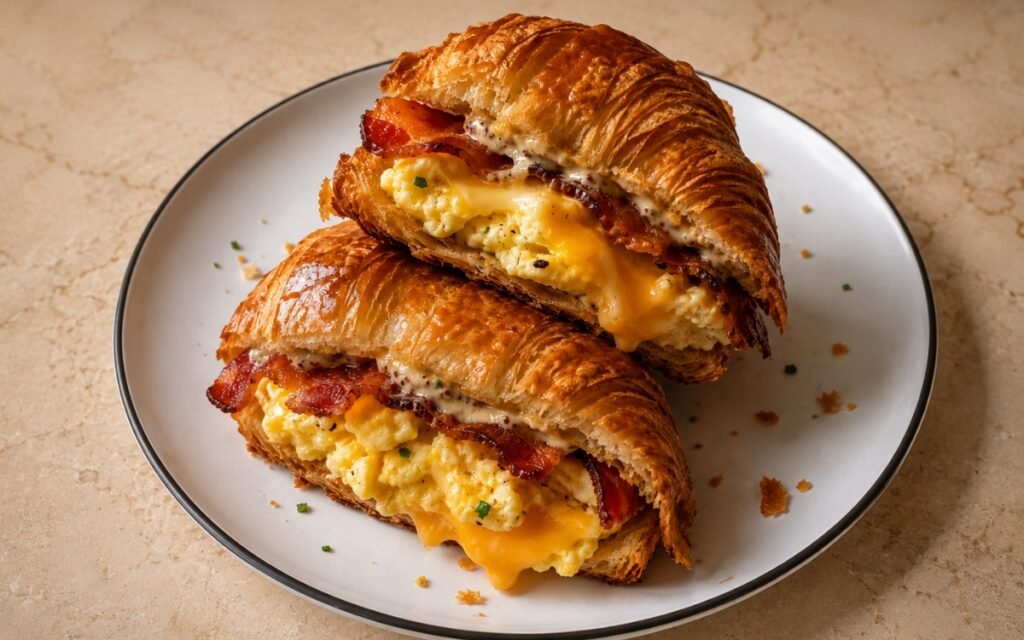
Breakfast Croissant Sandwich
Flaky buttery croissants filled with soft scrambled eggs, melted cheese, crispy bacon, and a thin layer of Dijon mayo.
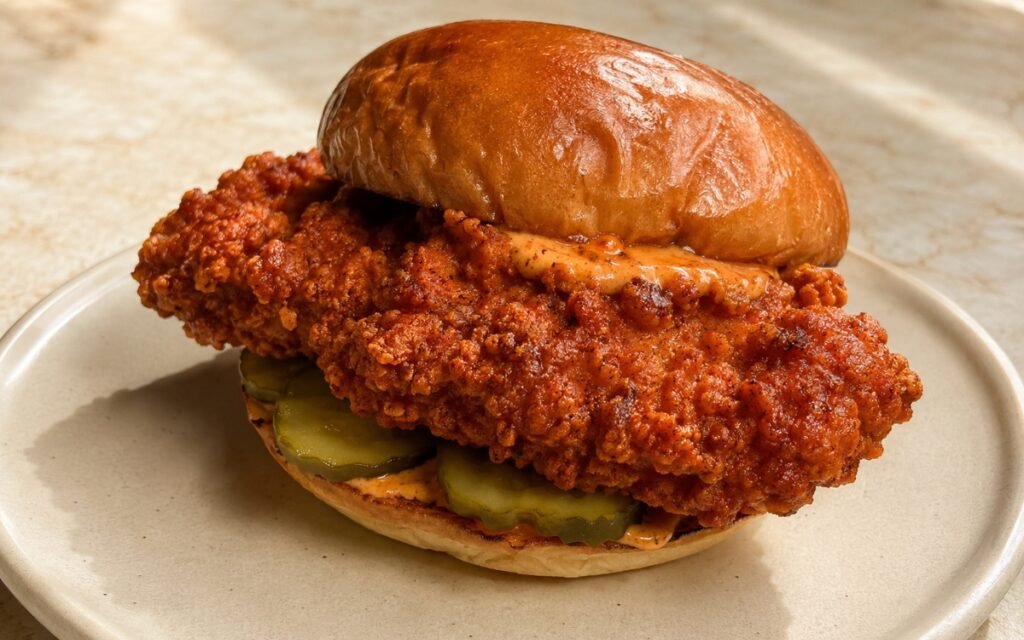
Spicy Fried Chicken Sandwich
Ultra-crispy gochujang-marinated chicken with pickles, melted cheese, and garlicky heat stacked on toasted brioche.
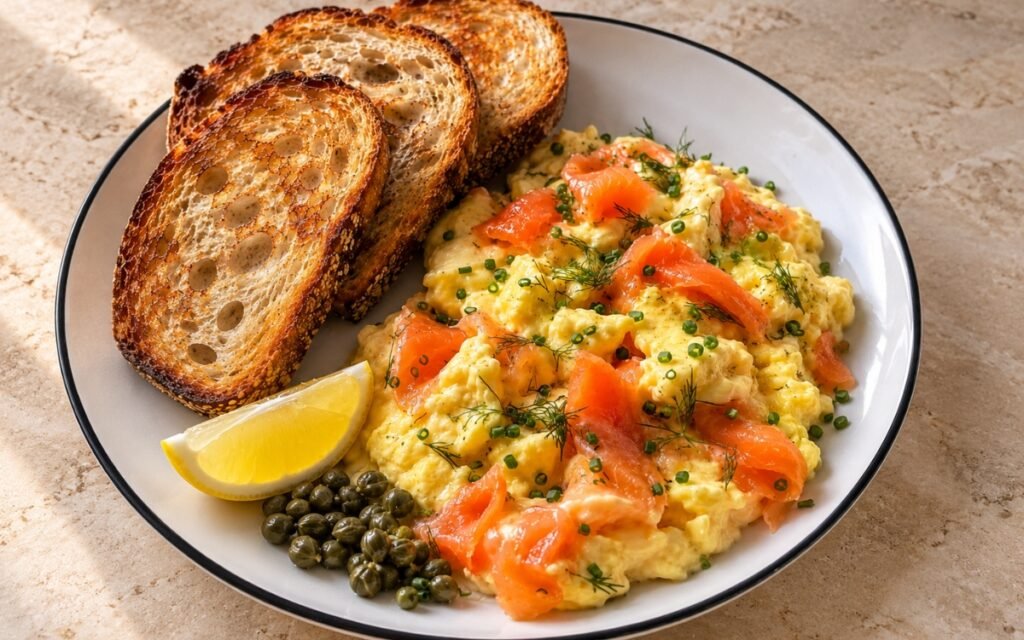
Smoked Salmon Scrambled Eggs Plate
Soft, creamy scrambled eggs finished with ribbons of smoked salmon, fresh dill, and chives, served with toasted sourdough, capers, and lemon.
You might also like
You might also like
Crispiest Fried Chicken
Buttermilk-brined chicken with a thick, craggy double-dredged crust built using a cold-water rehydration dip, then double-fried until aggressively crunchy.
Cuban Sandwich (Cubano)
Citrus-marinated pork roasted in its own mojo marinade, layered with ham, Swiss cheese, and pickles on homemade Cuban bread, pressed until crisp and golden.
Spicy Fried Chicken Sandwich
Ultra-crispy gochujang-marinated chicken with pickles, melted cheese, and garlicky heat stacked on toasted brioche.
Tuna Melt
Ingredients
Method
- Drain the tuna extremely well, then press out excess liquid with a fork or paper towel. This is non-negotiable. Wet tuna makes a soggy sandwich and weakens the cheese melt. The filling should be creamy, not watery. Canned tuna holds onto packing liquid more stubbornly than it might appear to at a glance — actively pressing it, rather than simply tipping the can and letting gravity do the work, removes considerably more of that residual moisture before it ever meets the mayonnaise.
- Add the drained tuna to a bowl and flake it into medium pieces. Add the mayonnaise, celery, onion, dill pickles, Dijon mustard, lemon juice, parsley if using, salt, black pepper, and garlic powder if using. Fold until combined but do not mash it into paste. The tuna salad should hold together while still having visible texture. Taste and adjust salt, pepper, lemon, or Dijon. It should taste creamy, bright, lightly sharp, and properly seasoned before it goes into the sandwich. Folding gently rather than mashing preserves distinct flakes of tuna within the creamy base, giving the finished filling real textural interest rather than a uniform paste.
- Lay out the sourdough slices. Spread a thin layer of softened butter on the outside of each slice. Add cheddar to the inside of 4 slices, then add the tuna salad, then add another layer of cheddar over the tuna. Close with the remaining bread slices, buttered side facing out. Cheese on both sides of the tuna helps bind the sandwich together and gives a better melt. Putting tuna straight against bare bread is asking for a soggy interior. The cheese layers act as a moisture barrier as much as a flavour component — melting around the tuna salad, they help contain any remaining liquid rather than letting it seep directly into the bread during griddling.
- Heat a large skillet, griddle, or cast-iron pan over medium-low to medium heat. Add a tiny splash of neutral oil if needed, then place the sandwiches in the pan. Cook for 4–5 minutes on the first side, pressing gently with a spatula, until the bread is deeply golden-brown and crisp. Flip carefully and cook another 4–5 minutes on the second side, until the cheddar is fully melted and pulling slightly at the edges. Do not crank the heat. High heat burns the sourdough before the cheese melts. Medium-low heat is the whole game here. This moderate heat is calibrated to let the cold tuna filling and the cheese come up to temperature and fully melt in roughly the same window the bread needs to develop deep colour — a hotter pan would force a choice between burnt bread and unmelted cheese.
- If the bread is browned but the cheese is not fully melted, lower the heat and cover the pan for 1–2 minutes. Do not keep blasting the bread. Burnt sourdough with cold cheese is a basic failure. Covering briefly traps residual heat and steam around the sandwich, giving the cheese a gentler, more contained environment to finish melting in without exposing the already-browned bread to any more direct, aggressive heat.
- Transfer the sandwiches to a cutting board and rest for 1–2 minutes. Cut each sandwich diagonally in half. The short rest keeps the tuna salad from spilling everywhere while still keeping the cheese melted enough to pull. This brief pause lets the melted cheese firm just slightly, enough that the first cut doesn’t send tuna salad and molten cheese spilling out, while everything is still hot and the cheese still pulls cleanly.
- Serve immediately while the sourdough is crisp, the cheddar is hot and melted, and the tuna salad is creamy inside. A tuna melt dies fast once steam softens the bread. Steam continues rising from the hot filling even after the sandwich leaves the pan, and that steam works directly against the crisp crust just built, so serving without delay is what keeps the sourdough’s exterior genuinely crisp.