
Lemon Ricotta Pancakes
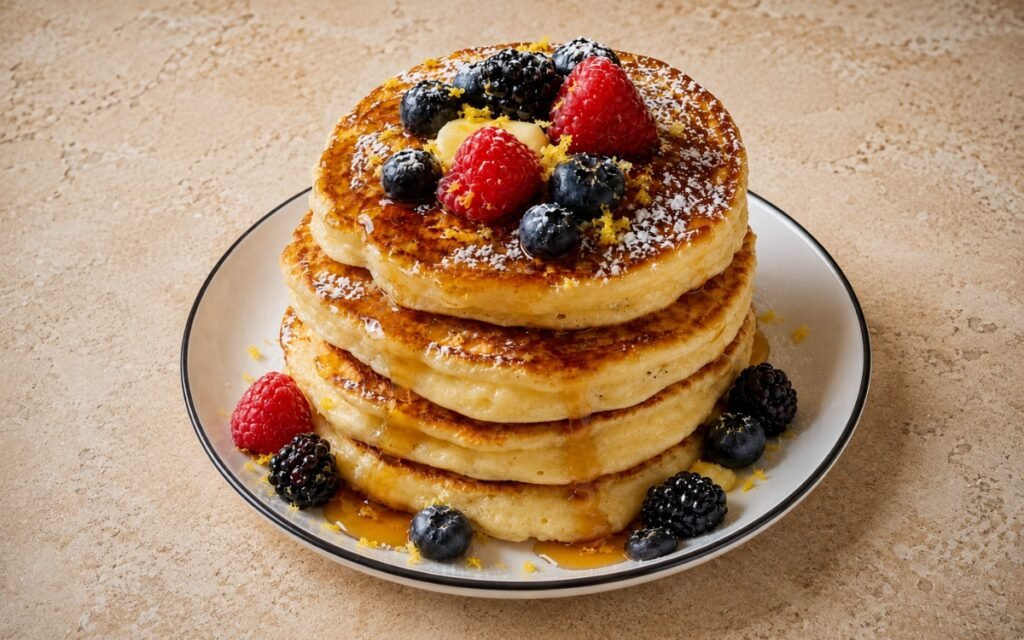
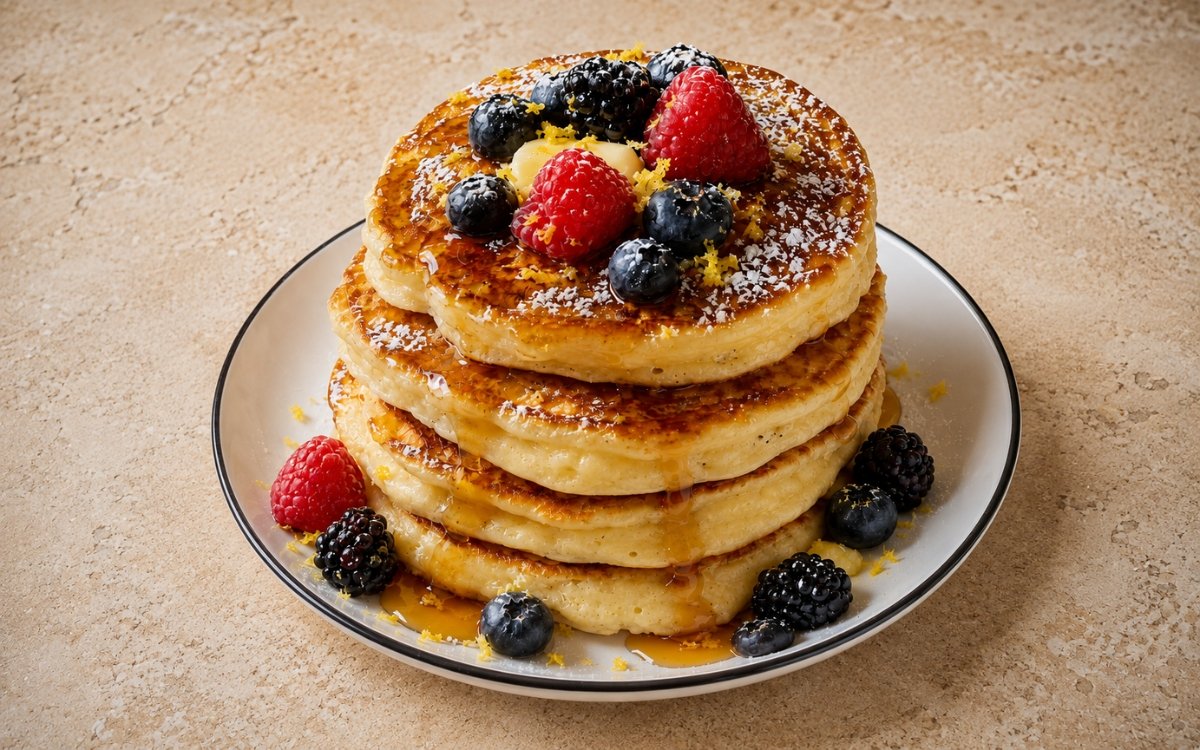
Fluffy lemon ricotta pancakes with golden edges and soft, tender interiors, finished with fresh berries, lemon zest, powdered sugar, maple syrup, and a pat of melting butter. The key is keeping the batter light by folding in whipped egg whites gently, so the pancakes stay airy and soft instead of heavy. Whipping the egg whites separately and folding them into the batter gently is the technique this whole recipe depends on for genuine lightness — that trapped air is what gives ricotta pancakes their characteristic airy lift despite the batter’s naturally thick, rich base, the same whip-and-fold-for-airiness principle used elsewhere in this collection whenever a heavier batter needs real structural lightness built in mechanically rather than through leavening alone. Mixing the wet and dry ingredients together only until combined, accepting a thick, slightly lumpy batter, is what keeps the finished pancakes tender rather than tough. Cooking over genuinely moderate heat, rather than high heat, is what lets these thicker, more delicate pancakes cook through evenly without browning too fast on the outside. The payoff is a pancake with real contrast — golden, lightly crisp edges around a soft, airy, tender interior, finished with bright lemon and fresh berries.
Prep Time : 15 min
Cook Time : 20 min
Servings : 4
15 min
20 min
4
Ingredients
For the Pancakes
• 250g all-purpose flour — this one on Amazon
• 30g granulated sugar, divided
• 10g baking powder
• 2g baking soda
• 4g fine sea salt
• 3 large eggs, separated
• 250g whole milk ricotta — this one on Amazon
• 240ml whole milk — this one on Amazon
• 30ml fresh lemon juice
• 2 tsp finely grated lemon zest, plus a little more for finishing
• 5ml vanilla extract — this one on Amazon
• 40g unsalted butter, melted and slightly cooled — this one on Amazon
• Butter or neutral oil, for the pan
For Serving
• 20 to 30g unsalted butter
• 200 to 250g mixed fresh berries, such as blueberries, raspberries, and blackberries
• Powdered sugar, for dusting
• Maple syrup, for serving
This post may contain affiliate links. As an Amazon Associate I earn from qualifying purchases, at no additional cost to you.
Directions
- Prep the Batter Components
Separate the eggs, placing the yolks in one large bowl and the whites in another clean bowl. In a separate bowl, whisk together the flour, 15g sugar, baking powder, baking soda, and salt. Keeping the whites in a genuinely clean, dry bowl matters directly here — any trace of fat or yolk left behind would prevent them from whipping up properly into the airy structure this recipe depends on. - Mix the Ricotta Base
To the bowl with the egg yolks, add the ricotta, milk, lemon juice, lemon zest, vanilla, and melted butter. Whisk until mostly smooth. Add the dry ingredients and mix just until combined. Do not overmix here. The batter should look thick and a little lumpy. Overmixing develops gluten and makes the pancakes tougher. Stopping the mixing the moment the dry ingredients are incorporated, rather than continuing for a smoother-looking batter, is what protects the finished pancakes from toughening — flour’s gluten develops more the longer it’s worked, and this thick, rich batter has genuinely little need for that extra structure. - Whip the Egg Whites
Add the remaining 15g sugar to the egg whites and beat until they reach soft to medium peaks. They should look glossy and hold their shape, but not be dry. Sugar added to the whites as they whip helps stabilize the foam structure, letting it hold its shape through the folding process that follows rather than collapsing the moment it’s disturbed. - Fold the Batter
Gently fold the whipped egg whites into the batter in 2 to 3 additions, using a spatula. Fold just until no large streaks remain. The finished batter should feel light and airy. If you stir too aggressively, you knock out the air that gives the pancakes their lift. Folding in stages, rather than adding all the whipped whites at once, lets the dense ricotta batter loosen gradually — that gradual approach protects far more of the trapped air than a single, more aggressive combining motion would. - Cook the Pancakes
Heat a nonstick skillet or griddle over medium-low to medium heat and lightly grease it with butter or oil. Scoop the batter onto the pan using about 80 to 90ml batter per pancake. Cook for about 2 to 3 minutes on the first side, until the bottoms are golden and the tops show bubbles with the edges beginning to set. Flip and cook for another 1½ to 2½ minutes, until the centers are cooked through and the pancakes are golden on both sides. Repeat with the remaining batter. Keep the heat moderate. Ricotta pancakes are thicker and more delicate than basic pancakes, so too much heat will brown the outside before the centers cook through. That specific, moderate heat range is calibrated around this batter’s real thickness — a hotter pan would develop colour on the exterior well before the genuinely dense, ricotta-rich centre has had time to cook all the way through. - Serve
Stack the warm pancakes on plates. Top with a pat of butter, fresh berries, extra lemon zest, a light dusting of powdered sugar, and maple syrup. Serve immediately. These pancakes are at their best the moment they come off the pan, with the airy interior still soft and the edges still holding a little of their fresh-cooked crispness.
*Notes :
- Whipping the egg whites separately, then folding them gently into the batter, deserves genuine recognition as the technique responsible for this recipe’s whole characteristic lightness. Ricotta batter is naturally thick and dense on its own, and without that separately whipped, trapped air folded in mechanically, these pancakes would come out considerably heavier and denser than the fluffy result this recipe is specifically built to achieve.
- Stopping the batter’s mixing the moment the dry and wet ingredients come together, accepting a thick, visibly lumpy result, deserves the same attention this principle receives throughout this collection’s other batter-based recipes. Flour’s gluten network strengthens the more it’s worked, and a batter this rich genuinely doesn’t need — or benefit from — that additional structure, which is exactly why stopping early protects tenderness.
- Folding the whipped whites into the batter in stages, rather than combining everything in one motion, deserves attention as a real, deliberate technique rather than an arbitrary instruction. That gradual approach lets the dense base loosen incrementally, accepting the airy whites with considerably less disruption to the trapped air than folding everything together at once would cause.
- Keeping the cooking heat genuinely moderate, rather than pushing it higher for faster browning, reflects real understanding of what makes ricotta pancakes different from a standard batter. Their real thickness and density mean the exterior would develop colour well ahead of the interior finishing at anything beyond moderate heat — the specific range given here is calibrated directly around that reality.
Why This Recipe Works
This recipe works because the egg whites are whipped separately and folded into the batter gently, in stages, building real, mechanical lightness into an otherwise dense ricotta base. The batter itself is mixed only until combined, protecting tenderness by avoiding unnecessary gluten development.
Cooking over genuinely moderate heat lets these thicker, more delicate pancakes cook through evenly without the exterior browning too far ahead of the interior. Serving immediately delivers the pancakes at their airiest and freshest, right when that carefully built lightness is at its best.
Ingredient Breakdown
Separately Whipped Egg Whites
The critical lightening technique — trapped air, folded in gently, is what gives this dense ricotta batter its characteristic fluffiness.
Thick, Minimally Mixed Batter
The critical technique — stopping at “just combined” protects tenderness by avoiding unnecessary gluten development.
Staged Folding (2–3 Additions)
The critical technique — gradual incorporation protects far more of the whipped whites’ trapped air than a single combining motion.
Whole Milk Ricotta
The signature richness — provides real texture and moisture, distinct from a standard, thinner pancake batter.
Moderate Cooking Heat
The critical cooking technique — calibrated specifically to this batter’s genuine thickness, letting the centre cook through before the exterior overbrowns.
Flavor Structure Explained
This lemon ricotta pancake follows a layered balance model:
- Rich, airy foundation (whole milk ricotta, whipped egg whites)
- Bright citrus lift (lemon juice, lemon zest)
- Golden, lightly crisp edges (properly cooked pancake exterior)
- Fresh fruity finish (mixed berries)
- Sweet finishing touches (powdered sugar, maple syrup, butter)
Whole milk ricotta and whipped egg whites together provide this pancake’s rich yet genuinely airy foundation. Fresh lemon juice and zest add bright citrus lift throughout the batter. Properly cooked, golden edges contribute a little textural contrast against the soft interior. Fresh mixed berries finish the stack with real fruity brightness, and a pat of melting butter, a light dusting of powdered sugar, and maple syrup complete the classic finish.
Common Mistakes to Avoid
- Getting Fat or Yolk Into the Egg Whites – This prevents them from whipping up properly. Always use a genuinely clean, dry bowl.
- Overmixing the Batter – This develops gluten and toughens the finished pancakes. Always stop as soon as the ingredients are combined.
- Folding the Egg Whites in All at Once – This deflates much of the trapped air. Always fold in stages, gently.
- Cooking Over Too-High Heat – This browns the exterior before the thick centre cooks through. Always keep the heat moderate.
- Letting the Pancakes Sit Before Serving – They’re at their airiest and freshest right off the pan. Always serve immediately.
Variations
Extra-Berry Version
Increase the mixed berries for a more fruit-forward finished stack.
Orange Version
Substitute orange juice and zest for lemon for a different, sweeter citrus direction.
Warm Oven-Hold Version
Keep cooked pancakes warm on a tray in a low oven, around 90 to 100°C, while finishing the rest, per the recipe’s own guidance.
Extra-Light Version
Whip the egg whites to slightly firmer peaks for an even airier finished texture, taking care not to overwhip to dry.
Storage & Make-Ahead
These are best served fresh, while the interiors are soft and the edges are still lightly crisp.
If needed, keep cooked pancakes warm on a tray in a low oven, around 90 to 100°C, while you finish the rest.
If your ricotta is very wet, let it drain briefly so the batter does not get too loose.
Frequently Asked Questions
Why do the egg whites need to be whipped separately rather than added directly to the batter?
Ricotta batter is naturally thick and dense, and that separately whipped, trapped air is what gives these pancakes their characteristic lightness. Without it, the pancakes would come out considerably heavier and denser.
Why does the batter need to stay thick and slightly lumpy rather than being mixed smooth?
Flour’s gluten network strengthens the more it’s worked, and this rich batter genuinely doesn’t need that additional structure. Stopping the mixing early protects the pancakes’ tenderness.
Why are the whipped egg whites folded in gradually, in stages, rather than all at once?
That gradual approach lets the dense batter loosen incrementally, accepting the airy whites with considerably less disruption to the trapped air than combining everything in one motion would cause.
Why does the cooking heat need to stay moderate rather than higher for faster browning?
Ricotta pancakes are genuinely thicker and denser than a standard batter, meaning the exterior would develop colour well ahead of the interior finishing at higher heat. The moderate range specified here is calibrated around that real thickness.
Are there other pancake, French toast, or custard pastry dishes worth trying?
Blueberry Buttermilk Pancakes and Classic French Toast both offer other classic breakfast directions worth exploring. Pastéis de Nata and Pastel de Nata Blondies are also worth trying for other custard-rich treats.
Nutrition Facts
( per serving )
Calories
~480 kcal
Protein
18 g
Fat
20 g
Carbs
56 g
Calories
~480 kcal
Protein
18 g
Fat
20 g
Carbs
56 g
Related Recipes
Related Recipes

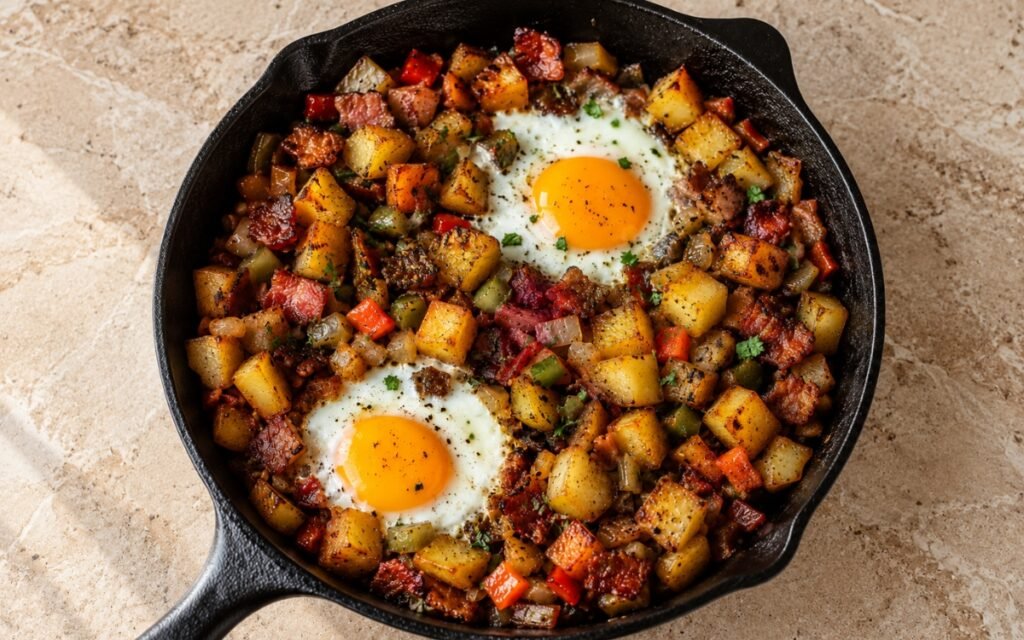
Breakfast Hash with Eggs and Potatoes
Crispy diced potatoes, browned breakfast sausage, crisp bacon, peppers, onions, and eggs cooked directly into the hash with runny yolks.
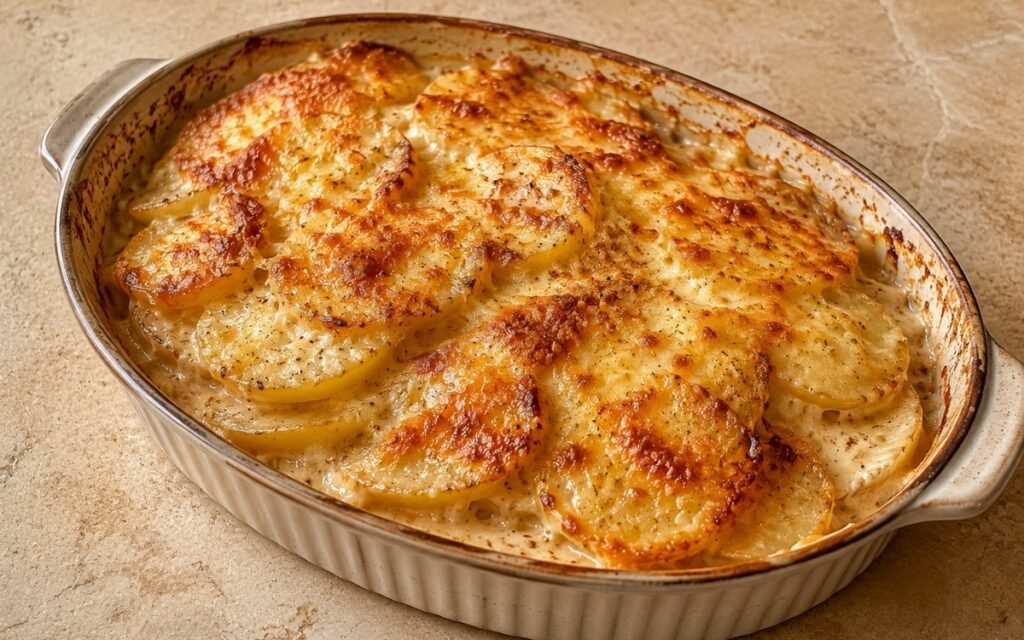
Creamy Scalloped Potatoes
Potatoes sliced evenly, layered with roux-based gruyere cream sauce, baked covered then uncovered until golden. Rested. Velvety and rich.
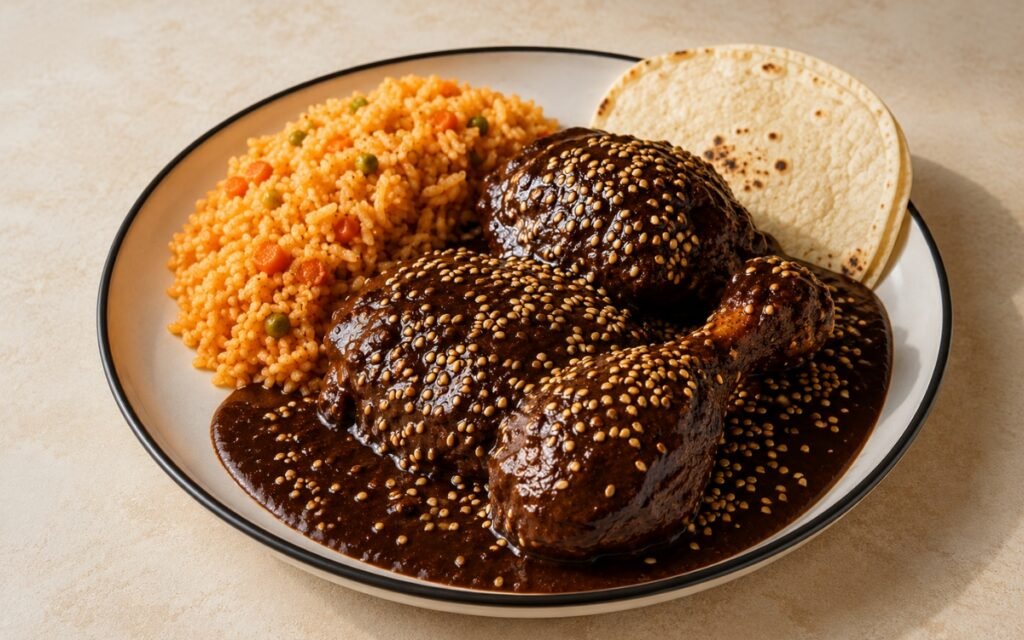
Chicken Mole Poblano
Gently poached chicken finished in deep, glossy mole poblano sauce, topped with toasted sesame seeds, served with Mexican rice and warm tortillas.
You might also like
You might also like
Nopales con Huevo
Scrambled eggs cooked with tender diced nopales, onion, tomato, and green chile, finished with fresh cilantro.
Breakfast Hash with Eggs and Potatoes
Crispy diced potatoes, browned breakfast sausage, crisp bacon, peppers, onions, and eggs cooked directly into the hash with runny yolks.
Challah Bread
Oil-and-egg enriched dough kneaded 10–12 minutes for braid structure — three strands braided at even tension, thoroughly egg-washed into every crevice, and baked to a deep amber. Soft, golden, slightly chewy.
Lemon Ricotta Pancakes
Ingredients
Method
- Separate the eggs, placing the yolks in one large bowl and the whites in another clean bowl. In a separate bowl, whisk together the flour, 15g sugar, baking powder, baking soda, and salt. Keeping the whites in a genuinely clean, dry bowl matters directly here — any trace of fat or yolk left behind would prevent them from whipping up properly into the airy structure this recipe depends on.
- To the bowl with the egg yolks, add the ricotta, milk, lemon juice, lemon zest, vanilla, and melted butter. Whisk until mostly smooth. Add the dry ingredients and mix just until combined. Do not overmix here. The batter should look thick and a little lumpy. Overmixing develops gluten and makes the pancakes tougher. Stopping the mixing the moment the dry ingredients are incorporated, rather than continuing for a smoother-looking batter, is what protects the finished pancakes from toughening — flour’s gluten develops more the longer it’s worked, and this thick, rich batter has genuinely little need for that extra structure.
- Add the remaining 15g sugar to the egg whites and beat until they reach soft to medium peaks. They should look glossy and hold their shape, but not be dry. Sugar added to the whites as they whip helps stabilize the foam structure, letting it hold its shape through the folding process that follows rather than collapsing the moment it’s disturbed.
- Gently fold the whipped egg whites into the batter in 2 to 3 additions, using a spatula. Fold just until no large streaks remain. The finished batter should feel light and airy. If you stir too aggressively, you knock out the air that gives the pancakes their lift. Folding in stages, rather than adding all the whipped whites at once, lets the dense ricotta batter loosen gradually — that gradual approach protects far more of the trapped air than a single, more aggressive combining motion would.
- Heat a nonstick skillet or griddle over medium-low to medium heat and lightly grease it with butter or oil. Scoop the batter onto the pan using about 80 to 90ml batter per pancake. Cook for about 2 to 3 minutes on the first side, until the bottoms are golden and the tops show bubbles with the edges beginning to set. Flip and cook for another 1½ to 2½ minutes, until the centers are cooked through and the pancakes are golden on both sides. Repeat with the remaining batter. Keep the heat moderate. Ricotta pancakes are thicker and more delicate than basic pancakes, so too much heat will brown the outside before the centers cook through. That specific, moderate heat range is calibrated around this batter’s real thickness — a hotter pan would develop colour on the exterior well before the genuinely dense, ricotta-rich centre has had time to cook all the way through.
- Stack the warm pancakes on plates. Top with a pat of butter, fresh berries, extra lemon zest, a light dusting of powdered sugar, and maple syrup. Serve immediately. These pancakes are at their best the moment they come off the pan, with the airy interior still soft and the edges still holding a little of their fresh-cooked crispness.