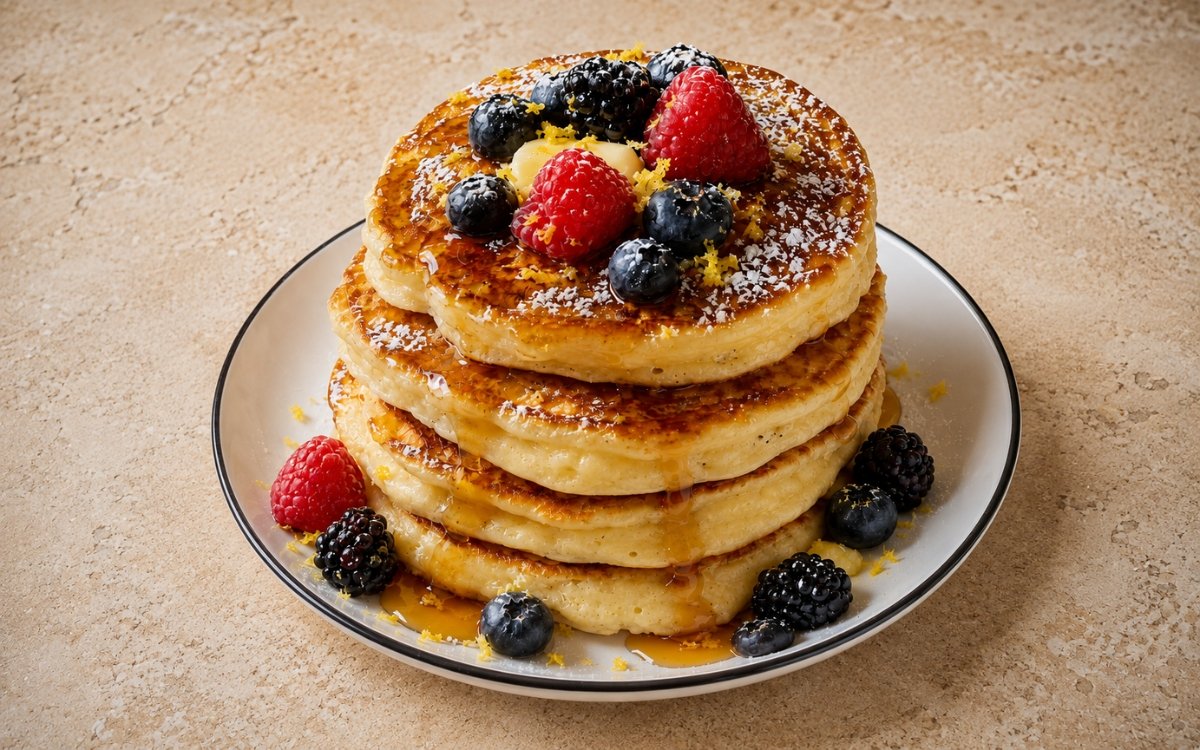
Ingredients
Method
Prep the Batter Components
- Separate the eggs, placing the yolks in one large bowl and the whites in another clean bowl. In a separate bowl, whisk together the flour, 15g sugar, baking powder, baking soda, and salt. Keeping the whites in a genuinely clean, dry bowl matters directly here — any trace of fat or yolk left behind would prevent them from whipping up properly into the airy structure this recipe depends on.
Mix the Ricotta Base
- To the bowl with the egg yolks, add the ricotta, milk, lemon juice, lemon zest, vanilla, and melted butter. Whisk until mostly smooth. Add the dry ingredients and mix just until combined. Do not overmix here. The batter should look thick and a little lumpy. Overmixing develops gluten and makes the pancakes tougher. Stopping the mixing the moment the dry ingredients are incorporated, rather than continuing for a smoother-looking batter, is what protects the finished pancakes from toughening — flour's gluten develops more the longer it's worked, and this thick, rich batter has genuinely little need for that extra structure.
Whip the Egg Whites
- Add the remaining 15g sugar to the egg whites and beat until they reach soft to medium peaks. They should look glossy and hold their shape, but not be dry. Sugar added to the whites as they whip helps stabilize the foam structure, letting it hold its shape through the folding process that follows rather than collapsing the moment it's disturbed.
Fold the Batter
- Gently fold the whipped egg whites into the batter in 2 to 3 additions, using a spatula. Fold just until no large streaks remain. The finished batter should feel light and airy. If you stir too aggressively, you knock out the air that gives the pancakes their lift. Folding in stages, rather than adding all the whipped whites at once, lets the dense ricotta batter loosen gradually — that gradual approach protects far more of the trapped air than a single, more aggressive combining motion would.
Cook the Pancakes
- Heat a nonstick skillet or griddle over medium-low to medium heat and lightly grease it with butter or oil. Scoop the batter onto the pan using about 80 to 90ml batter per pancake. Cook for about 2 to 3 minutes on the first side, until the bottoms are golden and the tops show bubbles with the edges beginning to set. Flip and cook for another 1½ to 2½ minutes, until the centers are cooked through and the pancakes are golden on both sides. Repeat with the remaining batter. Keep the heat moderate. Ricotta pancakes are thicker and more delicate than basic pancakes, so too much heat will brown the outside before the centers cook through. That specific, moderate heat range is calibrated around this batter's real thickness — a hotter pan would develop colour on the exterior well before the genuinely dense, ricotta-rich centre has had time to cook all the way through.
Serve
- Stack the warm pancakes on plates. Top with a pat of butter, fresh berries, extra lemon zest, a light dusting of powdered sugar, and maple syrup. Serve immediately. These pancakes are at their best the moment they come off the pan, with the airy interior still soft and the edges still holding a little of their fresh-cooked crispness.
Notes
Whipping the egg whites separately, then folding them gently into the batter, deserves genuine recognition as the technique responsible for this recipe's whole characteristic lightness. Ricotta batter is naturally thick and dense on its own, and without that separately whipped, trapped air folded in mechanically, these pancakes would come out considerably heavier and denser than the fluffy result this recipe is specifically built to achieve.
Stopping the batter's mixing the moment the dry and wet ingredients come together, accepting a thick, visibly lumpy result, deserves the same attention this principle receives throughout this collection's other batter-based recipes. Flour's gluten network strengthens the more it's worked, and a batter this rich genuinely doesn't need — or benefit from — that additional structure, which is exactly why stopping early protects tenderness.
Folding the whipped whites into the batter in stages, rather than combining everything in one motion, deserves attention as a real, deliberate technique rather than an arbitrary instruction. That gradual approach lets the dense base loosen incrementally, accepting the airy whites with considerably less disruption to the trapped air than folding everything together at once would cause.
Keeping the cooking heat genuinely moderate, rather than pushing it higher for faster browning, reflects real understanding of what makes ricotta pancakes different from a standard batter. Their real thickness and density mean the exterior would develop colour well ahead of the interior finishing at anything beyond moderate heat — the specific range given here is calibrated directly around that reality.