
Classic French Toast
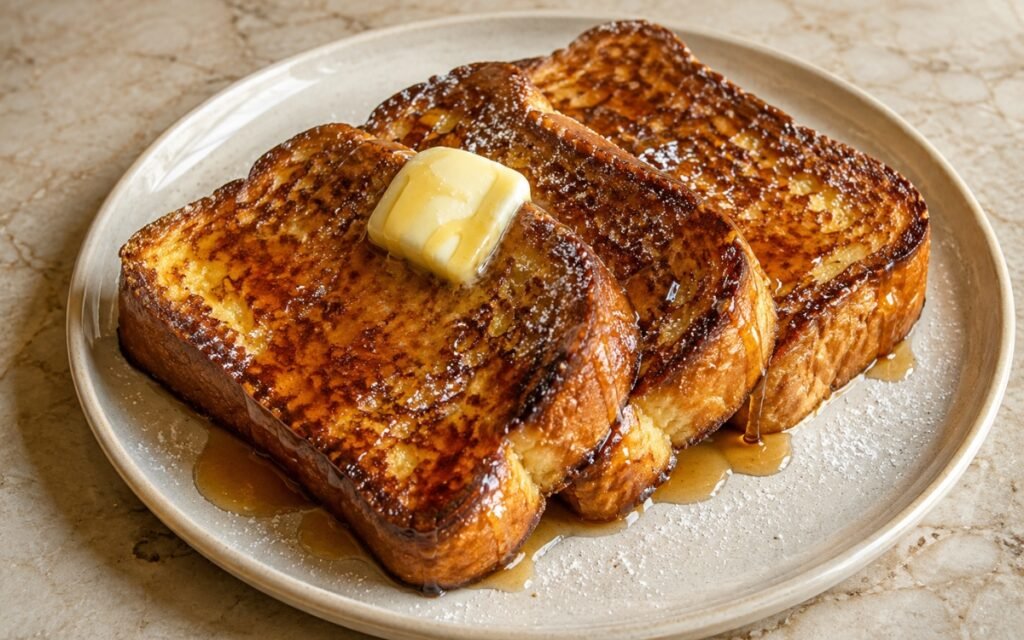
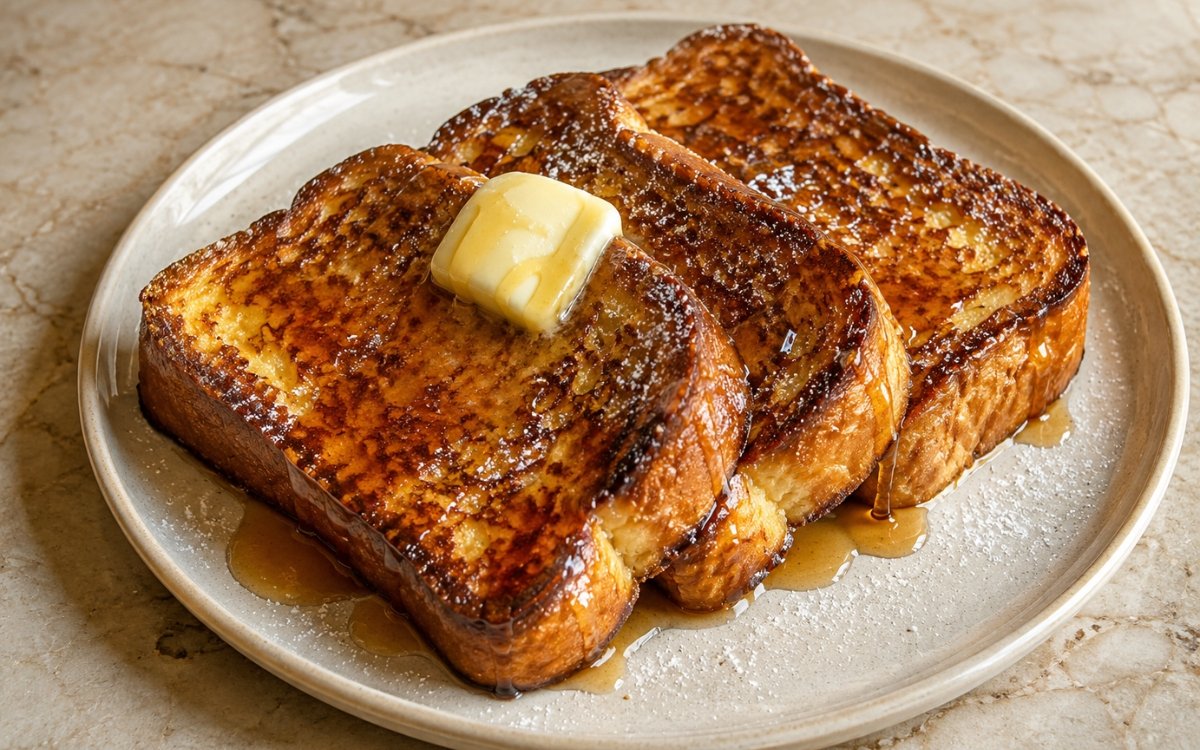
A custard built from three whole eggs and three additional yolks — the extra yolks providing the specific richness and the deeper golden colour during cooking that whole eggs alone produce at a lower intensity. Heavy cream and whole milk combined rather than one or the other: the cream’s fat content for richness, the milk’s volume for the liquid ratio that allows full brioche absorption without the custard being too thick to penetrate the bread. Cinnamon, nutmeg, and sugar balanced so the spice is present and warm without being identifiable as the primary flavour. Brioche specifically — its butter and egg content making it the bread that produces the most custardy interior from the same soak time that would produce a waterlogged result in plain sandwich bread. Brief soaking rather than long soaking, for the crispy-edged, custardy-centred result rather than the soggy, uniformly soft result of over-soaked bread. Butter in the pan, sizzling but not browned. Three minutes per side until deeply golden and fully set. The French toast that tastes exactly as it should.
Prep Time : 15 min
Cook Time : 15 min
Servings : 4
15 min
15 min
4
Ingredients
For the French Toast
• 3 large eggs
• 3 large egg yolks
• 3g ground cinnamon — approximately 1 tsp
• 3g kosher salt — approximately ½ tsp
• 25g granulated sugar — approximately 2 tbsp
• Pinch of freshly grated nutmeg
• 80ml heavy whipping cream
• 180ml whole milk
• 8 slices brioche bread, cut 2cm (¾ inch) thick
• Unsalted butter, for cooking and serving — this one on Amazon
• Maple syrup, for serving — this one on Amazon
This post may contain affiliate links. As an Amazon Associate I earn from qualifying purchases, at no additional cost to you.
Directions
- Build the Custard
In a medium bowl, combine the 3 whole eggs and 3 egg yolks. The egg yolk addition beyond the standard whole-egg custard is the specific enrichment decision that produces French toast with a noticeably deeper golden colour during cooking — yolks contain concentrated carotenoid pigments and a higher fat content that both contribute to the colour development on the cooked surface — and a richer, more custardy interior texture than whole eggs alone. Whisk together until completely uniform with no visible yolk streaks. Add the 3g of cinnamon, 3g of salt, 25g of sugar, and the pinch of freshly grated nutmeg. Whisk until the sugar has dissolved into the egg mixture. The nutmeg is specified freshly grated rather than pre-ground — freshly grated nutmeg’s volatile aromatic oils are present at full intensity, providing the specific warm, slightly floral spice note that pre-ground nutmeg has largely lost through oxidation during storage. A small pinch is correct — nutmeg at higher quantities becomes medicinal rather than warmly aromatic. Add the 80ml of heavy cream and 180ml of whole milk. Whisk until fully combined. The cream-and-milk combination rather than all milk or all cream is calibrated for the correct custard consistency — all cream produces a custard too thick to penetrate the brioche in the brief soaking time; all milk produces a less rich, less custardy result. The current ratio produces a pourable, smooth custard that absorbs into brioche cleanly within a few seconds per side. - Prepare the Soaking Dish
Pour the custard into a shallow baking dish — a 23cm (9-inch) baking dish or a similar wide, flat-bottomed vessel that allows two brioche slices to lie flat side by side without stacking. The width matters: slices that must be placed diagonally or overlapped in the custard soak unevenly, with the overlapping areas absorbing significantly less custard than the exposed surfaces. - Cut and Prepare the Brioche
Slice the brioche to a consistent 2cm thickness if not already sliced. The thickness is the balance point between a slice thin enough to cook through completely in the 3 minutes per side without burning the exterior, and thick enough to maintain an interior that is custardy and yielding rather than cooked all the way through to a uniform firm texture. At 2cm, the exterior develops the correct deeply golden crust while the centre remains slightly soft and custardy — the contrast between crust and interior that makes properly cooked French toast specifically satisfying. - Heat the Pan and Soak the First Slices
Set a large non-stick skillet over medium heat. Add a generous amount of unsalted butter — enough to coat the entire pan bottom in a visible layer once melted. Allow the butter to melt and foam. The correct temperature for cooking French toast is when the butter is foaming and sizzling gently but has not yet begun to brown — the foam indicates the water in the butter is still evaporating and the temperature is at the correct level for even, controlled browning of the custard-soaked bread over the full 3-minute period without burning. While the pan heats, place two brioche slices into the custard. Allow them to soak for a few seconds per side — 10–15 seconds per side is the correct window for brioche specifically. Brioche’s butter-enriched, egg-enriched crumb structure absorbs the custard relatively quickly; the brief soak is sufficient for the custard to penetrate the outer 5–6mm of each slice. Longer soaking — 30 seconds or more per side — over-saturates the brioche, producing a bread that is uniformly wet throughout with no structural integrity remaining, which cooks into the soft, uniformly dense result that is the French toast failure mode. The correctly soaked slice feels weighted and slightly softened at its surfaces but maintains its structure when lifted. - Cook the French Toast
Transfer the two soaked slices to the butter-coated pan. Cook undisturbed for 3 minutes. Do not press down on the slices or move them during this period — the crust develops through sustained contact between the custard-coated bread surface and the hot butter, and any movement before the crust has set disrupts the even colour development. After 3 minutes, the underside should be deeply golden-brown — the sugar in the custard contributing to the Maillard reaction and producing the characteristic caramelised sweetness of properly cooked French toast. Flip each slice carefully and cook the second side for 3 minutes. The interior is cooked through when the custard has fully set — pressing gently on the centre of a cooked slice should feel firm and spring back slightly rather than yielding wetly. Transfer to a baking sheet and keep warm in a 95°C oven while the remaining batches are cooked. - Cook the Remaining Slices
Add additional butter to the pan as needed — each batch requires a fresh butter coating to maintain the correct cooking surface and flavour. The pan temperature may have increased during the first batch and the second batch may cook slightly faster; monitor the colour actively and adjust heat downward slightly if the butter begins to brown rather than foam. Repeat the soak-and-cook sequence for the remaining 6 slices. - Serve
Plate the warm French toast. Place a small pat of cold unsalted butter on the top slice — it softens immediately from the bread’s heat, producing the glossy, rich finish that specifically distinguishes properly finished French toast from a plain stack. Drizzle maple syrup generously over each serving. Serve immediately.
*Notes :
- The three-yolk addition beyond the three whole eggs is the single most impactful custard composition decision in this recipe. Egg yolks contain lecithin — a natural emulsifier — at higher concentrations than whites, producing a custard with a richer, smoother mouthfeel. Their high fat content increases the custard’s richness directly. And their carotenoid pigment concentration produces the specific deep amber colour on the cooked exterior that makes French toast visually compelling rather than pale and flat. At the ratio used here, the custard is noticeably richer and more flavourful than a whole-egg-only version without being overwhelmingly eggy.
- Brioche is the specific bread for this recipe for structural and flavour reasons simultaneously. Brioche’s high butter and egg content gives it a specific richness that makes the finished French toast taste specifically indulgent rather than simply eggy. Its crumb structure — slightly denser and more cohesive than standard sandwich bread from the added fats — absorbs the custard at the correct rate for the brief soaking time: quickly enough for good penetration, slowly enough that the brief soak does not over-saturate. Challah operates on the same principle and is a direct substitute; thick Texas toast works but produces a less rich, less custardy result.
Why This Recipe Works
This recipe works because every ratio decision — three yolks beyond three whole eggs, cream combined with milk rather than one or the other, 2cm brioche thickness, brief soaking rather than prolonged soaking — is calibrated for the specific outcome of deeply golden exterior and custardy interior.
The extra yolks provide colour, richness, and emulsification. The cream-milk ratio provides the correct custard consistency. The brioche provides the correct absorption rate. And the brief soak prevents the over-saturation that produces soggy results.
Ingredient Breakdown
Three Egg Yolks (Beyond Three Whole Eggs)
The enrichment addition — concentrated fat, lecithin, and carotenoid pigment producing richer texture, smoother custard, and deeper golden colour during cooking.
Heavy Cream and Whole Milk Combined
The custard liquid balance — cream’s fat for richness, milk’s volume for the correct absorption consistency; neither alone achieves the same result.
Freshly Grated Nutmeg
The aromatic spice — freshly grated volatile oils provide the specific warm, slightly floral note that pre-ground nutmeg has largely lost.
2cm Brioche Thickness
The calibrated cut — thick enough for a custardy interior, thin enough to cook through completely in the correct time.
Brief Soak (10–15 Seconds Per Side)
The absorption technique — sufficient penetration into the enriched brioche without over-saturation; longer soaking produces the soggy failure mode.
Pasta Cooking Salt
The throughout-seasoning of the fettuccine — 30–40g in the boiling water seasons every strand from the inside out in a way that sauce-level salt cannot replicate.
Butter in Foaming Stage (Not Browned)
The cooking fat and temperature indicator — foaming indicates the correct cooking temperature for controlled, even browning over the full 3-minute period.
Flavor Structure Explained
This French toast follows a layered balance model:
- Sweet custardy core (egg, cream, brioche)
- Warm spice layer (cinnamon, nutmeg)
- Buttery richness (pan butter, finishing butter)
- Caramelized surface depth (Maillard browning)
- Sweet finishing glaze (maple syrup)
The custard-soaked brioche defines the foundation with rich egg-and-cream sweetness intensified by caramelisation on the hot pan surface. Cinnamon and nutmeg create the warm aromatic background that gives French toast its unmistakable identity. Butter adds rounded richness and enhances both the custard and the browned crust. The caramelised exterior introduces deeper toasted sweetness and slight savory complexity through Maillard browning. Maple syrup finishes the structure with concentrated sweetness and caramel notes that tie every layer together into a complete, comforting flavor profile.
Common Mistakes to Avoid
- Over-Soaking the Bread – The most common error. Prolonged soaking over-saturates the brioche, removing all structural integrity — the cooked result is uniformly dense, wet, and soft throughout rather than custardy at the centre and crisped at the surface.
- Using Low-Fat Milk or Thin Cream – The fat content of the cream is the richness source. Substituting with low-fat alternatives produces a noticeably thinner, less custardy result.
- Not Grating Nutmeg Fresh – Pre-ground nutmeg has lost most of its volatile aromatics through oxidation. Freshly grated nutmeg from whole nutmeg provides the specific warm, floral note at full intensity.
- Cooking at Too High Heat – High heat browns the exterior in under 60 seconds while the custard interior remains unset and liquid. Medium heat and 3 minutes per side is the correct balance.
- Not Adding Butter Between Batches – Each batch requires a fresh butter coating — the butter from the first batch is partially absorbed or evaporated before the second batch enters the pan.
- Not Keeping Finished Slices Warm – Finished slices left on the counter cool and lose their texture while the remaining batches cook. Always keep warm in a 95°C oven.
Variations
With Vanilla Extract
Add ½ tsp of pure vanilla extract to the custard after the cream and milk — its aromatic sweetness amplifies the custard’s richness and rounds the cinnamon and nutmeg into a more complex spiced vanilla character.
With Orange Zest:
Add the zest of half an orange to the custard — the citrus’s bright, slightly floral aromatics provide a specific French patisserie character that complements the butter and egg richness particularly well.
With Challah
Replace the brioche with thick-cut challah — its egg-enriched structure behaves nearly identically to brioche in this custard and produces a result that is slightly less rich but equally well-structured.
With Brown Butter
Brown the butter in the pan until it smells nutty and the milk solids turn golden before adding the soaked brioche — the brown butter’s hazelnut-like depth adds a specifically more complex flavour to the cooked exterior than plain melted butter.
Storage & Make-Ahead
Custard can be made up to 24 hours in advance and refrigerated while covered. Before using it, whisk it briefly since the ingredients may settle slightly during storage.
Cooked French toast can be refrigerated for up to 2 days. To reheat it, warm it in a 160°C oven on a wire rack for 5 to 6 minutes. A toaster also works well and helps restore some of the exterior crispness.
Cooked and cooled French toast also freezes very well for up to 1 month. It can be reheated directly from frozen in a 175°C oven for 8 to 10 minutes or in a toaster on a medium setting.
Frequently Asked Questions
Why additional egg yolks beyond whole eggs?
Egg yolks contain concentrated fat, lecithin, and carotenoid pigments — producing a richer, smoother custard and a noticeably deeper golden colour during cooking compared to whole-egg-only custard. The three-yolk addition makes a specific, visible difference in both the cooked colour and the interior texture.
Why brioche specifically?
Brioche’s butter-and-egg-enriched crumb absorbs custard at the correct rate for brief soaking — quickly enough for good penetration, slowly enough that it isn’t over-saturated in the brief window. Its inherent richness also makes the finished toast taste specifically indulgent. Challah is a direct substitute; standard sandwich bread absorbs too quickly and produces an over-saturated result.
How brief is brief soaking?
10–15 seconds per side for 2cm brioche — long enough for the custard to penetrate the outer 5–6mm, short enough to maintain the centre’s structural integrity. The correctly soaked slice feels slightly weighted and softened at its surface but holds its shape completely when lifted. A slice that droops or tears when lifted has been soaked too long.
Why the combination of cream and whole milk rather than all of one?
All heavy cream produces a custard too viscous to penetrate the bread evenly in the brief soak time; all whole milk produces a less rich, less custardy result. The 80ml cream and 180ml milk ratio produces the correct consistency and fat content for both proper absorption and the desired custard richness.
What temperature is correct for the pan?
Medium heat with foaming but not browning butter — the foam indicates the water in the butter is still evaporating and the pan is at the correct temperature for even, controlled browning over 3 minutes per side without burning.
Nutrition Facts
( per serving )
Calories
~480 kcal
Protein
14 g
Fat
21 g
Carbs
58 g
Calories
~480 kcal
Protein
14 g
Fat
21 g
Carbs
58 g
Related Recipes
Related Recipes

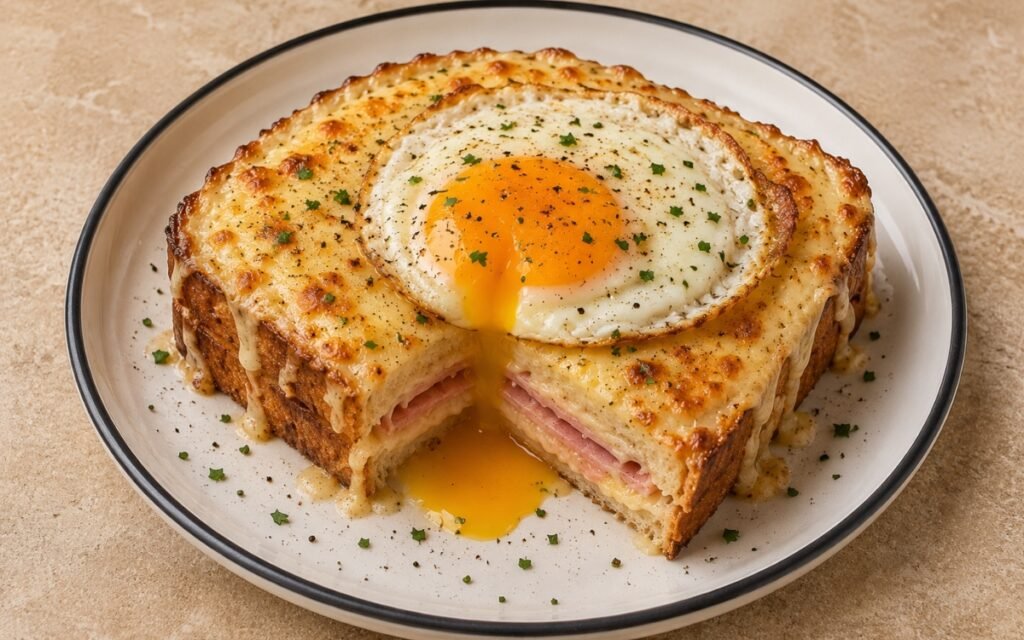
Croque Madame
Toasted bread with ham, Gruyère, and thick béchamel, baked until bubbling and topped with a gently fried egg.
Vietnamese Turmeric Sticky Rice (Xôi Xéo)
Golden turmeric sticky rice topped with soft crumbled mung bean, crispy fried shallots, and glossy scallion oil.
Crispy Sweet Potato Fries
Sweet potatoes soaked, dried, lightly coated in cornstarch, seasoned, and baked until golden and crisp. Sweet, savory, and satisfying.


You might also like
You might also like
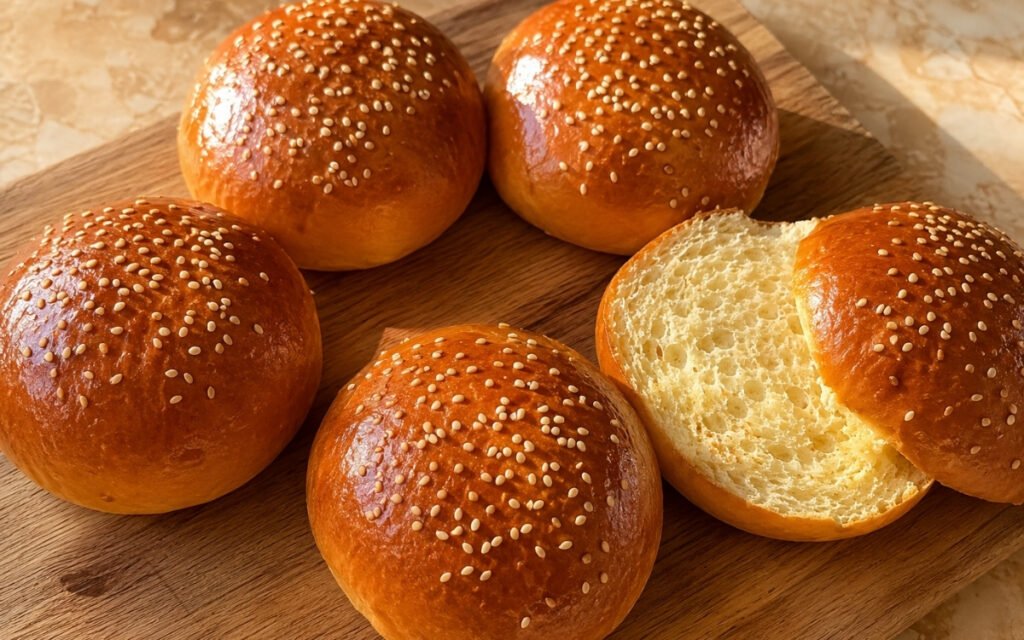
Brioche Burger Buns
Butter, egg, and milk enriched brioche buns with a deep golden egg-washed finish — soft, tender, and the bun that makes every burger and fried chicken sandwich worth making from scratch.
Chilaquiles Verdes
Crispy tortilla chips folded into hot, broiled salsa verde, topped with a runny-yolk fried egg, avocado, cotija, and crema drizzle.
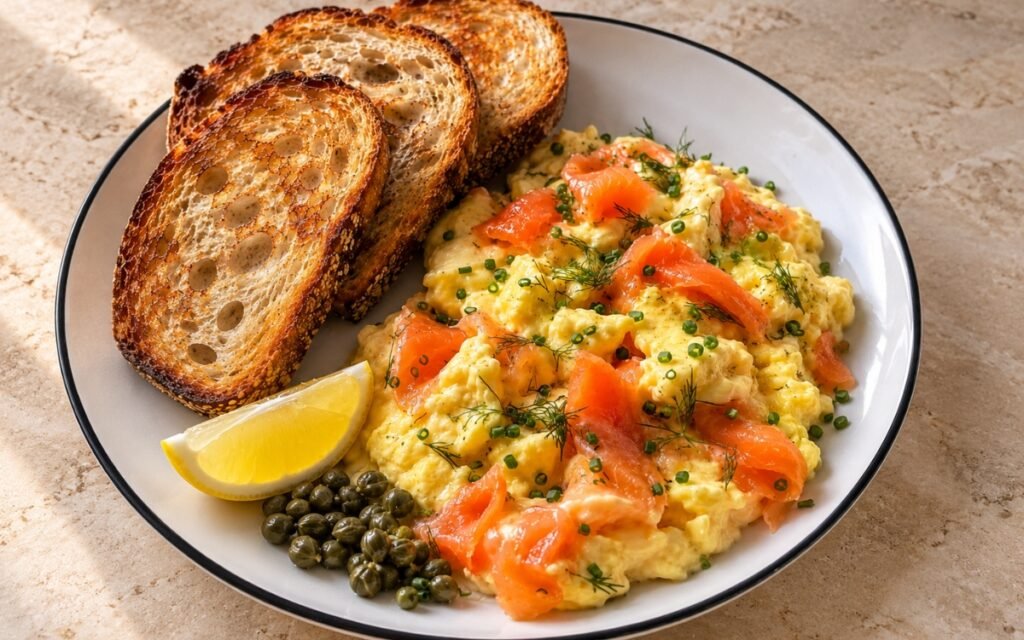
Smoked Salmon Scrambled Eggs Plate
Soft, creamy scrambled eggs finished with ribbons of smoked salmon, fresh dill, and chives, served with toasted sourdough, capers, and lemon.

Classic French Toast
Ingredients
Method
- In a medium bowl, combine the 3 whole eggs and 3 egg yolks. The egg yolk addition beyond the standard whole-egg custard is the specific enrichment decision that produces French toast with a noticeably deeper golden colour during cooking — yolks contain concentrated carotenoid pigments and a higher fat content that both contribute to the colour development on the cooked surface — and a richer, more custardy interior texture than whole eggs alone. Whisk together until completely uniform with no visible yolk streaks. Add the 3g of cinnamon, 3g of salt, 25g of sugar, and the pinch of freshly grated nutmeg. Whisk until the sugar has dissolved into the egg mixture. The nutmeg is specified freshly grated rather than pre-ground — freshly grated nutmeg’s volatile aromatic oils are present at full intensity, providing the specific warm, slightly floral spice note that pre-ground nutmeg has largely lost through oxidation during storage. A small pinch is correct — nutmeg at higher quantities becomes medicinal rather than warmly aromatic. Add the 80ml of heavy cream and 180ml of whole milk. Whisk until fully combined. The cream-and-milk combination rather than all milk or all cream is calibrated for the correct custard consistency — all cream produces a custard too thick to penetrate the brioche in the brief soaking time; all milk produces a less rich, less custardy result. The current ratio produces a pourable, smooth custard that absorbs into brioche cleanly within a few seconds per side.
- Pour the custard into a shallow baking dish — a 23cm (9-inch) baking dish or a similar wide, flat-bottomed vessel that allows two brioche slices to lie flat side by side without stacking. The width matters: slices that must be placed diagonally or overlapped in the custard soak unevenly, with the overlapping areas absorbing significantly less custard than the exposed surfaces.
- Slice the brioche to a consistent 2cm thickness if not already sliced. The thickness is the balance point between a slice thin enough to cook through completely in the 3 minutes per side without burning the exterior, and thick enough to maintain an interior that is custardy and yielding rather than cooked all the way through to a uniform firm texture. At 2cm, the exterior develops the correct deeply golden crust while the centre remains slightly soft and custardy — the contrast between crust and interior that makes properly cooked French toast specifically satisfying.
- Set a large non-stick skillet over medium heat. Add a generous amount of unsalted butter — enough to coat the entire pan bottom in a visible layer once melted. Allow the butter to melt and foam. The correct temperature for cooking French toast is when the butter is foaming and sizzling gently but has not yet begun to brown — the foam indicates the water in the butter is still evaporating and the temperature is at the correct level for even, controlled browning of the custard-soaked bread over the full 3-minute period without burning. While the pan heats, place two brioche slices into the custard. Allow them to soak for a few seconds per side — 10–15 seconds per side is the correct window for brioche specifically. Brioche’s butter-enriched, egg-enriched crumb structure absorbs the custard relatively quickly; the brief soak is sufficient for the custard to penetrate the outer 5–6mm of each slice. Longer soaking — 30 seconds or more per side — over-saturates the brioche, producing a bread that is uniformly wet throughout with no structural integrity remaining, which cooks into the soft, uniformly dense result that is the French toast failure mode. The correctly soaked slice feels weighted and slightly softened at its surfaces but maintains its structure when lifted.
- Transfer the two soaked slices to the butter-coated pan. Cook undisturbed for 3 minutes. Do not press down on the slices or move them during this period — the crust develops through sustained contact between the custard-coated bread surface and the hot butter, and any movement before the crust has set disrupts the even colour development. After 3 minutes, the underside should be deeply golden-brown — the sugar in the custard contributing to the Maillard reaction and producing the characteristic caramelised sweetness of properly cooked French toast. Flip each slice carefully and cook the second side for 3 minutes. The interior is cooked through when the custard has fully set — pressing gently on the centre of a cooked slice should feel firm and spring back slightly rather than yielding wetly. Transfer to a baking sheet and keep warm in a 95°C oven while the remaining batches are cooked.
- Add additional butter to the pan as needed — each batch requires a fresh butter coating to maintain the correct cooking surface and flavour. The pan temperature may have increased during the first batch and the second batch may cook slightly faster; monitor the colour actively and adjust heat downward slightly if the butter begins to brown rather than foam. Repeat the soak-and-cook sequence for the remaining 6 slices.
- Plate the warm French toast. Place a small pat of cold unsalted butter on the top slice — it softens immediately from the bread’s heat, producing the glossy, rich finish that specifically distinguishes properly finished French toast from a plain stack. Drizzle maple syrup generously over each serving. Serve immediately.