
Breakfast Hash with Eggs and Potatoes
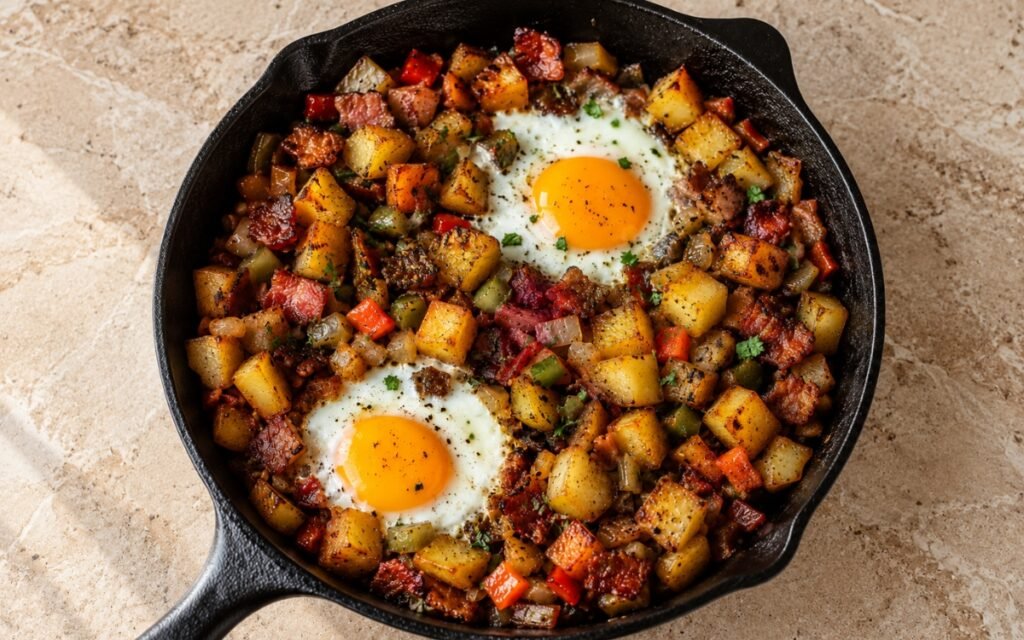
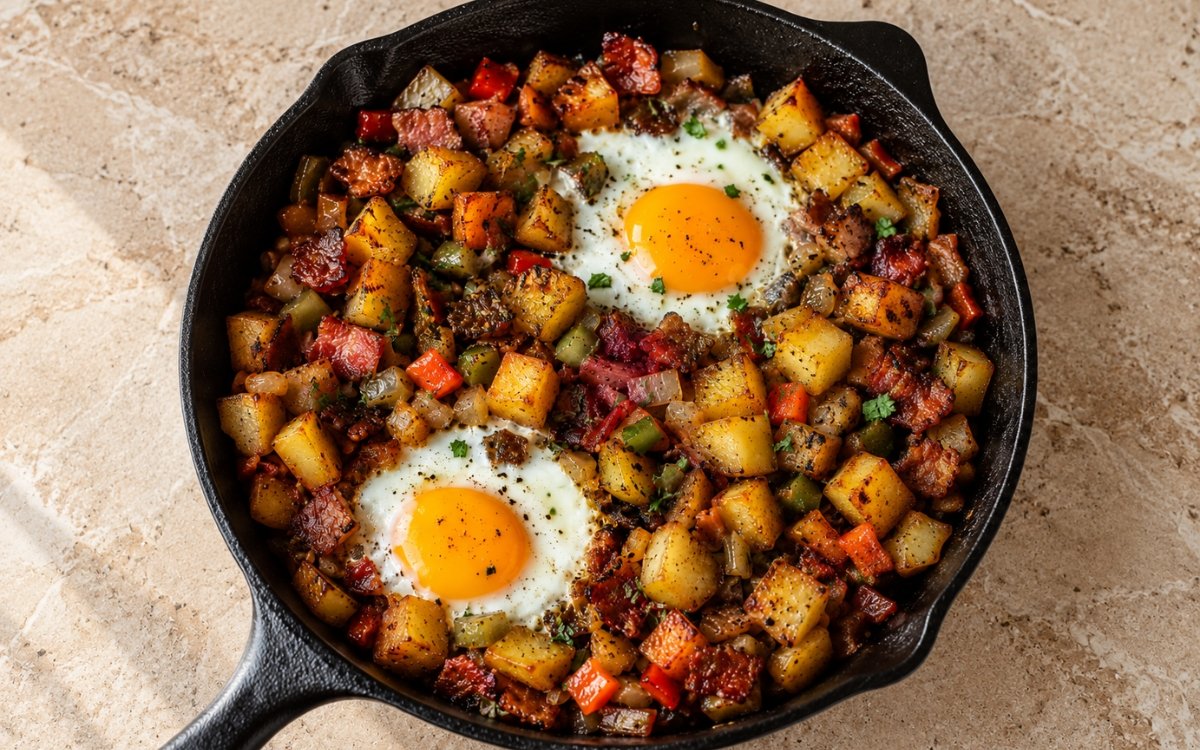
A classic breakfast hash with crispy diced potatoes, browned breakfast sausage, crisp bacon, peppers, onions, and eggs cooked directly into the hash with runny yolks. The key is cooking the potatoes until deeply golden before adding the eggs, then lowering the heat and covering the skillet just long enough to set the whites without overcooking the yolks. Parboiling the potatoes before they ever meet the hot skillet is the technique this whole hash depends on for genuinely crisp edges around a fully cooked centre, since that brief simmer gets a real head start on the interior so the pan’s job becomes purely about developing colour, the same parboil-then-crisp principle used elsewhere in this collection whenever a dense potato needs both a properly browned exterior and a fully cooked interior within a reasonable pan time. Adding the garlic only late, once the vegetables have already softened, is what protects it from burning before the hash is finished. Covering the skillet only once the eggs go in, and only for the brief window needed to set the whites, is what delivers this dish’s whole point — glossy, runny yolks nestled directly into a fully cooked, well-browned hash. The payoff is a skillet with real, hearty contrast — crisp golden potatoes, browned sausage and bacon, softened peppers and onion, all cradling eggs with yolks still glossy and runny.
Prep Time : 20 min
Cook Time : 35 min
Servings : 4
20 min
35 min
4
Ingredients
For the Potatoes
• 1kg potatoes, peeled or unpeeled, cut into 1.5cm cubes
• 30ml neutral oil
• 20g unsalted butter — this one on Amazon
• 8g fine sea salt, divided
• 2g black pepper
• 1 tsp smoked paprika or sweet paprika — this one on Amazon
• ½ tsp garlic powder, optional — this one on Amazon
For the Meat and Vegetables
• 200g bacon, cut into small pieces
• 300g breakfast sausage, loose or removed from casings
• 1 medium yellow onion, diced
• 1 red bell pepper, diced
• 1 green bell pepper, diced
• 2 garlic cloves, finely minced
• 1 tbsp chopped parsley, plus more for serving
• 2 tbsp sliced scallions, plus more for serving
For the Eggs
• 8 large eggs
• Fine sea salt, to taste
• Black pepper, to taste
For Serving
• Extra chopped parsley
• Extra sliced scallions
• Hot sauce, optional
This post may contain affiliate links. As an Amazon Associate I earn from qualifying purchases, at no additional cost to you.
Directions
- Parboil the Potatoes
Place the diced potatoes in a pot of cold water. Add about 5g salt and bring to a boil. Simmer for 5 to 6 minutes, just until the potatoes are barely starting to soften but are not falling apart. Drain well and let them steam dry for 3 to 5 minutes. The potatoes should be partly cooked, not soft. This gives you crisp edges in the skillet without leaving the centers raw. That brief simmer gets a genuine head start on cooking the interior through, meaning the pan stage that follows can focus purely on developing colour rather than also needing to cook a raw centre within that same window. - Cook the Bacon
Place the bacon in a large cast iron skillet over medium heat. Cook for 7 to 9 minutes, stirring occasionally, until the fat renders and the bacon is crisp. Transfer the bacon to a plate, leaving about 2 tbsp bacon fat in the skillet. The bacon should be crisp enough to stay distinct in the hash. If it is soft now, it will disappear into the potatoes later. Cooking the bacon fully crisp before the rest of the hash comes together protects its own distinct texture — bacon that’s still soft at this stage would only continue softening further once mixed back into the hot skillet. - Brown the Sausage
Add the breakfast sausage to the same skillet. Cook over medium-high heat for 5 to 7 minutes, breaking it into small pieces with a spatula, until browned and cooked through. Transfer to the plate with the bacon. Let the sausage sit undisturbed for short stretches so it actually browns. Constant stirring makes it gray and soft. Giving the sausage genuine, sustained contact with the hot pan, rather than breaking it apart continuously, is what lets real browning develop rather than being interrupted before it has a chance to form. - Crisp the Potatoes
Add the neutral oil and butter to the skillet. Add the drained potatoes in an even layer. Season with the remaining salt, black pepper, paprika, and garlic powder if using. Cook over medium-high heat for 12 to 16 minutes, turning occasionally, until the potatoes are deeply golden and crisp on multiple sides. Do not stir constantly. Potatoes need steady contact with the hot pan to form a proper crust. Cooking in the same skillet the bacon and sausage just used means the potatoes pick up real, residual flavour from whatever fond was left behind, rather than starting from a clean, neutral pan. - Add the Peppers, Onion, and Garlic
Add the onion, red bell pepper, and green bell pepper to the skillet. Cook for 5 to 7 minutes, stirring occasionally, until the vegetables soften and pick up a little color. Add the minced garlic and cook for 30 to 45 seconds, just until fragrant. Add the garlic late. If it goes in with the potatoes, it can burn before the hash is finished. Garlic minced this finely has genuinely little margin between fragrant and burnt, which is exactly why it’s held back until this much later stage, well after the vegetables have already had their own time to soften. - Return the Meat
Add the cooked bacon and sausage back to the skillet. Stir everything together and cook for 1 to 2 minutes, until hot and evenly mixed. Stir in the parsley and scallions. Taste and adjust with a little more salt or black pepper if needed. Returning the meat only once the vegetables have already softened, rather than earlier, keeps the bacon’s own crispness and the sausage’s own browned texture intact right up until this final, brief reheating stage. - Cook the Eggs into the Hash
Lower the heat to medium-low. Make 8 small wells in the hash and crack one egg into each well. Season the eggs lightly with salt and black pepper. Cover the skillet and cook for 4 to 6 minutes, until the whites are set and the yolks are still runny. Stop as soon as the whites turn opaque and set around the yolks. The yolks should still look glossy and move slightly. If the eggs cook until firm, the hash loses the best part. That specific cover-and-lower-heat combination traps just enough gentle heat and steam to set the whites through without the yolks receiving the same direct, aggressive heat — pulling the lid at exactly the point the whites turn opaque is what protects the yolks’ own runny centre. - Serve
Scatter with extra parsley and scallions. Serve hot, with 2 eggs per serving and plenty of crispy potato, sausage, bacon, peppers, and onions. Serving immediately, straight from the hot skillet, delivers the hash at its best — both the potatoes’ own crispness and the eggs’ glossy, just-set yolks begin to change noticeably the longer the dish sits.
*Notes :
- Parboiling the potatoes before they ever meet the hot skillet deserves genuine respect as the technique responsible for this hash’s real contrast between crisp exterior and fully cooked interior. That brief simmer gives the potato’s own centre a real head start on cooking through, meaning the subsequent pan time can focus entirely on developing colour and crispness rather than also needing to finish cooking a raw centre within that same window — skipping this step would force an uncomfortable compromise between properly browned and properly cooked through.
- Adding the garlic only once the vegetables have already softened, well after the potatoes went in, deserves attention as a real, deliberate timing choice rather than an arbitrary order. Garlic minced this finely has genuinely little margin between fragrant and burnt, and holding it back until this later stage is specifically what protects it from scorching over the extended cooking time the rest of the hash requires.
- Covering the skillet only once the eggs are added, and only for the specific window needed to set the whites, deserves the same attention this collection gives to any dish depending on a precisely timed egg finish. That combination of lowered heat and a brief cover traps enough gentle steam to properly set the whites through without exposing the yolks to the same aggressive, direct heat — pulling the lid the moment the whites turn opaque is what protects the yolks’ own glossy, runny centre.
- Cooking every component of this hash — bacon, sausage, potatoes, vegetables — in the same skillet throughout, rather than switching pans, deserves recognition as a genuine, deliberate technique choice beyond simple convenience. Each subsequent stage picks up real, residual flavour from whatever fond and fat the previous stage left behind, layering flavour throughout the entire cooking process.
Why This Recipe Works
This recipe works because the potatoes are parboiled first, giving their interior a genuine head start so the pan stage can focus purely on real browning. The bacon and sausage are cooked properly, developing distinct texture and flavour before being set aside. The vegetables soften before the garlic is added late, protecting it from burning.
Every component shares the same skillet throughout, layering real, residual flavour at each stage. Covering the skillet only once the eggs are added, for a carefully timed window, delivers the dish’s essential glossy, runny-yolked finish right at the moment the whites properly set.
Ingredient Breakdown
Parboiled Potatoes
The critical technique — a brief simmer gives the interior a head start, letting the pan stage focus on real browning.
Undisturbed Potato and Sausage Browning
The critical technique — sustained pan contact, rather than constant stirring, is what actually develops crisp colour.
Late-Added Garlic
The critical timing technique — held back until the vegetables have softened, protecting it from burning over the hash’s extended cook time.
Shared Skillet Throughout
The flavour-building technique — each subsequent stage picks up real, residual flavour from what came before.
Covered, Timed Egg Finish
The critical technique — sets the whites gently while protecting the yolks’ own glossy, runny centre.
Flavor Structure Explained
This breakfast hash follows a layered balance model:
- Crisp golden foundation (parboiled, pan-crisped potatoes)
- Savoury seared protein (bacon, breakfast sausage)
- Sweet softened body (peppers, onion, late-added garlic)
- Fresh herbal lift (parsley, scallions)
- Glossy soft centrepiece (eggs cooked directly into the hash)
Parboiled, pan-crisped potatoes provide this hash’s crisp, golden foundation. Bacon and breakfast sausage add real, seared savoury protein throughout. Softened peppers, onion, and late-added garlic contribute sweet, aromatic body. Fresh parsley and scallions add herbal lift right at the surface. Eggs, cooked directly into the hash with a carefully timed cover, finish the dish as its soft, glossy centrepiece, tying every hearty component together.
Common Mistakes to Avoid
- Skipping the Potato Parboil – This forces a compromise between properly browned and properly cooked through. Always parboil first.
- Stirring the Potatoes or Sausage Too Often – This prevents real browning from developing. Always let them cook mostly undisturbed.
- Adding the Garlic Too Early – This risks it burning before the hash is finished. Always add it late, after the vegetables have softened.
- Covering the Skillet Too Long Once the Eggs Are In – This overcooks the yolks past runny. Always pull the lid the moment the whites turn opaque.
- Letting the Hash Sit Before Serving – Both the potatoes’ crispness and the eggs’ runny yolks change quickly. Always serve immediately.
Variations
Batch-Cooked Egg Version
Use a very large skillet for all 8 eggs, per the recipe’s own note, or cook the hash separately and finish the eggs in two batches if your skillet is smaller.
Russet Potato Version
Substitute russet potatoes for waxy ones if you prefer softer centers and rougher crisp edges, per the recipe’s own guidance.
Extra-Spicy Version
Serve with hot sauce on the side for those who want extra heat, keeping it optional so the classic flavour stays central.
Vegetarian Version
Omit the bacon and sausage and add extra vegetables, such as mushrooms or zucchini, for a meat-free hash.
Storage & Make-Ahead
Use a very large skillet for all 8 eggs. If your skillet is smaller, cook the hash in one pan and fry the eggs separately, or finish the eggs in two batches.
Parboiling is optional, but it gives better control and a more evenly cooked hash.
The eggs should be added only after the hash is fully browned and seasoned.
Frequently Asked Questions
Why does parboiling the potatoes matter so much before they go into the skillet?
That brief simmer gives the potatoes’ interior a real head start on cooking through. This means the subsequent pan time can focus purely on developing crisp, golden colour rather than also needing to cook a raw centre within the same window.
Why is the garlic added so much later than the other vegetables?
Garlic minced this finely has genuinely little margin between fragrant and burnt. Holding it back until the vegetables have already softened protects it from scorching over the hash’s extended overall cooking time.
Why is the skillet covered only once the eggs are added, and only briefly?
That combination of lowered heat and a brief cover traps enough gentle steam to properly set the egg whites without exposing the yolks to the same direct heat. Pulling the lid at exactly the right moment protects the yolks’ glossy, runny centre.
Why is every component cooked in the same skillet rather than switching pans?
Each subsequent stage — bacon, sausage, potatoes, vegetables — picks up real, residual flavour from the fond and fat the previous stage left behind, layering flavour throughout the entire dish.
Are there other hearty breakfast plate or egg-and-potato dishes worth trying?
Classic American Breakfast Plate and Full English Breakfast both offer other hearty, multi-component breakfast directions worth exploring. Brie and Bacon Omelette is also worth trying for a different, egg-forward breakfast, and Crispy Hash Brown Potatoes offers another classic, crisp potato side worth exploring.
Nutrition Facts
( per serving )
Calories
~680 kcal
Protein
34 g
Fat
42 g
Carbs
42 g
Calories
~680 kcal
Protein
34 g
Fat
42 g
Carbs
42 g
Related Recipes
Related Recipes

Gorditas with Chicharrón and Salsa
Thick masa gorditas cooked golden and split into a pocket while warm, filled with crispy chicharrón, salsa roja, shredded cabbage, and avocado.
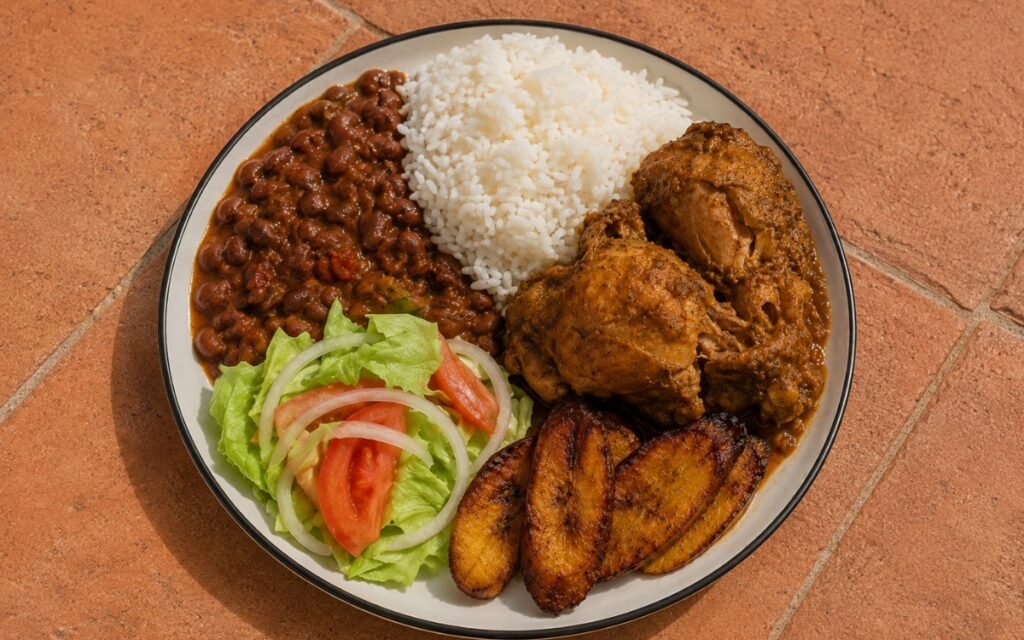
La Bandera Dominicana
Fluffy white rice, stewed red beans, caramelised braised chicken, sweet fried plantains, and fresh salad, each kept distinct on the plate.
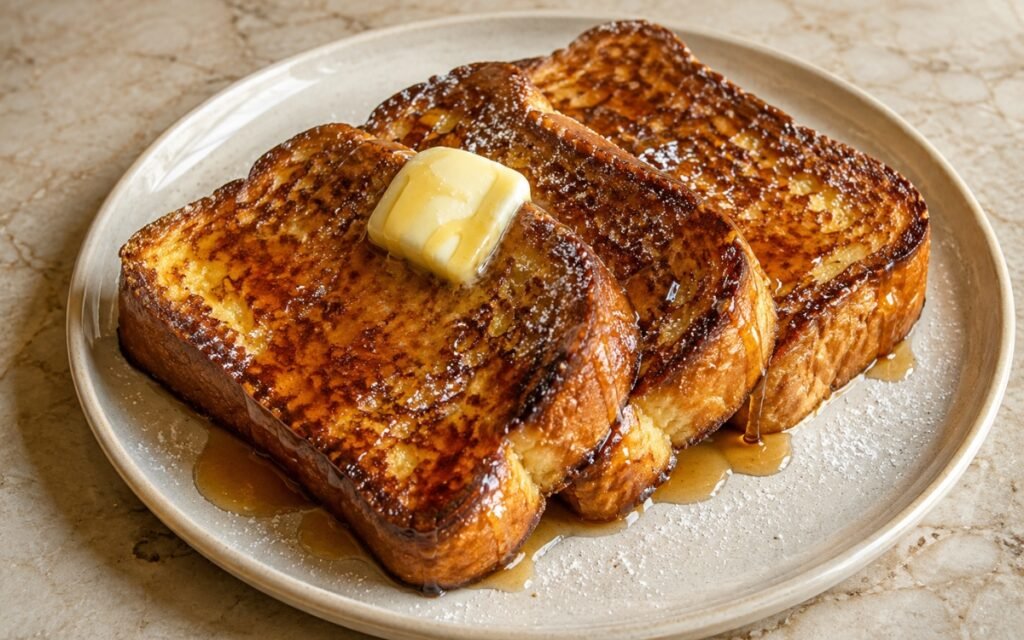
Classic French Toast
Three eggs and three yolks whisked with cream, cinnamon, and nutmeg — briefly soaking thick brioche and cooking 3 minutes per side in foaming butter until deeply golden. 30 minutes.

You might also like
You might also like
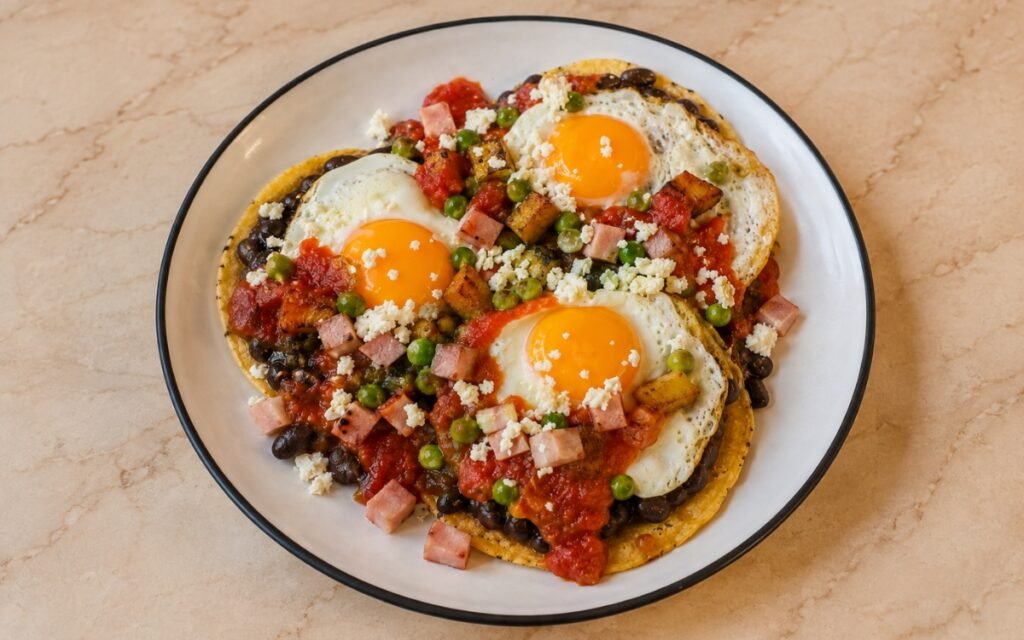
Huevos Motuleños
Crisp corn tortillas layered with black beans and fried eggs, topped with light tomato sauce, ham, peas, and sweet fried plantain.
Chicken Mole Poblano
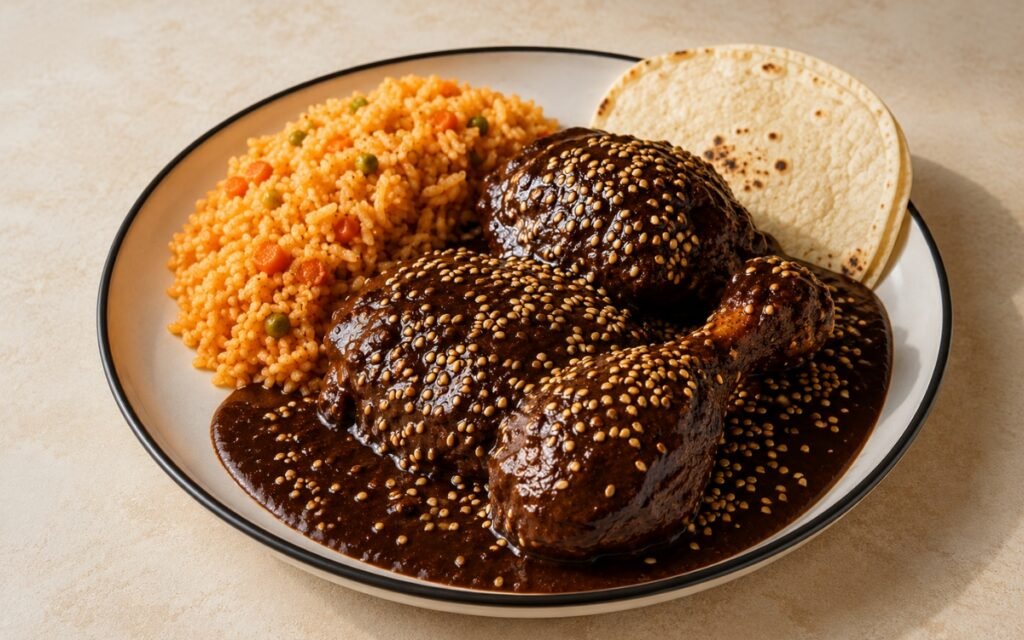
Gently poached chicken finished in deep, glossy mole poblano sauce, topped with toasted sesame seeds, served with Mexican rice and warm tortillas.
Lox and Cream Cheese Bagel
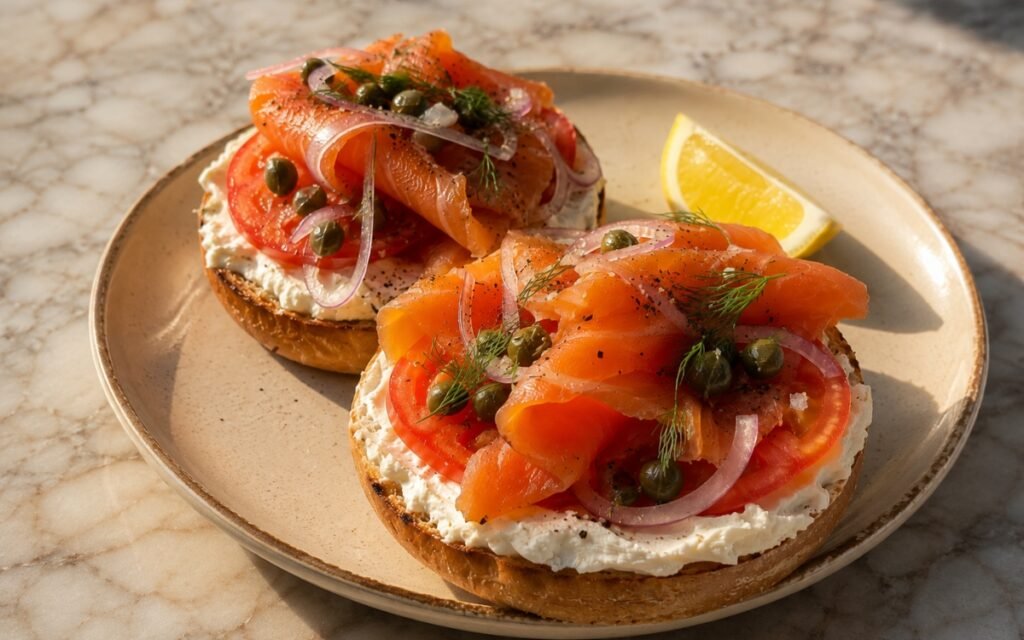
Nova lox, whipped cream cheese on both halves, salted tomato, paper-thin red onion, fresh dill, capers, and lemon on a toasted bagel — the New York classic in 10 minutes.
Breakfast Hash with Eggs and Potatoes
Ingredients
Method
- Place the diced potatoes in a pot of cold water. Add about 5g salt and bring to a boil. Simmer for 5 to 6 minutes, just until the potatoes are barely starting to soften but are not falling apart. Drain well and let them steam dry for 3 to 5 minutes. The potatoes should be partly cooked, not soft. This gives you crisp edges in the skillet without leaving the centers raw. That brief simmer gets a genuine head start on cooking the interior through, meaning the pan stage that follows can focus purely on developing colour rather than also needing to cook a raw centre within that same window.
- Place the bacon in a large cast iron skillet over medium heat. Cook for 7 to 9 minutes, stirring occasionally, until the fat renders and the bacon is crisp. Transfer the bacon to a plate, leaving about 2 tbsp bacon fat in the skillet. The bacon should be crisp enough to stay distinct in the hash. If it is soft now, it will disappear into the potatoes later. Cooking the bacon fully crisp before the rest of the hash comes together protects its own distinct texture — bacon that’s still soft at this stage would only continue softening further once mixed back into the hot skillet.
- Add the breakfast sausage to the same skillet. Cook over medium-high heat for 5 to 7 minutes, breaking it into small pieces with a spatula, until browned and cooked through. Transfer to the plate with the bacon. Let the sausage sit undisturbed for short stretches so it actually browns. Constant stirring makes it gray and soft. Giving the sausage genuine, sustained contact with the hot pan, rather than breaking it apart continuously, is what lets real browning develop rather than being interrupted before it has a chance to form.
- Add the neutral oil and butter to the skillet. Add the drained potatoes in an even layer. Season with the remaining salt, black pepper, paprika, and garlic powder if using. Cook over medium-high heat for 12 to 16 minutes, turning occasionally, until the potatoes are deeply golden and crisp on multiple sides. Do not stir constantly. Potatoes need steady contact with the hot pan to form a proper crust. Cooking in the same skillet the bacon and sausage just used means the potatoes pick up real, residual flavour from whatever fond was left behind, rather than starting from a clean, neutral pan.
- Add the onion, red bell pepper, and green bell pepper to the skillet. Cook for 5 to 7 minutes, stirring occasionally, until the vegetables soften and pick up a little color. Add the minced garlic and cook for 30 to 45 seconds, just until fragrant. Add the garlic late. If it goes in with the potatoes, it can burn before the hash is finished. Garlic minced this finely has genuinely little margin between fragrant and burnt, which is exactly why it’s held back until this much later stage, well after the vegetables have already had their own time to soften.
- Add the cooked bacon and sausage back to the skillet. Stir everything together and cook for 1 to 2 minutes, until hot and evenly mixed. Stir in the parsley and scallions. Taste and adjust with a little more salt or black pepper if needed. Returning the meat only once the vegetables have already softened, rather than earlier, keeps the bacon’s own crispness and the sausage’s own browned texture intact right up until this final, brief reheating stage.
- Lower the heat to medium-low. Make 8 small wells in the hash and crack one egg into each well. Season the eggs lightly with salt and black pepper. Cover the skillet and cook for 4 to 6 minutes, until the whites are set and the yolks are still runny. Stop as soon as the whites turn opaque and set around the yolks. The yolks should still look glossy and move slightly. If the eggs cook until firm, the hash loses the best part. That specific cover-and-lower-heat combination traps just enough gentle heat and steam to set the whites through without the yolks receiving the same direct, aggressive heat — pulling the lid at exactly the point the whites turn opaque is what protects the yolks’ own runny centre.
- Scatter with extra parsley and scallions. Serve hot, with 2 eggs per serving and plenty of crispy potato, sausage, bacon, peppers, and onions. Serving immediately, straight from the hot skillet, delivers the hash at its best — both the potatoes’ own crispness and the eggs’ glossy, just-set yolks begin to change noticeably the longer the dish sits.