
Classic American Breakfast Plate
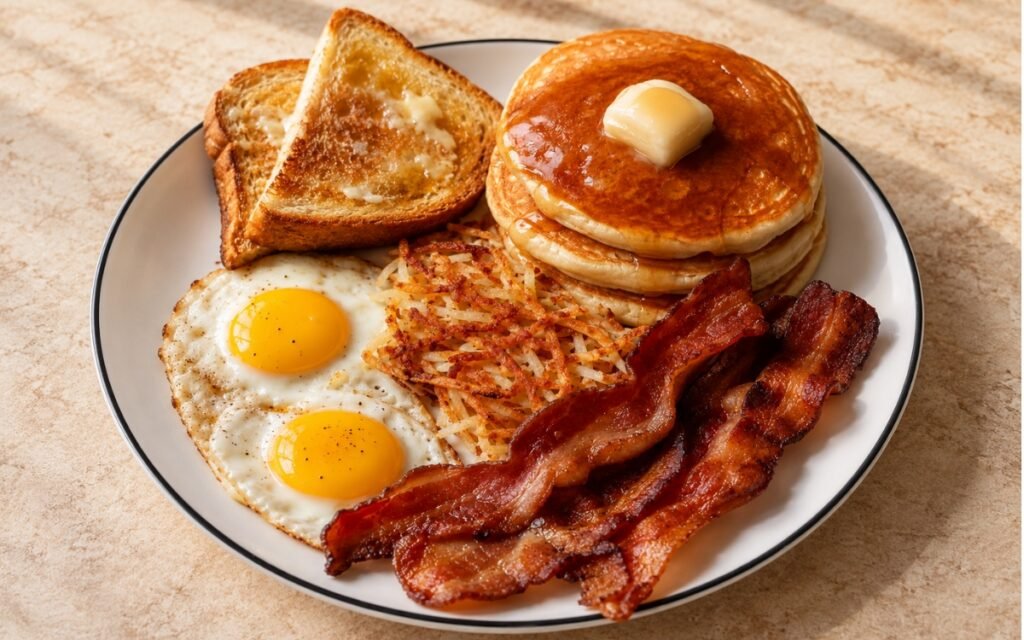
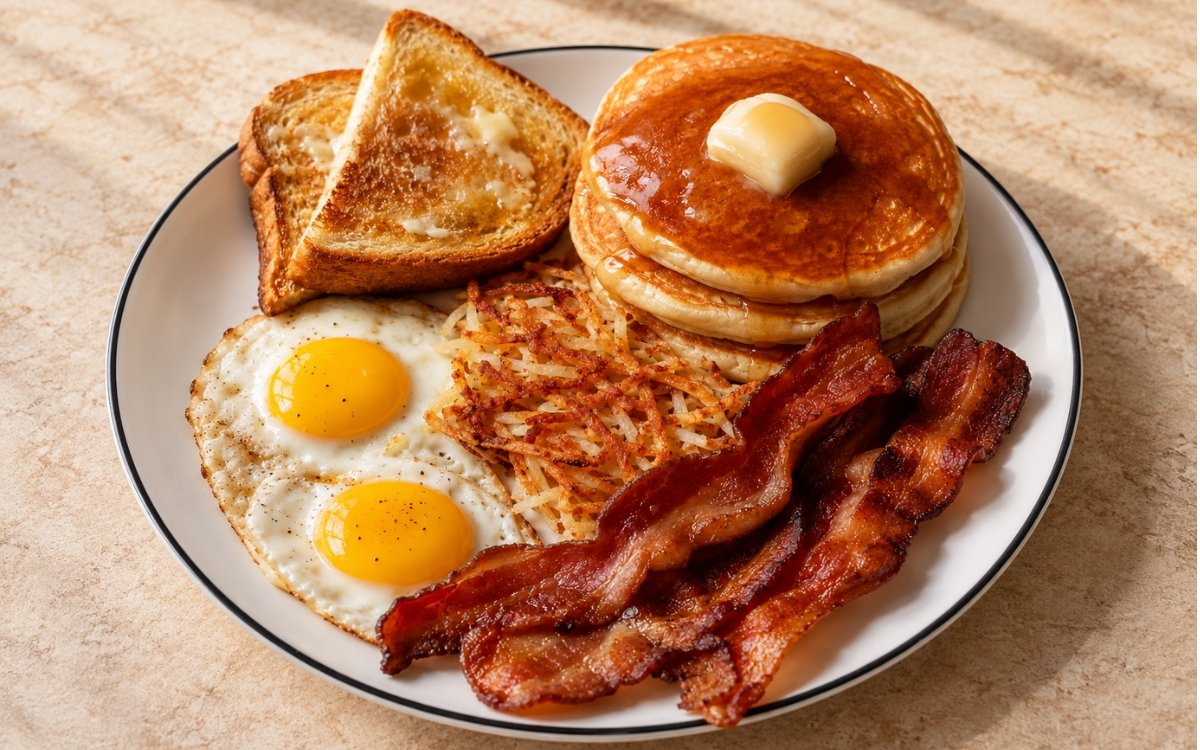
A classic American diner breakfast plate with sunny-side-up eggs, crispy bacon, golden hash browns, buttered toast, and a small stack of fluffy buttermilk pancakes with melting butter and maple syrup. The key is cooking the bacon and hash browns first, holding them warm, making the pancakes next, and frying the eggs last so the yolks stay glossy and runny. Working through this plate’s components in a genuine, deliberate order — bacon and hash browns first, pancakes next, eggs strictly last — is the technique this whole breakfast depends on, since each component’s own cooking time is respected only by scheduling everything backward from the eggs’ brief, final cook, the same slowest-first sequencing principle used elsewhere in this collection whenever a multi-component plate needs every element to arrive hot and properly finished at the same moment. Squeezing every last bit of moisture from the grated potatoes is what makes the real difference between genuinely crisp hash browns and pale, steamed ones. Frying the eggs only at the very end, once every other component is already warm and waiting, is what delivers this dish’s whole point — glossy, runny yolks landing hot on a plate where nothing else has to wait. The payoff is a plate with real, classic diner variety — crisp bacon and hash browns, fluffy pancakes, buttered toast, and perfectly sunny eggs, all arriving together at their individual best.
Prep Time : 25 min
Cook Time : 35 min
Servings : 4
25 min
35 min
4
Ingredients
For the Buttermilk Pancakes
• 240g all-purpose flour
• 30g granulated sugar
• 10g baking powder
• 2g baking soda
• 5g fine sea salt
• 2 large eggs
• 480ml buttermilk
• 45g unsalted butter, melted and slightly cooled
• 1 tsp vanilla extract, optional
• Extra butter or neutral oil, for cooking — this one on Amazon
For the Hash Browns
• 700g russet potatoes or starchy potatoes, peeled
• 30ml neutral oil
• 30g unsalted butter
• 5g fine sea salt, plus more to taste — this one on Amazon
• Black pepper, to taste
For the Bacon
• 12 bacon strips
For the Eggs
• 8 large eggs
• 20g unsalted butter
• 10ml neutral oil
• Fine sea salt, to taste
• Black pepper, to taste
For the Toast and Serving
• 8 slices white sandwich bread or thick toast bread
• 40g softened butter, for toast
• Maple syrup, for serving
• Extra butter, for the pancakes
This post may contain affiliate links. As an Amazon Associate I earn from qualifying purchases, at no additional cost to you.
Directions
- Prep the Pancake Batter
In a large bowl, whisk together the flour, sugar, baking powder, baking soda, and salt. In a second bowl, whisk together the eggs, buttermilk, melted butter, and vanilla if using. Pour the wet ingredients into the dry ingredients and stir just until combined. A few small lumps are fine. Let the batter rest while you start the rest of the breakfast. Do not beat the batter smooth. Overmixing makes pancakes rubbery instead of soft and fluffy. Stopping the mixing the moment everything is combined, rather than continuing for a smoother-looking batter, is what protects the finished pancakes from toughening — flour’s gluten develops more the longer it’s worked, and this batter has genuinely little need for that extra structure. - Prep the Hash Browns
Grate the potatoes on the large holes of a box grater. Rinse them under cold water until the water runs mostly clear, then drain very well. Wrap the grated potatoes in a clean towel and squeeze hard until as much moisture as possible is removed. Dry potatoes are the difference between crisp hash browns and steamed, pale potatoes. Squeeze more than you think you need to. That aggressive squeezing removes surface starch and moisture that would otherwise convert to steam the moment the shreds hit the hot pan, working directly against the crisp crust this recipe is built around. - Cook the Bacon
Place the bacon strips in a cold large skillet, then set over medium heat. Cook for 8 to 12 minutes, turning as needed, until browned and crisp. Transfer to a paper towel-lined plate, then keep warm in a low oven around 90–100°C. Start bacon in a cold pan so the fat renders gradually. If the pan is too hot too fast, the bacon can scorch before it crisps evenly. That gradual heat gives the bacon’s own fat genuine time to melt out as the pan slowly comes up to temperature, rather than seizing and browning unevenly the way bacon dropped into an already-hot pan tends to. - Cook the Hash Browns
Heat a large skillet over medium-high heat. Add the oil and butter. Add the shredded potatoes in a fairly even layer. Press them down lightly, then cook undisturbed for 5 to 7 minutes, until the underside is deep golden and crisp. Flip in sections, season with salt and black pepper, and cook another 5 to 7 minutes, until crisp and golden throughout. Transfer to the low oven with the bacon. Do not stir constantly. Hash browns need steady contact with the pan to form a crisp crust. Leaving the potatoes genuinely undisturbed for that first several minutes gives them the sustained, direct pan contact real browning depends on — constant stirring interrupts that contact before a proper crust ever has a chance to form. - Cook the Pancakes
Heat a griddle or nonstick skillet over medium heat. Lightly butter or oil the surface. Scoop about 60ml batter per pancake onto the hot surface. Cook for 2 to 3 minutes, until bubbles form on top and the edges look slightly set. Flip and cook another 1 to 2 minutes, until golden and cooked through. Repeat until you have about 12 small pancakes. Keep warm loosely covered or in the low oven. Flip when the bubbles stay open and the edges look set. If you flip too early, the pancakes spread and lose height. Waiting for that specific visual cue — open bubbles and set edges — confirms the batter has firmed up enough structurally to hold its shape once flipped, rather than spreading thin across the hot surface. - Make the Toast
Toast the bread until golden. Butter while hot, then cut into triangles if you want the classic diner-plate look. Do not cover tightly, or the toast will steam and soften. Buttering the toast while it’s still genuinely hot lets that butter melt in and soak slightly rather than sitting as an unmelted layer on top. - Fry the Eggs Last
Heat a large nonstick or well-seasoned skillet over medium heat. Add the butter and oil. Crack in the eggs and fry for 2 to 3 minutes, until the whites are set and the yolks are still glossy and runny. Season with salt and black pepper. The whites should be fully set, but the yolks should still move slightly when the pan is tilted. Cook the eggs last so they hit the plate hot. Every earlier component on this plate was cooked and held warm specifically so the eggs could be the very last thing to hit the pan — that sequencing is what delivers glossy, runny yolks onto a plate where everything else is already properly hot and ready. - Plate the Breakfast
On each plate, arrange 2 sunny-side-up eggs, 3 bacon strips, a portion of crispy hash browns, 2 buttered toast triangles, and 3 small buttermilk pancakes, with butter and maple syrup for the pancakes. Serve immediately. Serving without any real delay is what actually delivers this plate’s whole point — every component, from the crisp hash browns to the glossy, just-fried eggs, is at its own individual best only in the moments right after cooking.
*Notes :
- Working through this plate’s many components in a genuine, deliberate order — bacon and hash browns first, pancakes next, eggs strictly last — deserves recognition as the organizing principle behind the entire recipe. This diner-style plate carries real variety, with components ranging from crisp hash browns needing real, sustained pan time to eggs needing barely three minutes — respecting each one’s own real cooking time is what lets every element arrive at the final plate properly finished rather than some overcooked while others lag behind.
- Squeezing the grated potatoes far more aggressively than instinct might suggest deserves genuine respect as the single detail most responsible for whether these hash browns turn out crisp or pale and steamed. Any residual surface moisture converts directly to steam the instant the shreds hit the hot pan, and that steam actively works against the direct pan contact real browning depends on — thorough squeezing is what removes that moisture before it ever has the chance to interfere.
- Starting the bacon in a cold pan, rather than an already-hot one, deserves the same attention this technique receives throughout this collection’s other bacon-forward dishes. That gradual approach lets the fat render out evenly as the pan slowly comes up to temperature, producing consistently crisp bacon rather than the unevenly seized, scorched result bacon dropped into a hot pan tends to produce.
- Frying the eggs only at the very end, after every other component is already cooked and held warm, deserves the same respect this collection gives to any dish built around a final, time-sensitive centrepiece. This entire recipe’s sequencing exists to make that possible — every earlier stage is deliberately timed backward from the eggs’ own brief cook, ensuring the whole plate can be served the moment those glossy, still-runny yolks are ready.
Why This Recipe Works
This recipe works because every component is cooked in a genuine, deliberate order based on its own real cooking time, with the slowest and most hands-on elements — bacon and hash browns — started first. The potatoes are squeezed thoroughly dry, protecting their ability to actually crisp rather than steam.
The pancake batter is mixed only until combined, protecting tenderness, and the pancakes are flipped only once a specific visual cue confirms they’re structurally ready. Frying the eggs only once everything else is warm and waiting delivers this dish’s essential, glossy, runny-yolked centrepiece at exactly the right moment.
Ingredient Breakdown
Thoroughly Squeezed Grated Potatoes
The critical technique — removing as much moisture as possible protects the hash browns’ ability to actually crisp rather than steam.
Cold-Started Bacon
The critical technique — gradual rendering alongside the heating pan produces evenly crisp bacon rather than unevenly seized results.
Minimally Mixed Pancake Batter
The critical technique — stopping at “just combined” protects tenderness by avoiding unnecessary gluten development.
Undisturbed Hash Brown Searing
The critical technique — sustained, direct pan contact is what actually builds a real, crisp crust.
Last-Fried Eggs (Glossy, Runny Yolks)
The centrepiece and organizing principle — every earlier stage exists to make this final, time-sensitive component possible.
Flavor Structure Explained
This classic American breakfast plate follows a layered balance model:
- Crisp savoury foundation (bacon, hash browns)
- Sweet fluffy body (buttermilk pancakes, maple syrup)
- Buttery neutral base (toast)
- Glossy soft centrepiece (last-fried sunny-side-up eggs)
Crisp bacon and hash browns provide this plate’s savoury, crunchy foundation. Fluffy buttermilk pancakes, finished with butter and maple syrup, add sweet, classic diner-style body. Buttered toast contributes a neutral, familiar base. Sunny-side-up eggs, fried strictly last with their yolks still glossy and runny, finish the whole plate as its soft, rich centrepiece, tying every component together in the same hot, freshly cooked moment.
Common Mistakes to Avoid
- Not Squeezing the Potatoes Dry Enough – This produces steamed, pale hash browns rather than crisp ones. Always squeeze out far more moisture than seems necessary.
- Starting the Bacon in a Hot Pan – This causes uneven rendering and scorching. Always start it cold and let the pan heat gradually alongside it.
- Overmixing the Pancake Batter – This makes the pancakes rubbery rather than soft and fluffy. Always stop as soon as the ingredients are combined.
- Stirring the Hash Browns Too Often – This prevents a real, crisp crust from forming. Always let them cook mostly undisturbed.
- Cooking the Eggs Too Early – This leaves them cold and firm by the time the rest of the plate is ready. Always fry them strictly last.
Variations
Frozen Hash Brown Version
Use frozen shredded hash browns, thawed and squeezed dry first, per the recipe’s own note, for a quicker alternative.
Large Pancake Version
Make fewer, larger pancakes instead of small diner-style ones, adjusting the cook time slightly.
Extra-Crispy Bacon Version
Extend the bacon’s cooking time slightly for a more brittle, deeply crisp finish.
Sausage Swap Version
Substitute breakfast sausage links or patties for the bacon for a different classic protein.
Storage & Make-Ahead
For the most classic diner feel, use small thick pancakes rather than one large pancake.
A low oven is useful for holding bacon, hash browns, and pancakes while the eggs cook.
Do not hold fried eggs in the oven. They should be cooked last and served immediately.
Frequently Asked Questions
Why does the order of cooking matter so much for this breakfast?
This plate carries real variety in cooking times, from hash browns needing real, sustained pan time to eggs needing barely three minutes. Starting with the slowest, most hands-on components and finishing with the eggs is what lets every element arrive properly finished together.
Why do the grated potatoes need to be squeezed so aggressively before cooking?
Any residual surface moisture converts directly to steam the instant the shreds hit the hot pan, working against real browning. Thorough squeezing removes that moisture before it can interfere with the hash browns’ ability to actually crisp.
Why does the bacon need to start in a cold pan rather than a hot one?
Starting cold gives the fat genuine time to render out evenly as the pan heats alongside it. Bacon dropped into an already-hot pan tends to seize and scorch unevenly before its interior fat has fully rendered.
Why are the eggs cooked strictly last, after everything else is already warm?
Every earlier stage of this recipe is deliberately timed backward from the eggs’ own brief cook. That sequencing is what delivers glossy, still-runny yolks onto a plate where every other component is already properly hot and ready.
Are there other classic breakfast plate or hearty morning dishes worth trying?
Full English Breakfast offers a related, similarly hearty multi-component breakfast worth exploring. Classic Belgian Waffles with Berries and Breakfast Hash with Eggs and Potatoes are also worth trying for other classic morning directions, and Blueberry Buttermilk Pancakes offers a related, fruit-forward pancake worth exploring.
Nutrition Facts
( per serving )
Calories
~1080 kcal
Protein
40 g
Fat
54 g
Carbs
108 g
Calories
~1080 kcal
Protein
40 g
Fat
54 g
Carbs
108 g
Related Recipes
Related Recipes

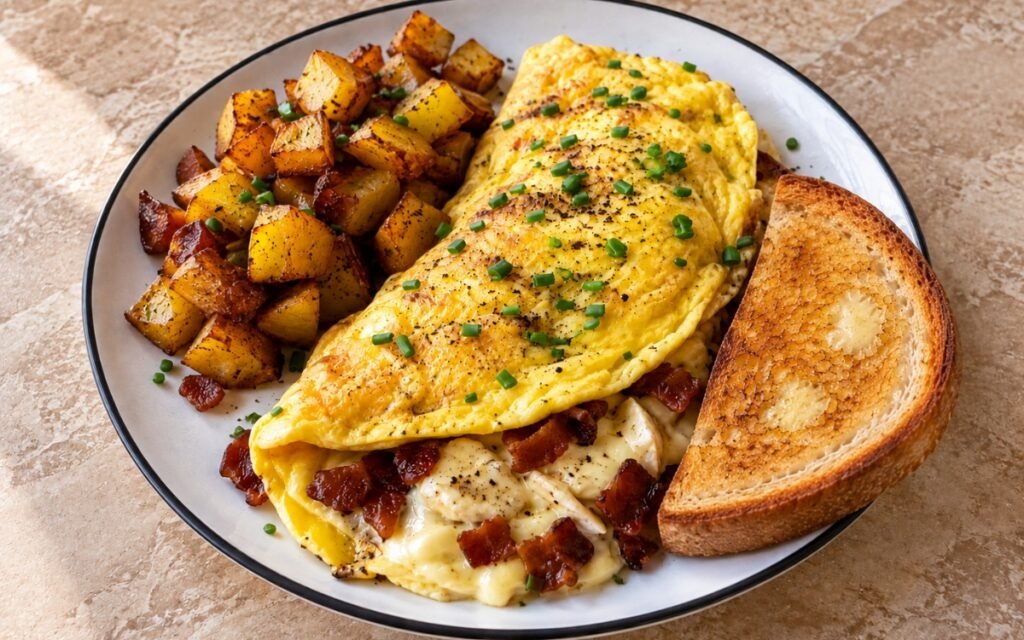
Brie and Bacon Omelette
A soft folded omelette filled with creamy melted Brie and crispy bacon, served with golden breakfast potatoes and buttered toast.
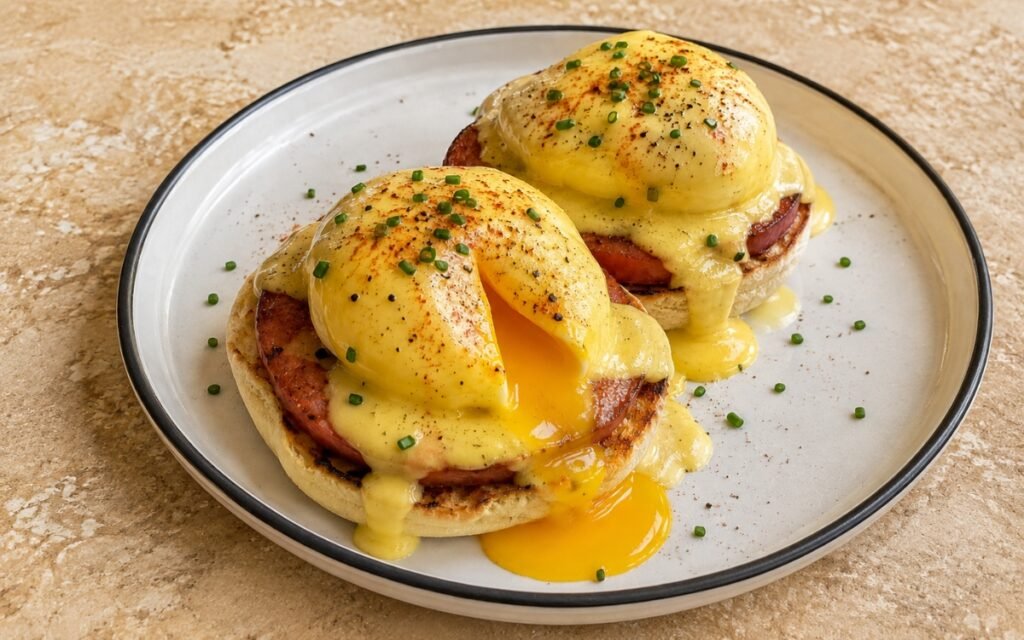
Eggs Benedict
Toasted English muffin halves topped with warm ham, perfectly poached eggs, and a thick glossy hollandaise sauce.
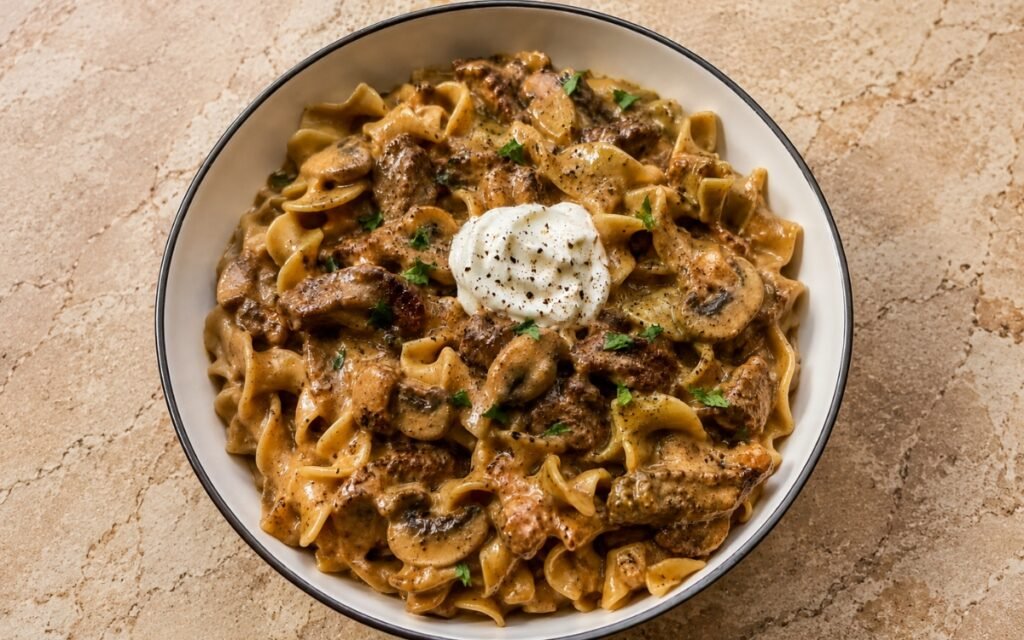
Beef Stroganoff
Tender seared beef, properly browned mushrooms, and a rich, glossy sour cream sauce over buttery egg noodles.
You might also like
You might also like
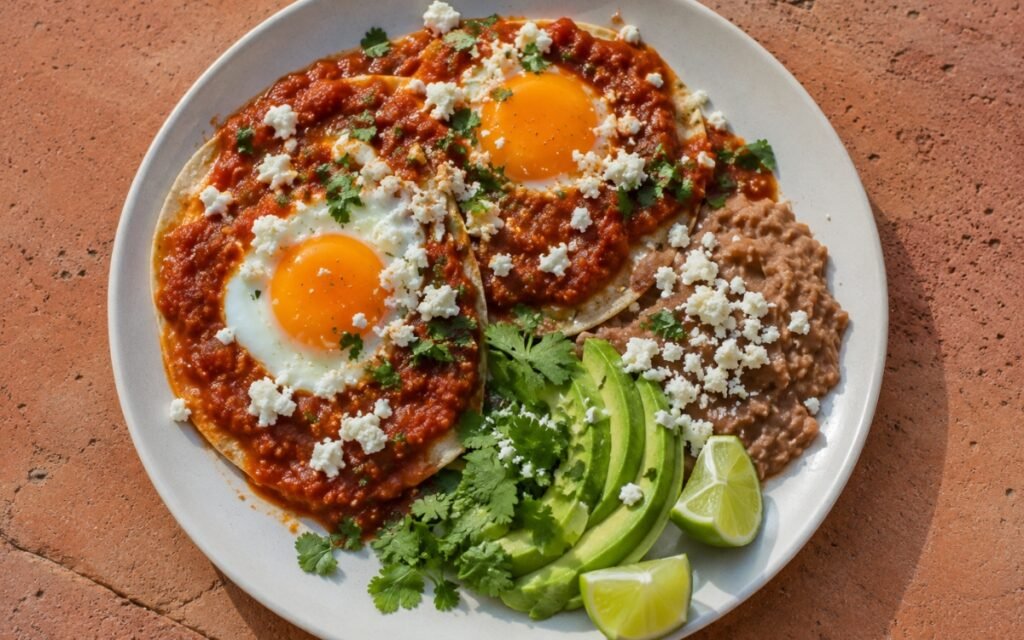
Huevos Rancheros
Fried eggs with bright runny yolks served on warm corn tortillas, covered in chunky red ranchero sauce, with refried beans and avocado.
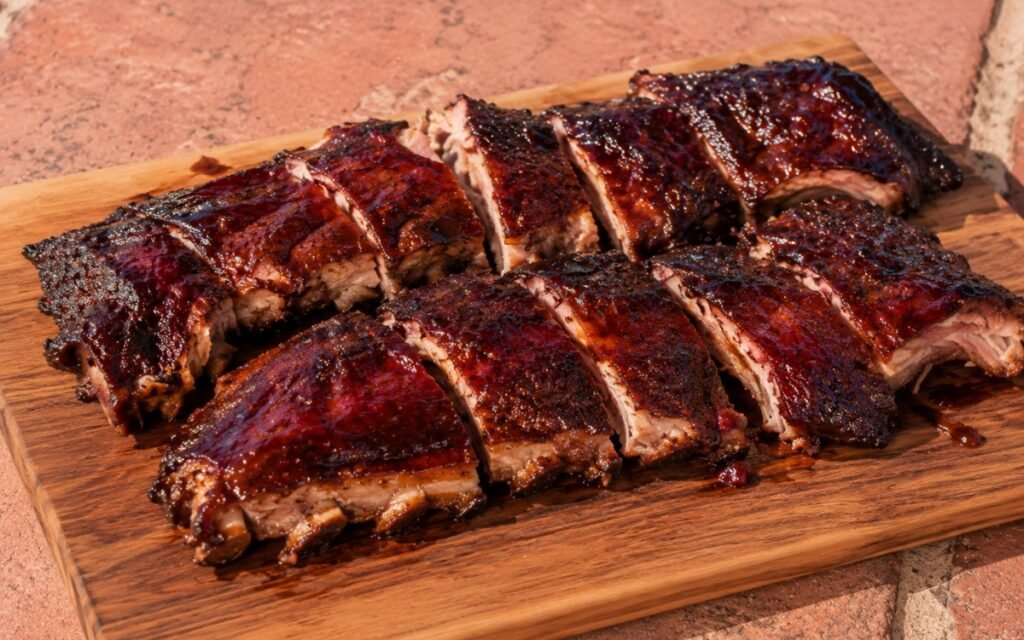
BBQ Baby Back Ribs
Spice-rubbed baby back ribs slow-baked until tender, then grilled and glazed in layers with a smoky chipotle barbecue sauce.
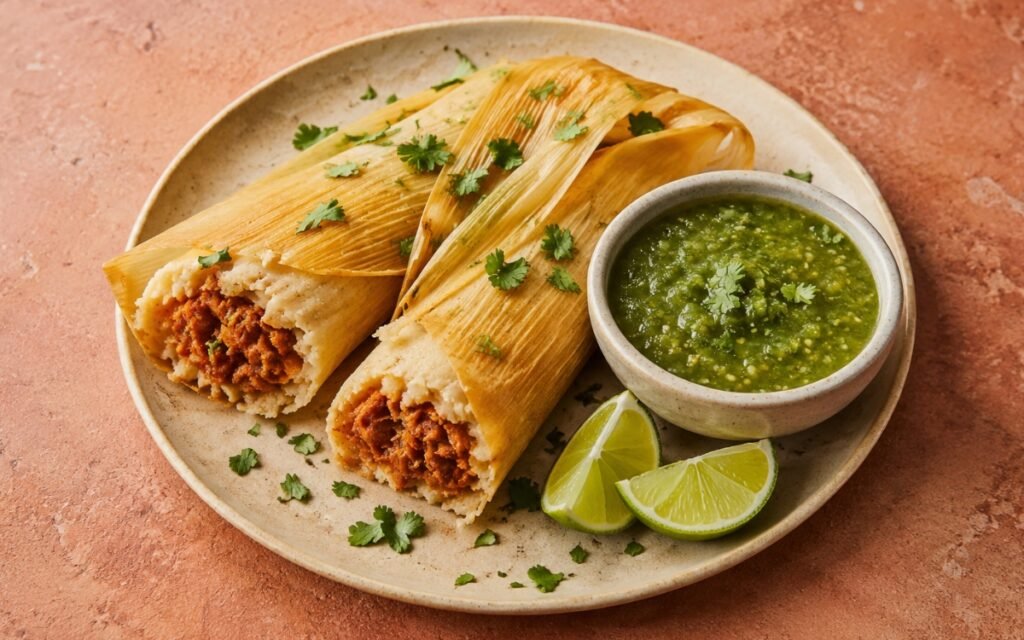
Pork Tamales with Salsa Verde
Braised, shredded pork in a glossy red chile sauce, wrapped in tender, broth-hydrated masa, and steamed in corn husks. Served with bright salsa verde.
Classic American Breakfast Plate
Ingredients
Method
- In a large bowl, whisk together the flour, sugar, baking powder, baking soda, and salt. In a second bowl, whisk together the eggs, buttermilk, melted butter, and vanilla if using. Pour the wet ingredients into the dry ingredients and stir just until combined. A few small lumps are fine. Let the batter rest while you start the rest of the breakfast. Do not beat the batter smooth. Overmixing makes pancakes rubbery instead of soft and fluffy. Stopping the mixing the moment everything is combined, rather than continuing for a smoother-looking batter, is what protects the finished pancakes from toughening — flour’s gluten develops more the longer it’s worked, and this batter has genuinely little need for that extra structure.
- Grate the potatoes on the large holes of a box grater. Rinse them under cold water until the water runs mostly clear, then drain very well. Wrap the grated potatoes in a clean towel and squeeze hard until as much moisture as possible is removed. Dry potatoes are the difference between crisp hash browns and steamed, pale potatoes. Squeeze more than you think you need to. That aggressive squeezing removes surface starch and moisture that would otherwise convert to steam the moment the shreds hit the hot pan, working directly against the crisp crust this recipe is built around.
- Place the bacon strips in a cold large skillet, then set over medium heat. Cook for 8 to 12 minutes, turning as needed, until browned and crisp. Transfer to a paper towel-lined plate, then keep warm in a low oven around 90–100°C. Start bacon in a cold pan so the fat renders gradually. If the pan is too hot too fast, the bacon can scorch before it crisps evenly. That gradual heat gives the bacon’s own fat genuine time to melt out as the pan slowly comes up to temperature, rather than seizing and browning unevenly the way bacon dropped into an already-hot pan tends to.
- Heat a large skillet over medium-high heat. Add the oil and butter. Add the shredded potatoes in a fairly even layer. Press them down lightly, then cook undisturbed for 5 to 7 minutes, until the underside is deep golden and crisp. Flip in sections, season with salt and black pepper, and cook another 5 to 7 minutes, until crisp and golden throughout. Transfer to the low oven with the bacon. Do not stir constantly. Hash browns need steady contact with the pan to form a crisp crust. Leaving the potatoes genuinely undisturbed for that first several minutes gives them the sustained, direct pan contact real browning depends on — constant stirring interrupts that contact before a proper crust ever has a chance to form.
- Heat a griddle or nonstick skillet over medium heat. Lightly butter or oil the surface. Scoop about 60ml batter per pancake onto the hot surface. Cook for 2 to 3 minutes, until bubbles form on top and the edges look slightly set. Flip and cook another 1 to 2 minutes, until golden and cooked through. Repeat until you have about 12 small pancakes. Keep warm loosely covered or in the low oven. Flip when the bubbles stay open and the edges look set. If you flip too early, the pancakes spread and lose height. Waiting for that specific visual cue — open bubbles and set edges — confirms the batter has firmed up enough structurally to hold its shape once flipped, rather than spreading thin across the hot surface.
- Toast the bread until golden. Butter while hot, then cut into triangles if you want the classic diner-plate look. Do not cover tightly, or the toast will steam and soften. Buttering the toast while it’s still genuinely hot lets that butter melt in and soak slightly rather than sitting as an unmelted layer on top.
- Heat a large nonstick or well-seasoned skillet over medium heat. Add the butter and oil. Crack in the eggs and fry for 2 to 3 minutes, until the whites are set and the yolks are still glossy and runny. Season with salt and black pepper. The whites should be fully set, but the yolks should still move slightly when the pan is tilted. Cook the eggs last so they hit the plate hot. Every earlier component on this plate was cooked and held warm specifically so the eggs could be the very last thing to hit the pan — that sequencing is what delivers glossy, runny yolks onto a plate where everything else is already properly hot and ready.
- On each plate, arrange 2 sunny-side-up eggs, 3 bacon strips, a portion of crispy hash browns, 2 buttered toast triangles, and 3 small buttermilk pancakes, with butter and maple syrup for the pancakes. Serve immediately. Serving without any real delay is what actually delivers this plate’s whole point — every component, from the crisp hash browns to the glossy, just-fried eggs, is at its own individual best only in the moments right after cooking.