Ingredients
Method
Prep the Pancake Batter
- In a large bowl, whisk together the flour, sugar, baking powder, baking soda, and salt. In a second bowl, whisk together the eggs, buttermilk, melted butter, and vanilla if using. Pour the wet ingredients into the dry ingredients and stir just until combined. A few small lumps are fine. Let the batter rest while you start the rest of the breakfast. Do not beat the batter smooth. Overmixing makes pancakes rubbery instead of soft and fluffy. Stopping the mixing the moment everything is combined, rather than continuing for a smoother-looking batter, is what protects the finished pancakes from toughening — flour's gluten develops more the longer it's worked, and this batter has genuinely little need for that extra structure.
Prep the Hash Browns
- Grate the potatoes on the large holes of a box grater. Rinse them under cold water until the water runs mostly clear, then drain very well. Wrap the grated potatoes in a clean towel and squeeze hard until as much moisture as possible is removed. Dry potatoes are the difference between crisp hash browns and steamed, pale potatoes. Squeeze more than you think you need to. That aggressive squeezing removes surface starch and moisture that would otherwise convert to steam the moment the shreds hit the hot pan, working directly against the crisp crust this recipe is built around.
Cook the Bacon
- Place the bacon strips in a cold large skillet, then set over medium heat. Cook for 8 to 12 minutes, turning as needed, until browned and crisp. Transfer to a paper towel-lined plate, then keep warm in a low oven around 90–100°C. Start bacon in a cold pan so the fat renders gradually. If the pan is too hot too fast, the bacon can scorch before it crisps evenly. That gradual heat gives the bacon's own fat genuine time to melt out as the pan slowly comes up to temperature, rather than seizing and browning unevenly the way bacon dropped into an already-hot pan tends to.
Cook the Hash Browns
- Heat a large skillet over medium-high heat. Add the oil and butter. Add the shredded potatoes in a fairly even layer. Press them down lightly, then cook undisturbed for 5 to 7 minutes, until the underside is deep golden and crisp. Flip in sections, season with salt and black pepper, and cook another 5 to 7 minutes, until crisp and golden throughout. Transfer to the low oven with the bacon. Do not stir constantly. Hash browns need steady contact with the pan to form a crisp crust. Leaving the potatoes genuinely undisturbed for that first several minutes gives them the sustained, direct pan contact real browning depends on — constant stirring interrupts that contact before a proper crust ever has a chance to form.
Cook the Pancakes
- Heat a griddle or nonstick skillet over medium heat. Lightly butter or oil the surface. Scoop about 60ml batter per pancake onto the hot surface. Cook for 2 to 3 minutes, until bubbles form on top and the edges look slightly set. Flip and cook another 1 to 2 minutes, until golden and cooked through. Repeat until you have about 12 small pancakes. Keep warm loosely covered or in the low oven. Flip when the bubbles stay open and the edges look set. If you flip too early, the pancakes spread and lose height. Waiting for that specific visual cue — open bubbles and set edges — confirms the batter has firmed up enough structurally to hold its shape once flipped, rather than spreading thin across the hot surface.
Make the Toast
- Toast the bread until golden. Butter while hot, then cut into triangles if you want the classic diner-plate look. Do not cover tightly, or the toast will steam and soften. Buttering the toast while it's still genuinely hot lets that butter melt in and soak slightly rather than sitting as an unmelted layer on top.
Fry the Eggs Last
- Heat a large nonstick or well-seasoned skillet over medium heat. Add the butter and oil. Crack in the eggs and fry for 2 to 3 minutes, until the whites are set and the yolks are still glossy and runny. Season with salt and black pepper. The whites should be fully set, but the yolks should still move slightly when the pan is tilted. Cook the eggs last so they hit the plate hot. Every earlier component on this plate was cooked and held warm specifically so the eggs could be the very last thing to hit the pan — that sequencing is what delivers glossy, runny yolks onto a plate where everything else is already properly hot and ready.
Plate the Breakfast
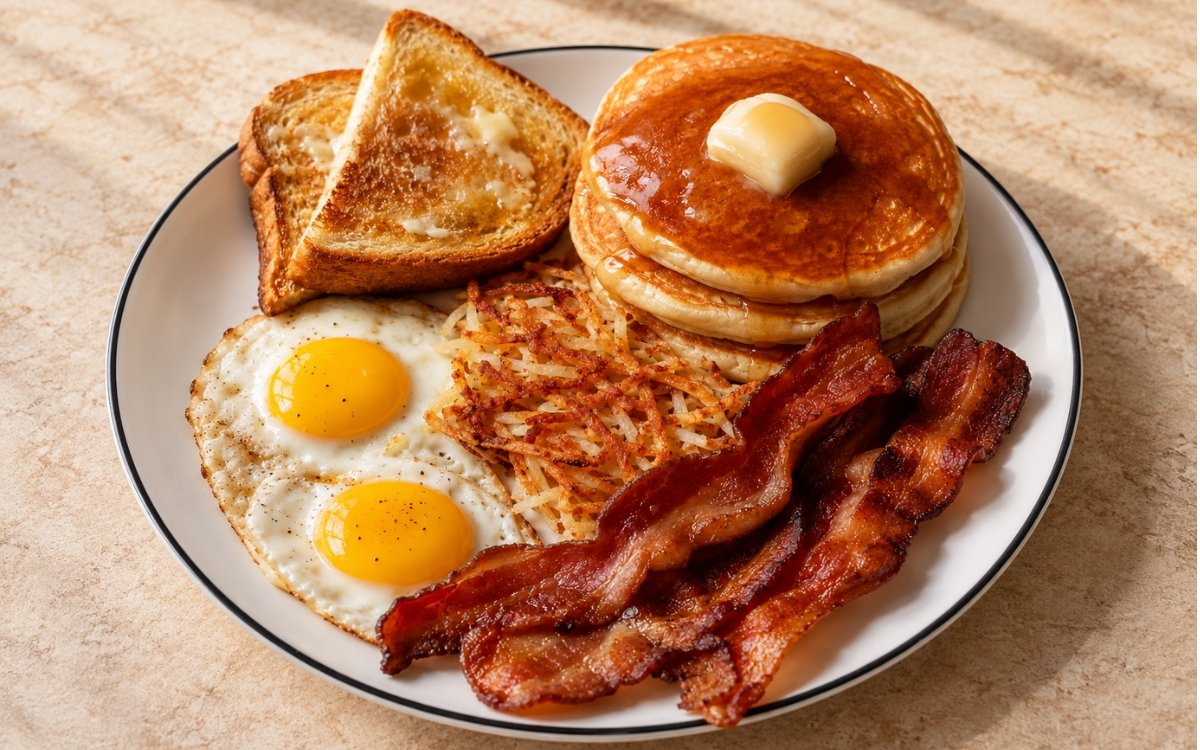
- On each plate, arrange 2 sunny-side-up eggs, 3 bacon strips, a portion of crispy hash browns, 2 buttered toast triangles, and 3 small buttermilk pancakes, with butter and maple syrup for the pancakes. Serve immediately. Serving without any real delay is what actually delivers this plate's whole point — every component, from the crisp hash browns to the glossy, just-fried eggs, is at its own individual best only in the moments right after cooking.
Notes
Working through this plate's many components in a genuine, deliberate order — bacon and hash browns first, pancakes next, eggs strictly last — deserves recognition as the organizing principle behind the entire recipe. This diner-style plate carries real variety, with components ranging from crisp hash browns needing real, sustained pan time to eggs needing barely three minutes — respecting each one's own real cooking time is what lets every element arrive at the final plate properly finished rather than some overcooked while others lag behind.
Squeezing the grated potatoes far more aggressively than instinct might suggest deserves genuine respect as the single detail most responsible for whether these hash browns turn out crisp or pale and steamed. Any residual surface moisture converts directly to steam the instant the shreds hit the hot pan, and that steam actively works against the direct pan contact real browning depends on — thorough squeezing is what removes that moisture before it ever has the chance to interfere.
Starting the bacon in a cold pan, rather than an already-hot one, deserves the same attention this technique receives throughout this collection's other bacon-forward dishes. That gradual approach lets the fat render out evenly as the pan slowly comes up to temperature, producing consistently crisp bacon rather than the unevenly seized, scorched result bacon dropped into a hot pan tends to produce.
Frying the eggs only at the very end, after every other component is already cooked and held warm, deserves the same respect this collection gives to any dish built around a final, time-sensitive centrepiece. This entire recipe's sequencing exists to make that possible — every earlier stage is deliberately timed backward from the eggs' own brief cook, ensuring the whole plate can be served the moment those glossy, still-runny yolks are ready.