
Lemon Poppyseed Crepes
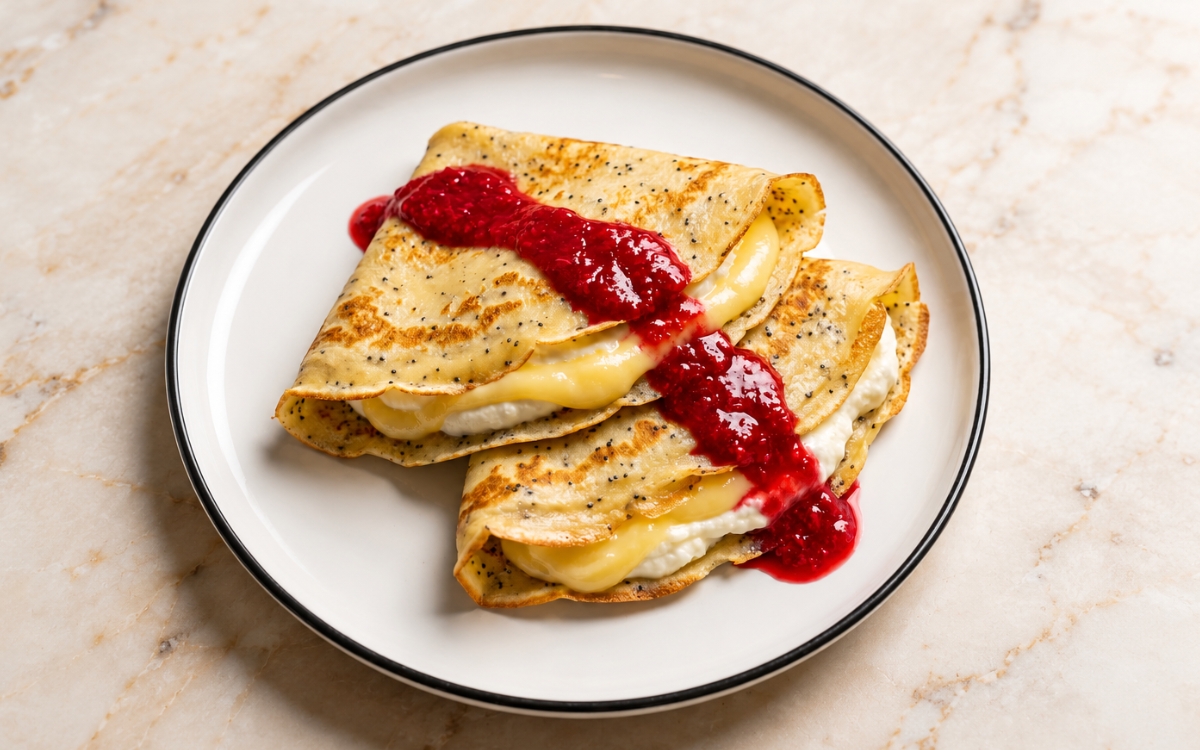
Delicate lemon poppyseed crepes folded around a generous filling of silky lemon curd and whipped ricotta, then finished with a vivid raspberry mash spooned over the top, the crepes thin, soft, lightly golden, and tender with creamy filling visible at the open edges. Resting the crepe batter for a full 30 minutes before cooking is the step the entire texture depends on — the same hydration-and-relaxation pause used elsewhere in this collection whenever a thin batter needs time for the flour to fully absorb liquid before it hits a hot pan. Cooling the lemon curd completely before assembly protects the whipped ricotta from melting on contact, and draining the ricotta well beforehand is what keeps the filling light rather than loose enough to soak through the delicate crepes.

Prep Time : 35 min
Total Time : 1 hr 35 min
Servings : 4
35 min
1 hr 35 min
4
Ingredients
Crepe Batter
• 120 g all-purpose flour
• 20 g granulated sugar
• ¼ tsp fine salt
• 1 tbsp poppy seeds
• Finely grated zest of 1 lemon
• 2 large eggs
• 300 ml whole milk
• 60 ml water
• 30 g unsalted butter, melted and slightly cooled
• ½ tsp vanilla extract
• Butter or neutral oil, for lightly greasing the pan
Lemon Curd
• 2 large eggs
• 2 large egg yolks
• 120 g granulated sugar
• 120 ml fresh lemon juice
• Finely grated zest of 1 lemon
• Pinch of fine salt
• 85 g unsalted butter, cut into small pieces
Whipped Ricotta Filling
• 300 g whole milk ricotta, well drained
• 120 ml cold heavy cream
• 30 g powdered sugar
• ½ tsp vanilla extract
• Finely grated zest of ½ lemon
Raspberry Mash
• 180 g fresh or frozen raspberries
• 20–30 g granulated sugar, to taste
• 1 tsp lemon juice
Directions
- Make the Lemon Curd
Whisk together the eggs, egg yolks, sugar, lemon juice, lemon zest, and salt in a heatproof bowl or saucepan until smooth. Cook over low heat directly in a heavy saucepan, or over a double boiler, stirring constantly with a spatula, until the curd thickens enough to coat the spatula and reaches about 82–84°C — don’t let it boil, or the eggs may scramble. Remove from the heat and immediately whisk in the butter a few pieces at a time until fully emulsified and glossy, straining through a fine sieve if a perfectly smooth texture matters to you. Press plastic wrap directly onto the surface and cool until no longer warm, then chill until thick enough to spread without running. - Mix and Rest the Crepe Batter
Whisk together the flour, sugar, salt, poppy seeds, and lemon zest in a bowl. In a separate bowl or measuring jug, whisk the eggs, milk, water, melted butter, and vanilla, then gradually whisk that wet mixture into the dry ingredients until smooth, with no flour pockets remaining, straining if needed for an extra-smooth batter. Cover and rest the batter for 30 minutes — this hydrates the flour and relaxes the gluten, which is what lets the crepes cook thin and tender rather than tough. After resting, the batter should be fluid like light cream; whisk in 1 to 2 tablespoons of milk if it’s thickened too much. - Make the Whipped Ricotta Filling
Drain the ricotta well if it looks wet, then combine it with the powdered sugar, vanilla, and lemon zest in a bowl and beat or whisk until smooth. Whip the cold heavy cream to medium peaks in a separate bowl, then fold it gently into the ricotta mixture until smooth, light, and fluffy. Chill until needed — the filling should end up airy but still hold its shape. - Make the Raspberry Mash
Place the raspberries, sugar, and lemon juice in a small saucepan over medium-low heat and cook for 3 to 5 minutes, stirring and lightly crushing the berries, until they break down into a thick, spoonable mash. Cook just until slightly thickened — it should still look fresh and bright, not jammy and over-reduced. Cool before using. - Cook the Crepes
Heat a 20–22 cm nonstick skillet or crepe pan over medium heat, lightly grease it with butter or oil, and wipe away any excess. Whisk the batter once more, then pour in about 55–60 ml per crepe, immediately swirling the pan to coat the base in a thin, even layer. Cook the first side for about 45 to 60 seconds, until the surface looks set, the edges begin to dry, and the underside shows light golden spots, then flip and cook the second side for just 10 to 20 seconds. Transfer to a plate and continue with the remaining batter, lightly greasing the pan only as needed, stacking the crepes as they cook. You should end up with 8 crepes total. - Fill and Fold
Lay out the crepes and spread each with about 1 tablespoon of lemon curd and a generous spoonful of whipped ricotta, keeping the filling mostly in the center and leaving a small border so it doesn’t squeeze out too heavily. Fold each crepe into a rolled or folded rectangle shape, depending on your presentation preference, keeping the filling generous enough that some stays visible at the open edges. - Finish and Serve
Arrange 2 crepes per serving and spoon raspberry mash in a vivid streak over the top of each portion. Serve immediately, or chill briefly if you want the filling slightly firmer.
*Notes :
- Resting the crepe batter for the full 30 minutes isn’t a step worth skipping even when you’re short on time. Unrested batter tends to produce crepes that tear more easily and cook up slightly tougher, since the flour hasn’t had the chance to fully hydrate or the gluten time to relax.
- Draining the ricotta well before using it protects the whole assembly from two directions at once. Excess moisture makes the whipped filling loose and harder to hold its shape, and that same moisture can soak into the delicate crepes themselves if the filling sits for any length of time before serving.
- Cooling the lemon curd completely before it touches the whipped ricotta is worth treating as a firm rule rather than a suggestion. A curd that’s even slightly warm will soften the airy ricotta filling on contact, undoing the light, fluffy texture the whipping step was meant to create.
- Cooking the crepes lightly, with the second side getting only 10 to 20 seconds, keeps them pale gold rather than crisp. These are meant to stay soft and foldable, and a browner, crisper crepe would crack rather than fold cleanly around the filling.
Why This Recipe Works
This recipe works because resting the batter lets the flour fully hydrate, producing crepes thin and tender enough to fold without tearing. Cooking each crepe briefly on both sides keeps them pale and pliable rather than crisp, which matters for a recipe that depends on clean folding around a substantial filling. Cooling the lemon curd fully before assembly protects the whipped ricotta from melting, and whipping the cream only to medium peaks before folding it into the ricotta keeps that filling light and airy rather than dense. The raspberry mash, cooked just until thickened rather than reduced into jam, finishes the dish with a bright, fresh contrast against the rich filling underneath.
Ingredient Breakdown
Rested Crepe Batter
The critical texture technique — resting hydrates the flour for thin, tender crepes that fold without tearing.
Lemon Curd
The tart, silky filling — cooked gently and emulsified with butter for a glossy, smooth texture.
Drained Ricotta
The filling’s foundation — excess moisture here would make the finished filling loose and the crepes soggy.
Whipped Cream (Filling)
The lightening technique — folded gently into ricotta for an airy texture that still holds its shape.
Raspberry Mash
The bright finishing contrast — cooked just until thickened so it stays fresh rather than jammy.
Poppy Seeds and Lemon Zest
The flavor signature — built into the batter itself for a crepe that carries flavor beyond the filling.
Flavor Structure Explained
This lemon poppyseed crepe follows a layered balance model:
- Soft, tender foundation (rested crepe batter with lemon and poppy seed)
- Tart, silky core (lemon curd)
- Light, rich body (whipped ricotta filling)
- Bright fresh finish (raspberry mash)
The rested crepe batter, flecked with poppy seeds and lemon zest, forms the soft, tender foundation that wraps around the filling. Lemon curd adds a tart, silky core, while the whipped ricotta filling brings a light, rich body that balances the curd’s sharpness. A spoonful of fresh raspberry mash over the top finishes the dish with the bright, slightly tart contrast the richer components need.
Common Mistakes to Avoid
- Skipping the Batter Rest – This produces crepes that tear more easily and cook up tougher. Always rest the batter for the full 30 minutes before cooking.
- Using Ricotta That Isn’t Well Drained – This makes the filling loose and can soak into the crepes. Always drain the ricotta thoroughly before mixing.
- Assembling Before the Lemon Curd Has Cooled – This melts the whipped ricotta on contact. Always cool the curd completely before filling the crepes.
- Overcooking the Crepes – This makes them crisp and prone to cracking when folded. Always cook them lightly, pale gold rather than browned.
- Over-Reducing the Raspberry Mash – This turns it jammy instead of fresh and bright. Always cook it just until slightly thickened.
Variations
Orange Poppyseed Version
Replace the lemon zest in the batter and filling with orange zest for a sweeter, less tart citrus profile that still pairs well with the raspberry mash on top.
Blueberry Topping Version
Replace the raspberry mash with an equal weight of fresh or frozen blueberries cooked the same way, per the recipe’s own method, for a milder, less acidic berry topping.
Seedless Raspberry Version
Press the cooked raspberry mash through a fine sieve to remove the seeds, per the recipe’s own suggested option, for a smoother topping with the same bright flavor.
Make-Ahead Crepe Version
Cook the crepes up to a day ahead and keep them wrapped in the refrigerator, assembling with the curd, ricotta, and raspberry mash close to serving time for the best texture in both the crepes and the fillings.
Storage & Make-Ahead
The crepes themselves are the component best suited to being made ahead. Cook them up to a day in advance, let them cool, and keep them wrapped tightly in the refrigerator, then bring them to room temperature briefly before filling so they’re pliable rather than stiff.
The lemon curd and whipped ricotta filling can also be made a day ahead and stored separately in sealed containers in the refrigerator. Keep the plastic wrap pressed directly onto the curd’s surface the whole time it chills, since that’s what prevents a skin from forming.
Once the crepes are filled and assembled with the raspberry mash, they’re best eaten the same day. The delicate crepes and airy ricotta filling don’t hold up well to extended refrigeration, and the texture noticeably softens the longer the finished dish sits.
If you want the filling slightly firmer for a cleaner presentation, chill the assembled crepes briefly before serving rather than serving them immediately off the counter. This firms the whipped ricotta just enough to hold its shape more distinctly at the open edges.
Frequently Asked Questions
Why did my crepes tear when I tried to fold them?
This almost always comes down to skipping or shortening the batter rest, since unrested batter produces a tougher, less pliable crepe. Make sure to rest the batter for the full 30 minutes, and cook the crepes lightly rather than letting them brown and crisp.
Why is my filling runny instead of light and fluffy?
This usually traces back to ricotta that wasn’t drained well enough before mixing, since excess moisture keeps the whipped filling from holding its shape. Drain the ricotta thoroughly, and make sure the lemon curd has fully cooled before it’s folded in with the ricotta.
Can I make the components ahead of time?
Yes, and it’s actually recommended. Cook the crepes and make the lemon curd and whipped ricotta a day ahead, storing them separately in the refrigerator, then assemble everything close to serving for the best texture.
Why does my raspberry mash taste jammy instead of fresh?
This comes from cooking it too long or at too high a heat, which reduces it past the thick, spoonable consistency the recipe is aiming for. Cook it only for 3 to 5 minutes, just until slightly thickened, and pull it from the heat while it still looks bright and fresh.
What other crepes, pancakes, and pastries pair well with this one?
Crepes Suzette, Lemon Ricotta Pancakes, Lemon Poppy Seed Crinkle Cookies, Classic Maritozzo, and Dutch Baby Pancake all share similar citrus-forward or cream-filled techniques and make good options to try next.
Nutrition Facts
( Per Serving — 2 filled crepes )
Calories
~480 kcal
Protein
12 g
Fat
28 g
Carbs
44 g
Calories
~480 kcal
Protein
12 g
Fat
28 g
Carbs
44 g
Related Recipes
Related Recipes
-

Strawberry Hibiscus Sugar Cookies
Soft, chewy strawberry hibiscus sugar cookies with a naturally rosy-pink color and lightly crackled tops.
-
Cinnamon Sugar Muffins
Tall bakery-style muffins with a crisp cinnamon-sugar crust and a soft, fluffy crumb.
-
Double Chocolate Muffins
Bakery-style double chocolate muffins with tall domed tops and melted chocolate pockets.


You might also like
You might also like
-
Breakfast Burritos
Soft scrambled eggs, crispy breakfast potatoes, melted cheese, bacon, salsa, and avocado rolled in warm flour tortillas and toasted golden.
-
Blueberry Buttermilk Pancakes
buttermilk batter mixed to 8 strokes with visible lumps — blueberries folded in and added again in the pan. Tall, tender, and golden in 25 minutes.
-
Blackberry Cornmeal Muffins
Bakery-style cornmeal muffins with a tender rustic crumb and blackberry pockets.



Lemon Poppyseed Crepes
Ingredients
Method
- Whisk together the eggs, egg yolks, sugar, lemon juice, lemon zest, and salt in a heatproof bowl or saucepan until smooth. Cook over low heat directly in a heavy saucepan, or over a double boiler, stirring constantly with a spatula, until the curd thickens enough to coat the spatula and reaches about 82–84°C — don’t let it boil, or the eggs may scramble. Remove from the heat and immediately whisk in the butter a few pieces at a time until fully emulsified and glossy, straining through a fine sieve if a perfectly smooth texture matters to you. Press plastic wrap directly onto the surface and cool until no longer warm, then chill until thick enough to spread without running.
- Whisk together the flour, sugar, salt, poppy seeds, and lemon zest in a bowl. In a separate bowl or measuring jug, whisk the eggs, milk, water, melted butter, and vanilla, then gradually whisk that wet mixture into the dry ingredients until smooth, with no flour pockets remaining, straining if needed for an extra-smooth batter. Cover and rest the batter for 30 minutes — this hydrates the flour and relaxes the gluten, which is what lets the crepes cook thin and tender rather than tough. After resting, the batter should be fluid like light cream; whisk in 1 to 2 tablespoons of milk if it’s thickened too much.
- Drain the ricotta well if it looks wet, then combine it with the powdered sugar, vanilla, and lemon zest in a bowl and beat or whisk until smooth. Whip the cold heavy cream to medium peaks in a separate bowl, then fold it gently into the ricotta mixture until smooth, light, and fluffy. Chill until needed — the filling should end up airy but still hold its shape.
- Place the raspberries, sugar, and lemon juice in a small saucepan over medium-low heat and cook for 3 to 5 minutes, stirring and lightly crushing the berries, until they break down into a thick, spoonable mash. Cook just until slightly thickened — it should still look fresh and bright, not jammy and over-reduced. Cool before using.
- Heat a 20–22 cm nonstick skillet or crepe pan over medium heat, lightly grease it with butter or oil, and wipe away any excess. Whisk the batter once more, then pour in about 55–60 ml per crepe, immediately swirling the pan to coat the base in a thin, even layer. Cook the first side for about 45 to 60 seconds, until the surface looks set, the edges begin to dry, and the underside shows light golden spots, then flip and cook the second side for just 10 to 20 seconds. Transfer to a plate and continue with the remaining batter, lightly greasing the pan only as needed, stacking the crepes as they cook. You should end up with 8 crepes total.
- Lay out the crepes and spread each with about 1 tablespoon of lemon curd and a generous spoonful of whipped ricotta, keeping the filling mostly in the center and leaving a small border so it doesn’t squeeze out too heavily. Fold each crepe into a rolled or folded rectangle shape, depending on your presentation preference, keeping the filling generous enough that some stays visible at the open edges.
- Arrange 2 crepes per serving and spoon raspberry mash in a vivid streak over the top of each portion. Serve immediately, or chill briefly if you want the filling slightly firmer.