
Dutch Baby Pancake
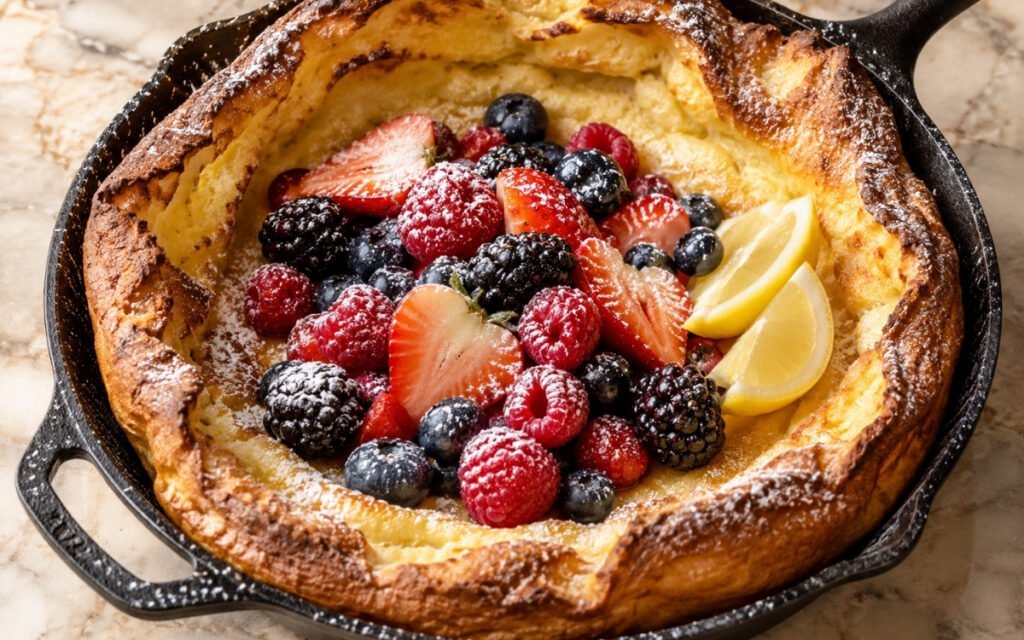
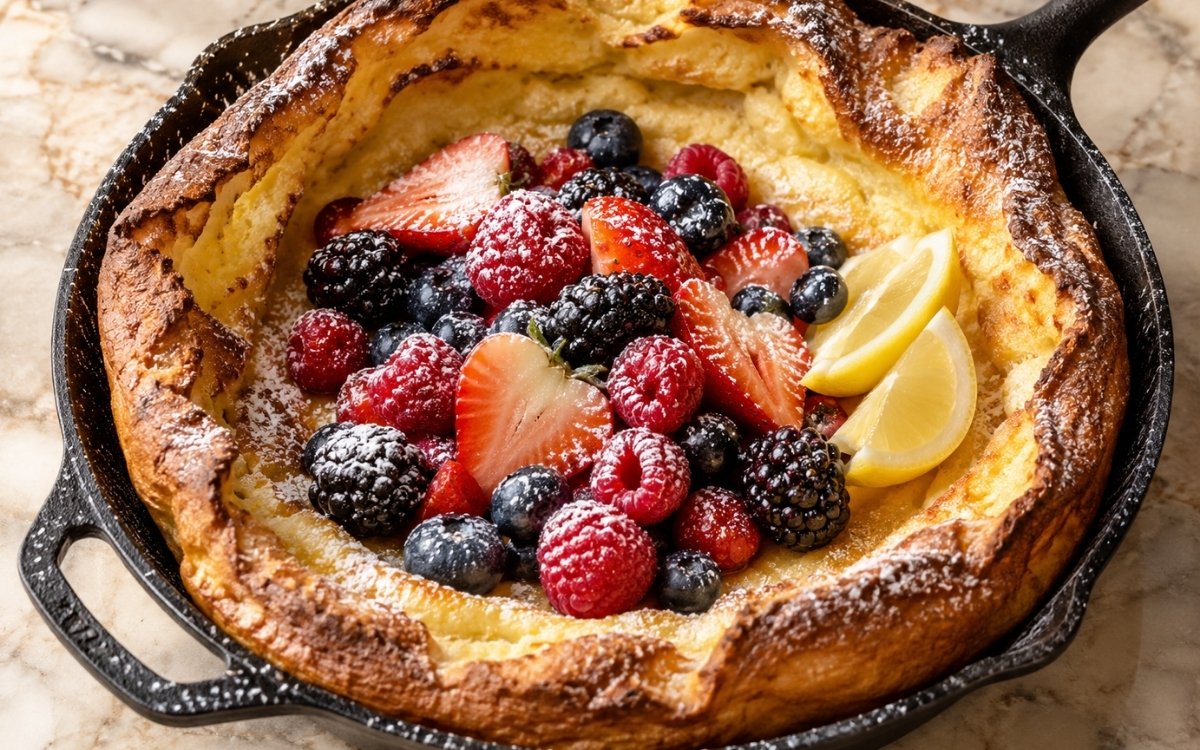
Four individual Dutch babies baked in small cast-iron skillets until dramatically puffed, golden and crisp at the edges, with tender custardy centers, finished with powdered sugar, lemon wedges, and a fresh mixed-berry filling so every slice gets fruit. Fully preheating both the oven and the cast-iron skillets before the batter ever goes in is the technique this whole pancake depends on for its dramatic, characteristic rise — that instant sizzle of butter and batter sets the edges fast and drives real steam, the same fully-preheated-pan principle used elsewhere in this collection whenever a batter’s own explosive oven spring depends on genuine, sustained heat right from the very first second of contact. Keeping the oven door closed for at least the first 14 minutes of baking is what protects the rising pancake from losing its own hard-won lift. Adding the berries only after baking, rather than into the batter itself, is what keeps the Dutch baby’s rise from being weighed down by extra moisture. The payoff is a pancake with real, dramatic contrast — deeply golden, crisp, puffed edges around a soft, custardy center, filled with fresh, glossy berries.
Prep Time : 15 min
Cook Time : 16–20 min
Servings : 4
15 min
16–20 min
4
Ingredients
For the Dutch Baby Batter
• 4 large eggs, room temperature
• 240ml whole milk, room temperature — this one on Amazon
• 120g all-purpose flour — this one on Amazon
• 20g granulated sugar
• 1 tsp vanilla extract — this one on Amazon
• ¼ tsp fine salt
• ¼ tsp ground cinnamon, optional, light background warmth
• 56g unsalted butter, divided between skillets — this one on Amazon
For the Berry Filling
• 100g blueberries
• 100g raspberries
• 120g strawberries, hulled and cut into small pieces
• 80g blackberries, halved if large
• 1 tbsp lemon juice
• 1 tsp finely grated lemon zest
• 1–2 tsp sugar, only if the berries need it
For the Finish
• Powdered sugar, for dusting
• 2 lemons, cut into wedges
This post may contain affiliate links. As an Amazon Associate I earn from qualifying purchases, at no additional cost to you.
Directions
- Heat the Oven and Skillets
Place a rack in the middle of the oven and heat to 230°C / 450°F. Put 4 small cast-iron skillets (about 15–18cm / 6–7 inches) in the oven while it heats. The oven and pans must be fully hot before the batter goes in. This initial heat is what creates the dramatic rise. That fully preheated cast iron gives the batter genuine, instant, sustained heat the very moment it makes contact — a pan only partially warmed would let the batter’s own edges set considerably more slowly, missing that explosive early rise. - Make the Batter
Add the eggs, milk, flour, sugar, vanilla, salt, and cinnamon if using to a blender. Blend until completely smooth, about 20–30 seconds. Let the batter rest for 10 minutes. If you do not have a blender, whisk very thoroughly until no flour lumps remain. Room-temperature eggs and milk help the batter puff more evenly. After resting, the batter should be smooth and fluid, like thin crepe batter, with a light foam on top. That brief resting period gives the flour genuine time to fully hydrate, which is directly what lets the batter puff more evenly rather than unevenly across the pan. - Prepare the Berry Filling
While the batter rests, combine the blueberries, raspberries, strawberries, and blackberries with the lemon juice and lemon zest. Add 1–2 tsp sugar only if the fruit is tart. Toss gently and leave at room temperature. Do not macerate the berries too long or they will release too much juice and become soft. You want them fresh, glossy, and spoonable. That deliberately brief maceration time protects the berries from releasing too much of their own juice — held too long, they would soften considerably past the fresh, distinct, glossy texture this filling depends on. - Butter the Pans and Bake
Carefully remove the hot skillets from the oven. Add 14g butter to each skillet and swirl to coat the base and part of the sides. Immediately divide the batter evenly among the 4 skillets. Return to the oven at once. Bake for 16–20 minutes, until the edges are dramatically risen and deeply golden-brown, the peaks are lightly crisp, the center is pale golden and just set, and the pancake looks dry on the surface, not wet. Do not open the oven for at least the first 14 minutes or the pancakes may lose lift. The Dutch babies should rise high around the edges and form a natural bowl in the center. That closed-door discipline through the earliest baking stage protects the pancake’s own rise from a real, sudden drop in oven temperature — even a brief door opening would let enough heat escape to deflate the batter before its own structure has fully set. - Fill and Finish
Remove the skillets from the oven. The centers will begin to settle almost immediately. Dust generously with powdered sugar. Spoon the berry mixture into the center of each pancake, distributing it so it spreads through the collapsed middle. Add 1–2 lemon wedges to each skillet or serve wedges on the side. Fill them right after baking while the centers are warm and soft, so the berries settle into the bowl and end up in every slice. That immediate filling, right as the center is still settling, is exactly what lets the berries actually nestle into the collapsing middle rather than sitting on top of a surface that’s already firmed up. - Serve
Serve immediately, straight from the skillets or transferred carefully to plates. Cut each Dutch baby into wedges so each portion gets puffed edge, soft center, and berries. That immediate serving captures the pancake at its genuinely best moment — both the crisp edges and the soft, still-warm center begin changing noticeably within just a few minutes.
*Notes :
- Fully preheating both the oven and the cast-iron skillets deserves genuine recognition as the technique most directly responsible for this pancake’s whole dramatic rise. The recipe’s own explicit note that “this initial heat is what creates the dramatic rise” reflects a real, essential foundation — a pan only partially warmed simply couldn’t deliver the same instant, sustained heat the batter depends on for that explosive early puff.
- Keeping the oven door closed for at least the first 14 minutes deserves the same attention this technique receives throughout classical Dutch baby and pancake baking generally. The recipe’s own explicit warning that opening it early “may lose lift” reflects a real, physical risk — even a brief drop in oven temperature at this critical early stage would deflate the still-rising batter before its own structure has genuinely set.
- Adding the berries only after baking, rather than into the batter itself, deserves genuine attention as a deliberate technique protecting the pancake’s own rise. The recipe’s own explicit guidance that berries baked into the batter “weighs it down and releases moisture” reflects real understanding of how directly that added moisture would compromise the dramatic puff this recipe is specifically built around.
- Filling the pancakes immediately after baking, right as the centers begin to settle, deserves respect as a real, deliberate timing choice rather than an afterthought. That specific moment is what lets the berries actually settle into the naturally forming bowl at the pancake’s center, ensuring every slice gets a genuine share of fruit.
Why This Recipe Works
This recipe works because both the oven and cast-iron skillets are fully preheated before the batter ever goes in, delivering the instant, sustained heat responsible for the dramatic rise. The batter is rested briefly, letting the flour hydrate evenly.
The oven door stays closed through the critical early baking stage, protecting the rising pancake from a sudden temperature drop.
The berries are prepared separately and added only after baking, keeping the batter light while protecting the fruit’s own fresh, glossy texture, and filling the pancakes immediately while their centers are still settling ensures every slice gets a real share of berries.
Ingredient Breakdown
Fully Preheated Oven and Cast-Iron Skillets
The critical technique — delivers genuine, instant, sustained heat responsible for the pancake’s dramatic rise.
Rested Batter
The critical technique — gives the flour real time to hydrate, letting the batter puff more evenly.
Closed Oven Door (First 14 Minutes)
The critical technique — protects the rising batter from a sudden temperature drop that would deflate it.
Berries Added After Baking (Never Into the Batter)
The critical technique — keeps the batter’s own rise from being weighed down by extra moisture.
Immediately Filled, Still-Settling Center
The critical technique — lets the berries nestle into the naturally forming bowl right as it forms.
Room-Temperature Eggs and Milk
The critical technique — helps the batter puff more evenly than cold ingredients would allow.
Flavor Structure Explained
This Dutch baby pancake follows a layered balance model:
- Crisp, dramatic foundation (fully preheated, buttery skillet edges)
- Soft, custardy centre (thin, well-rested batter)
- Fresh, bright fruit (mixed berries, lemon zest and juice)
- Sweet finishing touch (powdered sugar)
- Sharp citrus accent (lemon wedges)
Crisp, dramatically risen edges provide this pancake’s genuinely crisp foundation, built through fully preheated cast iron and real, sustained oven heat. A thin, well-rested batter defines the soft, custardy centre beneath those crisp edges. Fresh mixed berries, tossed with lemon juice and zest, add bright, glossy fruit right at the heart of each pancake. A generous dusting of powdered sugar finishes the dish with sweet, classic simplicity, and lemon wedges served alongside add a final, sharp citrus accent that ties the whole dish together.
Common Mistakes to Avoid
- Not Fully Preheating the Oven or Skillets – This misses the instant, sustained heat responsible for the dramatic rise. Always preheat both thoroughly before the batter goes in.
- Opening the Oven Door Too Early – This can cause the pancake to lose lift. Always keep it closed for at least the first 14 minutes of baking.
- Adding the Berries Into the Batter Before Baking – This weighs the batter down and reduces the rise. Always add them only after baking.
- Macerating the Berries Too Long – This releases too much juice, softening the fruit past its intended fresh, glossy texture. Always keep the maceration brief.
- Delaying the Filling and Serving – This lets the pancake’s own crisp edges and soft center change quickly. Always fill and serve immediately after baking.
Variations
Lime-Finished Version
Substitute lime for lemon in the wedges, per the recipe’s own note on it giving a sharper finish, accepting that lemon is more classical and pairs better with powdered sugar.
Single Large Dutch Baby Version
Use one larger cast-iron skillet instead of four small ones, per the recipe’s own guidance on not overfilling to protect the rise, adjusting the bake time accordingly.
Savory Pairing Version
Skip the powdered sugar and berries entirely for a plain Dutch baby suited to savoury toppings, following the same fully preheated, undisturbed baking technique throughout.
Extra-Warm Spice Version
Include the optional cinnamon in the batter, per the recipe’s own suggestion, for a light background warmth that complements the fresh berries.
Storage & Make-Ahead
Four small cast-iron skillets, about 15 to 18cm each, give the most classical individual Dutch baby shape, and if using larger skillets instead, avoid overfilling them, since too much batter reduces the overall lift.
A thin batter is genuinely correct here, since a thicker batter produces a heavier, considerably less dramatic result than the properly thin, crepe-like consistency this recipe depends on.
The instant sizzle of butter meeting batter in a fully hot pan is what sets the edges fast and drives the steam responsible for the rise, so don’t skip or shorten the preheating stage for either the oven or the skillets.
For the best rise, bake the Dutch babies entirely plain and add the berries only after baking, since fruit baked directly into the batter weighs it down and releases unwanted moisture during the bake.
Dutch babies are genuinely at their best in the first few minutes after baking, while the edges are still crisp and the centers still tender, so serve them immediately rather than letting them sit.
Frequently Asked Questions
Why do both the oven and the skillets need to be fully preheated before the batter goes in?
That initial, genuine heat is specifically what creates the dramatic rise this dish is known for. The instant sizzle of butter and batter meeting a truly hot pan sets the edges fast and drives the steam responsible for that puff.
Why can’t the oven door be opened during the first 14 minutes of baking?
Even a brief opening lets enough heat escape to risk the rising pancake losing its own hard-won lift before its structure has genuinely set. Keeping the door closed protects that critical early rise.
Why are the berries added after baking rather than mixed into the batter?
Fruit baked directly into the batter weighs it down and releases moisture during cooking, both of which work directly against the dramatic rise this recipe depends on. Adding them after baking protects that lift entirely.
Why does the pancake need to be filled and served so immediately after baking?
The center begins settling almost right away once the pancake comes out of the oven. Filling it immediately lets the berries nestle into that naturally forming bowl, and serving right away captures both the crisp edges and soft center at their genuine best.
Are there other classic breakfast pancake, crêpe, or French pastry dishes worth trying?
Classic French Madeleines offers another classic French baked treat worth exploring. Classic Pavlova is also worth trying for a different, dramatic baked dessert, and Lemon Ricotta Pancakes, Crêpes Suzette, and Classic Belgian Waffles with Berries offer other classic breakfast batters worth exploring.
Nutrition Facts
( Per Serving — 1 individual Dutch baby )
Calories
~380 kcal
Protein
12 g
Fat
16 g
Carbs
46 g
Calories
~280 kcal
Protein
12 g
Fat
16 g
Carbs
46 g
Related Recipes
Related Recipes

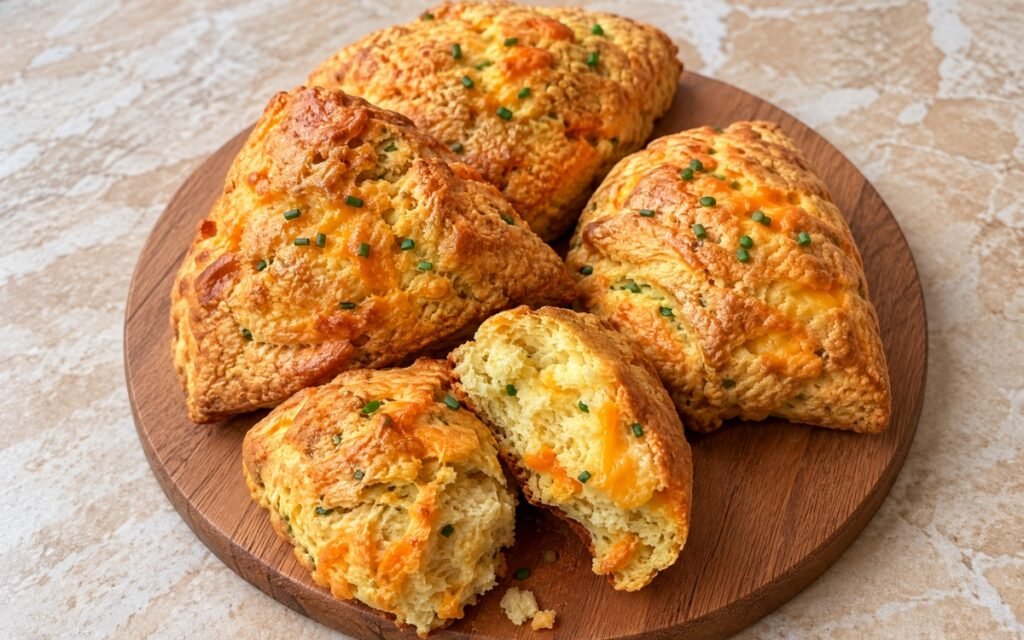
Cheddar Chive Scones
Savory cheddar chive scones with golden craggy tops, buttery flaky interiors, sharp cheddar pockets, and fresh chive flecks throughout.
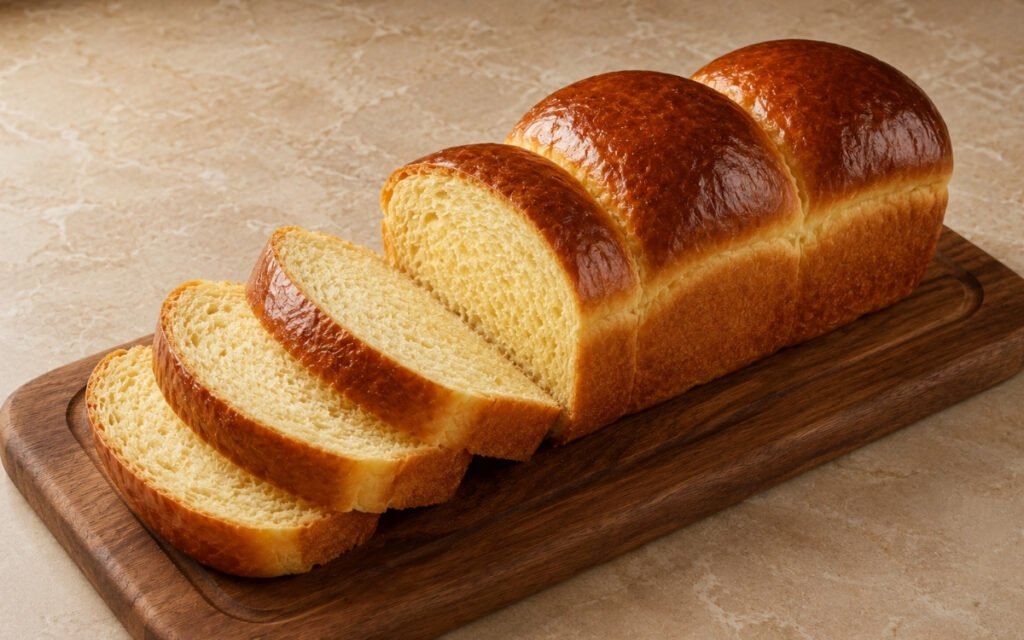
Brioche Toast Bread
Enriched dough with four eggs and butter added gradually after gluten development — overnight cold-fermented for flavour, three-piece shaped in a loaf pan, baked to a deep golden glossy crust. The brioche built for toast.
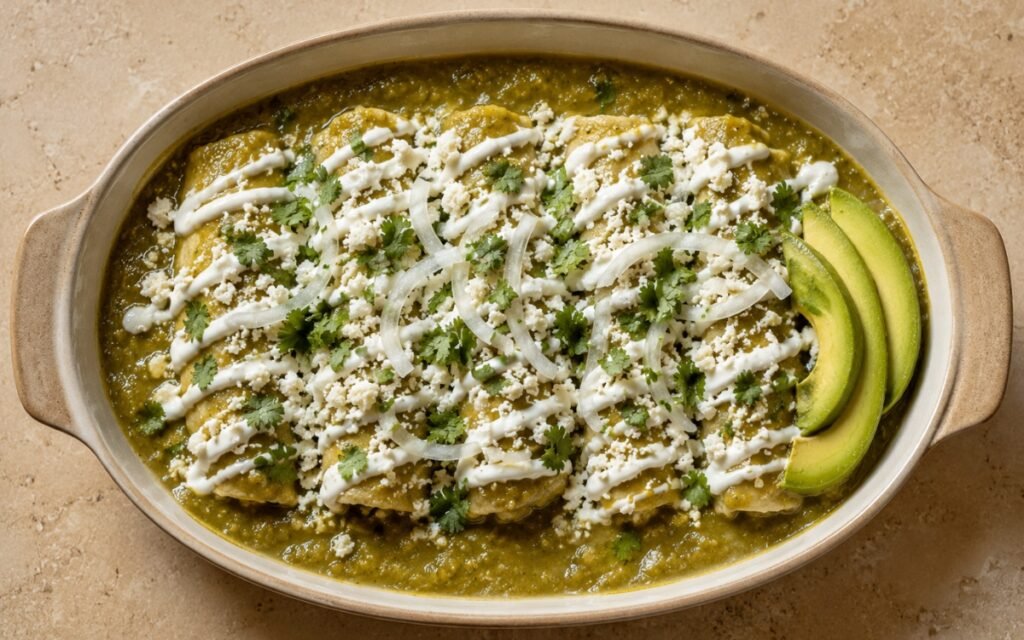
Enchiladas Verdes
Corn tortillas rolled with tender shredded chicken, coated in a vivid roasted tomatillo salsa verde, and topped with queso fresco and crema.
You might also like
You might also like
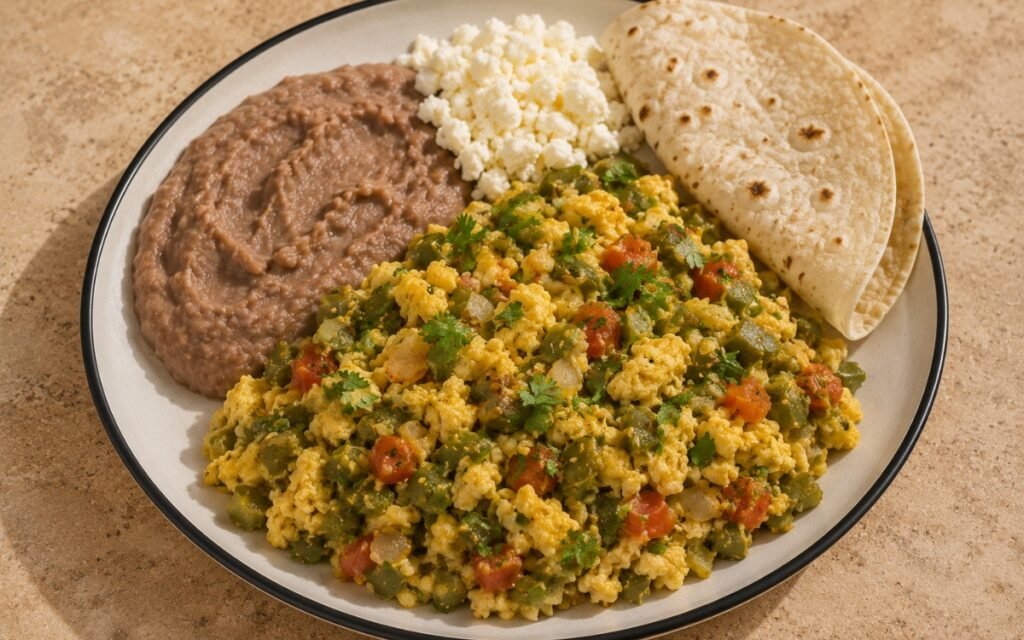
Nopales con Huevo
Scrambled eggs cooked with tender diced nopales, onion, tomato, and green chile, finished with fresh cilantro.
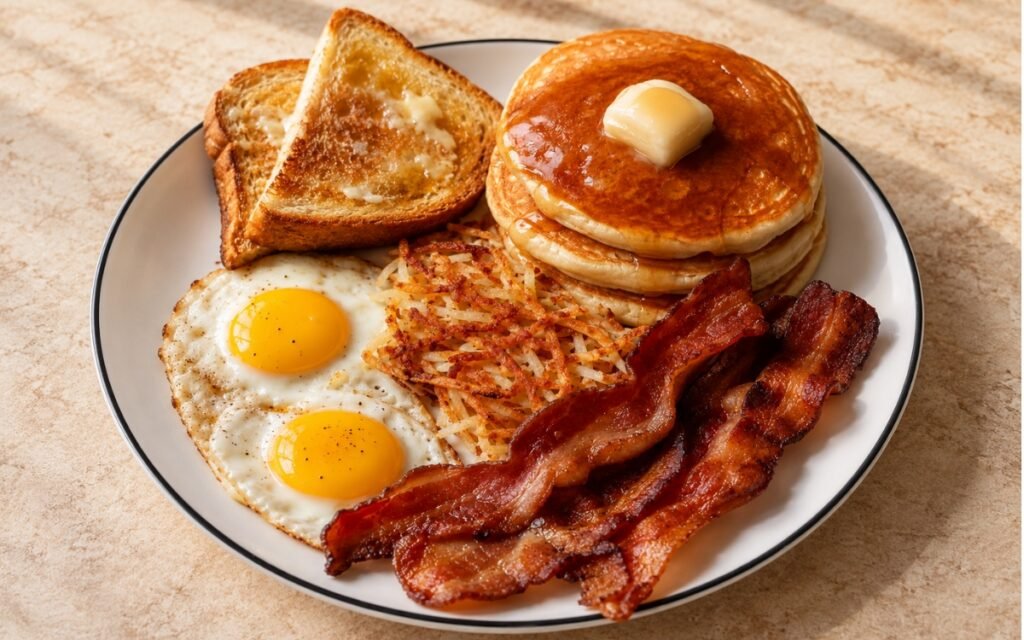
Classic American Breakfast Plate
Sunny-side-up eggs, crispy bacon, golden hash browns, buttered toast, and a small stack of fluffy buttermilk pancakes with maple syrup.
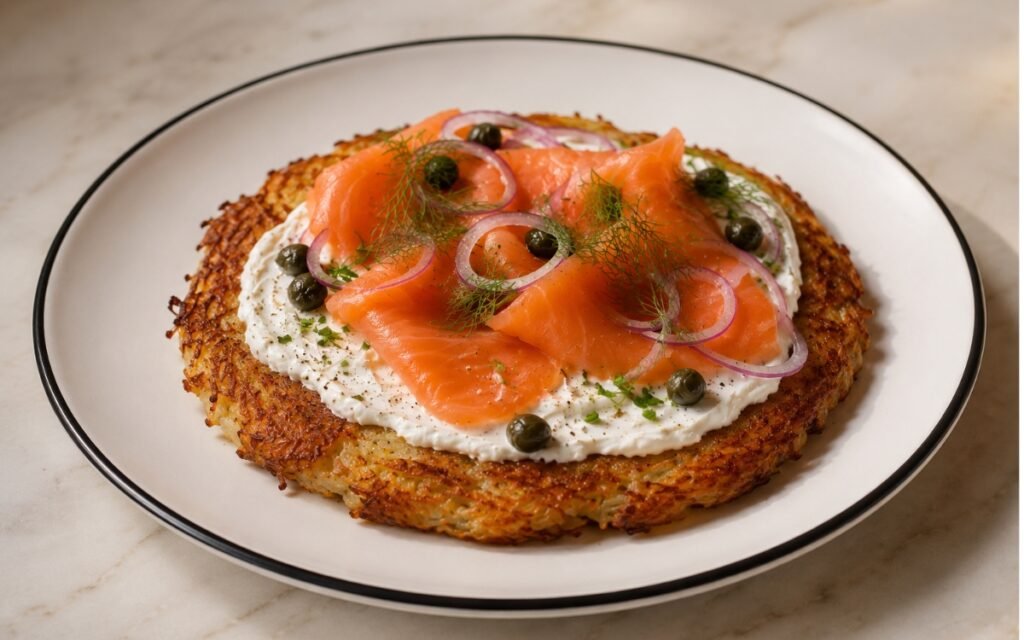
Crispy Potato Galette with Smoked Salmon
Whole Yukon Gold potatoes pressed in butter until deeply golden on both sides — crème fraîche, folded smoked salmon, soaked red onion, capers, and dill. The lox bagel as a crispy potato galette. Gluten-free.
Dutch Baby Pancake
Ingredients
Method
- Place a rack in the middle of the oven and heat to 230°C / 450°F. Put 4 small cast-iron skillets (about 15–18cm / 6–7 inches) in the oven while it heats. The oven and pans must be fully hot before the batter goes in. This initial heat is what creates the dramatic rise. That fully preheated cast iron gives the batter genuine, instant, sustained heat the very moment it makes contact — a pan only partially warmed would let the batter’s own edges set considerably more slowly, missing that explosive early rise.
- Add the eggs, milk, flour, sugar, vanilla, salt, and cinnamon if using to a blender. Blend until completely smooth, about 20–30 seconds. Let the batter rest for 10 minutes. If you do not have a blender, whisk very thoroughly until no flour lumps remain. Room-temperature eggs and milk help the batter puff more evenly. After resting, the batter should be smooth and fluid, like thin crepe batter, with a light foam on top. That brief resting period gives the flour genuine time to fully hydrate, which is directly what lets the batter puff more evenly rather than unevenly across the pan.
- While the batter rests, combine the blueberries, raspberries, strawberries, and blackberries with the lemon juice and lemon zest. Add 1–2 tsp sugar only if the fruit is tart. Toss gently and leave at room temperature. Do not macerate the berries too long or they will release too much juice and become soft. You want them fresh, glossy, and spoonable. That deliberately brief maceration time protects the berries from releasing too much of their own juice — held too long, they would soften considerably past the fresh, distinct, glossy texture this filling depends on.
- Carefully remove the hot skillets from the oven. Add 14g butter to each skillet and swirl to coat the base and part of the sides. Immediately divide the batter evenly among the 4 skillets. Return to the oven at once. Bake for 16–20 minutes, until the edges are dramatically risen and deeply golden-brown, the peaks are lightly crisp, the center is pale golden and just set, and the pancake looks dry on the surface, not wet. Do not open the oven for at least the first 14 minutes or the pancakes may lose lift. The Dutch babies should rise high around the edges and form a natural bowl in the center. That closed-door discipline through the earliest baking stage protects the pancake’s own rise from a real, sudden drop in oven temperature — even a brief door opening would let enough heat escape to deflate the batter before its own structure has fully set.
- Remove the skillets from the oven. The centers will begin to settle almost immediately. Dust generously with powdered sugar. Spoon the berry mixture into the center of each pancake, distributing it so it spreads through the collapsed middle. Add 1–2 lemon wedges to each skillet or serve wedges on the side. Fill them right after baking while the centers are warm and soft, so the berries settle into the bowl and end up in every slice. That immediate filling, right as the center is still settling, is exactly what lets the berries actually nestle into the collapsing middle rather than sitting on top of a surface that’s already firmed up.
- Serve immediately, straight from the skillets or transferred carefully to plates. Cut each Dutch baby into wedges so each portion gets puffed edge, soft center, and berries. That immediate serving captures the pancake at its genuinely best moment — both the crisp edges and the soft, still-warm center begin changing noticeably within just a few minutes.