
Homemade Chicharrones with Chunky Guacamole
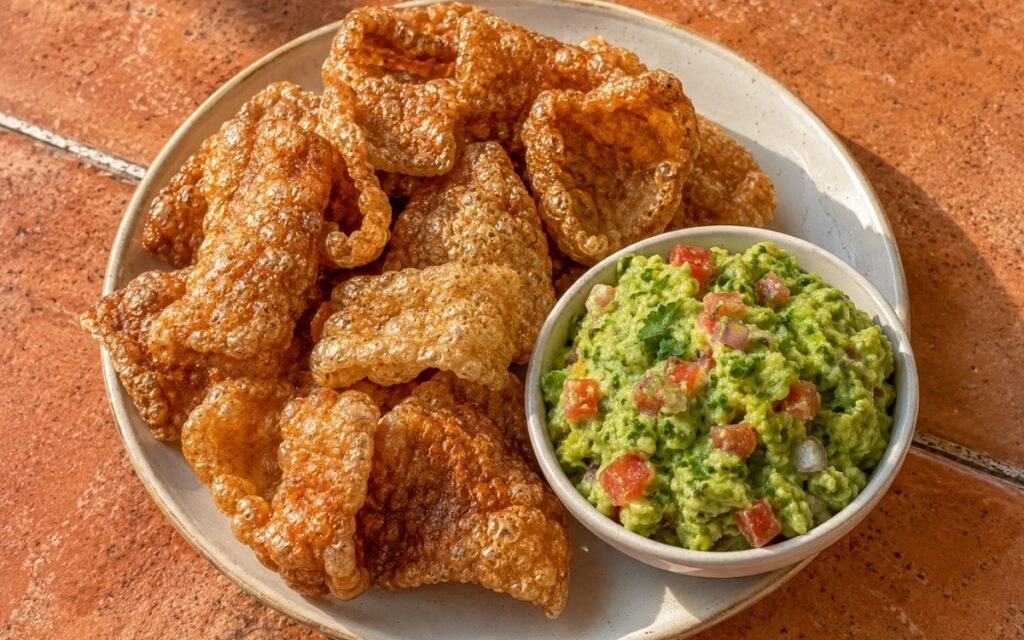
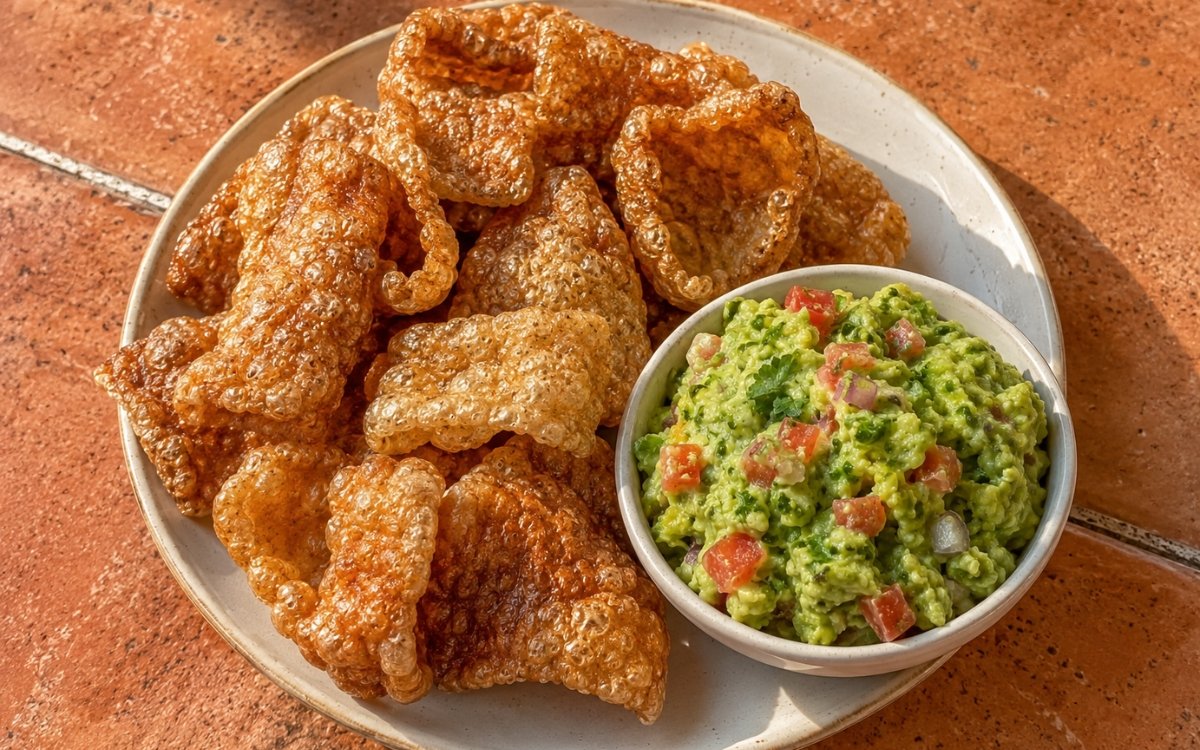
Crispy homemade chicharrones made from pork skin only — boiled, dried, and fried until puffed, blistered, and deeply crunchy — served with a chunky guacamole made from avocado, red onion, jalapeño, garlic, lime, cilantro, cumin, and extra diced Roma tomatoes. Drying the simmered pork skin thoroughly, ideally overnight, is the technique this entire recipe depends on — any lingering surface moisture prevents the skin from puffing properly in the fryer and can cause it to splatter violently, the same exhaustive-dry principle used elsewhere in this collection whenever a fried food needs to expand and puff dramatically rather than simply crisp. Trimming the fat down to only the thinnest possible layer before the skin ever hits the pot matters just as much, since residual fat is one of the biggest reasons homemade chicharrones come out dense and chewy instead of light and hollow. Frying in small, uncrowded batches at a carefully held temperature is what lets each piece puff and blister fully rather than steaming in a crowded pot. The payoff is a chicharrón that’s genuinely light, rigid, and hollow-sounding when tapped, served alongside a bright, chunky guacamole studded with fresh tomato.
Prep Time : 30 min
Cook Time : 1 hr, 15 min
Servings : 4
30 min
1 hr, 15 min
4
Ingredients
For the Chicharrones
• 1kg pork skin, skin only, with as little attached fat as possible
• 12g fine sea salt, divided
• 1 tsp black pepper
• 1 tsp garlic powder, optional but acceptable if you want a lightly seasoned finish
• 1 tsp neutral oil, only if needed for rubbing after drying
• Neutral oil or rendered lard, for deep-frying
For the Guacamole — base recipe with added Roma tomatoes; (Full recipe — see Classic Guacamole)
• 3 ripe avocados
• 1 medium red onion, diced to small ¼–⅛ inch cubes
• 1 green jalapeño, deseeded, diced very small
• 2 garlic cloves, minced or very thinly sliced
• Juice of 1 lime
• 1 large handful fresh cilantro, roughly chopped
• 1 tsp ground cumin — this one on Amazon
• Salt, to taste
• Freshly ground black pepper, to taste
• 1 tbsp green Tabasco, optional — this one on Amazon
• 2–3 medium Roma tomatoes, deseeded if very watery, diced small
This post may contain affiliate links. As an Amazon Associate I earn from qualifying purchases, at no additional cost to you.
Directions
- Prepare the Pork Skin
If the pork skin has thick attached fat underneath, trim it down heavily with a sharp knife so you are left with skin and only a thin layer of fat. Do not try to leave thick fat attached — it will prevent proper drying and puffing later. Cut the skin into bite-size pieces, roughly 4–5cm wide. They will shrink during drying and expand irregularly during frying, so keep the size fairly even for more even cooking. The skin should be mostly clean and flat, not thick and heavy with fat. Too much fat gives chewy, hard pieces instead of light puffed crackling. Fat trapped beneath the skin doesn’t render out cleanly the way it would in a longer roast — left in place, it simply weighs the piece down and blocks the steam-driven puffing that’s supposed to happen once the dried skin hits hot oil. - Simmer to Tenderize and Start Rendering
Place the pork skin pieces in a pot and cover with cold water. Add 6g of the salt. Bring to a gentle simmer, not a hard boil, then cook for 45–60 minutes until the skin is tender enough to bend easily but not falling apart. Drain well and let cool just enough to handle. Once slightly cooled, inspect the underside again and scrape or trim away any softened excess fat that remains. This step matters — removing this rendered fat is one of the biggest factors in getting truly puffed chicharrones. After simmering, the skin should feel flexible and gelatinous, not rubbery-stiff. If it is still rigid, simmer a little longer. The gentle simmer here breaks down the skin’s collagen into a softer, more gelatinous texture without agitating it hard enough to tear it apart — that pliability is what allows the skin to expand dramatically once fried, rather than staying stiff and resistant. - Dry the Skin Thoroughly
Pat the skin very dry with paper towels. Arrange the pieces in a single layer on a wire rack set over a tray. Refrigerate uncovered for at least 4 hours, ideally overnight, until the pieces feel dry, leathery, and no longer wet on the surface. If you want to speed the process slightly, you can place the tray in a low oven at about 90–95°C for 1½–2½ hours after the initial pat-drying, then still allow the skins to cool and air-dry before frying. The frying stage depends completely on this drying step being done properly. Wet or damp skin will not puff properly and may splatter violently. The dried skin should feel firmer, slightly stiff, and matte on the outside. Any tackiness or surface moisture means it needs more drying time. Every bit of moisture remaining in the skin has to violently flash to steam the instant it hits the hot oil — a thoroughly dried piece converts that internal moisture into the controlled, dramatic puff this dish depends on, while a still-damp piece produces dangerous, uncontrolled spattering instead. - Fry the Chicharrones
Heat 5–7cm of neutral oil or lard in a deep heavy pot to 190°C. Fry the dried pork skin in small batches. As soon as the pieces hit the oil, they should begin to blister, expand, and puff dramatically. Fry each batch for about 1–2 minutes, turning as needed, until fully puffed, deeply blistered, and golden. Remove immediately to a wire rack or paper towel-lined tray. While still hot, season with the remaining 6g salt, the black pepper, and garlic powder if using. Properly fried chicharrones will be light, rigid, and hollow-sounding when tapped. If they stay dense and hard, they were either too wet before frying or had too much fat attached. If they darken before puffing, the oil is too hot. Frying only a small batch at a time keeps the oil at its full, held temperature throughout — a crowded pot drops that temperature immediately, and the resulting cooler oil produces exactly the dense, unpuffed pieces this whole process is built to avoid. - Make the Chunky Guacamole
Halve and pit the avocados. Scoop the flesh into a bowl. Add the lime juice, cumin, a pinch of salt, and black pepper. Mash lightly with a fork, keeping plenty of visible chunks — do not make it fully smooth. Add the red onion, jalapeño, garlic, cilantro, and green Tabasco if using. Fold gently to combine. Add the diced Roma tomatoes last and fold them in carefully so they stay distinct and do not break down too much. Taste and adjust with more salt, pepper, or lime juice if needed. The finished guacamole should be chunky and spoonable, with visible avocado pieces, tomato, onion, and cilantro throughout. It should taste bright, savoury, and fresh, not flat or overly mashed. Adding the tomato last and folding it in gently, rather than mashing it in with the avocado from the start, is what keeps its pieces distinct rather than breaking down into extra liquid that would thin out the whole guacamole. - Serve
Pile the hot chicharrones generously onto a serving plate or shallow bowl. Spoon the chunky guacamole into a separate bowl or ramekin alongside. Serve immediately while the chicharrones are still fully crisp. Chicharrones lose their signature hollow crispness within a fairly short window once fried, so serving without delay is what preserves that texture at the table.
*Notes :
- Trimming away as much attached fat as possible before the skin ever meets the pot is worth taking seriously as the first and arguably most consequential step in the whole process. Fat left clinging to the underside of the skin doesn’t render away cleanly during either the simmer or the fry — it simply sits there, adding weight and moisture that work directly against the dramatic puffing this dish depends on. The closer the skin gets to genuinely clean before simmering, the lighter and more reliably puffed the final chicharrones will be.
- The extended drying period is worth understanding as the true dependency the entire recipe hinges on, more so than any single other step. Every bit of moisture still present in the skin when it hits the hot oil has to flash into steam violently and immediately, and if there’s too much of it, that flash happens uncontrollably — producing dangerous spattering rather than the controlled, dramatic puff a properly dried piece produces. Rushing or shortening this stage is the single most common reason homemade chicharrones fail to puff.
- Frying in genuinely small batches protects the oil’s temperature, which in turn protects the puffing reaction each piece needs. Chicharrones expand dramatically the instant they hit properly hot oil, and that expansion depends on the oil staying at its full temperature throughout — even a modest amount of overcrowding drops that temperature enough to produce dense, only partially puffed pieces instead of the light, hollow-sounding result this recipe is built around.
- The guacamole’s construction — mashing the avocado first with lime, cumin, and seasoning, then folding in the sharper components, and adding the tomato only at the very end — protects the specific chunky texture this version calls for. Adding everything at once and mixing vigorously would break down both the avocado and the tomato considerably faster, producing something closer to a smooth dip than the visibly chunky, distinct-piece guacamole this recipe is meant to be.
Why This Recipe Works
This recipe works because every stage manages moisture and fat with real precision: the skin is trimmed of excess fat before simmering, dried exhaustively afterward so it can puff safely and dramatically in the fryer, and fried in small batches to keep the oil at full temperature throughout.
That careful preparation is what produces genuinely light, hollow, crackling chicharrones rather than dense, chewy ones. The chunky guacamole, built by folding rather than mashing its components together and adding tomato only at the end, provides a bright, fresh, texturally distinct counterpoint to the rich, crisp pork skin.
Ingredient Breakdown
Trimmed Pork Skin (Minimal Fat)
The base ingredient — as clean of attached fat as possible, since residual fat produces dense, chewy pieces instead of light, puffed ones.
Gently Simmered, Then Thoroughly Dried Skin
The critical prep sequence — simmering softens the skin into a pliable, gelatinous state, and exhaustive drying afterward is what allows safe, dramatic puffing in the fryer.
Small-Batch, High-Heat Frying
The cooking technique — genuinely small batches keep the oil at full temperature, which is essential for each piece to puff fully.
Fork-Mashed, Chunk-Preserving Avocado Base
The guacamole’s foundation — mashed only lightly to keep visible pieces rather than a smooth purée.
Late-Added Diced Roma Tomatoes
The finishing addition — folded in last, gently, to stay distinct rather than breaking down and thinning the guacamole.
Flavor Structure Explained
This chicharrones dish follows a layered balance model:
- Crisp savoury foundation (puffed, fried pork skin)
- Salty sharp seasoning (salt, black pepper, garlic powder)
- Rich creamy contrast (mashed avocado)
- Bright fresh acidity (lime, tomato)
- Sharp herbal finish (cilantro, jalapeño, onion)
The puffed, deeply crunchy chicharrones provide a savoury, salty, genuinely crisp foundation on their own. The chunky guacamole alongside offers rich, creamy contrast from the avocado, brightened by lime juice and fresh diced tomato. Red onion, jalapeño, and cilantro layer in sharp, fresh, herbal notes that cut through the guacamole’s richness. Together, the crackling pork skin and the bright, chunky dip create a pairing built entirely around textural and flavour contrast — crisp against creamy, rich against fresh.
Common Mistakes to Avoid
- Leaving Too Much Fat Attached to the Skin – This produces dense, chewy pieces rather than light, puffed ones. Always trim down to a thin fat layer before simmering.
- Skipping or Rushing the Drying Step – Wet or damp skin won’t puff properly and can splatter dangerously in hot oil. Always dry thoroughly, ideally overnight.
- Overcrowding the Fryer – This drops the oil’s temperature and prevents the pieces from puffing dramatically. Always fry in small, uncrowded batches.
- Mashing the Guacamole Too Smooth – This loses the chunky, distinct-piece texture this version is built around. Always mash the avocado lightly, keeping visible chunks.
- Adding the Tomato Too Early or Mixing Too Vigorously – This breaks the tomato down and thins the guacamole. Always fold it in gently at the very end.
Variations
Extra-Spicy Version
Include the full amount of green Tabasco and leave some jalapeño seeds in for a sharper heat throughout the guacamole.
With Lime-Chili Seasoning
Toss the hot fried chicharrones with a light dusting of chili powder and lime zest alongside the salt for an extra flavour layer.
Smaller Party Portions
Cut the pork skin into smaller pieces before simmering for bite-sized chicharrones, adjusting the fry time down slightly.
With Pico de Gallo Instead of Guacamole
Serve the chicharrones alongside a fresh pico de gallo for a lighter, less rich dip option.
Storage & Make-Ahead
Simmered, dried, unfried pork skin can be refrigerated for up to 2 days before frying, or frozen for up to 1 month — thaw and ensure it’s fully dry again before frying.
Fried chicharrones are best eaten the same day; if holding for a short time, keep them uncovered at room temperature, since covering traps steam and softens the crust quickly.
The guacamole is best made fresh close to serving to avoid browning; if needed, press plastic wrap directly against the surface and refrigerate for a few hours.
Frequently Asked Questions
Why does the pork skin need to be trimmed of as much fat as possible before simmering?
Fat left attached beneath the skin doesn’t render away cleanly during the simmer or fry — it adds weight and moisture that work directly against proper puffing. The closer the skin gets to clean before cooking, the lighter and more reliably puffed the finished chicharrones will be.
Why is the drying step described as non-negotiable?
Any moisture remaining in the skin has to flash into steam the instant it hits hot oil. A thoroughly dried piece converts that moisture into a controlled, dramatic puff, while a still-damp piece produces dangerous, uncontrolled spattering instead of proper crackling.
Why fry in small batches instead of a larger one to save time?
Chicharrones need the oil to stay at its full temperature to puff dramatically. Overcrowding the pot drops that temperature enough to produce dense, only partially puffed pieces rather than the light, hollow-sounding result this recipe is built around.
Why does the guacamole need to stay chunky rather than being mashed smooth?
This specific version is built around visible pieces of avocado, tomato, onion, and cilantro rather than a uniform texture. Mashing everything smooth would lose that chunky, fresh character and turn it into something closer to a standard dip.
Are there other crispy pork or Mexican street-food recipes worth trying, and what’s a good dip alongside these?
Crispy Pork Belly Chicharrón takes a related but distinct direction, using pork belly with meat attached rather than skin alone. Suadero Tacos and Gorditas with Chicharrón and Salsa both feature crispy chicharrón as a component within a larger dish. For an even more flavour-packed dip alongside these chicharrones, prepare a full batch of Salsa Verde or Salsa Roja to serve alongside the guacamole.
Nutrition Facts
( per serving )
Calories
~520 kcal
Protein
28 g
Fat
40 g
Carbs
12 g
Calories
~520 kcal
Protein
28 g
Fat
40 g
Carbs
12 g
Related Recipes
Related Recipes

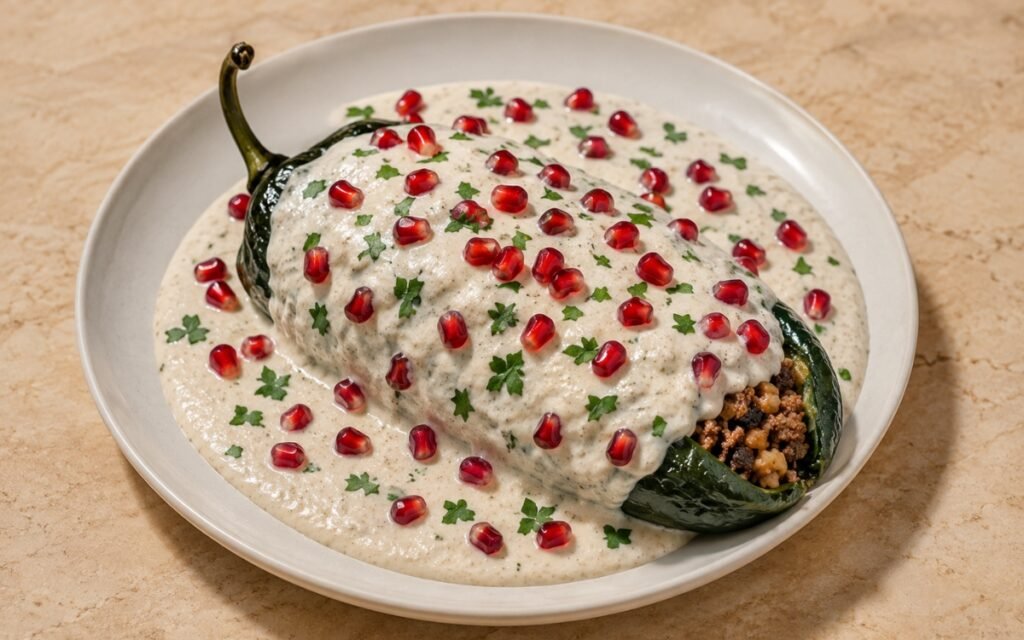
Chiles en Nogada
Roasted poblano peppers stuffed with a savoury-sweet pork and beef picadillo, covered in creamy white walnut sauce, and finished with pomegranate seeds.
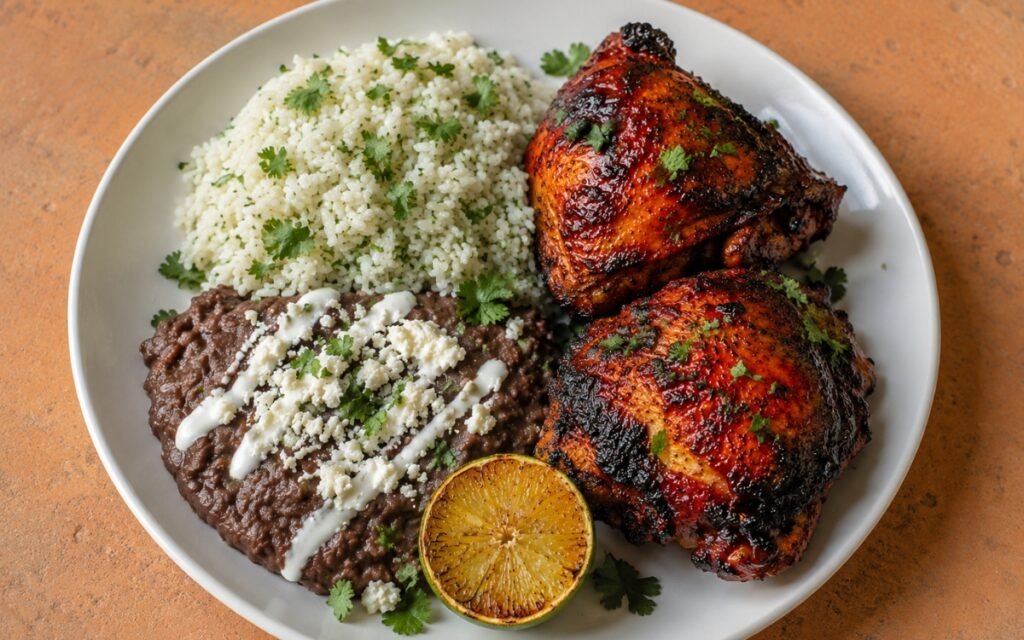
Pollo Asado with Rice and Beans
Bone-in chicken thighs marinated in achiote and citrus, grilled two-zone until deeply red and charred. Served with cilantro-lime rice and creamy black beans.
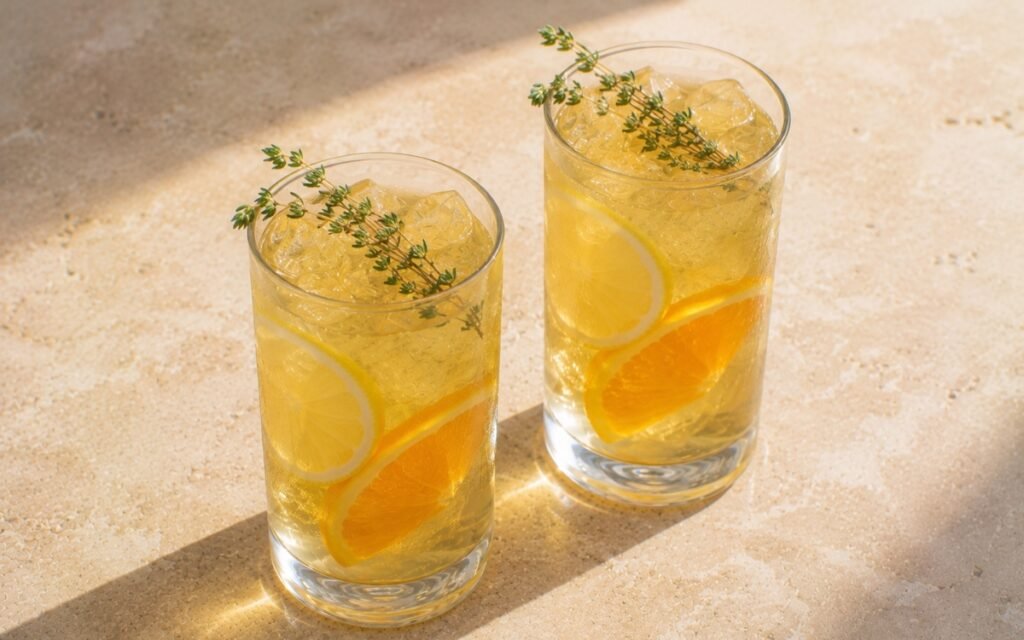
Thyme Lemon Orange Green Tea Cooler
Green tea at 75–80°C for 2–3 minutes, thyme clapped and infused cold — orange juice for softness, lemon juice for sharpness, honey, chilled. Bright and lightly herbal.
You might also like
You might also like
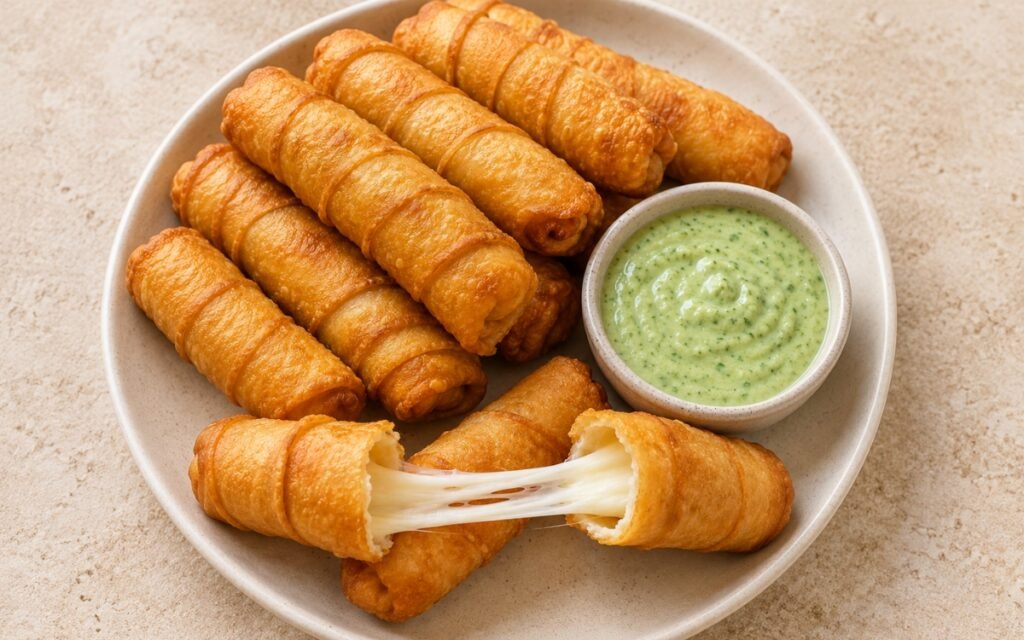
Tequeños
Firm white cheese wrapped in thin buttery dough, fried until deeply golden and crisp with melted, stretchy cheese inside.
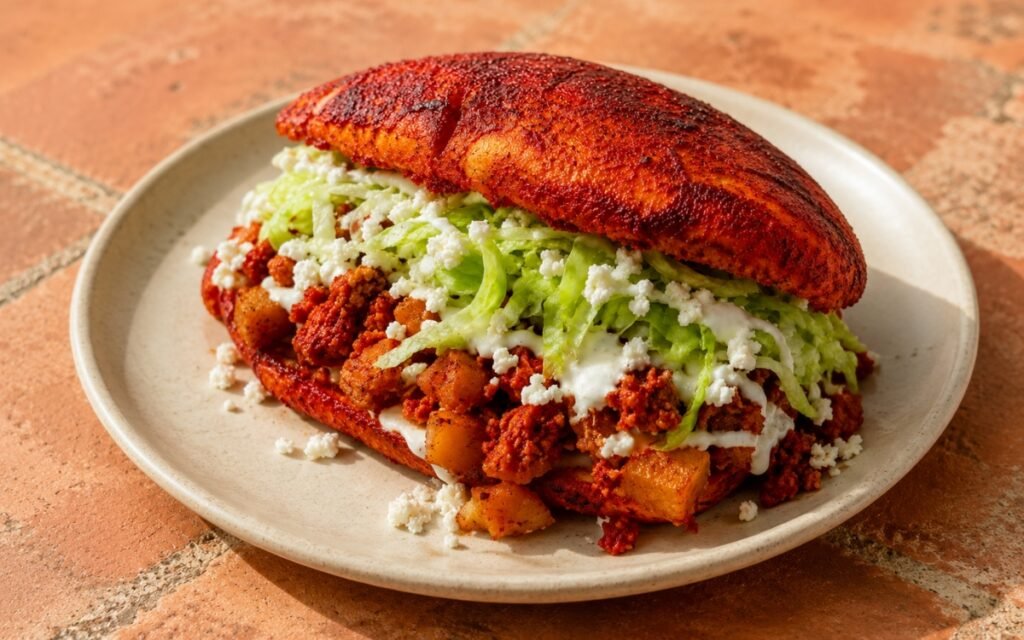
Pambazo Sandwich
Rolls dipped in vivid guajillo chili sauce and griddled deep red and lightly crisp, filled with savory potato-and-chorizo, and finished with crema and queso fresco.
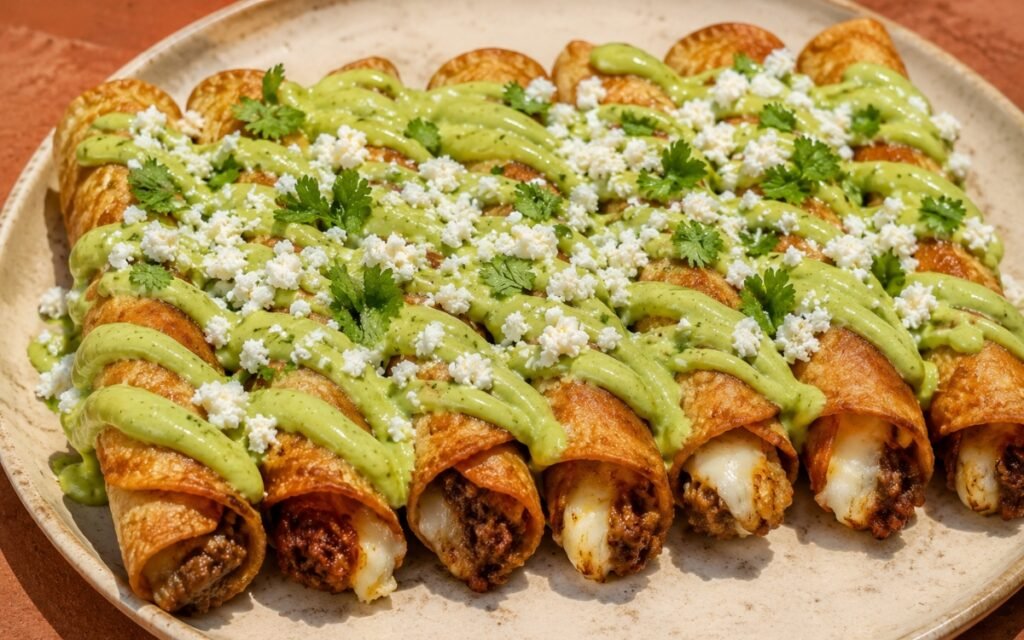
Crispy Cheesy Beef Taquitos
Slow-braised shredded beef and melted Mexican cheese rolled tightly in corn tortillas, fried crisp, and finished with creamy avocado sauce.
Homemade Chicharrones with Chunky Guacamole
Ingredients
Method
- If the pork skin has thick attached fat underneath, trim it down heavily with a sharp knife so you are left with skin and only a thin layer of fat. Do not try to leave thick fat attached — it will prevent proper drying and puffing later. Cut the skin into bite-size pieces, roughly 4–5cm wide. They will shrink during drying and expand irregularly during frying, so keep the size fairly even for more even cooking. The skin should be mostly clean and flat, not thick and heavy with fat. Too much fat gives chewy, hard pieces instead of light puffed crackling. Fat trapped beneath the skin doesn’t render out cleanly the way it would in a longer roast — left in place, it simply weighs the piece down and blocks the steam-driven puffing that’s supposed to happen once the dried skin hits hot oil.
- Place the pork skin pieces in a pot and cover with cold water. Add 6g of the salt. Bring to a gentle simmer, not a hard boil, then cook for 45–60 minutes until the skin is tender enough to bend easily but not falling apart. Drain well and let cool just enough to handle. Once slightly cooled, inspect the underside again and scrape or trim away any softened excess fat that remains. This step matters — removing this rendered fat is one of the biggest factors in getting truly puffed chicharrones. After simmering, the skin should feel flexible and gelatinous, not rubbery-stiff. If it is still rigid, simmer a little longer. The gentle simmer here breaks down the skin’s collagen into a softer, more gelatinous texture without agitating it hard enough to tear it apart — that pliability is what allows the skin to expand dramatically once fried, rather than staying stiff and resistant.
- Pat the skin very dry with paper towels. Arrange the pieces in a single layer on a wire rack set over a tray. Refrigerate uncovered for at least 4 hours, ideally overnight, until the pieces feel dry, leathery, and no longer wet on the surface. If you want to speed the process slightly, you can place the tray in a low oven at about 90–95°C for 1½–2½ hours after the initial pat-drying, then still allow the skins to cool and air-dry before frying. The frying stage depends completely on this drying step being done properly. Wet or damp skin will not puff properly and may splatter violently. The dried skin should feel firmer, slightly stiff, and matte on the outside. Any tackiness or surface moisture means it needs more drying time. Every bit of moisture remaining in the skin has to violently flash to steam the instant it hits the hot oil — a thoroughly dried piece converts that internal moisture into the controlled, dramatic puff this dish depends on, while a still-damp piece produces dangerous, uncontrolled spattering instead.
- Heat 5–7cm of neutral oil or lard in a deep heavy pot to 190°C. Fry the dried pork skin in small batches. As soon as the pieces hit the oil, they should begin to blister, expand, and puff dramatically. Fry each batch for about 1–2 minutes, turning as needed, until fully puffed, deeply blistered, and golden. Remove immediately to a wire rack or paper towel-lined tray. While still hot, season with the remaining 6g salt, the black pepper, and garlic powder if using. Properly fried chicharrones will be light, rigid, and hollow-sounding when tapped. If they stay dense and hard, they were either too wet before frying or had too much fat attached. If they darken before puffing, the oil is too hot. Frying only a small batch at a time keeps the oil at its full, held temperature throughout — a crowded pot drops that temperature immediately, and the resulting cooler oil produces exactly the dense, unpuffed pieces this whole process is built to avoid.
- Halve and pit the avocados. Scoop the flesh into a bowl. Add the lime juice, cumin, a pinch of salt, and black pepper. Mash lightly with a fork, keeping plenty of visible chunks — do not make it fully smooth. Add the red onion, jalapeño, garlic, cilantro, and green Tabasco if using. Fold gently to combine. Add the diced Roma tomatoes last and fold them in carefully so they stay distinct and do not break down too much. Taste and adjust with more salt, pepper, or lime juice if needed. The finished guacamole should be chunky and spoonable, with visible avocado pieces, tomato, onion, and cilantro throughout. It should taste bright, savoury, and fresh, not flat or overly mashed. Adding the tomato last and folding it in gently, rather than mashing it in with the avocado from the start, is what keeps its pieces distinct rather than breaking down into extra liquid that would thin out the whole guacamole.
- Pile the hot chicharrones generously onto a serving plate or shallow bowl. Spoon the chunky guacamole into a separate bowl or ramekin alongside. Serve immediately while the chicharrones are still fully crisp. Chicharrones lose their signature hollow crispness within a fairly short window once fried, so serving without delay is what preserves that texture at the table.