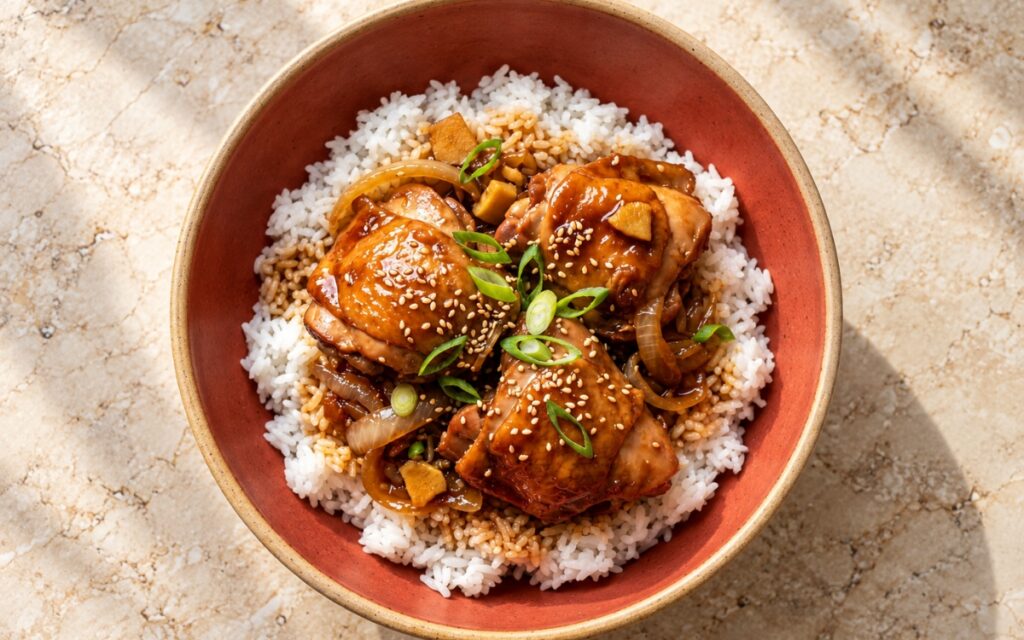
Hawaiian Shoyu Chicken Rice Bowl
Classic Hawaiian-style shoyu chicken rice bowls built from tender boneless chicken thighs braised in a savoury-sweet soy sauce with fresh ginger, garlic, and soft sliced onion, served over fluffy steamed white rice and finished with scallions and toasted sesame seeds, the key being the contrast between a deeply seasoned sauce and plain, absorbent rice. Braising the thighs at a gentle simmer, rather than boiling them hard or searing them for a heavy crust, is the technique this whole bowl depends on for tender, juicy meat and a glossy sauce — a rapid boil tightens the muscle fibres and reduces the liquid before the chicken is cooked through, the same low-and-slow braising principle used elsewhere in this collection whenever dark meat must turn tender in a seasoned liquid. Lightly browning the skin and aromatics for only a few minutes is what builds savoury depth without the bitterness that burnt garlic would add. Uncovering the pan for the final 5–8 minutes is what reduces the braising liquid into a glossy sauce that coats the chicken and lightly soaks into the rice. The payoff is a bowl with real, comforting contrast — fork-tender chicken, silky onions, a glossy savoury-sweet sauce, soft white rice, and the fresh bite of scallion and toasted sesame.
- Prep Time : 20 min
- Total Time : 55 min
- Servings : 4
Ingredients
For the Rice
- 300g jasmine rice or other long-grain white rice
- 360ml water
- A pinch of salt
For the Chicken
- 1.1–1.2kg boneless skin-on chicken thighs, or boneless skinless if preferred
- ½ tsp kosher salt
- ¼ tsp black pepper
- 1 tsp neutral oil, only if needed
For the Shoyu Sauce
- 180ml soy sauce
- 180ml water
- 70g light brown sugar
- 2 tbsp mirin
- 1 tbsp sake or dry cooking wine, optional
- 1 tbsp oyster sauce, optional, for extra body; omit for a more traditional, lighter sauce
- 20–25g fresh ginger, peeled and cut into small thin pieces or matchsticks
- 4 garlic cloves, finely sliced or minced
- 1 medium onion, halved and thinly sliced
Optional Slurry for a Glossier Bowl-Style Sauce
- 2 tsp cornstarch
- 2 tbsp cold water
For Finishing and Serving
- 2–3 scallions, thinly sliced
- 1–2 tsp toasted sesame seeds
Directions
- Cook the Rice
Rinse the 300g of rice under cold running water, swishing it with your fingers, until the water runs mostly clear, then drain well. Combine the rice with the 360ml of water and a pinch of salt in a pot or rice cooker. In a pot, bring to a boil, cover tightly, and cook on low for about 12 minutes until the water is absorbed and the grains are tender, or follow your rice cooker. Rest covered for 10 minutes, then fluff with a fork and keep warm. That covered rest is what lets the grains finish steaming evenly, so they stay fluffy and distinct enough to absorb sauce without turning wet or mushy. - Prepare the Chicken
Pat the 1.1–1.2kg of chicken thighs thoroughly dry with paper towels, then trim away any excess loose fat, taking care not to over-trim since some fat keeps the meat juicy. Season lightly with the ½ tsp of kosher salt and ¼ tsp of black pepper, only enough to flavour the surface. If time allows, let the seasoned chicken sit in the refrigerator for 20–30 minutes, which is the optional marinating time in the time line. That light seasoning is what leaves room for the soy sauce, which is already the main seasoning in the pan, to do its work without making the dish too salty. - Build the Braising Liquid
In a bowl or measuring jug, combine the 180ml of soy sauce, 180ml of water, 70g of brown sugar, 2 tbsp of mirin, and the sake and oyster sauce if using. Stir for about a minute until the sugar is mostly dissolved and the liquid looks uniform and dark. Taste it: it should seem strongly seasoned, salty-sweet, and a little intense. If it tastes only pleasantly balanced now, it will be bland once the chicken, onion, and rice absorb it. That deliberately bold seasoning is what allows the sauce to mellow into the right strength as it cooks. - Start the Chicken and Aromatics
Set a wide skillet, sauté pan, or shallow pot over medium heat and add the 1 tsp of oil only if the pan needs it. For skin-on thighs, lay them skin-side down and cook for 3–4 minutes, just until the skin turns lightly golden, then turn once. Scatter the sliced onion, ginger, and garlic around the chicken and cook for 1–2 minutes until fragrant but not deeply browned. This is a braise, not a crust-focused dish, so stop well before hard colour develops. That restraint is what keeps the garlic sweet instead of bitter and the sauce clean. - Braise in the Shoyu Sauce
Pour the shoyu sauce mixture over the chicken and aromatics and bring it to a gentle simmer, with only small bubbles breaking the surface, never a rapid boil. Cover the pan partially and simmer for 20–25 minutes, turning the chicken once or twice, until the thighs are tender and cooked through. Check that the thickest piece reads at least 74°C / 165°F. If the liquid reduces too fast before the chicken is done, add a small splash of water. That steady, quiet simmer is what keeps the meat tender and the sauce glossy. - Reduce and Glaze
Remove the lid and let the sauce reduce for the final 5–8 minutes, spooning it over the chicken now and then, until it lightly coats the chicken and onions and the onions look soft and silky. For a thicker bowl-style glaze, stir the 2 tsp of cornstarch into the 2 tbsp of cold water until smooth, then add a little at a time while the sauce simmers, until it turns glossy and lightly clingy. The sauce should stay fluid and pourable, never gummy or gravy-thick. That careful reduction is what gives a sauce that coats the chicken yet still soaks into the rice. - Rest and Assemble
Lift the chicken from the pan and rest it for 3–5 minutes, then leave the thighs whole or cut them into large serving pieces. Divide the warm rice among 4 bowls and spoon the softened onions and a little sauce over the rice first. Top each bowl with chicken, then spoon more sauce over the chicken and rice, leaving some white grains visible rather than drowning the bowl. Finish with the sliced scallions and toasted sesame seeds, kept light and functional. That sauce-first layering is what gives the bowl its soaked, comforting look from the very first bite.
*Notes :
- Holding the braise at a gentle simmer deserves genuine recognition as the technique most directly responsible for whether the chicken turns out tender or tough. A rapid boil tightens the muscle fibres and drives off liquid before the connective tissue has softened, whereas small, steady bubbles let the thighs cook through slowly while the sauce stays glossy instead of scorched.
- Choosing thighs over breast deserves the same attention this technique receives throughout this collection’s other braised dishes, because dark meat carries far more fat and collagen. Over 20–25 minutes in the pan those elements melt into the sauce and keep the meat juicy, while breast meat would dry out and turn stringy long before the sauce was ready.
- Keeping the salt centred on the soy sauce deserves genuine respect as the detail most directly responsible for a bowl that tastes savoury rather than harsh. Because the soy already supplies most of the seasoning, a heavy hand on the chicken or an extra pinch in the sauce would push the reduced result past the point of balance, with no easy way to dilute it.
- The 74°C / 165°F reading deserves attention as a genuine, checkable doneness cue rather than a guess from colour or cooking time alone. Braised thighs can look fully cooked well before they are safe and tender, and measuring the thickest piece before the final reduction tells you whether to keep simmering, so the chicken is never served undercooked or overcooked.
Why This Recipe Works
This recipe works because a bold soy, sugar, and mirin braising liquid is built to taste strongly seasoned before it ever meets the chicken. Brief browning with the ginger, garlic, and onion adds depth without bitterness, and a gentle simmer cooks the thighs until tender and juicy. Uncovering the pan for the final minutes then reduces the liquid into a glossy sauce that clings rather than floods. Spooning some of that sauce onto the rice first means every grain is seasoned, so the finished bowl tastes comforting, savoury-sweet, and balanced from the first spoonful to the last.
Ingredient Breakdown
Gentle Simmer (Never a Rapid Boil)
The critical technique — low, steady heat keeps the thighs tender and the sauce glossy, while a hard boil toughens the meat and reduces the liquid too early.
Boneless Chicken Thighs
The critical ingredient choice — dark meat holds its moisture through more than 20 minutes of braising, where breast meat would turn dry and stringy.
Soy Sauce, Brown Sugar, and Mirin
The flavour foundation — salt, caramel sweetness, and a gentle rice-wine sweetness form the classic savoury-sweet shoyu balance that defines the bowl.
Fresh Ginger, Garlic, and Onion
The aromatic backbone — ginger perfumes the sauce, garlic adds warmth, and onion melts into a soft, sweet layer without dominating the pot.
Uncovered Reduction (Final 5–8 Minutes)
The finishing technique — removing the lid thickens the braising liquid into a glossy sauce that coats the chicken and onions without turning gummy.
Sauce on the Rice First
The finishing touch — seasoning the grains before the chicken goes on gives the bowl its soaked, comforting character while keeping some white rice visible.
Flavor Structure Explained
This Hawaiian shoyu chicken rice bowl follows a layered balance model:
- Soft, absorbent foundation (steamed jasmine rice, a pinch of salt)
- Rich, tender centre (braised chicken thighs, rendered fat)
- Savoury-sweet backbone (soy sauce, light brown sugar, mirin)
- Warm, aromatic lift (fresh ginger, garlic, sliced onion)
- Fresh, nutty finish (sliced scallions, toasted sesame seeds)
Steamed rice gives the bowl a soft, neutral base that soaks up the sauce. Braised thighs provide the rich, tender centre, while soy sauce, brown sugar, and mirin build the savoury-sweet backbone around them. Ginger, garlic, and onion add warmth and gentle sweetness so the sauce never tastes flat, while mirin rounds out the sharper edges. Scallions and toasted sesame seeds add the fresh, nutty finish that ties the bowl together.
Common Mistakes to Avoid
- Boiling the Braise Hard – This toughens the thighs and reduces the sauce before the chicken is cooked through. Always keep the liquid at a gentle simmer with only small bubbles.
- Browning the Garlic Too Far – This turns the garlic bitter and leaves a harsh note in the finished sauce. Always add it with the onion and ginger for just 1–2 minutes until fragrant.
- Salting the Chicken Heavily – This stacks salt on top of the soy sauce and makes the reduced sauce harsh. Always season only lightly with ½ tsp of salt and let the soy lead.
- Over-Thickening the Glaze – This turns the sauce gummy and stops it soaking into the rice. Always add the cornstarch slurry a little at a time and stop while the sauce still flows.
- Drowning the Rice in Sauce – This makes the bowl soupy and hides the soft white grains. Always spoon sauce over the rice first, then add chicken and a little more sauce.
Variations
Bone-In Version
Use bone-in thighs or drumsticks and lengthen the covered braise by about 10–15 minutes, confirming the meat is fully cooked before you uncover the pan and reduce the sauce.
Traditional Light Sauce Version
Leave out the oyster sauce, and skip the cornstarch slurry, for a thinner, more classic shoyu sauce that seasons the rice with a lighter, cleaner savoury-sweet flavour.
Skinless Version
Use boneless skinless thighs and add the 1 tsp of neutral oil to the pan, giving a leaner bowl with a slightly cleaner sauce and no skin to brown first.
Glossy Bowl-Style Version
Add the cornstarch slurry a little at a time during the final reduction, giving a thicker, shinier sauce that clings to the chicken and rice more like a restaurant-style bowl.
Storage & Make-Ahead
Cook the chicken up to a day ahead and keep it resting in its sauce, since the flavour improves overnight, then reheat it gently with a splash of water so the thighs stay tender.
Refrigerate the chicken and sauce together in an airtight container for up to 3 days, and warm them slowly over low heat in a covered pan until the chicken is hot throughout.
Cool the cooked rice quickly within an hour, refrigerate it in a sealed container for up to 2 days, and reheat it with a spoonful of water until steaming hot and fluffy again.
Serve the bowls with warm, freshly reheated or freshly cooked rice and spoon over enough sauce to season it well without making it soupy, which keeps the grains distinct and the bowl comforting.
Add the scallions and toasted sesame seeds only when the bowls are assembled, rather than before storing, so the garnish stays fresh and crisp against the warm, glossy chicken and rice.
Frequently Asked Questions
Why is the shoyu sauce meant to taste strongly seasoned before cooking?
The sauce mellows as the chicken, onion, and rice absorb it, so a liquid that tastes bold at the start ends up at the right strength in the finished bowl.
Why does the braise need a gentle simmer rather than a rapid boil?
A hard boil tightens the muscle fibres and reduces the liquid too quickly, while a quiet simmer keeps the thighs tender and the sauce glossy until the chicken is cooked through.
Why are chicken thighs preferred over breast for this rice bowl?
Thighs carry more fat and collagen, which soften during braising and keep the meat juicy and tender, while breast meat tends to dry out and turn stringy in the pan.
Why is the sauce spooned over the rice before the chicken goes on top?
Seasoning the grains first gives the bowl its soaked, comforting character and means every bite tastes savoury-sweet, while leaving some white rice visible keeps it from turning soupy.
Are there other classic Hawaiian chicken, rice bowl, or soy-glaze dishes worth trying?
Huli Huli Chicken Rice Bowl offers another classic Hawaiian chicken direction worth exploring, and Teriyaki Chicken Rice Bowl is also worth trying for another glazed bowl. Hawaiian Macaroni Salad and Filipino Pork Adobo Bowl are also worth trying for plate-lunch and Filipino-style rice bowl directions, and Soy Ginger Glaze offers another soy-and-ginger sauce worth exploring.
Nutrition Facts
( Per Serving )
- Calories
- ~790 kcal
- Protein
- 50 g
- Fat
- 28 g
- Carbs
- 86 g
-

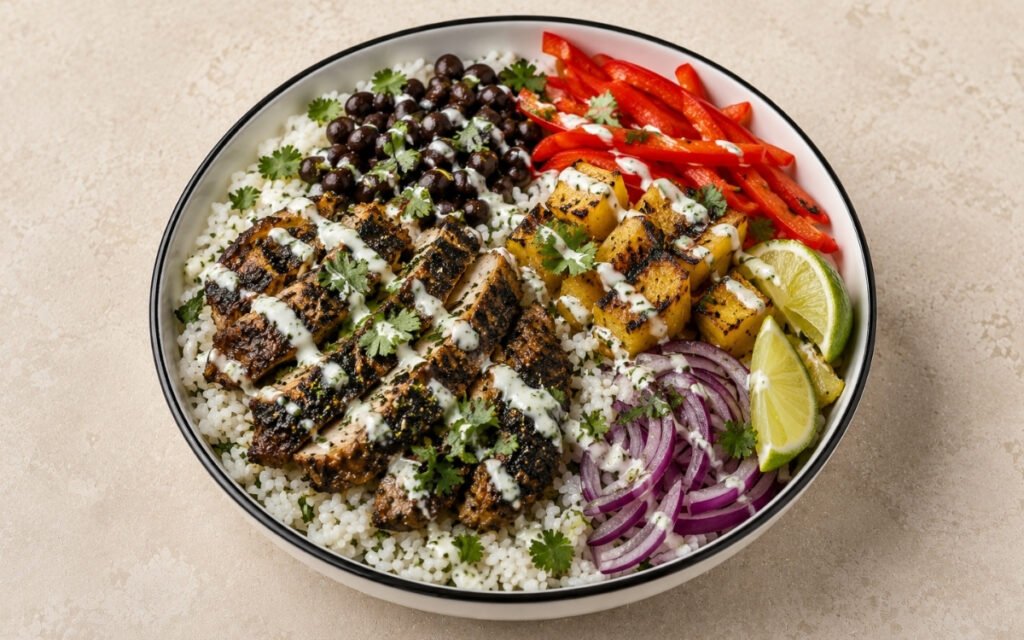
Caribbean Jerk Chicken Rice Bowl
Charred jerk-spiced chicken over coconut rice with black beans, grilled pineapple, peppers, and lime-cilantro crema.
-
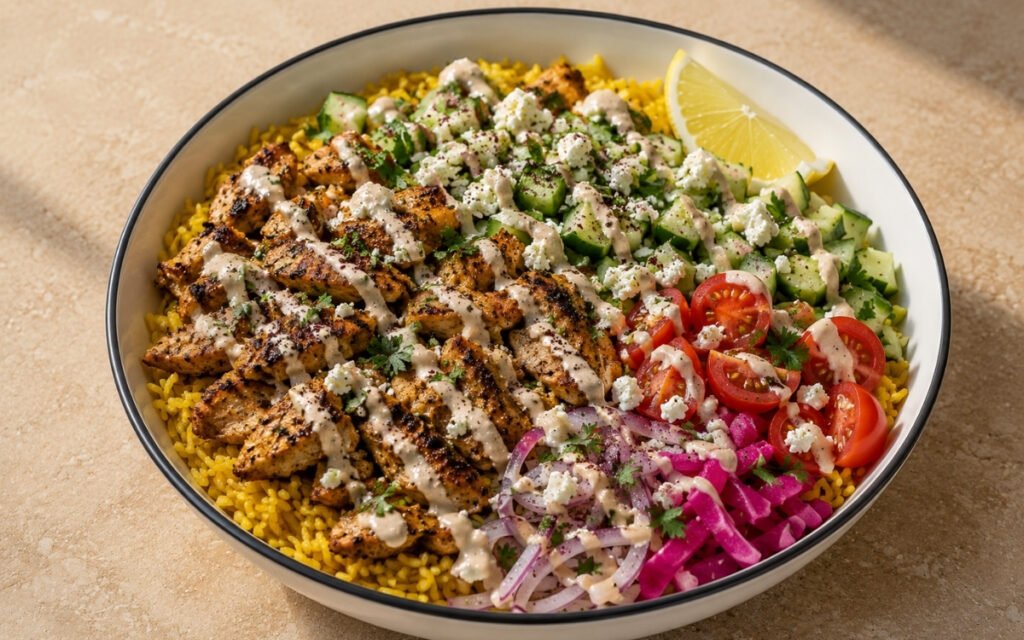
Lebanese Chicken Shawarma Rice Bowl
Chicken thighs marinated in yogurt and seven Lebanese spices, charred undisturbed in cast iron — over turmeric rice with cold-whisked tahini sauce and pickled turnips. 45 minutes.
-
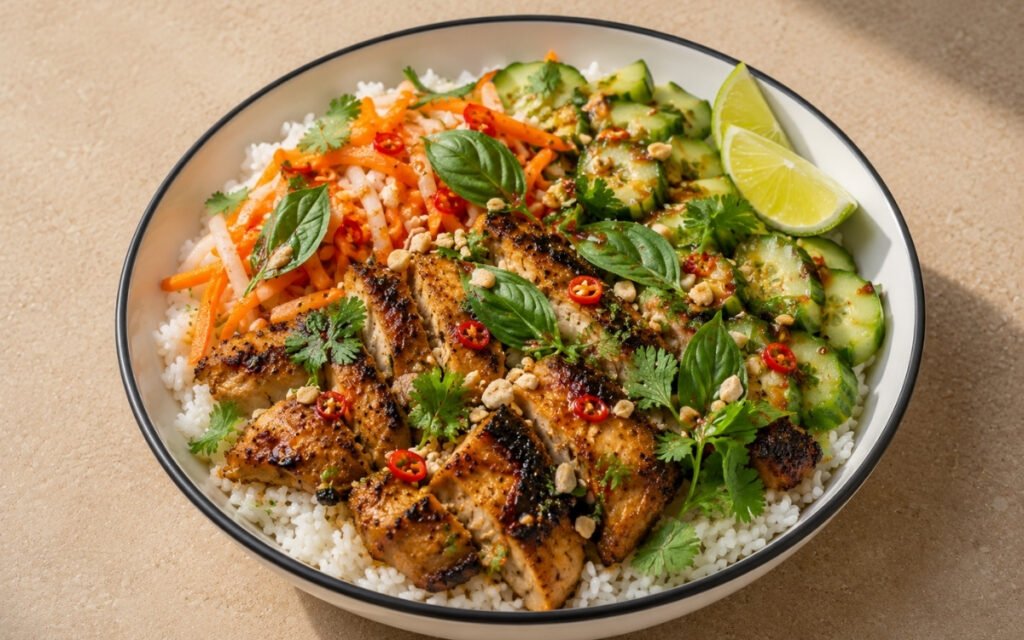
Vietnamese Lemongrass Chicken Rice Bowl
Caramelized lemongrass chicken over jasmine rice with pickled carrots, daikon, cucumber, fresh herbs, and nuoc cham.
-
Sweet Potato Ground Beef Burrito Bowl
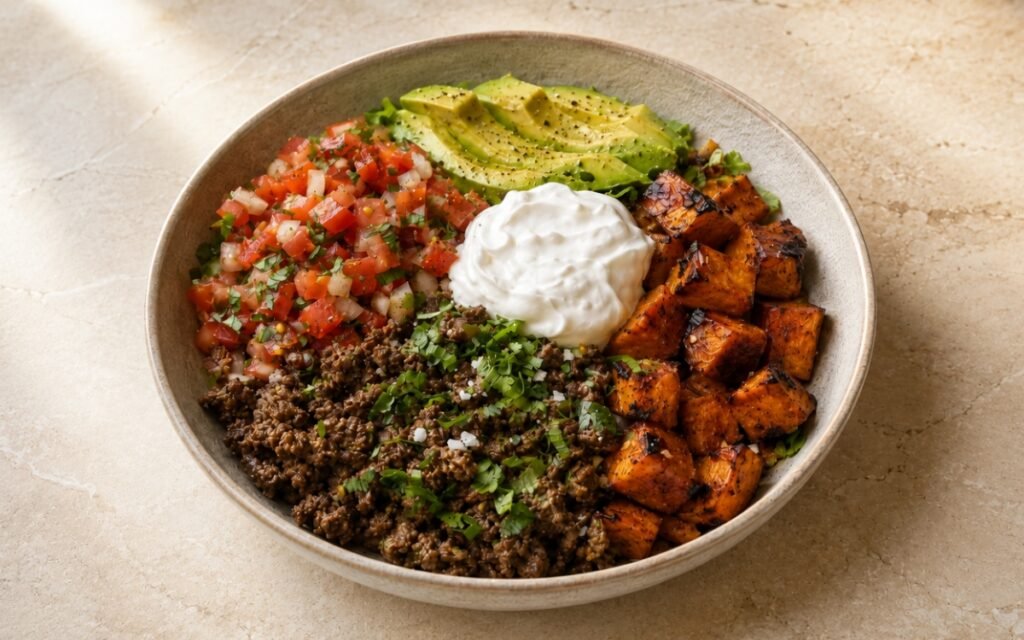
Crisp roasted sweet potato and browned seasoned ground beef with fresh pico de gallo, sliced avocado and cool sour cream.
-
Puerto Rican Arroz con Gandules
Golden-orange Puerto Rican rice cooked in one pot with pigeon peas, sofrito, green olives, red bell pepper, and browned pork shoulder cubes.
-
Vegetable Biryani
Classical-style vegetable biryani with basmati rice layered over a thick yogurt-spiced vegetable masala, fried onions, herbs, and saffron milk, finished on dum.