
Grilled Cacio e Pepe Chicken Wings
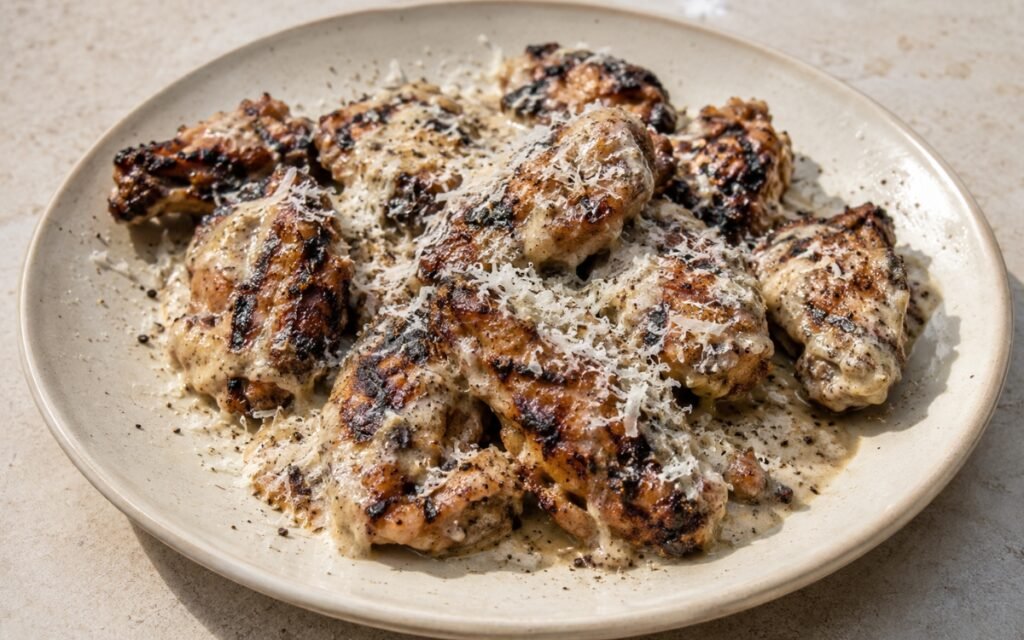
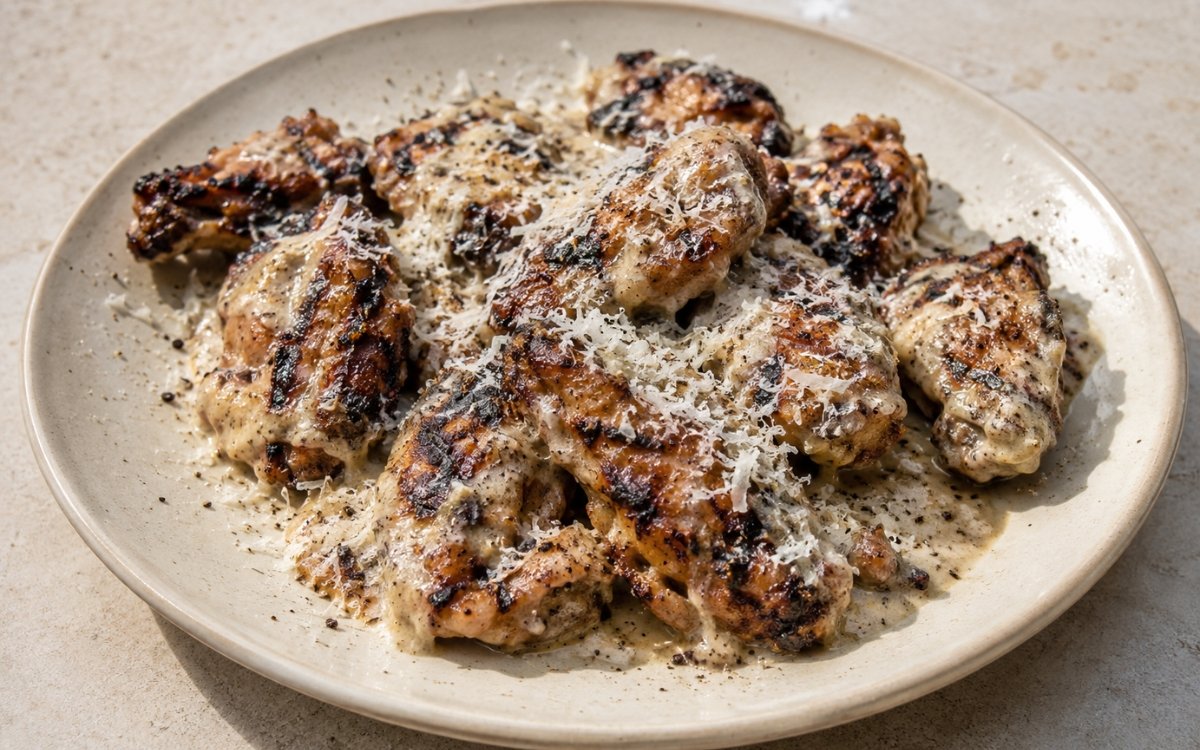
Grilled chicken wings cooked low and slow until the fat renders and the skin turns crisp, then coated in a creamy pale Pecorino-Parmesan cacio e pepe sauce with heavy coarsely cracked black pepper, finished with extra finely grated Pecorino so the wings look glossy, cheesy, pepper-speckled, and lightly charred. Drying the wings uncovered in the refrigerator for up to 12 hours before they ever hit the grill is the technique this whole recipe depends on — wet skin steams before it browns and never develops the crisp texture this dish needs, the same uncovered-dry principle used elsewhere in this collection whenever crisp skin is the goal. Grilling low and slow over indirect heat before finishing hot and direct is what allows the fat to fully render without burning the exterior, the same two-stage heat sequencing used throughout this collection whenever a fatty skin needs real time to render before colour develops. Emulsifying the cacio e pepe sauce entirely off direct heat protects it from the egg yolk scrambling or the cheese splitting, since this sauce simply cannot tolerate aggressive boiling. The payoff is a wing with genuinely crisp, rendered skin underneath a glossy, creamy, heavily peppered cheese coating.
Prep Time : 20 min
Cook Time : 45–55 min
Servings : 4
20 min
45–55 min
4
Ingredients
For the Chicken Wings
• 1kg chicken wings, drums and flats separated
• 8g fine sea salt
• 4g garlic powder — this one on Amazon
• 4g onion powder — this one on Amazon
• 2g white pepper — this one on Amazon
• 10ml neutral oil
For the Cacio e Pepe Sauce
• 80g Pecorino Romano, finely grated — this one on Amazon
• 60g Parmesan, finely grated — this one on Amazon
• 2 large egg yolks
• 6g coarsely cracked black pepper, plus more to finish
• 40g unsalted butter — this one on Amazon
• 90–120ml hot chicken stock, hot water, or hot wing resting juices
• 1g fine sea salt, only if needed
For Finishing
• 30g Pecorino Romano, finely grated
• Extra coarsely cracked black pepper
This post may contain affiliate links. As an Amazon Associate I earn from qualifying purchases, at no additional cost to you.
Directions
- Season and Dry the Wings
Pat the wings very dry with paper towels. Toss with the fine sea salt, garlic powder, onion powder, white pepper, and neutral oil until evenly coated. For the best skin, place the wings uncovered on a wire rack in the refrigerator for 2–12 hours. This dries the surface and gives the seasoning time to penetrate. Wet wings are trash on the grill. They steam first, brown late, and never get the crisp skin this recipe needs. Leaving the wings uncovered on a rack rather than sitting directly on a tray lets air circulate on all sides, drawing surface moisture away steadily over the extended chilling window — that dry surface is exactly what the grill’s heat needs to go straight into rendering and crisping rather than first evaporating moisture. - Prepare the Cheese Mixture
In a bowl, combine the finely grated Pecorino, Parmesan, egg yolks, and coarsely cracked black pepper. Mix into a thick paste. Do not use pre-grated cheese. It does not melt cleanly and can turn the sauce grainy. Pre-grated, packaged cheese is typically coated with anti-caking agents that interfere with smooth melting — freshly, finely grated cheese blends into the hot liquid cleanly, while pre-grated cheese tends to clump and produce a grainy, broken-looking sauce. - Set Up the Grill
Preheat the grill for two-zone cooking: one low indirect-heat area and one hotter direct-heat area. Aim for about 150–165°C on the indirect side. The point is to cook the wings slowly enough that the fat renders before the outside burns. This moderate indirect zone gives the wing’s substantial fat content, particularly around the drums and flats, real time to render out slowly — going straight to high heat would char the skin before that fat has had a chance to properly melt away. - Grill Low and Slow
Place the wings over indirect heat. Close the lid and cook for 30–40 minutes, turning every 10 minutes, until the fat has rendered, the skin looks tighter, and the wings are cooked through. The wings should reach at least 74°C internally, but they eat better around 82–88°C because the connective tissue softens and the meat pulls cleanly from the bone. Pushing well past the minimum safe temperature is specifically worthwhile for wings, since their connective tissue behaves similarly to a larger cut like a shoulder — extra time and heat beyond the bare minimum continues softening that tissue, producing meat that pulls away from the bone far more easily than wings pulled at just-safe temperature. - Crisp and Char the Wings
Move the wings over direct heat and grill for 5–10 minutes, turning often, until the skin is crisp with visible char marks. Do not walk away here. Rendered wings go from beautifully charred to burnt fast. Once the fat has fully rendered during the slow stage, the skin has very little remaining moisture or fat left to protect it from scorching — this final direct-heat stage moves quickly, and the margin between properly charred and burnt is genuinely narrow. - Oven Option
Bake the wings on a wire rack at 160°C for 35–40 minutes, then increase to 230°C or broil briefly until crisp and browned. This is less smoky than grilling, but it works if the skin is dried properly first. The same low-then-high sequencing that governs the grill method applies here too — the initial moderate bake renders fat gently, and the high-heat finish crisps the skin, mirroring the two-stage logic even without direct grill exposure. - Make the Cacio e Pepe Sauce
While the wings finish, melt the butter in a small saucepan over low heat. Add the cracked black pepper and bloom it for 30–45 seconds until fragrant. Remove the pan from direct heat. Slowly whisk 90ml hot chicken stock, hot water, or hot wing resting juices into the cheese-yolk mixture, a little at a time, until it loosens into a creamy sauce. Whisk in the peppered butter. The sauce should be creamy, pale, glossy, and thick enough to coat the wings. Add the remaining liquid only if needed. Do not boil the sauce. High heat will scramble the egg yolk and split the cheese. That would ruin the whole thing. Blooming the pepper briefly in melted butter releases its aromatic oils directly into the fat, producing a noticeably more fragrant, rounded pepper flavour than simply stirring raw cracked pepper into the finished sauce would. - Coat the Wings
Place the hot wings in a large bowl. Let them cool for 1–2 minutes so they are still hot but not violently steaming. Pour over the cacio e pepe sauce and toss until every wing is coated. The residual heat from the wings should warm and cling the sauce without breaking it. This brief cooling window matters more than it might seem — tossing the sauce with wings that are still violently steaming risks that trapped heat and moisture working against the delicate egg-and-cheese emulsion, while wings that are merely hot warm and loosen the sauce just enough to cling evenly. - Finish and Serve
Pile the wings onto a plate. Sprinkle heavily with extra finely grated Pecorino and more coarsely cracked black pepper. Serve immediately while the wings are hot, the skin is still crisp underneath the sauce, and the cheese coating is glossy. The crisp skin beneath the sauce begins softening the moment the sauce sits against it, so serving without delay is what preserves the contrast between the crackling skin and the creamy coating over it.
*Notes :
- Use fresh citrus whenever possible. Older fruit loses aromatic oils and The uncovered dry-brine period is worth treating as the single most consequential preparation step in this recipe, disproportionate to how passive it seems. Chicken skin holds a meaningful amount of surface moisture, and that moisture is directly opposed to crisping — any water present has to evaporate before the grill’s heat can start rendering fat and browning the skin. The extended, uncovered refrigerator time addresses that moisture in advance, so the actual cook time on the grill can go straight to rendering and crisping rather than spending its first several minutes fighting excess surface water.
- The two-zone, low-then-high grilling sequence exists specifically because of wings’ fat content and thin skin. Going straight to high, direct heat would char the skin’s exterior before the substantial fat underneath has had time to render out — the resulting wing would look done on the outside while still carrying unrendered, chewy fat beneath. The slow indirect stage solves that by giving the fat a genuine, unhurried window to melt away, with the final direct-heat stage reserved purely for building colour and char once that rendering is already complete.
- Keeping the cacio e pepe sauce entirely off direct heat during its emulsification is a non-negotiable technical constraint rather than a stylistic preference. Egg yolk begins to scramble at a fairly moderate temperature, and cheese proteins can seize and separate from their fat under similarly gentle heat if agitated aggressively. The technique here — building the sauce with hot liquid whisked gradually into the cold cheese-yolk base, off the stove — relies entirely on residual heat to gently thicken and emulsify the sauce without ever pushing it past the point either component can tolerate.
- Timing the sauce’s addition to the wings is worth being precise about rather than treating loosely. Wings tossed while still aggressively steaming risk that trapped heat and moisture destabilising the delicate emulsion the sauce depends on, while wings that have cooled too much won’t provide enough residual warmth to properly loosen and cling the sauce evenly. The brief 1–2 minute cooling window specified here is calibrated to land in the right range.
Why This Recipe Works
This recipe works because the wings are dried thoroughly in advance, giving the grill’s heat a clean surface to work on rather than fighting excess moisture from the start.
The low-then-high grilling sequence renders the wings’ substantial fat content fully before building char, and the cacio e pepe sauce is built entirely with residual and gently applied heat, protecting the delicate egg-and-cheese emulsion from ever scrambling or splitting.
Tossing the wings with sauce while they’re hot but no longer violently steaming lets the sauce cling evenly without breaking, producing a glossy, creamy coating over genuinely crisp skin.
Ingredient Breakdown
Uncovered, Dried Chicken Wings
The critical prep step — an extended, uncovered rest draws out surface moisture that would otherwise prevent proper crisping on the grill.
Two-Zone Low-Then-High Grilling
The cooking technique — indirect heat renders fat slowly, direct heat finishes the skin with char and colour once rendering is complete.
Freshly, Finely Grated Cheese
The sauce’s foundation — melts cleanly into a smooth emulsion, unlike pre-grated cheese, which can turn grainy and clump.
Off-Heat Emulsified Sauce
The critical technique — hot liquid whisked gradually into cold cheese and egg yolk, using residual heat rather than direct heat to thicken without scrambling.
Bloomed Cracked Black Pepper
The defining flavour note — briefly bloomed in butter for a more fragrant, rounded pepper character than raw cracked pepper stirred in cold.
Flavor Structure Explained
This cacio e pepe wingss follow a layered balance model:
- Crisp savoury foundation (rendered, charred chicken skin)
- Rich creamy centre (Pecorino-Parmesan sauce)
- Sharp aromatic spice (bloomed black pepper)
- Salty umami finish (extra grated Pecorino)
The rendered, crisped chicken skin defines the wing with a savoury, smoky foundation from the grill. The cacio e pepe sauce adds rich, creamy depth from the combined Pecorino and Parmesan, bound smoothly with egg yolk. Bloomed, coarsely cracked black pepper contributes sharp, aromatic warmth that’s meant to register clearly rather than as background seasoning. A final heavy scatter of grated Pecorino finishes each wing with a salty, umami-forward last layer that reinforces the sauce’s cheese-forward identity.
Common Mistakes to Avoid
- Skipping the Uncovered Drying Step – Wet skin steams before it browns and never develops proper crispness. Always dry the wings uncovered in the refrigerator for at least a couple of hours if possible.
- Grilling Over High Heat From the Start – This chars the skin before the fat underneath has rendered. Always start over indirect, moderate heat before finishing hot and direct.
- Boiling the Cacio e Pepe Sauce – This scrambles the egg yolk and splits the cheese, ruining the emulsion. Always keep it off direct heat, using residual warmth to thicken.
- Using Pre-Grated Cheese – Anti-caking agents prevent it from melting smoothly into the sauce. Always use freshly, finely grated Pecorino and Parmesan.
- Tossing the Sauce With Wings That Are Too Hot or Too Cool – Violently steaming wings can destabilise the sauce; fully cooled wings won’t warm and cling it properly. Always let the wings rest 1–2 minutes first.
Variations
Extra-Peppery Version
Increase the coarsely cracked black pepper in both the sauce and the finishing garnish for a sharper, more assertive pepper presence throughout.
Oven-Only Version
Follow the oven method exclusively for a fully indoor version, accepting a less smoky flavour than grilling provides.
With Truffle Oil
Finish the sauced wings with a few drops of truffle oil alongside the extra Pecorino for a more indulgent, aromatic variation.
Smaller Batch for a Crowd
Double the wing quantity while keeping the sauce recipe as written, tossing in two batches to ensure even coating.
Storage & Make-Ahead
Raw, seasoned wings can be dried uncovered in the refrigerator for up to 12 hours as directed; do not extend significantly beyond this window.
Grilled, unsauced wings can be refrigerated for up to 2 days; reheat in a hot oven to restore some crispness before saucing.
The cacio e pepe sauce is best made fresh right before tossing with the wings, since reheating risks breaking the delicate emulsion.
Fully sauced wings are not suitable for storage — the skin softens under the sauce fairly quickly, so toss and serve only what will be eaten immediately.
Frequently Asked Questions
Why is drying the wings uncovered in the refrigerator described as the biggest turning point?
Any surface moisture on the wings has to evaporate before the grill’s heat can start rendering fat and crisping the skin. The extended, uncovered dry addresses that moisture in advance, so the actual grilling time goes straight into browning and crisping rather than fighting excess water first.
Why grill the wings low and slow before finishing over direct heat?
Wings carry a meaningful amount of fat that needs real time to render out. Starting over high, direct heat would char the skin’s exterior before that fat has melted away, leaving chewy, unrendered fat beneath a burnt surface. The slow indirect stage lets the fat render fully first.
Why can’t the cacio e pepe sauce be simmered or boiled like a normal sauce?
Egg yolk scrambles and cheese proteins can seize under even moderate direct heat when agitated. The technique here relies entirely on hot liquid whisked into a cold base, using residual heat to gently thicken and emulsify without ever risking that breakdown.
Why use freshly grated cheese instead of pre-grated?
Pre-grated cheese is typically coated with anti-caking agents that prevent it from melting smoothly, which can leave the sauce grainy or clumpy. Freshly, finely grated cheese blends into the hot liquid cleanly for a smooth, glossy result.
Are there other flavoured chicken wing recipes worth trying?
Elote-Style Chicken Wings and Lemon Garlic Chicken Wings are both worth exploring if you enjoy this kind of flavour-forward, sauced wing — one built around Mexican street-corn flavours with cotija and chilli, the other around a bright, garlicky citrus glaze. Honey Lemon Pepper Wings offers another direction entirely, balancing sweetness against a sharp, peppery citrus coating.
Nutrition Facts
( per serving )
Calories
~640 kcal
Protein
38 g
Fat
48 g
Carbs
4 g
Calories
~640 kcal
Protein
38 g
Fat
48 g
Carbs
4 g
Related Recipes
Related Recipes

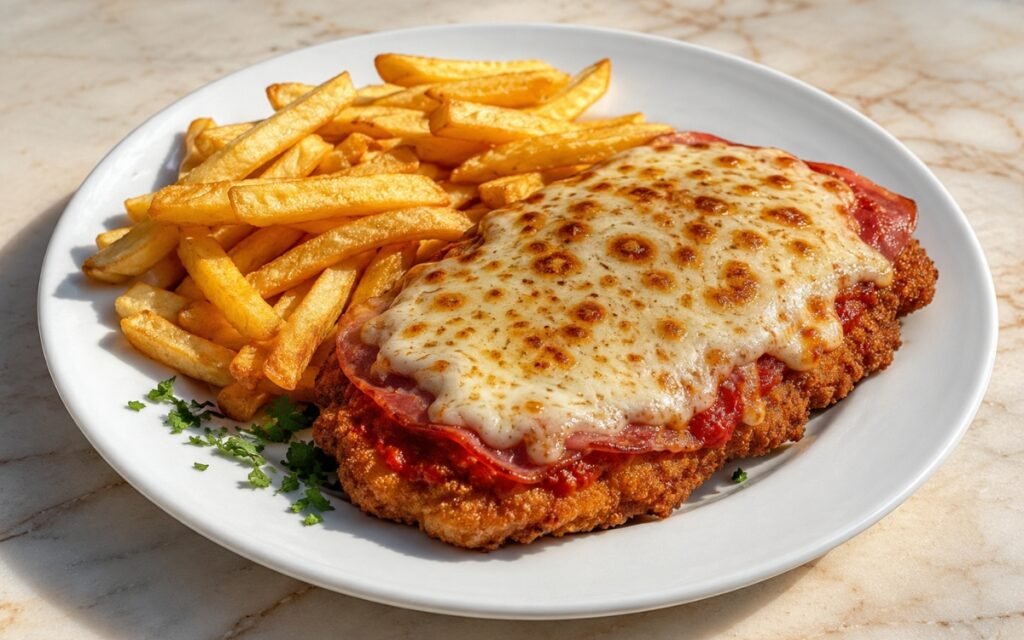
Argentine Milanesa Napolitana
Breaded, fried chicken cutlets topped with tomato sauce, smoked ham, and melted mozzarella, served with crispy double-fried fries.
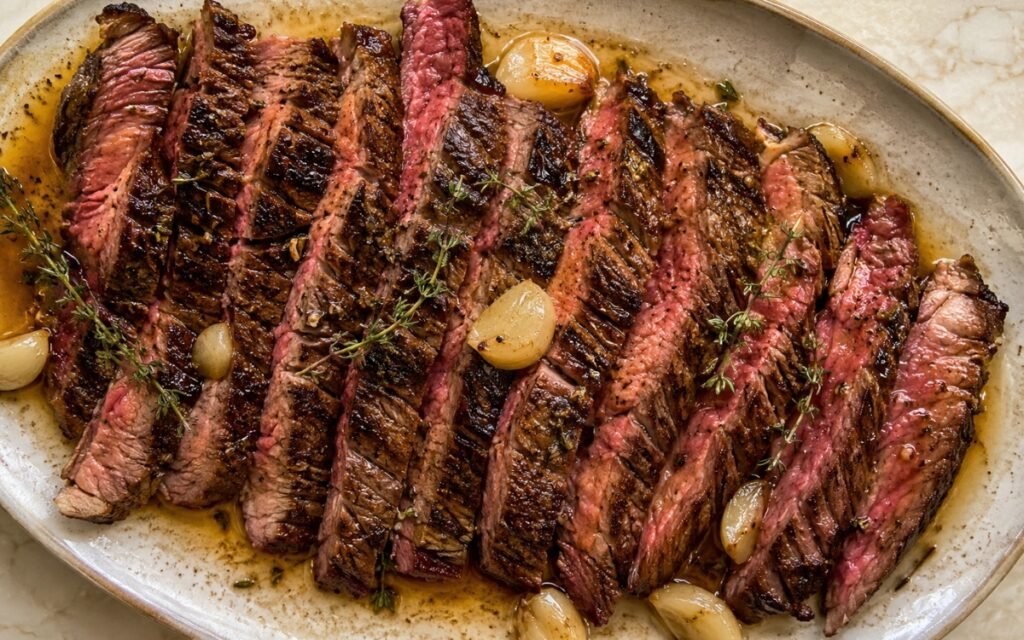
Pan-Seared Skirt Steak
Quick-seared skirt steak with garlic herb butter, sliced against the grain for maximum tenderness.
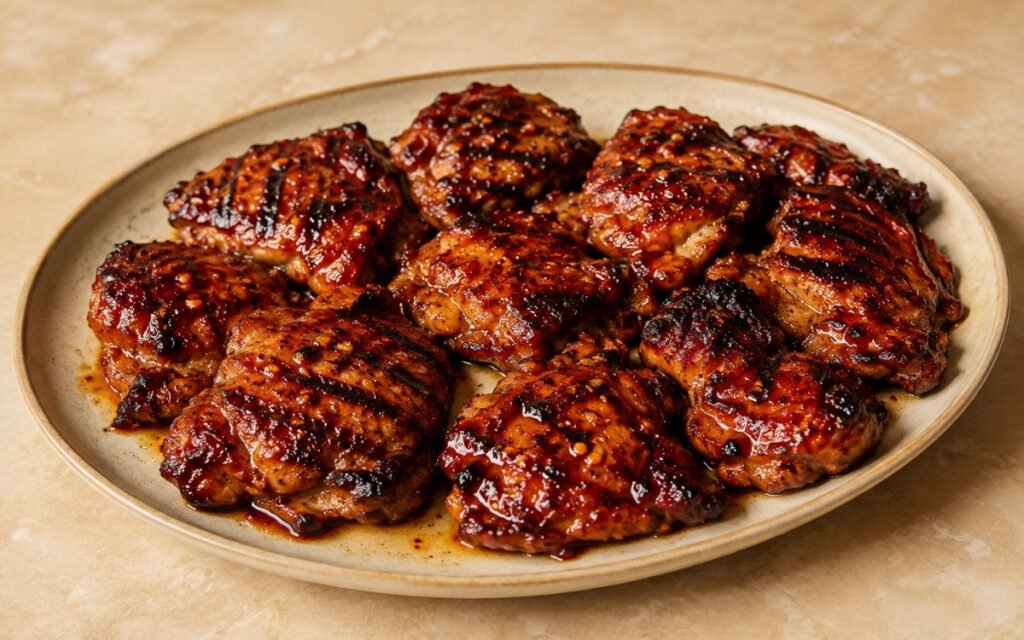
Grilled Hot Honey Chicken Thighs
Yogurt-marinated chicken thighs grilled to charred grill marks then glazed in progressive rounds with chili-infused hot honey — glossy, smoky, spicy, and caramelised in 35 minutes active time.
You might also like
You might also like
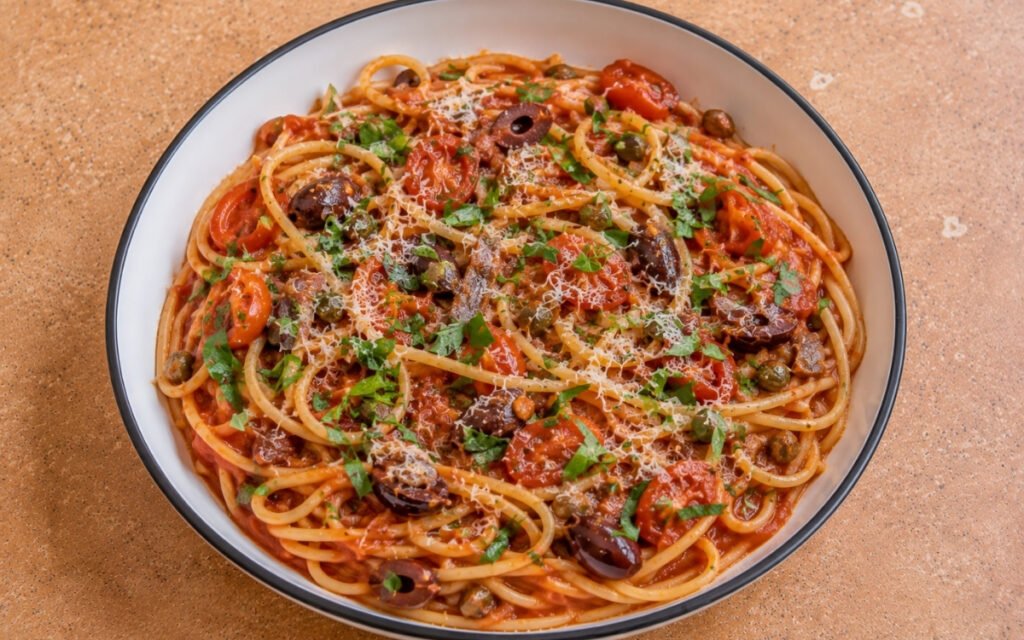
Italian Puttanesca Pasta
Anchovies dissolved for invisible depth, Kalamata olives, capers, and two tomatoes — bold and briny in 40 minutes.
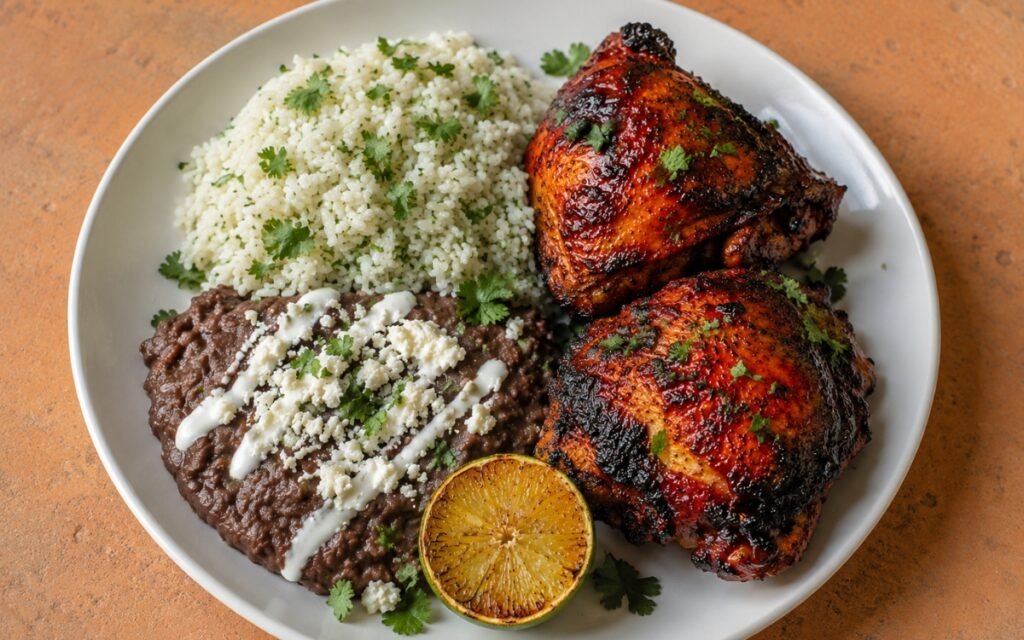
Pollo Asado with Rice and Beans
Bone-in chicken thighs marinated in achiote and citrus, grilled two-zone until deeply red and charred. Served with cilantro-lime rice and creamy black beans.
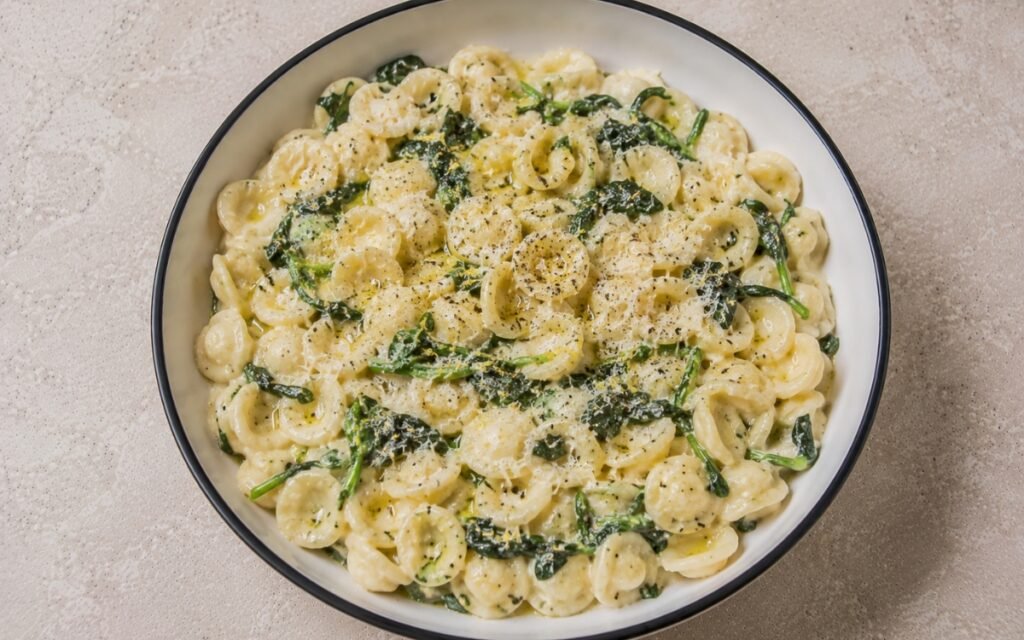
Lemon Ricotta Spinach Orecchiette
Ricotta whisked with Parmigiano, lemon, and warm pasta water — added off the heat to orecchiette and garlic spinach for silky sauce without cream. 30 minutes.
Grilled Cacio e Pepe Chicken Wings
Ingredients
Method
- Pat the wings very dry with paper towels. Toss with the fine sea salt, garlic powder, onion powder, white pepper, and neutral oil until evenly coated. For the best skin, place the wings uncovered on a wire rack in the refrigerator for 2–12 hours. This dries the surface and gives the seasoning time to penetrate. Wet wings are trash on the grill. They steam first, brown late, and never get the crisp skin this recipe needs. Leaving the wings uncovered on a rack rather than sitting directly on a tray lets air circulate on all sides, drawing surface moisture away steadily over the extended chilling window — that dry surface is exactly what the grill’s heat needs to go straight into rendering and crisping rather than first evaporating moisture.
- In a bowl, combine the finely grated Pecorino, Parmesan, egg yolks, and coarsely cracked black pepper. Mix into a thick paste. Do not use pre-grated cheese. It does not melt cleanly and can turn the sauce grainy. Pre-grated, packaged cheese is typically coated with anti-caking agents that interfere with smooth melting — freshly, finely grated cheese blends into the hot liquid cleanly, while pre-grated cheese tends to clump and produce a grainy, broken-looking sauce.
- Preheat the grill for two-zone cooking: one low indirect-heat area and one hotter direct-heat area. Aim for about 150–165°C on the indirect side. The point is to cook the wings slowly enough that the fat renders before the outside burns. This moderate indirect zone gives the wing’s substantial fat content, particularly around the drums and flats, real time to render out slowly — going straight to high heat would char the skin before that fat has had a chance to properly melt away.
- Place the wings over indirect heat. Close the lid and cook for 30–40 minutes, turning every 10 minutes, until the fat has rendered, the skin looks tighter, and the wings are cooked through. The wings should reach at least 74°C internally, but they eat better around 82–88°C because the connective tissue softens and the meat pulls cleanly from the bone. Pushing well past the minimum safe temperature is specifically worthwhile for wings, since their connective tissue behaves similarly to a larger cut like a shoulder — extra time and heat beyond the bare minimum continues softening that tissue, producing meat that pulls away from the bone far more easily than wings pulled at just-safe temperature.
- Move the wings over direct heat and grill for 5–10 minutes, turning often, until the skin is crisp with visible char marks. Do not walk away here. Rendered wings go from beautifully charred to burnt fast. Once the fat has fully rendered during the slow stage, the skin has very little remaining moisture or fat left to protect it from scorching — this final direct-heat stage moves quickly, and the margin between properly charred and burnt is genuinely narrow.
- Bake the wings on a wire rack at 160°C for 35–40 minutes, then increase to 230°C or broil briefly until crisp and browned. This is less smoky than grilling, but it works if the skin is dried properly first. The same low-then-high sequencing that governs the grill method applies here too — the initial moderate bake renders fat gently, and the high-heat finish crisps the skin, mirroring the two-stage logic even without direct grill exposure.
- While the wings finish, melt the butter in a small saucepan over low heat. Add the cracked black pepper and bloom it for 30–45 seconds until fragrant. Remove the pan from direct heat. Slowly whisk 90ml hot chicken stock, hot water, or hot wing resting juices into the cheese-yolk mixture, a little at a time, until it loosens into a creamy sauce. Whisk in the peppered butter. The sauce should be creamy, pale, glossy, and thick enough to coat the wings. Add the remaining liquid only if needed. Do not boil the sauce. High heat will scramble the egg yolk and split the cheese. That would ruin the whole thing. Blooming the pepper briefly in melted butter releases its aromatic oils directly into the fat, producing a noticeably more fragrant, rounded pepper flavour than simply stirring raw cracked pepper into the finished sauce would.
- Place the hot wings in a large bowl. Let them cool for 1–2 minutes so they are still hot but not violently steaming. Pour over the cacio e pepe sauce and toss until every wing is coated. The residual heat from the wings should warm and cling the sauce without breaking it. This brief cooling window matters more than it might seem — tossing the sauce with wings that are still violently steaming risks that trapped heat and moisture working against the delicate egg-and-cheese emulsion, while wings that are merely hot warm and loosen the sauce just enough to cling evenly.
- Pile the wings onto a plate. Sprinkle heavily with extra finely grated Pecorino and more coarsely cracked black pepper. Serve immediately while the wings are hot, the skin is still crisp underneath the sauce, and the cheese coating is glossy. The crisp skin beneath the sauce begins softening the moment the sauce sits against it, so serving without delay is what preserves the contrast between the crackling skin and the creamy coating over it.