
Flautas de Pollo with Guacamole and Salsa
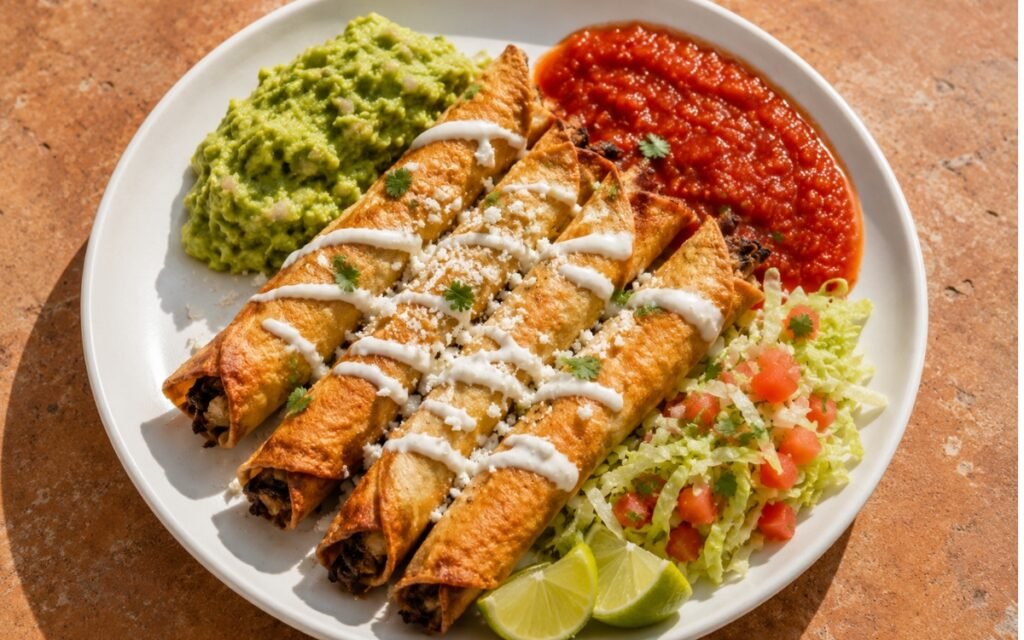
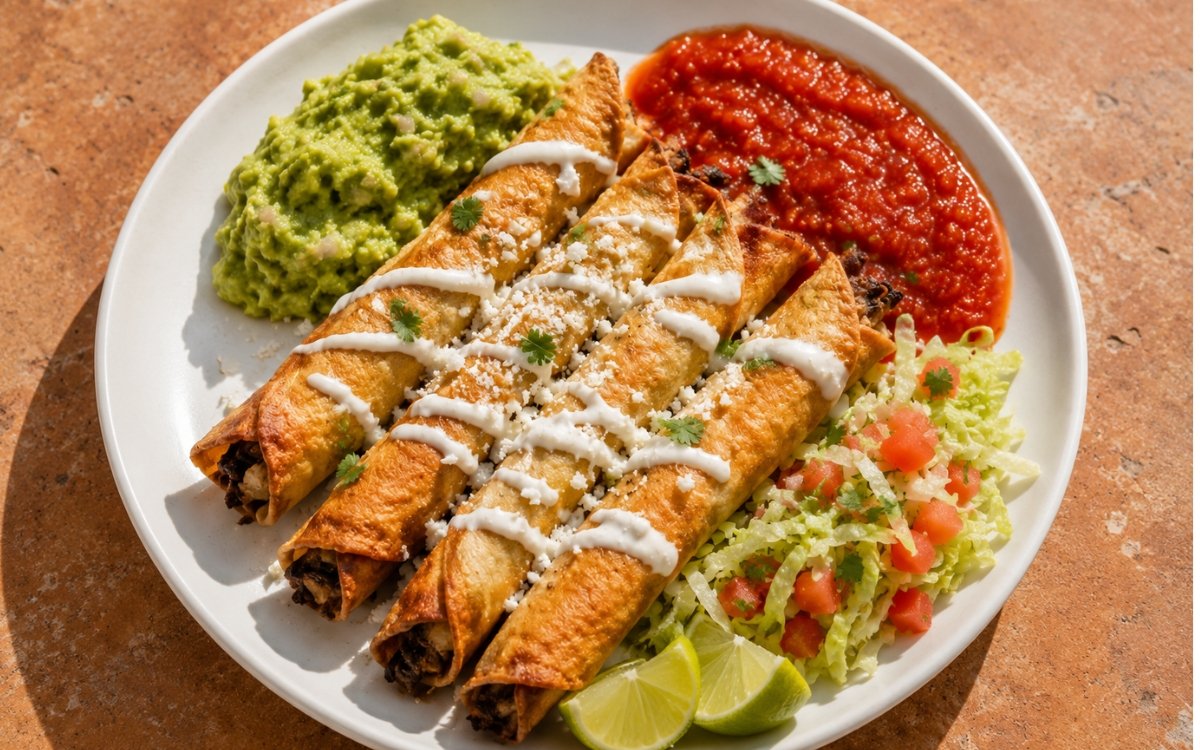
Tightly rolled corn tortilla flautas filled with shredded spiced chicken thighs, fried until golden-brown, crisp, and blistered, served in a fan pattern with chunky guacamole on one side, bright red salsa roja on the other, shredded lettuce with diced tomato, white crema drizzle, crumbled queso fresco, and lime. Frying the flautas seam-side down first is the technique that makes tightly rolled tortillas viable in hot oil — it seals the seam before the tube has any real chance to unravel, the same seal-first principle used elsewhere in this collection whenever a rolled or folded shape needs to hold together under direct heat. Keeping the shredded chicken filling moist but genuinely dry, rather than saucy, is just as critical, since any excess liquid steams the flauta from the inside and softens the crisp shell the frying is meant to build. Draining the tomato before it ever meets the lettuce protects the plate from the same problem in a different form — bleeding tomato liquid would soak into and soften the flautas the moment they’re plated. The payoff is a plate with real colour and textural range: golden, crisp fried tubes fanned against vivid green guacamole and bright red salsa, with cool lettuce and tomato alongside.
Prep Time : 50 min
Cook Time : 1 hr
Servings : 4
50 min
1 hr
4
Ingredients
For The Homemade Corn Tortillas — ⅔ batch; (Full recipe — see Homemade Corn Tortillas)
• 160g masa harina — this one on Amazon
• 2g fine sea salt
• 200g warm water, approximately 40°C
For the Shredded Spiced Chicken Thighs
• 850g boneless, skinless chicken thighs
• 15ml neutral oil
• 8g kosher salt
• 3g ground cumin
• 3g smoked paprika — this one on Amazon
• 3g chilli powder — this one on Amazon
• 2g dried Mexican oregano — this one on Amazon
• 2g garlic powder
• 2g onion powder
• 2g freshly cracked black pepper
• 120g white onion, thinly sliced
• 3 garlic cloves, minced
• 180ml chicken stock or water
• 30ml fresh lime juice
For Frying the Flautas
• Neutral oil, enough for 2–3cm depth in the skillet
• Wooden toothpicks, if needed
For The Salsa Roja
• 8 medium Roma tomatoes, about 600g, halved
• 1 white onion, halved, then each half cut into 4 wedges
• 3 garlic cloves, peeled and lightly smashed
• 2 tbsp extra-virgin olive oil — this one on Amazon
• ½ tsp ground cumin — this one on Amazon
• 2 green jalapeños, deseeded, cut into smaller pieces — added raw
• Juice of 1 lime
• Large bunch fresh cilantro, leaves and stems included
• Salt to taste
For the Classic Guacamole — half batch; (Full recipe — see Classic Guacamole)
• 1½ ripe avocados
• ½ medium red onion, diced to ¼–⅛ inch cubes
• ½ green jalapeño, deseeded, diced to ⅛ inch cubes
• Juice of ½ lime
• ½ large handful fresh cilantro, roughly chopped
• ½ tsp ground cumin
• Salt to taste
• Freshly ground black pepper to taste
• ½ tbsp green Tabasco, optional — this one on Amazon
For the Lettuce and Tomato
• 180g iceberg or romaine lettuce, shredded thinly
• 220g ripe tomato, diced
• 2g kosher salt
• 10ml fresh lime juice
For Garnishing and Serving
• 120g Mexican crema or sour cream, loosened slightly for drizzling
• 80g queso fresco, crumbled — this one on Amazon
• Fresh cilantro leaves
• 2 limes, cut into wedges
• Salsa roja, from above
• Guacamole, from above
This post may contain affiliate links. As an Amazon Associate I earn from qualifying purchases, at no additional cost to you.
Directions
- Prepare the Corn Tortillas
Prepare the Homemade Corn Tortilla dough according to its separate recipe, using 160g masa harina, 2g salt, and 200g warm water. Mix until the dough is soft, hydrated, and no dry masa remains. Rest covered for 20 minutes. Divide into 16 equal balls of about 22–23g each. Keep the dough covered at all times so the masa does not dry out. Press each tortilla to about 11.4cm / 4.5 inches diameter and cook on a dry hot skillet or comal until lightly charred, flexible, and cooked through. Stack immediately under a towel so the tortillas steam and stay pliable. Do not overcook the tortillas. Flautas need tortillas that are soft enough to roll tightly without cracking. A slightly undercooked, still-pale tortilla is actually preferable to a fully charred one here — the goal is maximum pliability for rolling, and the frying stage will finish cooking the tortilla anyway. - Cook the Spiced Chicken
Pat the chicken thighs dry. Toss with salt, cumin, smoked paprika, chilli powder, oregano, garlic powder, onion powder, and black pepper. Heat 15ml neutral oil in a skillet over medium-high heat. Sear the chicken thighs for 3–4 minutes per side, until browned. Add the sliced onion and minced garlic and cook for 2 minutes, scraping the browned bits from the pan. Add the chicken stock or water. Reduce the heat to medium-low, cover, and simmer for 18–22 minutes, until the chicken reaches 74°C and shreds easily. Browning the chicken thighs whole before simmering, rather than starting from raw diced chicken, builds a genuine fond on the bottom of the pan — scraping that fond up with the onion and garlic carries directly into the braising liquid that eventually gets reduced back into the shredded filling. - Shred and Tighten the Filling
Transfer the chicken to a board and rest for 5 minutes. Shred into medium strands. Return the shredded chicken to the skillet with the cooking juices and lime juice. Cook uncovered for 3–5 minutes, stirring often, until the chicken is moist but not wet. The filling should be juicy enough to hold together but dry enough that it does not leak into the tortillas. Wet filling will steam the flautas from the inside and soften the shell. This reduction stage is doing real work — it’s not simply warming the shredded chicken back up, but actively driving off excess liquid until what remains is concentrated flavour clinging to the meat rather than pooling loosely around it. - Prepare the Salsa Roja
Toss the Roma tomatoes, white onion, and garlic with olive oil and salt. Broil or roast until the tomatoes soften and blister, and the onion develops browned edges, about 8–12 minutes. Blend the roasted tomatoes, onion, garlic, cumin, raw jalapeño, lime juice, and cilantro until chunky-smooth. Taste and adjust salt. The salsa should be bright red, spoonable, and thick enough to sit on the plate without running everywhere. Adding the jalapeño raw at the blending stage, rather than roasting it alongside the tomatoes, keeps its heat sharper and fresher-tasting against the roasted sweetness of the tomatoes and onion. - Prepare the Guacamole
Mash the avocado with a fork until partly smooth and partly chunky. Fold in the red onion, jalapeño, garlic, lime juice, cilantro, cumin, salt, black pepper, and green Tabasco if using. Fold gently, not aggressively. Guacamole should stay rustic and chunky, not turn into a smooth green paste. Rest for 10 minutes before serving. The short rest allows the flavours from the onion, garlic, and lime to distribute through the mashed avocado, rounding out what would otherwise taste like separate ingredients sitting on top of plain avocado. - Prepare the Lettuce and Tomato
Dice the tomato and toss with kosher salt. Let sit for 5 minutes, then drain off excess liquid. Toss the drained tomato with the shredded lettuce and lime juice. Do not skip draining the tomato. Watery tomato will bleed across the plate and make the flautas soggy. Salting the diced tomato briefly draws out its internal liquid through osmosis before it ever reaches the plate — skipping this step means that liquid releases later instead, right where it can soak into the crisp fried flautas. - Roll the Flautas
Warm the tortillas again briefly if they have cooled. They must be flexible before rolling. Place 25–30g shredded chicken filling across the lower third of each tortilla. Roll tightly into a narrow tube. Secure with a toothpick if needed. Repeat with all 16 tortillas. Do not overfill. These are small tortillas, and overfilled flautas split open in the oil. Rolling tightly rather than loosely is what gives the finished flauta its structural integrity in the fryer — a loosely rolled tube has room to unfurl under the oil’s movement, while a tight roll holds its shape even without a toothpick in most cases. - Fry the Flautas
Heat 2–3cm neutral oil in a skillet to 175–180°C. Add the flautas seam-side down in batches and fry for 2–3 minutes per side, turning as needed, until deeply golden, blistered, and very crisp. Transfer to a rack and season lightly while hot. Do not stack them. Steam trapped between hot flautas softens the crust. Starting seam-side down is the detail that keeps a tightly rolled flauta from unravelling in the oil — the direct contact with hot oil sets and seals that seam within the first several seconds, before the tube has any opportunity to loosen. - Serve
Arrange 4 flautas per serving in a fan pattern. Add a generous spoonful of chunky guacamole on one side and bright salsa roja on the other. Add the shredded lettuce and diced tomato beside the flautas. Drizzle crema across the flautas in thick white lines. Scatter crumbled queso fresco over the top. Finish with fresh cilantro leaves and lime wedges. Serve immediately while the flautas are hot and crisp. Keeping the guacamole and salsa positioned beside rather than under the flautas is a visual and textural choice at once — burying the crisp tubes under either sauce would both hide their golden colour and begin softening the fried shell on contact.
*Notes :
- Use fresh citrus whenever possible. Older fruit loses aromatic oils and The reduction step after shredding the chicken is one of the more easily underestimated parts of this recipe. It’s tempting to treat it as simply reheating the meat before rolling, but the actual purpose is moisture management — driving off enough of the cooking liquid that what’s left clings to the chicken as concentrated flavour rather than pooling as excess liquid inside the rolled tortilla. Skipping or rushing this step is one of the more common reasons flautas split or turn soggy during frying, since the wet filling has nowhere to go but into the tortilla itself.
- Frying the flautas seam-side down first is a small sequencing detail with an outsized effect on the finished result. A tightly rolled tortilla wants to unfurl slightly the moment it’s released, and the seam is the weakest point in that structure. Direct contact with hot oil sets that seam almost immediately, effectively locking the roll shut before the rest of the frying process even properly begins — flautas started seam-side up are considerably more prone to opening in the oil.
- Both the salsa roja and the guacamole here use a “half batch” quantity specifically because a full batch of either would be disproportionate to what four servings of flautas actually need on the side. This is worth noting because both referenced recipes are written at their own standard yield, and halving them cleanly is part of correctly scaling this specific dish rather than a sign anything’s been simplified.
- Draining the diced tomato before combining it with the lettuce protects more than just the salad itself. Any liquid that bleeds out of unsalted, undrained tomato ends up on the plate directly alongside the fried flautas, and given how quickly a crisp fried shell picks up ambient moisture, that stray liquid is a genuine threat to the flautas’ texture even without touching them directly — it can seep across a crowded plate faster than expected.
Why This Recipe Works
This recipe works because it manages moisture and structural integrity at every stage: the shredded chicken filling is reduced until juicy but genuinely dry, the tortillas are kept soft and pliable specifically for rolling rather than overcooked, and the flautas are rolled tightly and fried seam-side down first so the seal holds through the full fry.
The drained tomato, chunky guacamole, and bright salsa roja are all kept positioned beside the flautas rather than under them, preserving both the visual colour story and the crisp texture the frying stage was built to create.
Ingredient Breakdown
Braised, Reduced Shredded Chicken Thighs
The filling — cooked down after shredding until moist but genuinely dry, protecting the tortilla from steaming and softening during frying.
Tightly Rolled Small Corn Tortillas
The structural format — rolled narrow and tight so the tube holds its shape through frying without unravelling.
Seam-Side-Down First Frying
The critical technique — seals the rolled seam within seconds of hitting hot oil, before the tube has any chance to open.
Drained Diced Tomato
The moisture-control step — salted and drained before combining with lettuce, protecting the plate and the crisp flautas from bleeding liquid.
Half-Batch Salsa Roja and Guacamole
The proportion-matched sides — scaled down from their full recipes specifically to suit four servings of flautas.
Flavor Structure Explained
This flautas de pollo follow a layered balance model:
- Crisp savoury foundation (fried tortilla shell)
- Warm spiced centre (shredded chicken filling)
- Cool creamy contrast (guacamole, crema)
- Bright acidic lift (salsa roja, lime)
- Fresh crunchy finish (lettuce, tomato, queso fresco)
The fried tortilla shell provides crisp, golden crunch that gives way to the warm, well-seasoned shredded chicken inside. Chunky guacamole and drizzled crema both cool the plate down with rich, fat-forward creaminess. Bright salsa roja cuts sharply through that richness with roasted tomato acidity and gentle heat. Shredded lettuce, diced tomato, and crumbled queso fresco finish the plate with fresh, sharp crunch, while a final squeeze of lime ties every element together.
Common Mistakes to Avoid
- Using Cold or Stiff Tortillas for Rolling – Cold corn tortillas crack under the fold, leaking filling into the frying oil. Always rewarm tortillas until flexible right before rolling.
- Making the Chicken Filling Too Wet – Excess liquid steams the flauta from the inside and softens the fried shell. Always reduce the shredded chicken until moist but not wet before rolling.
- Overfilling the Tortillas – Too much filling in these small tortillas causes the flautas to split open in the hot oil. Always keep to the specified 25–30g per tortilla.
- Frying Seam-Side Up First – This gives the tightly rolled tortilla a chance to unravel before the seam sets. Always start frying seam-side down.
- Stacking Fried Flautas While Hot – Trapped steam between stacked flautas softens the crisp crust almost immediately. Always drain them in a single layer on a rack.
Variations
Beef Flautas
Substitute the shredded chicken with the same-weight braised, shredded beef used elsewhere in this collection, following the identical filling-reduction method.
Baked Instead of Fried
Brush the rolled flautas lightly with oil and bake at 220°C for 18–22 minutes, turning once, for a lighter, non-fried version with a less pronounced crisp shell.
Spicier Version
Increase the chilli powder in the chicken seasoning to 5g and leave the jalapeño seeds in the salsa roja for a noticeably sharper heat throughout.
Cheese-Stuffed Flautas
Add a thin strip of Oaxaca or Monterey Jack cheese alongside the chicken filling before rolling for a melted cheese centre inside each flauta.
Storage & Make-Ahead
The shredded, reduced chicken filling can be refrigerated in an airtight container for up to 3 days. Reheat gently with a small splash of stock before rolling.
Rolled, unfried flautas can be refrigerated, covered, for a few hours before frying; frying fresh produces the best texture.
Salsa roja and guacamole should each be refrigerated according to their own recipes’ storage guidance.
Dressed lettuce and tomato is best made fresh close to serving, though the tomato can be salted and drained a few hours ahead.
Fried flautas are best eaten immediately; they lose their crisp texture within an hour and do not reheat well, becoming soft rather than crisp.
Frequently Asked Questions
Why does the chicken filling need to be reduced until dry rather than left juicy from the braise?
Excess liquid in the filling has nowhere to go once it’s rolled inside the tortilla except into the masa itself, softening it from the inside before the flauta ever reaches the oil. Reducing the shredded chicken until it’s moist but not wet is what lets the tortilla stay intact through frying.
Why fry the flautas seam-side down first instead of seam-side up?
A tightly rolled tortilla wants to unfurl slightly the moment it’s released into the oil, and the seam is the weakest point in that roll. Direct contact with hot oil sets and seals the seam almost immediately, locking the tube shut before it has any real chance to open.
Why does the diced tomato need to be salted and drained before combining it with the lettuce?
Salting draws liquid out of the tomato through osmosis before it reaches the plate. Skipped, that same liquid releases later on the plate instead, where it can bleed across toward the fried flautas and soften their crisp shell even without direct contact.
Why use chicken thighs instead of chicken breast for the filling?
Thighs have enough fat content to stay moist through searing, simmering, shredding, and a final reduction step without drying out. Chicken breast, being leaner, tends to dry out considerably faster through that same multi-stage cooking process.
Are there other recipes built around similar shredded chicken and crispy tortilla combinations?
If you like this pairing of shredded, seasoned chicken with crisped corn tortilla, Chicken Quesadilla follows a related idea — the same kind of seared, shredded chicken filling, but folded into a large tortilla and crisped flat in butter rather than rolled and deep-fried. As for the crema here, Cilantro Lime Drizzle works well as a lighter, more citrus-forward alternative to the Mexican crema, or drizzled alongside it for two distinct sauces on the same plate.
Nutrition Facts
( per serving )
Calories
~680 kcal
Protein
38 g
Fat
40 g
Carbs
46 g
Calories
~680 kcal
Protein
38 g
Fat
40 g
Carbs
46 g
Related Recipes
Related Recipes

Chicken Parm Hero
A golden fried chicken cutlet in a toasted hoagie roll, topped with thick marinara, melted mozzarella, Parmesan, and fresh basil.
Caldo de Res
A clear, golden Mexican beef soup with gently simmered beef shank and large, staged vegetables — corn, potato, carrot, chayote, zucchini, and cabbage.
Melon Mint Agua Fresca Mocktail
Ripe honeydew blended with lime and honey, mint cold-infused — still, pale green, and cooling.
You might also like
You might also like
Gorditas with Chicharrón and Salsa
Thick masa gorditas cooked golden and split into a pocket while warm, filled with crispy chicharrón, salsa roja, shredded cabbage, and avocado.
Loaded Chili Cheese Fries
Double-fried thick-cut potatoes topped with rich, reduced beef chili, melted Mexican cheese, diced onion, pickled jalapeños, and sour cream.
Beef Burrito Rice Bowl
Ground beef pressed flat in smoking cast iron, seared until deeply caramelised, then broken down and seasoned — over Mexican rice with spiced beans, pico, corn salad, guacamole, and cheese blend.
Flautas de Pollo with Guacamole and Salsa
Ingredients
Method
- Prepare the Homemade Corn Tortilla dough according to its separate recipe, using 160g masa harina, 2g salt, and 200g warm water. Mix until the dough is soft, hydrated, and no dry masa remains. Rest covered for 20 minutes. Divide into 16 equal balls of about 22–23g each. Keep the dough covered at all times so the masa does not dry out. Press each tortilla to about 11.4cm / 4.5 inches diameter and cook on a dry hot skillet or comal until lightly charred, flexible, and cooked through. Stack immediately under a towel so the tortillas steam and stay pliable. Do not overcook the tortillas. Flautas need tortillas that are soft enough to roll tightly without cracking. A slightly undercooked, still-pale tortilla is actually preferable to a fully charred one here — the goal is maximum pliability for rolling, and the frying stage will finish cooking the tortilla anyway.
- Pat the chicken thighs dry. Toss with salt, cumin, smoked paprika, chilli powder, oregano, garlic powder, onion powder, and black pepper. Heat 15ml neutral oil in a skillet over medium-high heat. Sear the chicken thighs for 3–4 minutes per side, until browned. Add the sliced onion and minced garlic and cook for 2 minutes, scraping the browned bits from the pan. Add the chicken stock or water. Reduce the heat to medium-low, cover, and simmer for 18–22 minutes, until the chicken reaches 74°C and shreds easily. Browning the chicken thighs whole before simmering, rather than starting from raw diced chicken, builds a genuine fond on the bottom of the pan — scraping that fond up with the onion and garlic carries directly into the braising liquid that eventually gets reduced back into the shredded filling.
- Transfer the chicken to a board and rest for 5 minutes. Shred into medium strands. Return the shredded chicken to the skillet with the cooking juices and lime juice. Cook uncovered for 3–5 minutes, stirring often, until the chicken is moist but not wet. The filling should be juicy enough to hold together but dry enough that it does not leak into the tortillas. Wet filling will steam the flautas from the inside and soften the shell. This reduction stage is doing real work — it’s not simply warming the shredded chicken back up, but actively driving off excess liquid until what remains is concentrated flavour clinging to the meat rather than pooling loosely around it.
- Toss the Roma tomatoes, white onion, and garlic with olive oil and salt. Broil or roast until the tomatoes soften and blister, and the onion develops browned edges, about 8–12 minutes. Blend the roasted tomatoes, onion, garlic, cumin, raw jalapeño, lime juice, and cilantro until chunky-smooth. Taste and adjust salt. The salsa should be bright red, spoonable, and thick enough to sit on the plate without running everywhere. Adding the jalapeño raw at the blending stage, rather than roasting it alongside the tomatoes, keeps its heat sharper and fresher-tasting against the roasted sweetness of the tomatoes and onion.
- Mash the avocado with a fork until partly smooth and partly chunky. Fold in the red onion, jalapeño, garlic, lime juice, cilantro, cumin, salt, black pepper, and green Tabasco if using. Fold gently, not aggressively. Guacamole should stay rustic and chunky, not turn into a smooth green paste. Rest for 10 minutes before serving. The short rest allows the flavours from the onion, garlic, and lime to distribute through the mashed avocado, rounding out what would otherwise taste like separate ingredients sitting on top of plain avocado.
- Dice the tomato and toss with kosher salt. Let sit for 5 minutes, then drain off excess liquid. Toss the drained tomato with the shredded lettuce and lime juice. Do not skip draining the tomato. Watery tomato will bleed across the plate and make the flautas soggy. Salting the diced tomato briefly draws out its internal liquid through osmosis before it ever reaches the plate — skipping this step means that liquid releases later instead, right where it can soak into the crisp fried flautas.
- Warm the tortillas again briefly if they have cooled. They must be flexible before rolling. Place 25–30g shredded chicken filling across the lower third of each tortilla. Roll tightly into a narrow tube. Secure with a toothpick if needed. Repeat with all 16 tortillas. Do not overfill. These are small tortillas, and overfilled flautas split open in the oil. Rolling tightly rather than loosely is what gives the finished flauta its structural integrity in the fryer — a loosely rolled tube has room to unfurl under the oil’s movement, while a tight roll holds its shape even without a toothpick in most cases.
- Heat 2–3cm neutral oil in a skillet to 175–180°C. Add the flautas seam-side down in batches and fry for 2–3 minutes per side, turning as needed, until deeply golden, blistered, and very crisp. Transfer to a rack and season lightly while hot. Do not stack them. Steam trapped between hot flautas softens the crust. Starting seam-side down is the detail that keeps a tightly rolled flauta from unravelling in the oil — the direct contact with hot oil sets and seals that seam within the first several seconds, before the tube has any opportunity to loosen.
- Arrange 4 flautas per serving in a fan pattern. Add a generous spoonful of chunky guacamole on one side and bright salsa roja on the other. Add the shredded lettuce and diced tomato beside the flautas. Drizzle crema across the flautas in thick white lines. Scatter crumbled queso fresco over the top. Finish with fresh cilantro leaves and lime wedges. Serve immediately while the flautas are hot and crisp. Keeping the guacamole and salsa positioned beside rather than under the flautas is a visual and textural choice at once — burying the crisp tubes under either sauce would both hide their golden colour and begin softening the fried shell on contact.