
Chiles Rellenos with Tomato Sauce
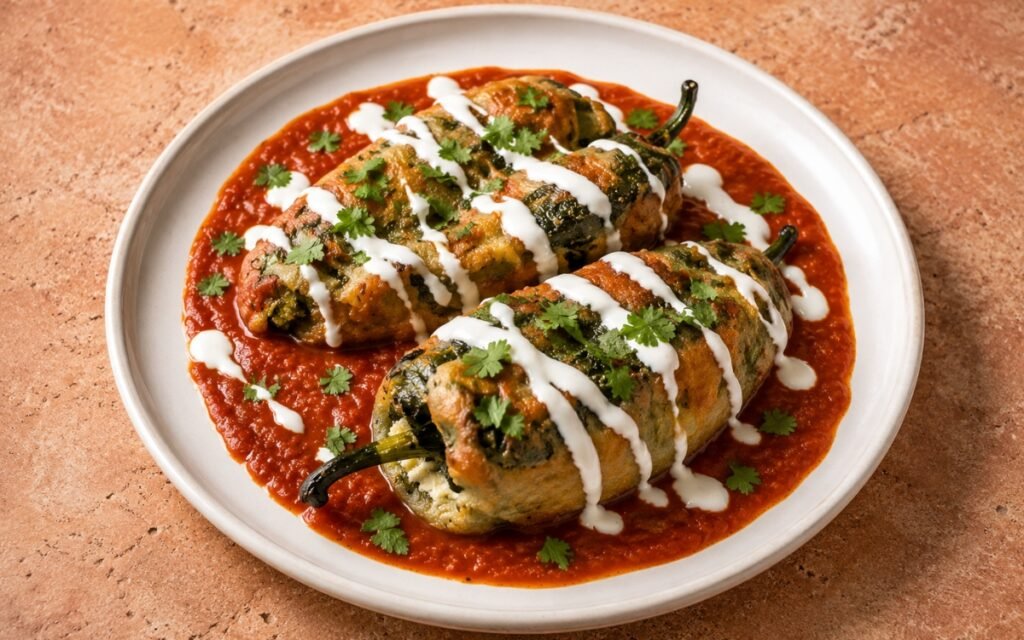
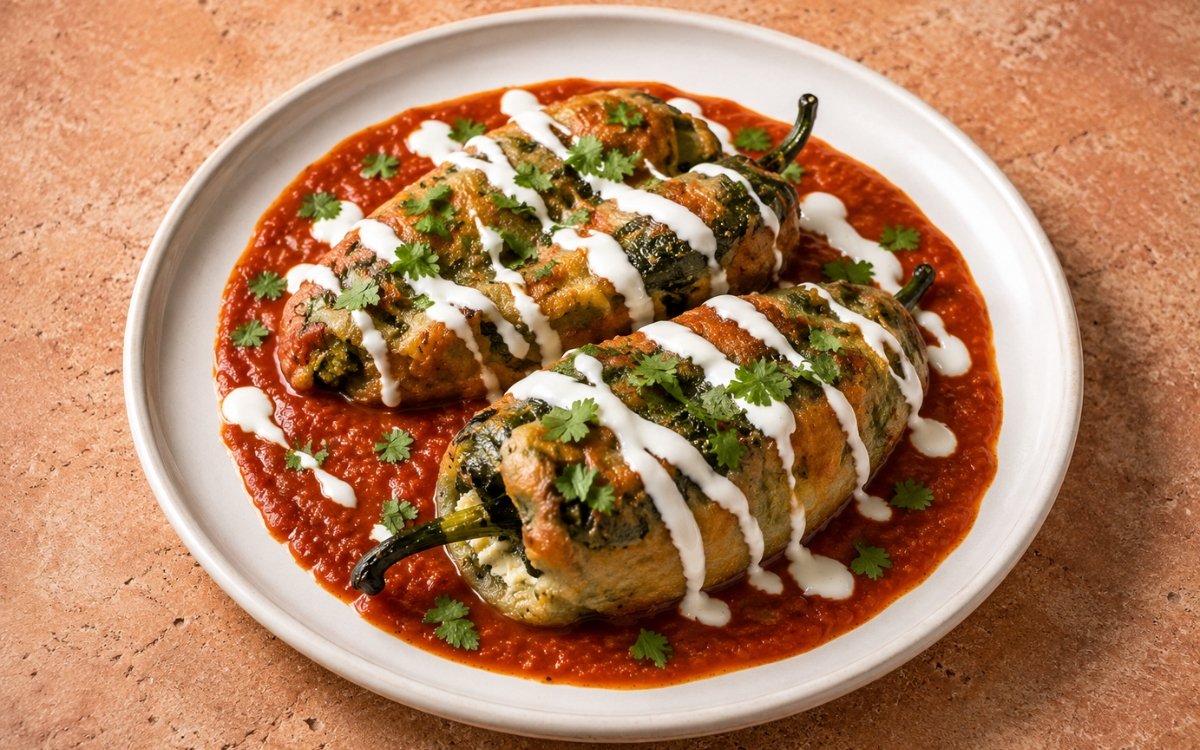
Large poblano peppers roasted, peeled, stuffed with white melting cheese, dipped in airy egg batter, and pan-fried until golden and slightly irregular, served over a vivid red tomato-chipotle sauce that pools around the peppers, finished with white sour cream drizzle and fresh cilantro. The egg batter is the technique that makes or breaks this dish — whipping the whites to stiff, glossy peaks before folding in the yolk mixture is what traps the air responsible for the batter’s puffed, slightly irregular texture, the same whipped-and-folded principle used elsewhere in this collection whenever a coating needs genuine lightness rather than density. Drying the roasted, peeled peppers thoroughly before flouring matters just as much: any lingering moisture rejects both the flour and the batter, producing patchy coverage instead of an even golden crust. The tomato-chipotle sauce is kept deliberately loose rather than thick, since chiles rellenos are meant to sit in a pool of sauce that touches without submerging, protecting the fried batter’s crispness. The payoff is a chile with a genuinely puffed, tender-crisp golden shell giving way to melted cheese, set against a glossy, smoky-sweet red sauce and a cooling drizzle of sour cream.
Prep Time : 45 min
Cook Time : 55 min
Servings : 4
45 min
55 min
4
Ingredients
For the Poblano Peppers
• 8 large poblano peppers
• 560g Oaxaca cheese, Monterey Jack, or another mild white melting cheese, cut into strips — this one on Amazon
• 60g all-purpose flour, for dusting
• Wooden toothpicks, for closing the peppers if needed
For the Tomato-Chipotle Sauce
• 900g Roma tomatoes, halved
• 1 medium white onion, cut into wedges
• 5 garlic cloves, peeled
• 30ml neutral oil
• 2 chipotle peppers in adobo — this one on Amazon
• 20g adobo sauce
• 20g tomato paste
• 500ml chicken stock or vegetable stock
• 4g ground cumin — this one on Amazon
• 3g dried Mexican oregano — this one on Amazon
• 5g kosher salt, plus more to taste
• 2g freshly cracked black pepper
• 5g sugar, optional, only if tomatoes are sharp
For the Egg Batter
• 6 large eggs, separated
• 2g fine sea salt
• 1g cream of tartar or 5ml fresh lime juice
• 30g all-purpose flour
For Frying
• 300–400ml neutral oil, for shallow frying
For Garnishing and Serving
• 160g sour cream, loosened with 15–30ml water or lime juice for drizzling
• 20g fresh cilantro leaves
• Extra tomato-chipotle sauce, from above
This post may contain affiliate links. As an Amazon Associate I earn from qualifying purchases, at no additional cost to you.
Directions
- Roast the Poblanos
Place the poblano peppers directly over a gas flame, under a broiler, or on a very hot dry skillet. Turn frequently until the skins are blistered and blackened in patches all over, about 8–10 minutes. Transfer the roasted peppers to a bowl and cover tightly for 15 minutes. The steam loosens the skins and makes peeling easier. Covering the hot peppers tightly traps their own residual steam against the blistered skin, which is what loosens it from the flesh underneath — peppers left uncovered to cool will still peel, but with considerably more effort and torn skin left clinging to the pepper. - Peel and Prepare the Peppers
Gently rub off the blistered skins using your fingers or a paper towel. Do not rinse the peppers under water; it washes away flavour and makes them slippery. Cut one lengthwise slit in each pepper, keeping the stem attached. Carefully remove the seeds and large inner ribs without tearing the flesh. Pat the peppers dry inside and outside. This is a major turning point. Wet peppers will reject the flour and batter, and torn peppers will leak cheese into the oil. Rinsing under water might feel like the faster way to remove stubborn skin, but it strips away the peppers’ own smoky, charred surface oils along with any remaining skin fragments — the flavour lost that way is a real and noticeable trade-off for the convenience. - Stuff the Peppers
Fill each poblano with about 70g white cheese strips. The pepper should look full but still close naturally. If needed, secure the opening with one or two toothpicks. Do not overstuff. Too much cheese will burst through the slit during frying. A pepper that closes naturally around its filling, without needing to be forced shut, is the visual cue that the amount of cheese is correct — overstuffed peppers put pressure on the slit from the inside out, and that pressure only increases as the cheese begins to melt in the hot oil. - Make the Tomato-Chipotle Sauce
Heat 30ml neutral oil in a large skillet or saucepan over medium-high heat. Add the Roma tomatoes cut-side down, onion wedges, and garlic. Cook for 6–8 minutes, turning occasionally, until the tomatoes soften and develop browned spots. Transfer the tomatoes, onion, and garlic to a blender. Add the chipotle peppers, adobo sauce, tomato paste, stock, cumin, oregano, salt, black pepper, and sugar if needed. Blend until smooth. Pour the sauce into a saucepan and simmer uncovered for 15–20 minutes, stirring occasionally, until vivid red, slightly thickened, and glossy. The sauce should be loose enough to pool around the peppers, not thick like paste. Taste and adjust salt. Browning the tomatoes cut-side down before blending concentrates their sugars and adds a light roasted character that a purely raw-blended tomato sauce wouldn’t have — this step is quick but meaningfully deepens the final sauce’s flavour. - Dust the Peppers
Spread 60g flour on a plate. Lightly dust each stuffed poblano with flour, shaking off the excess. The flour layer should be thin and dry, just enough to help the egg batter cling. The flour here serves the same purpose as a dry dredge does for a battered fish — it gives the wet batter a slightly textured surface to grip, rather than sliding off the pepper’s naturally smooth, roasted skin. - Prepare the Egg Batter
In a clean bowl, beat the egg whites with cream of tartar or lime juice until stiff glossy peaks form. In a separate bowl, whisk the egg yolks with salt and 30g flour until smooth. Gently fold the yolk mixture into the beaten whites in 2 additions. Do not deflate the batter. It should be airy, thick, and spoonable, not runny. Make the batter right before frying. If it sits too long, it collapses. The cream of tartar or lime juice stabilises the whipped whites’ protein structure, helping them hold their air longer, but that stability is still temporary — folding gently in two additions, rather than one aggressive mix, is what keeps as much of that trapped air intact as possible going into the fry. - Fry the Chiles Rellenos
Heat 1–1.5cm neutral oil in a wide skillet over medium heat to about 170–175°C. The oil should shimmer, and a drop of batter should sizzle immediately without smoking. Dip one stuffed poblano into the egg batter, coating it fully. Carefully lay it into the hot oil seam-side up or slightly to the side. Spoon a little extra batter over any exposed areas if needed. Fry for 2–3 minutes per side, turning gently, until the batter is golden, puffed, and slightly irregular. Transfer to a rack or paper towel-lined tray. Repeat with the remaining peppers, working in batches. Do not crowd the skillet. Crowding drops the oil temperature and gives greasy, pale batter instead of a golden crust. Laying the pepper seam-side up or to the side, rather than seam-side down, keeps the cheese-filled opening away from direct contact with the hot oil for as long as possible, reducing the chance of cheese leaking out before the batter has set around it. - Warm the Fried Peppers in Sauce
Spread most of the tomato-chipotle sauce in a wide pan or baking dish. Place the fried chiles rellenos into the sauce and warm gently for 3–5 minutes, spooning a little sauce around the sides but not drowning the golden batter. The sauce should pool around the peppers and lightly touch them. If you bury them completely, the batter turns soggy. This brief warming step is about bringing the fried peppers back up to serving temperature and letting the sauce’s edges just touch the batter, not about cooking anything further — full submersion for even a few minutes will soften the crisp, puffed exterior that the frying stage worked to build. - Serve
Spoon tomato-chipotle sauce onto each plate. Place 2 chiles rellenos per serving over the sauce. Drizzle with loosened sour cream in thick white lines. Scatter fresh cilantro leaves over the top. Serve immediately while the batter is still tender and golden, the cheese is melted, and the red sauce is hot and glossy. The sour cream is loosened specifically so it drizzles in clean, visible lines rather than sitting as a thick dollop — that visual line work is part of the classic presentation, contributing to the deep green, red, and white colour story the dish is known for.
*Notes :
- The egg batter’s structure comes entirely from correctly whipped whites, and it’s worth understanding why the process is sequenced the way it is. Whipping the whites alone first, to stiff glossy peaks, builds a stable foam with maximum trapped air. Folding the yolk mixture in afterward, gently and in stages, adds richness and colour without collapsing that foam. Reversing the order, or mixing everything together at once, produces a flatter, denser batter that fries into a heavier, less puffed crust.
- Drying the peppers thoroughly after peeling is one of the easiest steps to underestimate. Roasted, peeled poblanos naturally hold some surface moisture from both their own juices and the steaming step used to loosen the skin, and that moisture actively works against every subsequent step — it prevents the flour from adhering evenly, which in turn prevents the batter from clinging properly, producing patchy, uneven frying with bare spots where the coating has slid away.
- The tomato-chipotle sauce’s consistency is a deliberate choice specific to how chiles rellenos are meant to be served. A thick, reduced sauce would sit heavily on top of the fried peppers and soften the batter on contact everywhere it touched. Keeping the sauce genuinely loose and pourable, closer to a soup than a paste, lets it pool around the peppers on the plate instead — visually striking and texturally protective of the batter at the same time.
- The brief warming step, placing the fried peppers into the sauce for just 3–5 minutes rather than simmering them, exists purely to bring everything to the same serving temperature without compromising the batter’s texture. It’s tempting to treat this step like simmering the chiles fully in the sauce for deeper flavour, but that approach reliably produces soggy, collapsed batter — the fried crust and the sauce are meant to meet only briefly on the plate, not merge into one texture.
Why This Recipe Works
This recipe works because each major component is built around protecting a specific texture through to serving: the peppers are dried thoroughly so the flour and batter adhere cleanly; the egg batter is whipped and folded correctly to trap air for genuine puff.
The tomato-chipotle sauce is kept loose and pourable so it pools rather than smothers; and the fried peppers are only briefly warmed in the sauce rather than simmered, keeping the golden batter crisp right up to the moment it’s served.
Ingredient Breakdown
Roasted, Steamed Poblano Peppers
The specified preparation — blistered directly over flame, then steamed covered to loosen the skin cleanly for peeling.
Mild White Melting Cheese (Oaxaca or Monterey Jack)
The filling — chosen specifically for reliable, stretchy melt rather than a crumbly cheese like queso fresco.
Whipped Egg White Batter
The coating technique — whites whipped to stiff peaks first, then folded with yolks, trapping air for a puffed, tender-crisp fried crust.
Loose Tomato-Chipotle Sauce
The serving sauce — kept pourable rather than thick, so it pools around the fried peppers without softening the batter.
Loosened Sour Cream Drizzle
The cooling finish — thinned with water or lime juice specifically to drizzle in clean, visible lines rather than sitting as a thick dollop.
Flavor Structure Explained
This chiles rellenos follows a layered balance model:
- Smoky charred foundation (roasted poblano)
- Rich melted centre (white cheese filling)
- Airy golden crust (whipped egg batter)
- Warm smoky-sweet sauce (tomato-chipotle)
- Cool creamy finish (sour cream, cilantro)
The roasted poblano defines the dish with a smoky, slightly bitter charred flavour that anchors everything else. Melted white cheese fills the centre with rich, stretchy warmth. The whipped egg batter contributes a light, airy crunch that contrasts against the soft pepper and molten cheese beneath it. The tomato-chipotle sauce layers in smoky sweetness and gentle heat that pools around rather than overwhelms the fried pepper. A final drizzle of cooling sour cream and fresh cilantro finishes the plate with clean, bright contrast against the richness.
Common Mistakes to Avoid
- Not Drying the Peppers Before Flouring – Residual moisture prevents the flour and batter from adhering evenly, producing patchy, uneven frying. Always pat the peeled peppers thoroughly dry inside and out.
- Overstuffing the Peppers with Cheese – Excess cheese bursts through the slit during frying, leaking into the hot oil. Always fill to about 70g per pepper so it closes naturally.
- Letting the Egg Batter Sit Before Frying – Whipped batter collapses over time, losing the air that gives it a puffed texture. Always make the batter immediately before frying and use it right away.
- Crowding the Frying Skillet – Too many peppers at once drops the oil temperature, producing greasy, pale batter instead of a golden crust. Always fry in batches with space between peppers.
- Fully Submerging the Fried Peppers in Sauce – Burying the peppers completely softens the crisp batter within minutes. Always let the sauce pool around and lightly touch the peppers rather than covering them.
Variations
With Picadillo Filling
Replace the cheese with a savoury ground beef or pork picadillo filling, seasoned similarly to the ground beef used elsewhere in this collection, for a meat-forward version of the same technique.
Baked Instead of Fried
Skip the egg batter and shallow fry entirely — bake the cheese-stuffed, unbattered poblanos at 190°C for 15–20 minutes until the cheese is fully melted, for a lighter, non-fried version.
With Mixed Cheese
Combine the Oaxaca or Monterey Jack with a small amount of crumbled queso fresco for a filling that’s both meltingly smooth and slightly sharper in flavour.
Extra-Smoky Sauce
Increase the chipotle peppers to 3–4 and their adobo sauce proportionally for a noticeably smokier, spicier tomato sauce.
Storage & Make-Ahead
Roasted, peeled, and seeded poblanos can be refrigerated in an airtight container for up to 2 days before stuffing and frying.
The tomato-chipotle sauce can be refrigerated in a sealed container for up to 5 days, or frozen for up to 3 months.
Stuffed, unbattered peppers can be refrigerated for a few hours before flouring and battering, though frying fresh produces the best texture.
Fried chiles rellenos are best eaten immediately; the batter loses its crisp, puffed texture within an hour and does not reheat well.
Frequently Asked Questions
Why cover the roasted poblanos tightly after charring instead of letting them air-cool?
Covering the hot peppers traps their own steam against the blistered skin, which loosens it from the flesh underneath. Left uncovered, the skin cools and tightens back against the pepper, making it considerably harder to peel cleanly without tearing the flesh.
Why whip the egg whites separately before folding in the yolks?
Whipping the whites alone builds a stable, air-filled foam at its maximum volume. Folding the yolk mixture in afterward, gently and in stages, adds richness without collapsing that trapped air — combining everything at once produces a flatter, denser batter that fries into a heavier crust.
Why does the tomato-chipotle sauce need to stay loose rather than thick?
A thick sauce sits heavily on top of the fried peppers and softens the batter wherever it touches. A loose, pourable sauce instead pools around the peppers on the plate, staying visually striking while protecting the crisp texture of the fried shell.
Why is drying the peppers before flouring described as a major turning point?
Any residual moisture on the peeled peppers prevents the flour from adhering evenly, which in turn prevents the egg batter from clinging properly. The result is patchy, uneven coverage with bare spots that fry pale and greasy instead of golden and crisp.
Are there other classic recipes built around whole roasted poblano peppers?
Chiles en Nogada is another classic Mexican dish built on the same whole roasted poblano base, though it takes the concept in a completely different direction — the peppers are stuffed with a sweet-savoury picadillo filling and left unbattered, then topped with a creamy walnut sauce and pomegranate seeds instead of the tomato-chipotle sauce here. It’s a good next dish to explore if you enjoy the technique of working with whole roasted poblanos.
Nutrition Facts
( per serving )
Calories
~640 kcal
Protein
30 g
Fat
42 g
Carbs
34 g
Calories
~640 kcal
Protein
30 g
Fat
42 g
Carbs
34 g
Related Recipes
Related Recipes

Pork Chile Verde
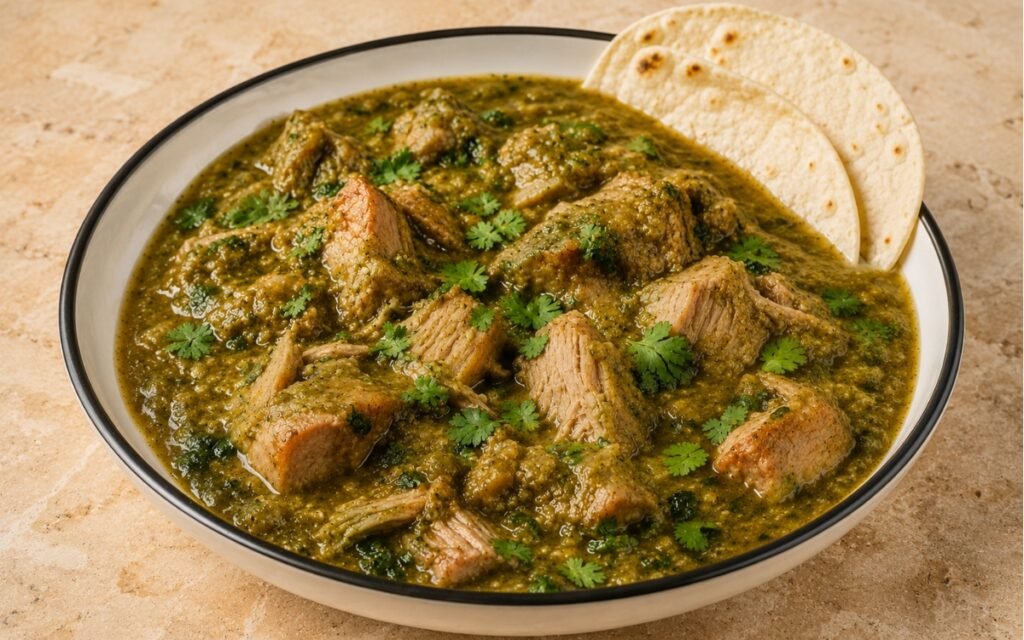
Browned pork shoulder braised tender in a roasted tomatillo-green chile sauce, thick and glossy with poblano body.
Huevos Divorciados
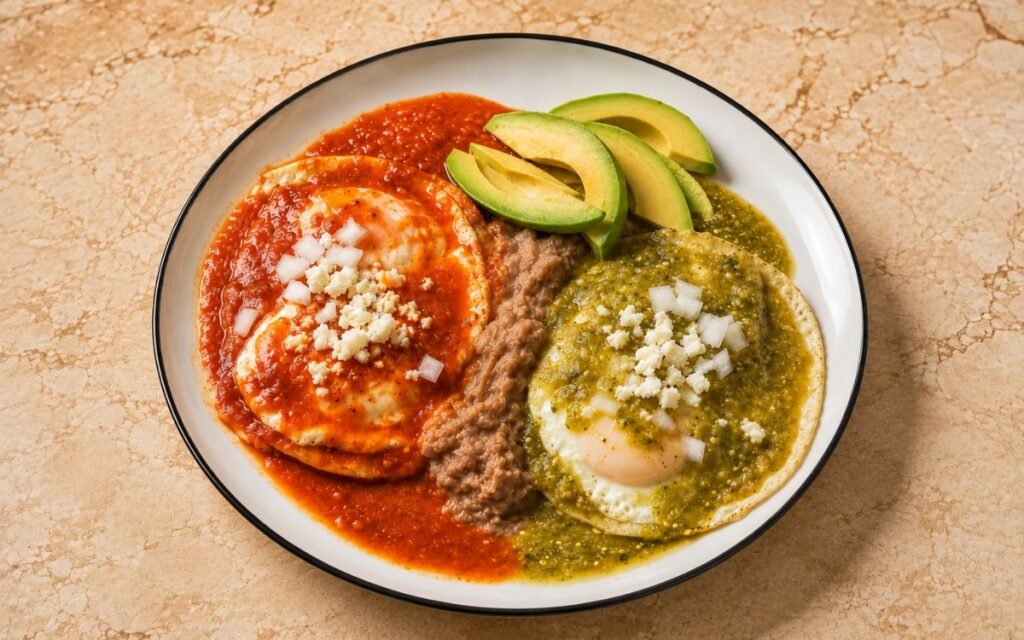
Two fried eggs on lightly fried tortillas, “divorced” by vivid salsa roja and salsa verde, with refried beans and fresh garnishes.
Mexican Chicken Taco Salad
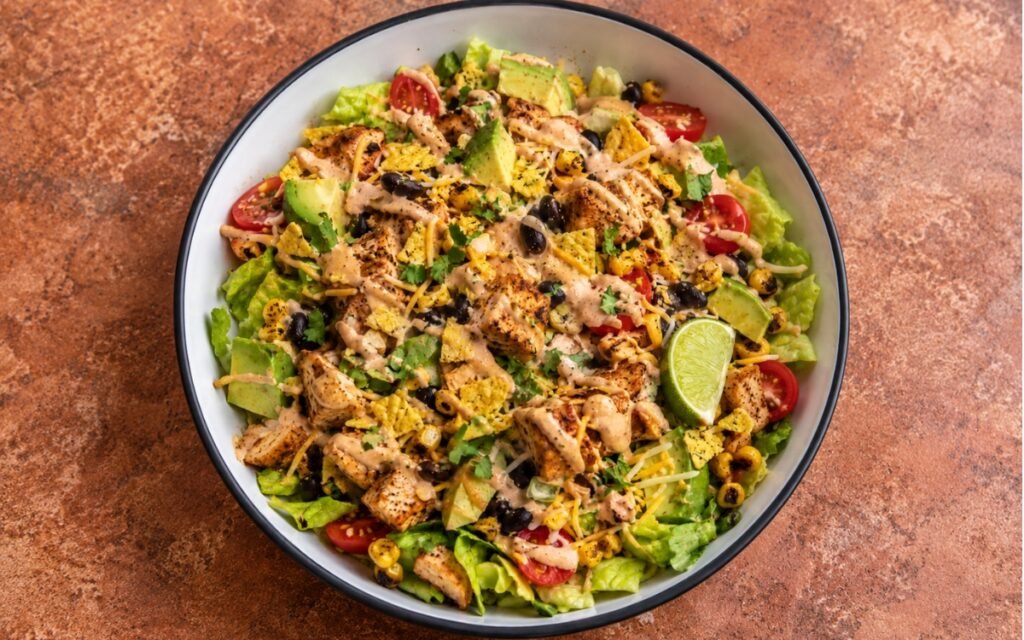
Seasoned chicken breast, chopped lettuce, black beans, charred corn, cherry tomatoes, avocado, shredded cheese, and crushed tortilla chips with chipotle crema.
You might also like
You might also like
Carnitas Tacos with Pickled Red Onion
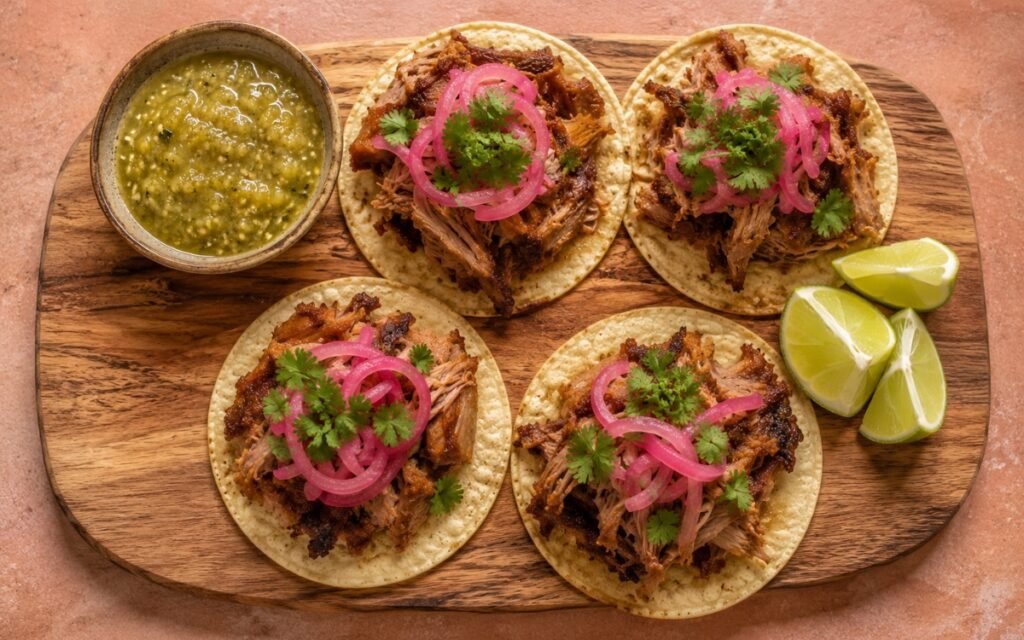
Pork shoulder braised in citrus and lard until tender, then crisped hot and fast for caramelised edges. Topped with pickled red onion and cilantro.
Kimcheese (Kimchi Grilled Cheese)
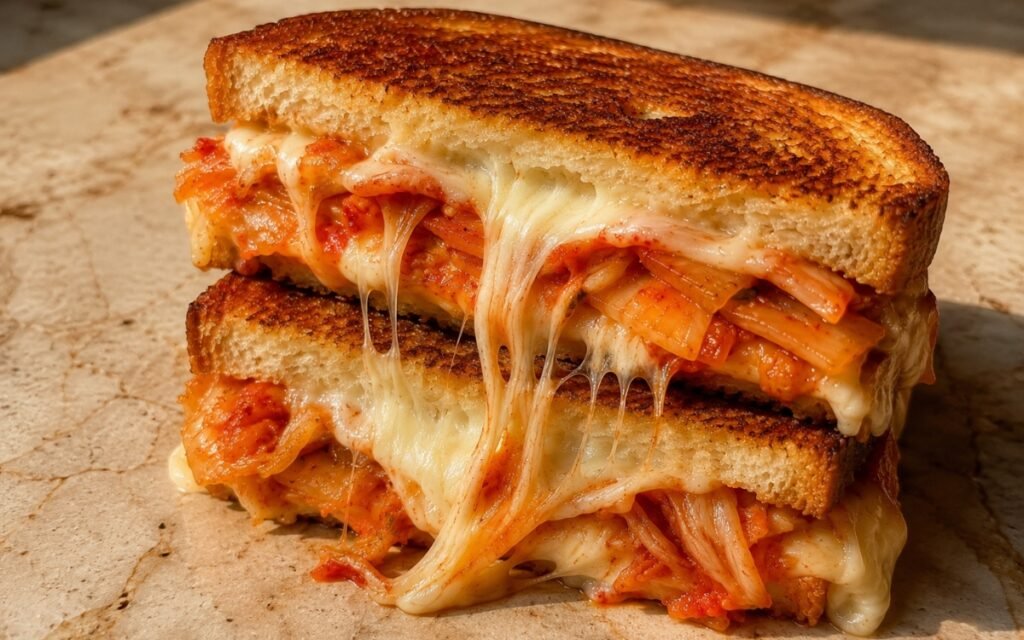
Crisp, buttery griddled bread with gooey, stretchy low-moisture mozzarella and vivid, well-drained kimchi.
Huevos Rancheros
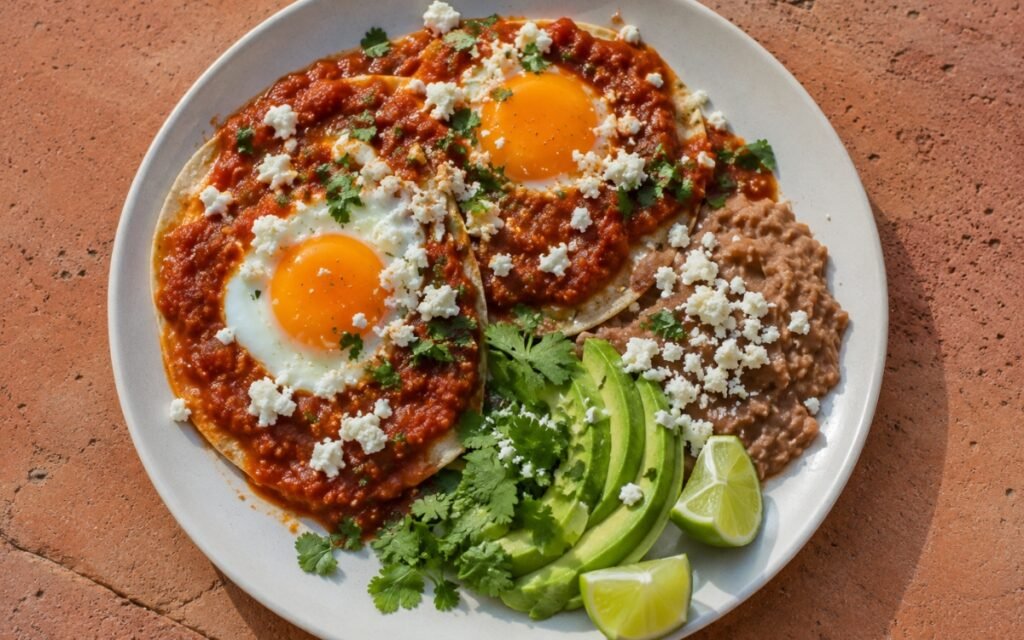
Fried eggs with bright runny yolks served on warm corn tortillas, covered in chunky red ranchero sauce, with refried beans and avocado.
Chiles Rellenos with Tomato Sauce
Ingredients
Method
- Place the poblano peppers directly over a gas flame, under a broiler, or on a very hot dry skillet. Turn frequently until the skins are blistered and blackened in patches all over, about 8–10 minutes. Transfer the roasted peppers to a bowl and cover tightly for 15 minutes. The steam loosens the skins and makes peeling easier. Covering the hot peppers tightly traps their own residual steam against the blistered skin, which is what loosens it from the flesh underneath — peppers left uncovered to cool will still peel, but with considerably more effort and torn skin left clinging to the pepper.
- Gently rub off the blistered skins using your fingers or a paper towel. Do not rinse the peppers under water; it washes away flavour and makes them slippery. Cut one lengthwise slit in each pepper, keeping the stem attached. Carefully remove the seeds and large inner ribs without tearing the flesh. Pat the peppers dry inside and outside. This is a major turning point. Wet peppers will reject the flour and batter, and torn peppers will leak cheese into the oil. Rinsing under water might feel like the faster way to remove stubborn skin, but it strips away the peppers’ own smoky, charred surface oils along with any remaining skin fragments — the flavour lost that way is a real and noticeable trade-off for the convenience.
- Fill each poblano with about 70g white cheese strips. The pepper should look full but still close naturally. If needed, secure the opening with one or two toothpicks. Do not overstuff. Too much cheese will burst through the slit during frying. A pepper that closes naturally around its filling, without needing to be forced shut, is the visual cue that the amount of cheese is correct — overstuffed peppers put pressure on the slit from the inside out, and that pressure only increases as the cheese begins to melt in the hot oil.
- Heat 30ml neutral oil in a large skillet or saucepan over medium-high heat. Add the Roma tomatoes cut-side down, onion wedges, and garlic. Cook for 6–8 minutes, turning occasionally, until the tomatoes soften and develop browned spots. Transfer the tomatoes, onion, and garlic to a blender. Add the chipotle peppers, adobo sauce, tomato paste, stock, cumin, oregano, salt, black pepper, and sugar if needed. Blend until smooth. Pour the sauce into a saucepan and simmer uncovered for 15–20 minutes, stirring occasionally, until vivid red, slightly thickened, and glossy. The sauce should be loose enough to pool around the peppers, not thick like paste. Taste and adjust salt. Browning the tomatoes cut-side down before blending concentrates their sugars and adds a light roasted character that a purely raw-blended tomato sauce wouldn’t have — this step is quick but meaningfully deepens the final sauce’s flavour.
- Spread 60g flour on a plate. Lightly dust each stuffed poblano with flour, shaking off the excess. The flour layer should be thin and dry, just enough to help the egg batter cling. The flour here serves the same purpose as a dry dredge does for a battered fish — it gives the wet batter a slightly textured surface to grip, rather than sliding off the pepper’s naturally smooth, roasted skin.
- In a clean bowl, beat the egg whites with cream of tartar or lime juice until stiff glossy peaks form. In a separate bowl, whisk the egg yolks with salt and 30g flour until smooth. Gently fold the yolk mixture into the beaten whites in 2 additions. Do not deflate the batter. It should be airy, thick, and spoonable, not runny. Make the batter right before frying. If it sits too long, it collapses. The cream of tartar or lime juice stabilises the whipped whites’ protein structure, helping them hold their air longer, but that stability is still temporary — folding gently in two additions, rather than one aggressive mix, is what keeps as much of that trapped air intact as possible going into the fry.
- Heat 1–1.5cm neutral oil in a wide skillet over medium heat to about 170–175°C. The oil should shimmer, and a drop of batter should sizzle immediately without smoking. Dip one stuffed poblano into the egg batter, coating it fully. Carefully lay it into the hot oil seam-side up or slightly to the side. Spoon a little extra batter over any exposed areas if needed. Fry for 2–3 minutes per side, turning gently, until the batter is golden, puffed, and slightly irregular. Transfer to a rack or paper towel-lined tray. Repeat with the remaining peppers, working in batches. Do not crowd the skillet. Crowding drops the oil temperature and gives greasy, pale batter instead of a golden crust. Laying the pepper seam-side up or to the side, rather than seam-side down, keeps the cheese-filled opening away from direct contact with the hot oil for as long as possible, reducing the chance of cheese leaking out before the batter has set around it.
- Spread most of the tomato-chipotle sauce in a wide pan or baking dish. Place the fried chiles rellenos into the sauce and warm gently for 3–5 minutes, spooning a little sauce around the sides but not drowning the golden batter. The sauce should pool around the peppers and lightly touch them. If you bury them completely, the batter turns soggy. This brief warming step is about bringing the fried peppers back up to serving temperature and letting the sauce’s edges just touch the batter, not about cooking anything further — full submersion for even a few minutes will soften the crisp, puffed exterior that the frying stage worked to build.
- Spoon tomato-chipotle sauce onto each plate. Place 2 chiles rellenos per serving over the sauce. Drizzle with loosened sour cream in thick white lines. Scatter fresh cilantro leaves over the top. Serve immediately while the batter is still tender and golden, the cheese is melted, and the red sauce is hot and glossy. The sour cream is loosened specifically so it drizzles in clean, visible lines rather than sitting as a thick dollop — that visual line work is part of the classic presentation, contributing to the deep green, red, and white colour story the dish is known for.