
Vietnamese Chicken Pho / Phở Gà
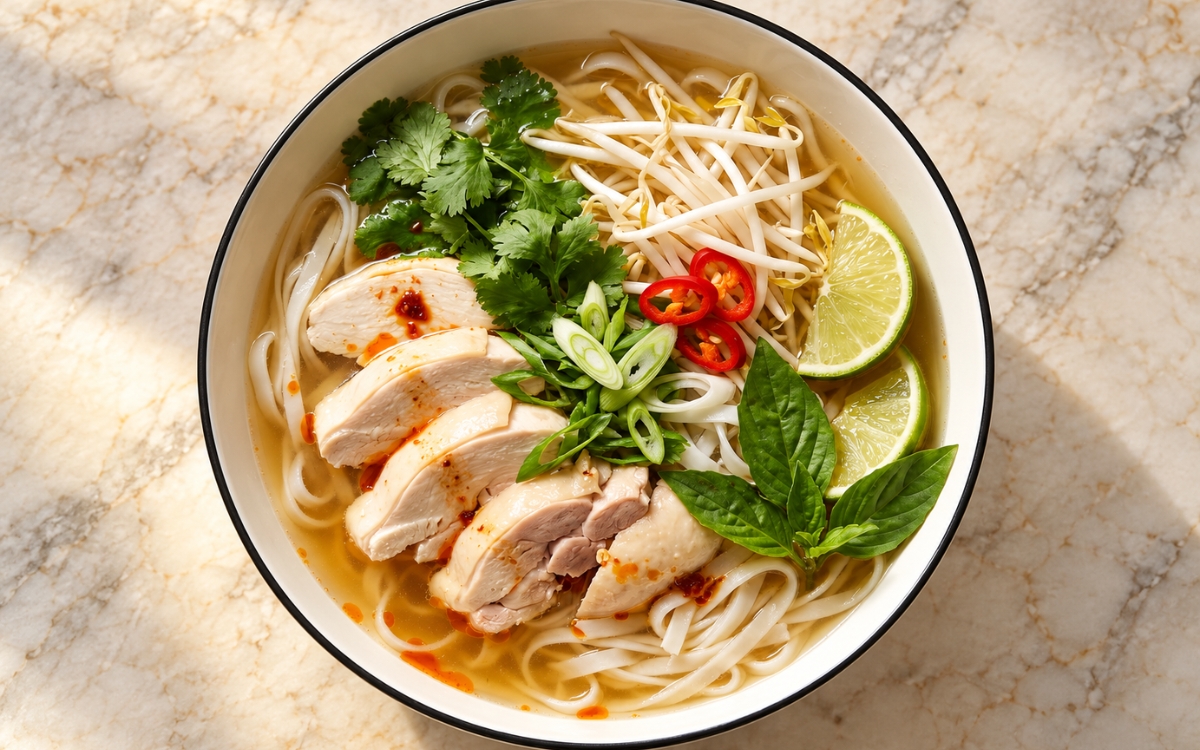
A classic Vietnamese-style chicken pho — a clear golden broth infused with charred onion, ginger and warm whole spices, ladled over flat rice noodles and sliced poached chicken thighs, the key being a broth that tastes light and clean yet deeply savoury. Charring the onion and ginger until blistered, then simmering everything gently rather than at a rolling boil, is the technique this whole soup depends on for its clear, aromatic depth — the char adds a lightly smoky sweetness raw aromatics cannot give, while a hard boil churns fat and protein into the stock and clouds it, the same char-then-simmer-gently principle used elsewhere in this collection whenever a pho broth needs to stay clear and fragrant. Poaching the chicken thighs very gently to 74°C is what keeps them juicy and tender while their flavour settles into the broth. Adding the fish sauce only after straining, in small steps, is what seasons the broth deeply without letting it taste fishy or overpowering. The payoff is a pho with real, clean depth — a clear golden broth, tender slices of chicken, springy rice noodles and a bright, fragrant tangle of herbs, sprouts, chilli and lime.

Prep Time : 25 min
Total Time : 1 hr 55 min
Servings : 4
25 min
1 hr 55 min
4
Ingredients
For the Chicken
• 700g boneless skinless chicken thighs
• 1 tsp salt
• ½ tsp black pepper
For the Broth Base
• 2.5 litres good-quality low-sodium chicken stock
• 1 large yellow onion, halved
• 1 large piece ginger, about 70–80g, sliced lengthwise
• 2 cinnamon sticks
• 4 star anise
• 4 cloves
• 1½ tsp coriander seeds
• 1 tsp black peppercorns
• 1 tbsp neutral oil
• 1 tsp salt
For the Broth Seasoning
• 2–3 tbsp fish sauce, to taste
• 1½ tsp sugar, divided, 1 tsp to start and up to ½ tsp to finish
• Extra salt, only if needed
For the Noodles
• 600g dried flat rice noodles (pho noodles / bánh phở), about 150g per bowl
For the Bowl Garnishes
• 4 scallions, thinly sliced
• 20–25g cilantro leaves and tender stems, roughly chopped
• 1 bunch Thai basil
• 250–300g bean sprouts
• 2 red chillies, thinly sliced
• 2 limes, cut into wedges
Optional Classical Additions (Not essential, but a classical finish at the pho table)
• 1 small onion, very thinly sliced, for serving
• A little neutral chilli oil or sliced fresh bird’s eye chilli, for extra heat
Directions
- Char the Aromatics
Pour the 2.5 litres chicken stock into a covered saucepan over medium-low heat so it warms while the aromatics char. Heat a dry cast-iron pan or heavy skillet over medium-high heat, or use an open gas flame. Lay the halved onion cut-side down alongside the 70–80g sliced ginger and char for 6–8 minutes, turning occasionally, until both are visibly blistered and browned in spots, with a few deeply darkened patches. If the pan smokes heavily before the onion colours, lower the heat slightly. Set the onion and ginger aside on a plate and keep the pan for the spices. That charring is what gives pho broth its signature depth and lightly smoky aromatic character without making it heavy. - Toast the Spices
Lower the heat under the same pan to medium and add the 2 cinnamon sticks, 4 star anise, 4 cloves, 1½ tsp coriander seeds and 1 tsp black peppercorns. Toast for 45–60 seconds, shaking the pan constantly, until the spices smell strongly fragrant and the coriander seeds darken by a shade. Watch closely, because the pan is already very hot from charring and whole spices scorch within seconds. If any spice turns black or smells acrid, discard the batch and toast fresh spices rather than risk the whole pot. Tip them straight onto the plate with the onion and ginger so they stop cooking. That brief toasting is what wakes up the spices’ aromatic oils, while burnt spices would make the broth bitter. - Start the Broth
Heat the 1 tbsp neutral oil in a medium-large stockpot over medium heat. Add the toasted spices and let them sizzle for a few seconds, then add the charred onion and ginger and pour in the warmed stock. Bring back to a gentle simmer, about 2 minutes, then add 1 tsp salt and 1 tsp of the sugar. Lower the heat to low or medium-low and simmer uncovered or partially covered for 30 minutes, with small bubbles breaking lazily at the surface, never a rolling boil. Skim off any foam that rises. If the noodle brand needs soaking, put the 600g dried noodles in a large bowl of room-temperature water now. That gentle simmer is what keeps the broth genuinely clear and its clean pho character intact, since hard boiling clouds it. - Poach the Chicken
Towards the end of the 30-minute simmer, season the 700g chicken thighs lightly on both sides with 1 tsp salt and ½ tsp black pepper. Slide them into the gently simmering broth and poach very gently for 18–25 minutes, depending on thickness, keeping the surface barely shivering. The chicken is ready when the thickest piece reaches 74°C / 165°F and the meat feels tender and springy rather than tight. Lift the thighs onto a plate or tray, cover loosely and let them rest. Continue simmering the broth for another 15–20 minutes so the chicken flavour and the aromatics fully settle into it, skimming again if needed. That gentle poach is what keeps the thighs juicy and tender instead of tight and stringy. - Strain and Season the Broth
Strain the broth through a fine sieve into a clean pot and discard the onion, ginger and spices. Return the clear broth to low heat and season gradually: add 2 tbsp fish sauce first, stir and taste, then add up to 1 tbsp more fish sauce, the remaining ½ tsp sugar as needed and extra salt only if needed. The broth should taste savoury, aromatic, lightly sweet and gently spiced, and a little stronger than perfect on its own, because the noodles and garnishes will dilute it in the bowl. If it tastes flat, add a little more fish sauce, salt or a pinch of sugar. Keep it hot over low heat, but never boil it aggressively. That gradual, late seasoning is what keeps the fish sauce deep and rounded rather than fishy or overpowering. - Slice the Chicken
Once the rested chicken is cool enough to handle, slice the thighs across the grain into bite-size slices or slightly thicker pho-style slices, trimming any visible fat or sinew as you go. Cutting across the grain shortens the muscle fibres, so each slice stays tender rather than stringy in the bowl. Keep the sliced chicken covered with a plate or a sheet of foil, or spoon over a little of the hot broth, so it does not dry out while the noodles cook. That covered rest is what keeps the slices moist enough to warm through perfectly under the hot broth. - Cook the Noodles
Bring a large pot of water to a rolling boil while the broth finishes its final simmer, then cook the 600g rice noodles according to the packet instructions, usually just 1–2 minutes for soaked noodles or a few minutes longer for unsoaked ones, until just tender. Taste a strand: it should be tender but still springy, with no chalky centre. Drain and rinse very briefly under warm water only if needed to stop the cooking, then divide among 4 bowls. Cook the noodles just before serving, because noodles held for long clump together and go soft. That slightly firm texture is what lets the noodles finish softening in the hot broth without turning mushy. - Prep the Garnishes
Prepare the garnishes while the broth simmers so everything is ready at the end. Thinly slice the 4 scallions, roughly chop the 20–25g cilantro leaves and tender stems, and pick the Thai basil leaves from the bunch, leaving a few small sprigs whole. Rinse and drain the 250–300g bean sprouts, thinly slice the 2 red chillies and cut the 2 limes into wedges. If using the optional additions, very thinly slice the small onion and set out the chilli oil or bird’s eye chilli. Arrange the basil, sprouts, chillies and lime on a platter and keep the herbs fresh and dry until serving. That dry, crisp handling is what keeps the herbs fragrant and the sprouts crunchy when they meet the hot broth. - Assemble the Bowls
Check that the broth is steaming hot, then top the noodles in each of the 4 bowls with a quarter of the sliced chicken. Scatter over the scallions, cilantro and the optional sliced onion. Ladle the very hot broth over each bowl, about 500ml per portion, so the chicken warms through and the noodles soften to their final springy texture. Serve at once with the Thai basil, bean sprouts, chilli slices, lime wedges and any optional chilli oil or bird’s eye chilli, either added directly to the bowls or on the side so each portion can be finished to taste. Squeeze lime into individual bowls only, never into the pot. That last-minute assembly is what keeps the broth clear, the noodles springy and the herbs genuinely fresh.
*Notes :
- Charring the onion and ginger deserves genuine recognition as the technique most directly responsible for whether this broth tastes like pho or simply like spiced stock. The recipe’s own warning, “Do not skip charring,” reflects how blistering caramelises the onion’s sugars and mellows the ginger’s raw bite — adding the lightly smoky, rounded depth that defines the broth without weighing it down.
- The gentle simmer deserves the same attention this technique receives throughout this collection’s other clear soups and broths, because clarity is built or lost in the pot. The recipe’s own instruction to keep the broth “at a gentle simmer, not a rolling boil” matters because hard bubbling churns fat and proteins into the liquid, clouding it and weakening the clean character chicken pho depends on.
- Late, gradual fish sauce deserves genuine respect as the detail most directly responsible for the broth’s rounded savoury depth. The recipe’s own note that “Too much too early can overpower the broth” explains why it goes in after straining, a little at a time, since the broth should taste deeper and rounder rather than fishy, and seasoned slightly strong to allow for the noodles and garnishes.
- The noodle texture deserves attention as a genuine, checkable readiness cue rather than a loose approximation of the packet time. The recipe’s own reminder that “Held noodles tend to clump and go soft” means cooking them only just before serving and pulling them while still springy, because they keep softening for several minutes once the very hot broth is ladled over them.
Why This Recipe Works
This recipe works because every step protects the clarity and fragrance of a light chicken broth. Charred onion and ginger and briefly toasted whole spices give the stock a smoky, warmly spiced depth before it even simmers, and a low, steady simmer draws that flavour out without clouding it. Chicken thighs poach gently in the same pot, staying juicy while their flavour enriches the broth. Fish sauce and sugar are then balanced by taste after straining, so the seasoning lands deep and rounded rather than fishy. Ladled over springy noodles and finished with fresh herbs, sprouts and lime, every bowl tastes clean, savoury and genuinely aromatic.
Ingredient Breakdown
Charred Onion and Ginger
The critical technique — blistering both until browned in spots adds the lightly smoky, rounded depth that defines pho broth.
Toasted Whole Spices (45–60 Seconds)
The core flavour-building stage — cinnamon, star anise, cloves, coriander and peppercorns release their aromatic oils without turning bitter.
Gentle Simmer, Never a Boil
The critical technique — steady, lazy bubbles keep the broth clear and clean instead of cloudy, greasy and muddy.
Boneless Skinless Chicken Thighs
The critical ingredient choice — thighs stay juicier and more flavourful than breast and enrich the broth as they poach.
Fish Sauce Added After Straining
The critical finishing technique — added gradually and late, it genuinely deepens and rounds the broth without tasting fishy.
Flat Rice Noodles (Bánh Phở)
The structural choice — cooked just before serving and pulled while springy, they finish softening in the hot broth.
Fresh Herbs, Sprouts and Lime
The finishing touch — Thai basil, cilantro, crunchy bean sprouts, chilli and lime add brightness and contrast at the table.
Flavor Structure Explained
This Vietnamese chicken pho follows a layered balance model:
- Clean, savoury foundation (low-sodium chicken stock, poached chicken thighs, salt)
- Smoky, rounded depth (charred onion, charred ginger)
- Warm spice perfume (cinnamon, star anise, cloves, coriander seeds, black peppercorns)
- Deep, lightly sweet seasoning (fish sauce, sugar)
- Fresh, bright finish (Thai basil, cilantro, scallions, bean sprouts, chilli, lime)
Chicken stock and gently poached thighs lay the clean, savoury foundation that keeps this pho light. Charred onion and ginger add a smoky, rounded depth, while cinnamon, star anise, cloves, coriander and peppercorns bring the warm spice perfume that rises from every bowl. Fish sauce and a little sugar, added late, turn that base deep and lightly sweet without any fishy edge. Thai basil, cilantro, scallions, sprouts, chilli and lime then bring the fresh, bright finish that ties this Vietnamese chicken pho together.
Common Mistakes to Avoid
- Skipping the Charring Step – This leaves the broth tasting like plain spiced stock, without the smoky depth that defines pho. Always blister the onion and ginger until browned in spots first.
- Scorching the Spices – This turns the whole pot bitter, because burnt star anise and cloves cannot be masked later. Always toast them for just 45–60 seconds, until fragrant.
- Boiling the Broth or Chicken Hard – This clouds the broth and tightens the thighs until they turn stringy. Always keep the pot at a genuinely gentle simmer with small, lazy bubbles.
- Adding All the Fish Sauce at the Start – This lets it overpower the broth and leaves no room to adjust. Always add it after straining, a little at a time, tasting as you go.
- Cooking the Noodles Too Early – This leaves them clumped and soft by the time the broth is ready. Always cook them just before serving, pulling them while still springy.
Variations
Chicken Breast Version
Swap the thighs for 700g boneless chicken breasts, poaching them for less time to 74°C, per the recipe’s own note, then slicing them very thinly so they stay moist.
Blanched Sprout Version
Dip the bean sprouts into the hot broth for a few seconds before adding them to the bowls, per the recipe’s own suggestion, for softer sprouts that still keep a little crunch.
Extra-Heat Version
Add the optional sliced bird’s eye chilli and a little neutral chilli oil to each bowl at the table for a sharper, hotter pho that still keeps its clear, fragrant broth.
Bone-In Thigh Version
Poach 900g bone-in, skinless chicken thighs for 30–35 minutes until 74°C, then slice the meat off the bone, for a slightly richer, more gelatinous broth with the same clean character.
Storage & Make-Ahead
Choose a genuinely good low-sodium chicken stock and firm, fresh ginger, since the stock carries the whole soup and a salty commercial stock leaves no room for the fish sauce to season the broth properly.
The broth can be made up to 1 day ahead, strained, cooled quickly and refrigerated in a covered container, then reheated gently to a steaming simmer and tasted again before the bowls are assembled.
Store leftover broth, sliced chicken and noodles in separate airtight containers in the fridge for up to 3 days, since noodles left sitting in broth swell, soften and soak up much of the liquid.
Reheat the broth gently over medium heat until steaming, never at a hard boil, then add the sliced chicken for the final minute so it warms through without tightening or drying out.
Refresh stored noodles briefly in boiling water before portioning, and always add fresh herbs, sprouts and lime at serving, since Thai basil darkens and lime added to the pot dulls the whole broth.
Frequently Asked Questions
Why are the onion and ginger charred before they go into the broth?
Charring caramelises the onion’s natural sugars and mellows the ginger’s sharp bite, giving the broth a lightly smoky, rounded depth. Uncharred aromatics still add flavour, but the broth then tastes like plain spiced stock rather than genuine pho.
Why is the fish sauce added only after the broth has been strained?
Fish sauce varies in strength, and adding it all early can overpower the broth before the other flavours have developed. Adding it gradually at the end lets you stop exactly when the broth tastes deeper and rounder rather than fishy.
Why should the broth taste slightly stronger than perfect before serving?
The noodles, chicken, herbs and bean sprouts all dilute the broth once it is ladled into the bowl. Seasoning it a little stronger on its own means each finished bowl tastes genuinely balanced rather than thin or flat.
Why does this pho use chicken thighs rather than breasts?
Thighs carry more fat and connective tissue, so they stay juicy and tender through 18–25 minutes of poaching and give more flavour to the broth. Breasts dry out far more easily and need a shorter poach and very thin slicing.
Are there other classic Vietnamese noodle soup, chicken, or drink recipes worth trying?
Pho Soup / Vietnamese Beef Pho offers the classic beef counterpart, and Bun Bo Hue Inspired Spicy Beef Noodle Soup is worth trying for a spicier noodle soup direction. Vietnamese Chicken Curry / Ca Ri Ga and Vietnamese Lemongrass Chicken Rice Bowl offer other chicken directions, and Vietnamese Iced Coffee is a classic drink worth making.
Nutrition Facts
( Per Serving — 1 bowl )
Calories
~830 kcal
Protein
50 g
Fat
12 g
Carbs
128 g
Calories
~830 kcal
Protein
50 g
Fat
12 g
Carbs
128 g
Related Recipes
Related Recipes
-

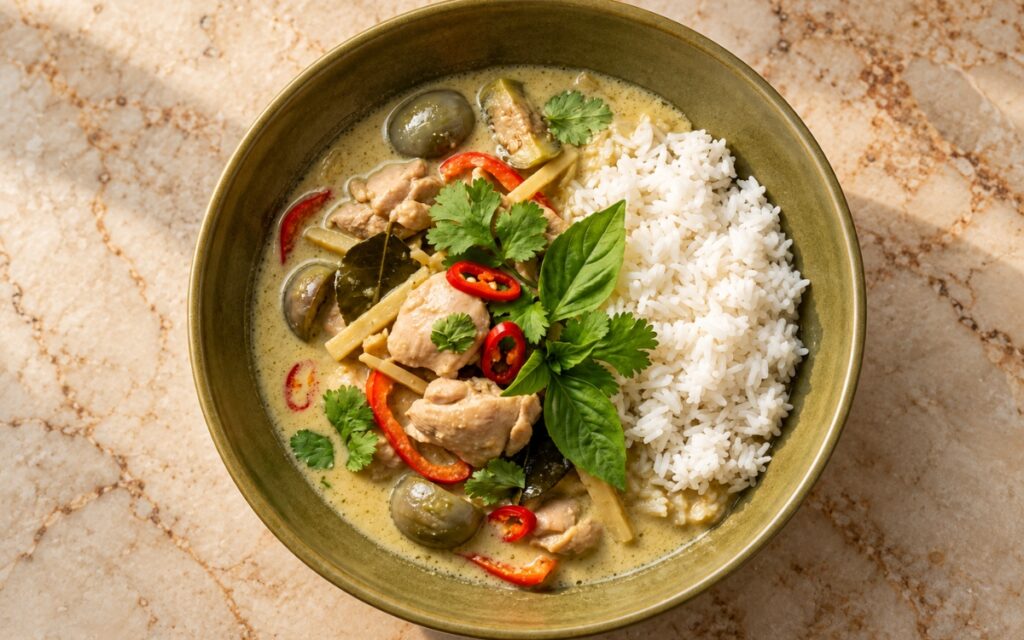
Thai Green Curry Chicken
Chicken thighs simmered in a creamy green coconut curry with Thai eggplant, red pepper, lime leaves and Thai basil, served with jasmine rice.
-
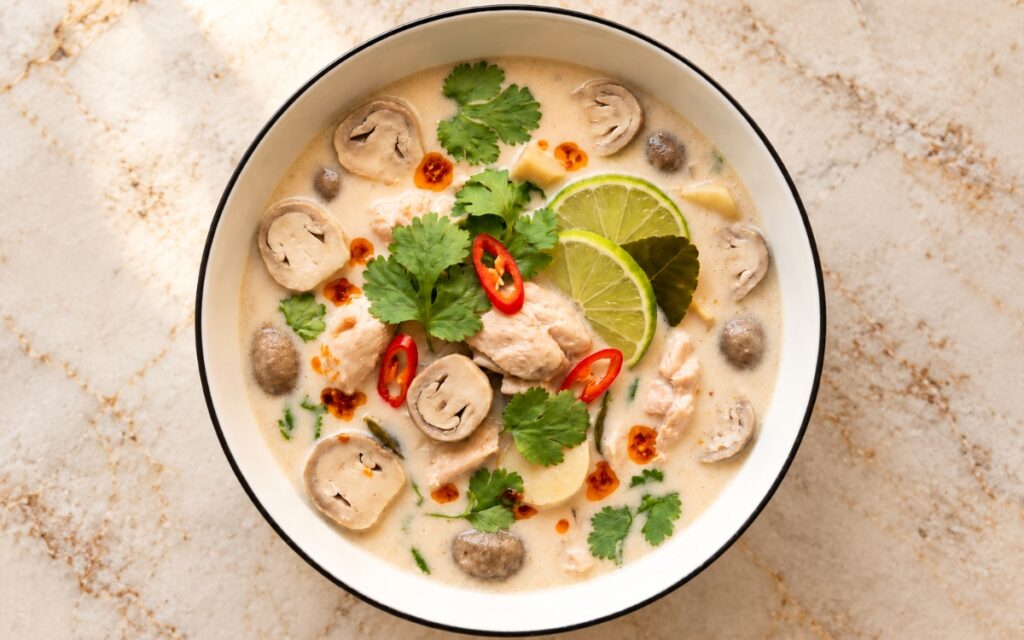
Tom Kha Gai Coconut Chicken Soup
Chicken thighs and mushrooms simmered in a creamy coconut broth with lemongrass, galangal and kaffir lime leaves, finished with fish sauce and lime.
-
Huli Huli Chicken Rice Bowl
Grilled chicken thighs glazed in sticky pineapple-soy sauce, served over steamed white rice with caramelised grilled pineapple, scallions, and toasted sesame seeds.

You might also like
You might also like
-
Thai Green Curry Chicken
Chicken thighs simmered in a creamy green coconut curry with Thai eggplant, red pepper, lime leaves and Thai basil, served with jasmine rice.
-
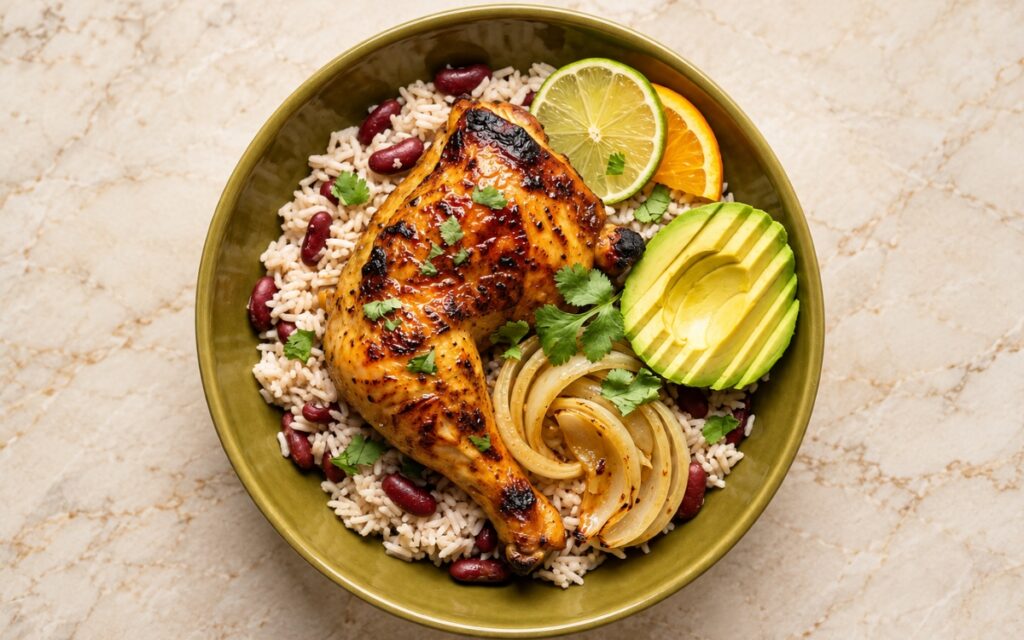
Cuban Mojo Chicken Rice Bowl
A composed Caribbean-style bowl of roasted mojo chicken leg quarter over coconut rice and red beans with mojo onions, avocado, citrus, and cilantro.
-
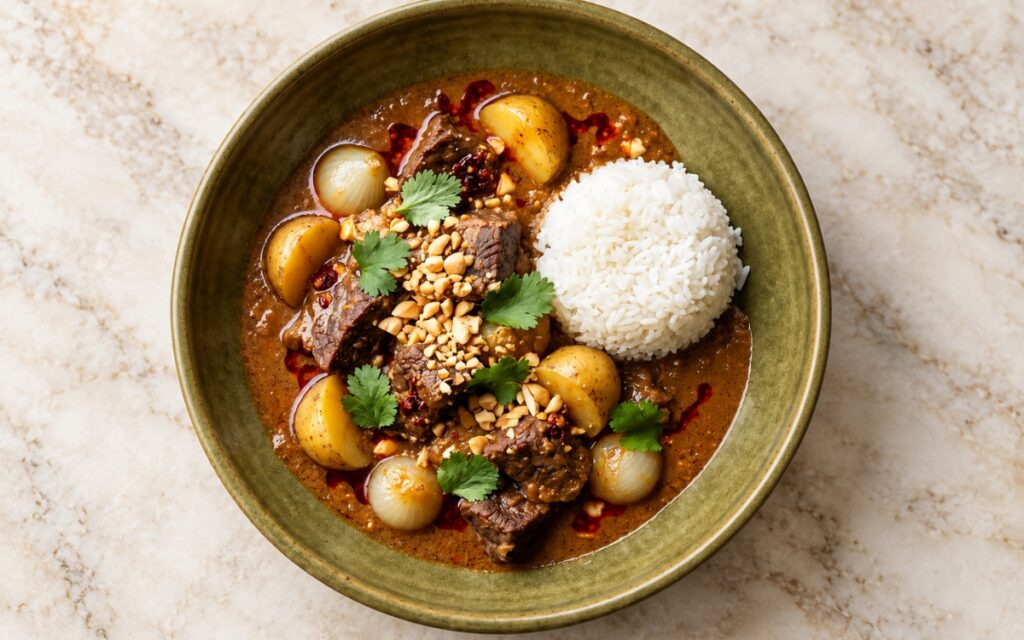
Massaman Beef Curry
Beef chuck braised in a rich, spiced coconut massaman sauce with baby potatoes, pearl onions and peanuts, served with jasmine rice.
Vietnamese Chicken Pho / Phở Gà
Ingredients
Method
- Pour the 2.5 litres chicken stock into a covered saucepan over medium-low heat so it warms while the aromatics char. Heat a dry cast-iron pan or heavy skillet over medium-high heat, or use an open gas flame. Lay the halved onion cut-side down alongside the 70–80g sliced ginger and char for 6–8 minutes, turning occasionally, until both are visibly blistered and browned in spots, with a few deeply darkened patches. If the pan smokes heavily before the onion colours, lower the heat slightly. Set the onion and ginger aside on a plate and keep the pan for the spices. That charring is what gives pho broth its signature depth and lightly smoky aromatic character without making it heavy.
- Lower the heat under the same pan to medium and add the 2 cinnamon sticks, 4 star anise, 4 cloves, 1½ tsp coriander seeds and 1 tsp black peppercorns. Toast for 45–60 seconds, shaking the pan constantly, until the spices smell strongly fragrant and the coriander seeds darken by a shade. Watch closely, because the pan is already very hot from charring and whole spices scorch within seconds. If any spice turns black or smells acrid, discard the batch and toast fresh spices rather than risk the whole pot. Tip them straight onto the plate with the onion and ginger so they stop cooking. That brief toasting is what wakes up the spices’ aromatic oils, while burnt spices would make the broth bitter.
- Heat the 1 tbsp neutral oil in a medium-large stockpot over medium heat. Add the toasted spices and let them sizzle for a few seconds, then add the charred onion and ginger and pour in the warmed stock. Bring back to a gentle simmer, about 2 minutes, then add 1 tsp salt and 1 tsp of the sugar. Lower the heat to low or medium-low and simmer uncovered or partially covered for 30 minutes, with small bubbles breaking lazily at the surface, never a rolling boil. Skim off any foam that rises. If the noodle brand needs soaking, put the 600g dried noodles in a large bowl of room-temperature water now. That gentle simmer is what keeps the broth genuinely clear and its clean pho character intact, since hard boiling clouds it.
- Towards the end of the 30-minute simmer, season the 700g chicken thighs lightly on both sides with 1 tsp salt and ½ tsp black pepper. Slide them into the gently simmering broth and poach very gently for 18–25 minutes, depending on thickness, keeping the surface barely shivering. The chicken is ready when the thickest piece reaches 74°C / 165°F and the meat feels tender and springy rather than tight. Lift the thighs onto a plate or tray, cover loosely and let them rest. Continue simmering the broth for another 15–20 minutes so the chicken flavour and the aromatics fully settle into it, skimming again if needed. That gentle poach is what keeps the thighs juicy and tender instead of tight and stringy.
- Strain the broth through a fine sieve into a clean pot and discard the onion, ginger and spices. Return the clear broth to low heat and season gradually: add 2 tbsp fish sauce first, stir and taste, then add up to 1 tbsp more fish sauce, the remaining ½ tsp sugar as needed and extra salt only if needed. The broth should taste savoury, aromatic, lightly sweet and gently spiced, and a little stronger than perfect on its own, because the noodles and garnishes will dilute it in the bowl. If it tastes flat, add a little more fish sauce, salt or a pinch of sugar. Keep it hot over low heat, but never boil it aggressively. That gradual, late seasoning is what keeps the fish sauce deep and rounded rather than fishy or overpowering.
- Once the rested chicken is cool enough to handle, slice the thighs across the grain into bite-size slices or slightly thicker pho-style slices, trimming any visible fat or sinew as you go. Cutting across the grain shortens the muscle fibres, so each slice stays tender rather than stringy in the bowl. Keep the sliced chicken covered with a plate or a sheet of foil, or spoon over a little of the hot broth, so it does not dry out while the noodles cook. That covered rest is what keeps the slices moist enough to warm through perfectly under the hot broth.
- Bring a large pot of water to a rolling boil while the broth finishes its final simmer, then cook the 600g rice noodles according to the packet instructions, usually just 1–2 minutes for soaked noodles or a few minutes longer for unsoaked ones, until just tender. Taste a strand: it should be tender but still springy, with no chalky centre. Drain and rinse very briefly under warm water only if needed to stop the cooking, then divide among 4 bowls. Cook the noodles just before serving, because noodles held for long clump together and go soft. That slightly firm texture is what lets the noodles finish softening in the hot broth without turning mushy.
- Prepare the garnishes while the broth simmers so everything is ready at the end. Thinly slice the 4 scallions, roughly chop the 20–25g cilantro leaves and tender stems, and pick the Thai basil leaves from the bunch, leaving a few small sprigs whole. Rinse and drain the 250–300g bean sprouts, thinly slice the 2 red chillies and cut the 2 limes into wedges. If using the optional additions, very thinly slice the small onion and set out the chilli oil or bird’s eye chilli. Arrange the basil, sprouts, chillies and lime on a platter and keep the herbs fresh and dry until serving. That dry, crisp handling is what keeps the herbs fragrant and the sprouts crunchy when they meet the hot broth.
- Check that the broth is steaming hot, then top the noodles in each of the 4 bowls with a quarter of the sliced chicken. Scatter over the scallions, cilantro and the optional sliced onion. Ladle the very hot broth over each bowl, about 500ml per portion, so the chicken warms through and the noodles soften to their final springy texture. Serve at once with the Thai basil, bean sprouts, chilli slices, lime wedges and any optional chilli oil or bird’s eye chilli, either added directly to the bowls or on the side so each portion can be finished to taste. Squeeze lime into individual bowls only, never into the pot. That last-minute assembly is what keeps the broth clear, the noodles springy and the herbs genuinely fresh.