Ingredients
Method
Char the Aromatics
- Pour the 2.5 litres chicken stock into a covered saucepan over medium-low heat so it warms while the aromatics char. Heat a dry cast-iron pan or heavy skillet over medium-high heat, or use an open gas flame. Lay the halved onion cut-side down alongside the 70–80g sliced ginger and char for 6–8 minutes, turning occasionally, until both are visibly blistered and browned in spots, with a few deeply darkened patches. If the pan smokes heavily before the onion colours, lower the heat slightly. Set the onion and ginger aside on a plate and keep the pan for the spices. That charring is what gives pho broth its signature depth and lightly smoky aromatic character without making it heavy.
Toast the Spices
- Lower the heat under the same pan to medium and add the 2 cinnamon sticks, 4 star anise, 4 cloves, 1½ tsp coriander seeds and 1 tsp black peppercorns. Toast for 45–60 seconds, shaking the pan constantly, until the spices smell strongly fragrant and the coriander seeds darken by a shade. Watch closely, because the pan is already very hot from charring and whole spices scorch within seconds. If any spice turns black or smells acrid, discard the batch and toast fresh spices rather than risk the whole pot. Tip them straight onto the plate with the onion and ginger so they stop cooking. That brief toasting is what wakes up the spices' aromatic oils, while burnt spices would make the broth bitter.
Start the Broth
- Heat the 1 tbsp neutral oil in a medium-large stockpot over medium heat. Add the toasted spices and let them sizzle for a few seconds, then add the charred onion and ginger and pour in the warmed stock. Bring back to a gentle simmer, about 2 minutes, then add 1 tsp salt and 1 tsp of the sugar. Lower the heat to low or medium-low and simmer uncovered or partially covered for 30 minutes, with small bubbles breaking lazily at the surface, never a rolling boil. Skim off any foam that rises. If the noodle brand needs soaking, put the 600g dried noodles in a large bowl of room-temperature water now. That gentle simmer is what keeps the broth genuinely clear and its clean pho character intact, since hard boiling clouds it.
Poach the Chicken
- Towards the end of the 30-minute simmer, season the 700g chicken thighs lightly on both sides with 1 tsp salt and ½ tsp black pepper. Slide them into the gently simmering broth and poach very gently for 18–25 minutes, depending on thickness, keeping the surface barely shivering. The chicken is ready when the thickest piece reaches 74°C / 165°F and the meat feels tender and springy rather than tight. Lift the thighs onto a plate or tray, cover loosely and let them rest. Continue simmering the broth for another 15–20 minutes so the chicken flavour and the aromatics fully settle into it, skimming again if needed. That gentle poach is what keeps the thighs juicy and tender instead of tight and stringy.
Strain and Season the Broth
- Strain the broth through a fine sieve into a clean pot and discard the onion, ginger and spices. Return the clear broth to low heat and season gradually: add 2 tbsp fish sauce first, stir and taste, then add up to 1 tbsp more fish sauce, the remaining ½ tsp sugar as needed and extra salt only if needed. The broth should taste savoury, aromatic, lightly sweet and gently spiced, and a little stronger than perfect on its own, because the noodles and garnishes will dilute it in the bowl. If it tastes flat, add a little more fish sauce, salt or a pinch of sugar. Keep it hot over low heat, but never boil it aggressively. That gradual, late seasoning is what keeps the fish sauce deep and rounded rather than fishy or overpowering.
Slice the Chicken
- Once the rested chicken is cool enough to handle, slice the thighs across the grain into bite-size slices or slightly thicker pho-style slices, trimming any visible fat or sinew as you go. Cutting across the grain shortens the muscle fibres, so each slice stays tender rather than stringy in the bowl. Keep the sliced chicken covered with a plate or a sheet of foil, or spoon over a little of the hot broth, so it does not dry out while the noodles cook. That covered rest is what keeps the slices moist enough to warm through perfectly under the hot broth.
Cook the Noodles
- Bring a large pot of water to a rolling boil while the broth finishes its final simmer, then cook the 600g rice noodles according to the packet instructions, usually just 1–2 minutes for soaked noodles or a few minutes longer for unsoaked ones, until just tender. Taste a strand: it should be tender but still springy, with no chalky centre. Drain and rinse very briefly under warm water only if needed to stop the cooking, then divide among 4 bowls. Cook the noodles just before serving, because noodles held for long clump together and go soft. That slightly firm texture is what lets the noodles finish softening in the hot broth without turning mushy.
Prep the Garnishes
- Prepare the garnishes while the broth simmers so everything is ready at the end. Thinly slice the 4 scallions, roughly chop the 20–25g cilantro leaves and tender stems, and pick the Thai basil leaves from the bunch, leaving a few small sprigs whole. Rinse and drain the 250–300g bean sprouts, thinly slice the 2 red chillies and cut the 2 limes into wedges. If using the optional additions, very thinly slice the small onion and set out the chilli oil or bird's eye chilli. Arrange the basil, sprouts, chillies and lime on a platter and keep the herbs fresh and dry until serving. That dry, crisp handling is what keeps the herbs fragrant and the sprouts crunchy when they meet the hot broth.
Assemble the Bowls
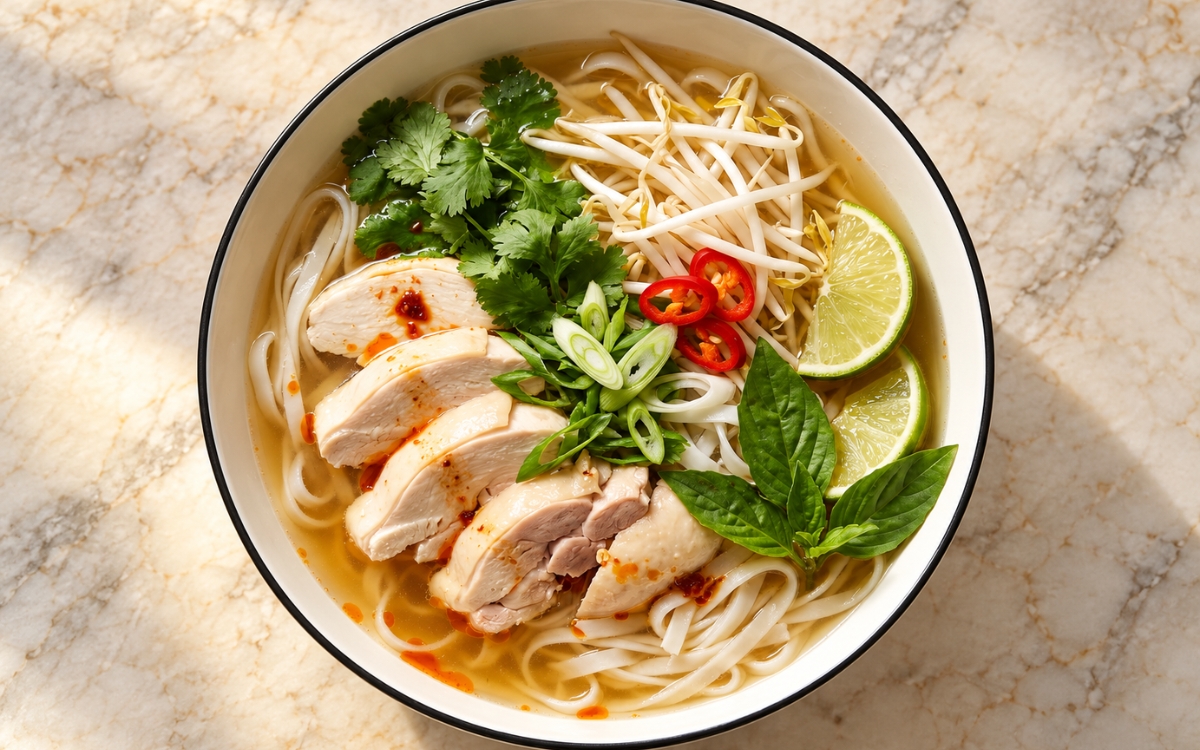
- Check that the broth is steaming hot, then top the noodles in each of the 4 bowls with a quarter of the sliced chicken. Scatter over the scallions, cilantro and the optional sliced onion. Ladle the very hot broth over each bowl, about 500ml per portion, so the chicken warms through and the noodles soften to their final springy texture. Serve at once with the Thai basil, bean sprouts, chilli slices, lime wedges and any optional chilli oil or bird's eye chilli, either added directly to the bowls or on the side so each portion can be finished to taste. Squeeze lime into individual bowls only, never into the pot. That last-minute assembly is what keeps the broth clear, the noodles springy and the herbs genuinely fresh.
Notes
Charring the onion and ginger deserves genuine recognition as the technique most directly responsible for whether this broth tastes like pho or simply like spiced stock. The recipe's own warning, "Do not skip charring," reflects how blistering caramelises the onion's sugars and mellows the ginger's raw bite — adding the lightly smoky, rounded depth that defines the broth without weighing it down.
The gentle simmer deserves the same attention this technique receives throughout this collection's other clear soups and broths, because clarity is built or lost in the pot. The recipe's own instruction to keep the broth "at a gentle simmer, not a rolling boil" matters because hard bubbling churns fat and proteins into the liquid, clouding it and weakening the clean character chicken pho depends on.
Late, gradual fish sauce deserves genuine respect as the detail most directly responsible for the broth's rounded savoury depth. The recipe's own note that "Too much too early can overpower the broth" explains why it goes in after straining, a little at a time, since the broth should taste deeper and rounder rather than fishy, and seasoned slightly strong to allow for the noodles and garnishes.
The noodle texture deserves attention as a genuine, checkable readiness cue rather than a loose approximation of the packet time. The recipe's own reminder that "Held noodles tend to clump and go soft" means cooking them only just before serving and pulling them while still springy, because they keep softening for several minutes once the very hot broth is ladled over them.