
Beef Tataki
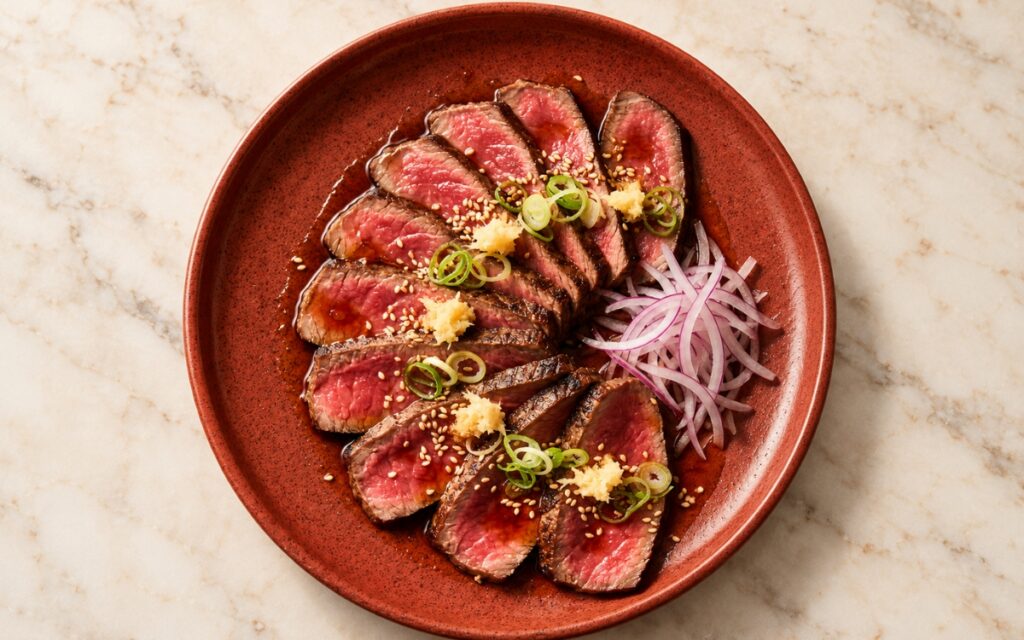
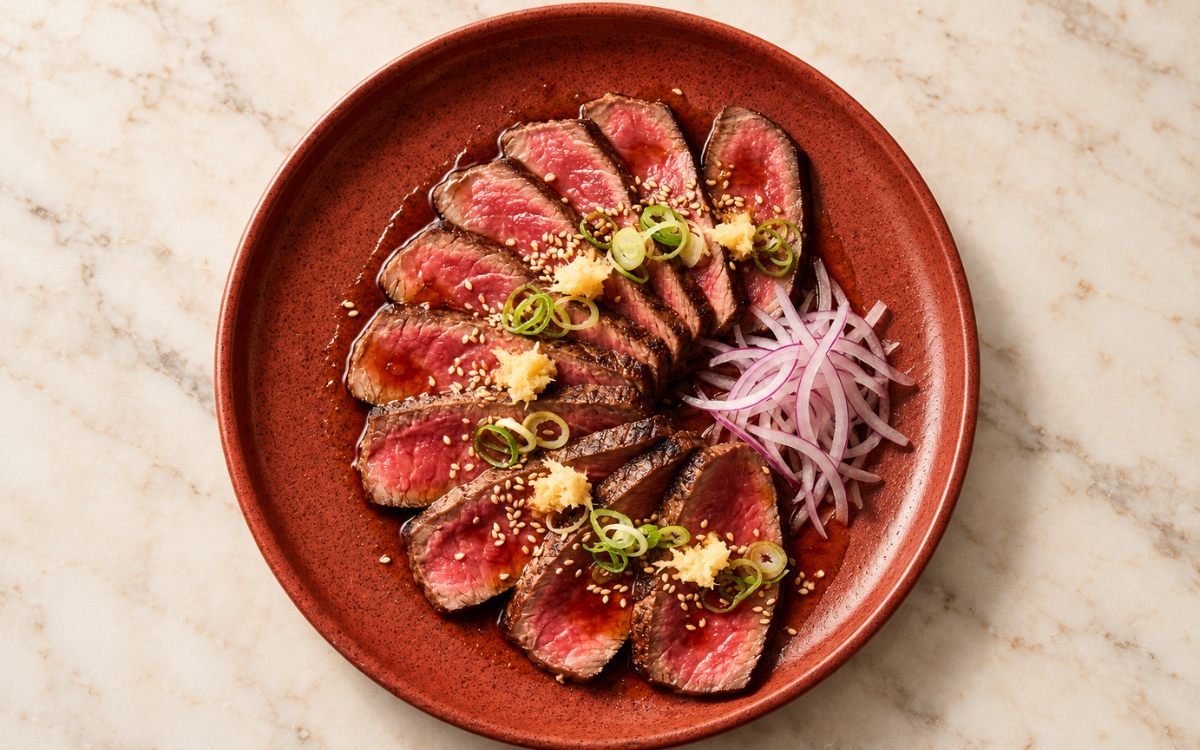
A classic Japanese-style beef appetizer of a thick, tender steak seared hard on the outside and left vividly rosy in the centre, then chilled, sliced thin, and dressed with a bright homemade citrus-soy ponzu, fresh grated ginger, sliced scallions, toasted sesame seeds, and fine red onion, the key being a dark seared rim against a cool, soft, rare centre. Searing the beef for only 30–45 seconds per broad side, rather than cooking it through like an ordinary steak, is the technique this whole tataki depends on for a browned edge with a genuinely rare interior — every extra minute pushes the grey band inward and turns the slices firm and dry, the same fast-hot-sear principle used elsewhere in this collection whenever a tender cut is meant to stay rare. Chilling the seared beef for 20–30 minutes is what stops carryover cooking and firms the meat enough to slice cleanly at 3–5 mm. Mixing the ponzu from lemon, lime, and rice vinegar is what cuts through the richness of the beef while keeping the dressing thin and pourable rather than syrupy. The payoff is a tataki with real, restaurant-style contrast — a dark savoury crust, soft rosy slices, glossy citrus-soy dressing, and sharp ginger, scallion, and onion in every bite.
Prep Time : 20 min
Total Time : 58 min
Servings : 4
20 min
58 min
4
Ingredients
For the Beef
• 700–800g beef sirloin, striploin, tenderloin, or boneless ribeye, in 1 even piece, about 5cm thick
• 1 tsp neutral oil
• 1 tsp kosher salt
• ½ tsp freshly ground black pepper
For the Ponzu Dressing
• 80ml soy sauce
• 60ml fresh lemon juice
• 30ml fresh lime juice
• 30ml rice vinegar
• 1 tbsp mirin
• 1–2 tsp sugar, to balance
• 2 tbsp dashi, optional, for a rounder, more classical flavour
For the Garnish
• 1 small red onion, very thinly sliced
• 3–4 scallions, very thinly sliced
• 2–3 tsp fresh ginger, finely grated
• 2 tsp toasted sesame seeds
Optional for Serving
• Micro shiso, chives, or a tiny amount of daikon cress, optional
Directions
- Prepare the Garnish
Slice the small red onion into very thin strands and soak them in ice water for 10 minutes to soften their sharpness and help them curl slightly. Drain the onion very well and pat it dry with a clean towel so no water dilutes the ponzu later. Slice the 3–4 scallions thinly on a slight angle and set them aside. Leave the ginger whole until the last moment, since it is grated fresh just before serving. That thorough draining is what keeps the onion crisp and the dressing sharp instead of watery. - Make the Ponzu
Combine the 80ml soy sauce, 60ml lemon juice, 30ml lime juice, 30ml rice vinegar, 1 tbsp mirin, 1–2 tsp sugar, and the optional 2 tbsp dashi in a small bowl or jug. Stir until the sugar dissolves completely, then taste and adjust: add a little more citrus if it is too salty, a pinch more sugar if it is too sharp, or a splash more soy if it tastes weak. The finished ponzu should be bright, salty, lightly sweet, thin, and pourable, never syrupy. Refrigerate it until serving. That cold, balanced dressing is what supports the beef instead of drowning it. - Prepare the Beef
Remove the 700–800g beef from the fridge 15–20 minutes before cooking so the surface loses its chill and the sear stays fast. Pat it very dry on every side with paper towels, then trim any loose fat or silverskin. Season evenly with 1 tsp kosher salt and ½ tsp black pepper, pressing the seasoning gently onto all sides. Choose a thick, even piece, because a thin steak cannot hold a rare centre through searing. That dry, evenly seasoned surface is what browns on contact instead of steaming in its own moisture. - Sear the Beef
Heat a heavy skillet or cast-iron pan over high heat until it is very hot and the surface just begins to shimmer, then add the 1 tsp neutral oil. Lay in the beef and sear for about 30–45 seconds on each broad side, then 15–20 seconds on each edge and end, turning it with tongs. The outside should brown well while the centre stays clearly rare and cool to the touch. Remove it immediately, working in a pan large enough that the heat never drops. That brief, fierce contact is what builds a dark rim without cooking the interior. - Chill and Rest
Transfer the seared beef to a rack or plate and let it cool for a few minutes at room temperature. Then place it in the fridge, uncovered or loosely covered, for 20–30 minutes, until it feels firmed and cold through the surface. Do not wrap it tightly, since trapped steam softens the crust. Because the centre is served rare, keep the beef cold and handle it with clean hands and a clean board throughout. That chilling stage is what halts carryover cooking and preserves the vivid rosy centre. - Slice the Beef
Set the chilled beef on a clean board and slice it thinly across the grain with a very sharp knife, aiming for neat slices about 3–5 mm thick. Use long, smooth strokes rather than sawing, and wipe the blade between cuts if it drags or picks up juices. Keep the slices in order as you cut so they can be fanned out neatly. Discard any end that is fully grey if you prefer an entirely rosy plate. That clean, cross-grain slicing is what keeps every slice tender and the presentation precise. - Plate and Serve
Fan the sliced beef in overlapping layers across 4 appetizer plates. Spoon or drizzle the chilled ponzu around and lightly over the beef, so it pools softly without leaving the slices sitting in liquid. Grate the 2–3 tsp fresh ginger and set it in small mounds, then scatter the scallions and 2 tsp toasted sesame seeds lightly and group the drained red onion strands to one side, adding the optional shiso, chives, or daikon cress if using. Serve right away as a cool appetizer. That restrained plating is what lets the beef stay the centrepiece.
*Notes :
- Searing the beef quickly on all sides deserves genuine recognition as the technique most directly responsible for whether the finished tataki shows a dark rim and a rosy centre. Heat travels inward steadily, so a pan that is not hot enough or a sear that lingers pushes a wide grey band through the meat and removes the contrast the dish is named for.
- Choosing a thick, even cut deserves the same attention this technique receives throughout this collection’s other seared dishes, where thickness decides how much interior survives the heat. Sirloin, striploin, tenderloin, and boneless ribeye are all tender enough to serve rare, whereas a thin or uneven steak overcooks at the ends long before the middle has even warmed through.
- Chilling the beef before slicing deserves genuine respect as the detail most directly responsible for clean, thin, even slices. Cold, firm muscle holds its shape under the knife instead of smearing, and the cooling also stops carryover heat from quietly cooking the centre while the beef waits on the board.
- A balanced ponzu deserves attention as a genuine, checkable cue rather than a loose approximation, because tasting and adjusting is built into the method. The dressing should taste bright, salty, and lightly sweet, so one quick spoonful shows whether it needs more citrus, sugar, or soy before it reaches the beef.
Why This Recipe Works
This recipe works because a very hot, dry pan sears the outside of a thick steak in under a minute per side, building a dark crust while the centre stays rare. Chilling then firms the meat and halts carryover cooking, which makes thin, clean slices possible. A thin citrus-soy ponzu of lemon, lime, rice vinegar, and mirin cuts through the richness without drowning the beef. Cold onion, sharp ginger, scallion, and sesame add fresh crunch and aroma on top. Together they give a genuinely tender, savoury, refreshing appetizer with a clear contrast between warm-looking crust and cool, soft, rosy centre.
Ingredient Breakdown
Thick, Even Beef Cut (700–800g)
The structural foundation — a tender sirloin, striploin, tenderloin, or ribeye piece holds a rare centre while the outside sears.
Very Hot Dry Sear (30–45 Seconds)
The critical technique — a fast, fierce sear browns the surface without letting heat travel deep into the beef.
Chilling Before Slicing (20–30 Minutes)
The critical timing technique — cold, firm beef stops carryover cooking and cuts into thin, neat, even slices.
Citrus-Soy Ponzu
The flavour foundation — lemon, lime, rice vinegar, soy, and mirin make a thin, salty, bright dressing that supports the beef.
Ice-Soaked Red Onion
The crisp contrast — soaking and draining takes the sharp edge off thin onion strands and leaves them cool and crunchy.
Fresh Grated Ginger
The finishing touch — moist, freshly grated ginger adds a clean, warming heat that lifts the rich beef at the last moment.
Flavor Structure Explained
This beef tataki follows a layered balance model:
- Rich, tender foundation (seared rare beef, seasoned crust)
- Bright, salty dressing (soy sauce, lemon, lime, rice vinegar)
- Soft sweet balance (mirin, sugar, optional dashi)
- Sharp, warming accent (fresh grated ginger, ice-soaked red onion)
- Fresh, nutty finish (scallions, toasted sesame seeds)
Seared rare beef gives the dish its rich, tender foundation, with a savoury crust around a soft centre. The ponzu brings a bright, salty citrus dressing, while mirin and a little sugar round its sharpness into a gentle sweetness. Ginger and cold red onion add a warming, crisp accent, and scallions with toasted sesame supply the fresh, nutty finish. Every element stays light and restrained, so none competes with the beef, and together they form the balance that ties the tataki together.
Common Mistakes to Avoid
- Searing the Beef Too Long – This cooks the meat through and removes the rosy centre that defines tataki. Always sear only 30–45 seconds per broad side and 15–20 seconds on the edges.
- Skipping the Dry Pat-Down – This leaves moisture on the surface, so the beef steams and turns grey instead of browning. Always pat every side very dry before seasoning and searing.
- Slicing the Beef While Warm – This makes the meat soft and ragged, so the knife tears instead of gliding. Always chill the seared beef for 20–30 minutes before slicing across the grain.
- Using a Thin Steak – This overcooks the whole piece before the crust forms, leaving no rare centre. Always choose a thick, even cut such as sirloin, striploin, tenderloin, or boneless ribeye.
- Oversaucing the Plate – This leaves the slices sitting in a deep pool and drowns the delicate beef flavour. Always drizzle the ponzu lightly around and partly over the beef.
Variations
Dashi Ponzu Version
Stir in the optional 2 tbsp dashi to give the ponzu a rounder, more classical depth, with a gentler edge from the added umami and a slightly softer salty finish.
Daikon and Shiso Version
Finish the plates with micro shiso, chives, or a little daikon cress for a fresher herbal note, keeping the garnish tiny so the beef stays the focus.
Ribeye Version
Use boneless ribeye instead of sirloin for a richer, more marbled slice, searing it just as briefly and keeping the pieces thick so the centre stays rare.
Sharper Citrus Version
Add a splash more lemon or lime to the ponzu for a brighter, more refreshing dressing, balancing it with the extra teaspoon of sugar if it turns too sharp.
Storage & Make-Ahead
Buy very fresh, high-quality beef from a trusted butcher and keep it cold until about 15–20 minutes before cooking, because the centre stays rare and clean, cold handling matters most.
Make the ponzu up to 1 day ahead and keep it covered in the refrigerator, then taste and adjust it just before serving so the citrus and soy still taste bright and balanced.
Slice the red onion and scallions a few hours ahead and keep the drained onion cold and dry, but grate the ginger fresh just before plating so it stays moist and aromatic.
Sear and chill the whole piece of beef up to a few hours ahead, then slice and plate it close to serving so the slices stay moist and the rosy colour stays vivid.
Tataki is best served the day it is made, and any sliced leftovers should be refrigerated in an airtight container and eaten within 1 day, cold and undressed, because the rare centre does not reheat well.
Frequently Asked Questions
Why is the beef seared for only 30–45 seconds per side?
A very brief sear browns the outside while heat barely reaches the middle, so the centre stays rare and tender. Longer cooking widens the grey band and makes the slices firm and dry.
Why does the beef need to be patted dry before searing?
Surface moisture has to evaporate before browning can begin, so a wet steak steams and turns grey. A dry surface sears in seconds and builds the dark crust that gives tataki its flavour.
Why must the beef be chilled before it is sliced?
Chilling firms the meat and stops carryover cooking, so it cuts into thin, clean 3–5 mm slices without tearing. It also keeps the centre rosy instead of letting residual heat cook it.
Why is the red onion soaked in ice water and drained well?
The soak takes the harsh bite out of raw onion and leaves the strands cool and crisp. Draining thoroughly keeps water from diluting the ponzu on the plate.
Are there other classic beef salad, cold noodle, or seared steak dishes worth trying?
Vietnamese Rare Beef Salad — Bò Tái Chanh offers another classic rare beef direction worth exploring. Spicy Thai Beef Salad (Yam Neua) and Cold Soba Noodle Salad are also worth trying for bright salads, and Japanese Cucumber Salad (Sunomono) and Pan-Seared Skirt Steak round out the table.
Nutrition Facts
( Per Serving )
Calories
~320 kcal
Protein
39 g
Fat
14 g
Carbs
8 g
Calories
~320 kcal
Protein
39 g
Fat
14 g
Carbs
8 g
Related Recipes
Related Recipes
-

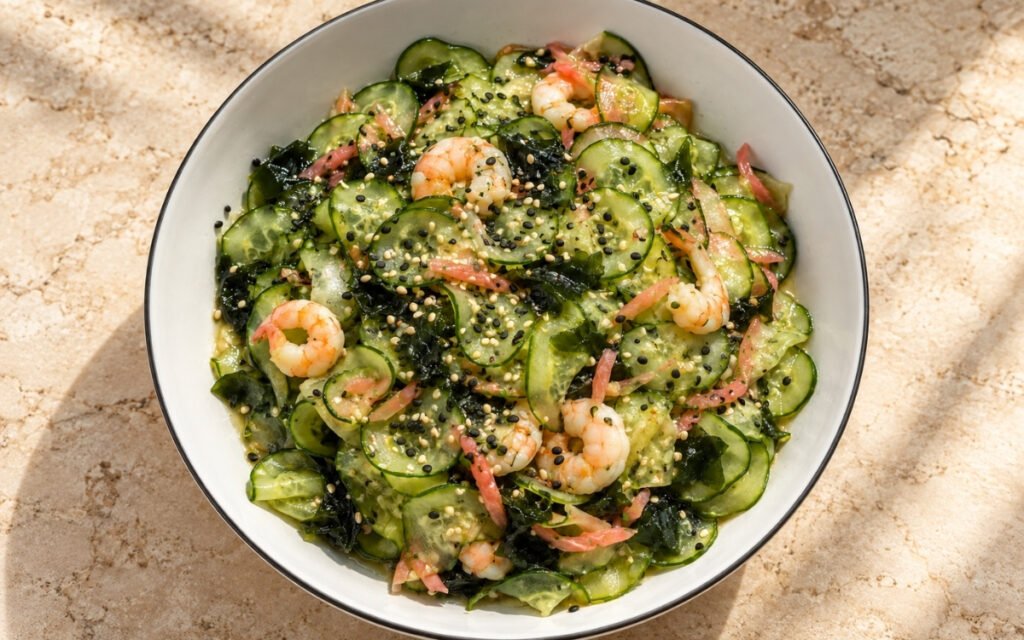
Japanese Cucumber Salad (Sunomono)
Very thinly sliced cucumber, rehydrated wakame, tender shrimp, and a balanced sweet-tart rice vinegar dressing, finished with sesame seeds and pickled ginger.
-
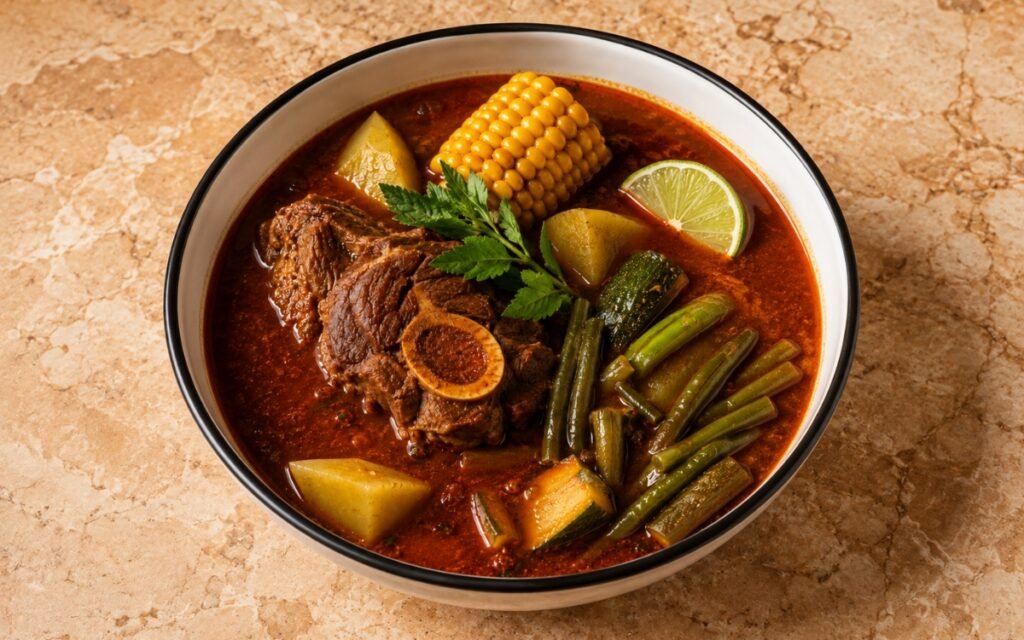
Mole de Olla
A vivid, brothy Mexican beef stew built on gently simmered beef shank, a blended guajillo-ancho chile base, and staged vegetables.
-
Tonkatsu with Cabbage Slaw
Golden panko-crusted pork cutlet, sliced and served over fine cabbage with fluffy rice, glossy sauce, and lemon.

You might also like
You might also like
-
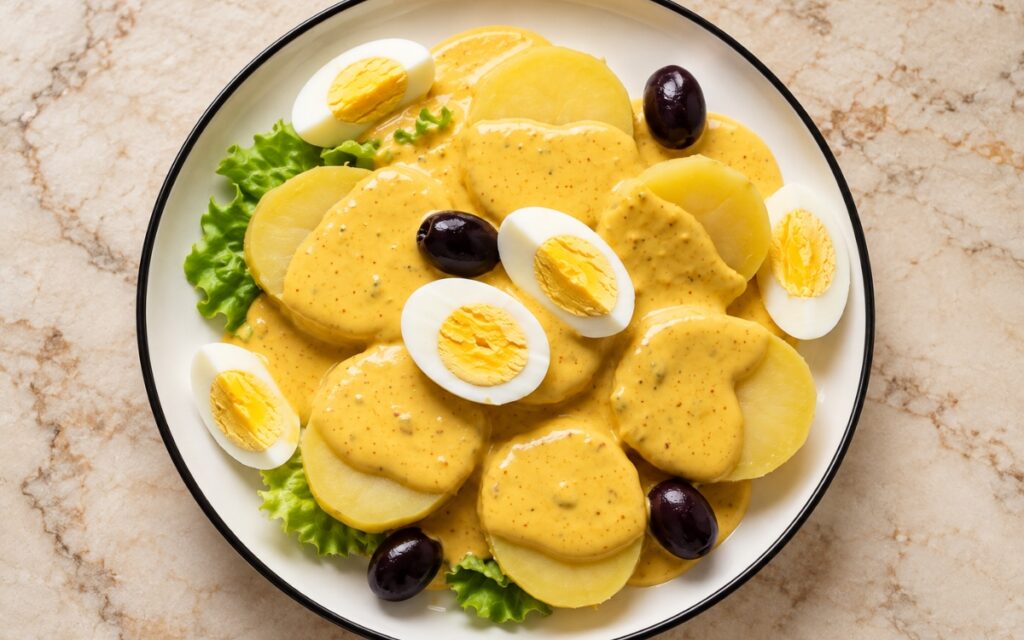
Papa a la Huancaína
Sliced yellow potatoes on crisp lettuce under a smooth golden ají amarillo cheese sauce, topped with halved hard-boiled eggs and black olives.
-
Kung Pao Chicken
Small seared chicken cubes in a glossy soy-chili glaze with dried red chilies, Sichuan peppercorns, roasted peanuts, scallions and green bell pepper pieces.
-
Beef Stroganoff
Tender seared beef, properly browned mushrooms, and a rich, glossy sour cream sauce over buttery egg noodles.

Beef Tataki
Ingredients
Method
- Slice the small red onion into very thin strands and soak them in ice water for 10 minutes to soften their sharpness and help them curl slightly. Drain the onion very well and pat it dry with a clean towel so no water dilutes the ponzu later. Slice the 3–4 scallions thinly on a slight angle and set them aside. Leave the ginger whole until the last moment, since it is grated fresh just before serving. That thorough draining is what keeps the onion crisp and the dressing sharp instead of watery.
- Combine the 80ml soy sauce, 60ml lemon juice, 30ml lime juice, 30ml rice vinegar, 1 tbsp mirin, 1–2 tsp sugar, and the optional 2 tbsp dashi in a small bowl or jug. Stir until the sugar dissolves completely, then taste and adjust: add a little more citrus if it is too salty, a pinch more sugar if it is too sharp, or a splash more soy if it tastes weak. The finished ponzu should be bright, salty, lightly sweet, thin, and pourable, never syrupy. Refrigerate it until serving. That cold, balanced dressing is what supports the beef instead of drowning it.
- Remove the 700–800g beef from the fridge 15–20 minutes before cooking so the surface loses its chill and the sear stays fast. Pat it very dry on every side with paper towels, then trim any loose fat or silverskin. Season evenly with 1 tsp kosher salt and ½ tsp black pepper, pressing the seasoning gently onto all sides. Choose a thick, even piece, because a thin steak cannot hold a rare centre through searing. That dry, evenly seasoned surface is what browns on contact instead of steaming in its own moisture.
- Heat a heavy skillet or cast-iron pan over high heat until it is very hot and the surface just begins to shimmer, then add the 1 tsp neutral oil. Lay in the beef and sear for about 30–45 seconds on each broad side, then 15–20 seconds on each edge and end, turning it with tongs. The outside should brown well while the centre stays clearly rare and cool to the touch. Remove it immediately, working in a pan large enough that the heat never drops. That brief, fierce contact is what builds a dark rim without cooking the interior.
- Transfer the seared beef to a rack or plate and let it cool for a few minutes at room temperature. Then place it in the fridge, uncovered or loosely covered, for 20–30 minutes, until it feels firmed and cold through the surface. Do not wrap it tightly, since trapped steam softens the crust. Because the centre is served rare, keep the beef cold and handle it with clean hands and a clean board throughout. That chilling stage is what halts carryover cooking and preserves the vivid rosy centre.
- Set the chilled beef on a clean board and slice it thinly across the grain with a very sharp knife, aiming for neat slices about 3–5 mm thick. Use long, smooth strokes rather than sawing, and wipe the blade between cuts if it drags or picks up juices. Keep the slices in order as you cut so they can be fanned out neatly. Discard any end that is fully grey if you prefer an entirely rosy plate. That clean, cross-grain slicing is what keeps every slice tender and the presentation precise.
- Fan the sliced beef in overlapping layers across 4 appetizer plates. Spoon or drizzle the chilled ponzu around and lightly over the beef, so it pools softly without leaving the slices sitting in liquid. Grate the 2–3 tsp fresh ginger and set it in small mounds, then scatter the scallions and 2 tsp toasted sesame seeds lightly and group the drained red onion strands to one side, adding the optional shiso, chives, or daikon cress if using. Serve right away as a cool appetizer. That restrained plating is what lets the beef stay the centrepiece.