
Papa a la Huancaína
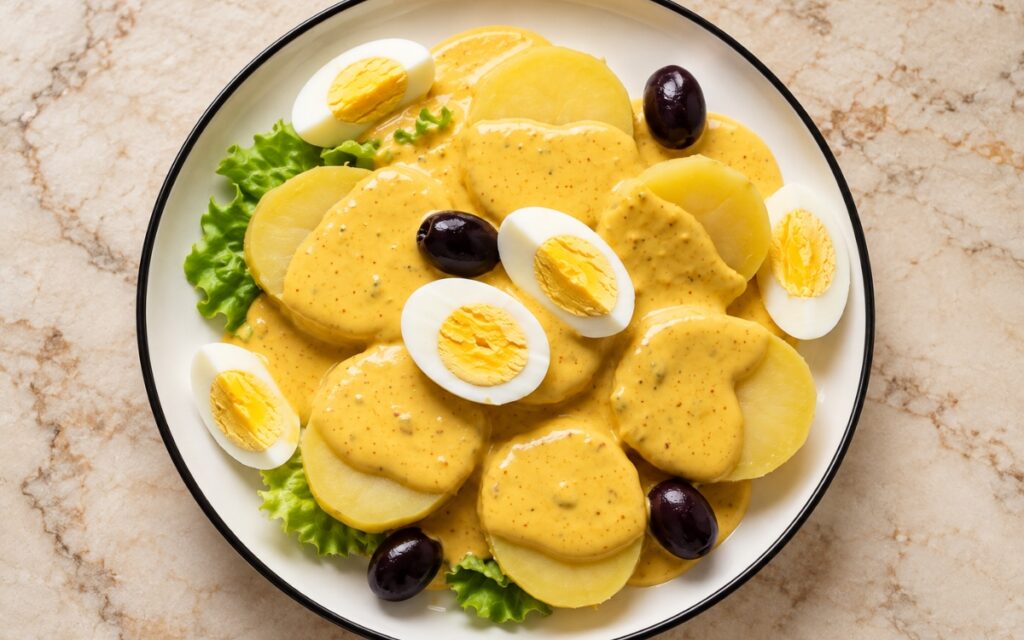
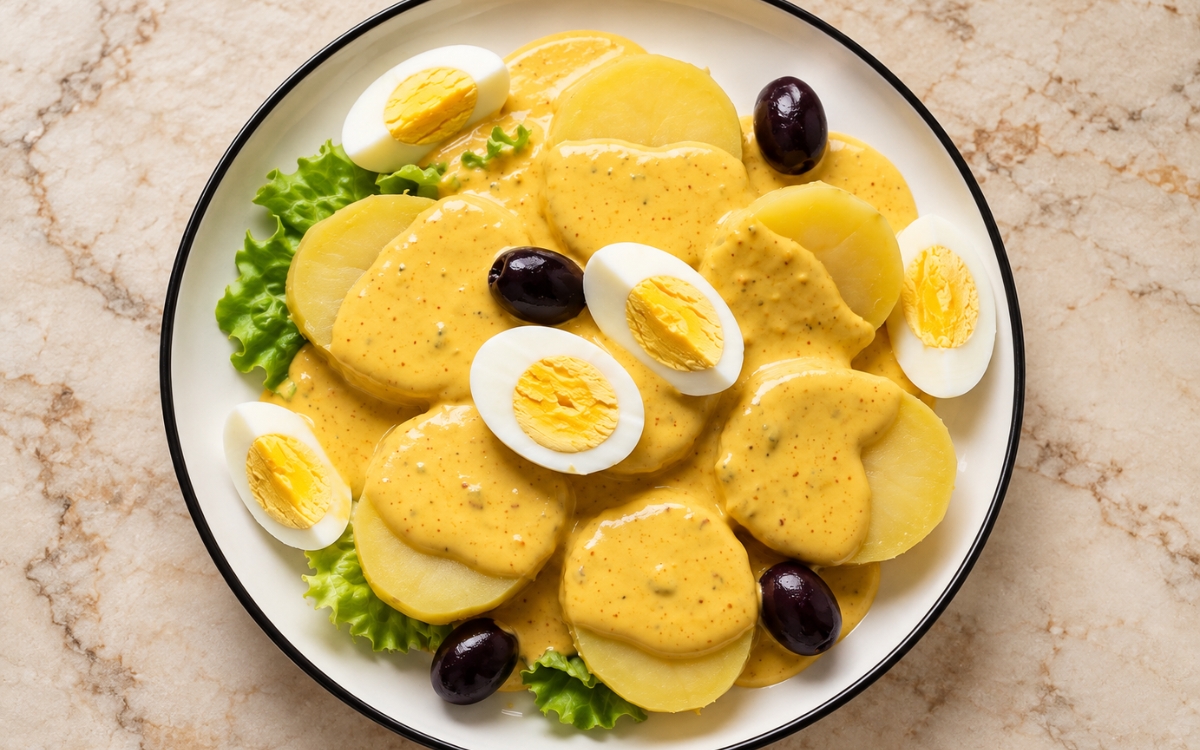
Tender boiled yellow potatoes sliced over crisp lettuce and generously coated in a smooth, golden ají amarillo cheese sauce, then finished with halved hard-boiled eggs and black olives, make a classic Peruvian appetizer, the key being a sauce thick enough to coat yet fluid enough to flow. Blending the sauce completely smooth and loosening it with evaporated milk a little at a time, rather than pouring in all the liquid at once, is the technique this whole dish depends on for a velvety, spoonable texture — too much milk turns it watery, while too little leaves it stiff and paste-like, the same add-liquid-gradually principle used elsewhere in this collection whenever a blended sauce must land at one exact consistency. Starting the potatoes in cold, lightly salted water is what lets them cook evenly through the centre without turning crumbly. Slicing the potatoes thickly while they are still slightly warm is what keeps the rounds intact and the sauce sitting neatly on top. The payoff is a papa a la Huancaína with real, layered contrast — soft, creamy potatoes, crisp lettuce, a cool, savoury-spicy cheese sauce with a clear ají amarillo glow, and the rich bite of egg and briny olive.
Prep Time : 20 min
Total Time : 45 min
Servings : 4
20 min
45 min
4
Ingredients
For the Potatoes and Garnishes
• 1.2kg yellow potatoes, medium size
• 4 large eggs
• 4 small lettuce leaves, or 8 smaller crisp lettuce pieces
• 8 black olives
• Salt, for the boiling water
For the Huancaína Sauce
• 180g queso fresco, crumbled
• 3–4 tbsp ají amarillo paste
• 5–6 plain crackers, about 25–30g, or 2 slices soft white bread, crusts removed
• 120–180ml evaporated milk, as needed
• 2 tbsp neutral oil
• 1 small garlic clove
• ½ tsp salt, or to taste
• ⅛ tsp black pepper
Directions
- Boil the Potatoes
Wash the 1.2kg of yellow potatoes well and place them whole and unpeeled in a large pot. Cover with cold water by about 3cm and add a generous pinch of salt. Bring to a boil over high heat, then reduce to a steady simmer and cook for 18–25 minutes, depending on size, until a knife slides into the centre with no resistance but the potato still holds its shape. Drain and leave until just cool enough to handle. That cold start and gentle simmer is what cooks the centre at the same rate as the outside, instead of leaving a mushy rim around a firm core. - Cook the Eggs
While the potatoes simmer, place the 4 large eggs in a small pot, cover them with cold water, and bring to a boil. Once the water is boiling, cook the eggs for 10 minutes for fully set, hard-boiled yolks. Transfer them straight into a bowl of cold water and leave until completely cool, then peel and halve each egg lengthwise to make 8 halves. That cold-water stop is what halts the cooking, so the yolks stay pale yellow and creamy instead of turning chalky with a grey ring. - Peel and Slice the Potatoes
When the potatoes are cool enough to handle but still slightly warm, peel off the skins with your fingers or a small knife. Slice the potatoes into thick rounds, about 1–1.5cm thick, and lay them in a single layer on a tray or plate. Leave them to cool further while you make the sauce, so they are cool or at room temperature by plating. That slightly warm peeling is what lets the skins slip away cleanly, and the thick cut is what lets each round hold its shape under a generous coating. - Blend the Huancaína Sauce
Break 5–6 plain crackers (about 25–30g) into pieces, or tear 2 crustless slices of soft white bread. In a blender, combine the 180g crumbled queso fresco, 3–4 tbsp ají amarillo paste, the crackers or bread, 120ml evaporated milk, 2 tbsp neutral oil, 1 small garlic clove, ½ tsp salt, and ⅛ tsp black pepper. Blend for about 1 minute, scraping down the sides once, until completely smooth, creamy, and golden with no grainy specks. Start with 3 tbsp of paste and add the fourth if you want a stronger ají amarillo flavour. That cracker or bread is what thickens and emulsifies the cheese, oil, and milk into one velvety sauce instead of a loose, separated mixture. - Adjust the Sauce Consistency
Check the sauce: it should be thick enough to coat the back of a spoon generously, yet fluid enough to spread and flow slightly. If it is too thick to blend or too stiff to spoon, add up to 60ml more evaporated milk, 1 tablespoon at a time, blending briefly after each addition. Taste and adjust the salt, remembering that the queso fresco and olives are already salty, and confirm the ají amarillo, cheese, and cream all come through clearly. Keep the sauce covered at room temperature until serving. That gradual loosening is what lets you stop at the right consistency, because a sauce thinned too far cannot be thickened again without more cheese or crackers. - Assemble and Serve
Place 1 small lettuce leaf, or a bed of 2 smaller crisp pieces, on each of 4 plates. Arrange the sliced potatoes over the lettuce in a neat, slightly overlapping layer rather than a pile. Spoon the Huancaína sauce generously over the potatoes so most of the surface is covered and a little sauce naturally settles around them, while the shape of the slices stays identifiable underneath. Garnish each plate with 2 egg halves and 2 black olives, and serve cool or at room temperature. That generous but not drowning coat is what gives the dish its signature look of golden sauce, pale potato, and bright yolk.
*Notes :
- The sauce consistency deserves genuine recognition as the technique most directly responsible for whether this dish reads as a proper Huancaína or a pale cheese soup. Evaporated milk added gradually keeps the sauce thick enough to coat the potatoes generously yet fluid enough to flow around them, whereas a single large pour makes it watery and sends it running off the slices.
- Starting the potatoes in cold water deserves the same attention this technique receives throughout this collection’s other potato and root-vegetable dishes. Dropping them into boiling water cooks the outside long before the heat reaches the centre — the exterior turns crumbly and waterlogged while the core stays firm, and neither survives thick slicing or a generous coating of sauce.
- The cracker or soft white bread deserves genuine respect as the detail most directly responsible for the smooth, stable texture of the sauce. Its starch absorbs the oil and milk and holds the blended cheese in suspension, so the sauce thickens evenly and stays creamy and glossy instead of turning grainy or separating into a greasy layer.
- Serving the dish cool or at room temperature deserves attention as a genuine, checkable serving cue rather than a matter of taste. Warm potatoes soften and thin the sauce where it touches them, so the coating slides off and pools on the plate, while cooled slices stay firm and let the golden sauce sit thick and cleanly on top.
Why This Recipe Works
This recipe works because potatoes started in cold water cook evenly to a tender, creamy centre that still holds a thick slice. Peeling them while slightly warm and cooling them before plating keeps the rounds intact and lets the sauce sit neatly on top. Blending queso fresco, ají amarillo paste, and a cracker with evaporated milk added gradually builds a smooth, golden sauce that is thick enough to coat yet fluid enough to flow. Halved eggs and black olives add richness and brine, while crisp lettuce gives the plate a fresh, cool base. Every bite balances soft potato, savoury cheese, and fruity ají heat.
Ingredient Breakdown
Cold-Start Yellow Potatoes
The critical technique — cold, lightly salted water cooks the creamy flesh evenly to the centre without crumbling.
Ají Amarillo Paste (3–4 Tbsp)
The defining flavour ingredient — fruity, golden chili paste gives the sauce its colour, gentle heat, and signature Peruvian flavour.
Queso Fresco
The flavour foundation — mild, fresh white cheese gives the sauce its creamy body and gentle salty tang without overpowering the chili.
Crackers or Soft White Bread
The structural choice — the starch thickens and emulsifies the cheese, oil, and milk into one smooth, stable sauce.
Gradual Evaporated Milk (120–180ml)
The critical technique — adding it a little at a time lets you stop at a thick, flowing consistency.
Hard-Boiled Eggs and Black Olives
The finishing touch — creamy yolk and briny olive add richness and salt that balance the cool, spiced sauce.
Flavor Structure Explained
This papa a la Huancaína follows a layered balance model:
- Creamy, savoury foundation (queso fresco, evaporated milk, oil, cracker)
- Fruity, golden heat (ají amarillo paste)
- Aromatic, sharp edge (garlic, black pepper)
- Soft, earthy base (boiled yellow potatoes)
- Rich, briny, fresh finish (hard-boiled egg, black olives, crisp lettuce)
The queso fresco, milk, and cracker build the creamy, savoury foundation, and the ají amarillo paste lays a fruity, golden heat across it. A little raw garlic and pepper sharpen the edges so the sauce never tastes flat. Soft yellow potatoes give the dish a mild, earthy base that carries the sauce, while egg yolk and briny olive add richness and salt. Crisp lettuce keeps the plate fresh, which is the cool, balanced contrast that ties the papa a la Huancaína together.
Common Mistakes to Avoid
- Pouring in All the Milk at Once – This thins the sauce past the point of recovery, leaving it watery and unable to coat the potatoes. Always add the evaporated milk a little at a time.
- Overboiling the Potatoes – This leaves them crumbly and waterlogged, so the slices break apart under the sauce. Always test with a knife from 18 minutes and drain as soon as they are tender.
- Blending the Sauce Too Briefly – This leaves gritty flecks of cracker and cheese that make the texture grainy instead of velvety. Always blend until completely smooth, adding a little milk if needed.
- Slicing the Potatoes Too Thin – This makes the rounds fragile, so they tear and turn mushy beneath the sauce. Always cut them 1–1.5cm thick and peel them while still slightly warm.
- Serving the Dish Hot – This thins the sauce and softens the potatoes, so the coating slides off instead of sitting on top. Always cool the potatoes before plating and serve at room temperature.
Variations
Mild Cheese Version
Replace the queso fresco with another mild, fresh white cheese when it is unavailable, keeping the flavour gentle and not overly salty so the ají amarillo remains clearly in front.
Soft White Bread Version
Swap the 5–6 crackers for 2 slices of crustless soft white bread torn into pieces, which blends into an equally smooth sauce with a slightly softer, more delicate body.
Extra-Bold Ají Version
Use the full 4 tbsp of ají amarillo paste, tasting after blending, for a deeper golden colour and a more pronounced fruity heat that still balances the cheese and milk.
Platter Version
Arrange all the sliced potatoes in one overlapping layer on a large lettuce-lined platter, spoon the sauce over the whole surface, and garnish with the eggs and olives for sharing.
Storage & Make-Ahead
Boil, peel, and slice the potatoes up to 1 day ahead, store the slices in a single layer in an airtight container in the refrigerator, and bring them to cool room temperature before plating.
Make the sauce up to 2 days ahead and keep it in an airtight container in the refrigerator, then loosen it with a small splash of evaporated milk and blend or stir again if it thickens.
Keep the peeled, halved eggs covered in the refrigerator for up to 2 days, and wash and dry the lettuce only close to serving so the leaves stay genuinely crisp under the sauce.
Assemble the plates no more than 30 minutes before serving and spoon the sauce on at the last moment, since the lettuce wilts and the potatoes absorb sauce the longer they sit together.
Store any assembled leftovers covered in the refrigerator for up to 1 day and serve them cool or at room temperature without reheating, since this dish is not meant to be eaten hot.
Frequently Asked Questions
Why are the potatoes started in cold water instead of boiling water?
Cold water heats the potatoes gradually, so the outside and centre cook at the same rate and finish tender without a crumbly, waterlogged rim, whereas boiling water overcooks the outside before the middle softens.
Why does the sauce use crackers or soft white bread?
The starch absorbs oil and milk and holds the blended cheese in suspension, so the sauce thickens evenly into a velvety emulsion that stays creamy instead of separating or turning grainy.
Why is the evaporated milk added a little at a time?
Starting with 120ml and adding more only as needed lets you stop at a thick sauce that still flows, because a sauce thinned too far cannot be thickened again without extra cheese or crackers.
Why is Papa a la Huancaína served cool or at room temperature rather than hot?
Cooled potatoes stay firm and let the thick sauce sit neatly on top, while heat would soften the slices and thin the coating so it slides off and pools around them.
Are there other classic Peruvian chicken, stir-fry, or salad dishes worth trying?
Ají de Gallina offers another classic Peruvian chicken direction worth exploring. Peruvian Lomo Saltado and Peruvian Chopped Salad are also worth trying for other savoury and fresh directions, and Peruvian Chicken Rice Bowl / Pollo a la Brasa Inspired and Peruvian Green Sauce Chicken offer other hearty chicken dishes worth exploring.
Nutrition Facts
( Per Serving )
Calories
~580 kcal
Protein
25 g
Fat
25 g
Carbs
62 g
Calories
~580 kcal
Protein
25 g
Fat
25 g
Carbs
62 g
Related Recipes
Related Recipes
-

Strawberry Iced Black Tea
Black tea at 90–95°C for 2½–3 minutes, strawberries simmered into a light unreduced syrup, lemon peel infused cold 5 minutes — chilled. Fresh, crisp, restrained.
-
Cold Foam Iced Coffee
A very dark, fully chilled cold coffee base topped with a thick, dense cold foam layer that sits clearly, cloud-like, on top.
-
Fresh Peach Iced Tea
Black tea at 90–95°C for 2½–3 minutes, raw peach slices cold-infused 45–60 minutes — strained cleanly, honey, chilled. Bright, fresh, fruit-forward.



You might also like
You might also like
-
Deep Fried Calamari
Tender squid rings and tentacles lightly coated in flour and cornstarch, fried briefly until pale golden and crisp, served with marinara.
-
Crispy Salt and Pepper Tofu
Golden salt and pepper tofu cubes with soft centres, fried garlic, red and green chilies, scallions, and black pepper.
-
Aloo Tikki Chaat
Crisp, shallow-fried spiced potato tikkis topped with yogurt, tamarind chutney, green chutney, sev, red onion, cilantro and tangy chaat spices.
Papa a la Huancaína
Ingredients
Method
- Wash the 1.2kg of yellow potatoes well and place them whole and unpeeled in a large pot. Cover with cold water by about 3cm and add a generous pinch of salt. Bring to a boil over high heat, then reduce to a steady simmer and cook for 18–25 minutes, depending on size, until a knife slides into the centre with no resistance but the potato still holds its shape. Drain and leave until just cool enough to handle. That cold start and gentle simmer is what cooks the centre at the same rate as the outside, instead of leaving a mushy rim around a firm core.
- While the potatoes simmer, place the 4 large eggs in a small pot, cover them with cold water, and bring to a boil. Once the water is boiling, cook the eggs for 10 minutes for fully set, hard-boiled yolks. Transfer them straight into a bowl of cold water and leave until completely cool, then peel and halve each egg lengthwise to make 8 halves. That cold-water stop is what halts the cooking, so the yolks stay pale yellow and creamy instead of turning chalky with a grey ring.
- When the potatoes are cool enough to handle but still slightly warm, peel off the skins with your fingers or a small knife. Slice the potatoes into thick rounds, about 1–1.5cm thick, and lay them in a single layer on a tray or plate. Leave them to cool further while you make the sauce, so they are cool or at room temperature by plating. That slightly warm peeling is what lets the skins slip away cleanly, and the thick cut is what lets each round hold its shape under a generous coating.
- Break 5–6 plain crackers (about 25–30g) into pieces, or tear 2 crustless slices of soft white bread. In a blender, combine the 180g crumbled queso fresco, 3–4 tbsp ají amarillo paste, the crackers or bread, 120ml evaporated milk, 2 tbsp neutral oil, 1 small garlic clove, ½ tsp salt, and ⅛ tsp black pepper. Blend for about 1 minute, scraping down the sides once, until completely smooth, creamy, and golden with no grainy specks. Start with 3 tbsp of paste and add the fourth if you want a stronger ají amarillo flavour. That cracker or bread is what thickens and emulsifies the cheese, oil, and milk into one velvety sauce instead of a loose, separated mixture.
- Check the sauce: it should be thick enough to coat the back of a spoon generously, yet fluid enough to spread and flow slightly. If it is too thick to blend or too stiff to spoon, add up to 60ml more evaporated milk, 1 tablespoon at a time, blending briefly after each addition. Taste and adjust the salt, remembering that the queso fresco and olives are already salty, and confirm the ají amarillo, cheese, and cream all come through clearly. Keep the sauce covered at room temperature until serving. That gradual loosening is what lets you stop at the right consistency, because a sauce thinned too far cannot be thickened again without more cheese or crackers.
- Place 1 small lettuce leaf, or a bed of 2 smaller crisp pieces, on each of 4 plates. Arrange the sliced potatoes over the lettuce in a neat, slightly overlapping layer rather than a pile. Spoon the Huancaína sauce generously over the potatoes so most of the surface is covered and a little sauce naturally settles around them, while the shape of the slices stays identifiable underneath. Garnish each plate with 2 egg halves and 2 black olives, and serve cool or at room temperature. That generous but not drowning coat is what gives the dish its signature look of golden sauce, pale potato, and bright yolk.