Traditional Spanish Pimientos de Padrón
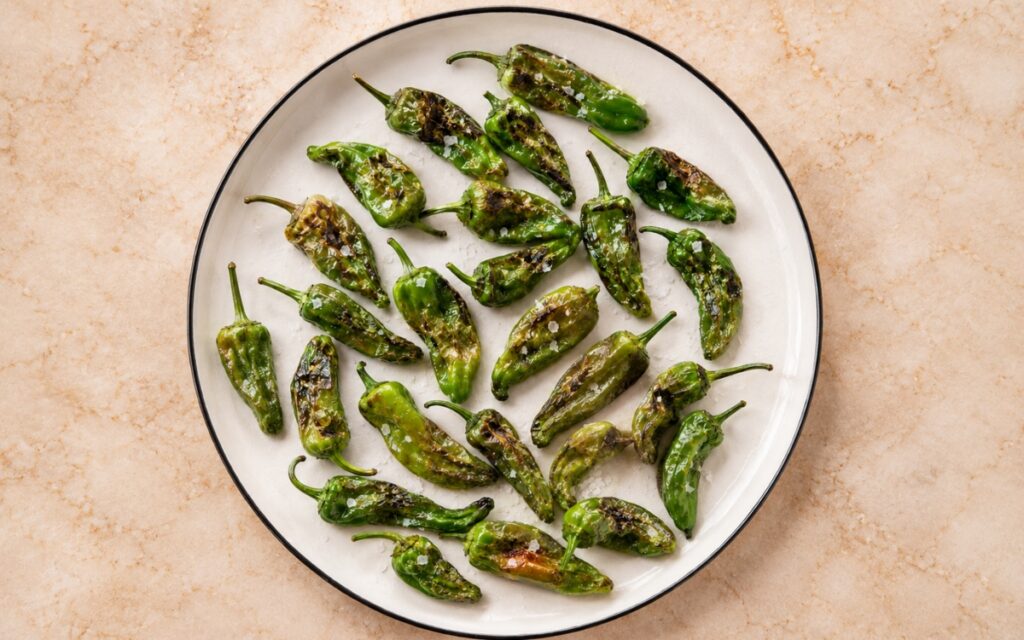
Traditional Spanish pimientos de Padrón are a classic Galician tapa of 24 small whole green peppers, stems attached, fried in hot Spanish extra virgin olive oil until their skins blister, wrinkle, and pick up dark charred patches, then finished with flaky sea salt and eaten hot, one stem at a time. Frying the peppers bone dry in a very hot, uncrowded skillet, rather than cooking them gently or with a lid on, is the technique this whole tapa depends on for blistered, smoky skins over tender, juicy flesh — any surface moisture or crowding makes them steam into limp, oily, olive-coloured peppers, the same hot-and-dry principle used elsewhere in this collection whenever a quick sear is meant to blister a vegetable. Leaving the peppers undisturbed for the first minute is what lets the skin char in patches rather than brown evenly. Salting them while the oil still coats the skins is what makes the coarse crystals cling and stay crunchy. The payoff is a plate of pimientos de Padrón with real, smoky character — glossy, lightly collapsed green skins, sweet tender flesh, bright salt crystals, and the occasional unexpectedly spicy pepper.
- Prep Time : 5 min
- Total Time : 15 min
- Servings : 4
Ingredients
For the Pimientos de Padrón
- 24 fresh Padrón peppers (about 300–360g), whole, with stems attached
- 30ml Spanish extra virgin olive oil, divided
For Finishing
- 4g coarse flaky sea salt, preferably sal en escamas
Directions
- Wash and Dry the Peppers
Wash the 24 Padrón peppers under cold running water to remove any dirt, then dry them completely with a clean kitchen towel or paper towels, turning each one over so no water is left in the creases near the stem. Leave them whole, stems attached, and do not cut, deseed, or slit them. Divide them into two batches of 12 peppers for even cooking. The peppers should feel firm, bright green, and bone dry. Dry skins are what blister properly and keep the hot oil from splattering. - Heat the Skillet and Oil
Place a large, heavy-bottomed skillet, preferably cast iron or carbon steel, over medium-high heat and add 15ml of the 30ml olive oil. Heat for 1–2 minutes until the oil shimmers freely across the base and gives a lively sizzle when a single pepper touches it, without smoking heavily. Keep the heat moderately high throughout, easing it back slightly only if the skins start to blacken before the flesh softens. A properly hot pan is what blisters the skin before the pepper turns limp. - Blister the First Batch
Add the first 12 peppers in a single layer, leaving enough room for each one to touch the hot surface, and leave them undisturbed for 60–90 seconds until the undersides show dark brown blistered patches. Turn them with tongs and fry for 2–3 minutes more, turning only now and then so different sides meet the pan, until the skins are wrinkled, glossy, and marked with irregular char while most of the green remains vibrant. Move them straight to a serving plate. Uneven patches of char are what give the peppers their smoky character without drying the flesh. - Fry the Second Batch
Add the remaining 15ml olive oil to the same skillet, let it shimmer for about 30 seconds, and repeat with the second batch of 12 peppers: 60–90 seconds undisturbed, then 2–3 minutes of occasional turning, until the skins are blistered and lightly collapsed and the peppers still hold their individual shapes. Some nearly black patches are welcome, but a pepper that is blackened all over or shrivelled has gone too far and should be pulled sooner. Frying the peppers in two batches is what keeps the pan hot enough for every pepper to blister. - Salt and Serve Immediately
Pile all 24 fried peppers loosely onto a warm plate so the curved bodies, tapered tips, and green stems stay visible, and sprinkle the 4g flaky sea salt evenly over the hot peppers while the oil still coats the skins. Let the oil left in the pan give a delicate sheen without pouring extra over the plate, then divide the peppers into four portions of 6 and serve at once, inviting each person to pick one up by the stem and bite it. Salting at once is what makes the coarse crystals cling to the glossy skins.
*Notes :
- Drying the peppers completely before they meet the oil deserves genuine recognition as the detail most directly responsible for properly blistered skins. Water on the surface turns to steam in the hot pan and cools the skin, so wet peppers go limp and greasy, and the same moisture makes the hot olive oil spit and splatter.
- Frying in two batches of 12 deserves the same attention this technique receives throughout this collection’s other quick, high-heat vegetable tapas. A single layer keeps every pepper in direct contact with the hot metal, whereas an overcrowded skillet drops in temperature and traps steam, so the peppers soften without any blistering at all.
- Salting the peppers immediately after frying deserves genuine respect as the detail most directly responsible for the crunchy, clinging crystals of the traditional finish. The thin film of olive oil on the skins holds the flakes in place for a moment, whereas fine table salt dissolves into the oil and loses the distinct crunch.
- Choosing small, fresh peppers of about 5–8cm deserves attention as a genuine, checkable selection cue rather than a casual detail. Firm, smooth green skins blister and soften within minutes, whereas larger, more mature peppers have tougher skins and a stronger flavour, and heat cannot be judged from appearance, so the occasional spicy pepper is part of the dish.
Why This Recipe Works
This recipe works because a very small amount of olive oil and a hot, dry, uncrowded pan do exactly what the pepper needs. Completely dry skins blister and char in patches instead of steaming, and 2–3 minutes of occasional turning softens the flesh while it stays juicy and sweet. Frying in two batches keeps the skillet hot throughout. Flaky salt added at once clings to the oiled skins and stays crunchy. The result is a plate of smoky, tender peppers that taste of nothing but pepper, oil, and salt.
Ingredient Breakdown
Padrón Peppers (24)
The defining ingredient — small, fresh green peppers have thin skins that blister quickly and sweet flesh that turns tender in minutes.
Drying the Peppers
The critical technique — bone-dry skins blister in hot oil instead of steaming and stop the oil splattering.
Spanish Extra Virgin Olive Oil (30ml)
The cooking medium — a small amount of fruity oil conducts heat to the skins and leaves a light sheen.
Two Batches of 12
The critical safeguard — a single layer keeps the skillet hot and gives every pepper direct contact for blistering.
Flaky Sea Salt (4g)
The finishing touch — coarse crystals added to hot, oiled skins cling and give a clean, crunchy burst of salt.
Flavor Structure Explained
This Spanish pimientos de Padrón dish follows a layered balance model:
- Sweet, green foundation (tender Padrón pepper flesh)
- Smoky, bitter accent (blistered and charred skin patches)
- Rich, fruity gloss (Spanish extra virgin olive oil)
- Crisp, saline finish (flaky sea salt crystals)
The tender pepper flesh gives the tapa its sweet, green foundation, while the charred patches on the blistered skins add a smoky, slightly bitter accent that stops it tasting plain. A thin film of fruity olive oil adds richness and gloss, and the flaky salt supplies a crisp, saline finish that ties the plate together. The occasional hot pepper adds a surprise heat that makes the tapa memorable.
Common Mistakes to Avoid
- Frying Wet Peppers – This makes them steam and the oil splatter instead of blistering the skins. Always dry every pepper completely with a clean towel before it touches the pan.
- Overcrowding the Skillet – This lowers the heat and traps steam, so the peppers go limp and oily. Always fry in two batches of 12 in a single layer.
- Frying Over Low Heat – This cooks the flesh before the skin blisters, giving pale, greasy peppers. Always heat the oil until it shimmers and keep the heat moderately high.
- Frying Too Long – This dries the flesh and shrivels the peppers instead of leaving them juicy. Always pull them once the skins are wrinkled, glossy, and patched with char.
- Using Fine Table Salt – This dissolves into the oil and gives no crunch. Always sprinkle coarse flaky sea salt over the hot peppers straight away.
Variations
Shishito Version
Use shishito peppers of a similar size instead of Padrón, as the recipe’s notes allow, which gives a very similar blistered result although the flavour and shape differ slightly.
Extra Salt Crunch Version
Serve a small bowl of additional flaky salt at the table so that each person can add a few more crystals, giving a crunchier, saltier bite on every pepper.
Hot Skillet Reheat Version
Briefly re-warm refrigerated leftover peppers in a very hot, dry skillet, which restores some of the blistered texture even though they never match the freshly cooked peppers.
Stem-Hold Tapa Version
Serve the peppers in a loose mound on a warm plate with the stems up, as in a Galician tapas bar, so each pepper can be held by the stem and eaten in a bite.
Storage & Make-Ahead
Pimientos de Padrón are best served immediately while hot, because the blistered skins and tender flesh start to soften and lose their charred texture within minutes of leaving the pan.
Wash and dry the peppers ahead of time if you like, then keep them whole with the stems attached in a single layer on a dry towel until the moment you want to fry them.
Leftovers can be refrigerated in an airtight container at 4°C or below for up to 2 days, although they lose some of their freshly blistered texture.
Reheat leftover peppers briefly in a hot skillet for a minute or two rather than in a microwave, which makes the skins soft and wet.
Keep the flaky salt for the very end, as salting the peppers ahead of time draws out moisture and leaves the skins wet instead of crisp and glossy.
Frequently Asked Questions
Why must the Padrón peppers be completely dry before frying?
Water on the skin turns to steam in hot oil, cooling the surface so the peppers go limp instead of blistering, and it also makes the oil spit and splatter.
Why are the peppers fried in two batches of 12?
A single layer keeps every pepper in direct contact with the hot surface, whereas a crowded pan drops in temperature and traps steam, so the peppers soften without developing dark blisters.
Why is the salt added right after frying?
The thin film of olive oil on the hot skins holds the coarse flakes in place, so they cling and stay crunchy, whereas salt added later slides off or dissolves into moisture.
Why can one Padrón pepper be unexpectedly hot?
Their pungency varies with growing conditions and maturity, so the heat cannot be predicted from appearance, which is why the tapa is mostly mild with an occasional surprise.
Are there other classic Spanish tapas, roasted vegetable, or garlic dishes worth trying?
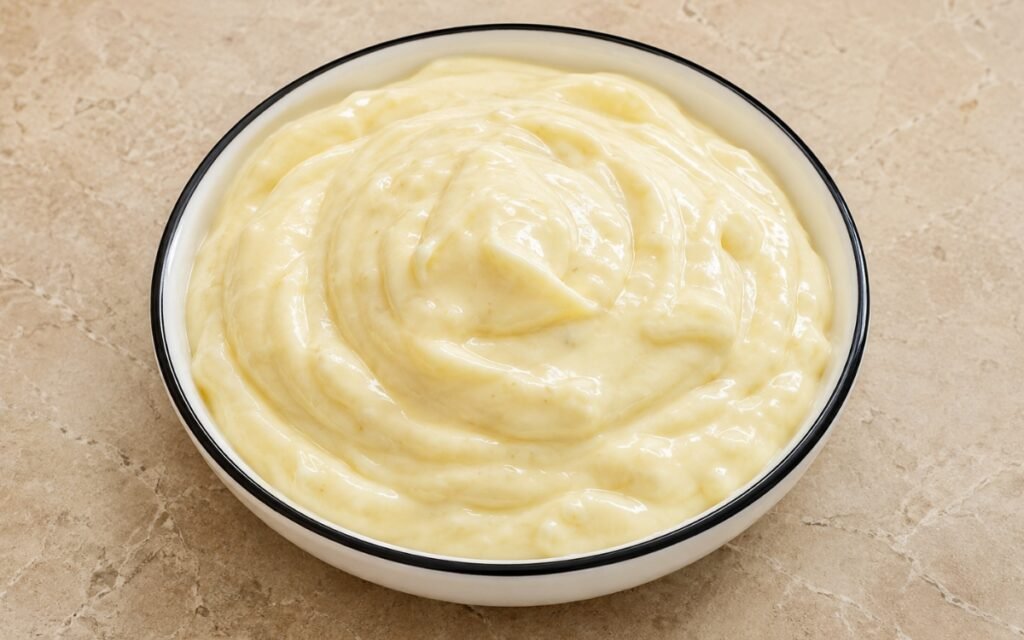
Patatas Bravas with Mayonnaise-Style Aioli and Spanish Tortilla / Tortilla Española are both classic Spanish tapas worth making for the same table, and Spanish Escalivada with Burrata & Capers is also worth trying for another Spanish vegetable tapa with burrata and capers. Spanish Alioli is a garlicky sauce that suits many small plates, while Traditional Portuguese Garlic Shrimp offers another hot-oil garlic dish from the Iberian tradition.
Nutrition Facts
( Per Serving — 6 peppers )
- Calories
- ~100 kcal
- Protein
- 2 g
- Fat
- 8 g
- Carbs
- 6 g
-

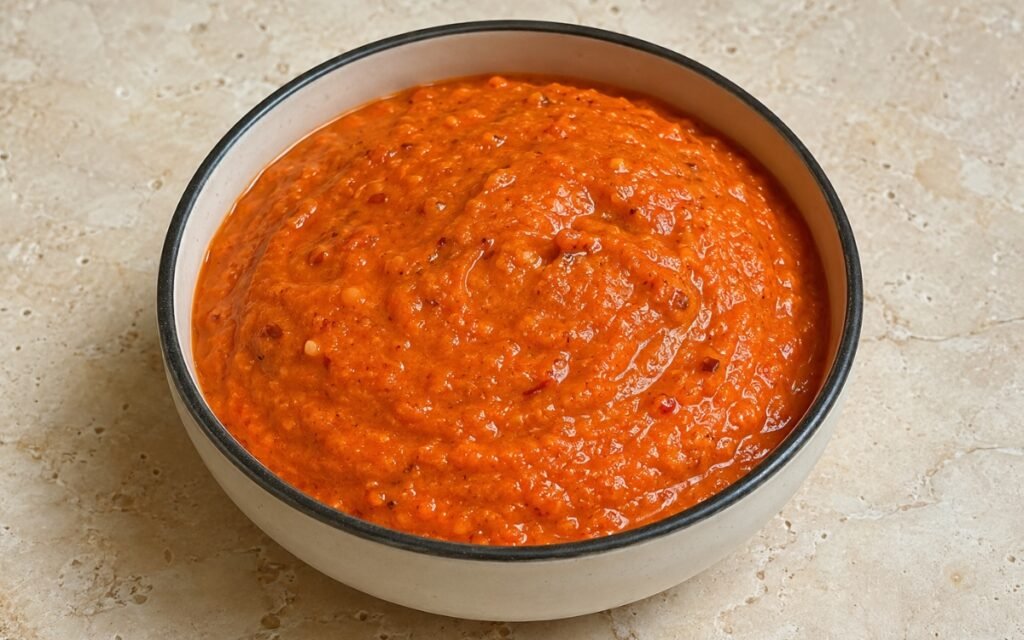
Roasted Red Pepper Sauce
Silky roasted red pepper sauce with garlic and almonds. No-cook versatile condiment in 10 minutes.
-
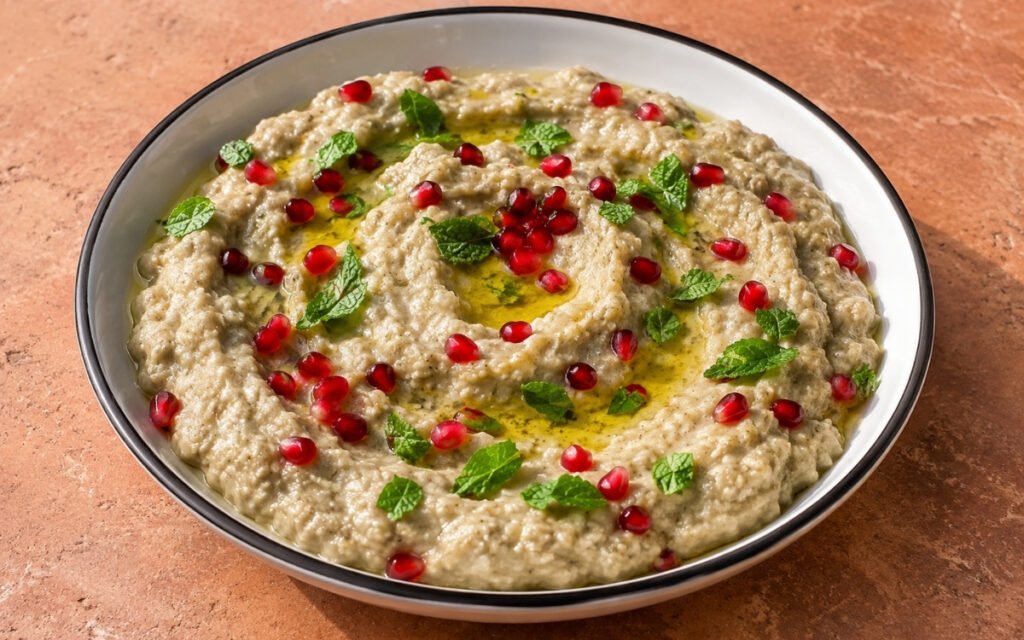
Baba Ganoush
Italian eggplants charred until smoky and caramelised, drained, and pulsed with garlic macerated in lemon juice and tahini — coarse, creamy, rested 20 minutes. Finished with pomegranate and mint.
-
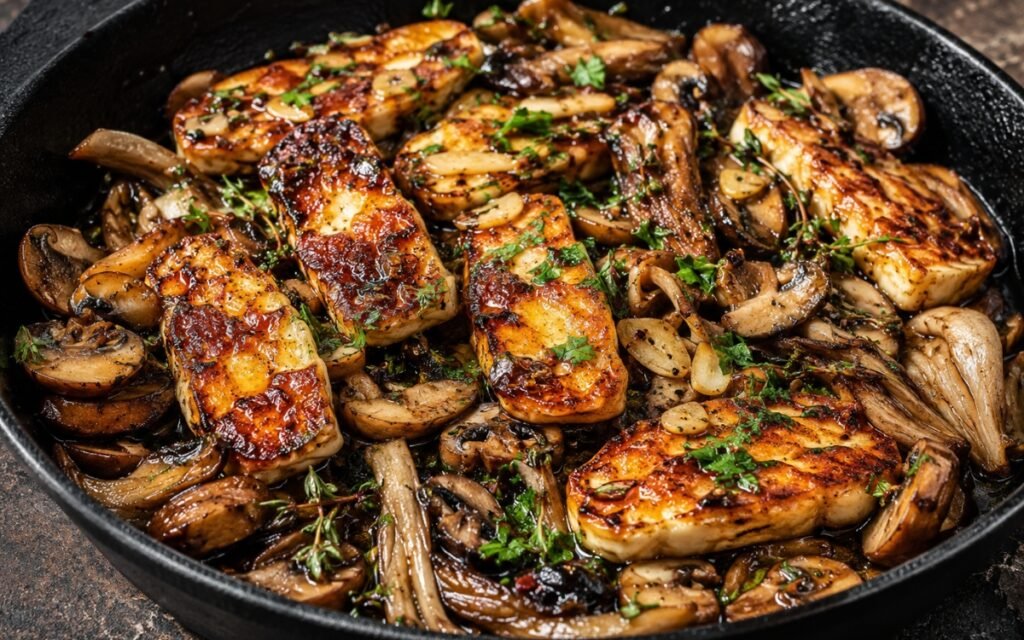
Garlic Mushroom & Halloumi Skillet
Mushrooms seared uncrowded until caramelized, halloumi cooked separately until crisp, combined in garlic balsamic pan sauce. Savory and satisfying.
-
Classic Garlic Aioli (Weeknight Version)
Quick garlic aioli with authentic flavor in 10 minutes—no emulsion technique or fancy tools needed!
-
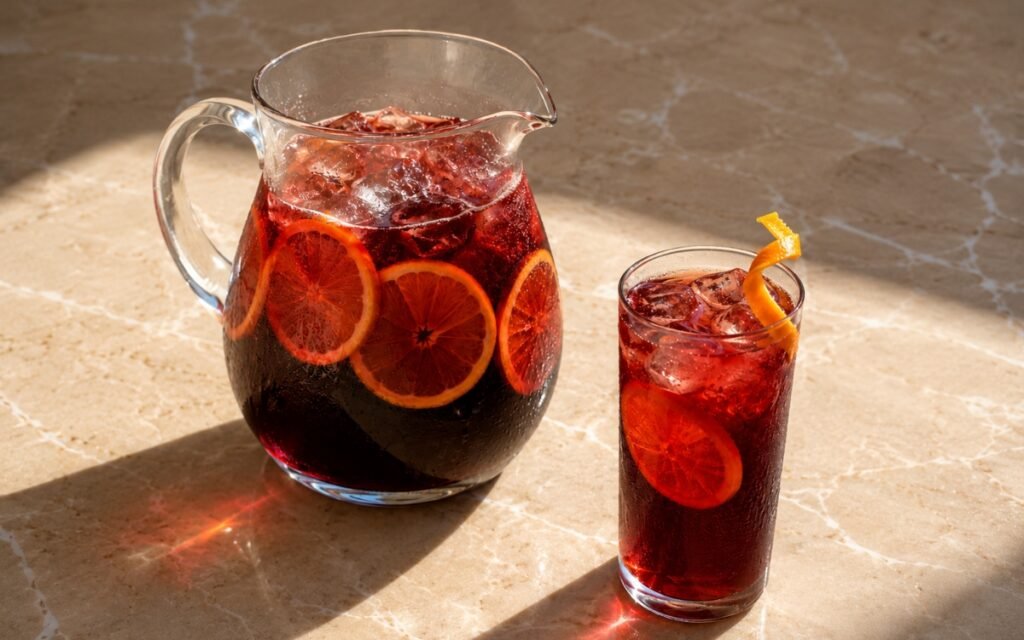
Virgin Spanish Sangria
Wine-like citrus mocktail with macerated fruit and verjus, lightly tannic, bright, festive, and convincingly grown-up.
-
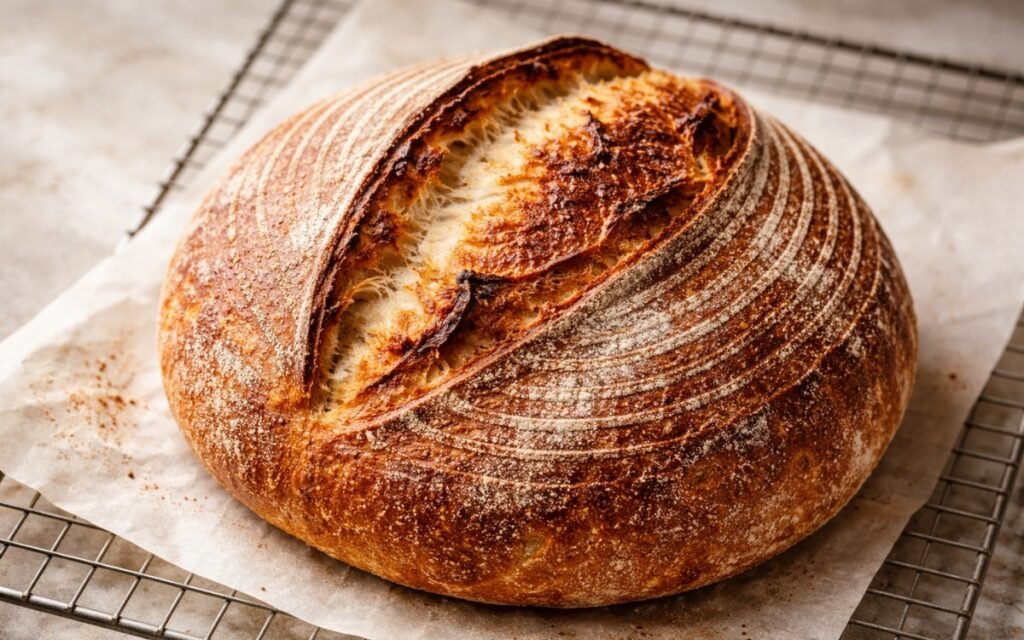
Sourdough Bread
Levain-built, cold-proofed, Dutch oven-baked sourdough with crackling crust and open crumb — the complete method with jalapeño cheddar, sun-dried tomato Parmesan, and olive rosemary variations.