Traditional Portuguese Garlic Shrimp
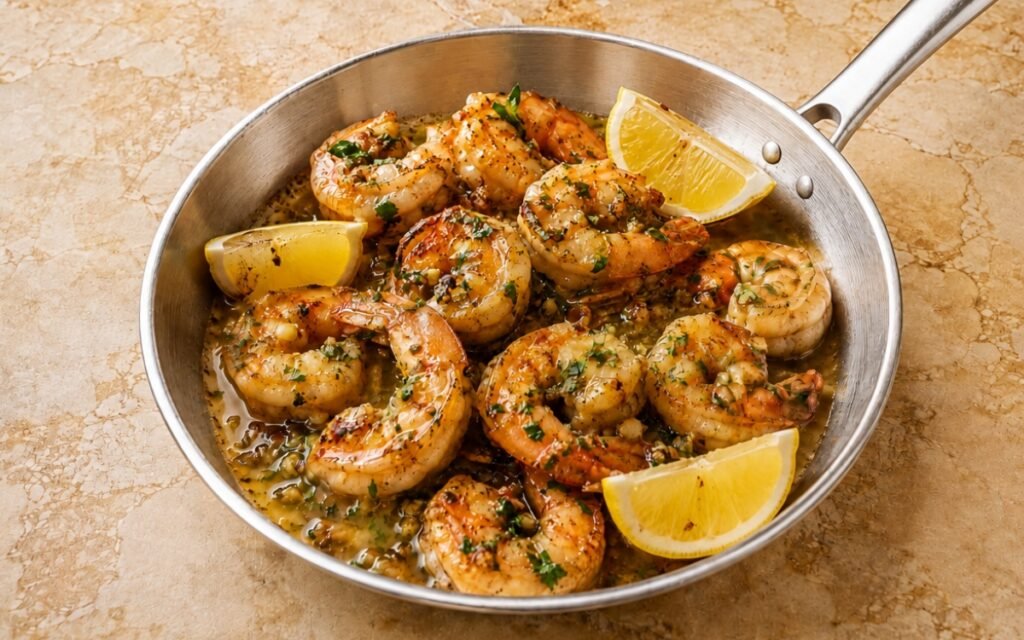
Traditional Portuguese garlic shrimp, or Camarão à Guilho, is a rustic seafood dish of large, juicy shell-on prawns seared until coral-orange and lightly caramelised, then coated in a fragrant sauce of garlic, olive oil, butter, white wine, and piri piri, the key being the contrast between sweet seared shellfish and a rich, golden, garlicky pool of juices. Searing the shrimp in batches in a hot pan and returning them to the sauce only at the very end, rather than simmering them in it, is the technique this whole dish depends on for plump, tender flesh — shrimp left in bubbling liquid turn tough and rubbery within minutes, the same cook-briefly-then-finish-gently principle used elsewhere in this collection whenever delicate seafood meets a sauce. Infusing sliced and chopped garlic gently in olive oil is what builds deep aroma without bitterness. Adding cold butter to reduced wine is what makes a glossy, lightly emulsified sauce. The payoff is a skillet with real, vivid flavour — sweet shellfish, soft toasted garlic, a bright lemony edge, and a gentle piri piri warmth, ready for crusty bread.

- Prep Time : 15 min
- Total Time : 33 min
- Servings : 4
Ingredients
For the Shrimp
- 1kg large raw whole shrimp or prawns, shell-on and preferably head-on (about 12–16 large prawns)
- 5g fine sea salt
- 1g freshly ground black pepper
- 30ml extra-virgin olive oil, for searing
For the Portuguese Garlic Sauce
- 40g garlic (about 8–10 cloves), divided between thin slices and finely chopped pieces
- 30ml extra-virgin olive oil
- 40g unsalted butter, cold and cubed
- 120ml dry Portuguese white wine
- 25ml freshly squeezed lemon juice
- 1–2 small red piri piri chilies, finely chopped
- 2g sweet paprika (about 1 tsp)
- 1g freshly ground black pepper
For Finishing and Serving
- 15g fresh flat-leaf parsley, finely chopped
- 5g fresh cilantro, finely chopped, optional
- 1 lemon, cut into 4 wedges
- Crusty Portuguese bread, optional, for serving
Directions
- Prepare the Shrimp
Rinse the shrimp briefly under cold running water if needed, then pat them completely dry with paper towels, leaving the shells and heads on for flavour and the traditional look. If necessary, devein them by lifting the intestinal tract with a toothpick between the shell segments, or make a very shallow cut along the back. Season evenly with salt and pepper, then slice about half the garlic into thin 1–2mm slices and finely chop the rest. That dry surface is what allows the shells to sear instead of steam. - Sear the Shrimp
Heat a large cast-iron or heavy skillet over medium-high heat, add 15ml of the olive oil, and heat until shimmering. Arrange half the shrimp in a single layer without crowding and sear for about 2 minutes, until the shells turn coral-orange with lightly golden patches, then turn and cook for 1–2 minutes more, until the flesh is nearly opaque. Move them to a plate, keep the juices, and repeat with the rest. That batch cooking is what builds colour and flavour without overcooking. - Infuse the Garlic and Piri Piri
Lower the heat to medium-low and add the remaining 30ml of olive oil, then the sliced garlic, stirring often for 1–2 minutes until it turns pale golden. Add the chopped garlic and piri piri chilies and cook for another 30–45 seconds until fragrant, then stir in the paprika and black pepper for 10–15 seconds. The oil should turn a warm orange-red, with soft garlic and a few toasted edges. That gentle heat is what releases the aroma without letting the garlic or paprika burn and turn bitter. - Build the White Wine and Garlic Sauce
Pour in the white wine and scrape up the browned bits from the base of the pan, then simmer over medium heat for 3–4 minutes until it has reduced by about half. Add the reserved shrimp juices, lower the heat, and swirl in the cold butter a few cubes at a time, then stir in the lemon juice. The sauce should be glossy, golden-orange, and fluid, never thick or greasy. That reduction before the butter is what softens the raw wine and gives the sauce its body. - Finish the Shrimp in the Sauce
Return the shrimp and any juices to the pan and turn them gently through the sauce, coating the shells with garlic, butter, and paprika oil. Cook over low heat for 1–2 minutes, just until heated through and opaque in the thickest part, with an internal temperature of 63°C. Remove from the heat, fold in about two thirds of the parsley and the cilantro if using, then taste and adjust the salt or lemon. That short final cooking is what keeps the flesh tender instead of rubbery. - Garnish and Serve
Arrange the shrimp naturally in a shallow skillet or serving dish, leaving some heads and curved bodies in view, and spoon the warm garlic-butter sauce over them. Scatter the golden garlic slices through the pan and sprinkle with the remaining parsley, then tuck two lemon wedges along one edge and serve the rest separately. Serve immediately with crusty bread for dipping. That immediate serving is what keeps the sauce glossy and the shrimp hot, tender, and juicy.
*Notes :
- Searing the shrimp in batches deserves genuine recognition as the technique most directly responsible for the coral-orange shells and sweet, caramelised flavour of the finished dish. A crowded pan drops in temperature and floods with juices, so the shrimp steam and turn pale, whereas a hot, uncrowded surface browns the shells quickly and leaves the flesh tender inside.
- Keeping the heat moderate while the garlic and paprika infuse deserves the same attention this technique receives throughout this collection’s other garlic-forward oil sauces. Garlic that passes pale gold turns bitter within seconds, and scorched paprika does the same, so a gentle pan, constant stirring, and a quick move to the wine are what keep the sauce sweet and aromatic.
- Reducing the wine before adding the butter deserves genuine respect as the detail most directly responsible for a glossy, balanced sauce. Wine that is only warmed leaves a sharp, raw acidity, while a proper reduction concentrates its flavour, and cold butter swirled in over low heat then emulsifies smoothly instead of separating into a greasy pool.
- Pulling the shrimp at 63°C deserves attention as a genuine, checkable doneness cue rather than a loose approximation. Shrimp go from plump to rubbery in a minute or two, and since they return briefly to the hot sauce at the end, the first sear should leave the flesh just short of opaque in the centre.
Why This Recipe Works
This recipe works because the shrimp and the sauce are cooked separately and joined only at the very end. Searing in batches gives the shells colour and flavour without overcooking the flesh, and the leftover browned bits and juices flavour the sauce. Garlic is infused gently so it turns sweet instead of bitter, and wine reduced before the butter goes in makes a glossy, balanced sauce. A final minute in the pan warms the shrimp through, so they stay plump, juicy, and tender.
Ingredient Breakdown
Shell-On, Head-On Prawns
The structural foundation — the shells protect the flesh and release extra flavour into the oil, giving a deeper seafood taste.
Sliced and Chopped Garlic
The flavour foundation — slices give golden, visible pieces while chopped garlic dissolves into the sauce for aroma.
Piri Piri Chilies
The defining flavour ingredient — small, hot chilies add a gentle, lingering warmth; use one for moderate heat or two for more.
Dry Portuguese White Wine
The core flavour-building stage — reduced by half, it adds bright, concentrated acidity; avoid sweet wines, which unbalance the sauce.
Cold Butter
The critical technique — swirled in over low heat, it makes the sauce glossy and lightly emulsified without thickening it.
Lemon and Parsley
The finishing touch — lemon brightens the rich sauce, and fresh parsley adds a clean green lift at the end.
Flavor Structure Explained
This Portuguese garlic shrimp follows a layered balance model:
- Sweet, briny foundation (seared shell-on prawns)
- Aromatic, savoury depth (golden garlic, olive oil, and paprika)
- Gentle, lingering heat (piri piri chilies)
- Rich, tangy body (reduced white wine, butter, and lemon juice)
- Fresh, herbal finish (parsley, cilantro, and lemon wedges)
Seared prawns provide the sweet, briny foundation of the dish, with colour and caramelised flavour from the shells. Golden garlic, olive oil, and paprika add aromatic, savoury depth, while piri piri chilies bring a gentle, lingering heat. Reduced wine, butter, and lemon give the sauce a rich, tangy body, and parsley, cilantro, and lemon wedges add a fresh, herbal finish that ties this dish together.
Common Mistakes to Avoid
- Crowding the Skillet – This steams the prawns instead of searing them. Always cook them in batches in a single layer so the shells colour properly.
- Browning the Garlic Too Far – This turns the whole sauce bitter. Always lower the heat and lift the pan once the garlic reaches pale gold.
- Adding Butter to Unreduced Wine – This leaves a sharp, thin sauce that splits. Always reduce the wine by half, then swirl in cold butter off a low heat.
- Boiling the Shrimp in the Sauce – This makes the flesh tough and rubbery. Always warm them gently for only 1–2 minutes before serving.
- Using Precooked Shrimp – This overcooks them on reheating and removes the juices that flavour the sauce. Always start with raw shell-on prawns.
Variations
Head-Off Version
Use shell-on prawns with the heads removed for easier eating, which keeps most of the shell flavour in the sauce while giving a slightly lighter, less dramatic presentation.
Extra-Spicy Version
Use two piri piri chilies instead of one and keep their seeds, which raises the heat and adds a sharper edge while the garlic, wine, and lemon still carry the sauce.
Olive Oil Only Version
Leave out the butter and add an extra 15ml of olive oil, which gives a lighter, more traditional garlic-oil sauce that is thinner and more peppery in flavour.
Cilantro Version
Use the full 5g of cilantro alongside the parsley, which gives a fresher, more herbal finish that suits the lemon and chili well without changing the base of the dish.
Storage & Make-Ahead
The shrimp can be cleaned, deveined, and refrigerated at 4°C or below for several hours before cooking, and the garlic and other ingredients can be prepared at the same time, but searing should happen just before serving.
Leftovers should be refrigerated promptly at 4°C or below and eaten within 2 days, though the flesh will be slightly firmer than when freshly cooked, because shrimp tighten as they cool and reheat.
Reheat leftovers gently over low heat just until hot, avoiding any prolonged simmering, since extra cooking turns the already-cooked shrimp tough and rubbery in a matter of minutes.
Serve the dish straight from the pan while the sauce is still glossy and hot, with crusty bread alongside, because the garlicky juices are the best part and cool into an oily layer on the plate.
Choose fresh or properly thawed raw shrimp rather than anything precooked, and pat them dry thoroughly before they touch the pan, since surface moisture prevents searing and dilutes the finished sauce.
Frequently Asked Questions
Why are the shrimp seared in batches instead of all at once?
A crowded pan loses heat and fills with liquid, so the shrimp steam and turn pale, whereas a single layer lets the shells brown quickly and keeps the flesh tender inside.
Why is the garlic cooked over a lower heat than the shrimp?
Garlic turns from sweet to bitter within seconds above pale gold, so gentle heat infuses the oil with aroma while avoiding the harsh, burnt flavour that would spoil the whole sauce.
Why is the wine reduced before the butter is added?
Reducing the wine removes its raw sharpness and concentrates its flavour, and cold butter then emulsifies smoothly into the thickened liquid to form a glossy, balanced sauce instead of a greasy one.
Why do the shrimp return to the pan only for a minute or two?
They are already nearly cooked from the sear, so a brief final warm-through finishes them, whereas longer cooking squeezes out their moisture and leaves them tough and rubbery.
Are there other classic shrimp, garlic, or seared main dishes worth trying?
Garlic Butter Shrimp Skillet and Shrimp Fajita both offer other classic shrimp directions worth exploring, and Garlic Shrimp Skewers is also worth trying for another garlicky shrimp dish. Chicken Fajita and Grilled Salmon Fillets are also worth trying for other seared and grilled mains.
Nutrition Facts
( Per Serving )
- Calories
- ~390 kcal
- Protein
- 38 g
- Fat
- 21 g
- Carbs
- 6 g
-

Garlic Butter Shrimp Skillet
Hard-seared shrimp finished gently in a glossy garlic butter sauce with lemon, parsley, and chili flakes.
-
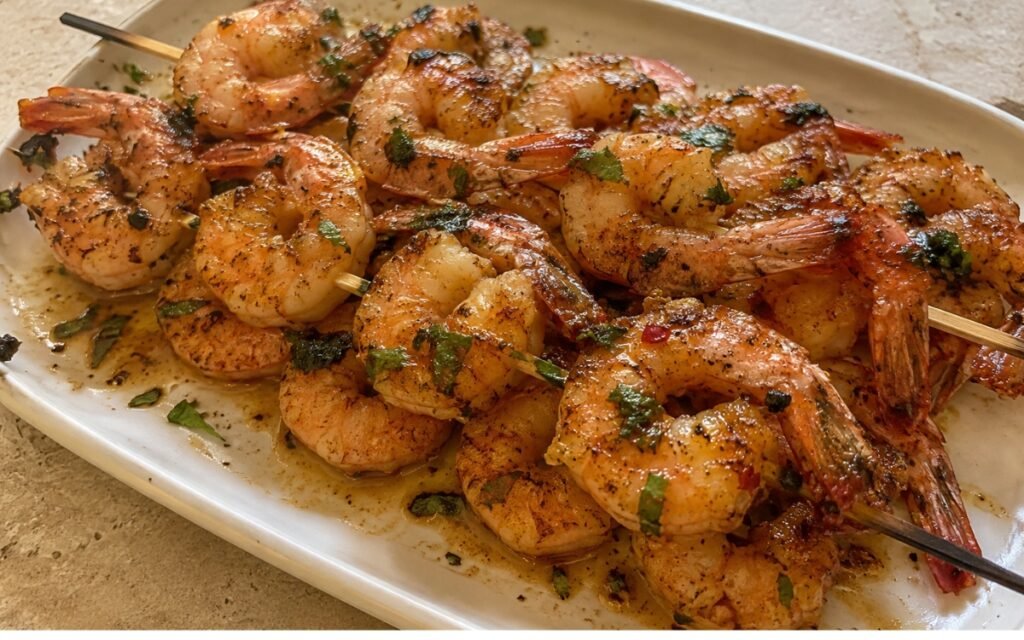
Garlic Shrimp Skewers
Shrimp marinated 30 minutes in garlic herb butter, threaded on double skewers, grilled fast with fresh butter basting until charred. Juicy and garlicky.
-
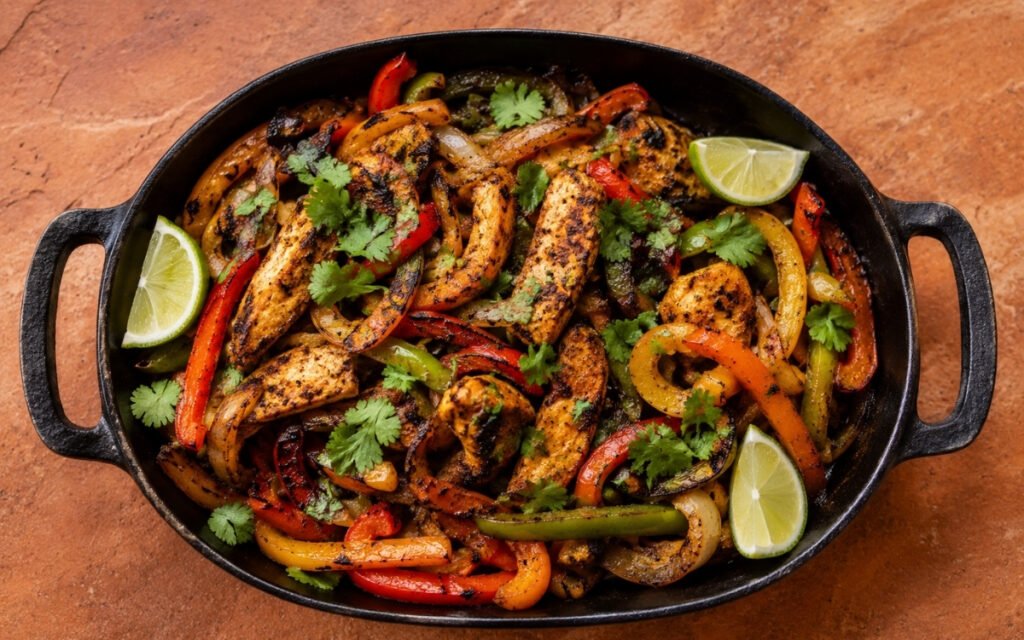
Chicken Fajita
Smoked paprika and cumin-marinated chicken thighs seared in cast iron with charred tri-colour peppers and caramelised onions — the complete Tex-Mex fajita in 35 minutes.
-
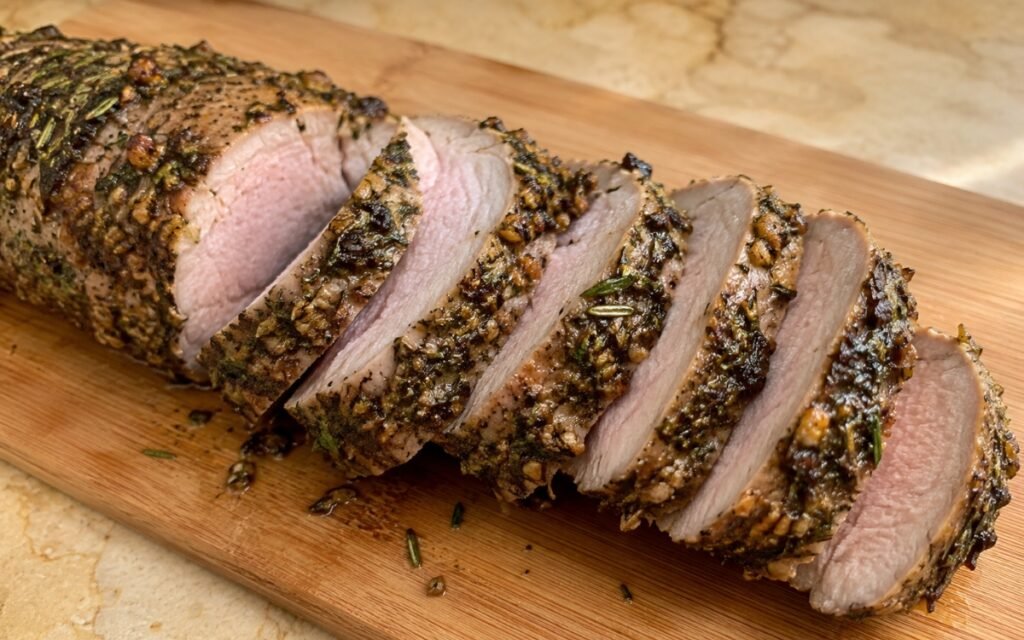
Garlic Herb Pork Tenderloin
Pork tenderloin trimmed, coated in Dijon mustard and fresh herb paste — seared for color, roasted precisely, rested and sliced. Elegant and aromatic.
-
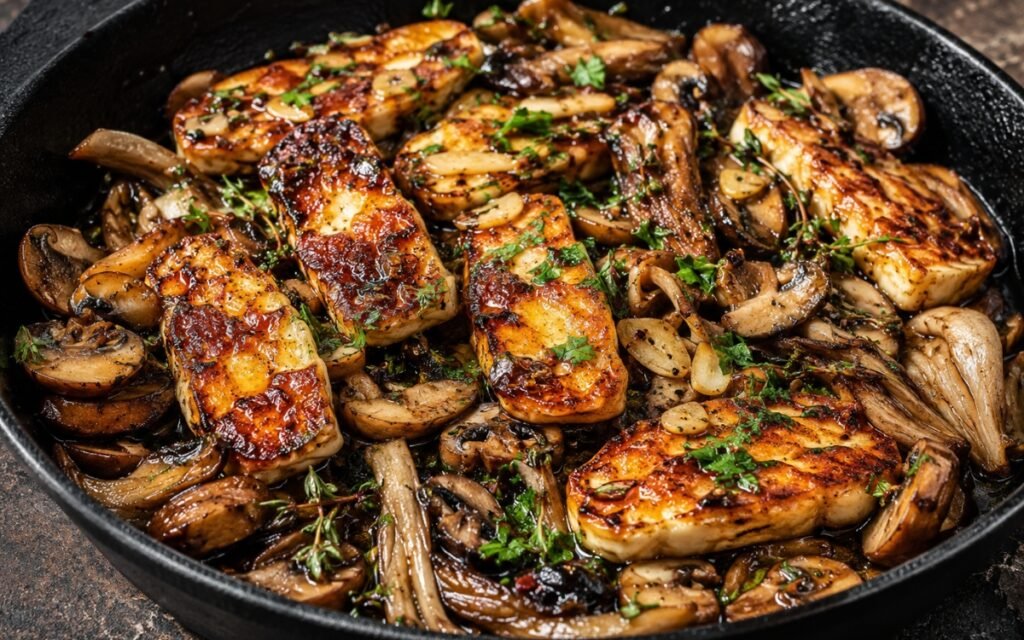
Garlic Mushroom & Halloumi Skillet
Mushrooms seared uncrowded until caramelized, halloumi cooked separately until crisp, combined in garlic balsamic pan sauce. Savory and satisfying.
-
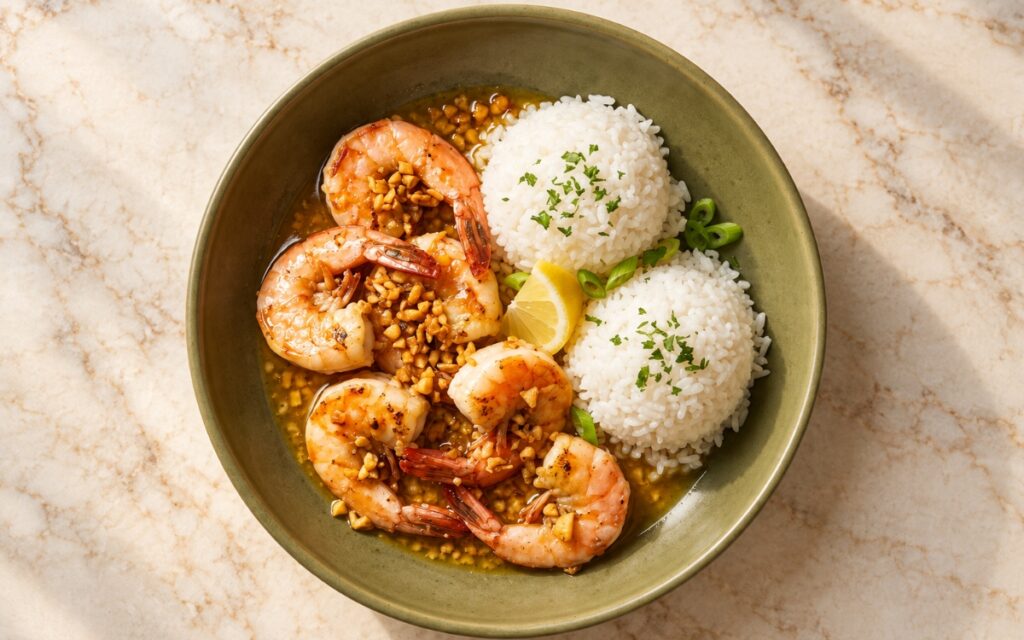
Hawaiian Garlic Shrimp Bowl
Seared shell-on shrimp tossed in golden garlic butter, served beside two scoops of fluffy white rice with a lemon wedge, parsley, and scallions.