
Strawberry Rhubarb Lemonade
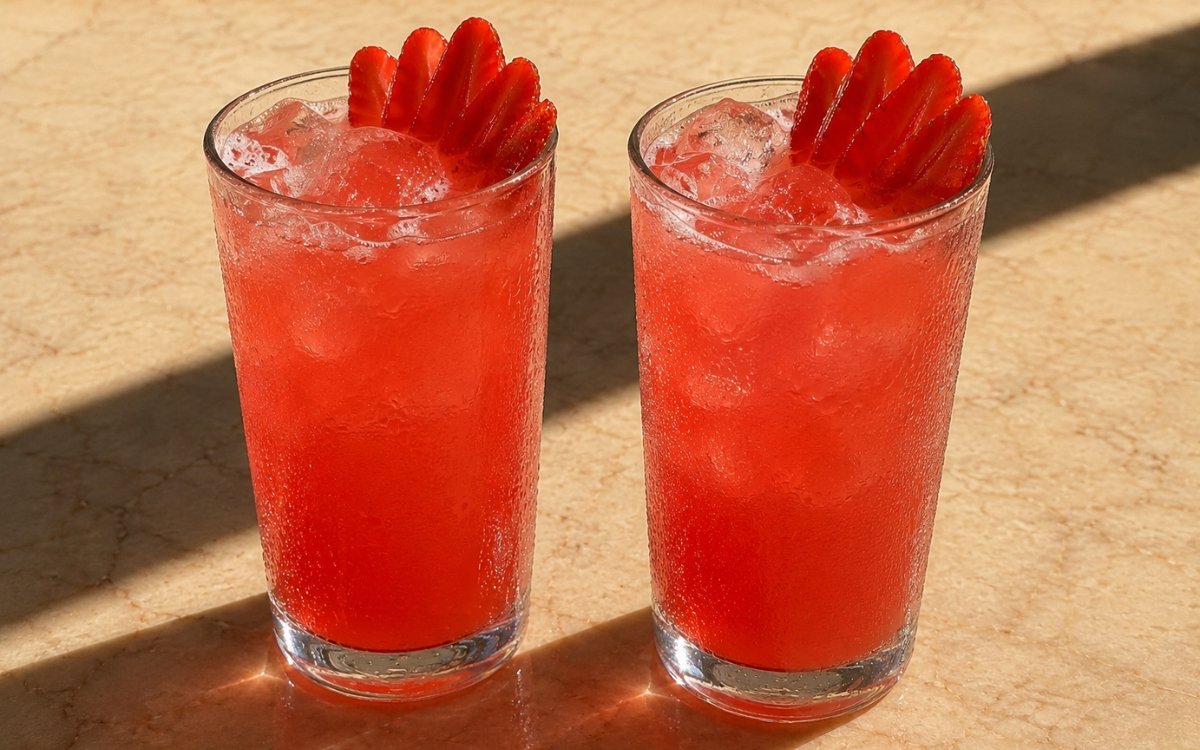
A bright pink-red strawberry rhubarb lemonade with fresh lemon juice, cold-extracted lemon zest sugar, and a gently cooked strawberry-rhubarb base to keep the flavor vivid, tart, and clean rather than jammy. Cooking the rhubarb only gently, and only briefly, is the technique this whole base depends on — rhubarb needs some heat to soften and release its flavour, but pushing that cook too far or too hard turns it into something closer to a heavy, cooked compote rather than the vivid, tart syrup this drink is built around. Adding half the strawberries only after the pan comes off the heat, letting them infuse rather than cook, is what keeps their flavour bright rather than jammy. Taking only the yellow lemon zest, carefully avoiding any white pith, is what keeps this drink’s citrus edge clean rather than bitter. The payoff is a lemonade that’s genuinely bright pink-red, tart, and clean — real strawberry and rhubarb depth against bright citrus, without ever tasting cooked down or heavy.

Prep Time : 20 min
Cook Time : 10 min
Servings : 8
20 min
10 min
8
Ingredients
For the Cold Lemon Extraction
• Zest of 4 large lemons, yellow part only, no white pith
• 170g granulated sugar — this one on Amazon
For the Strawberry-Rhubarb Base
• 300g rhubarb, trimmed and cut into 2cm pieces
• 250g strawberries, hulled and sliced
• 250ml water
• 60g granulated sugar
For the Lemonade
• 300ml fresh lemon juice, from about 6 lemons
• 900ml to 1 liter very cold water, plus more if needed
• 1 small pinch fine sea salt, optional
For Serving
• Ice cubes
• Thin fresh strawberry slices, fanned at the rim
This post may contain affiliate links. As an Amazon Associate I earn from qualifying purchases, at no additional cost to you.
Directions
- Make the Lemon Sugar
Wash and dry the lemons well. Finely zest them, taking only the yellow outer peel. Place the zest and 170g sugar in a bowl. Rub together with your fingertips for 2–3 minutes until very fragrant and lightly damp. Let sit for 20 minutes so the sugar absorbs the lemon oils. Rubbing rather than simply mixing the zest into the sugar is what actually ruptures the peel’s tiny oil glands, mechanically releasing those aromatic oils directly into the sugar without needing any heat. - Make the Strawberry-Rhubarb Base
Place the rhubarb, 150g of the strawberries, 250ml water, and 60g sugar in a saucepan. Set over low to medium-low heat and cook gently for 8–10 minutes, stirring occasionally, just until the rhubarb softens and breaks down. Do not boil hard or reduce aggressively. Remove from the heat and stir in the remaining 100g strawberries. Let stand 10 minutes so the fresh strawberry flavor infuses without becoming cooked and jammy. Strain through a fine sieve, pressing gently to extract the juices. Do not force too much pulp through unless you want a slightly cloudier lemonade. Splitting the strawberries into two batches — some cooked alongside the rhubarb, the rest added only once the heat is off — is what lets this base carry two genuinely distinct qualities at once: real cooked depth from the rhubarb-and-first-batch simmer, and bright, fresh strawberry character from the portion that never touches direct heat. - Make the Lemon Base
Add the fresh lemon juice to the lemon sugar and stir until the sugar mostly dissolves. Let stand 2–3 minutes, then stir again. Strain through a fine sieve, pressing on the zest well, to create a fragrant lemon syrup. The lemon juice’s own acidity helps dissolve the sugar while carrying the already-released lemon oils fully into the base, and pressing the spent zest firmly before discarding it captures as much of that flavourful syrup as possible. - Build the Lemonade
In a large pitcher, combine the lemon syrup, the strawberry-rhubarb syrup, 900ml cold water, and the pinch of salt, if using. Stir well. Taste and adjust with a little more cold water if needed, depending on how concentrated your fruit base is. The final yield should be about 2 liters. This tasting checkpoint matters directly given how much rhubarb’s own natural tartness can vary — building in that adjustment stage accounts for that variability rather than assuming a fixed recipe always lands at the same balance. - Chill
Refrigerate for 30 minutes, until thoroughly cold. That resting period lets the lemon and fruit components fully meld together, producing a more unified flavour than serving the drink immediately after mixing. - Serve
Fill glasses with ice. Garnish each with a thin fresh strawberry slice fanned at the rim, then pour in the lemonade and serve immediately. Serving right after chilling, rather than letting the pitcher sit out, keeps the drink at its coldest and most refreshing right when it’s poured.
*Notes :
- Keeping the rhubarb’s cook genuinely gentle and brief deserves recognition as the technique responsible for this drink’s whole flavour identity. Rhubarb does need real heat to soften its fibrous stalks and release its characteristically tart flavour, but a hard boil or an extended cook pushes that same process too far, transforming a vivid, tart syrup into something closer to a heavier, more subdued cooked compote — exactly the outcome this recipe is built to avoid.
- Splitting the strawberries into two portions, one cooked alongside the rhubarb and one added only once the pan is off the heat, deserves genuine attention as a deliberate technique rather than an unnecessary complication. That first cooked portion contributes real depth and colour developed alongside the rhubarb; the second, added only to infuse rather than actively cook, preserves a genuinely bright, fresh strawberry character that a fully cooked batch alone wouldn’t retain.
- The straining stage’s own guidance — press gently, and only force more pulp through if a cloudier result is specifically wanted — deserves to be understood as a real choice between two valid textures rather than a single correct outcome. A gentle press produces a cleaner, more polished syrup; a firmer press pushes more fruit solids through, producing a fuller-bodied, more rustic-looking finished lemonade. Neither is wrong; the recipe simply leaves that choice open.
- The strict avoidance of white pith throughout zesting deserves the same careful attention it receives across every citrus-forward drink in this collection. Lemon pith carries a real, distinct bitterness entirely separate from the fruit’s natural tartness — even a small amount worked accidentally into the zest can introduce a flavour that muddies this drink’s already-complex balance between rhubarb’s tartness and strawberry’s sweetness.
Why This Recipe Works
This recipe works because the rhubarb is cooked only gently and briefly, softening it enough to release its flavour without pushing the base toward a heavier, cooked-compote character. Splitting the strawberries into a cooked portion and a later, off-heat infused portion gives the finished base both real depth and genuinely bright fresh fruit character at once.
The lemon zest is worked carefully to avoid any white pith, and a built-in tasting stage accounts for real variability in rhubarb’s own natural tartness. A proper chilling period brings every component together into one cohesive, vivid, clean-tasting drink.
Ingredient Breakdown
Gently, Briefly Cooked Rhubarb
The base’s tart foundation — softened just enough to release flavour without pushing toward a heavier, cooked-compote character.
Split Strawberries (Cooked and Off-Heat Infused)
The signature technique — one portion builds depth alongside the rhubarb, the other preserves bright, fresh strawberry character.
Yellow Lemon Zest (No Pith)
The aromatic foundation — carefully separated from the bitter white pith, protecting the drink’s overall balance.
Cold-Extracted Zest-Sugar Base
The critical technique — rubbing releases lemon oils without the heat that would alter their fresher character.
Fresh Lemon Juice
The tartness and dissolving agent — its acidity both flavours the drink and helps fully dissolve the sugar.
Flavor Structure Explained
This strawberry rhubarb lemonade follows a layered balance model:
- Bright citrus foundation (cold-extracted lemon zest and juice)
- Sweet balancing base (granulated sugar)
- Tart, vivid depth (gently cooked rhubarb)
- Fresh fruity brightness (off-heat infused strawberries)
- Cool refreshing structure (cold water, ice)
Cold-extracted lemon zest and fresh lemon juice provide this drink’s bright, clean citrus foundation. Sugar, infused directly with those lemon oils, balances that tartness. Gently cooked rhubarb contributes tart, vivid depth without turning heavy or jammy, while off-heat infused strawberries layer in genuinely fresh fruity brightness on top of that. Cold water and ice keep the whole lemonade properly refreshing, tying every component together into one balanced, clean-tasting drink.
Common Mistakes to Avoid
- Boiling the Rhubarb Hard or Cooking It Too Long – This pushes the flavour toward a heavier, cooked-compote character. Always keep the cook gentle and brief.
- Cooking All the Strawberries With the Rhubarb – This loses the bright, fresh strawberry note this recipe is built to preserve. Always add the second portion off the heat.
- Zesting Too Deep Into the White Pith – This introduces bitterness that muddies the drink’s tart-sweet balance. Always take only the thin, fragrant yellow layer.
- Forcing Too Much Pulp Through the Strainer Unintentionally – This produces an unexpectedly cloudy result. Always press gently unless a cloudier lemonade is specifically desired.
- Serving Without a Proper Chill – The lemon and fruit flavours taste more separate without time to settle together. Always refrigerate at least 30 minutes before serving.
Variations
Extra-Tart Version
Add 20–30ml extra lemon juice for a sharper, brighter finish, per the recipe’s own guidance.
Sweeter Version
Add an extra 10–20g sugar if the rhubarb is especially sharp.
Cloudier, Fuller Version
Press the strained fruit base more firmly for a fuller-bodied, more rustic finished lemonade.
Sparkling Version
Top each glass with a splash of chilled soda water just before serving for light effervescence.
Storage & Make-Ahead
Best served the same day for the freshest fruit flavor. This recipe makes about 2 litres, enough for 8 servings of roughly 250ml each.
The lemon syrup and the strawberry-rhubarb base can both be made a few hours ahead and refrigerated separately before combining with the cold water.
Frequently Asked Questions
Why does the rhubarb need to be cooked so gently and briefly?
Rhubarb needs real heat to soften and release its flavour, but pushing that cook too far transforms a vivid, tart syrup into something closer to a heavier, cooked compote. The gentle, brief cook specified here keeps the flavour tart and fresh rather than dulled.
Why are the strawberries split into two portions instead of cooked all together?
The portion cooked alongside the rhubarb builds real depth and colour, while the portion added only once the pan is off the heat preserves genuinely bright, fresh strawberry character. Cooking all the strawberries together would lose that fresh note entirely.
Why is it so important to avoid the white pith when zesting the lemons?
Lemon pith carries real, distinct bitterness separate from the fruit’s natural tartness. Even a small amount worked into the zest can muddy this drink’s already-complex balance between rhubarb’s tartness and strawberry’s sweetness.
Why does the straining step allow for two different textures rather than one correct result?
A gentle press produces a cleaner, more polished syrup, while a firmer press pushes more fruit solids through for a fuller, more rustic finished lemonade. Both are valid outcomes depending on the texture preferred.
Are there other strawberry, berry, or bright fruit-forward lemonades worth trying?
Strawberry Lemonade, Hibiscus Strawberry Lemonade, and Raspberry Lemonade all offer other vivid, berry-forward lemonades worth exploring. Guava Lemonade is also worth trying for a different, tropical fruit-forward direction.
Nutrition Facts
( per serving )
Calories
~95 kcal
Protein
0 g
Fat
0 g
Carbs
24 g
Calories
~95 kcal
Protein
0 g
Fat
0 g
Carbs
24 g
Related Recipes
Related Recipes

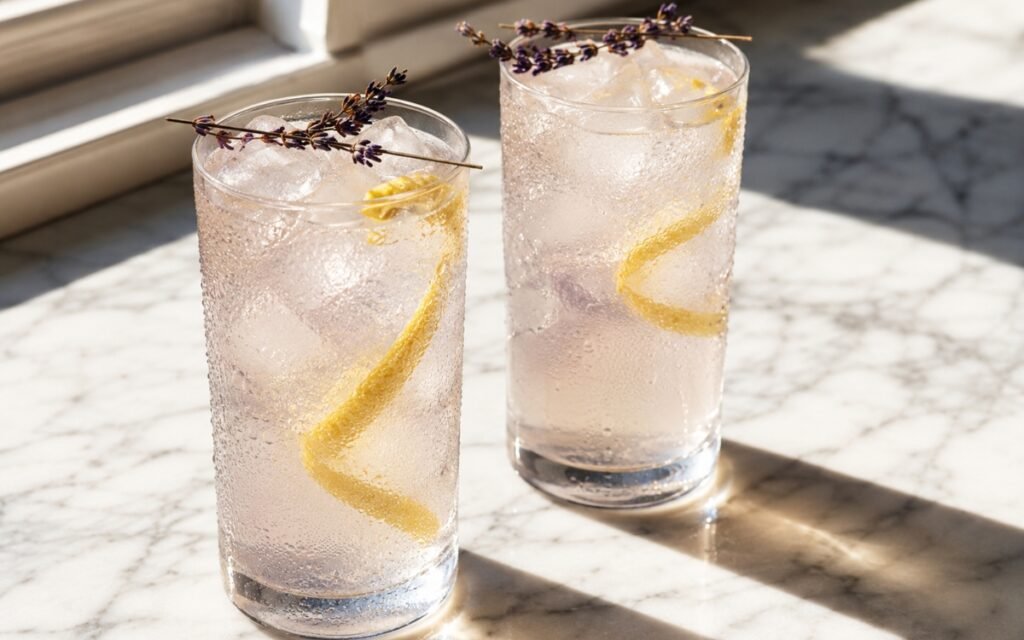
Lavender Lemonade
Lavender steeped in warm syrup exactly 6–8 minutes before camphor develops — lemon pulp, juice, salt, cold water, chilled. Citrus first, floral behind.
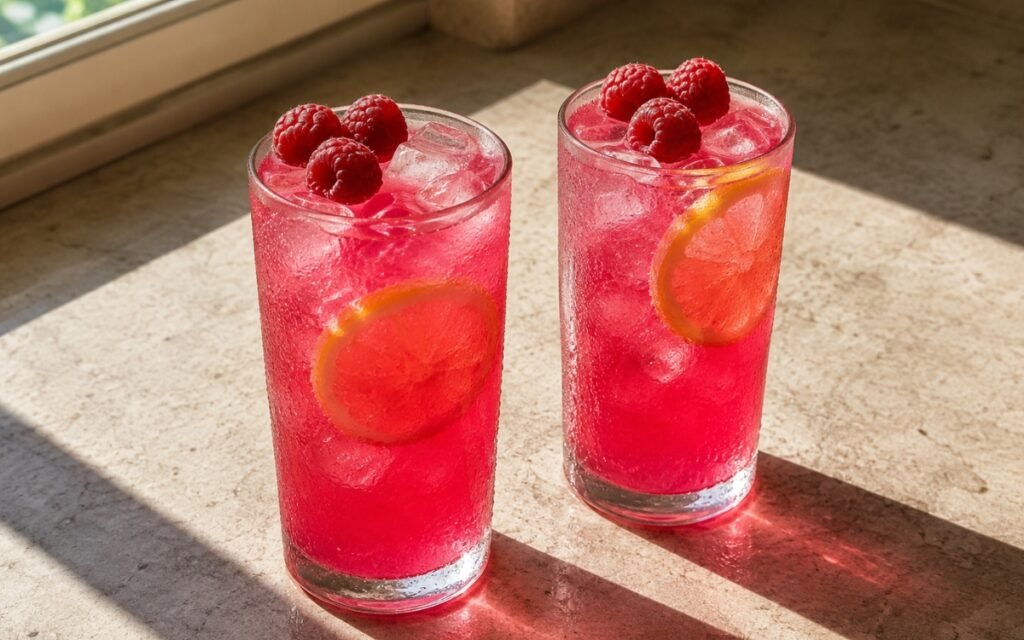
Raspberry Lemonade
Honey-raspberry syrup cooked with lemon zest off heat, fresh raspberries cold-strained for bright aromatic juice — combined with lemon, salt, cold water. Layered and vivid.
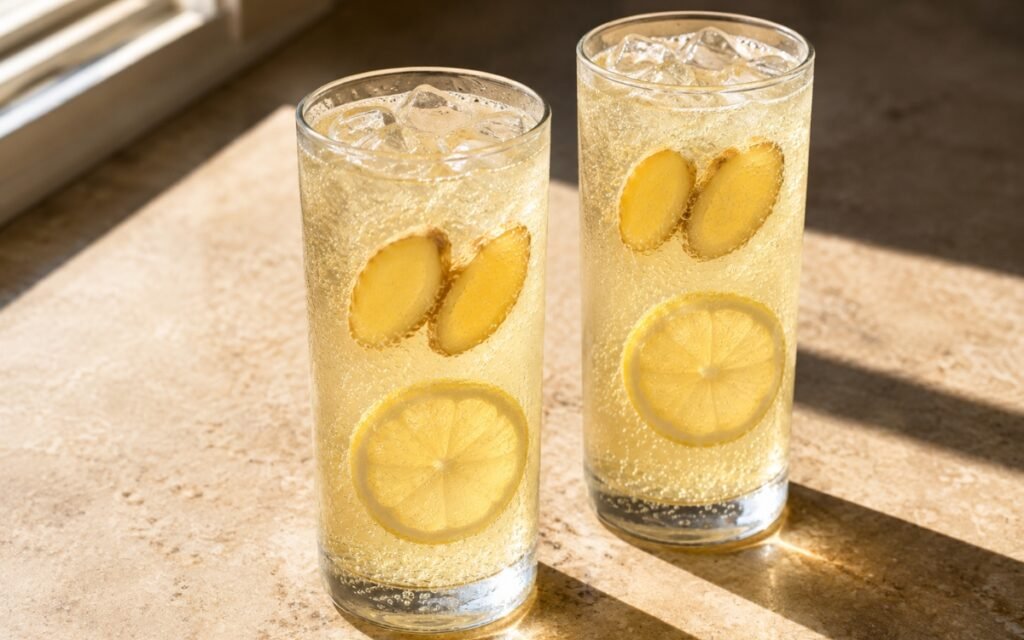
Sparkling Ginger Lemonade
Ginger simmered with honey 8–10 minutes, lemon zest off heat — concentrated base chilled, club soda side-poured right before serving. Sharp, hot, and fizzy.
You might also like
You might also like
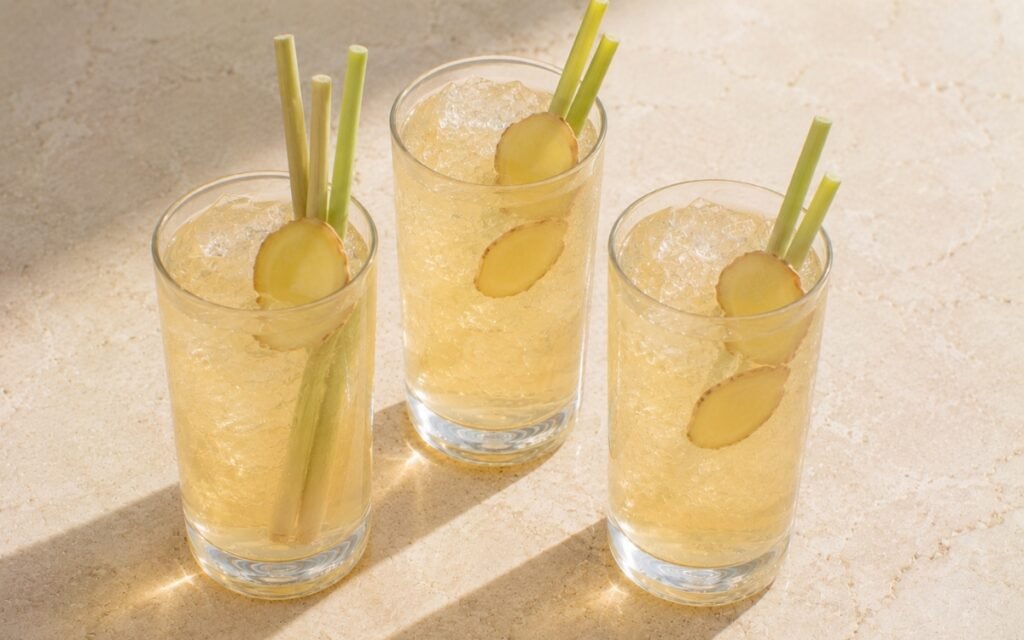
Lemongrass Ginger White Iced Tea
White tea at 75–80°C for 3–4 minutes, lemongrass bruised and infused with ginger 8–10 minutes — mild honey, chilled. Bright, citrus-herbal, gently warming.
Strawberry Basil Pitcher Drink
Cold-macerated strawberries with a gentle basil extraction, fresh lemon juice, and a second infusion of sliced strawberries and basil.
Strawberry Tarragon White Iced Tea
Properly brewed white tea combined with cold-macerated fresh strawberries and a gentle cold tarragon infusion for a light, elegant iced tea.
Strawberry Rhubarb Lemonade
Ingredients
Method
- Wash and dry the lemons well. Finely zest them, taking only the yellow outer peel. Place the zest and 170g sugar in a bowl. Rub together with your fingertips for 2–3 minutes until very fragrant and lightly damp. Let sit for 20 minutes so the sugar absorbs the lemon oils. Rubbing rather than simply mixing the zest into the sugar is what actually ruptures the peel’s tiny oil glands, mechanically releasing those aromatic oils directly into the sugar without needing any heat.
- Place the rhubarb, 150g of the strawberries, 250ml water, and 60g sugar in a saucepan. Set over low to medium-low heat and cook gently for 8–10 minutes, stirring occasionally, just until the rhubarb softens and breaks down. Do not boil hard or reduce aggressively. Remove from the heat and stir in the remaining 100g strawberries. Let stand 10 minutes so the fresh strawberry flavor infuses without becoming cooked and jammy. Strain through a fine sieve, pressing gently to extract the juices. Do not force too much pulp through unless you want a slightly cloudier lemonade. Splitting the strawberries into two batches — some cooked alongside the rhubarb, the rest added only once the heat is off — is what lets this base carry two genuinely distinct qualities at once: real cooked depth from the rhubarb-and-first-batch simmer, and bright, fresh strawberry character from the portion that never touches direct heat.
- Add the fresh lemon juice to the lemon sugar and stir until the sugar mostly dissolves. Let stand 2–3 minutes, then stir again. Strain through a fine sieve, pressing on the zest well, to create a fragrant lemon syrup. The lemon juice’s own acidity helps dissolve the sugar while carrying the already-released lemon oils fully into the base, and pressing the spent zest firmly before discarding it captures as much of that flavourful syrup as possible.
- In a large pitcher, combine the lemon syrup, the strawberry-rhubarb syrup, 900ml cold water, and the pinch of salt, if using. Stir well. Taste and adjust with a little more cold water if needed, depending on how concentrated your fruit base is. The final yield should be about 2 liters. This tasting checkpoint matters directly given how much rhubarb’s own natural tartness can vary — building in that adjustment stage accounts for that variability rather than assuming a fixed recipe always lands at the same balance.
- Refrigerate for 30 minutes, until thoroughly cold. That resting period lets the lemon and fruit components fully meld together, producing a more unified flavour than serving the drink immediately after mixing.
- Fill glasses with ice. Garnish each with a thin fresh strawberry slice fanned at the rim, then pour in the lemonade and serve immediately. Serving right after chilling, rather than letting the pitcher sit out, keeps the drink at its coldest and most refreshing right when it’s poured.